
Classic Oriental rugs
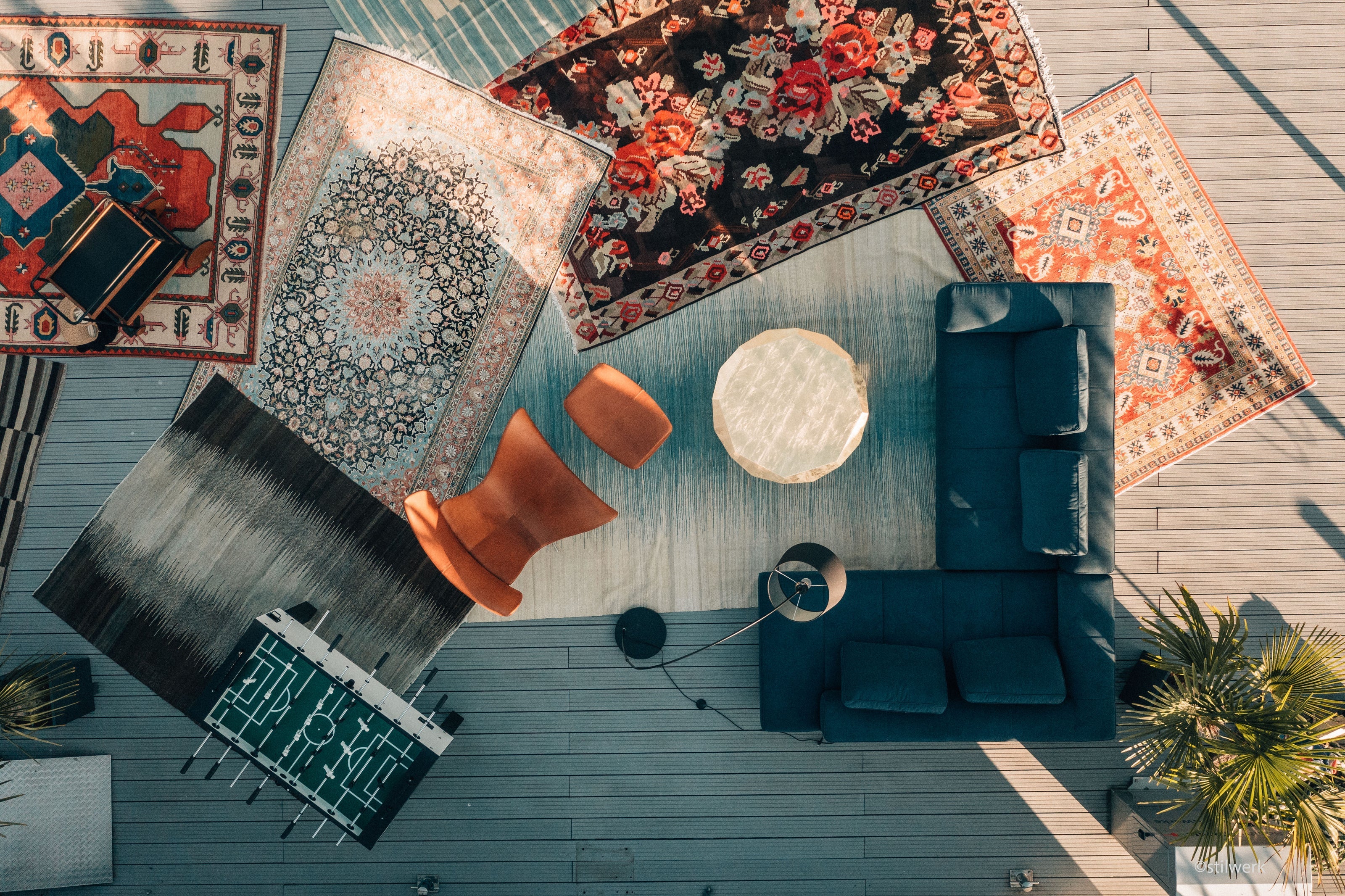
An Oriental rug is a hand-knotted or hand-woven rug from the Orient – above all from Persia (Iran), the Caucasus, Turkey, Afghanistan, Pakistan, India and China. At Zomorrodi you'll find classic Oriental rugs as one-of-a-kind pieces: old and new, fine city rugs and sturdy nomadic rugs, from runners to oversized formats.
Once you understand where a particular pattern comes from and what certain symbols stand for, classic Oriental rugs offer fascinating insights into their own history. From the design of an Oriental rug you can tell with near certainty the country, the town or even the village in which it was knotted.
Classic Oriental rugs at a glance
- Origin: Persia (Iran), Caucasus, Turkey, Afghanistan, Pakistan, India, China
- Technique: hand-knotted (pile) or hand-woven (Kelim, flat)
- Material: new wool on cotton or wool; fine pieces with silk or entirely of silk
- Age: new, old (40–99 years) and antique (100 years and over)
- Sizes: small rugs from approx. 60 × 90 cm, runners, standard sizes such as 200 × 300 cm, oversized formats and custom dimensions
- At Zomorrodi: every piece one of a kind, prices shown per rug, 14 days to try at home, free shipping within the EU
What is the difference between an Oriental rug and a Persian rug?
Oriental rug is the umbrella term. A Persian rug is an Oriental rug knotted in Iran – from Isfahan, Nain, Tabriz, Qom or Keshan, for example. Caucasian Kazak and Shirvan, Turkish Hereke, Afghan Kelims and Chinese silk rugs are Oriental rugs too, but not Persians. This collection brings together every region of origin; Persian rugs also have a collection of their own.
Patterns and symbols: how to recognise where a rug comes from
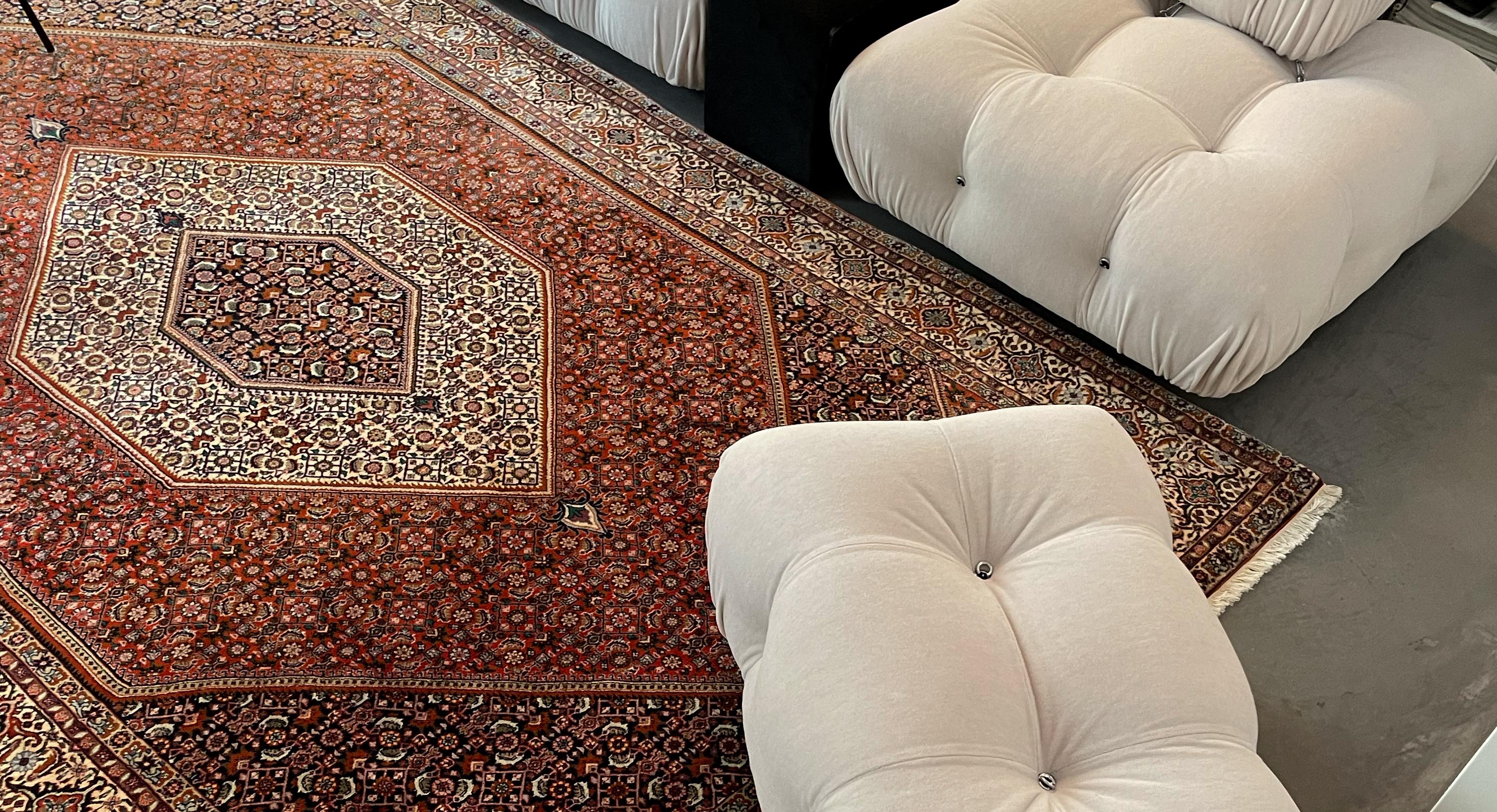
Every region has its own visual language. Persian town rugs usually show a central medallion, arabesques and floral vines. Caucasian and Turkmen rugs work with clear geometric shapes, stars and hook motifs. Nomadic rugs such as Gabbeh or Kordi are plainer and more coarsely knotted. Typical symbols include the tree of life, the boteh (paisley) as a sign of fertility and eternity, the vase, and the Herati and Mina Khani scattered-flower patterns.
On our site you will find detailed information on the various patterns and symbols used in Oriental rugs, along with their meaning and origin. That way you can delve deeper into the world of these works of art and learn more about their cultural history.
What to look for when buying an Oriental rug
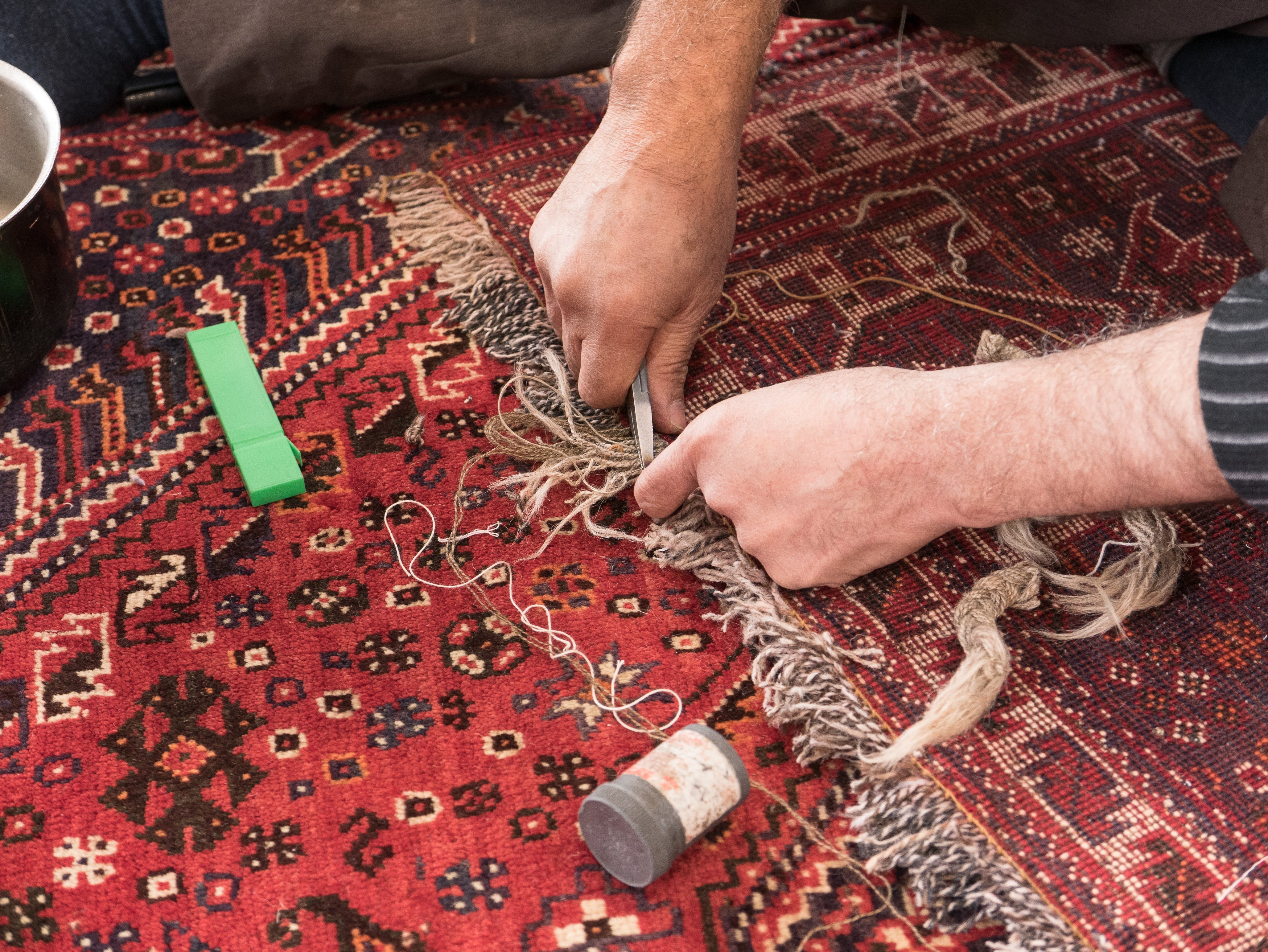
- Handwork: on a genuine Oriental rug the pattern is just as clear on the back as on the front; the fringes are the ends of the warp threads, not sewn on.
- Material: new wool is hard-wearing and dirt-repellent; silk is finer, more lustrous and more delicate.
- Knot density: more knots per m² mean finer patterns and a longer time at the loom – but not automatically the better rug for your room.
- Condition of older pieces: cleaned, restored or unrestored – we describe this for every rug.
- Size: measure the room first. Our guide to rug sizes covers living rooms, dining rooms, bedrooms and hallways.
Oriental rugs at Zomorrodi in Düsseldorf
We have been dealing in hand-knotted Oriental rugs in Düsseldorf since 1979. Every rug in this collection is a one-of-a-kind piece, shown with photos, dimensions, material and origin. If you would like to see a rug before you buy, visit our gallery on Heinrich-Heine-Allee or, anywhere in the Düsseldorf area, have rugs brought to your home with no obligation. Rugs ordered online can stay on your floor on approval for 14 days.
Frequently asked questions about Oriental rugs
What is an Oriental rug?
An Oriental rug is a hand-knotted or hand-woven rug from the Orient – from Iran, the Caucasus, Turkey, Afghanistan, Pakistan, India or China. The pattern is worked knot by knot by hand, which is why every Oriental rug is a one-of-a-kind piece.
Is a Persian rug the same thing as an Oriental rug?
No. Persian rugs are Oriental rugs from Iran. Every Persian rug is an Oriental rug, but not every Oriental rug is a Persian. Caucasian, Turkish, Afghan and Chinese rugs count as Oriental rugs too.
How do I recognise a genuine, hand-knotted Oriental rug?
By the back: on a hand-made rug the pattern is just as clear on the back as on the front, and the knots are slightly irregular. The fringes are the warp threads continuing beyond the rug, not sewn on afterwards. Machine-made rugs have an even back, often coated with glue or rubber.
What does an Oriental rug cost?
That depends on origin, material, knot density, age, condition and size. At Zomorrodi we show the price and the price per square metre openly for every rug – with no artificial discounts. The range runs from a few hundred euros for small nomadic rugs to five-figure sums for fine silk and collector's pieces.
How do I care for an Oriental rug?
Vacuum regularly without a rotating brush, and blot spills straight away with lukewarm water and a cloth rather than rubbing. Every few years a professional hand wash pays off – we offer this in Düsseldorf. Well cared for, a wool rug will last for decades.
Can I try an Oriental rug at home before buying?
Yes. Rugs ordered online can stay on your floor on trial for 14 days and be returned free of charge. In the Düsseldorf area we will also bring rugs to your home with no obligation.