

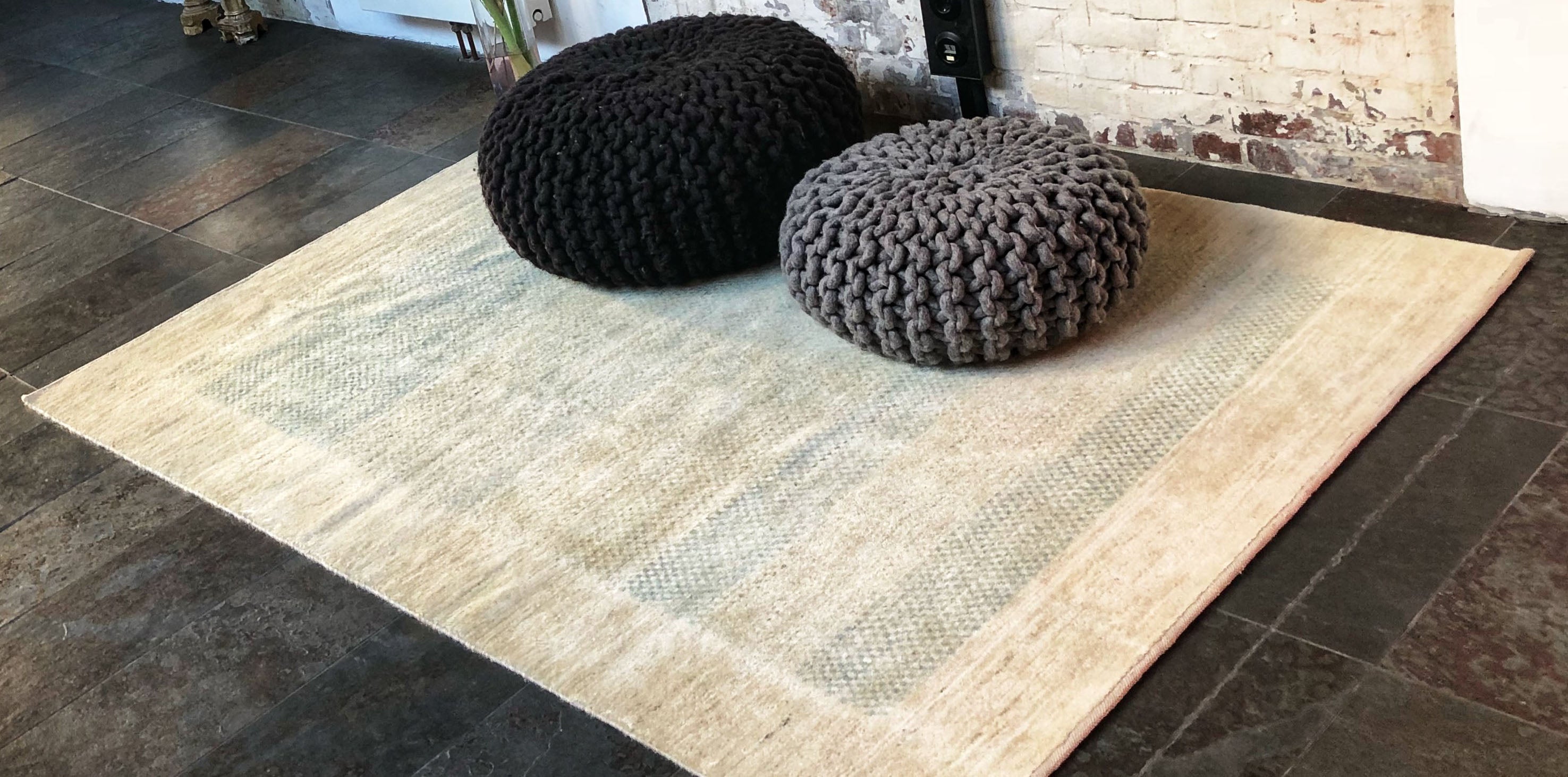
Lori Rugs & Gabbeh Rugs
Gabbeh and Lori rugs are hand-knotted nomadic rugs from southern Iran with a deep, soft wool pile and deliberately simple patterns: blocks of colour, stripes, small animals or figures. They are indestructible, soft and understated – and they make your living spaces warmer and cosier. At Zomorrodi you'll find Persian originals as well as new Gabbehs from Pakistan and India, every one a one-of-a-kind piece.
Lori rugs & Gabbeh rugs at a glance
- Origin: Southern Iran (Fars province, Zagros Mountains); the nomadic Lori and Qashqai tribes; newer pieces also from Pakistan and India
- Material: hand-spun new wool, often dyed with plant dyes; warp of wool or cotton
- Pile: high and dense, and therefore soft and warm
- Pattern: pared back: single- or multi-coloured fields, stripes, small animal and human figures
- Interior style: suits Scandinavian, modern and minimalist interiors
- Price: small Lori from approx. 350 €, large Gabbeh in the low four figures
What is the difference between Gabbeh and Lori?
Both come from the same region and the same tradition. Gabbeh (Persian for “raw” or “natural”) describes the coarsely knotted, high-pile nomadic rug with just a few large blocks of colour. Lori rugs come from the Lori tribes and are usually knotted a little more finely, often with stripes or diamond patterns in natural tones. In practice the two terms are frequently used side by side – the boundaries are fluid.
Why a Gabbeh works so well in modern rooms
A Gabbeh is the opposite of the intricately patterned Persian rug: few colours, plenty of calm, a clear expanse. That is why it works with pale wood, concrete, linen and plain furniture just as well as in a colourful period flat. The hand-spun wool has slight shifts in colour (abrash) that make the rug feel alive without being restless.
The dense, high pile is warm and soft – a Gabbeh is a rug for bare feet, for sitting and for playing. It works well in the living room, the bedroom and the children's room.
Hard-wearing and easy to care for
Nomadic rugs were made for everyday life in a tent. The natural oil in new wool (lanolin) repels dirt, and stains can usually be blotted away with lukewarm water. Regular vacuuming is enough; every few years we recommend a professional hand wash.
Frequently asked questions about Gabbeh and Lori rugs
What is a Gabbeh rug?
A Gabbeh is a hand-knotted nomadic rug from southern Iran with a deep, soft wool pile and simple, large-scale patterns. The word Gabbeh means something close to “raw” or “natural”. Today Gabbehs are also knotted in Pakistan and India, following the Persian model.
What is the difference between a Gabbeh and a Lori?
Both are nomadic rugs from the same region. Gabbehs are coarsely knotted and show large areas of colour, while Lori rugs are usually a little finer and often striped or patterned with diamonds. The two names are frequently used side by side.
Does a Gabbeh suit a modern interior?
Yes, very well indeed. With their pared-back patterns and natural tones, Gabbehs sit happily in Scandinavian, minimalist and modern rooms – anywhere a classic Persian rug would look too busy.
Is a Gabbeh suitable for children's rooms and pets?
Yes. The deep wool pile is soft and warm, and wool is naturally dirt-repellent and easy to look after. Crumbs and pet hair simply vacuum away.
What does a Gabbeh rug cost?
Small Lori and Gabbeh rugs start at around €350 at Zomorrodi, while large formats of about 250 × 300 cm fall into the low four figures. The price depends on size, origin (Persia or Pakistan/India) and knot density, and is shown transparently for every rug.