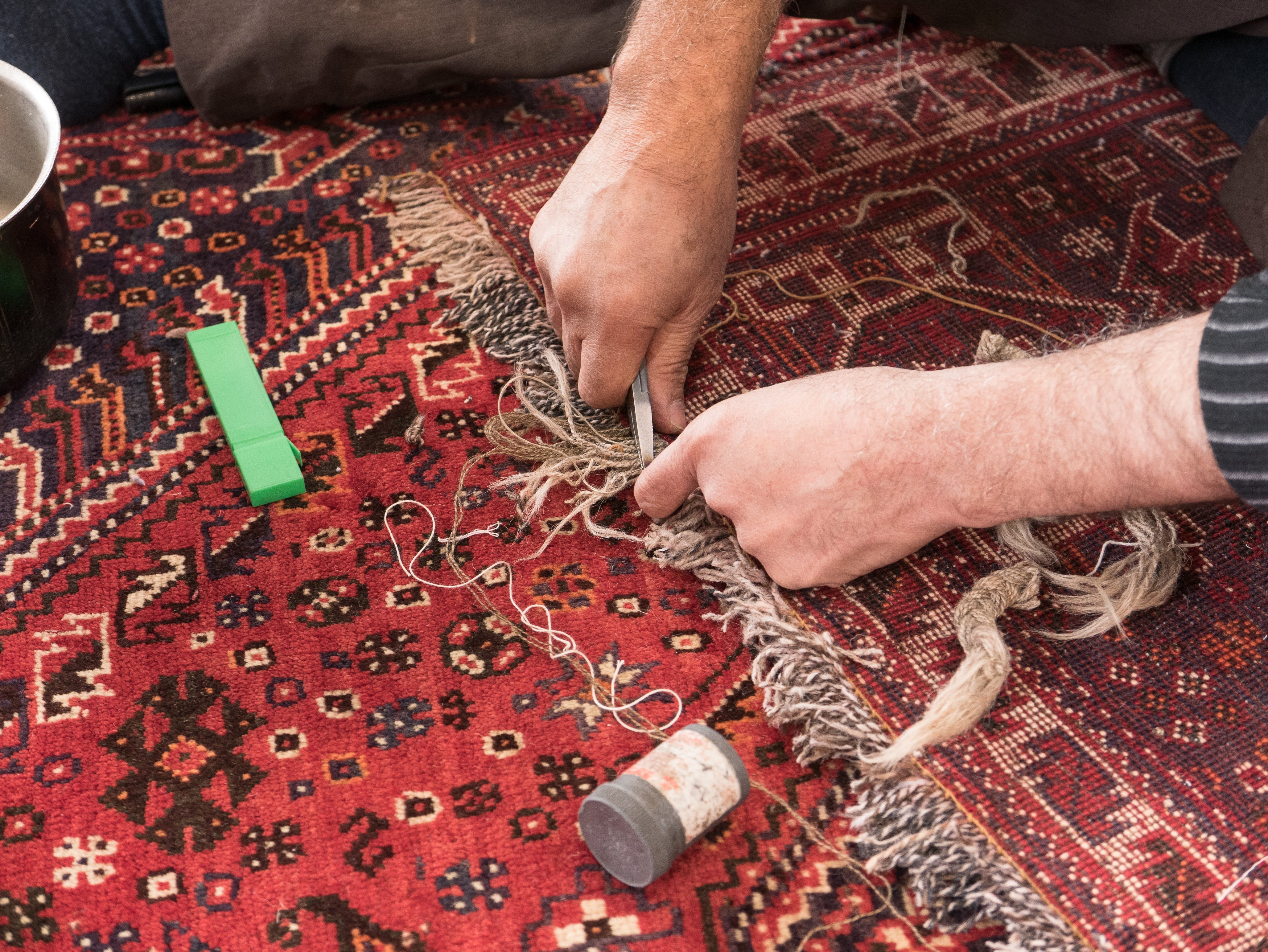
Hand-woven Kelim rugs
What is a hand-woven Kelim rug? – Characteristics and tradition
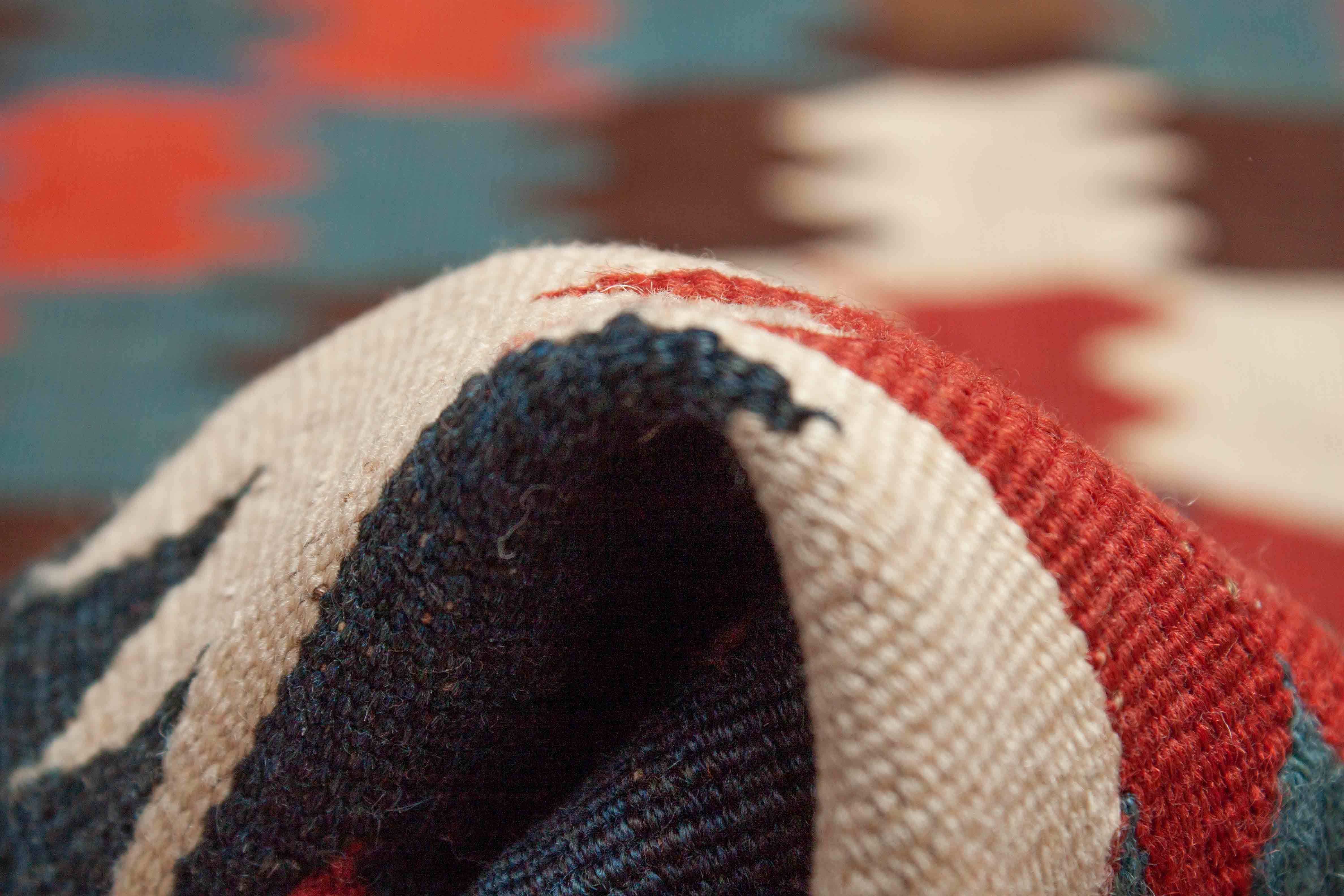
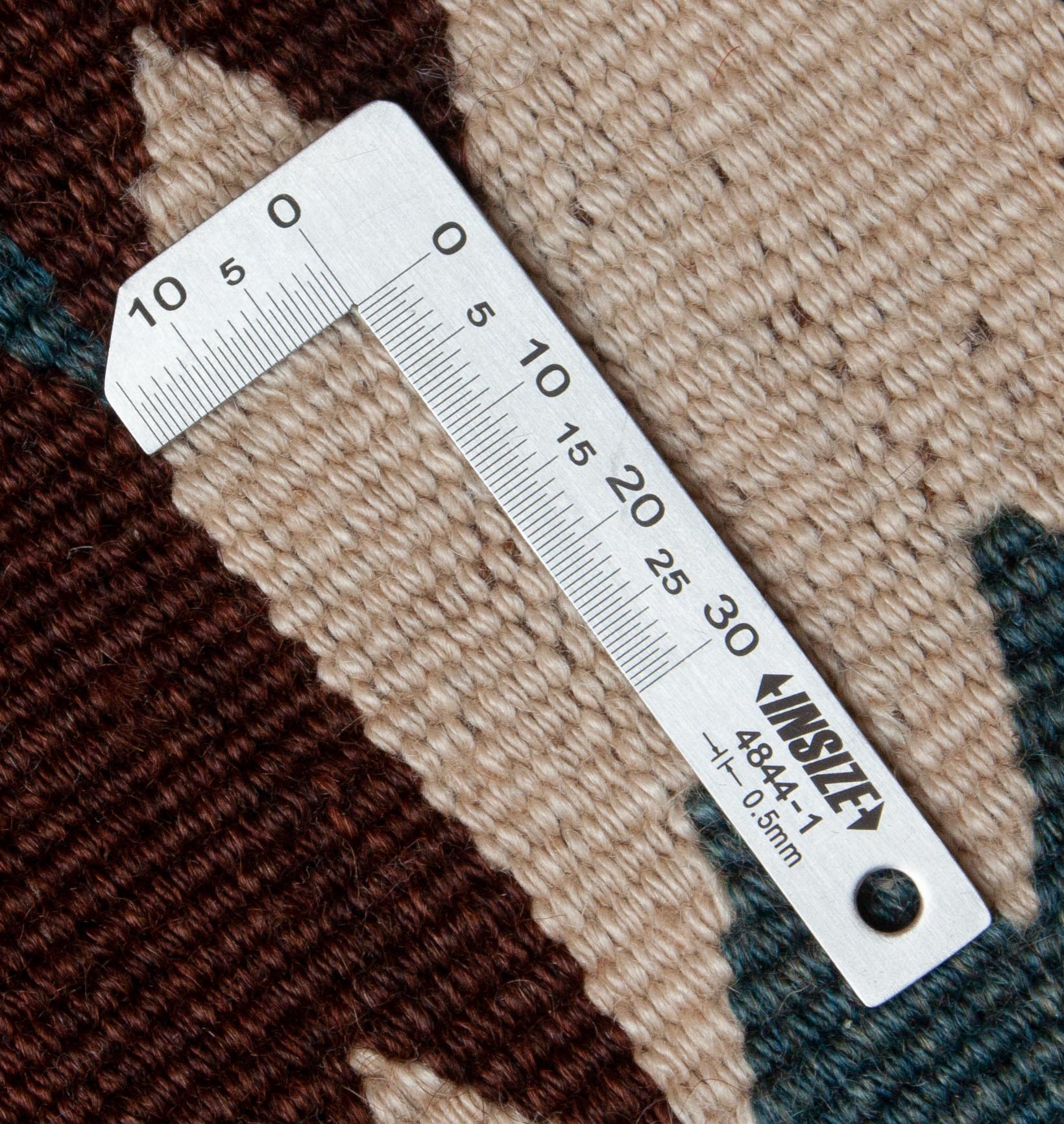
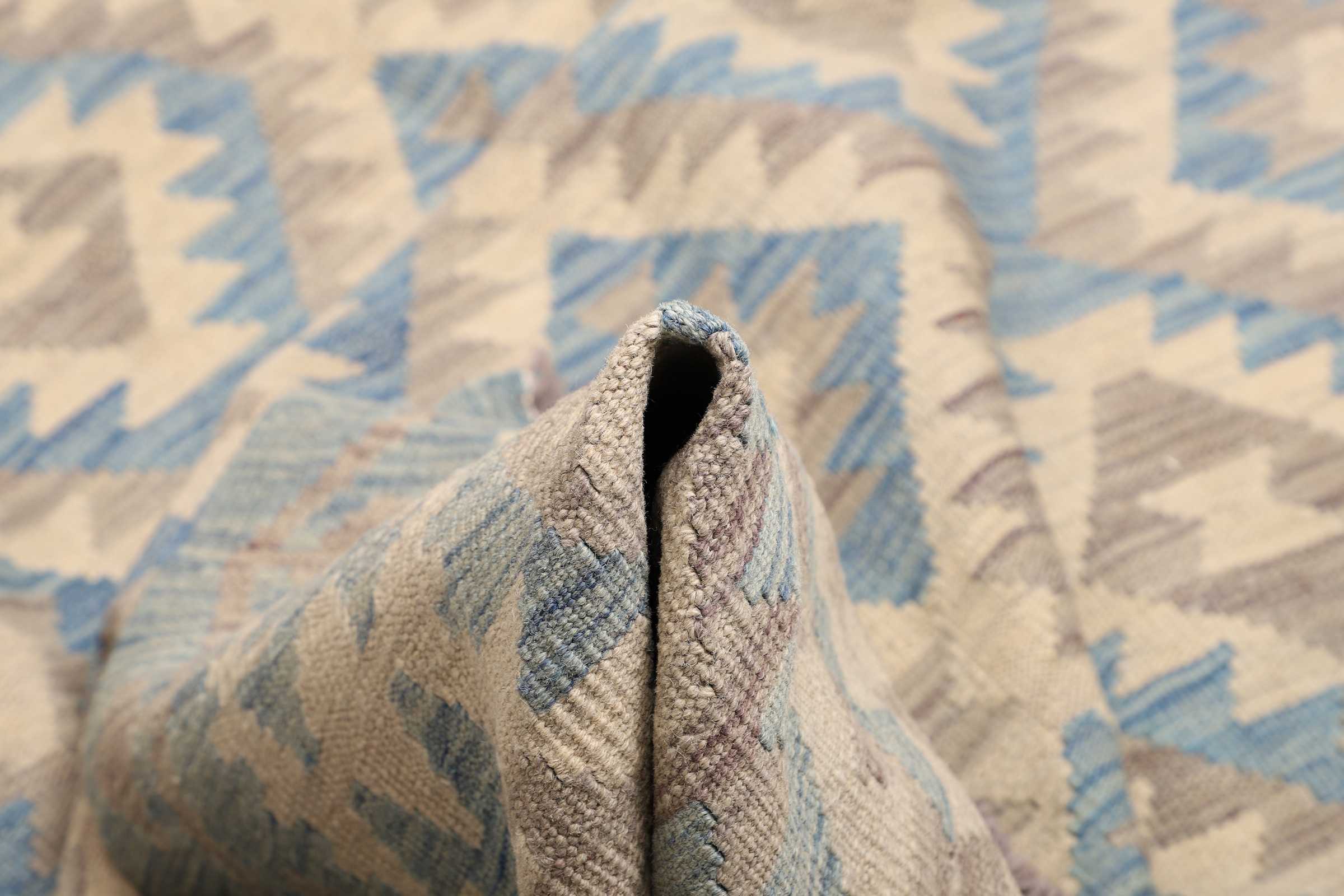
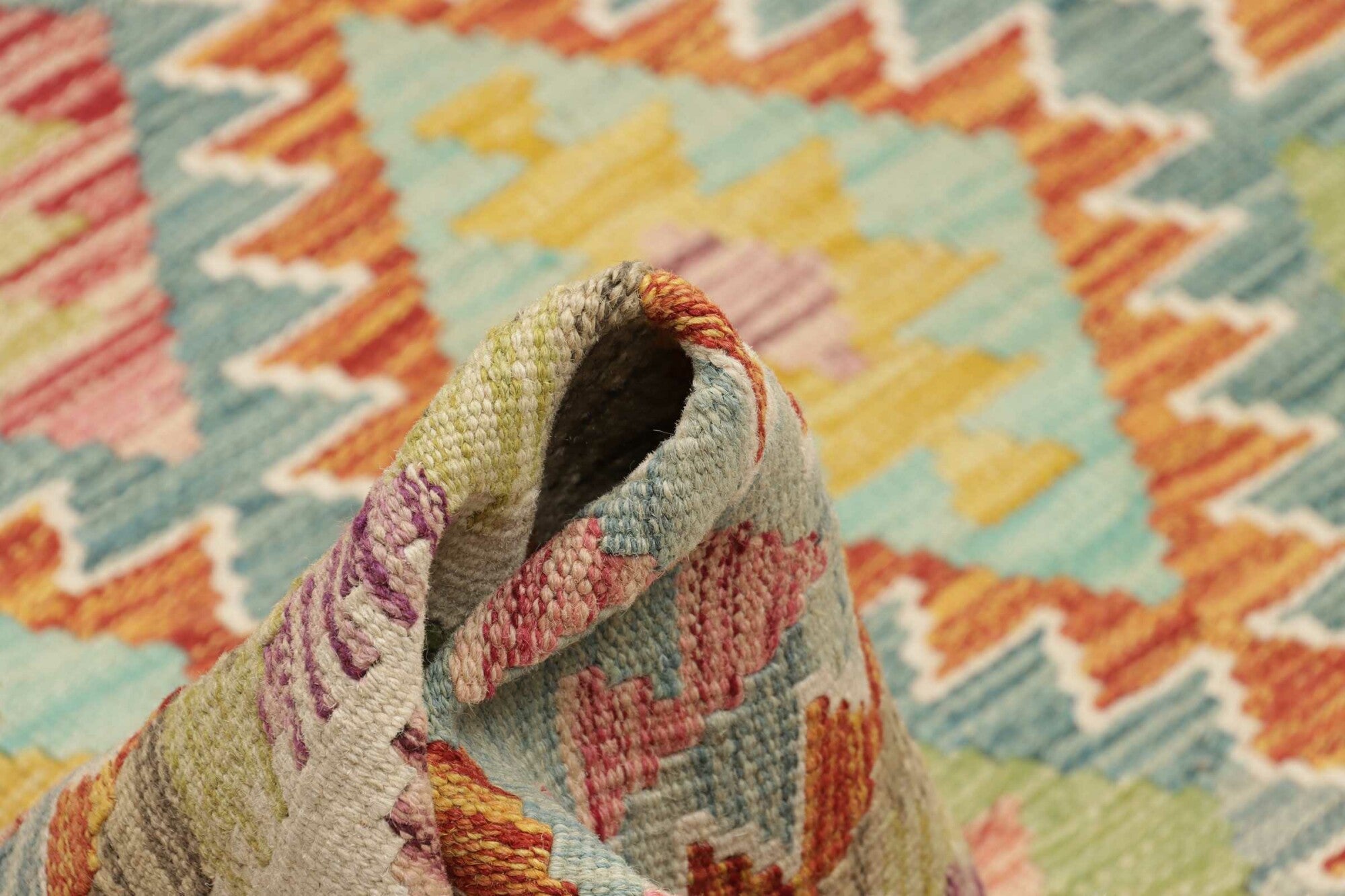
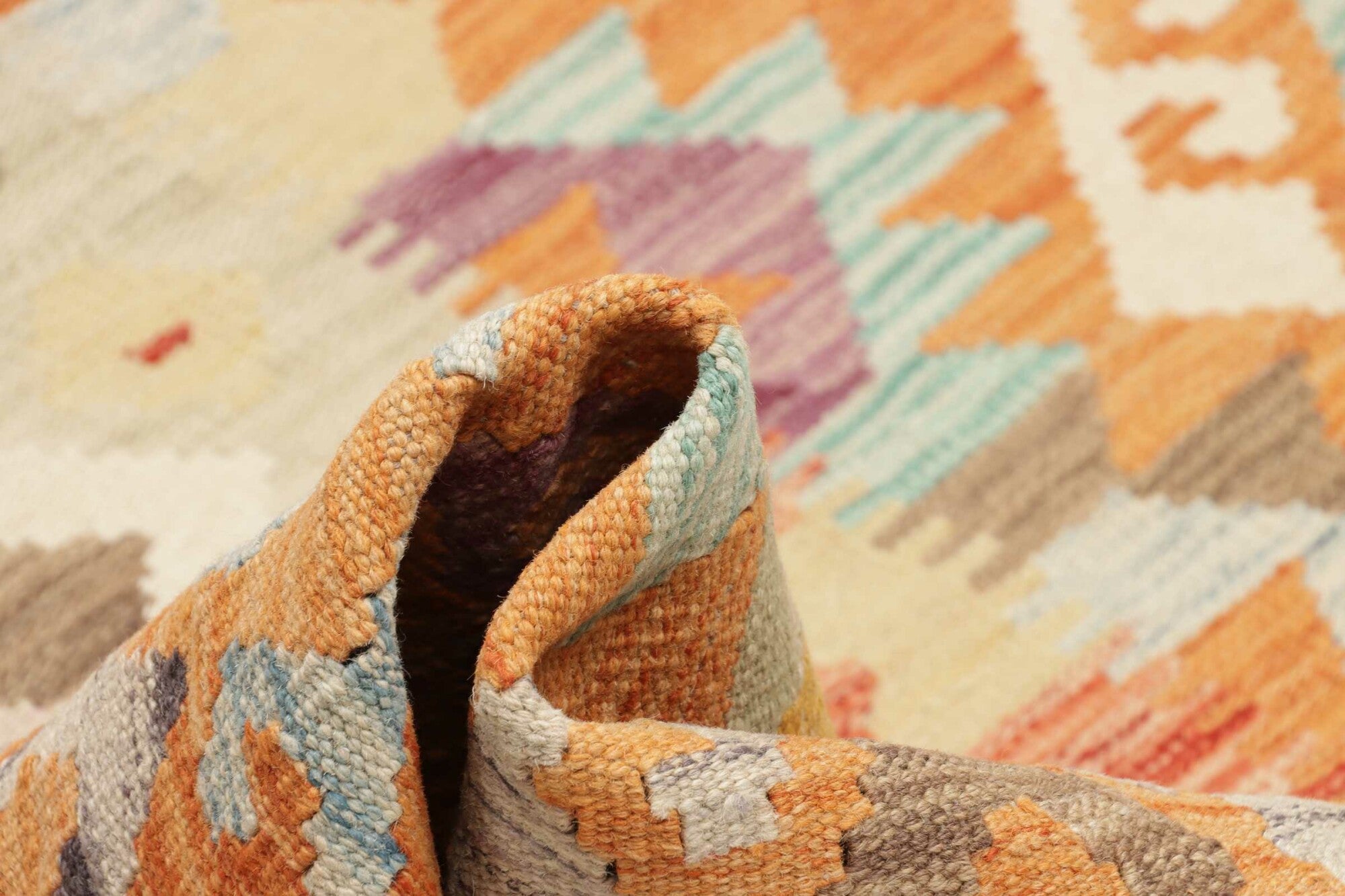
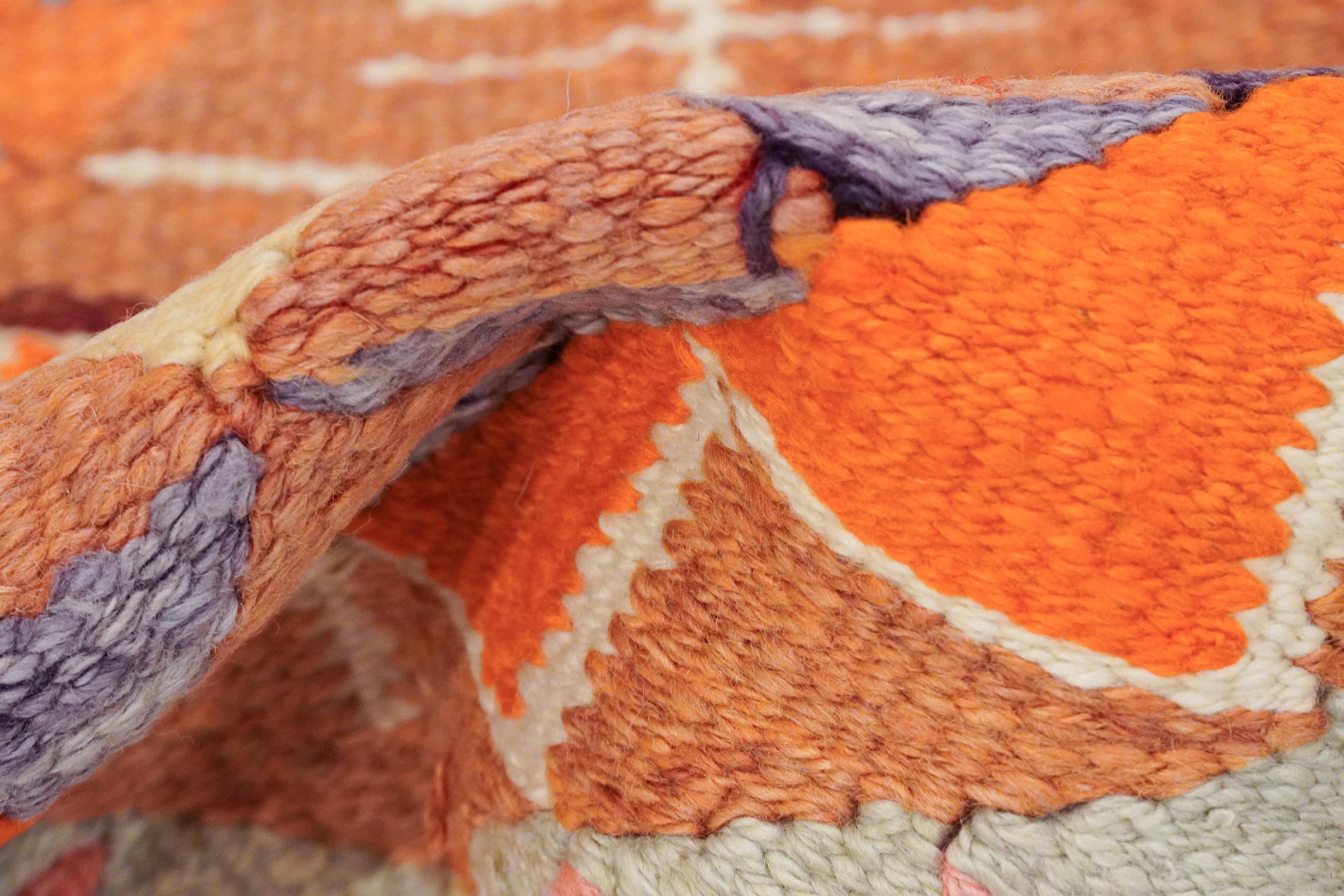
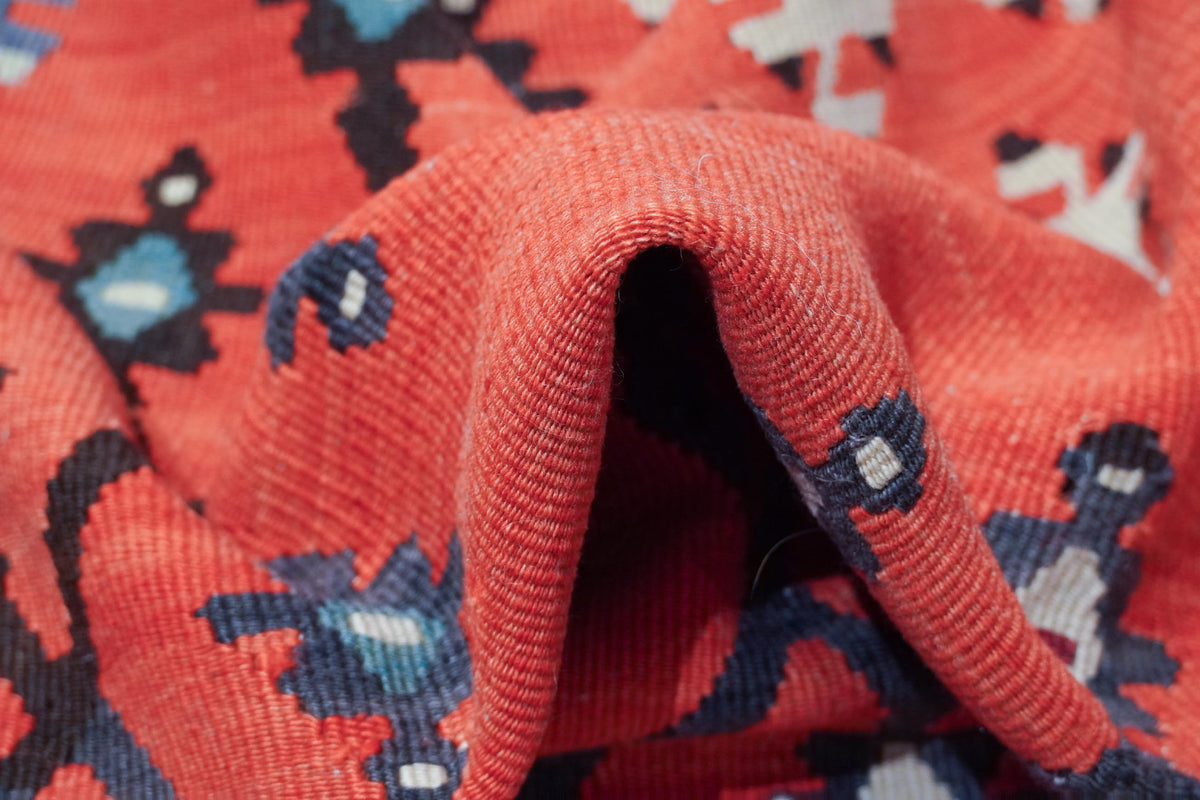
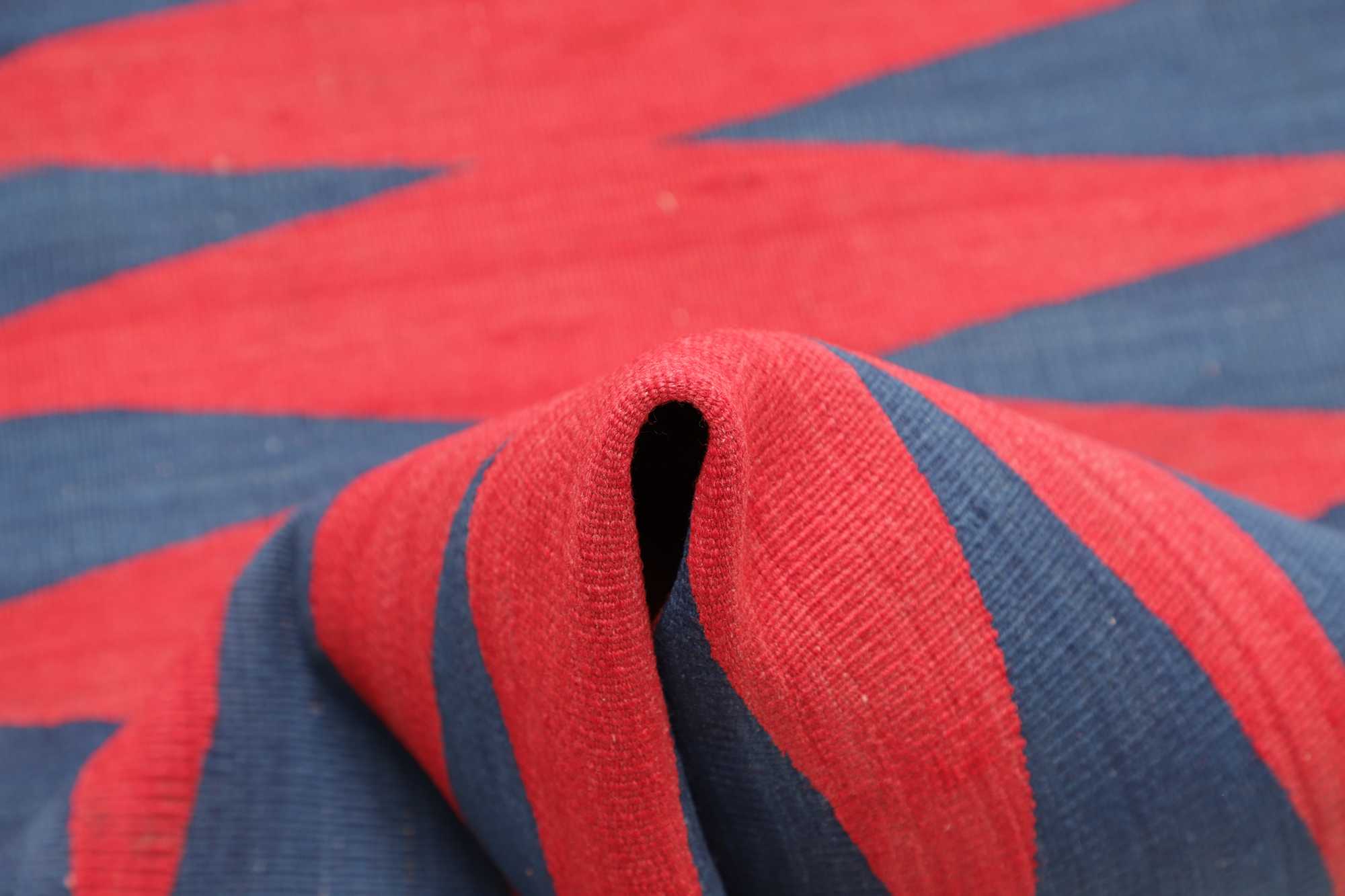
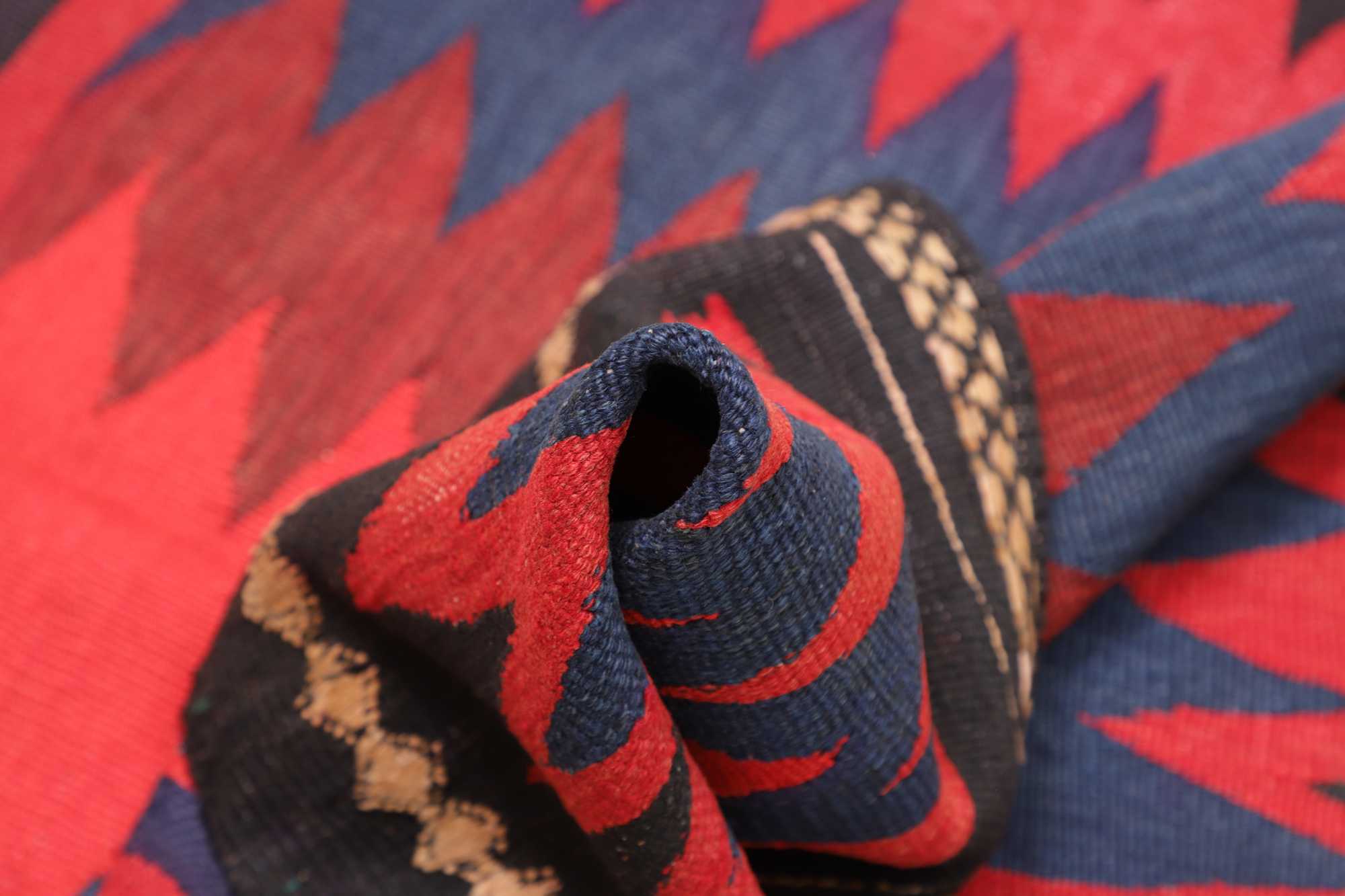
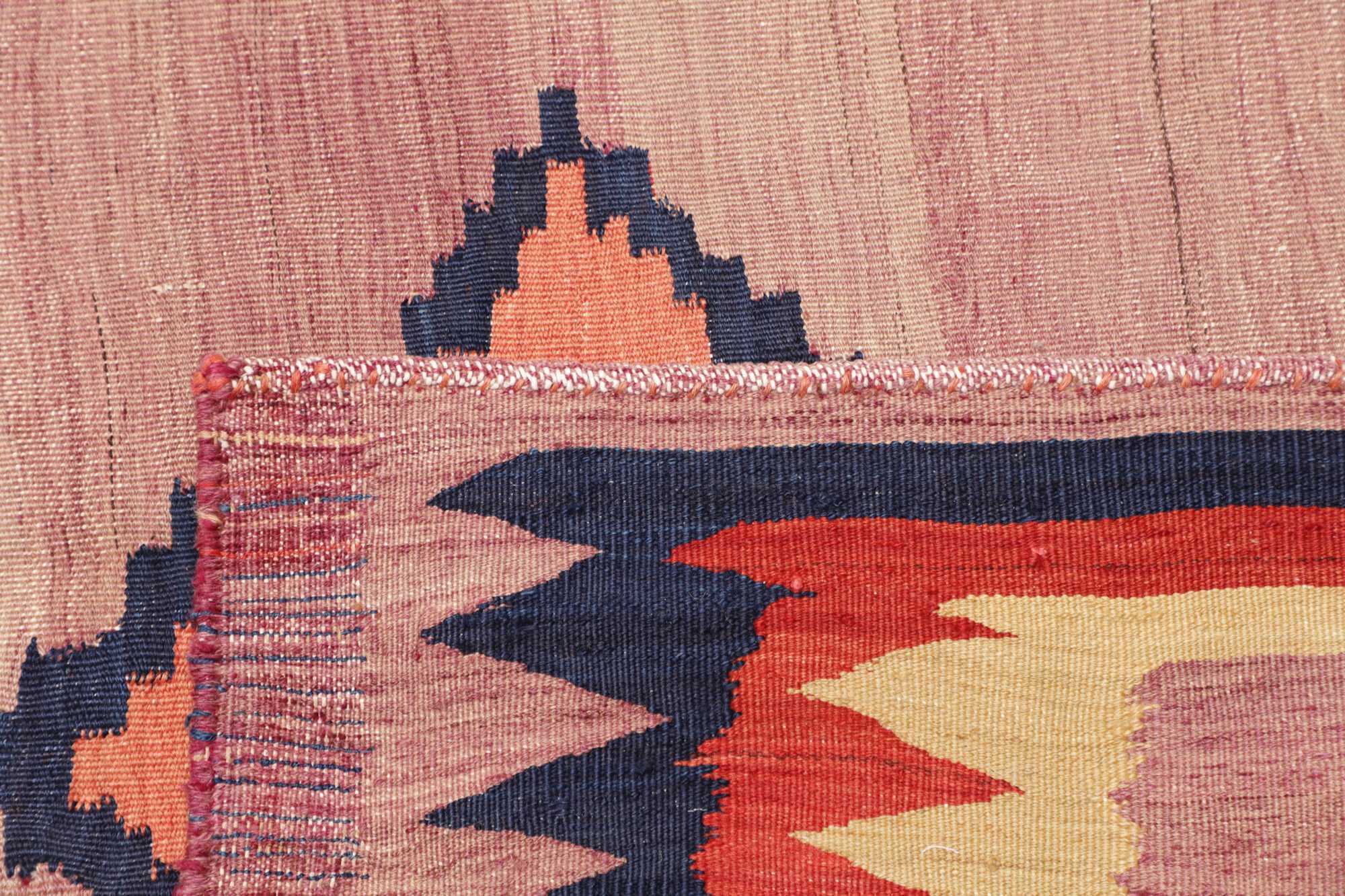
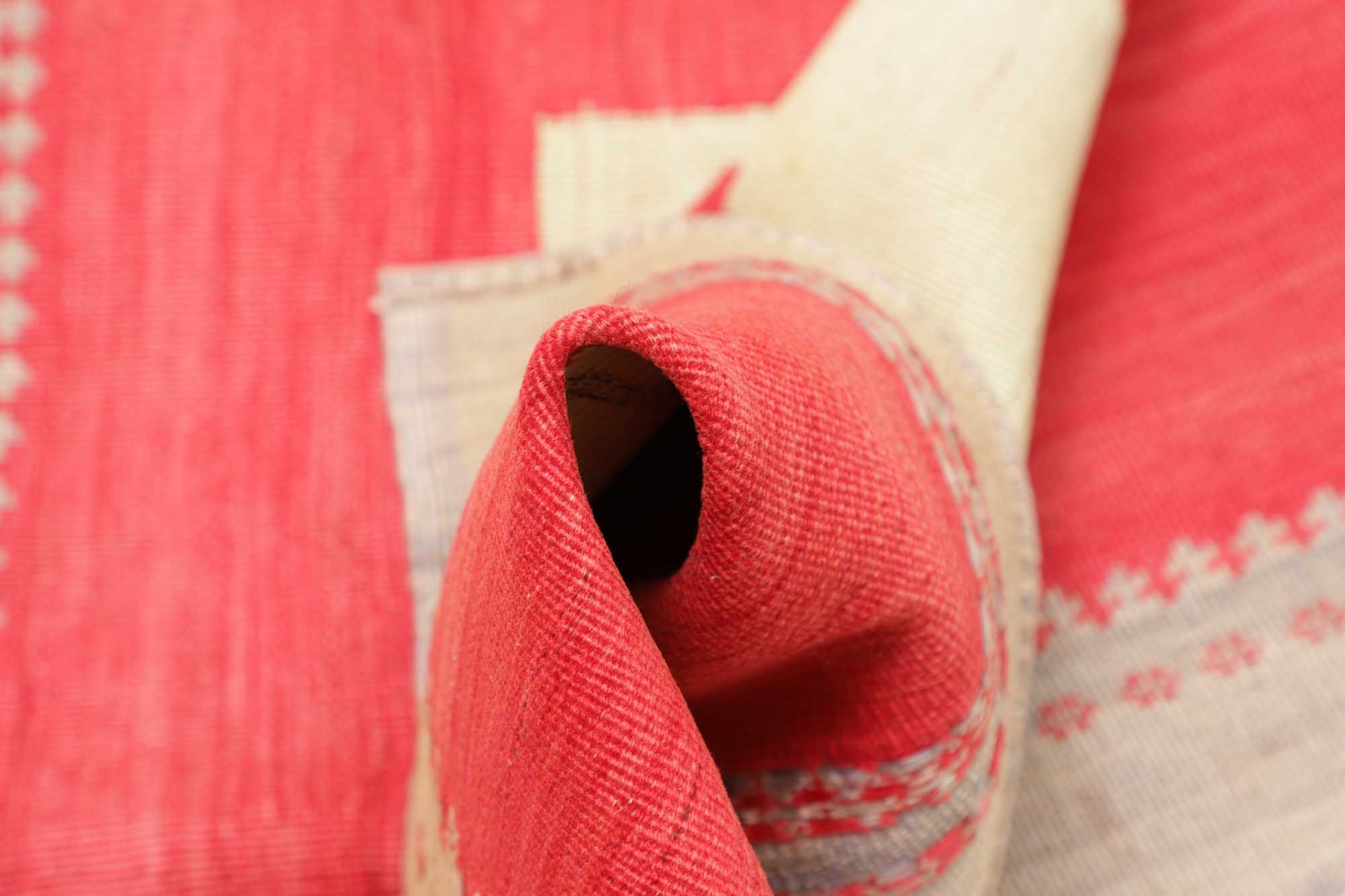
Handcrafted Kelim rugs are distinguished by their distinctive weaving technique, which is deeply rooted in the cultures of Turkey, Persia and North Africa. Unlike hand-knotted rugs, they are created by weaving, which gives them a flat, even structure. These rugs are usually made of wool or cotton, which, together with the artful weaving technique, turns them into a hard-wearing and decorative piece of craftsmanship. Their traditional patterns and lively colours make them a timeless treasure for any home – and you can buy them from us at any time.
The history of hand-woven Kelim rugs – origins and cultural significance
Kelim rugs have their roots in nomadic culture and were originally made by various tribes for everyday use. Today, however, they are known above all for their artful geometric patterns and lively colours. These rugs tell stories and reflect the cultural influences of the regions in which they were made. On the one hand they carry centuries-old traditions, on the other they are now a popular choice for modern interiors.
Designs and patterns – discover the variety
The designs of hand-woven Kelim rugs are wide-ranging, from classic geometric patterns to modern interpretations. You can choose the design that best suits the style of your room, as Kelim rugs are versatile enough to work with almost any decorating style. The patterns are not only decorative, they often carry symbolic meanings handed down by the artisans. That gives every rug a special character of its own.
Choosing materials for hand-woven Kelim rugs – wool, cotton and more
The choice of material shapes both the look and the durability of a hand-woven Kelim rug. Traditionally, Kelim rugs are made from wool or cotton, as these materials are not only hard-wearing but also pleasantly soft. Wool is especially easy to care for, while cotton gives the rug a light texture. Other materials, such as silk or synthetic fibres, can also be used to create different designs and structures.
Caring for hand-woven Kelim rugs – how to keep your rug looking beautiful
A Kelim rug is easy to look after if you follow a few simple steps. Clean it regularly to remove dust and dirt that could damage the fibres. Use a vacuum cleaner on a low setting or a rug cleaner so the fibres are treated gently. If you notice a stain, dab it off straight away with a damp cloth. Storing and covering the rug properly when it is not in use will keep it in good condition for longer.
Why hand-woven Kelim rugs? – Benefits and special qualities
Hand-woven Kelim rugs offer many advantages that make them an excellent choice for any home. They are not only hard-wearing and easy to care for, they also bring a warm, welcoming atmosphere to every room. By choosing a Kelim rug you are choosing a piece of tradition and craftsmanship that gives your room character and style. Kelim rugs are ideal for adding that certain something, and they fit just as well into modern interiors as into traditional ones.
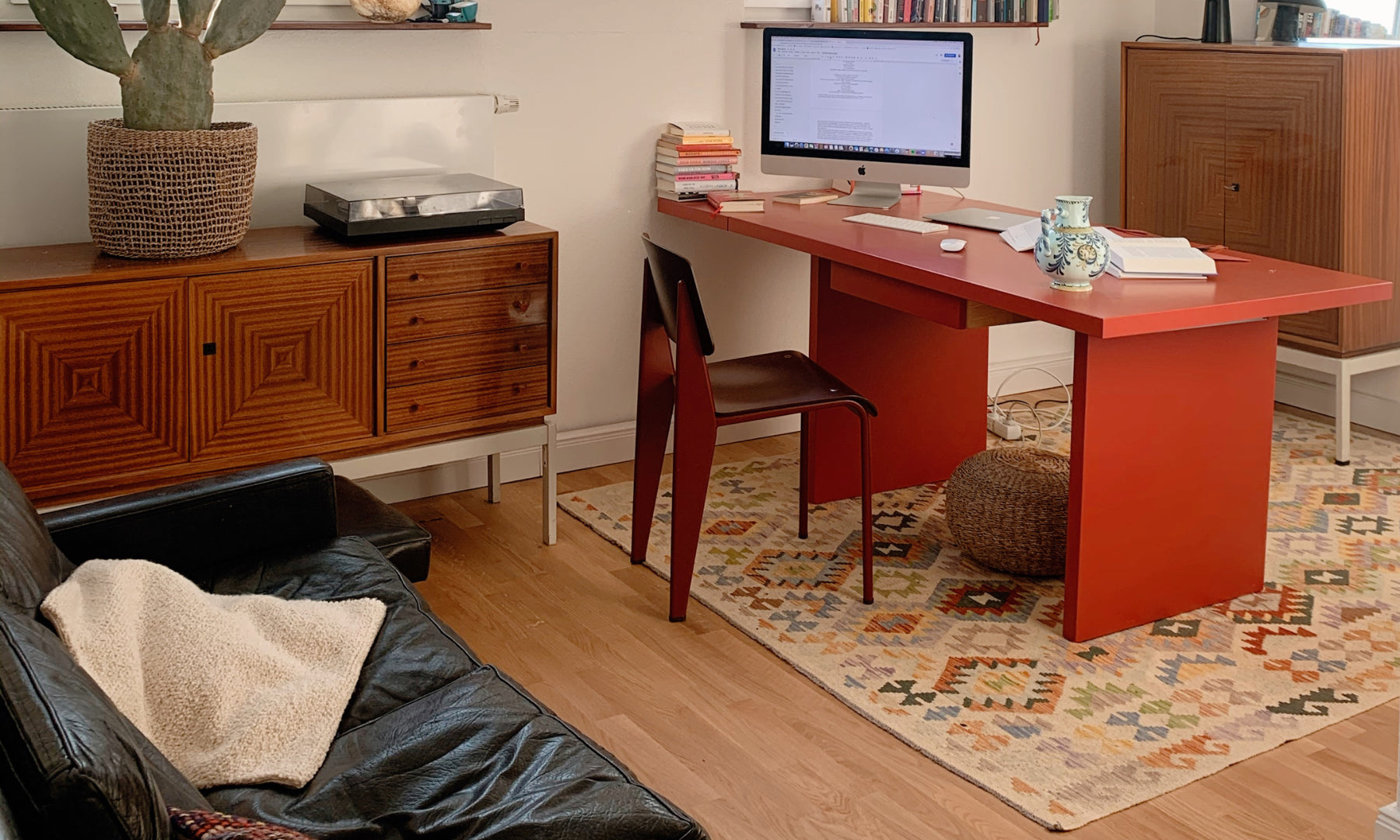

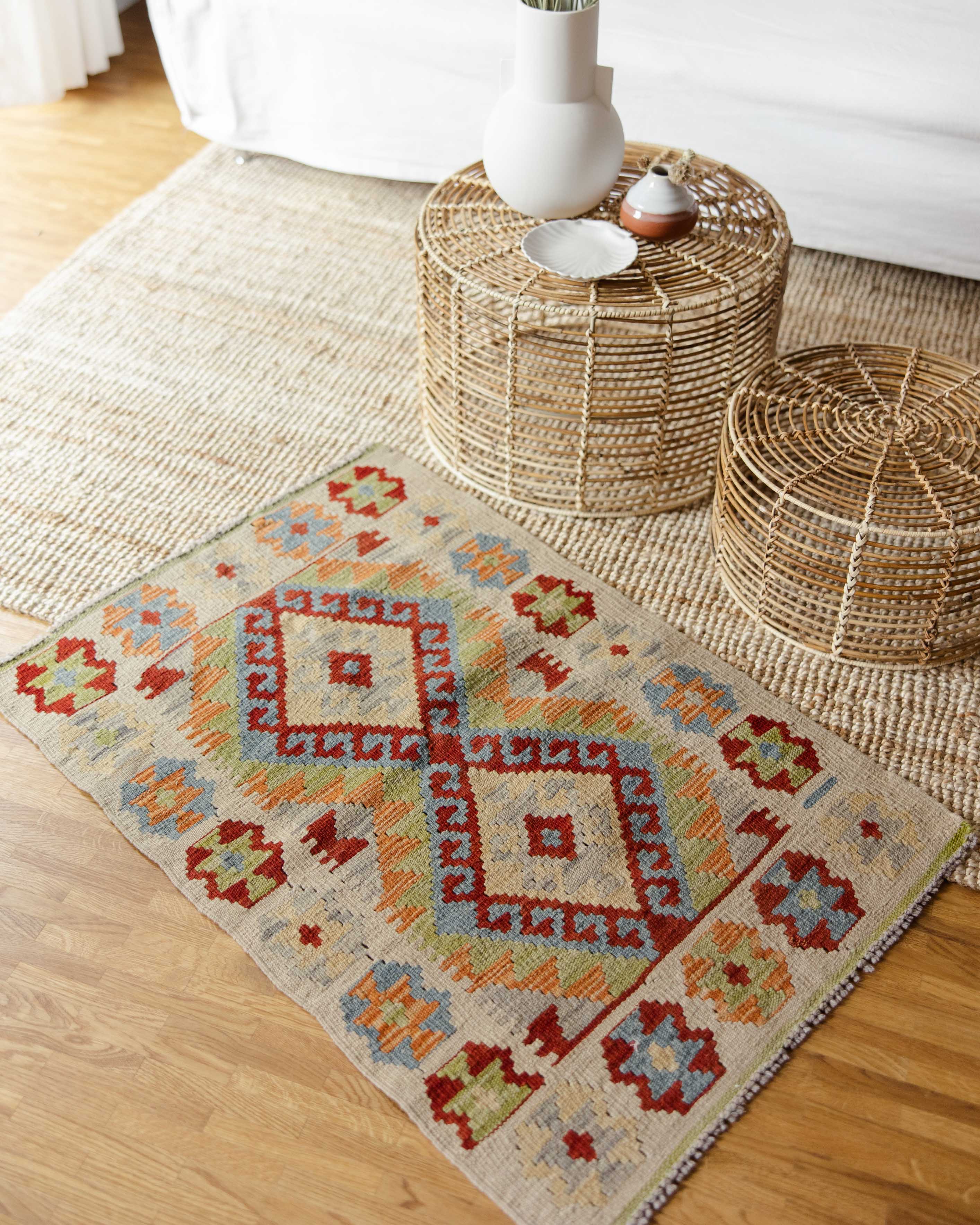
Kelims - hand-woven works of art
Kelims are making a big comeback in the modern home. And rightly so!
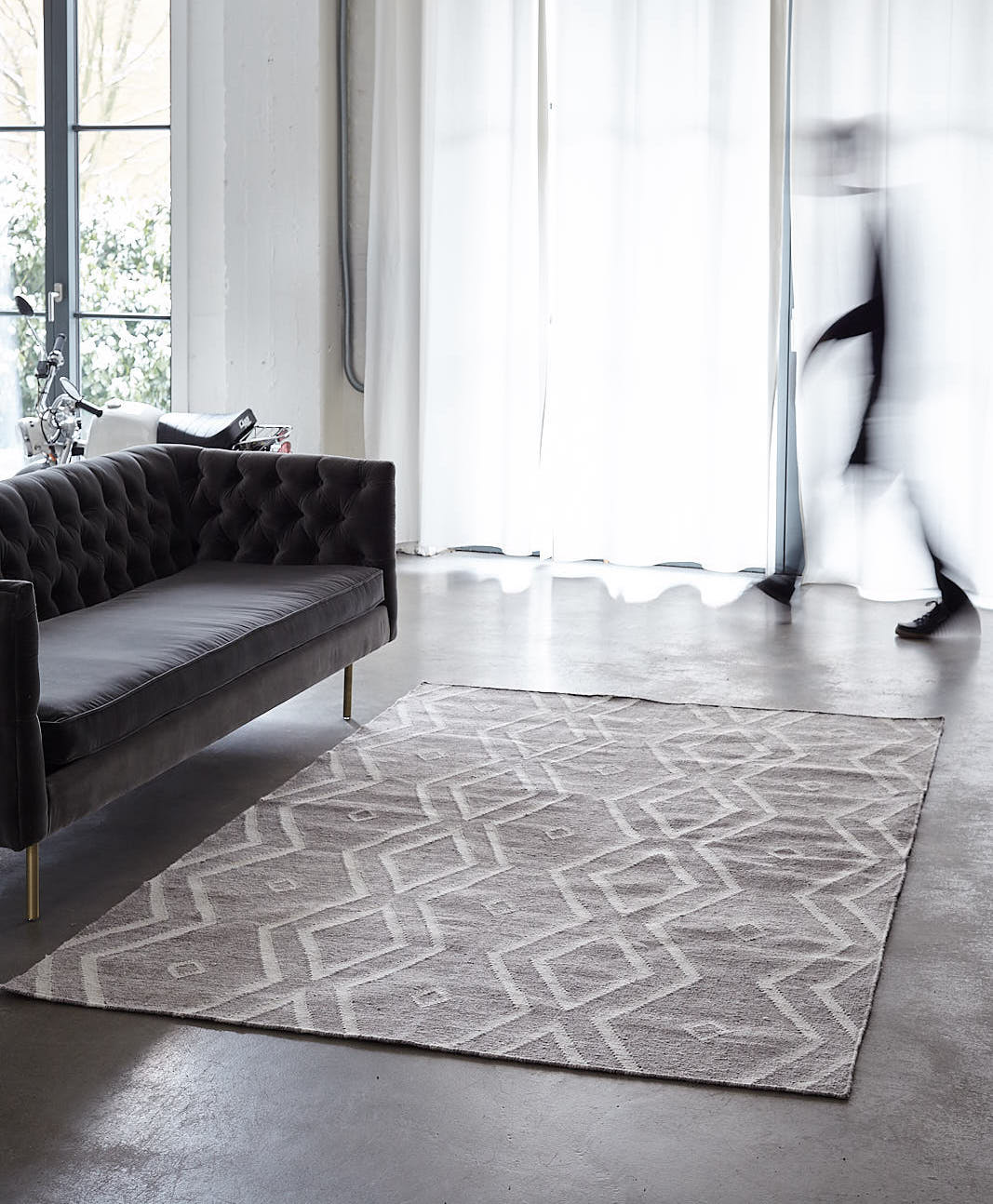
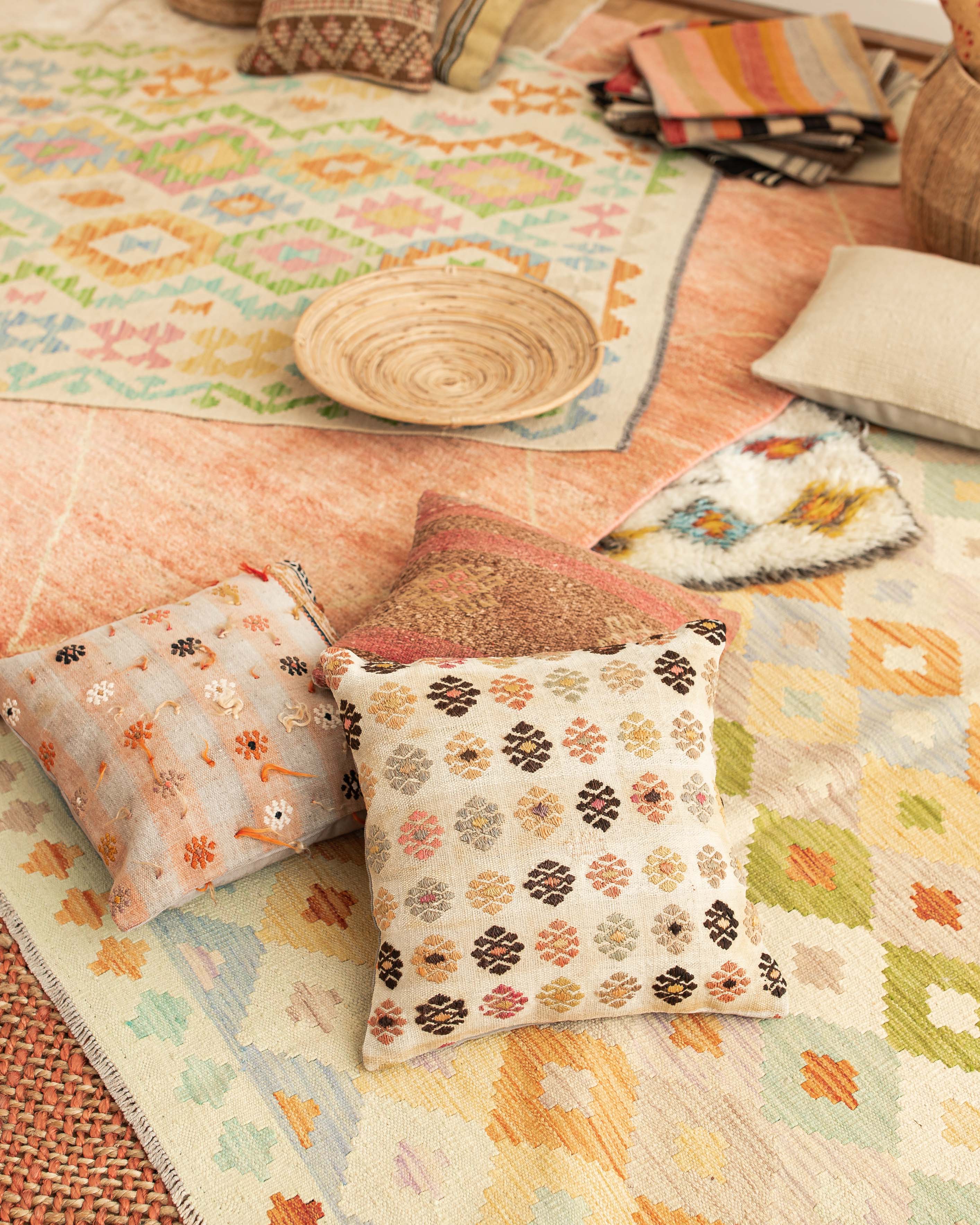
All over the world, these flat-woven rugs and runners are loved for their glowing colours and their unmistakable Oriental patterns. They fill any room with warmth and settle naturally into any style of interior – whether modern, minimalist, ethnic or boho.
What does ‘Kelim’ actually mean?
The word Kelim comes from the Turkish ‘kilim’ and simply translates as rug. What is usually meant by Kelims, though, are very flat-woven rugs made entirely by hand.
Kelim rugs


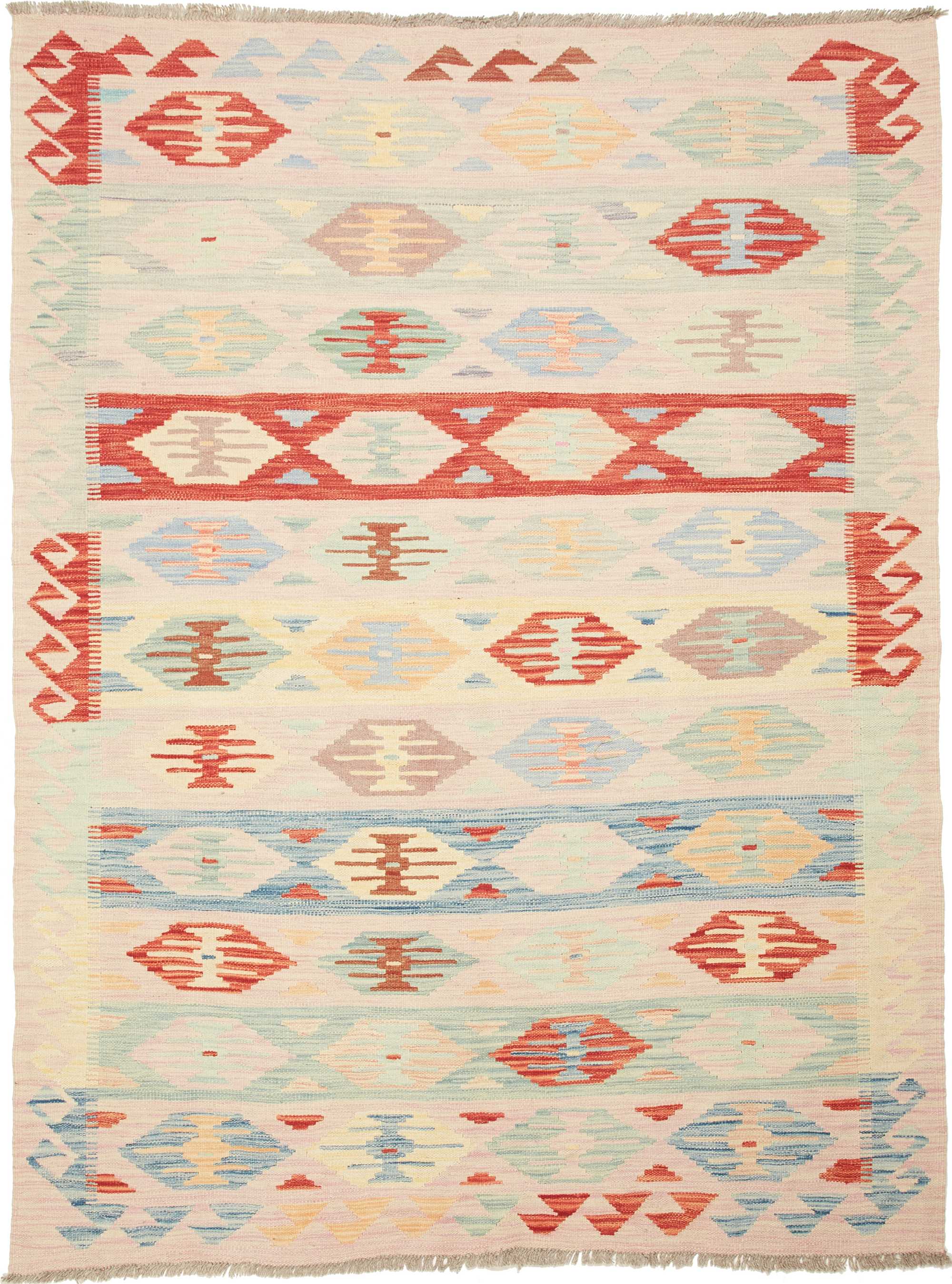
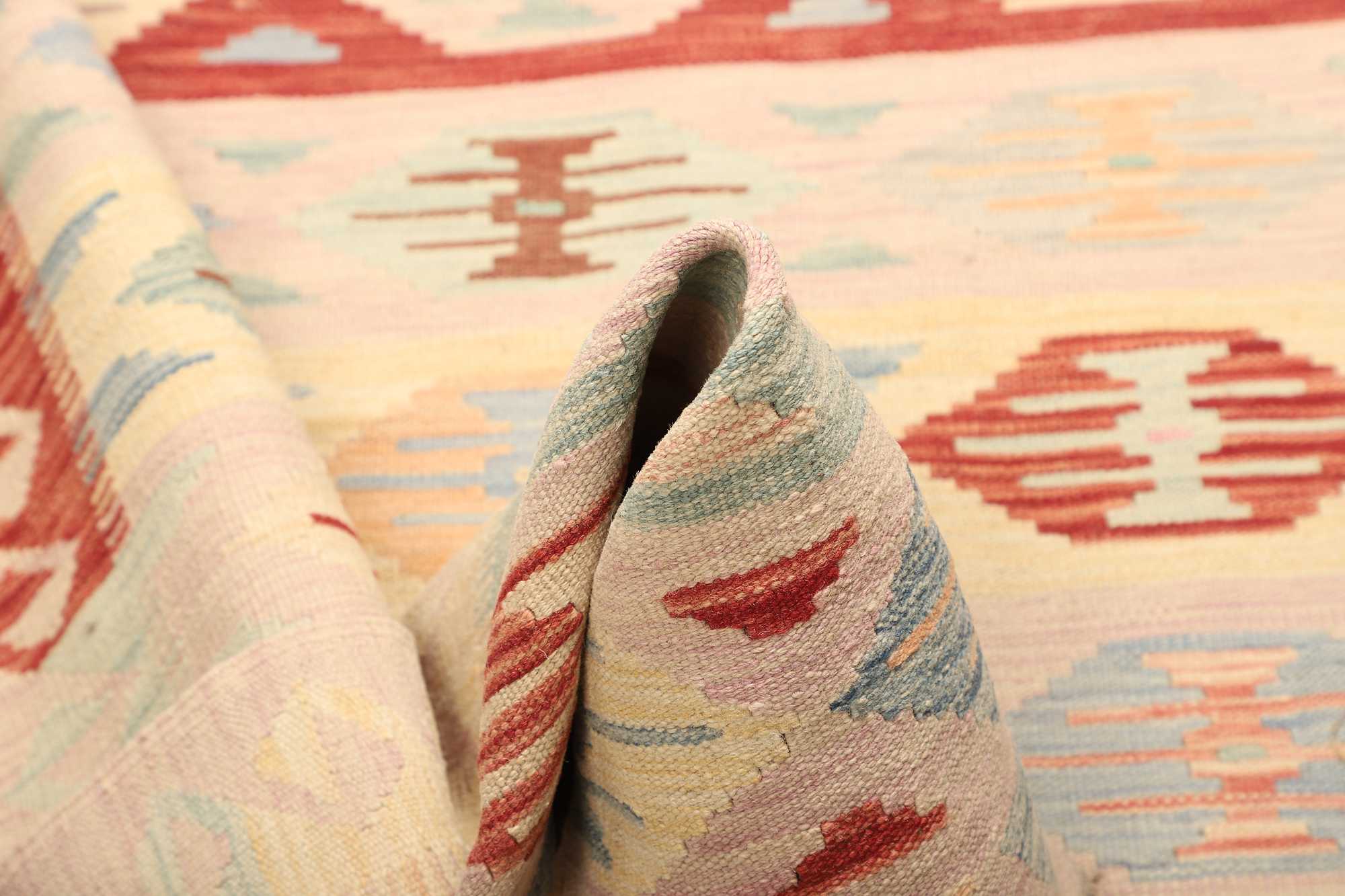
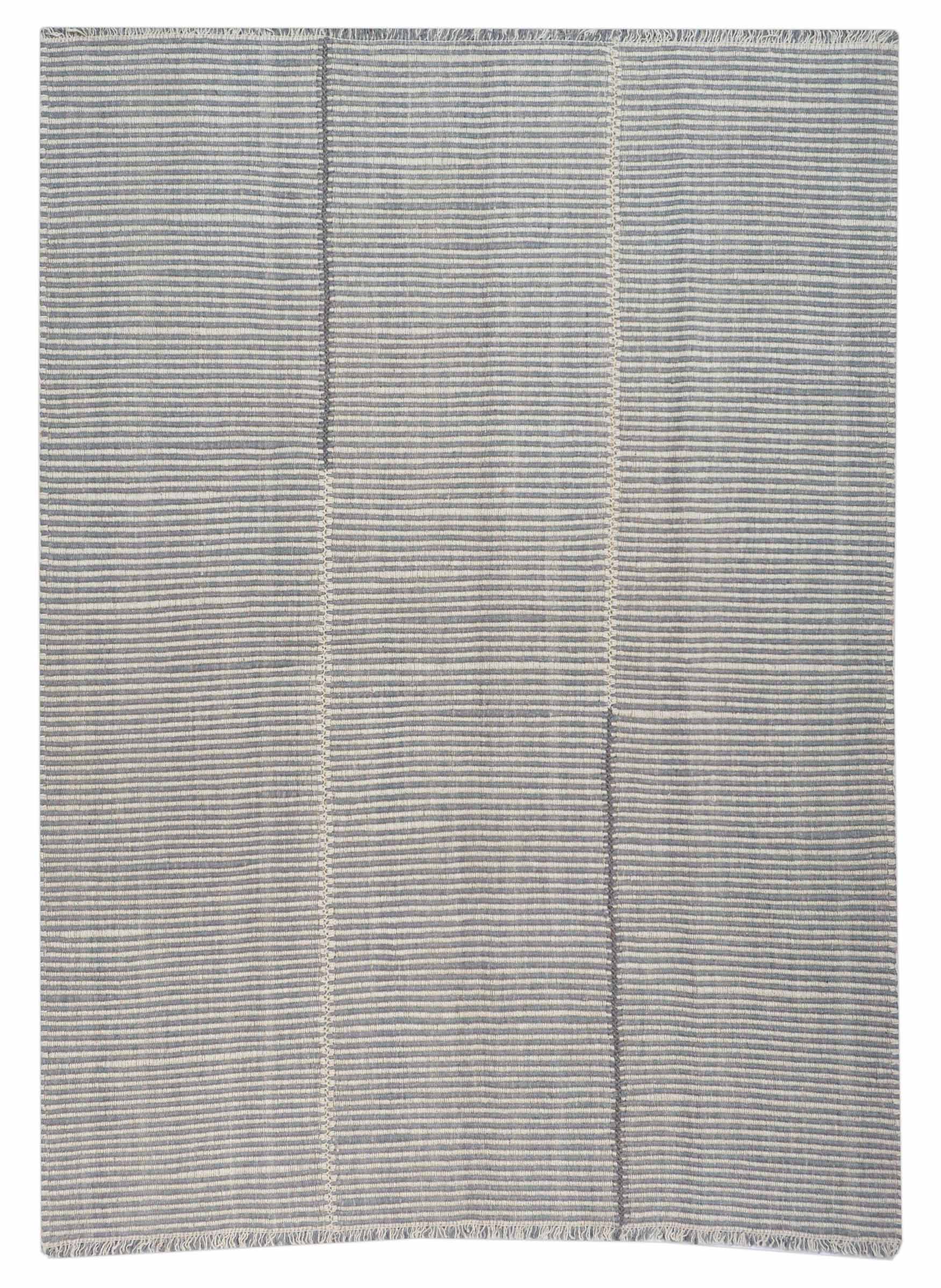
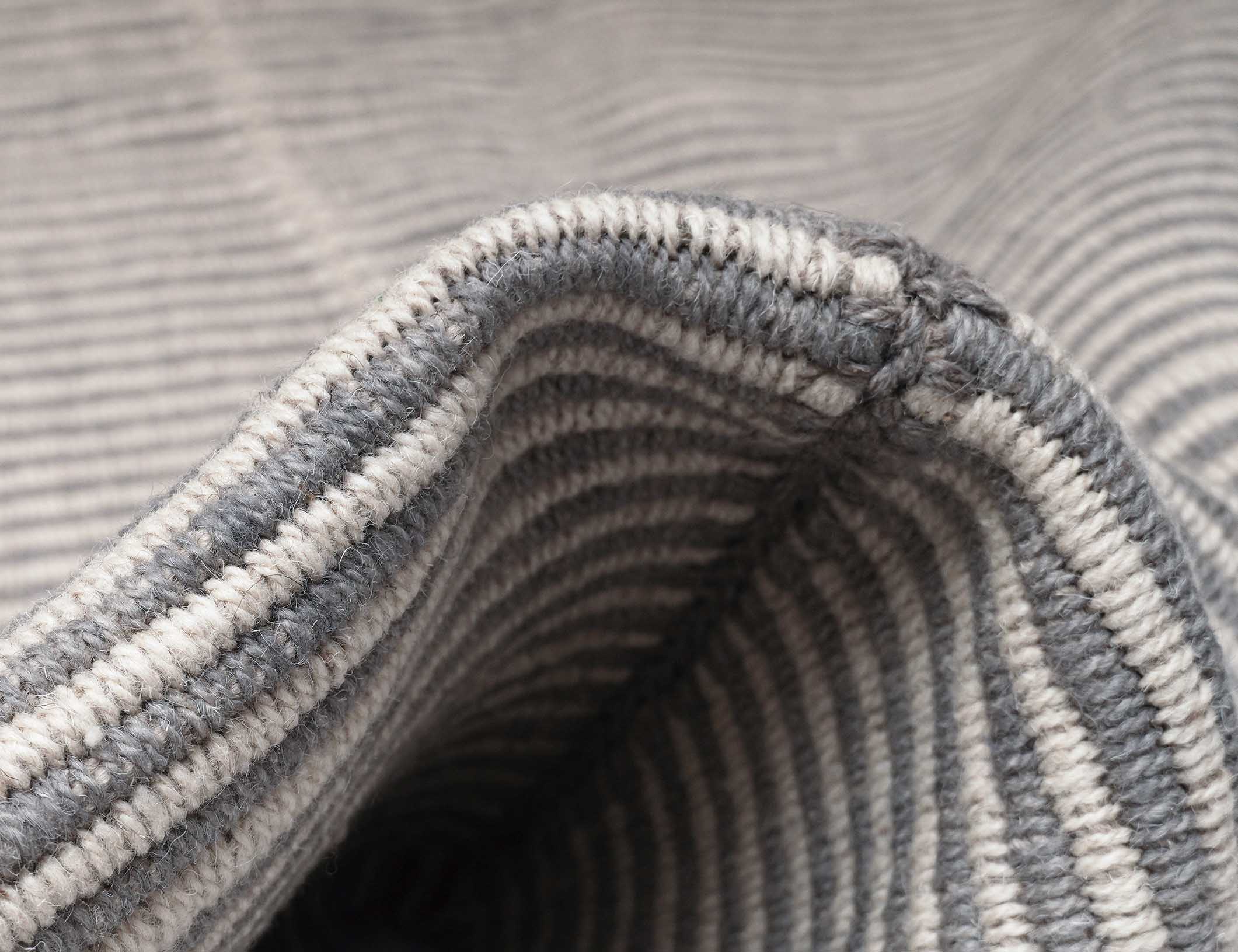
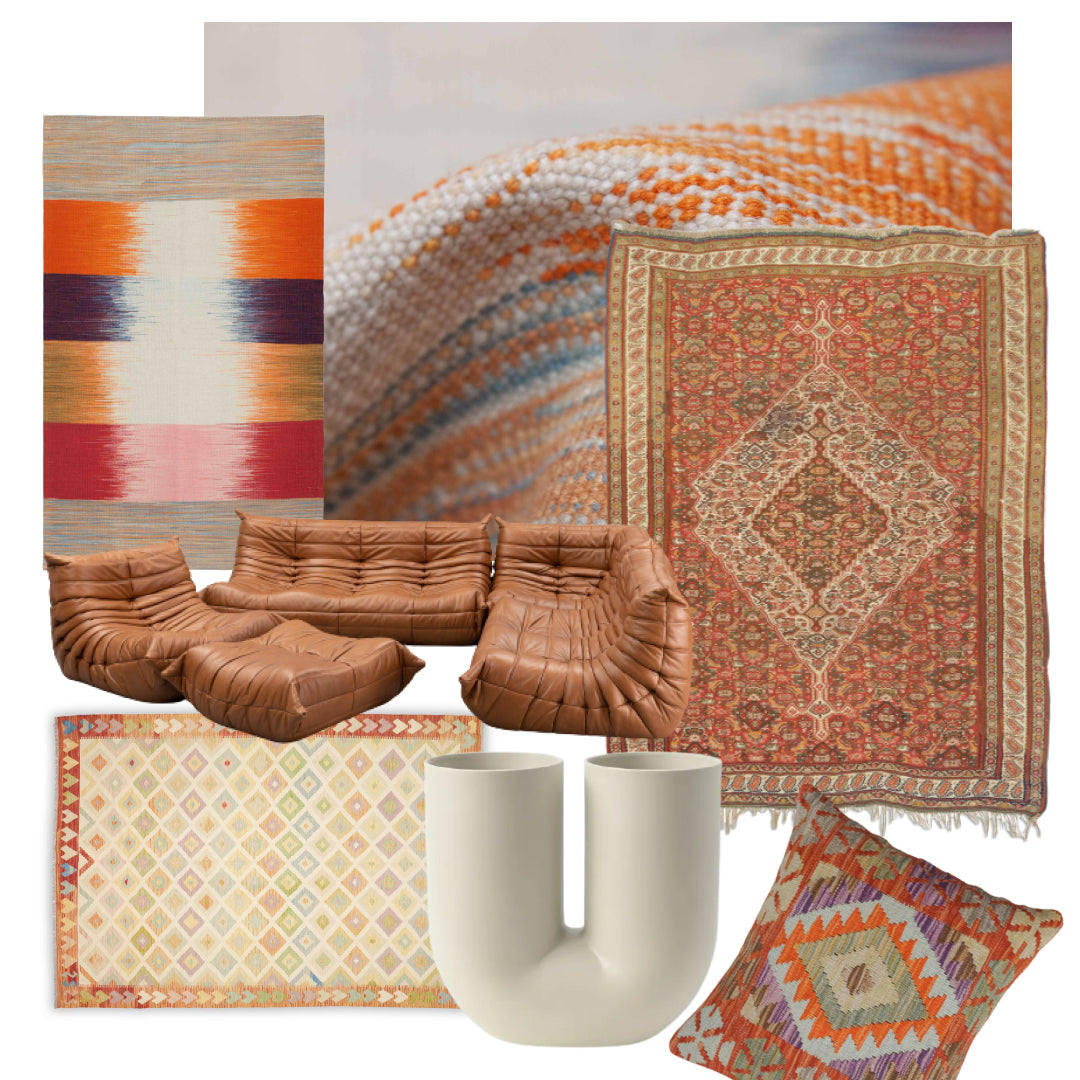
Shop the look
Origin
Especially well known and loved in Europe are Kelims from Turkey, the Caucasus region, Iran, Afghanistan and the Turkmen cultural sphere. In fact, rugs are hand-woven in every country where rugs are knotted.
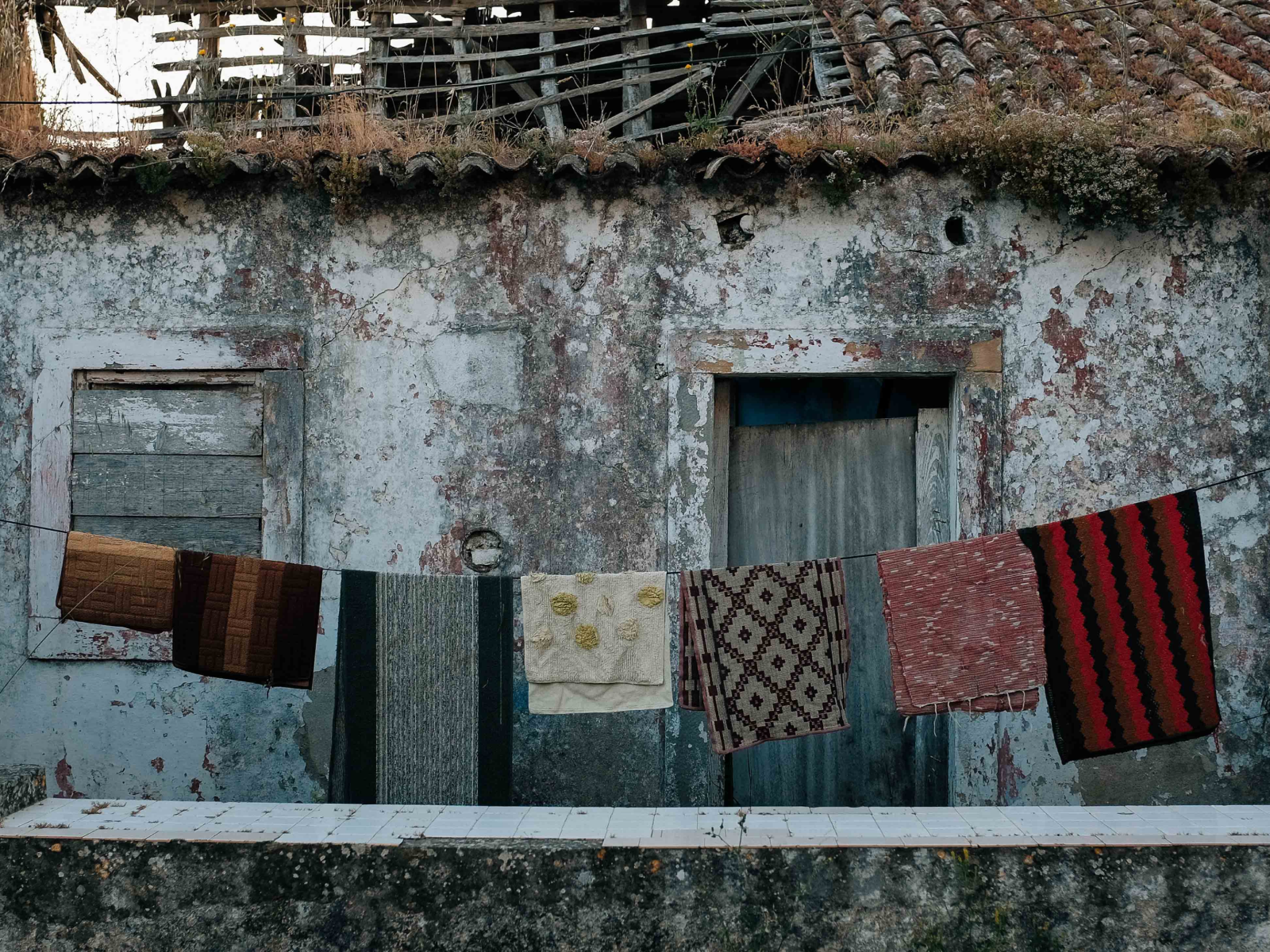
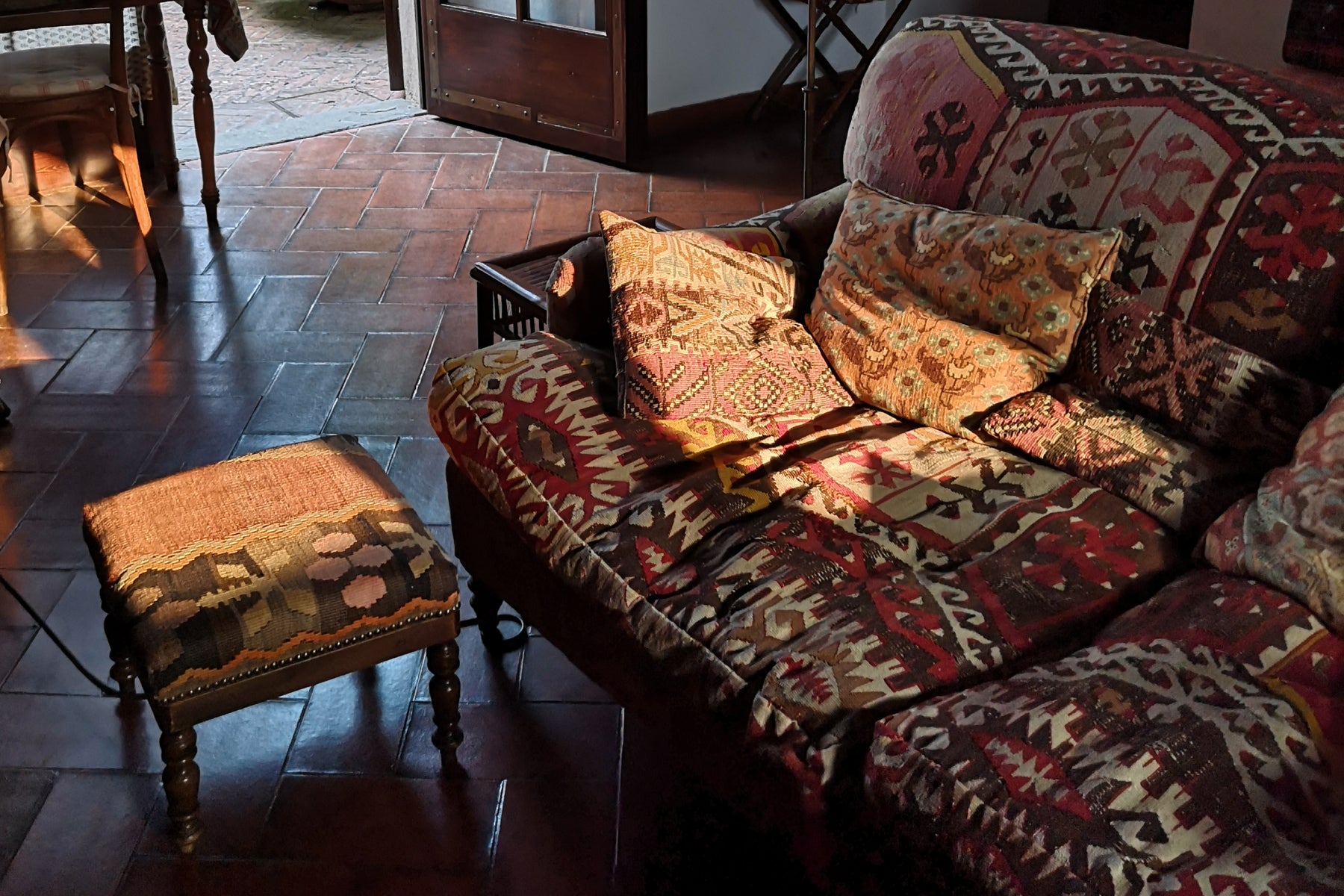
Centuries ago, the Kelims we still love today were made by nomadic tribes in painstaking handwork and played an important part in their everyday lives. They were not used as floor coverings alone, though – they also served as wall hangings, seating mats, cushions and blankets, among other things.
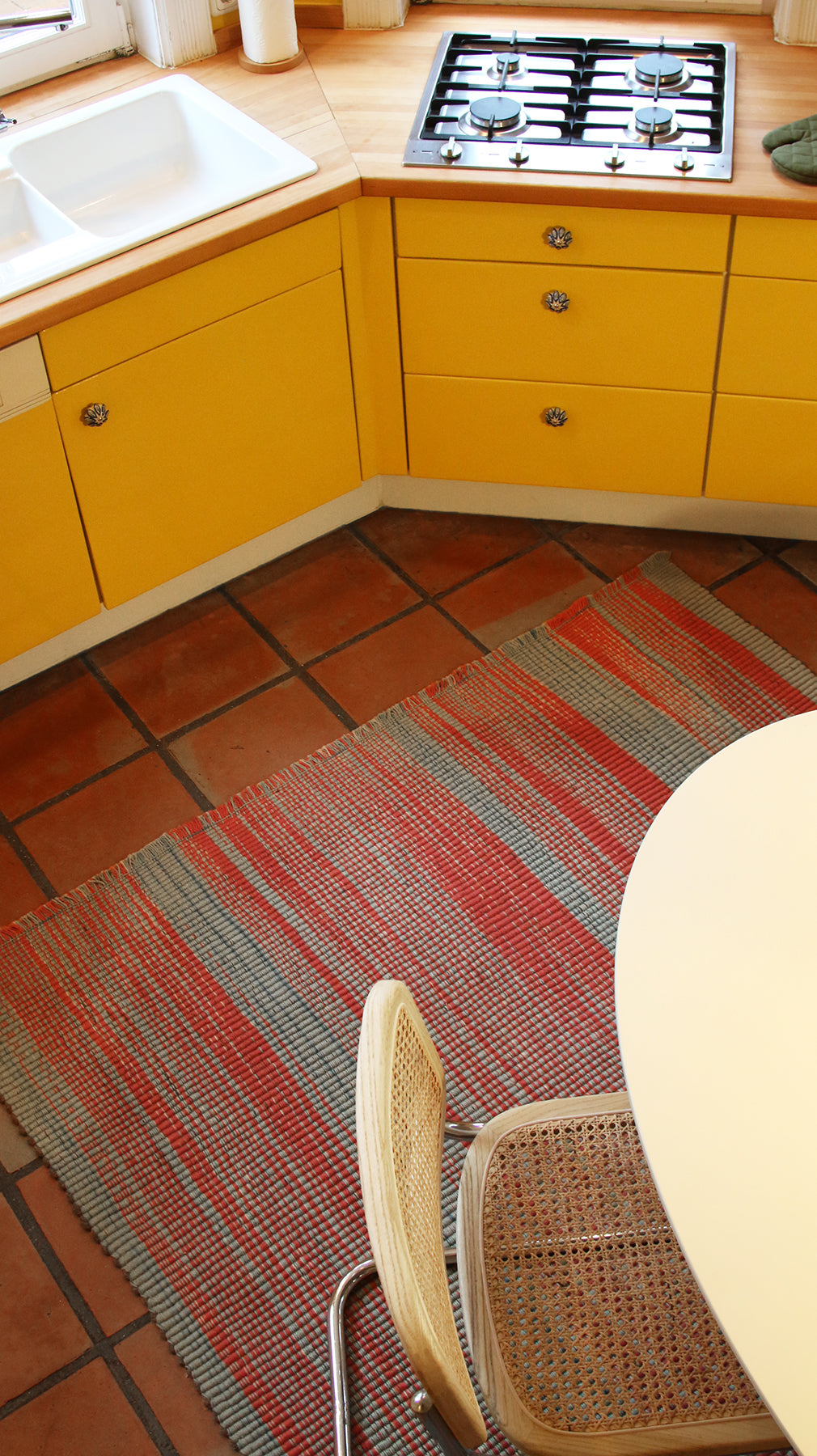
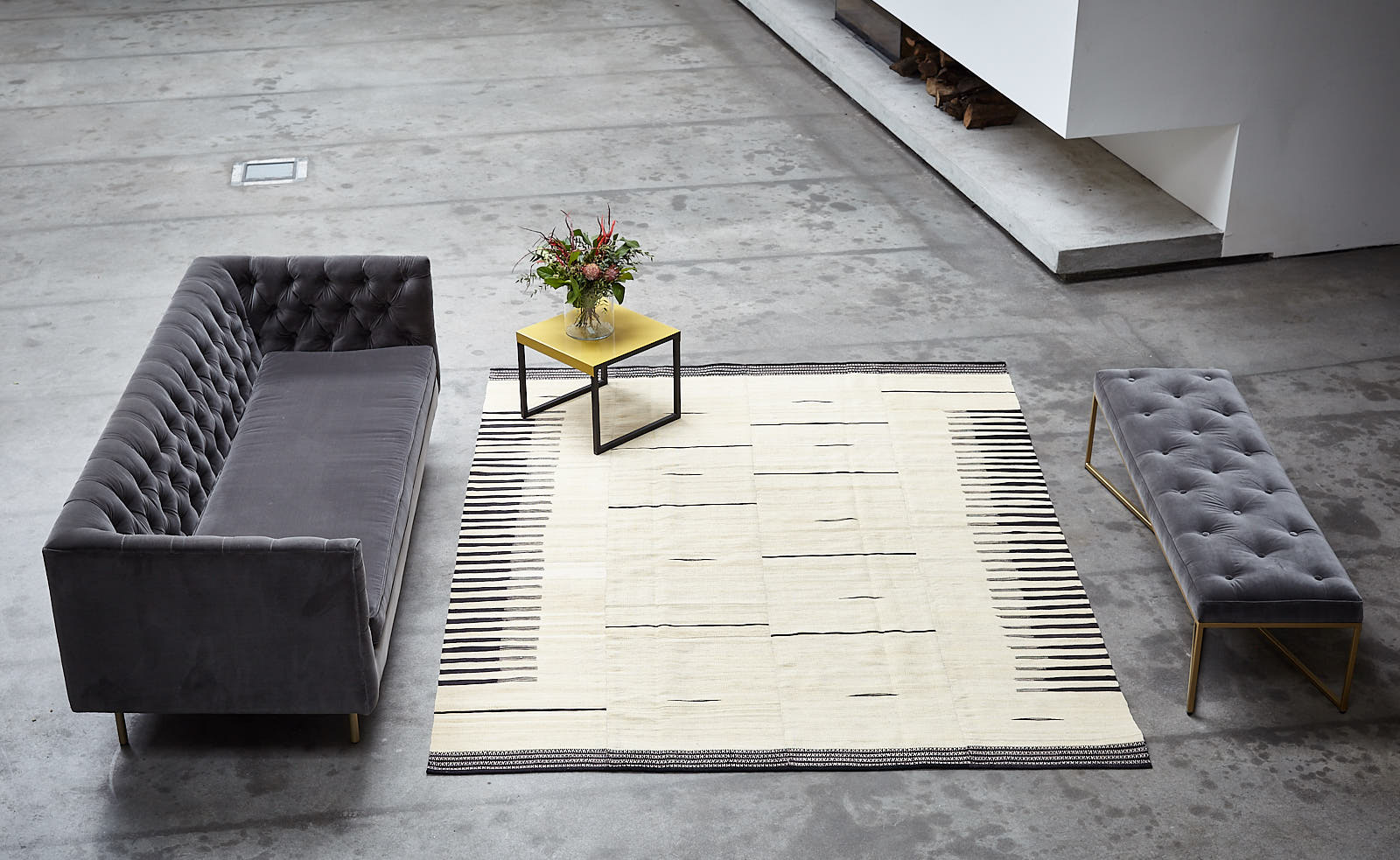
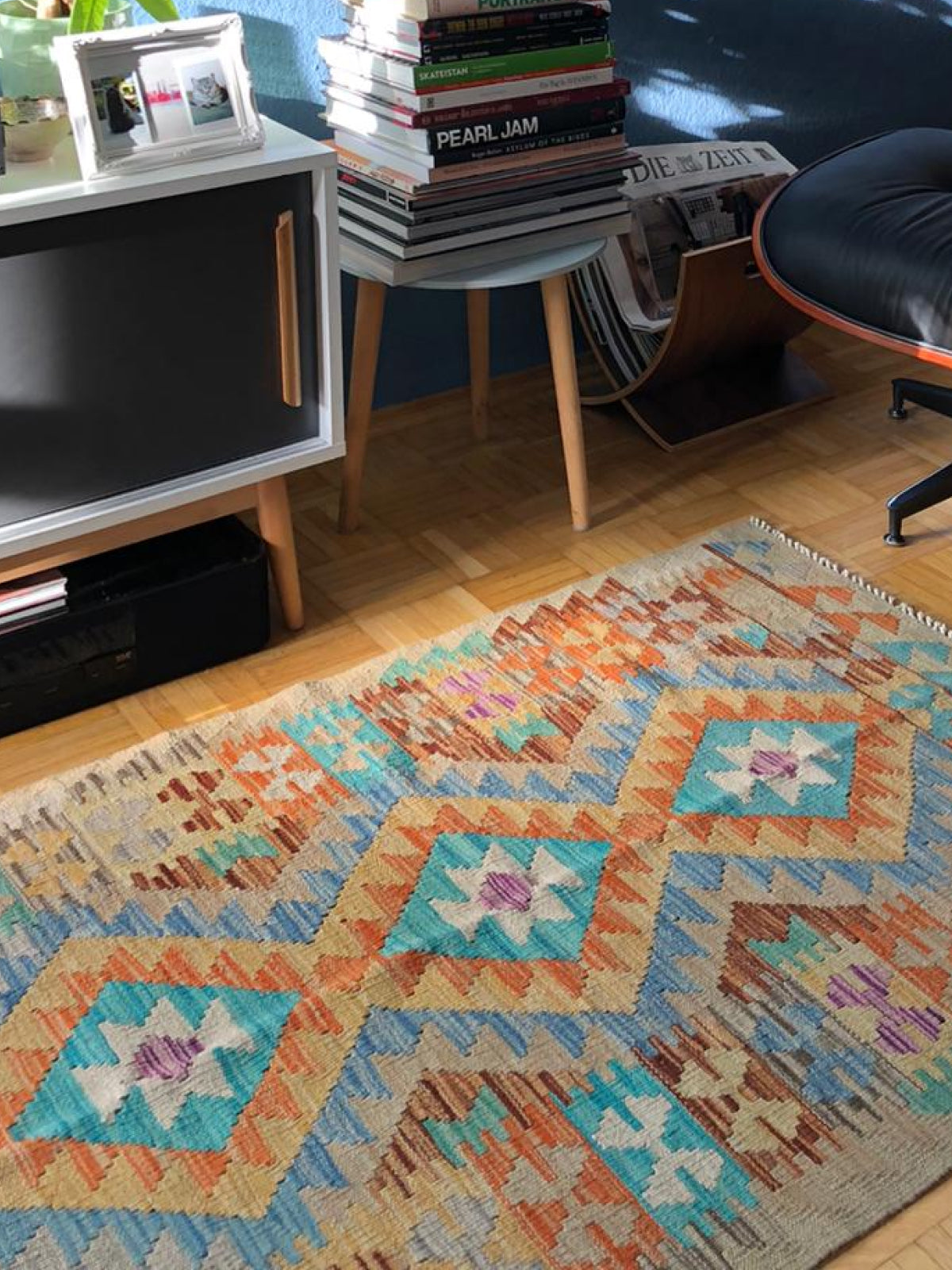
What's the story behind the patterns of Kelims?
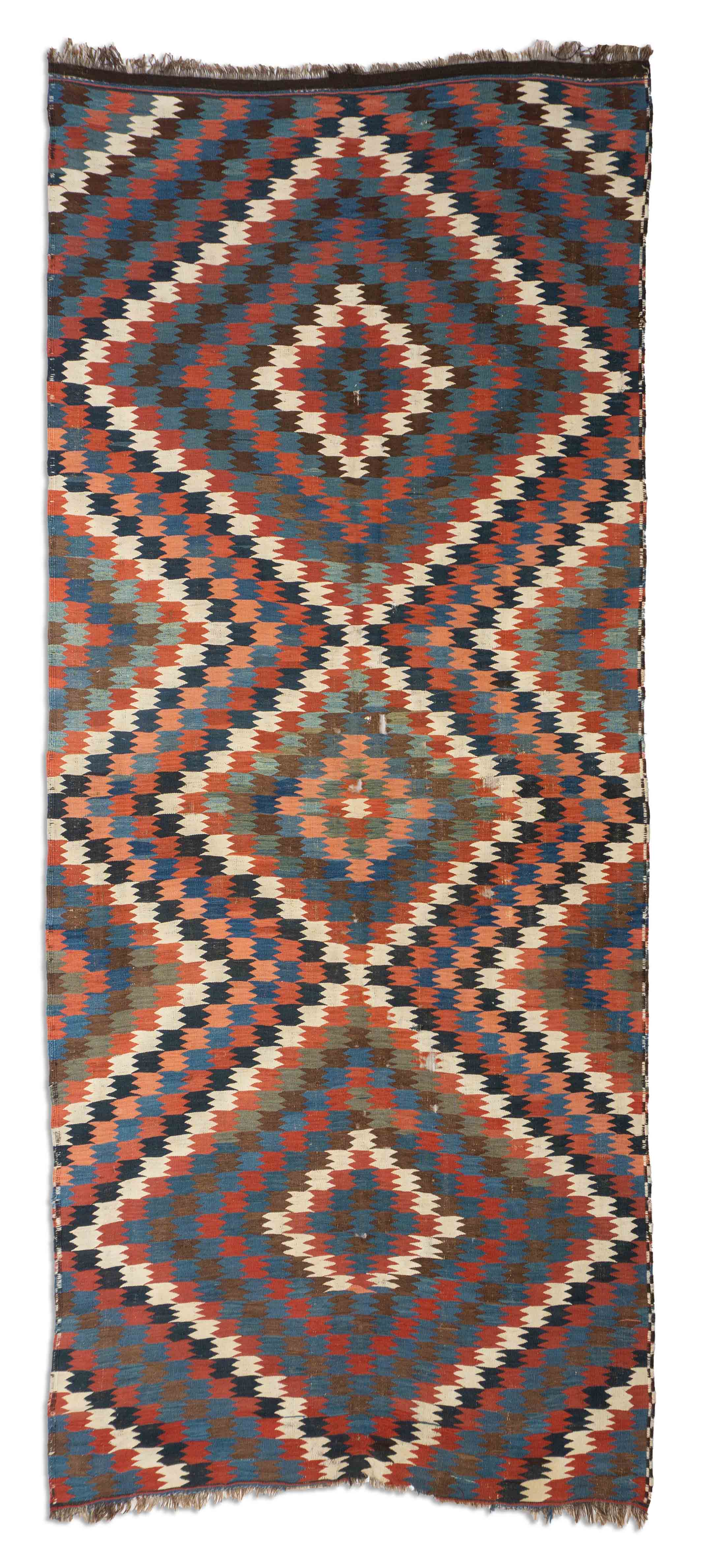
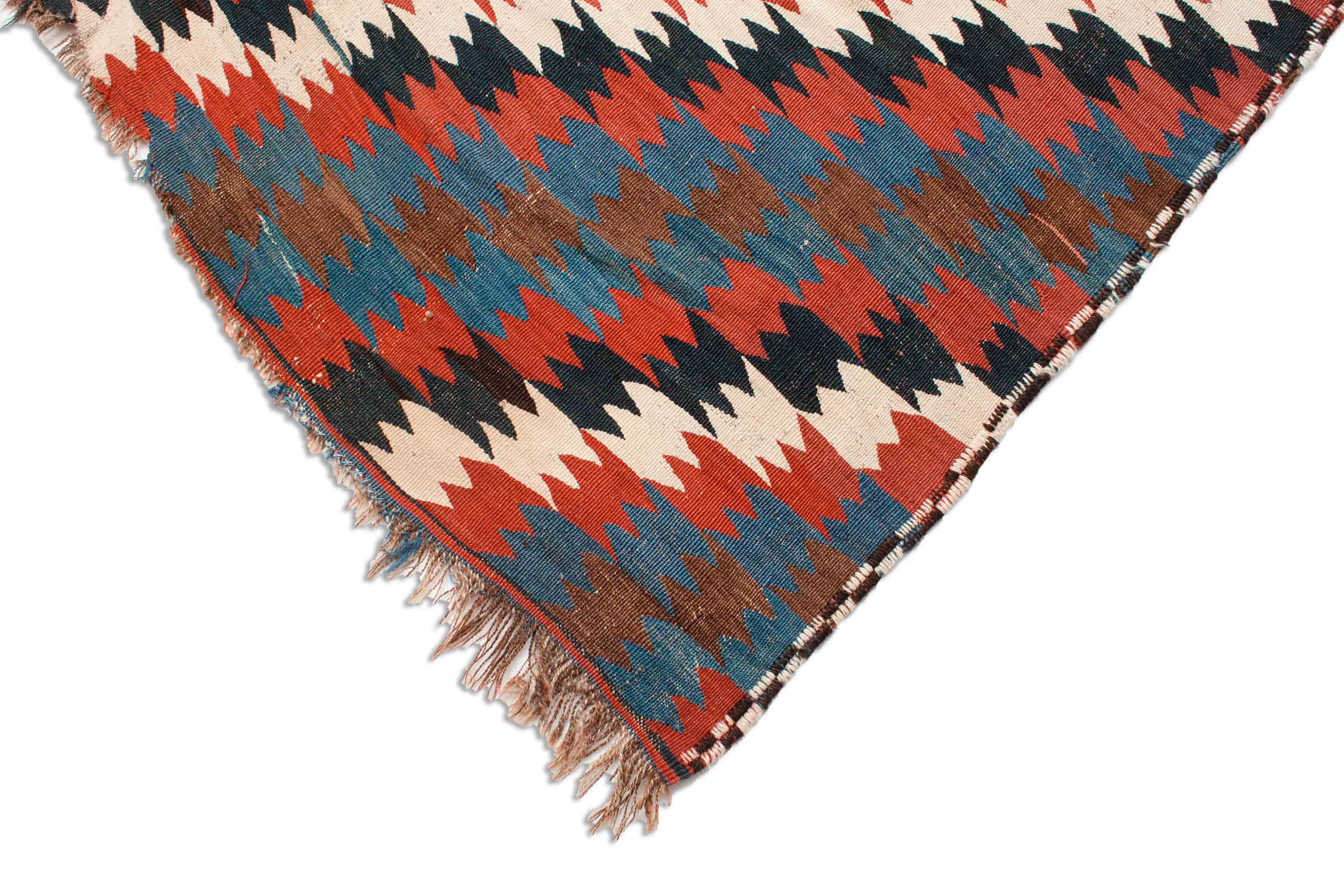
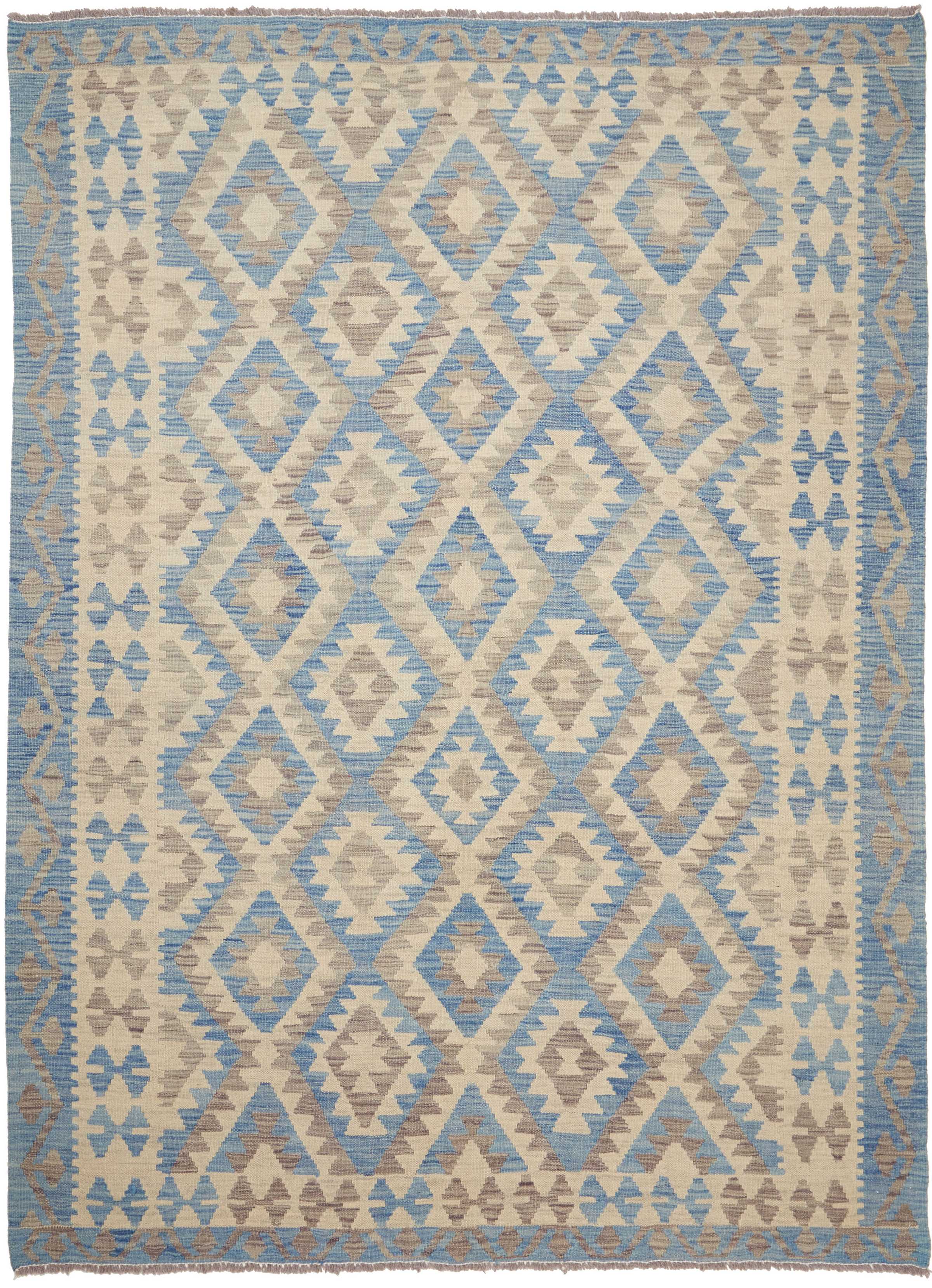
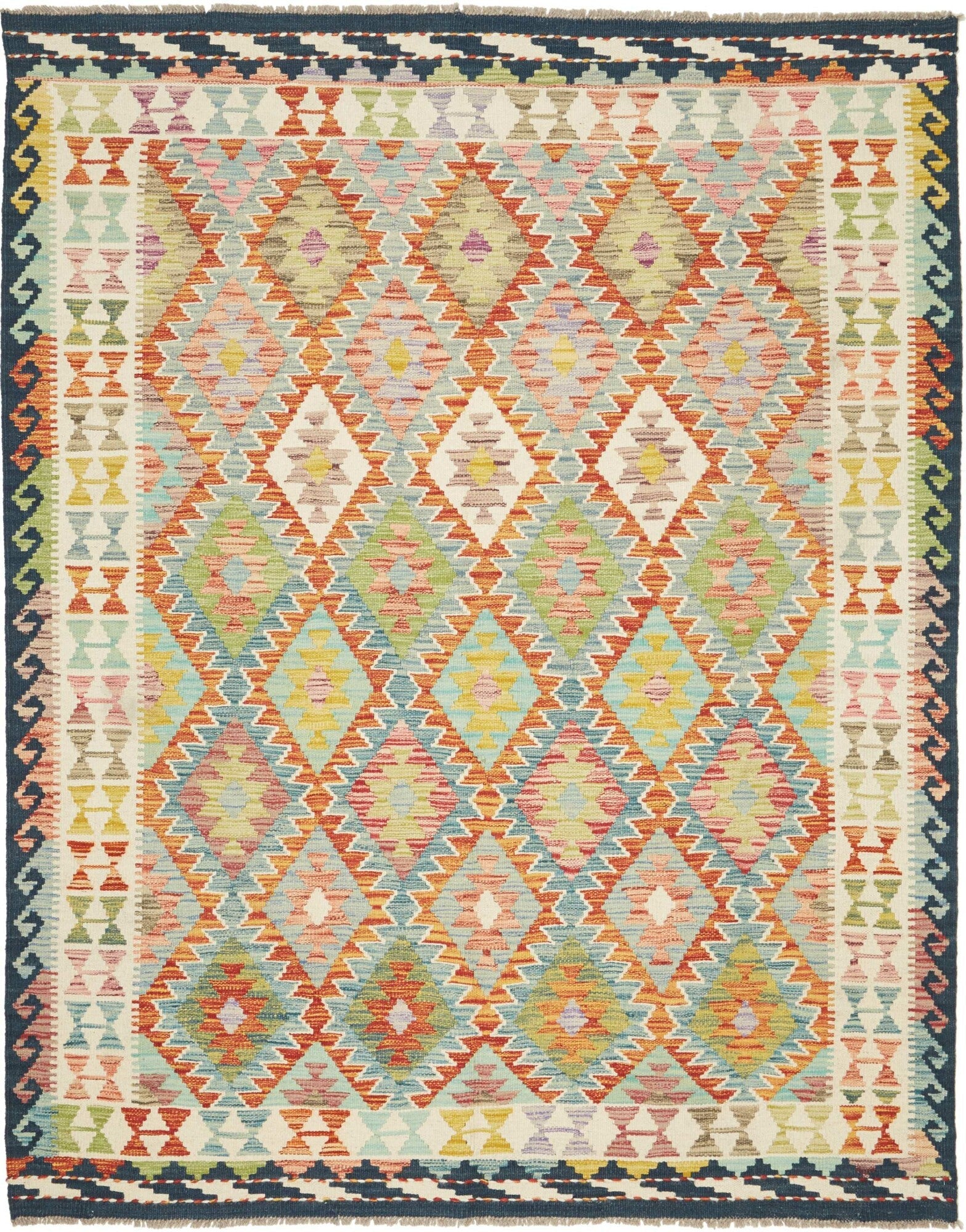
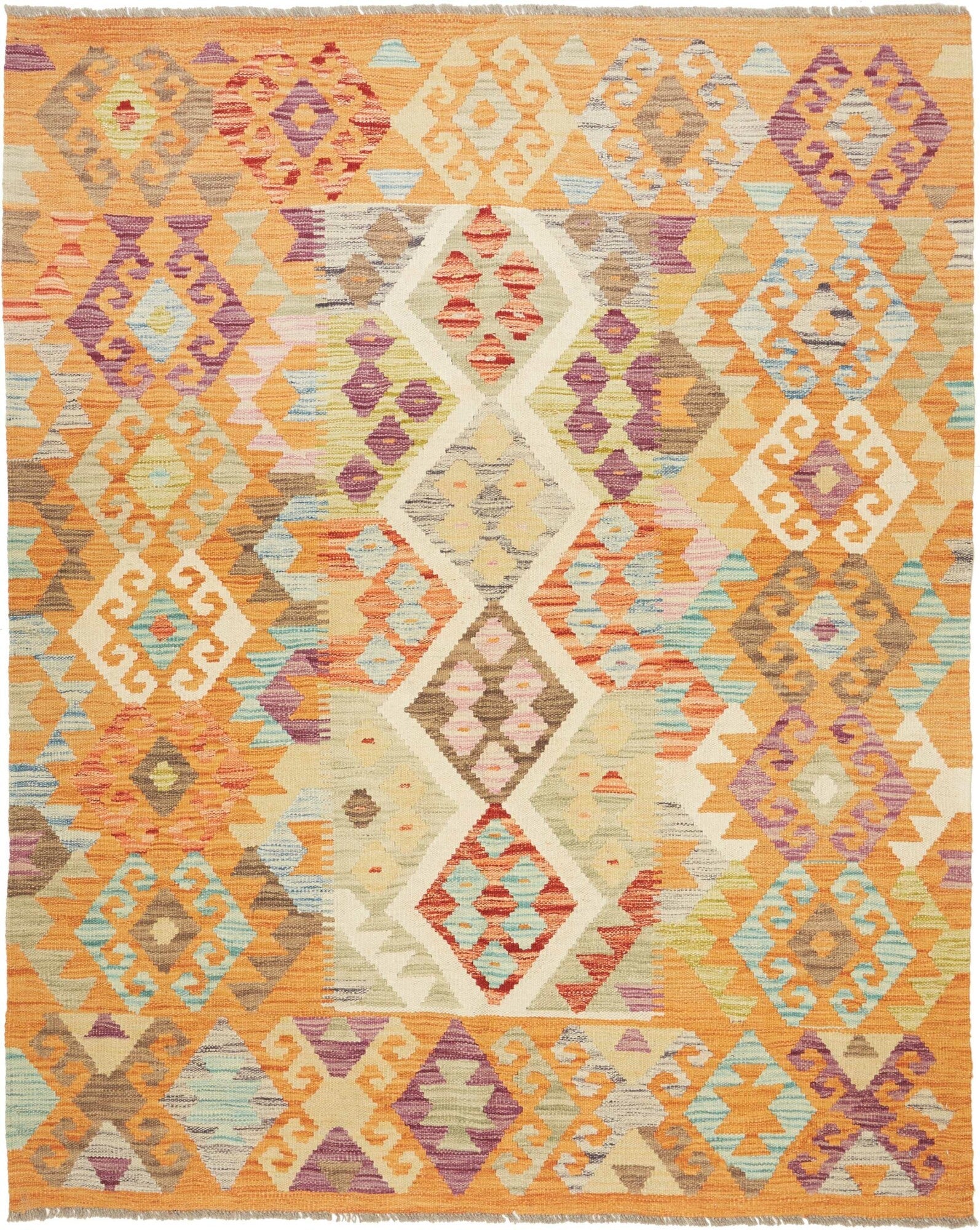
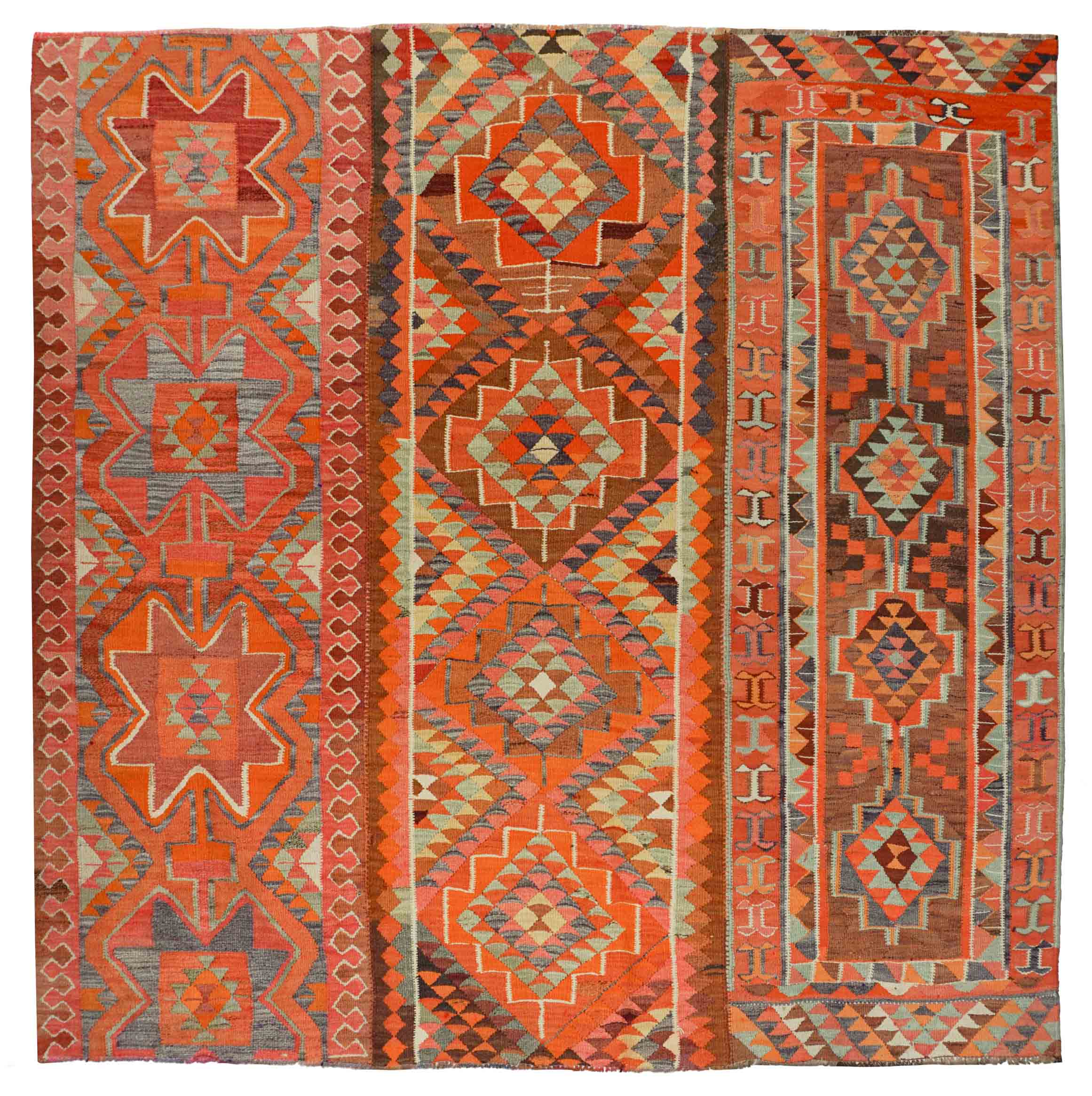
The typical Kelim pattern is built from a wide variety of geometric elements, usually arranged in straight lines and yet abstract. Their colours and patterns glow and tell stories of the lives of the nomads who wove them.
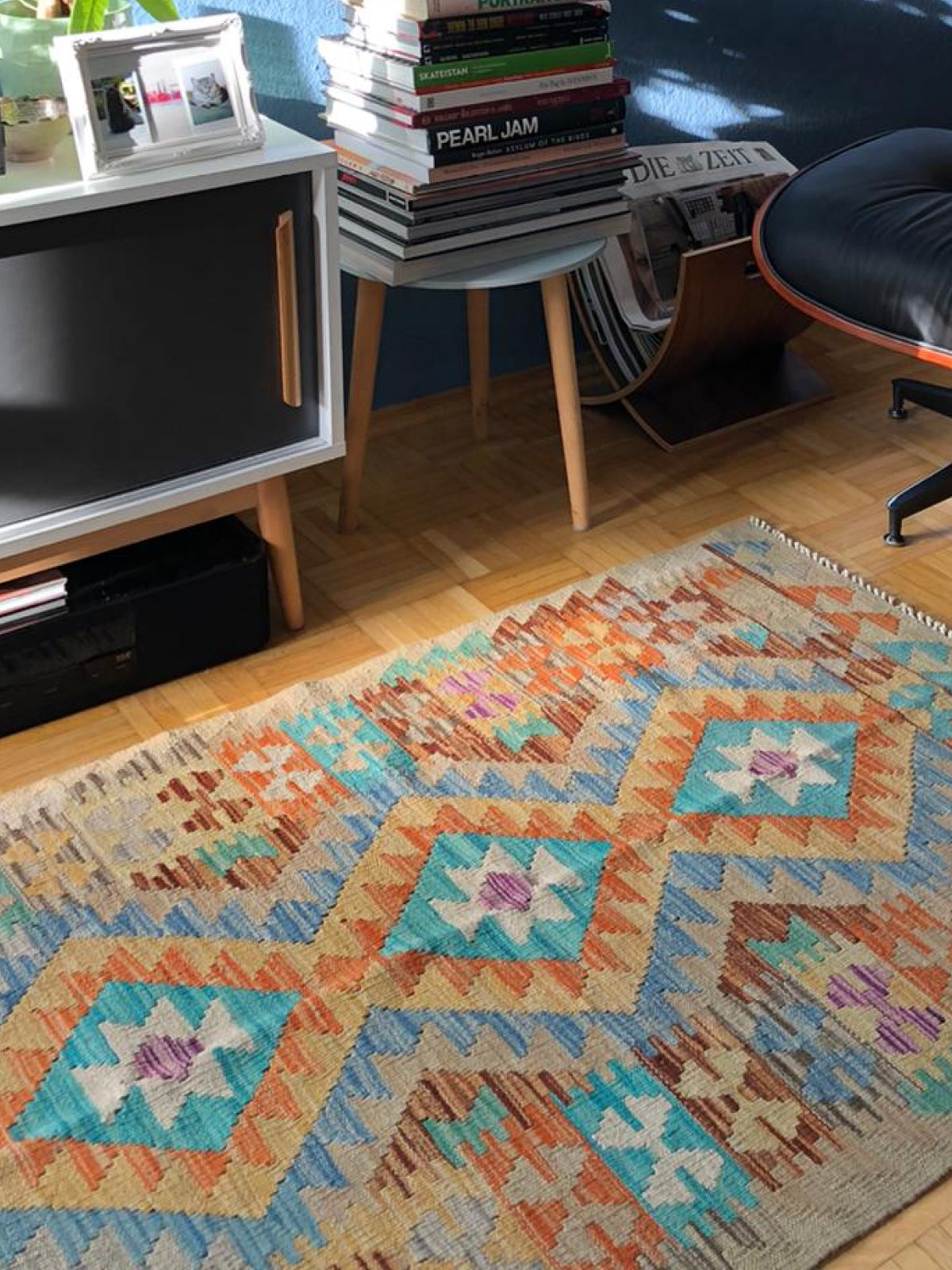
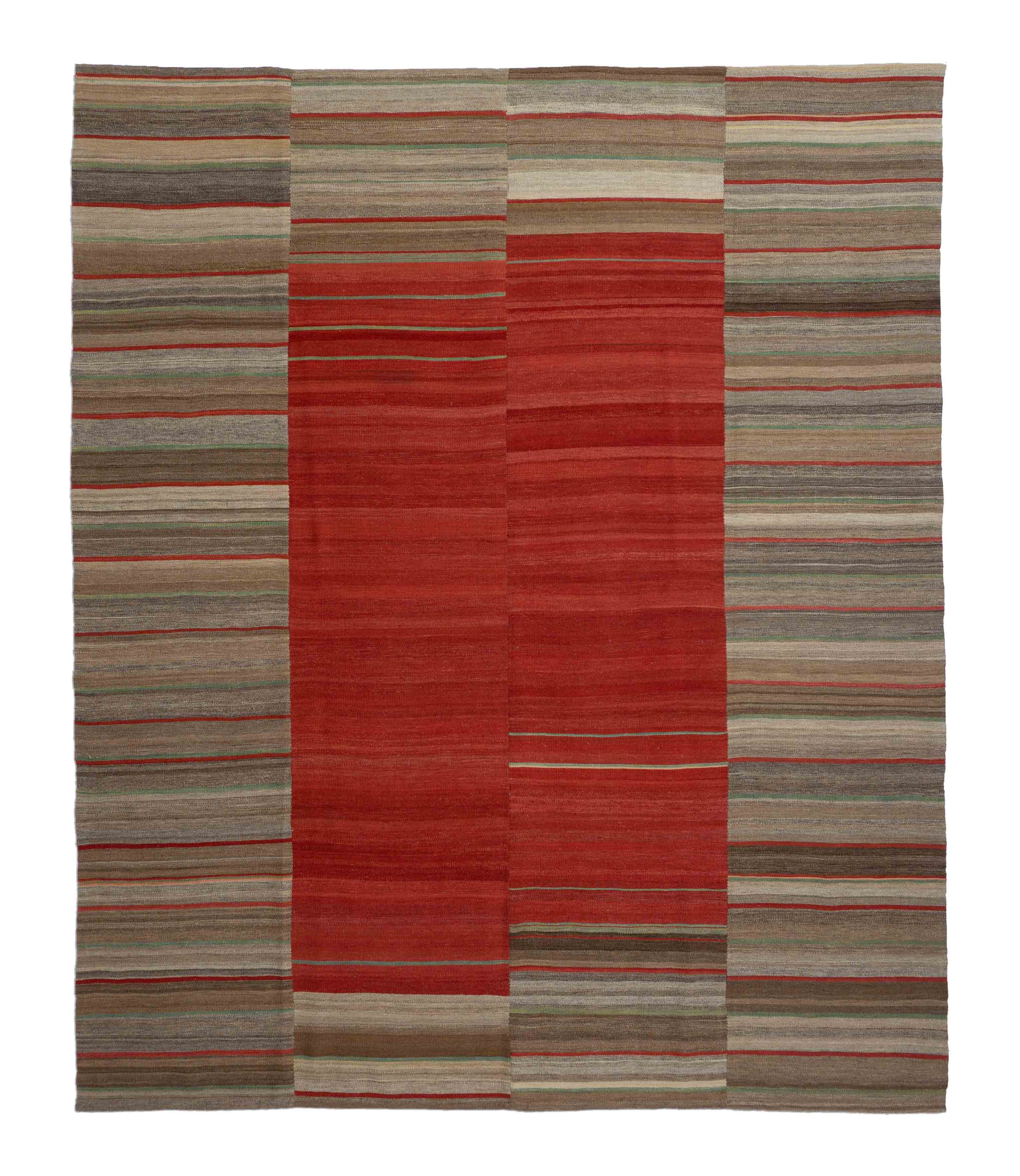
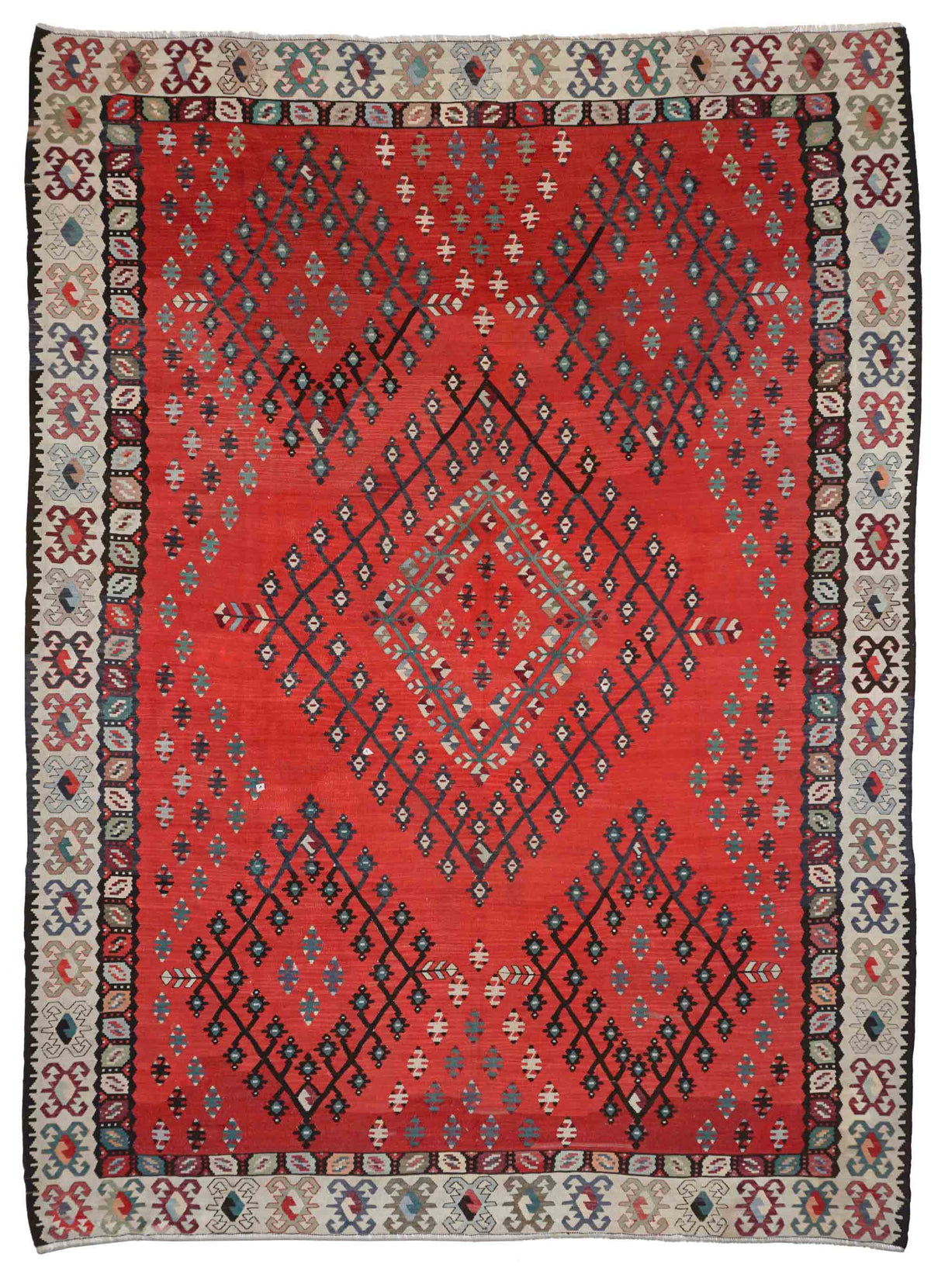
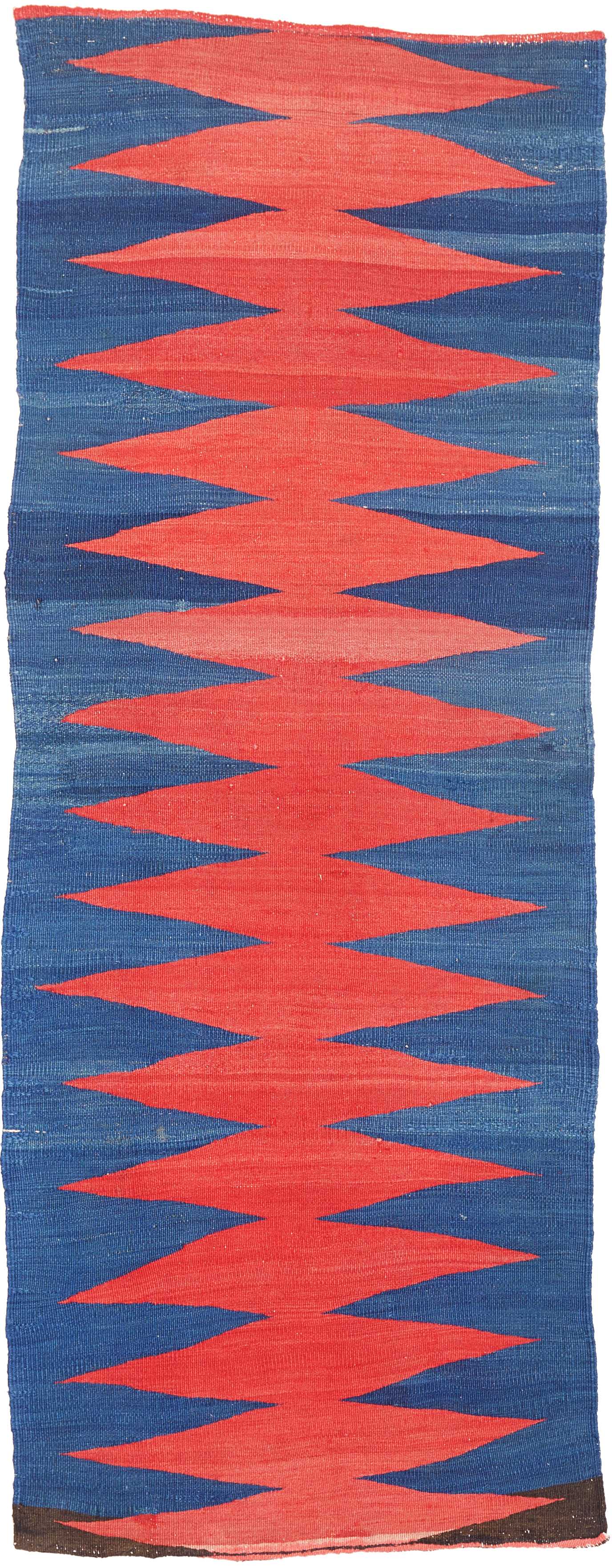
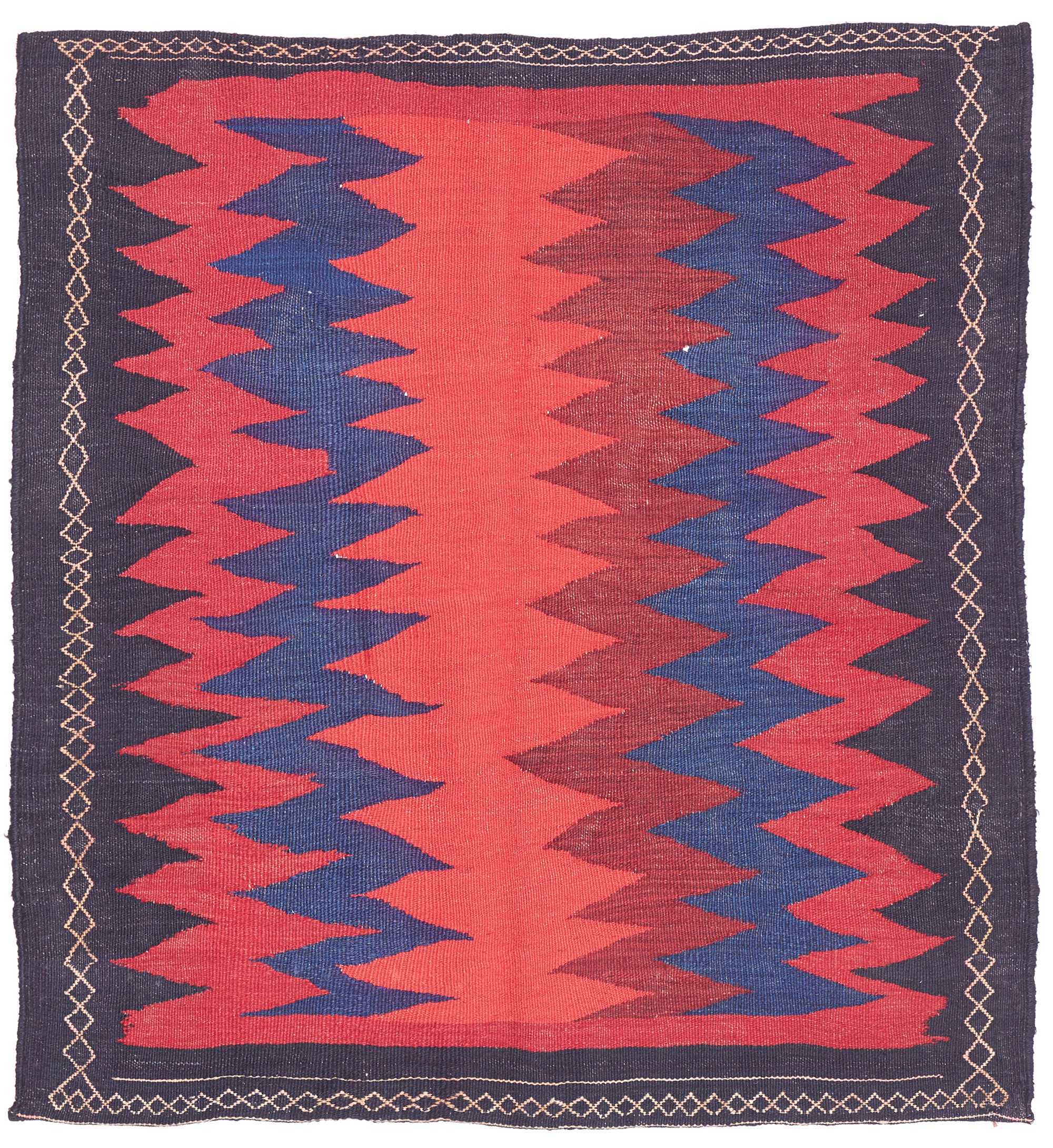
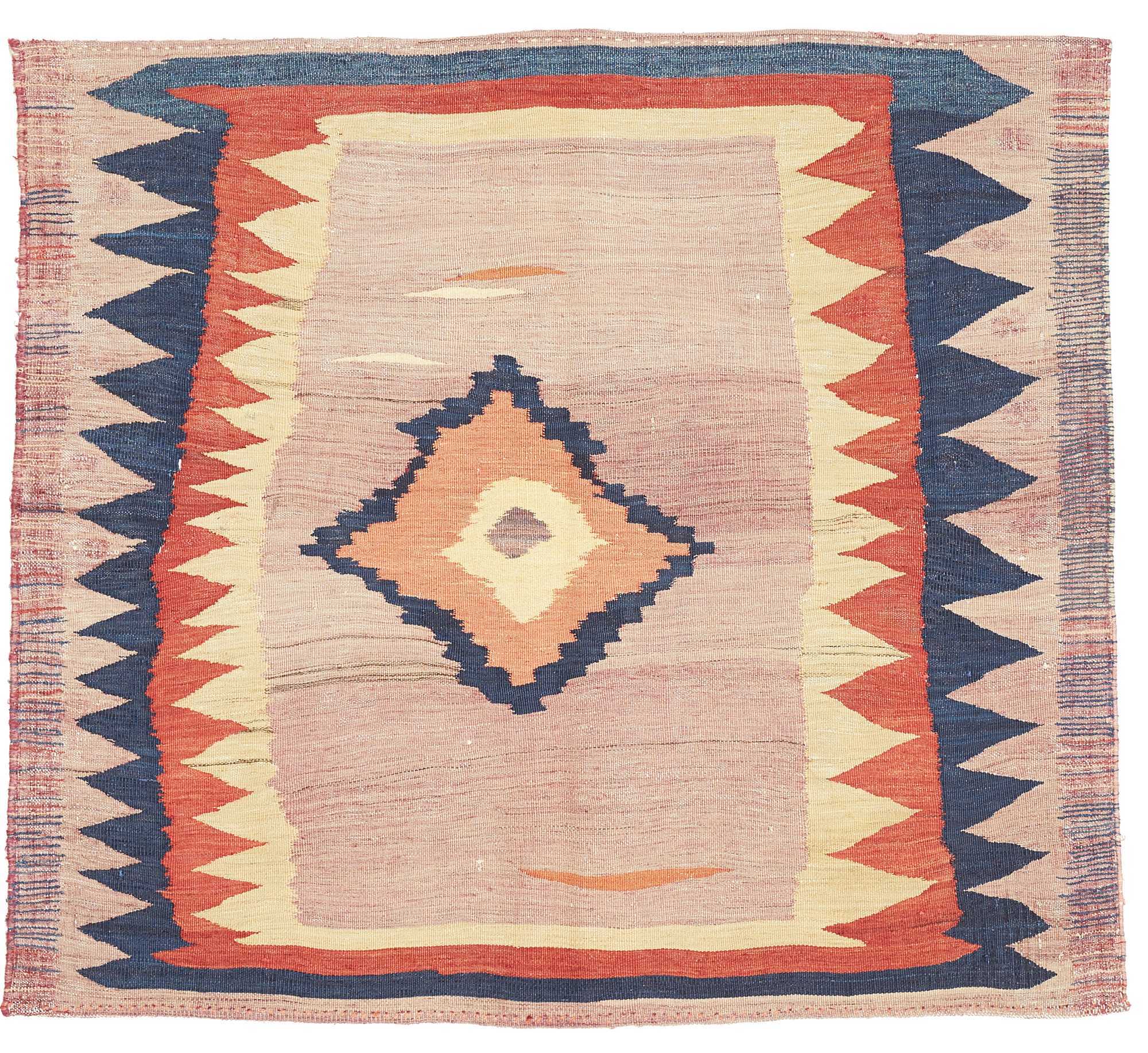
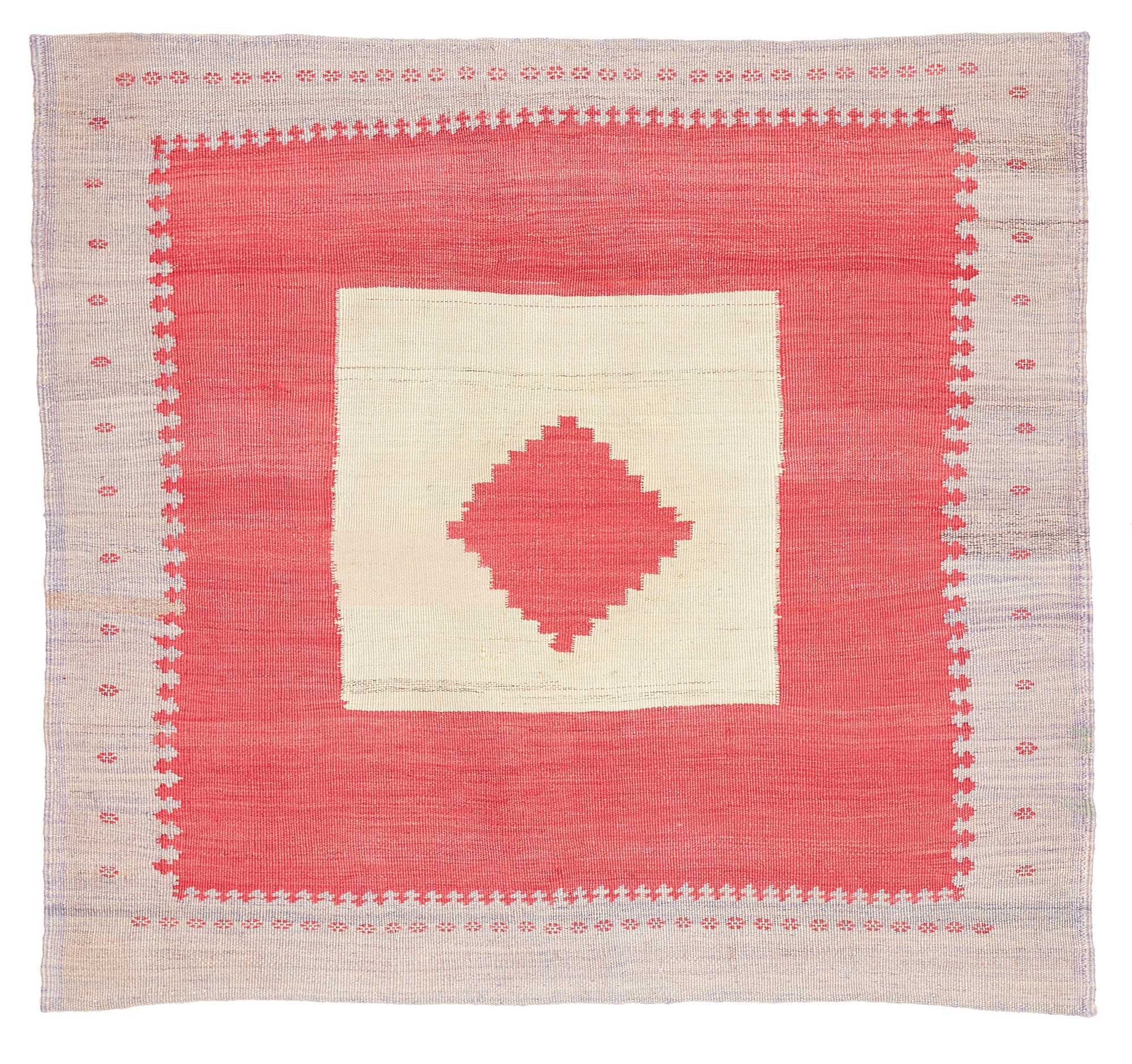
Modern Kelims often show refined diamond patterns in the widest range of colours. The diamond is one of the oldest basic forms in the Oriental rug. In the Islamic world it carries a symbolic meaning: it stands for the immortality of the soul. But Kelims with straight stripes, a chequered pattern or a distinctive colour gradient are just as popular.
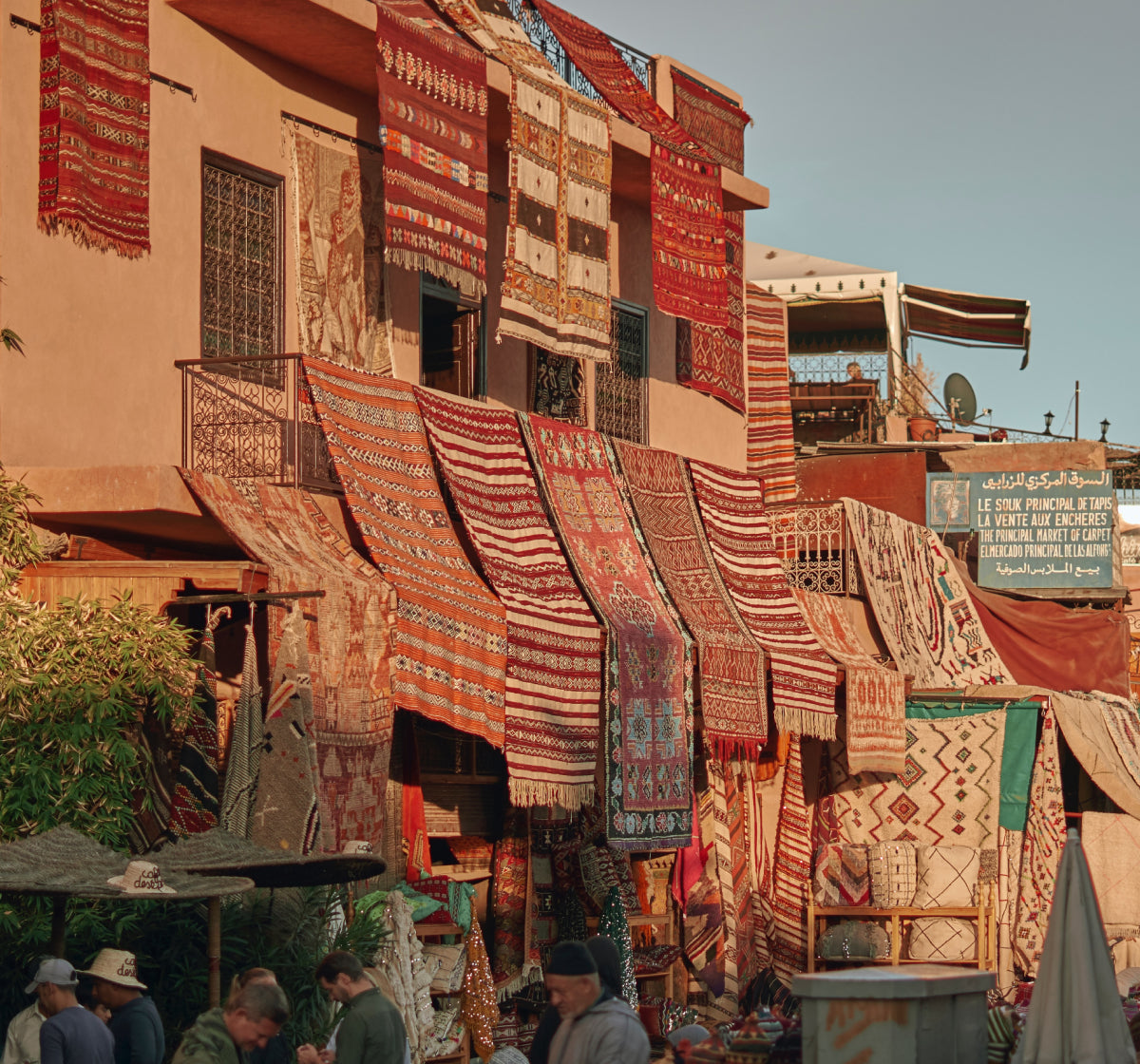
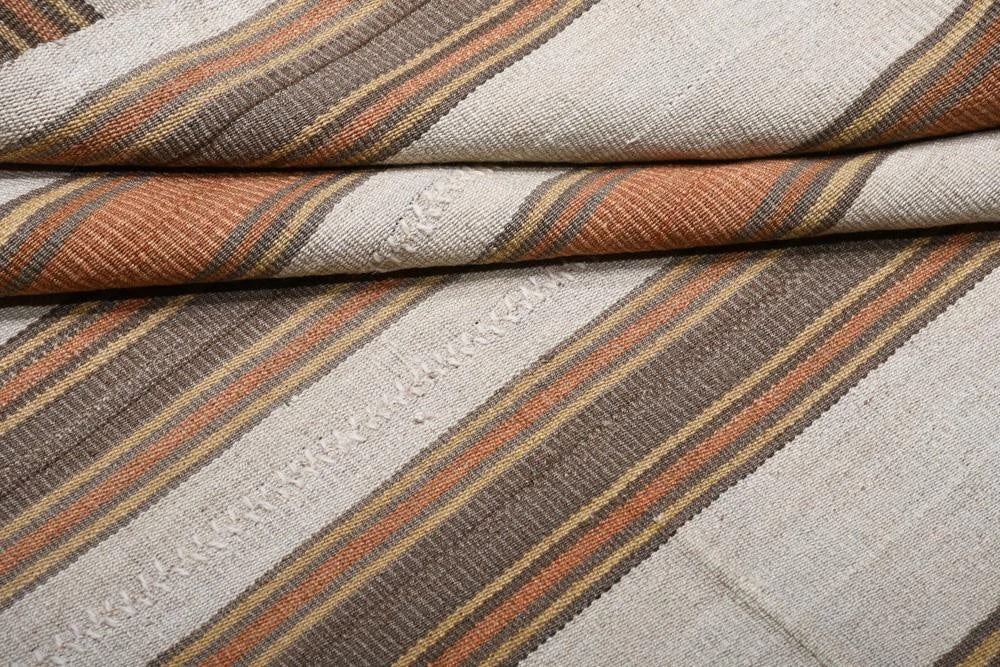
Kelim rugs
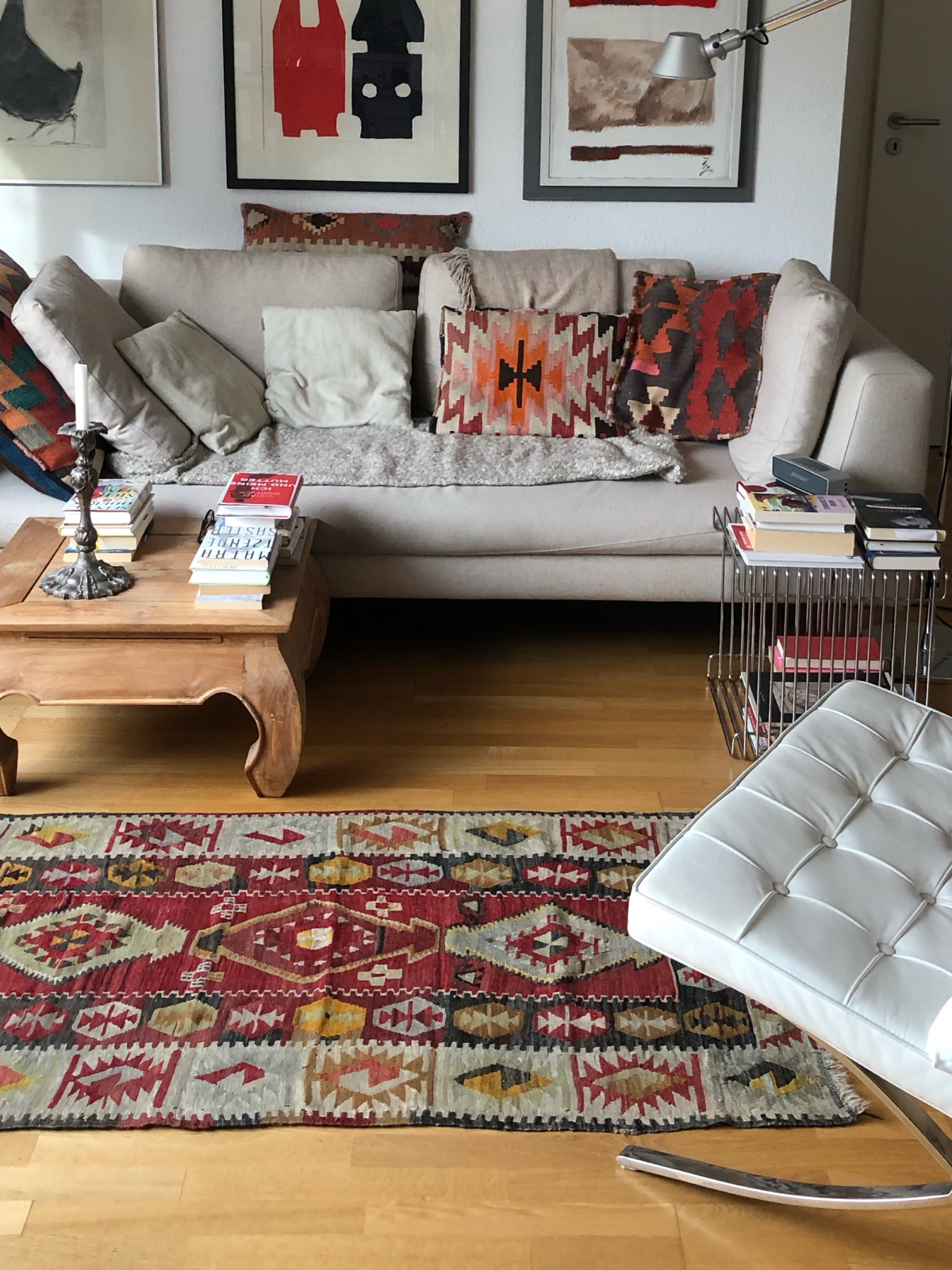
Old & Antique Kelims
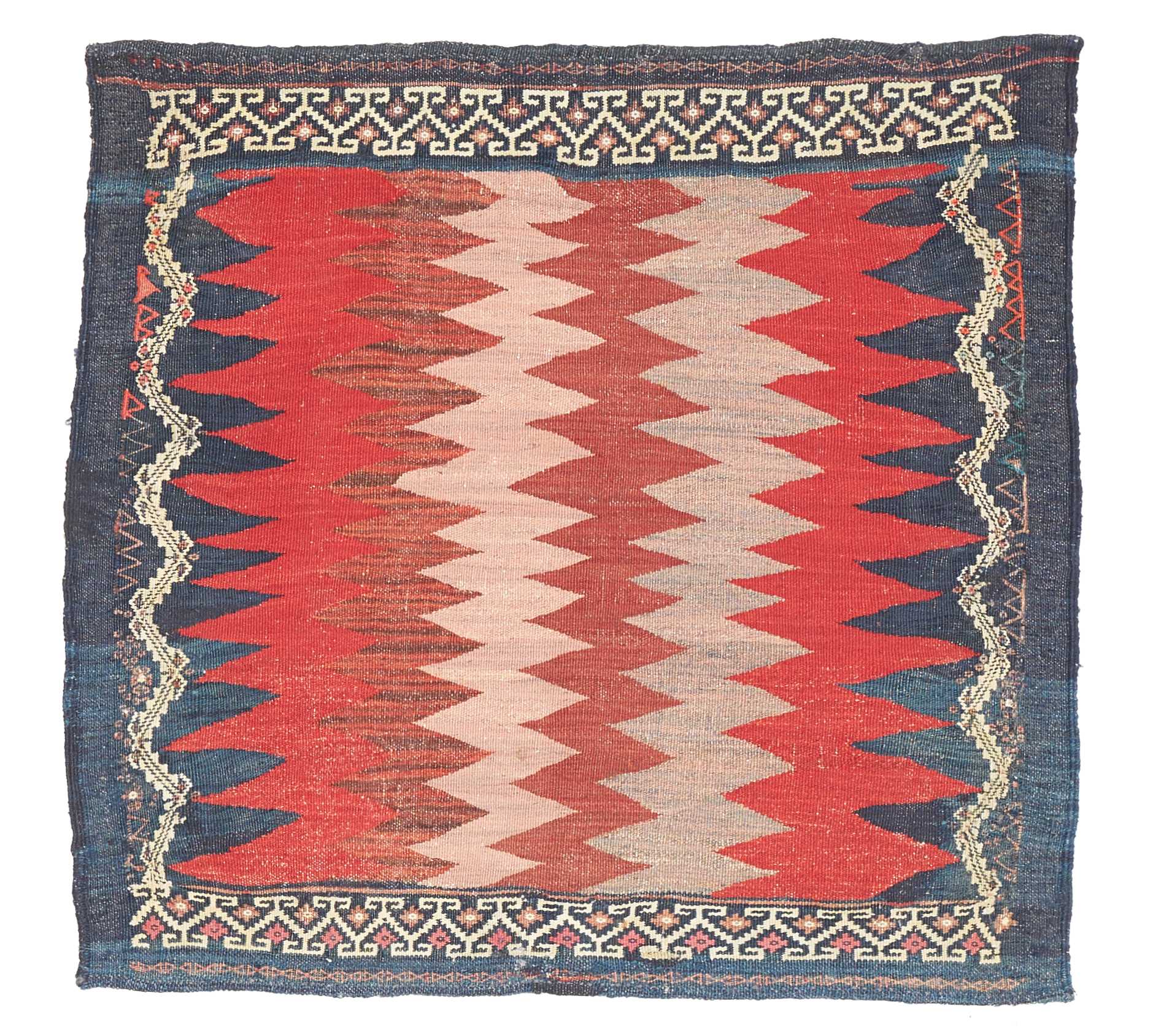
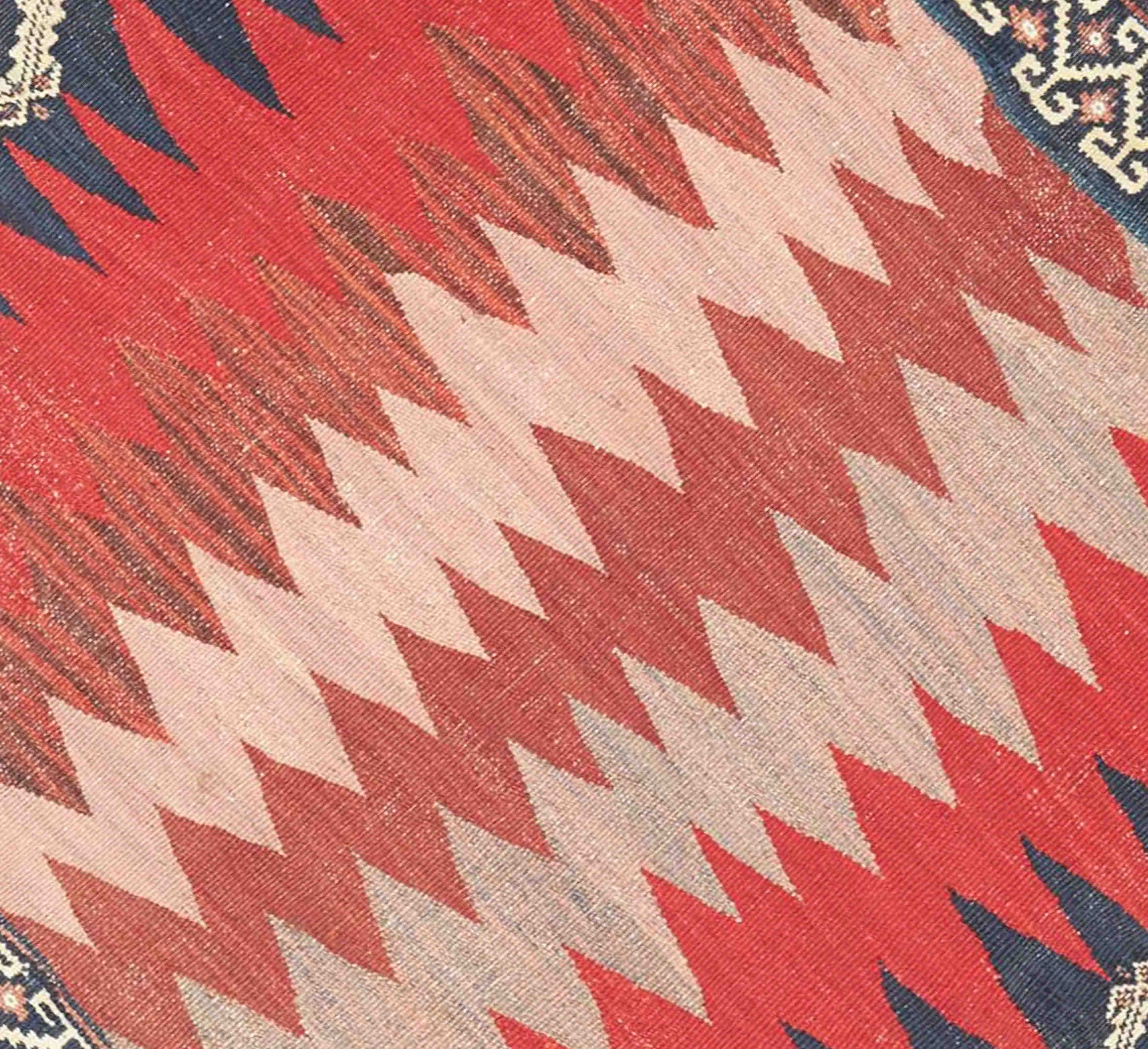
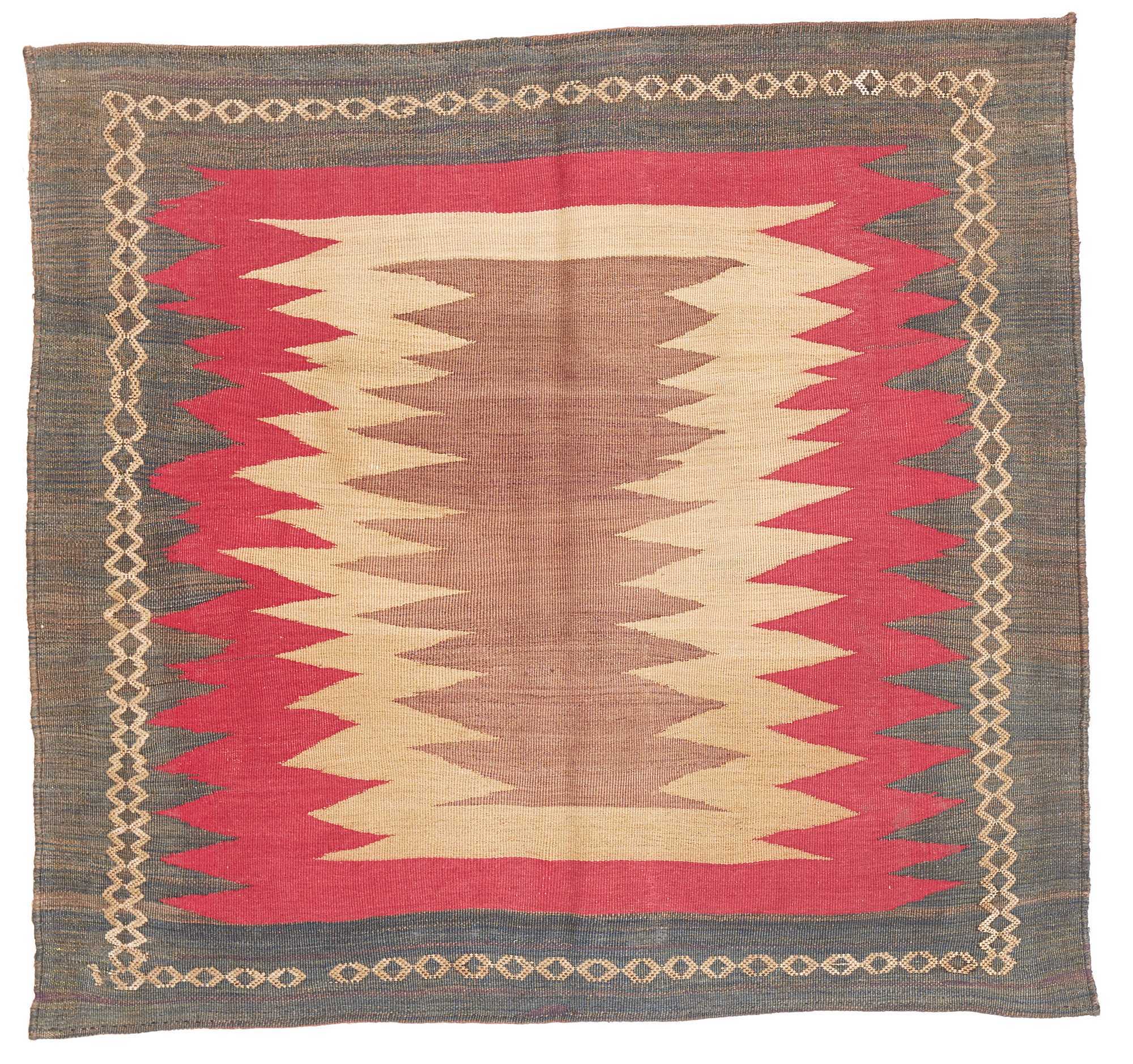
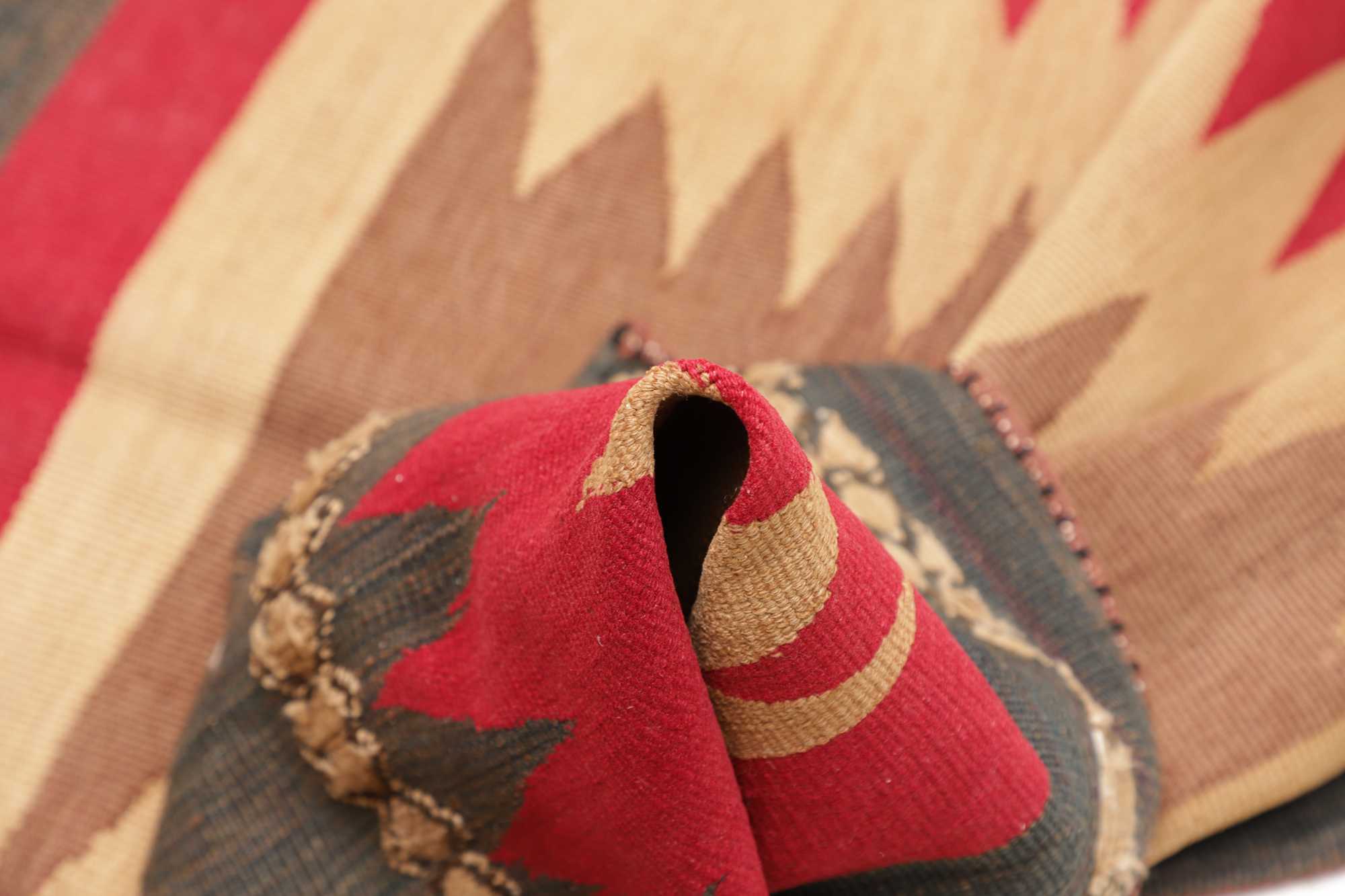
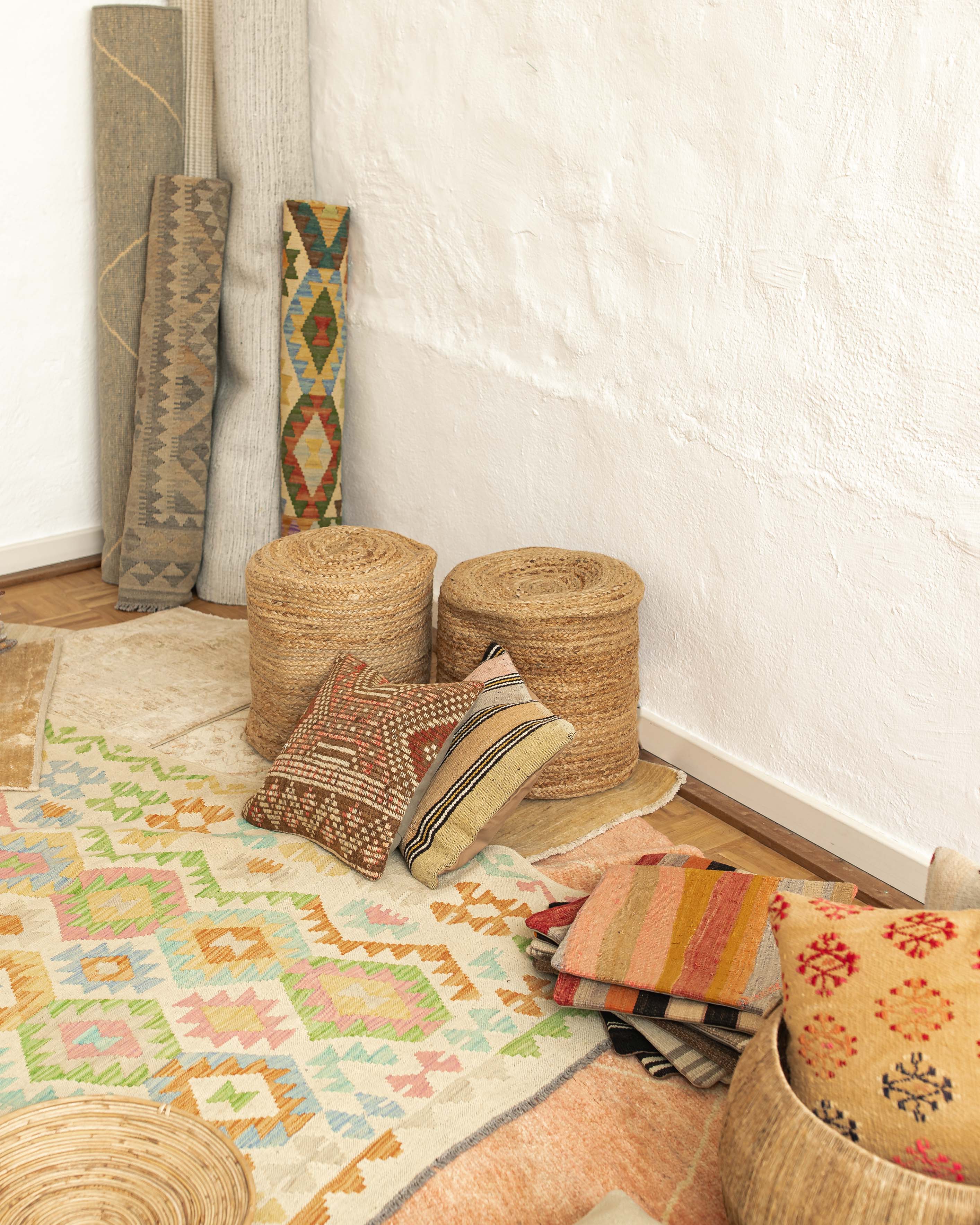
Old and antique Kelims are usually kept in muted colours, the kind you also find in nature. Beige and brown, but also strong oranges and reds, create wonderful colour combinations that settle beautifully into any room and bring it to life.
Featured collection
Old and antique Kelims
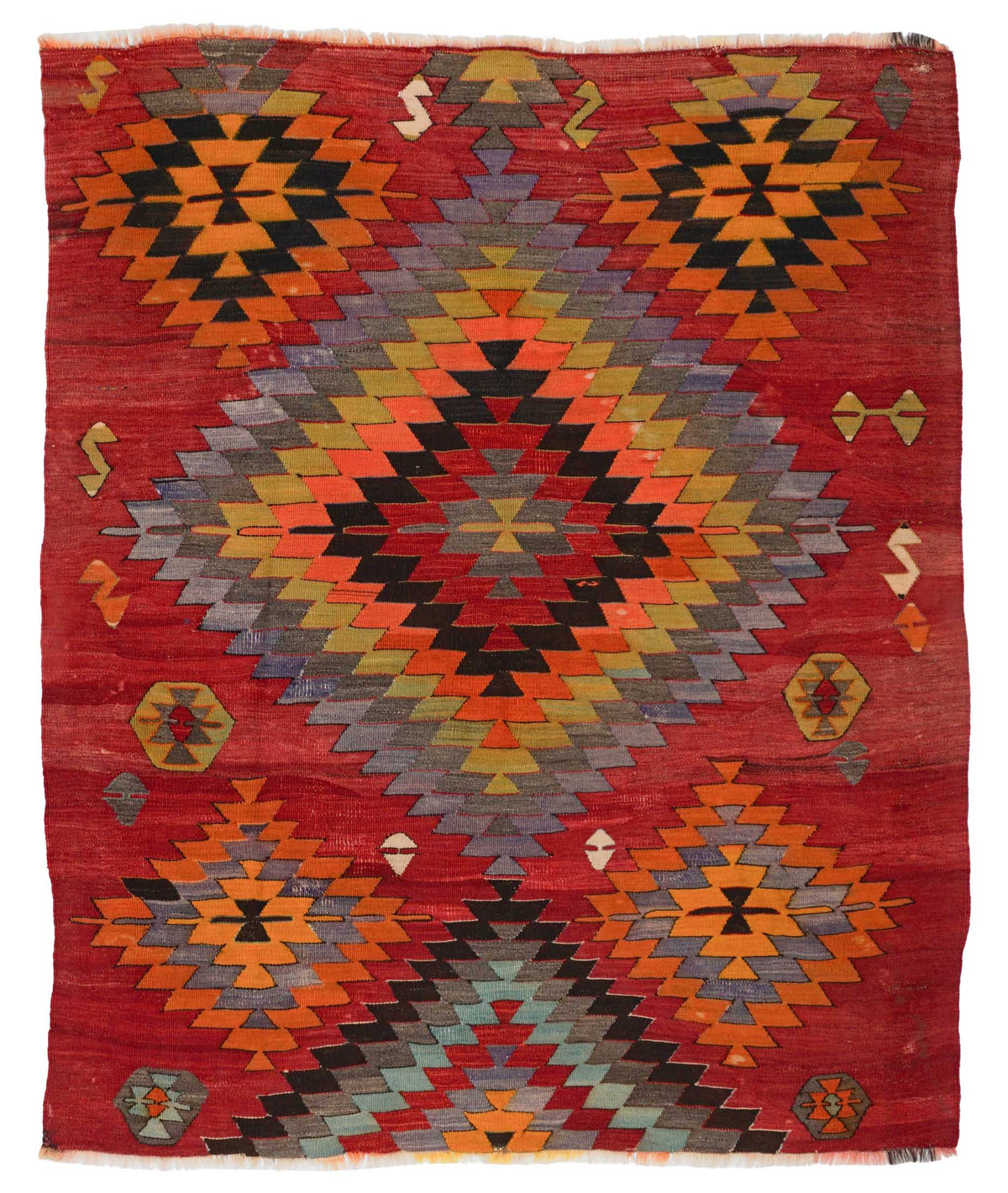
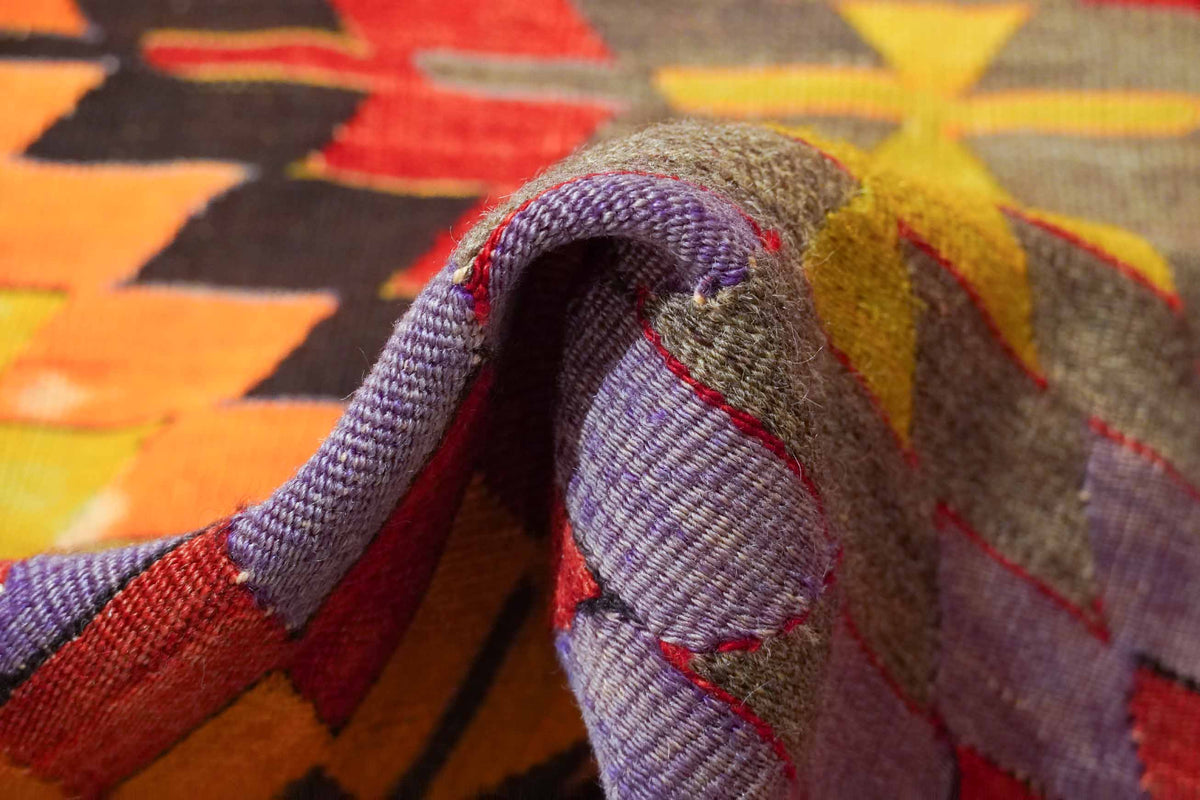
Featured collection
Kelim and Rug Cushion Covers & Accessories


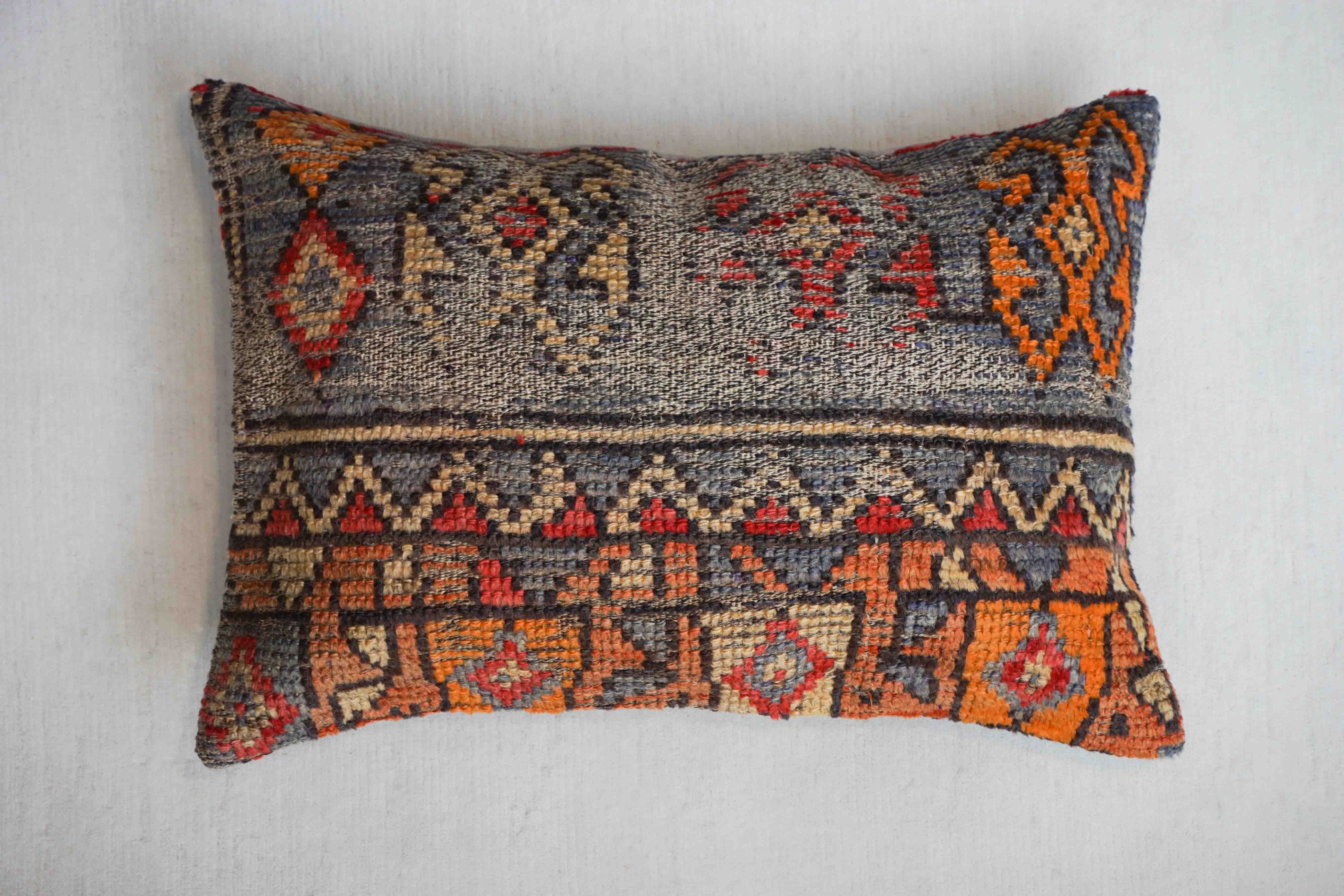


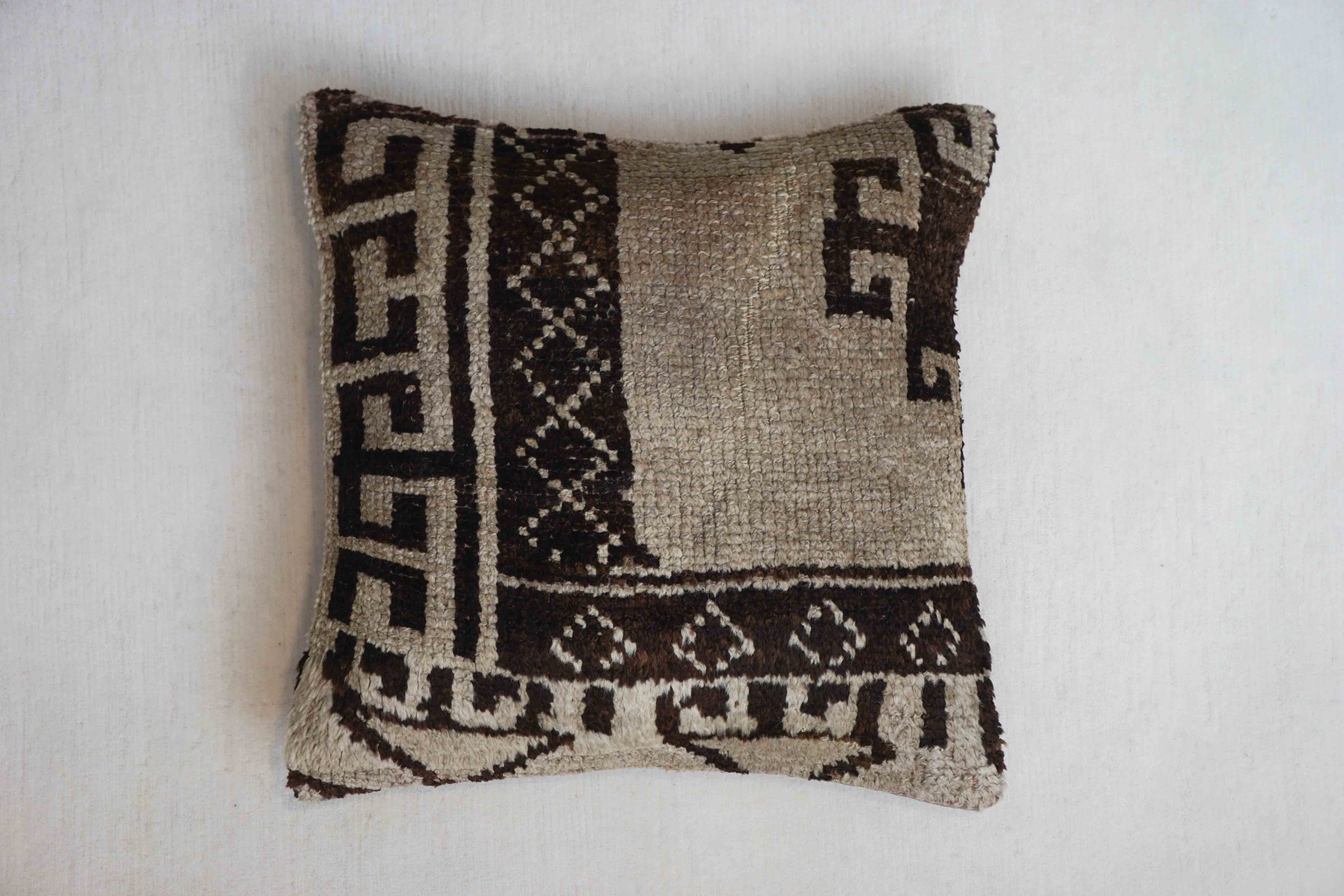

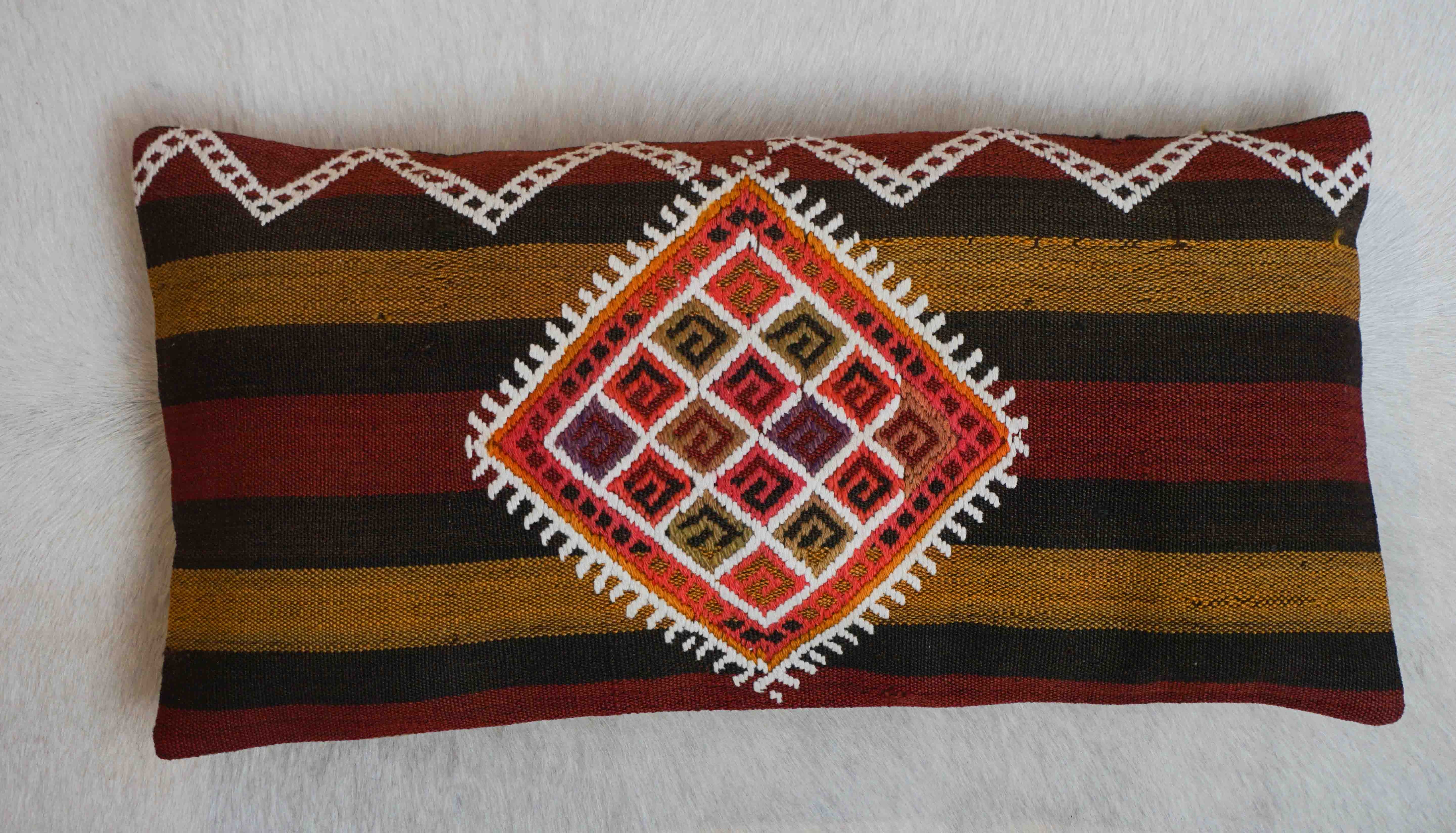


Every region has its own pattern
The pattern and the colours of every Kelim also tell you exactly where it comes from. A Kelim from Morocco, for instance, looks very different from a traditional Turkish Kelim. You don't need to be an expert to spot these differences. Look closely, though, and you can even pin down the very province in which the rug was woven. But feel free to leave that to us and rely on our expertise.
JAJIM? ...

... OR GHARABAGH?