
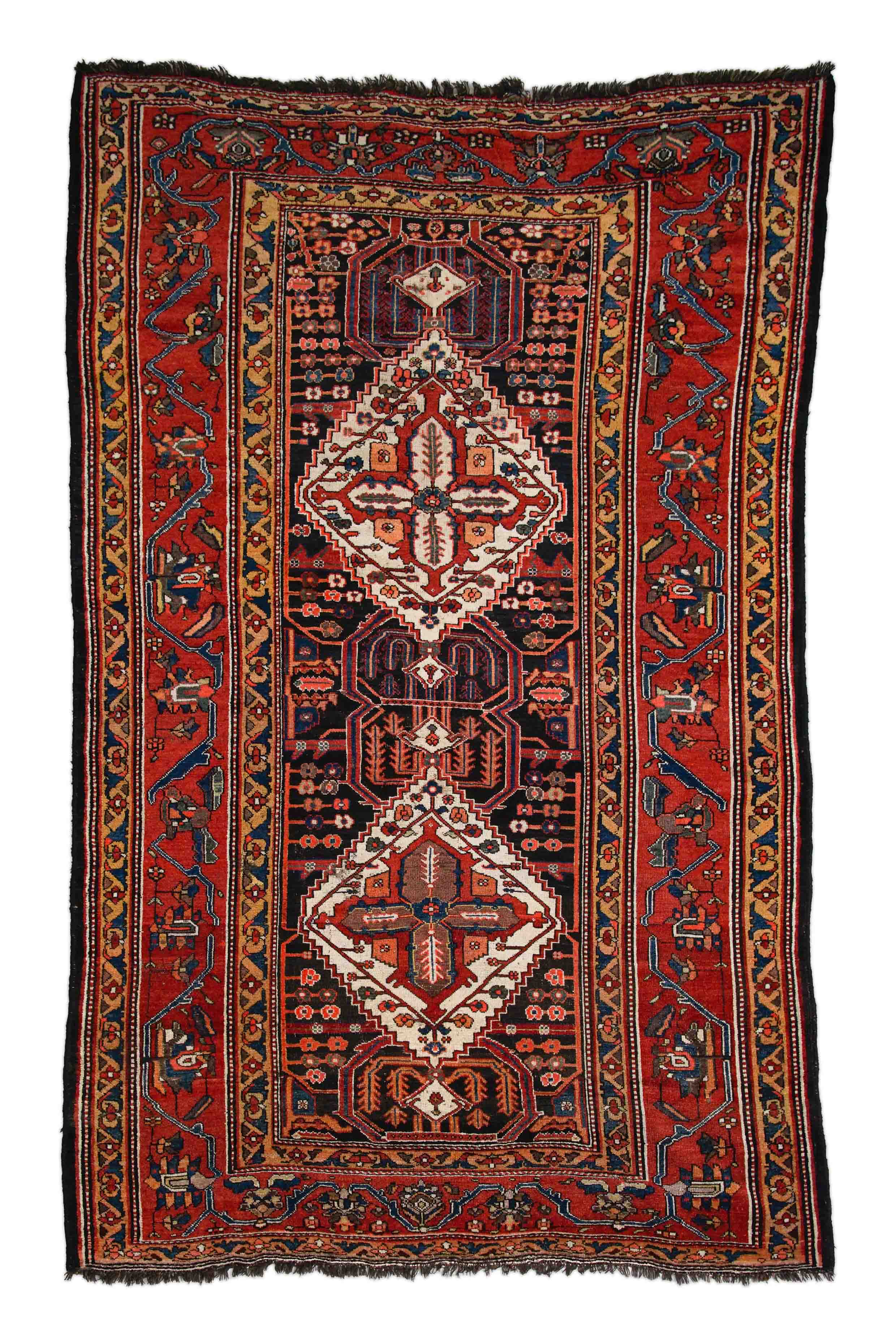
Old Bakhtiari | 285 x 180 cm | Nr. 19166

|
1-3 working days delivery time (within Germany) |

|
14-day home trial |

|
Free delivery & returns within the EU |
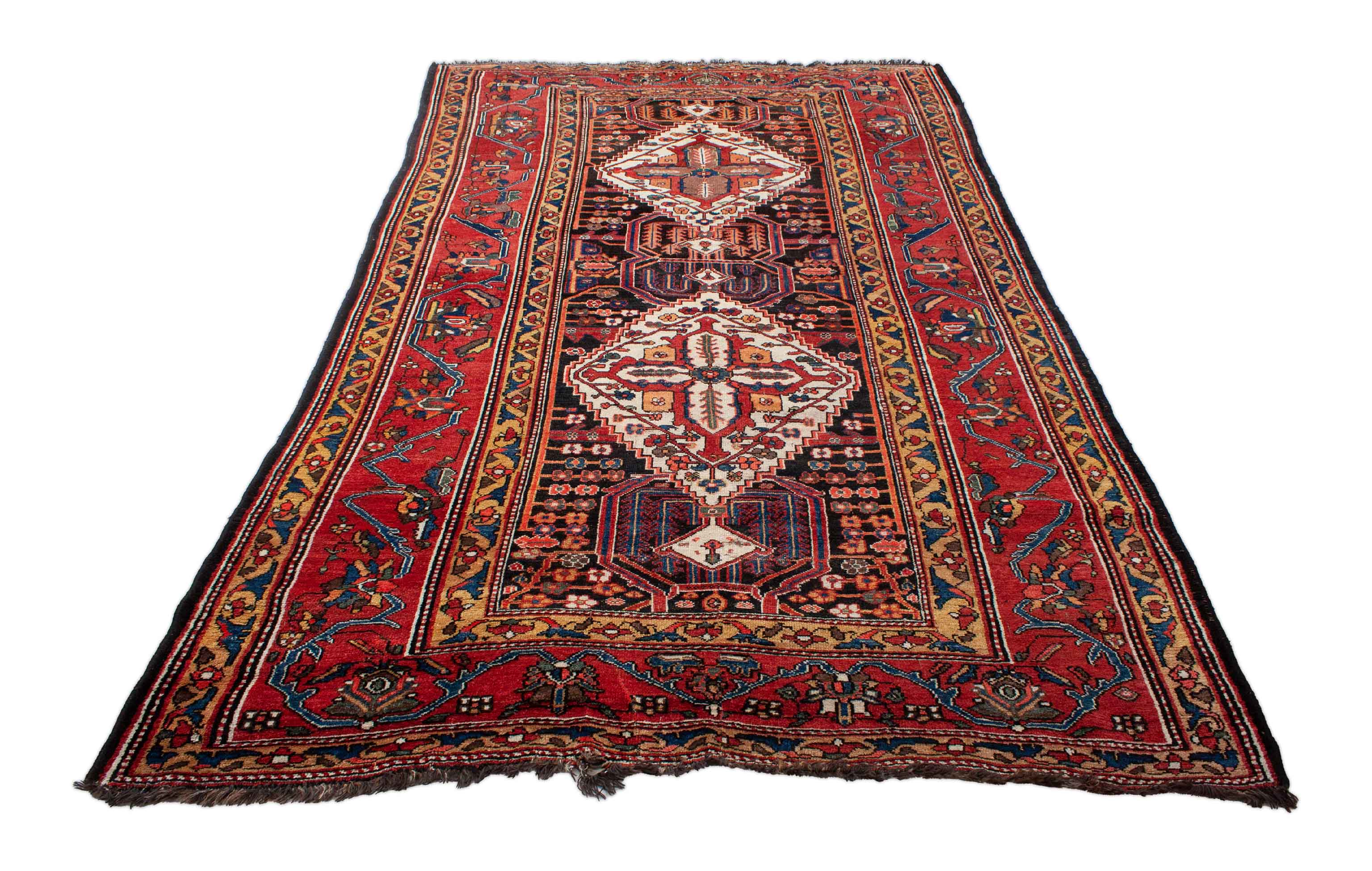
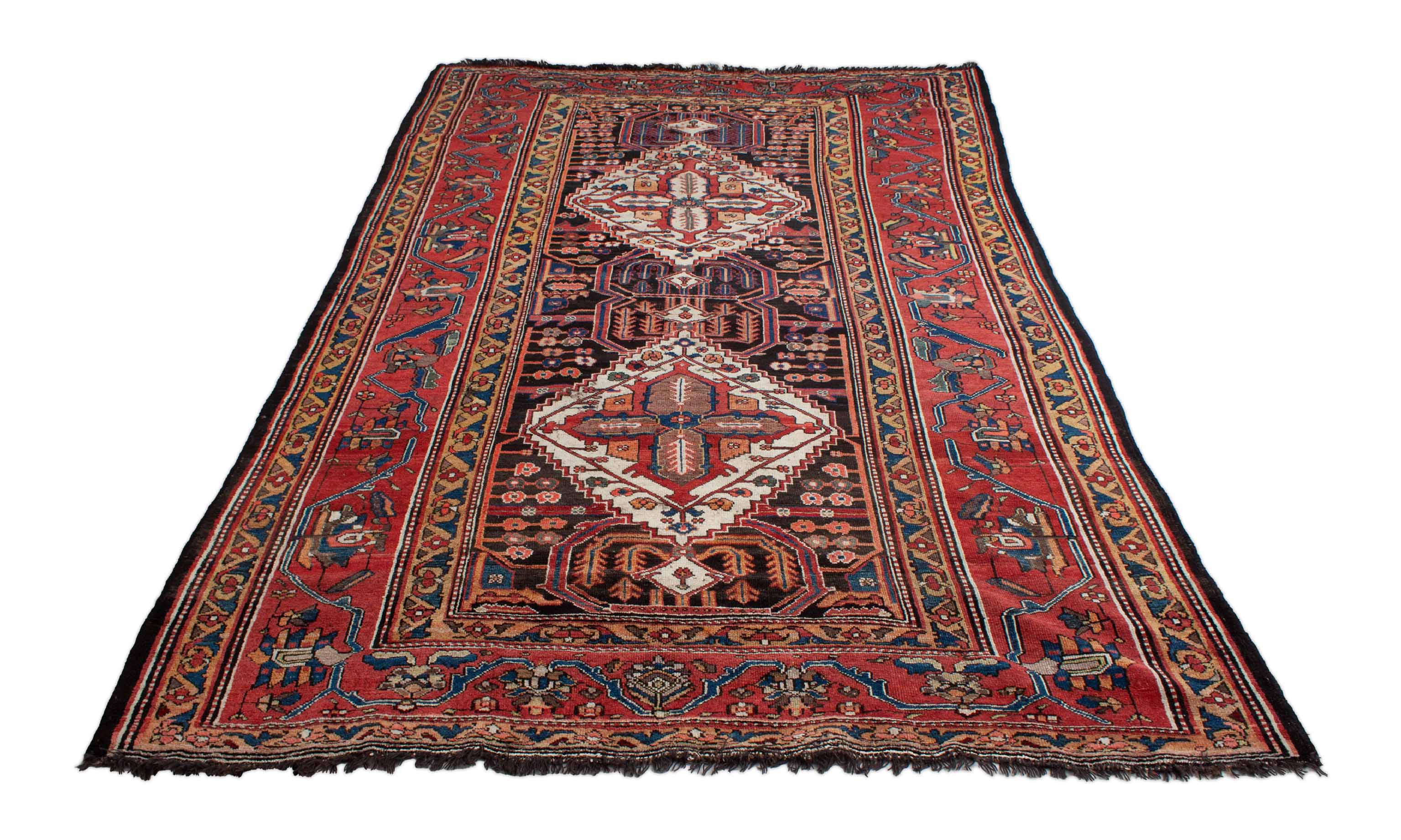
Geometric old Bakhtiari, dark blue with border
| Origin |
|
| Dimensions | 285 cm x 180 cm (= 5.13 m²) |
| Construction | hand-knotted |
| Material |
Pile: wool
|
| knots per m²2 | 120.000 |
| Pile height | 7mm |
| Year of manufacture | 1930 |
| Colour | Dark blue, dark red |
| Edition | one-of-a-kind piece |

Origin
The Bakhtiari (also Bachtiari) are an ancient, widely branching people living in south-western Iran. The collective name for their rugs is Bakhtiar or Bakhtiari, where the ‘i’ corresponds to our preposition ‘of’. Bakhtiari rugs – the rugs of the Bakhtiari – take in numerous sub-provenances with a range of pattern types. For all this breadth, Bakhtiar rugs resemble one another in their colour compositions, in their various handcrafted techniques and in their line, which is always floral.
Bakhtiari rugs are made preferably with natural dyes, which feel pleasant despite their intensity and develop a beautiful patina over time. Common colours are brown for the outlines, plus red, bottle green, yellow and white as a highlight that gives the rug its likeable character. This old Bakhtiari is around 90 years old and a true collector's piece.
Pattern
The abstract, geometric composition is what gives this Bakhtiari its understated elegance. The pattern flatters the design of the room and never steals attention from the furniture, the decoration or the architectural elements. It creates a pleasant atmosphere without dominating the style of the room.
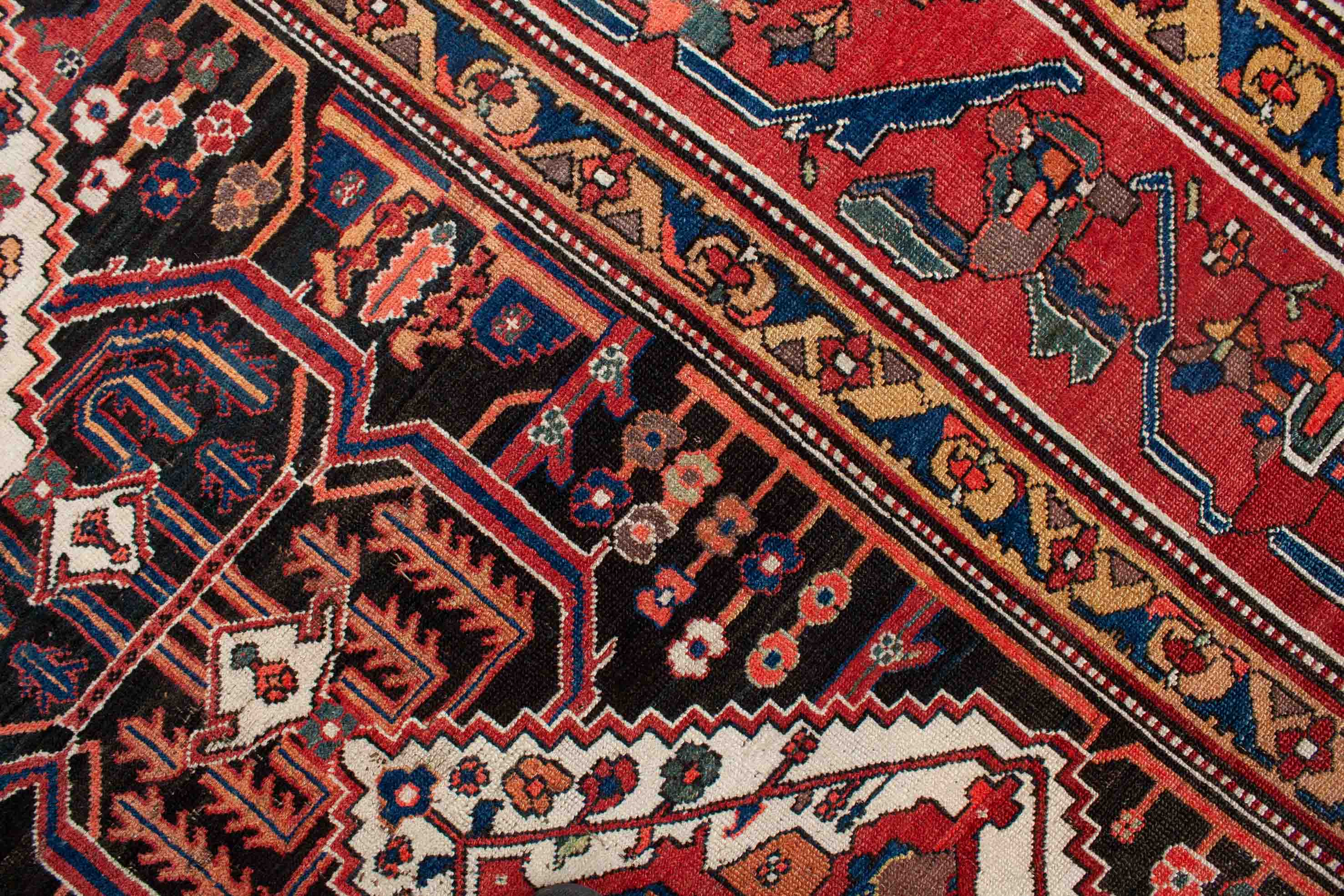
The decorated surround (border) forms a wonderful contrast to the centre and shapes the transition at the edge of the rug.
The repeating elements of this Bakhtiari rug have no specific centre. The recurring repeat pattern feels calming, yet never dull. Rugs with a repeat pattern are also described as all-over patterned.
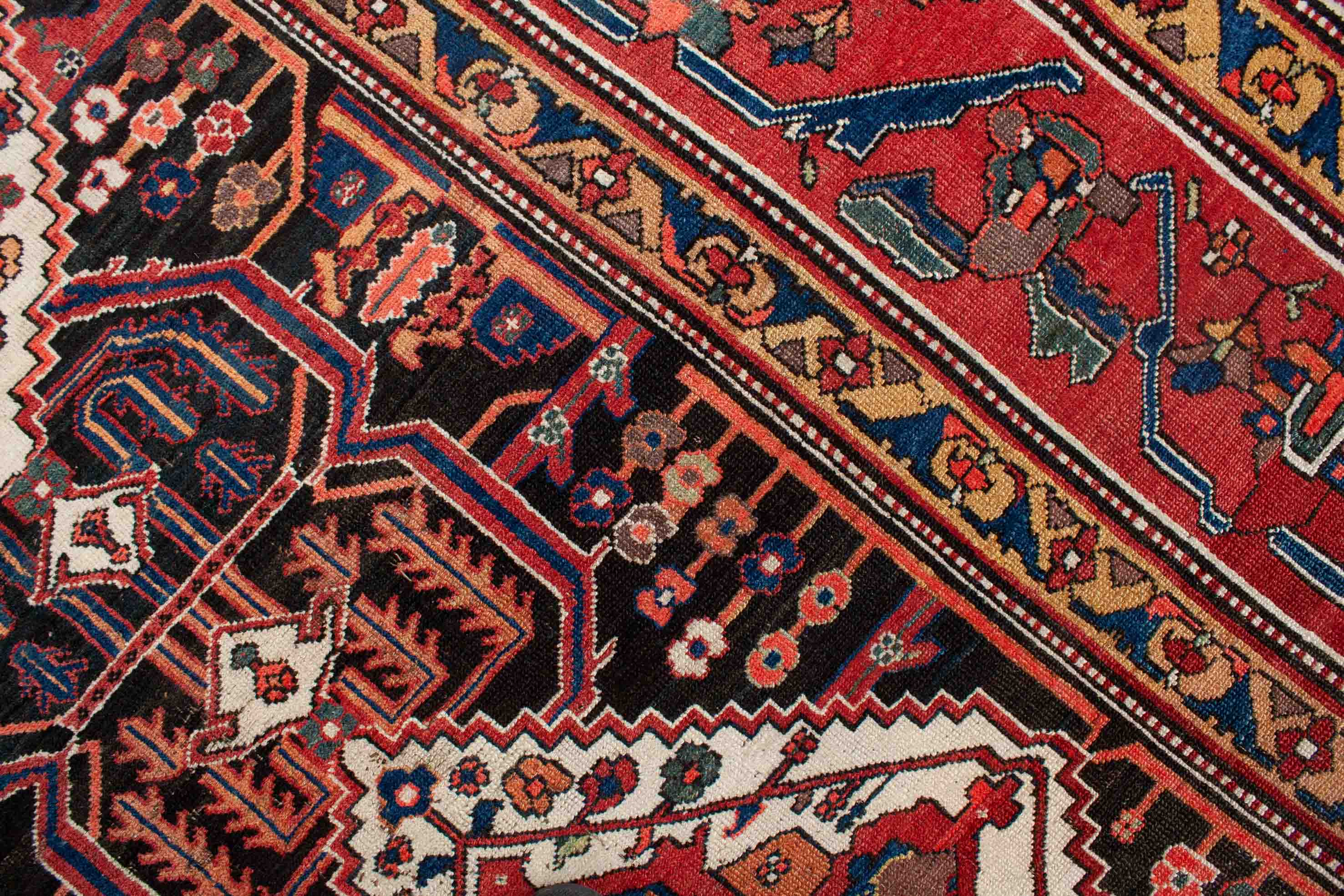
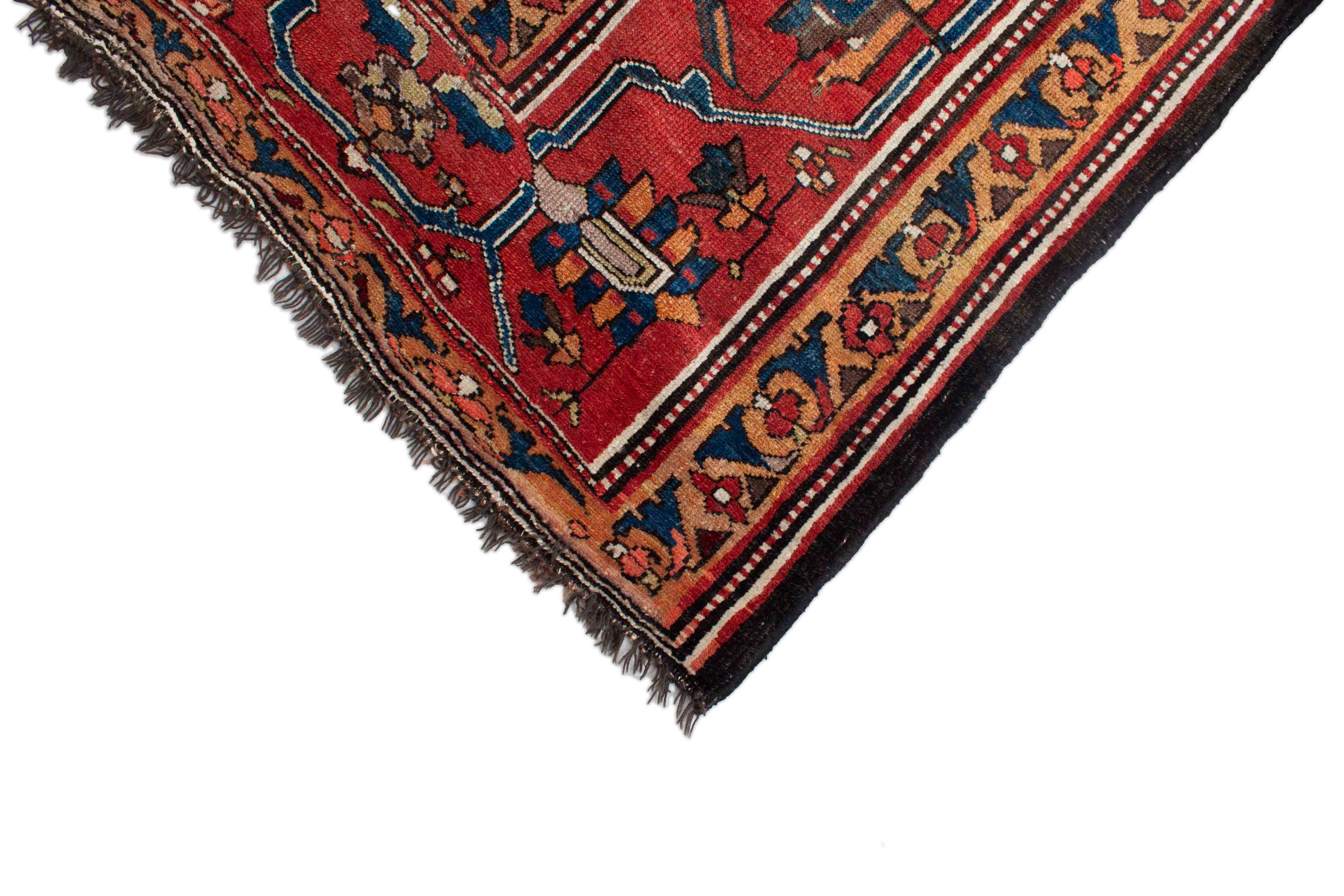
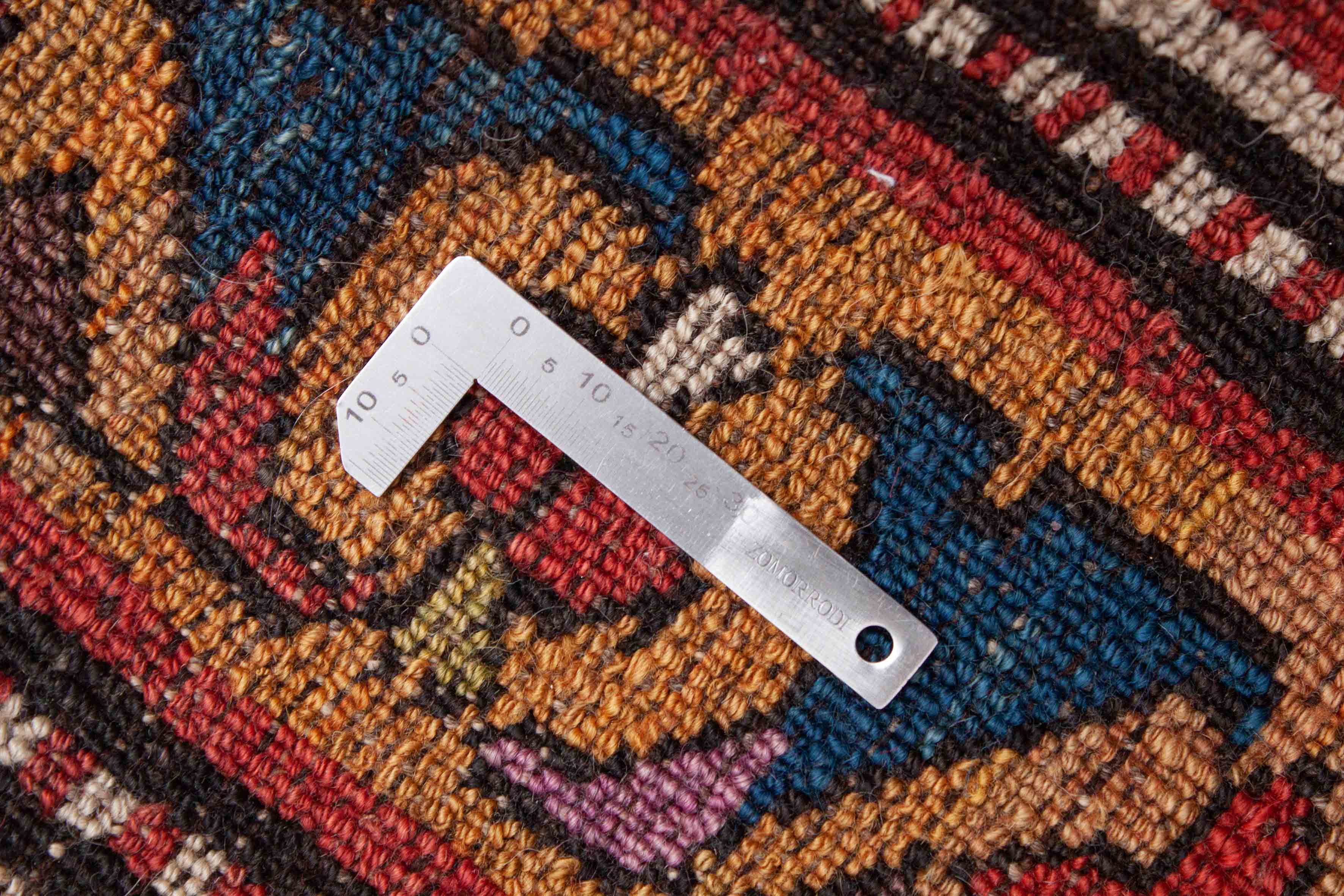
The surface of this Bakhtiari has a mottled look. The shifts in hue and the light-and-dark shading of the pile yarn make the colours shimmer and help the rug hide everyday dirt. These so-called colour shifts, known as abrash, make the rug look livelier. The mottling occurs because the wool of this Bakhtiari was hand-spun. During dyeing, the natural dyes are absorbed to differing degrees.
The ground of this Bakhtiari is dark blue. The border is worked in dark red, gold and dark blue.
Condition
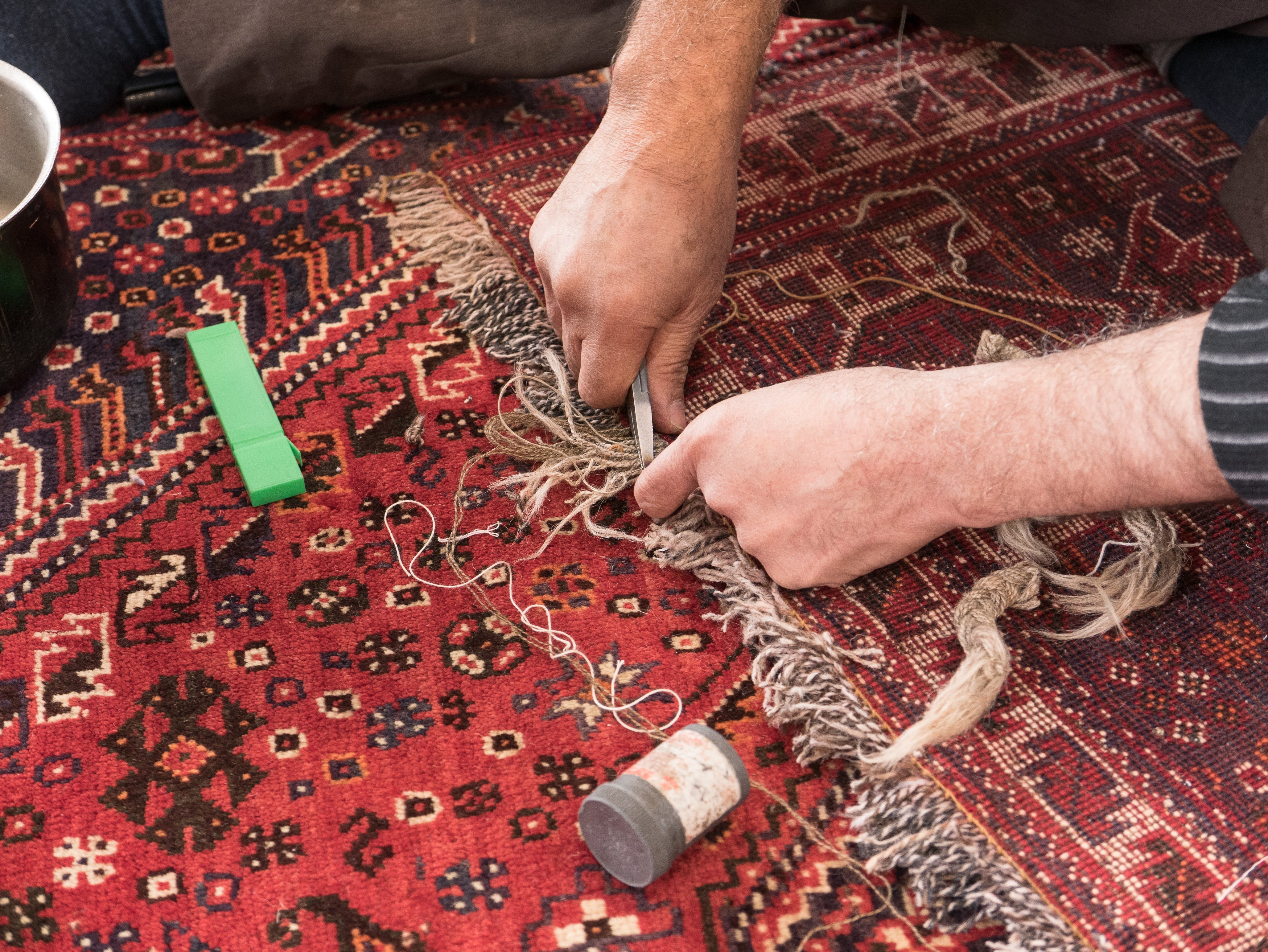
This Bakhtiari has a history. It was hand-knotted around 1930. It has been thoroughly cleaned and is in good, though only partly restored, condition. Only the pile has grown a little thinner over the years and shows one small hole. We have not fully restored this Bakhtiari because we feel it has a special presence just as it is. If you would like us to, we are of course happy to carry on restoring the rug for you. We can bring almost any rug back to near-perfect condition.
Material
The pile of this Bakhtiari was hand-knotted from high-quality new wool. New wool is obtained by gently shearing sheep. New wool is a renewable, natural raw material with a range of impressive qualities: thanks to the natural lanolin in the wool, the surface repels droplets of water and is naturally protected against dirt. Wool also provides excellent thermal insulation, helps regulate the indoor climate and dampens sound. The foundation (weft and warp threads) of this Bakhtiari is made of new wool.
A note on the photos
Child labour? No thanks.
Child labour? No thanks. Children belong in school, not at a knotting frame or a loom. For us it therefore goes without saying that we only offer rugs made under fair conditions and without child labour.
We attach particular importance to humane working conditions and tolerate no child labour at any of our producers. Thank you for helping us to ensure fair conditions.
That is why we support the initiative Care & Fair against child labour in the rug trade.

Choose options
|
|
1-3 working days delivery time (within Germany) |
|
|
14-day home trial |
|
|
Free delivery & returns within the EU |