
Indian Sarough Mir | 59 x 40 cm | Nr. Z-4473


|
14-day home trial |

|
Free delivery & returns within the EU |
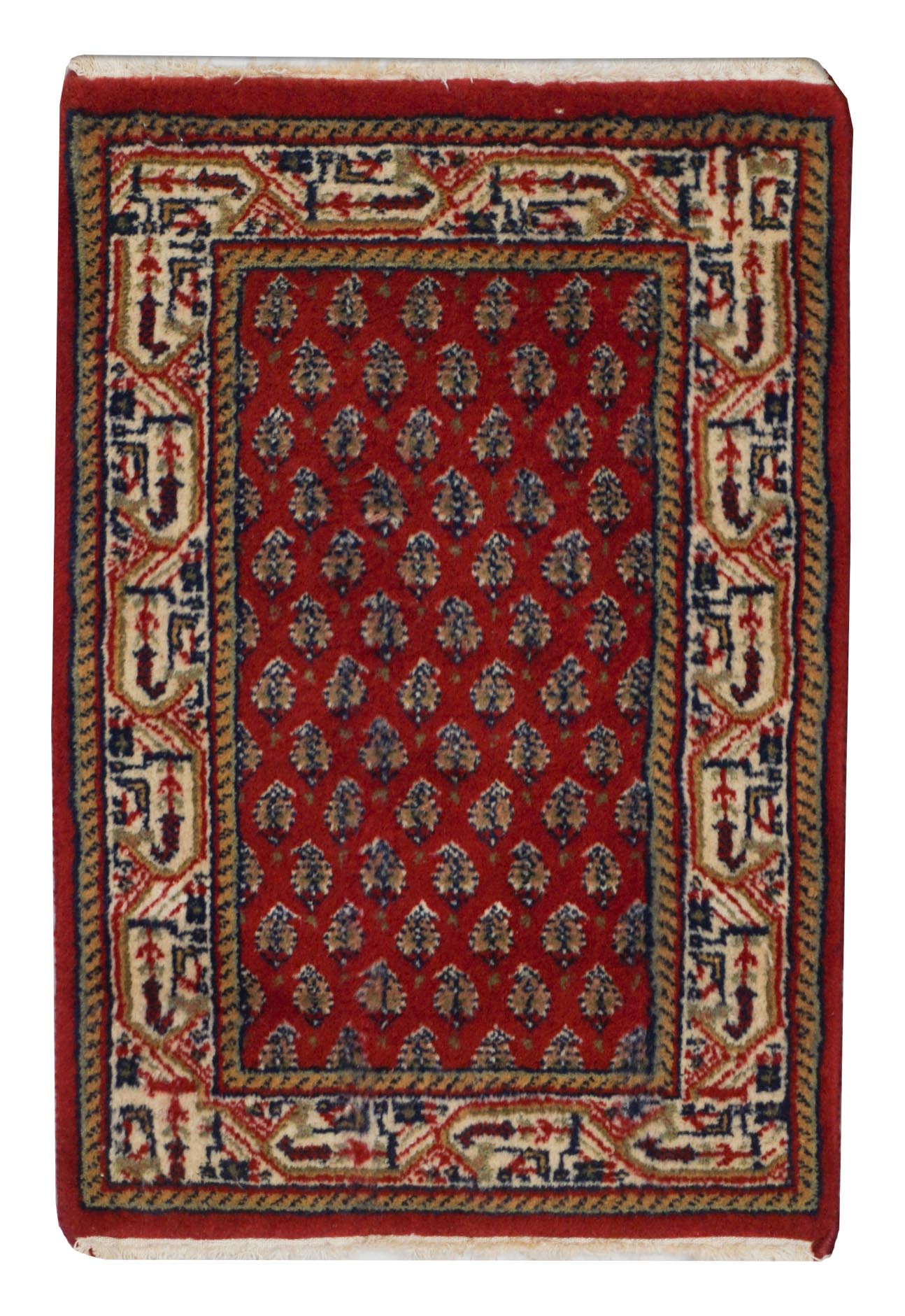
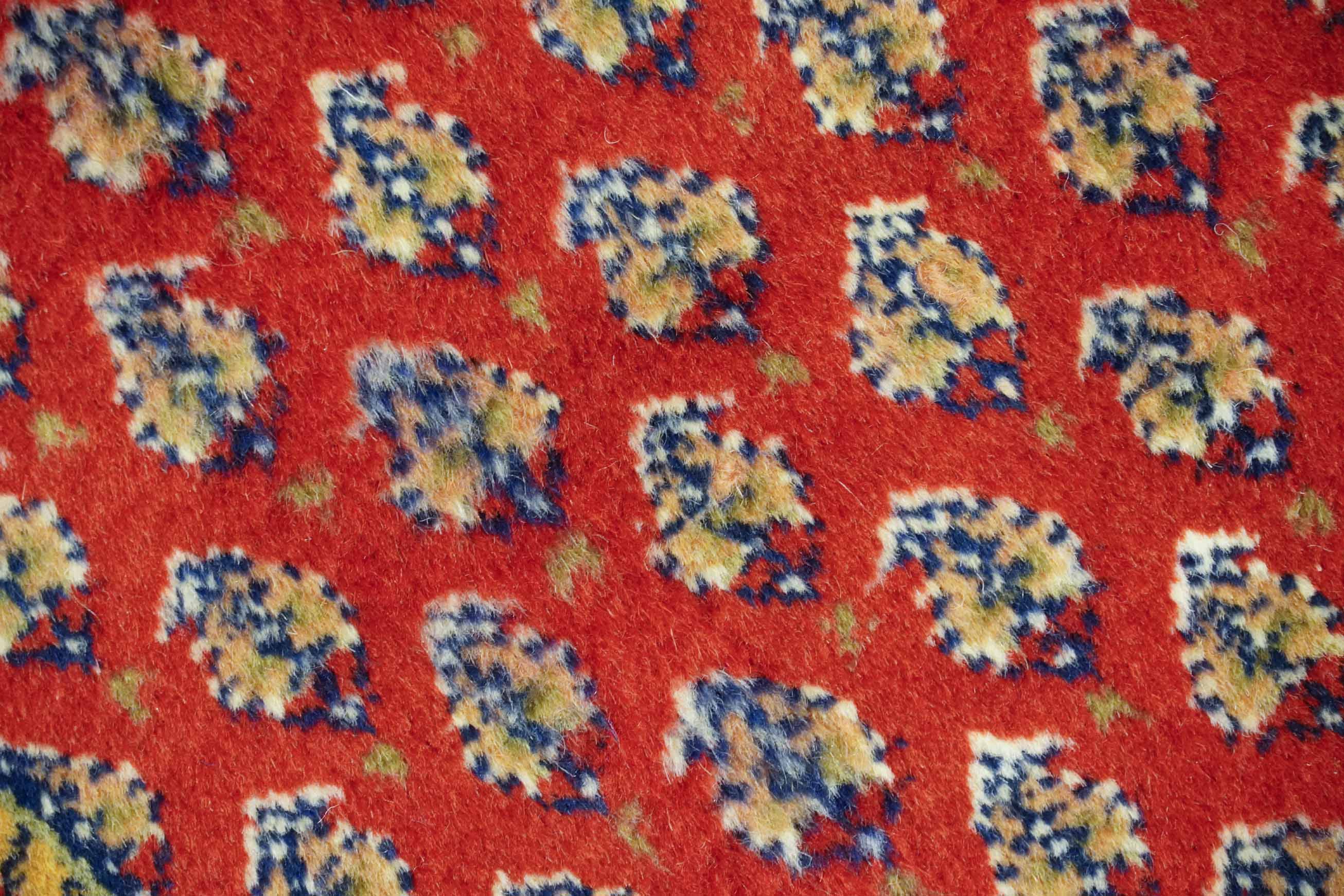
All-over patterned Indian Sarough Mir, light red with border
| Origin |
|
| Dimensions | 59 cm x 40 cm (= 0.24 m²) |
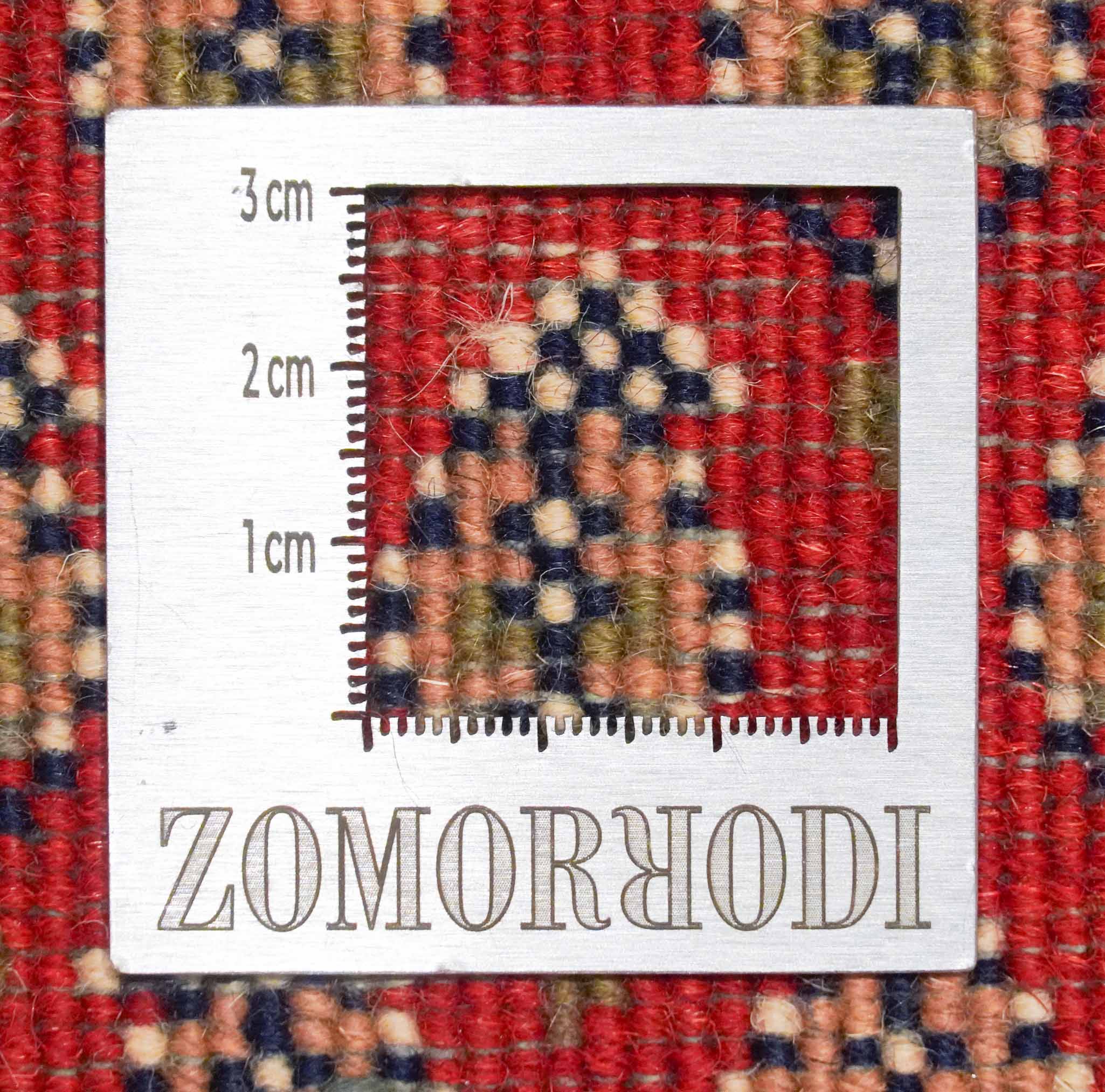
| Construction | hand-knotted |
| Material |
Pile: wool
|
| knots per m²2 | 250.000 |
| Pile height | 12mm |
| Year of manufacture | 2010 |
| Colour | Light red, Beige |
| Edition | one-of-a-kind piece |

Origin
The pattern of this rug is inspired by the patterns of classic Sarough Mir rugs. This piece, however, was knotted in India.
Exactly when rug production began in India is not known. The first rugs were probably made there during the cultural flowering of the Mughal dynasty, in the middle of the 16th century. In the middle of the 19th century, with the decline of the Mughal dynasty, Indian rug production fell into crisis. European companies whose sole aim was export to the West took the place of the traditional court manufactories. Very similar rugs were produced in different towns, and standardisation set in. Today the designs of hand-knotted Indian rugs can hardly be attributed to individual regions any more. Instead, the workshops have specialised in realising European and traditional Iranian designs adapted to Western taste. In terms of quality, rugs from India benefit from the long tradition of craftsmanship and the high quality of Indian materials. This rug comes from Sarough (also Sarouk, Saruk or Sarogh). Sarough is one of the best-known rug-knotting regions of Iran. Located in the west Persian province of Arak, it covers the provenances Arak, Djozan, Ghiasabad, Mahal, Malayer, Mohajeran, Sultanabad and Wiss. In Sarough, Persian patterns of every kind are knotted, in part also to the customer's specifications. Typical of this group of rugs is the very good wool quality of the pile, as the new wool comes from the Persian highlands. The foundation – warp and weft – is usually made of cotton, however. In old and antique rugs you often find a blue weft thread. The knotting is very fine and the pile relatively high.
Rugs like this one are known as Sarough Mir. Framed by a border, the all-over patterned field is adorned with the so-called Mir-i-Boteh pattern. The Mir-i-Boteh pattern consists of a curved almond motif that stands upright and forms a repeating row. Rendered naturalistically or abstractly, it is instantly recognisable by its bent tip. The shape has often been described as a flame – linked to the fire cult of the Parsees, followers of Zarathustra's teachings – or as a bent palm leaf. It is considered likely that the pattern was inspired by cypress trees. In Europe, the almond-shaped element of the pattern is known as the paisley pattern.
Pattern
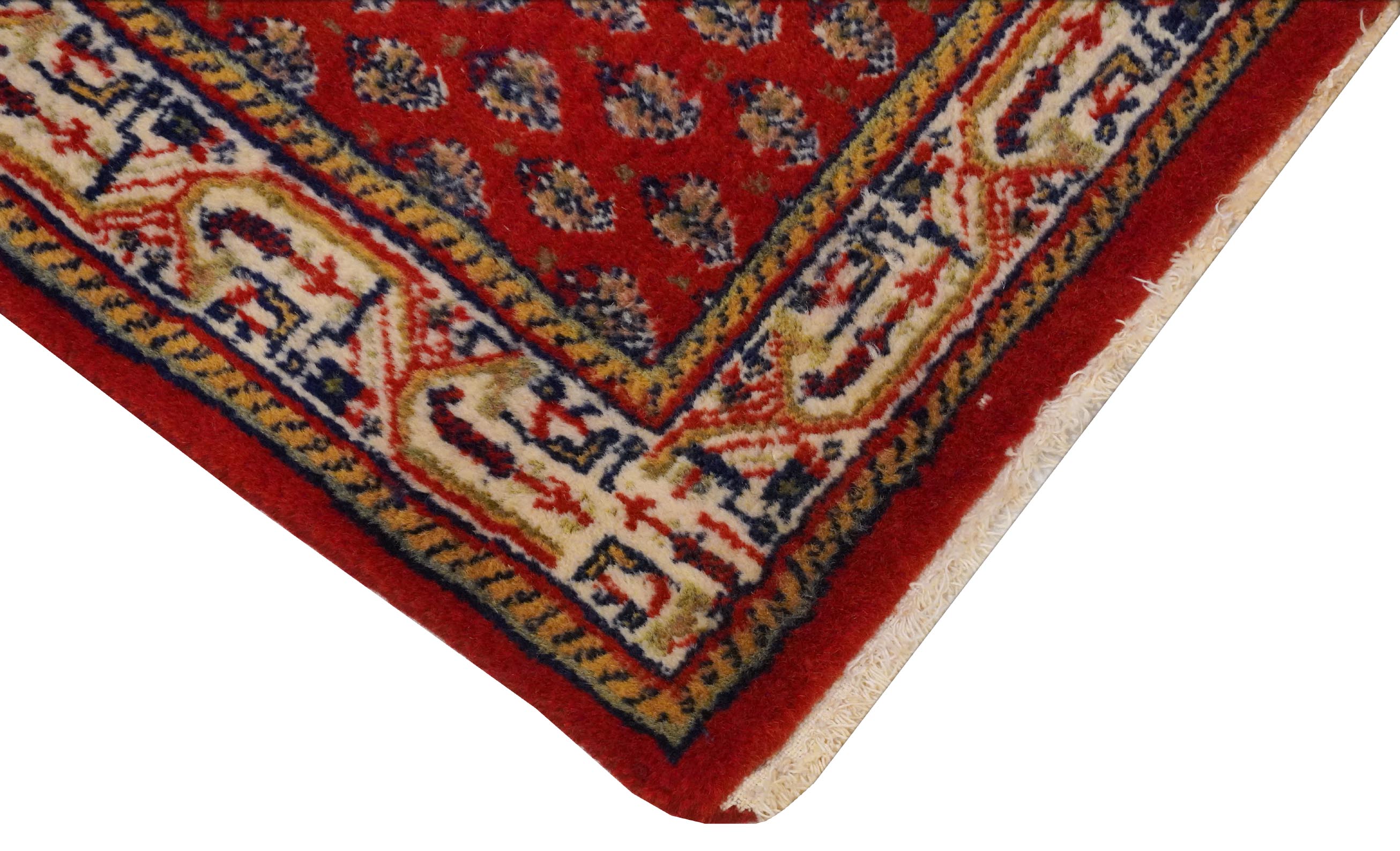
The decorated surround (border) forms a beautiful contrast to the centre and shapes the transition at the edge of the rug.
The repeating elements of this Sarough Mir rug have no specific centre. The recurring repeat pattern feels calming without ever becoming dull. Rugs with a repeat pattern are also described as all-over patterned.
The background of this Sarough Mir is light red. The border is designed in light red, beige and light brown.
Condition
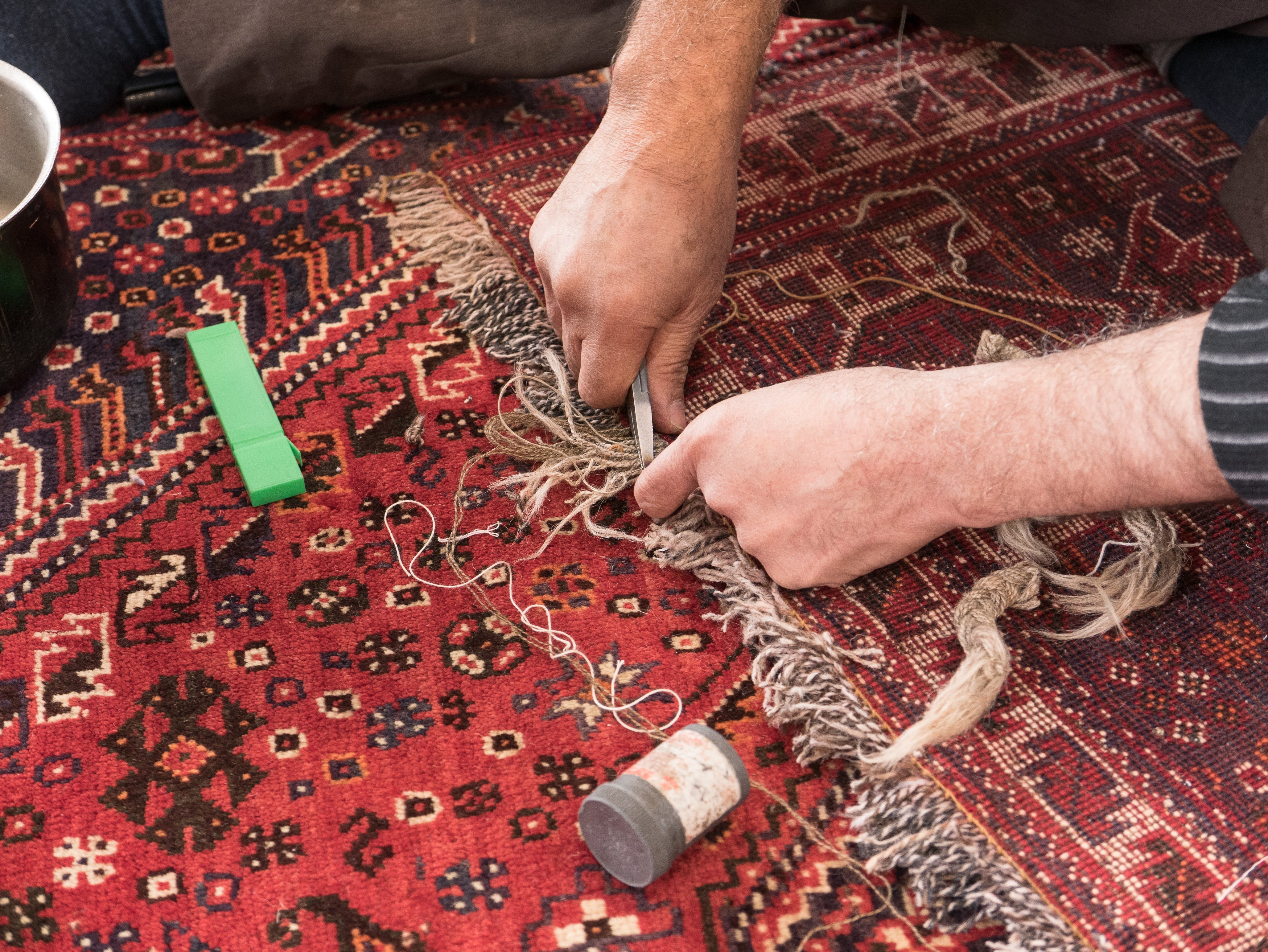
You are not the first to take a liking to this Sarough Mir. It has had owners before you who valued and used it. The fringes could do with a repair. It was hand-knotted around 2010. We have cleaned it thoroughly and restored it with care. Despite its age, it is therefore in very good condition.
Material
The pile of this Sarough Mir was hand-knotted from high-quality new wool. New wool is obtained by gently shearing sheep. New wool is a renewable, natural raw material with a range of impressive qualities: thanks to the wool's natural lanolin content, the surface repels droplets of water and is therefore naturally protected against dirt. Wool also offers excellent thermal insulation, helps regulate the indoor climate and dampens sound. The weft and warp threads of this Sarough Mir are made of cotton. This versatile material is tear-resistant and elastic, which makes it particularly well suited to a hard-wearing foundation.
A note on the photos
Child labour? No thanks.
Child labour? No thanks. Children belong in school, not at a knotting frame or a loom. For us it therefore goes without saying that we only offer rugs made under fair conditions and without child labour.
We attach particular importance to humane working conditions and tolerate no child labour at any of our producers. Thank you for helping us to ensure fair conditions.
That is why we support the initiative Care & Fair against child labour in the rug trade.

Choose options
|
|
14-day home trial |
|
|
Free delivery & returns within the EU |