
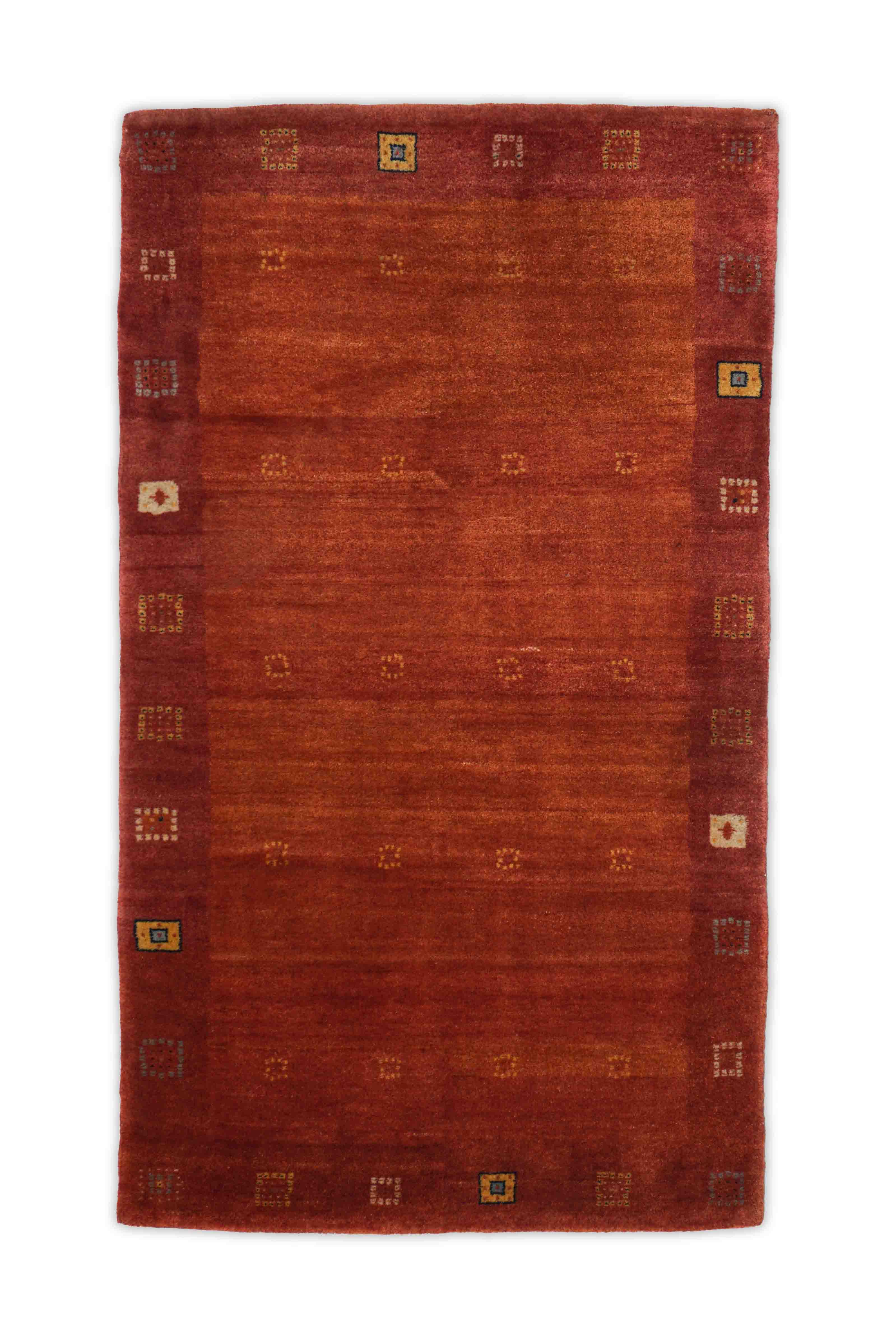
Lori | 153 x 89 cm | Nr. 18916


|
1-3 working days delivery time (within Germany) |

|
14-day home trial |

|
Free delivery & returns within the EU |
Geometric Lori, light red with colour gradient
| Origin |
|
| Dimensions | 153 cm x 89 cm (= 1.36 m²) |
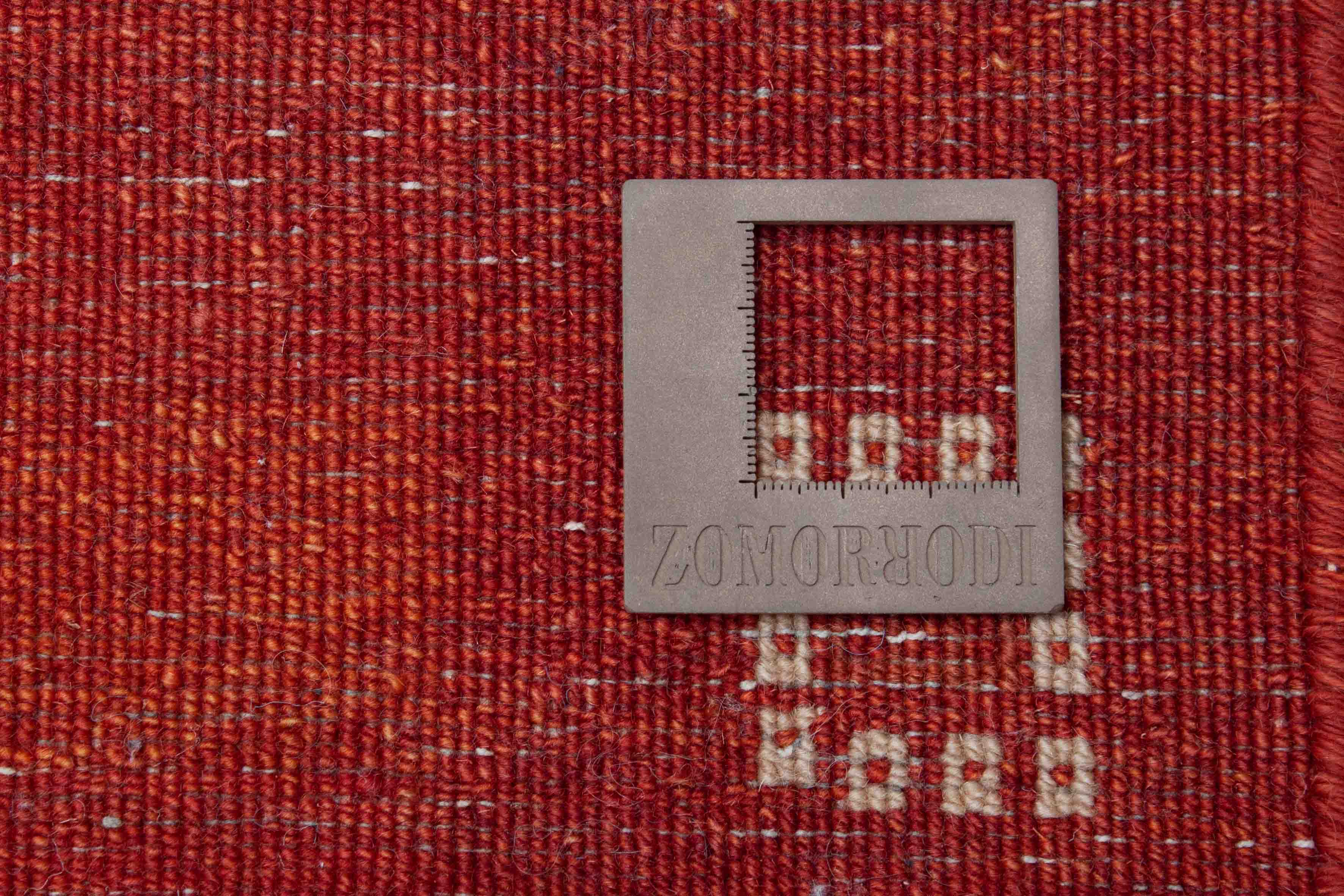
| Construction | hand-knotted |
| Material |
Pile: wool (hand-spun, natural dyes)
|
| knots per m²2 | 200.000 |
| Pile height | 10mm |
| Year of manufacture | 2015 |
| Colour | Light red, dark red |
| Edition | one-of-a-kind piece |

Origin
Lori rugs are a finer version of the Gabbeh, which was traditionally knotted by the Lurs. The Lurs are a tribal people in south-western Persia (also known as Loristan). Lori (or Luri) rugs are also referred to as Loribaft. The added syllable "baft" means roughly "knotted". Translated, Loribaft therefore means Lur knotting.
Lori rugs traditionally have inventive geometric patterns in colourful designs. Modern Loris are usually plainer these days, with monochrome designs. Even so, you still come across traditional, stylised and geometric motifs from everyday nomadic life, such as goats, camels, dogs, plants or people. The geometric pattern and the friendly colours create a pleasant, warm atmosphere at home.
Pattern
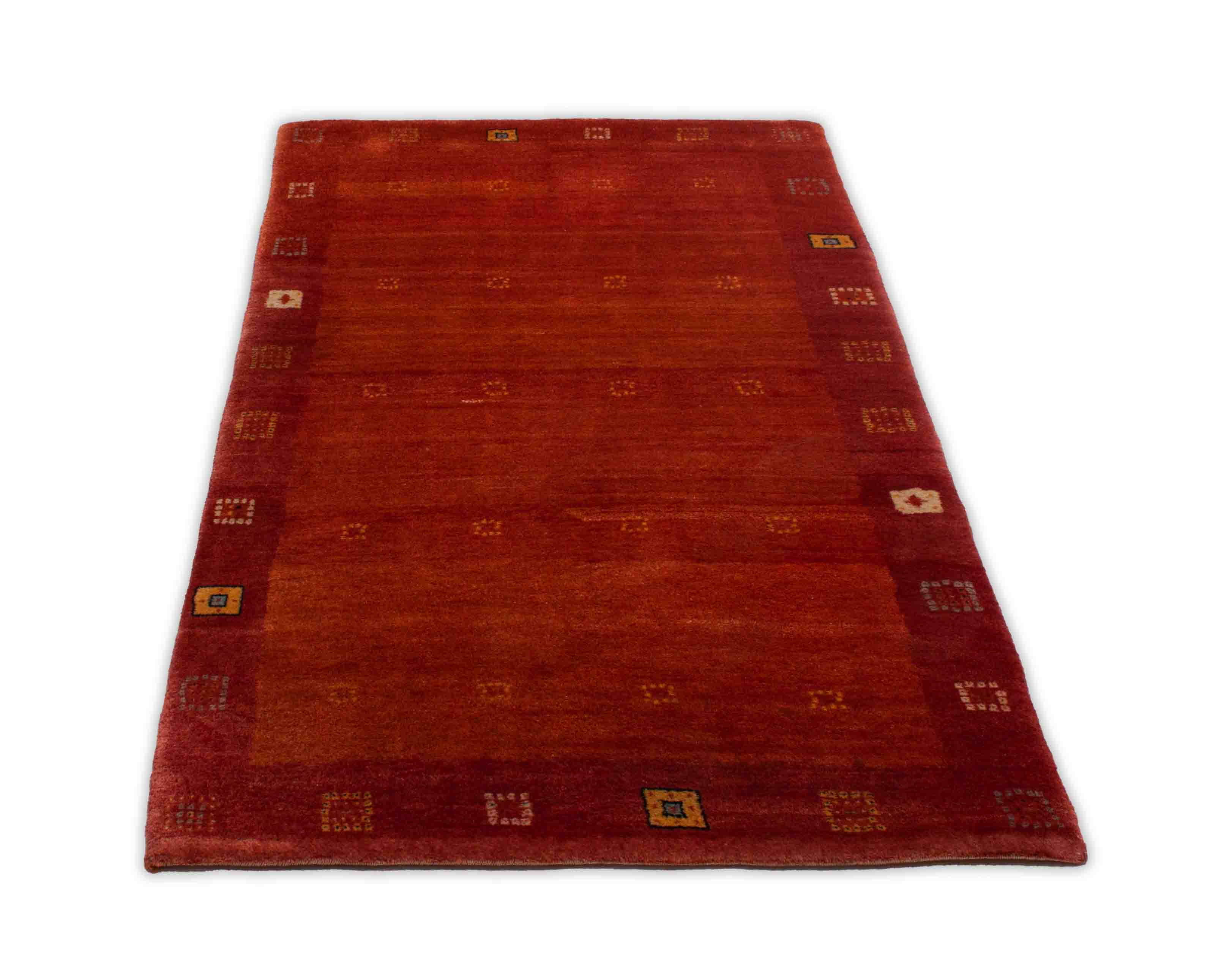
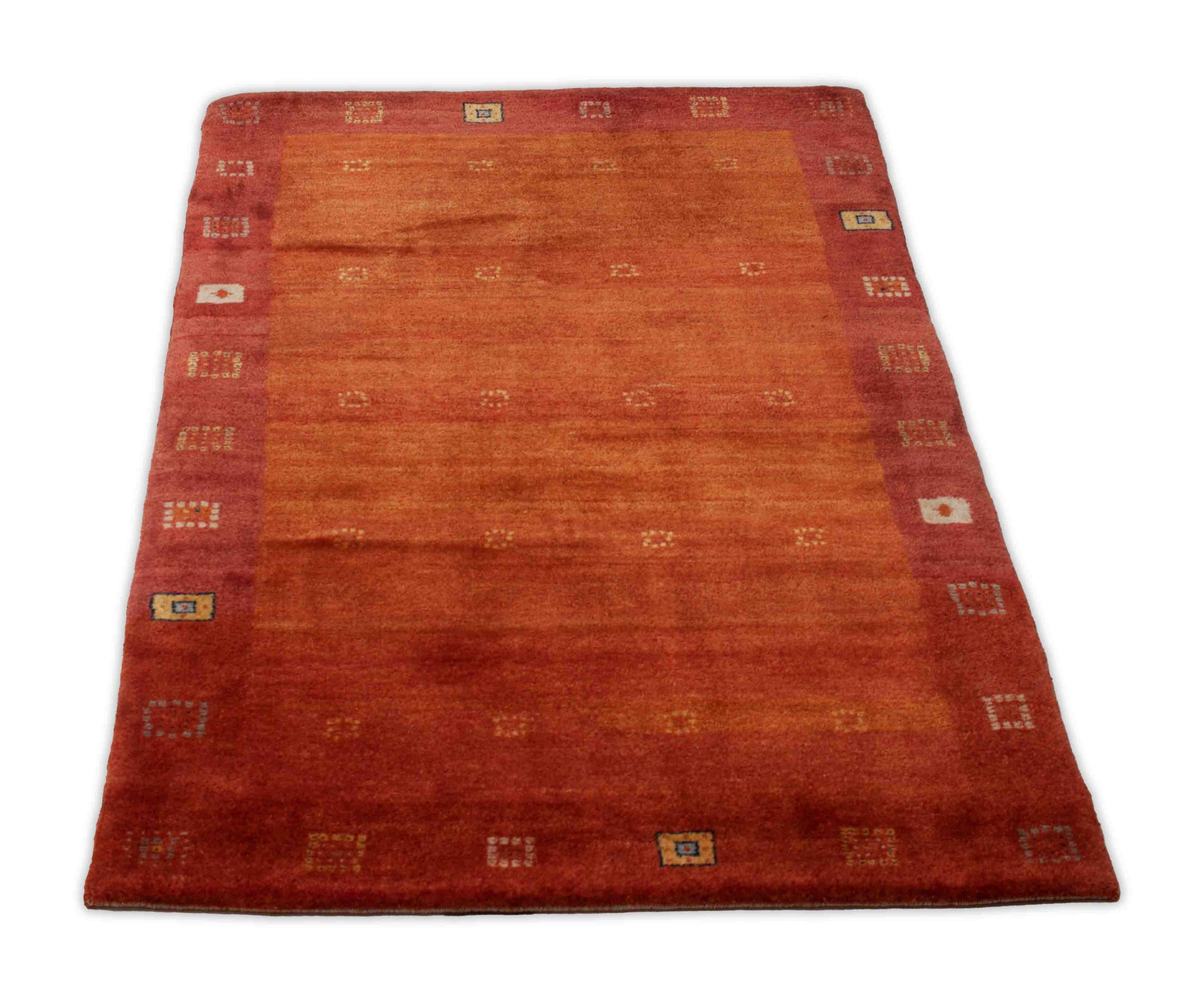
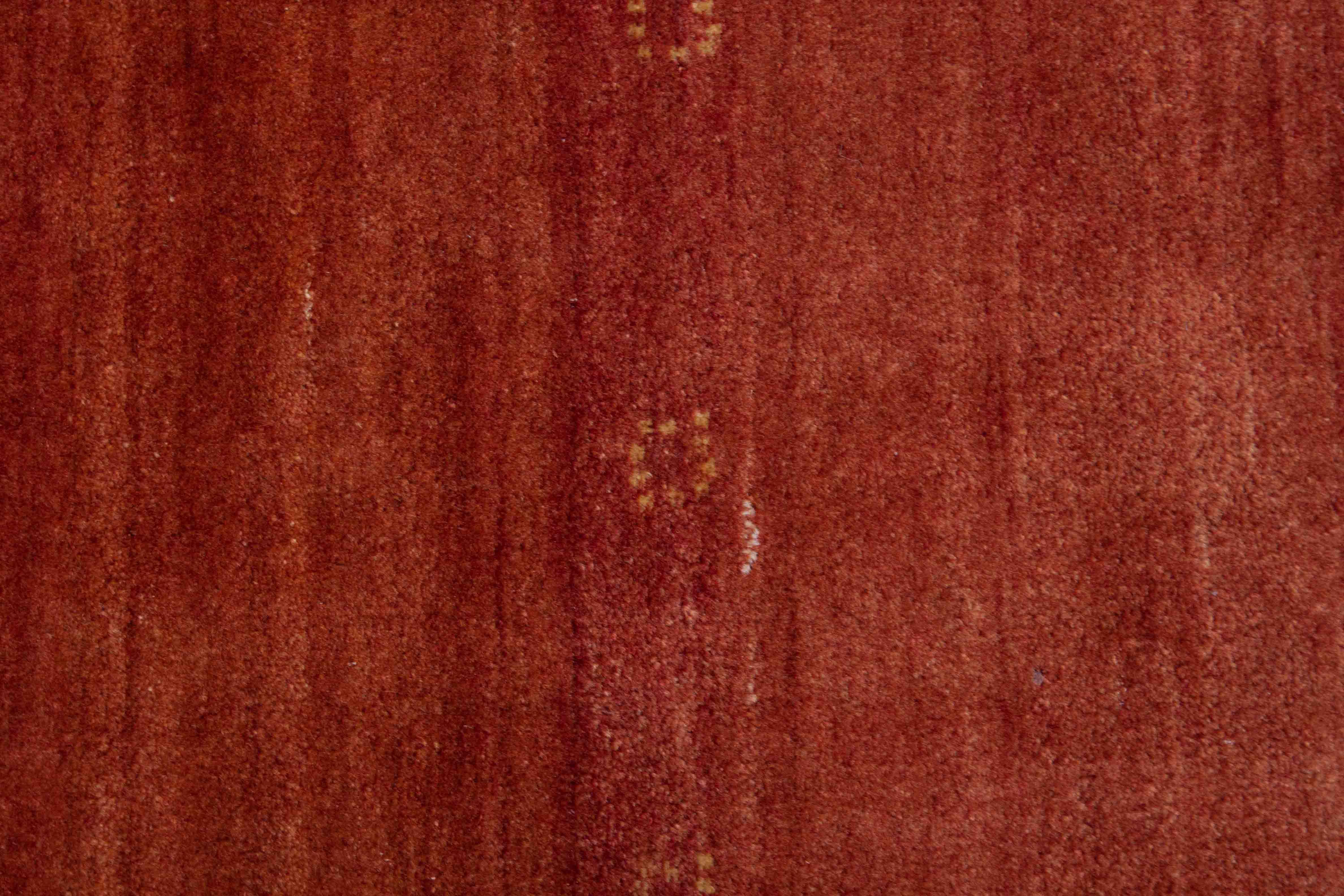
The colours of this Lori form a gradient and flow into one another.
The abstract, geometric composition is what gives this Lori its understated elegance. The pattern flatters the design of the room and never draws attention away from the furniture, the décor and the architectural elements. It creates a pleasant atmosphere without dominating the style of the room.
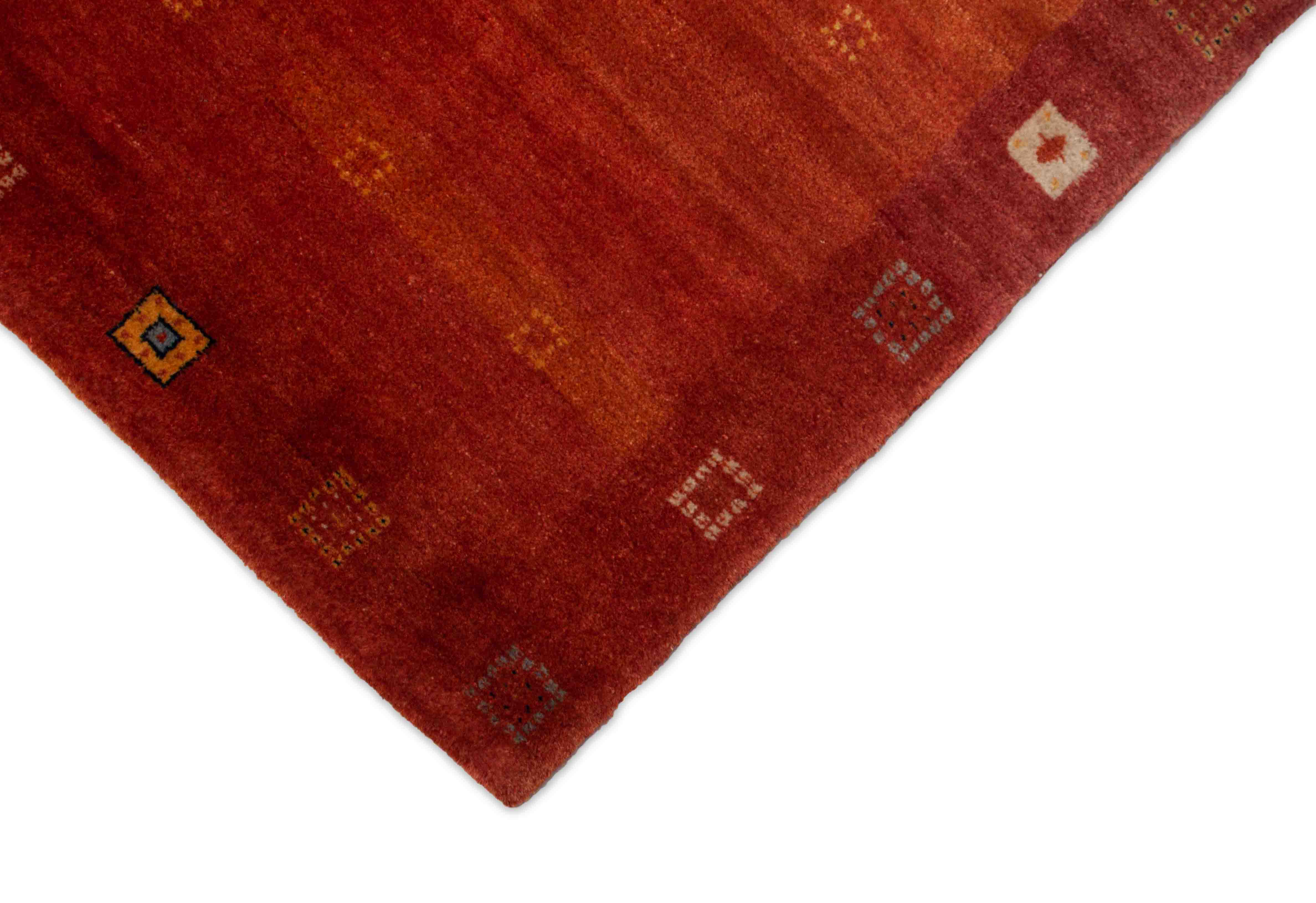
A lightly suggested border frames the edge of this rug.
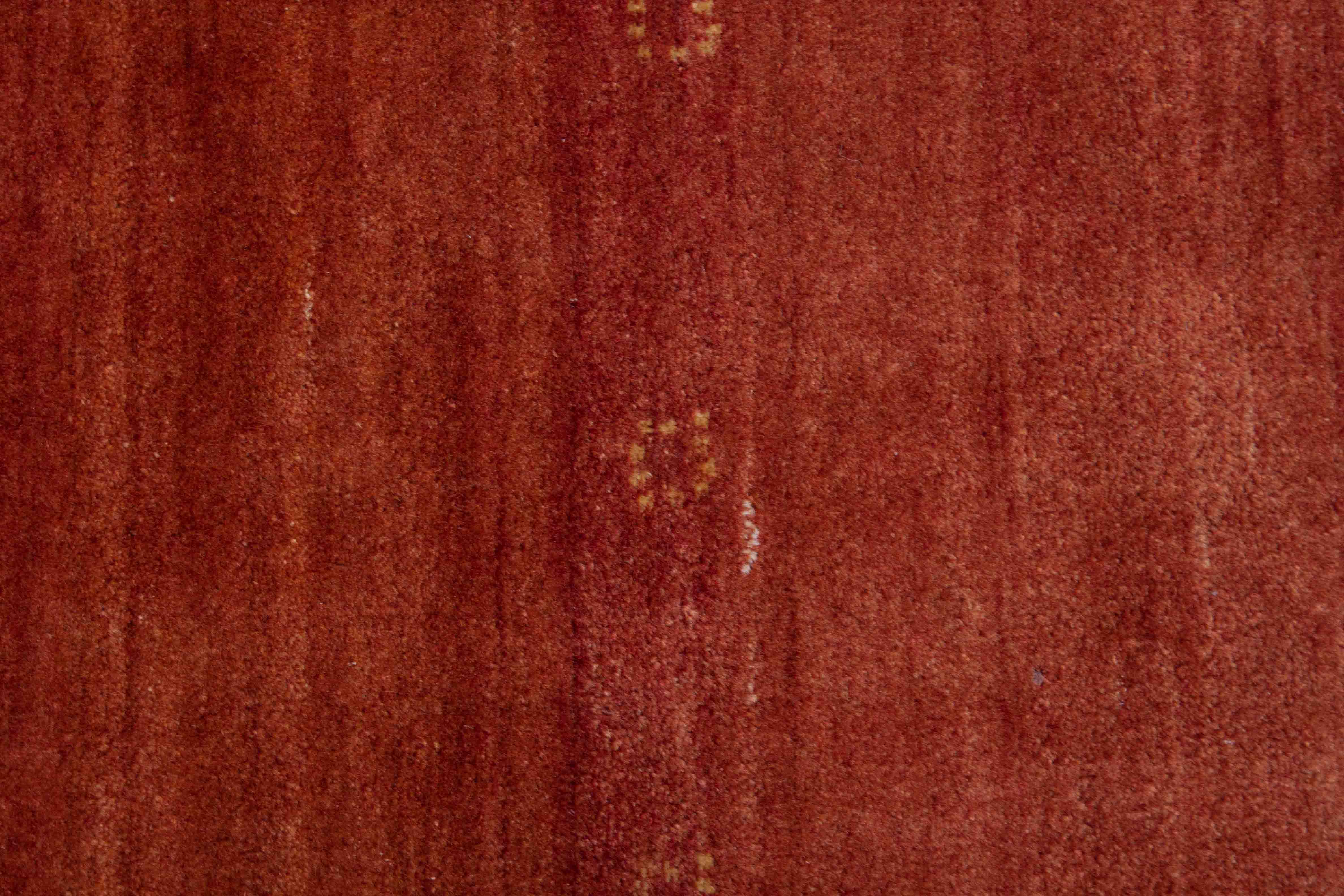
The surface of this Lori has a mottled look. The changes in shade and the light-and-dark gradations of the pile yarn run across the length of the rug, letting the colours shimmer and making the rug forgiving of dirt. These so-called colour shifts, abrash, give the rug a livelier feel. The mottling occurs because the wool of this Lori was hand-spun. During dyeing, the natural pigments are absorbed to differing degrees.
The background of this Lori is terracotta. The overall impression is also dominated by light red and dark red. The border is kept in dark red.
Condition
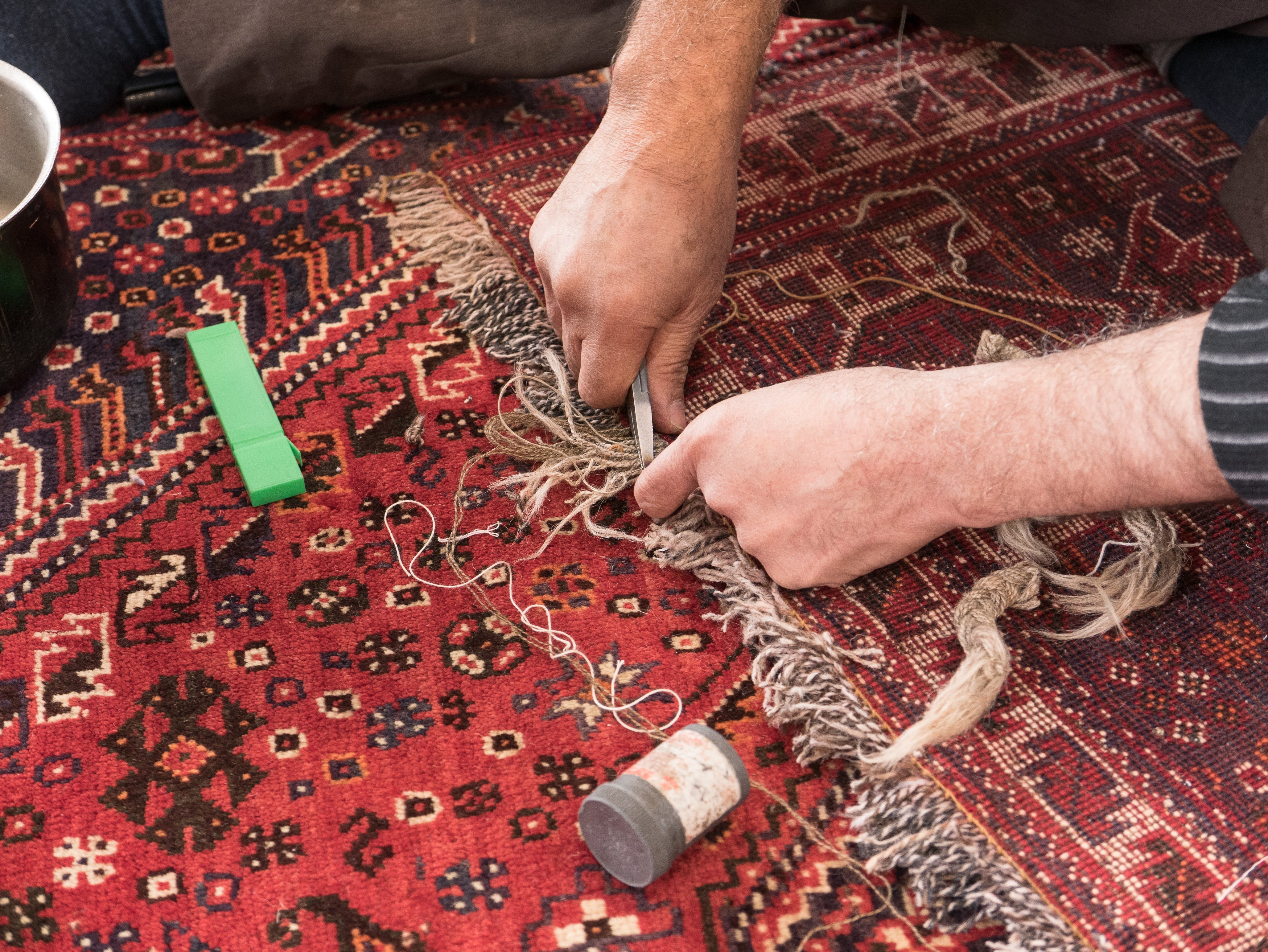
This Lori has had admirers before you. It was hand-knotted around 2015. We have cleaned it thoroughly and restored it with care. Despite its age, it is therefore in very good condition.
Material
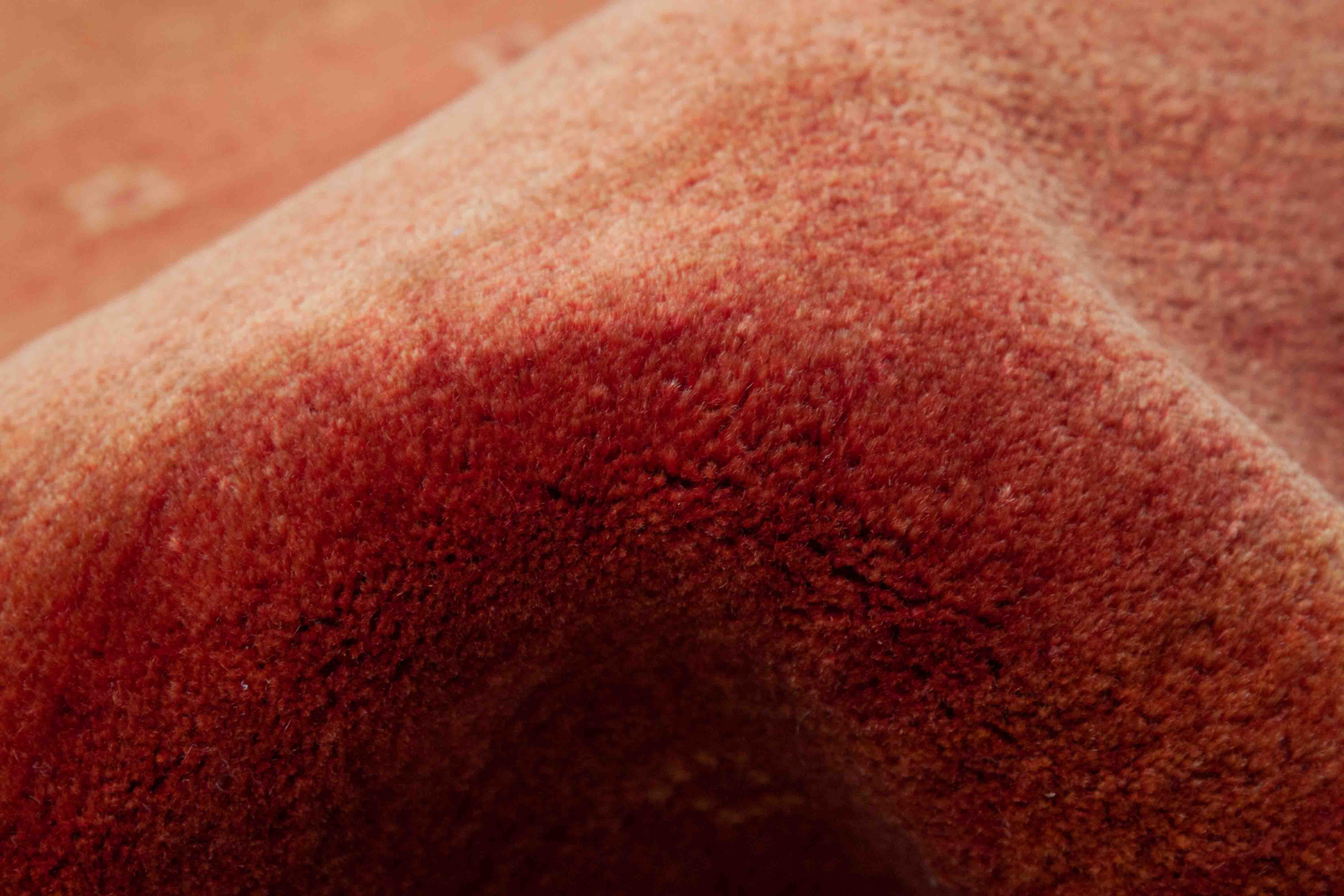
This hand-knotted Lori rug has a dense, relatively high pile. The sheep's wool used for the pile of Lori rugs is particularly fine and rich in lanolin. Lori rugs are wonderfully cosy and hard-wearing. Traditionally, Lori rugs – like the Gabbeh – were used for sleeping on. They invite you to sit and lounge about in the living room, but are just as good in hallways and dining areas. The sheep's wool pile of Lori rugs is dyed with natural colours and hand-spun. That is what gives the Loris their soft surface. Hand-spun wool is always slightly irregular. During dyeing, the natural pigments are absorbed to differing degrees. The rug gains a livelier feel, with so-called colour shifts (abrash), that is, light-and-dark gradations of colour. The changes in shade of the pile yarn always run across the length of the Lori and make the rug forgiving of dirt. The foundation (weft and warp threads) of this Lori is made of new wool.
A note on the photos
Child labour? No thanks.
Child labour? No thanks. Children belong in school, not at a knotting frame or a loom. For us it therefore goes without saying that we only offer rugs made under fair conditions and without child labour.
We attach particular importance to humane working conditions and tolerate no child labour at any of our producers. Thank you for helping us to ensure fair conditions.
That is why we support the initiative Care & Fair against child labour in the rug trade.

Choose options
|
|
1-3 working days delivery time (within Germany) |
|
|
14-day home trial |
|
|
Free delivery & returns within the EU |