Article: All about knotting: knots, technique and effort
All about knotting: knots, technique and effort
Have you ever wondered what lies behind the fine, dense pile of a hand-knotted rug?
Knotting
Hand-knotted rugs are made on a special frame, the so-called knotting loom . Depending on the width the rug is meant to have, it is set up individually every single time.
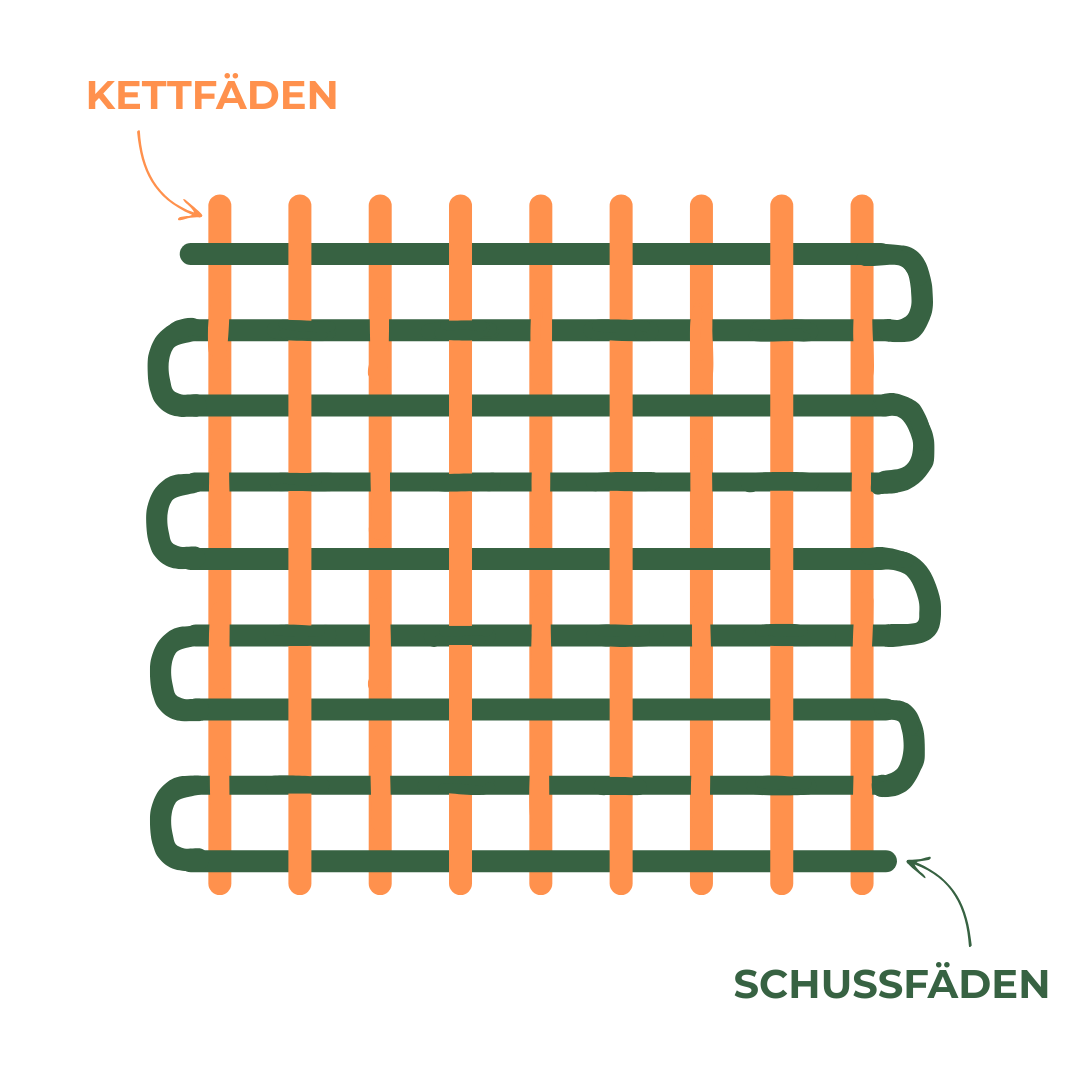
Just as in weaving, the vertical warp threads are first mounted on the knotting loom and pulled taut. It is very important that they stay tight, so the rug does not develop waves or uneven patches later on.

Now comes the most important step:
The actual pile yarn – the part that later forms the surface of the rug – is knotted in by hand. Every single knot is pulled tight, and knot by knot the desired pattern takes shape, following a design exactly or improvised entirely freely.
As soon as a row has been knotted all the way across, the weft thread is woven in - passed alternately over and under the taut warp threads and then, with a metal comb pressed firmly against the knots. This ensures that the knots sit straight and firmly in the right place and that a dense structure is formed. The warp thread gives the knots, and thus the emerging rug, additional hold and stability.
The knots of a hand-knotted rug are the key to its quality and durability. And there are different types of knot, which shape not only the rug's structure but also its appearance, its sturdiness and the way it feels.
Depending on the province, the design and the intended use, different types of knot are used.
Here we take a look at the best-known knotting techniques and what makes each of them special:
Senneh knot (Persian knot)
The Senneh knot is also known as the double knot, the asymmetrical knot or the Persian knot. It stands for the best-known and most traditional knotting technique.

How does it work?
The Senneh knot is looped around just one warp thread, and the yarn is then carried openly behind the neighbouring warp thread, so that the two ends are separated by a single warp thread. The knot can be open to the left or to the right.
What makes it special?
The Senneh knot is particularly well suited to very fine, detailed patterns with a high knot density.
It is typically used for Persian rugs, especially those from the provinces of Tabriz, Isfahan or Nain .
Ghiordes knot (Turkish knot)
The Ghiordes knot, also called the simple, symmetrical or Turkish knot, is especially hard-wearing.

How does it work?
The yarn runs outwards under one warp thread, comes back to the front and is looped around both warp threads, forming a collar-shaped knot. Finally the ends are drawn through the middle so that they emerge between the same two warp threads.
What makes it special?
The Senneh knot is typical of Turkish, Caucasian and Turkmen rugs, which win you over with their sturdy structure and traditional designs.
The Tibetan knot
The Tibetan knot is a distinctive knotting technique that produces a very soft, dense-looking rug with a plush pile.

How does it work?
With the Tibetan knot, the yarn is laid over a rod and looped around two or more warp threads.
Once a row is finished, the rod is pushed down and tapped tight with a wooden mallet. The metal comb makes sure the yarn sits firmly in the right place.
At the end the loops are cut open and the rod is removed - and that is how a particularly soft, plush pile comes about.
What makes it special?
The Tibetan knot is found above all in Nepalese and Tibetan rugs, which win you over with their dense, soft surface.
Knot density
Knot density is one of several important factors when it comes to placing hand-knotted rugs in terms of their value.
But it also plays an important role in how a rug looks.
You can think of knots as the resolution/the number of pixels on a screen. The more knots, or pixels, the sharper the image.
If you love finely branching floral patterns with perfect symmetry, for example, a high knot density is essential.
For a rustic look, or for a simple plain rug, the knotting can just as easily be a little coarser.
In the world of rugs, then, the following rule applies: the more knots, the more work involved / the more the rug costs.
Of course, factors such as the material used, age, condition, edition and so on play an equally important role in determining the value of a rug.
Knot density can be roughly estimated from the back of the rug as follows:
To do this, count the number of knots along one centimetre, multiply by 100 and then square the result. Bear in mind, though, that the density can vary slightly depending on the knotting technique and across the surface.
Rugs with a knot density of 40.000 to 180.000 knots per m² have a coarse, rustic look. This knot density is often found in Berber rugs or modern designer rugs with abstract patterns.

180.000 to 400.000 knots per m² are typical of many high-quality Persian rugs with richly detailed patterns and ornaments.

Rugs with a knot density of 500.000 to 1.000.000 knots per m² and above allow for extremely fine, richly detailed patterns. In particular, silk rugs are knotted this finely.

There are in fact outliers that are knotted even more finely. They are the exception, though, and rarely come along.
Naturally, we have a few such pieces in our range too. Do ask us about them on your next visit if that appeals to you!
Knotting rate
Have you ever wondered how long it takes to knot a handmade rug?
The answer is fascinating, and it shows just how much dedication goes into every single knot.
As an example, let's take a modern rug measuring 240 x 170 cm and with a knot density of 160.000 knots per m².
So for this rug, a total of 640.000 knots would have to be tied.
Experienced weavers tie on average 10.000 knots per day – which means this rug takes about 64 working days to finish. With a six-day working week, that works out to roughly two to three months of work.

But no two hand-knotted rugs are alike, and plenty of factors influence how fast the knotting goes:
The weavers' experience – the more practised the hands, the faster they glide across the loom.
The pattern – simple, repeating patterns or plain rugs come together faster than richly detailed ornaments or elaborate floral motifs.
The materials – silk is more slippery and harder to work with than coarse sheep's wool.
The knotting technique – a fine knot such as the Persian Senneh knot takes more time than coarser techniques.
Scale of the work – the larger a rug, the longer it takes to make - logically enough.
Often enough, though, rug knotting is only a sideline, something farmers, for instance, turn to in bad weather.
Naturally, that stretches out the time a rug spends on the loom accordingly.

One thing is certain: every handmade rug is the result of months of dedication, centuries-old knowledge and tireless skill of hand!