Skip to content

Cart

Your cart is empty

Article: Materials and dyeing

Materialien und Färbung

Materials and dyeing

The choice and processing of the materials in a handmade rug shape its quality, its durability and what it is best used for. 

The materials most commonly used for handmade rugs are sheep's wool, cotton, viscose, silk, hemp and jute.

Sheep's wool

Sheep's wool comes from the fleece of sheep. Thanks to its high lanolin content (the natural grease in the wool), sheep's wool repels dirt and cleans itself.

When the sheep are shorn is crucial, though - depending on the timing of the shearing, the wool turns out quite differently in quality. 

The lambs' first new wool is the finest quality, especially soft and valuable. Sheep up to 14 months old still give good to very good wool. Wool from very old or dead sheep is best avoided, as it mats quickly and loses its elasticity and its sheen.

After shearing, the wool is washed, dried and then trodden soft underfoot. Finally it is spun by hand on a spinning wheel until it becomes yarn. 

Of course, machines are used for certain parts of the process these days and take over some of the steps.

Yet wool that is still gathered and spun into yarn by the wholly traditional methods remains highly prized to this day, and it is indispensable to the charming, lively, "imperfect" look of a handmade rug. A good example are our Lori or Gabbeh rugs, with their wonderfully mottled wool.

cotton

Cotton comes from the seed hairs of the cotton plant and is naturally hard-wearing and good at absorbing moisture. As a rule it serves only to make the foundation weave, that is, the warp and weft threads. The cotton lends the rug's foundation enormous stability and gives it a long life. 

Viscose

Viscose, also known as acetate silk or rayon, is made from cellulose. For rug-making, bamboo is usually used, which in an elaborate process is turned into a cellulose pulp and then drawn into a wonderfully lustrous, continuous yarn. Because of this silky sheen, it is also called "bamboo silk". Our MOOD Designer Rugs made from bamboo silk. 

Silk  

Silk is a natural fibre obtained from the cocoons of the silkworm. Our silk rugs are known for their fine lustre, their softness and their high tensile strength. 


Hemp

Hemp is a robust natural fibre obtained from the stems of the hemp plant. Our hemp rugs are known for their high tensile strength, their breathability and their resistance to pests.

Jute

Jute comes from the stems of the Corchorus plant, which are retted in water after the harvest to loosen the fibres. These fibres are then dried, sorted and spun into yarn. jute rugs are especially robust, tear-resistant and sustainably made.


Dyeing with natural colours 

Wool for rugs has been dyed with natural colours for centuries.

Whatever nature offered in the weavers' own region was put to use. That is why colour is often a decisive clue when working out which province an old rug comes from.

With the development of aniline dyes at the end of the 19th century, the first chemical colours came into use. They were often not lightfast, faded quickly, or began to "bleed" on contact with water (the colours run).

So the focus turned back to natural colours, and to this day wool is dyed mainly with them.


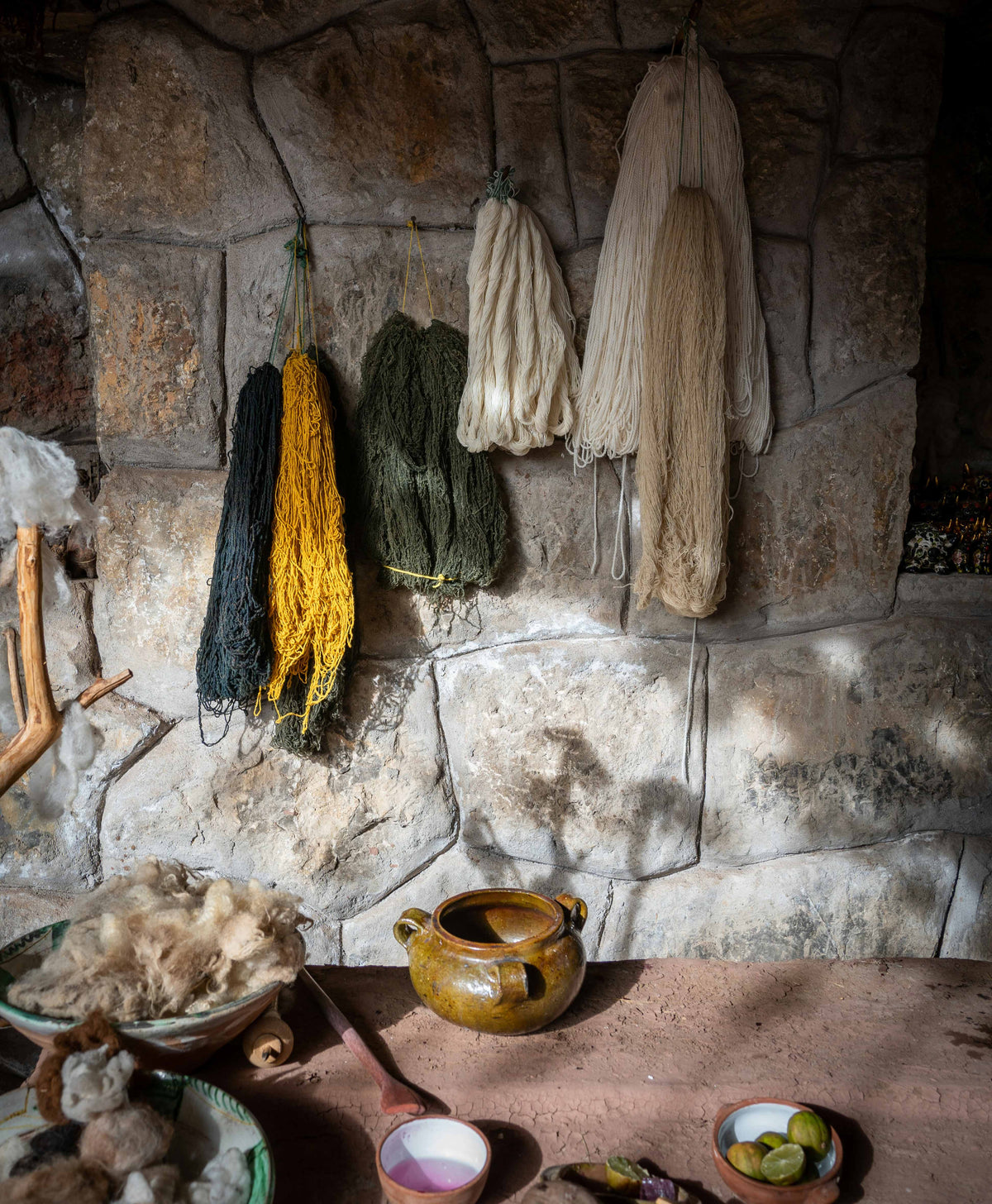
The dyes are drawn from plants, roots, leaves, blossoms, woods or bark. Because the dyeing process is so gentle, the wool keeps its natural oils, which is why the rug stays more dirt-repellent and hard-wearing.


To make the natural colours, the plants and woods are first ground into a fine powder. This gives the following colours: 

🟡 Yellow: turmeric, pomegranate skins, saffron

🔴 Red: madder root 

🔵 Blue: indigo

🟢 Green: a blend of indigo and the sources of yellow

🟤 Brown: walnut shells, iron oxide, oak bark

The powder is then boiled together with the wool in large vats. How long it boils depends on the depth of colour required. 

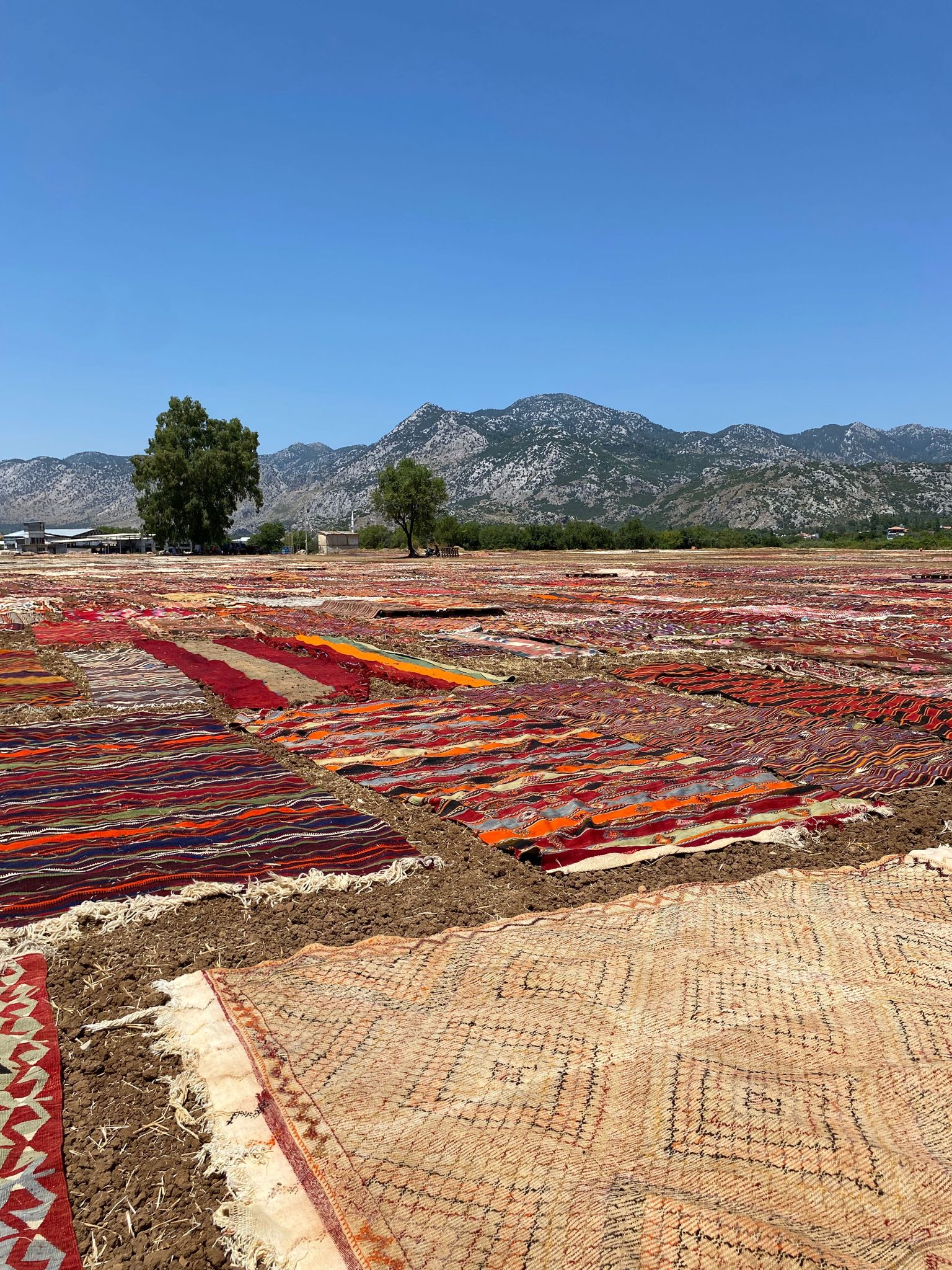
While it boils, the wool is turned regularly so that the colour takes as evenly as possible. Once the dyeing is done, the strands of wool are hung out in the sun to dry, which plays an important part in fixing the colours.


We, too, dye the wool we need for rug restoration or repair ourselves. It is the only way we can match, with a great deal of care, the exact shade of wool in rugs that are sometimes centuries old.
A hand-made rug is never 100% perfect. And that is just as it should be!


The small irregularities are what give a rug its particular charm, and that is precisely why rugs are so treasured.


Dyeing the wool with natural colours plays a central part here as well. During the dyeing process the wool takes up the colour unevenly. In the nature of things, the finished rug ends up with light-and-dark shadings, known as Abrasch . They make every rug individual and even less prone to showing dirt. They also make it far easier to combine, since they cover a broad palette of the shade in question.

Undyed wool

Alongside rugs of dyed wool, nomadic rugs also include pieces made from undyed or only partly dyed new wool. For these, the natural sheep's wool is sorted by shade and worked straight into the pattern. They are something quite special, as little or no dyeing is needed at all.

Many of our Gabbeh/Lori/Zen rugs are made this way.

Read more

Gewebt vs. Geknüpft

Woven vs. knotted

The first hand-made rugs in the Orient came about because people were looking for comfort and warmth - they gave shelter from the hot sun and made sitting and eating on the floor more pleasant. Bef...

Read more

Hand-tufted rugs

Hand-tufted rugs  are made using a semi-manual process, a faster and more affordable alternative to traditional rug knotting. First, a sturdy backing fabric, usually made of cotton or linen, is str...

Read more