
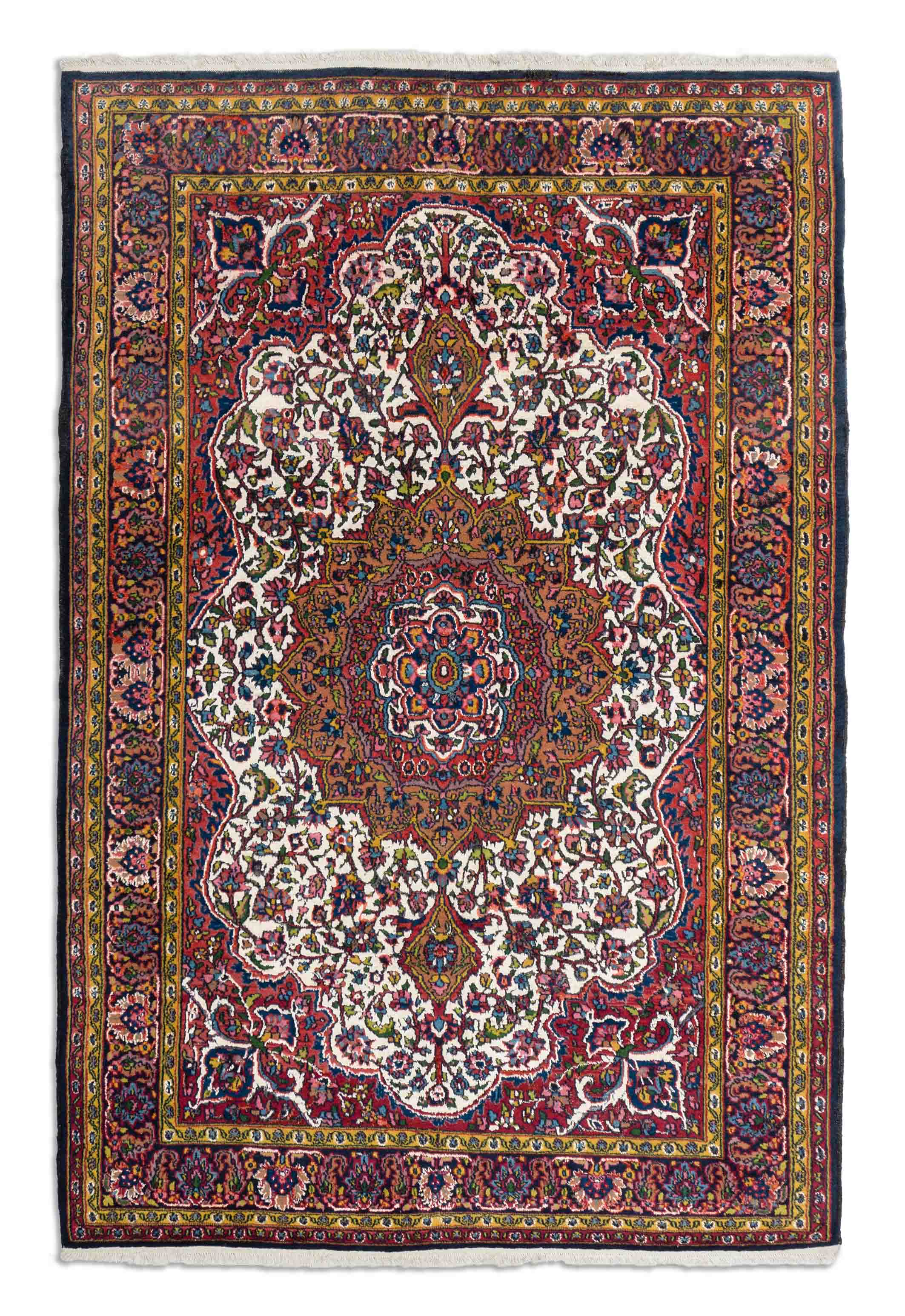
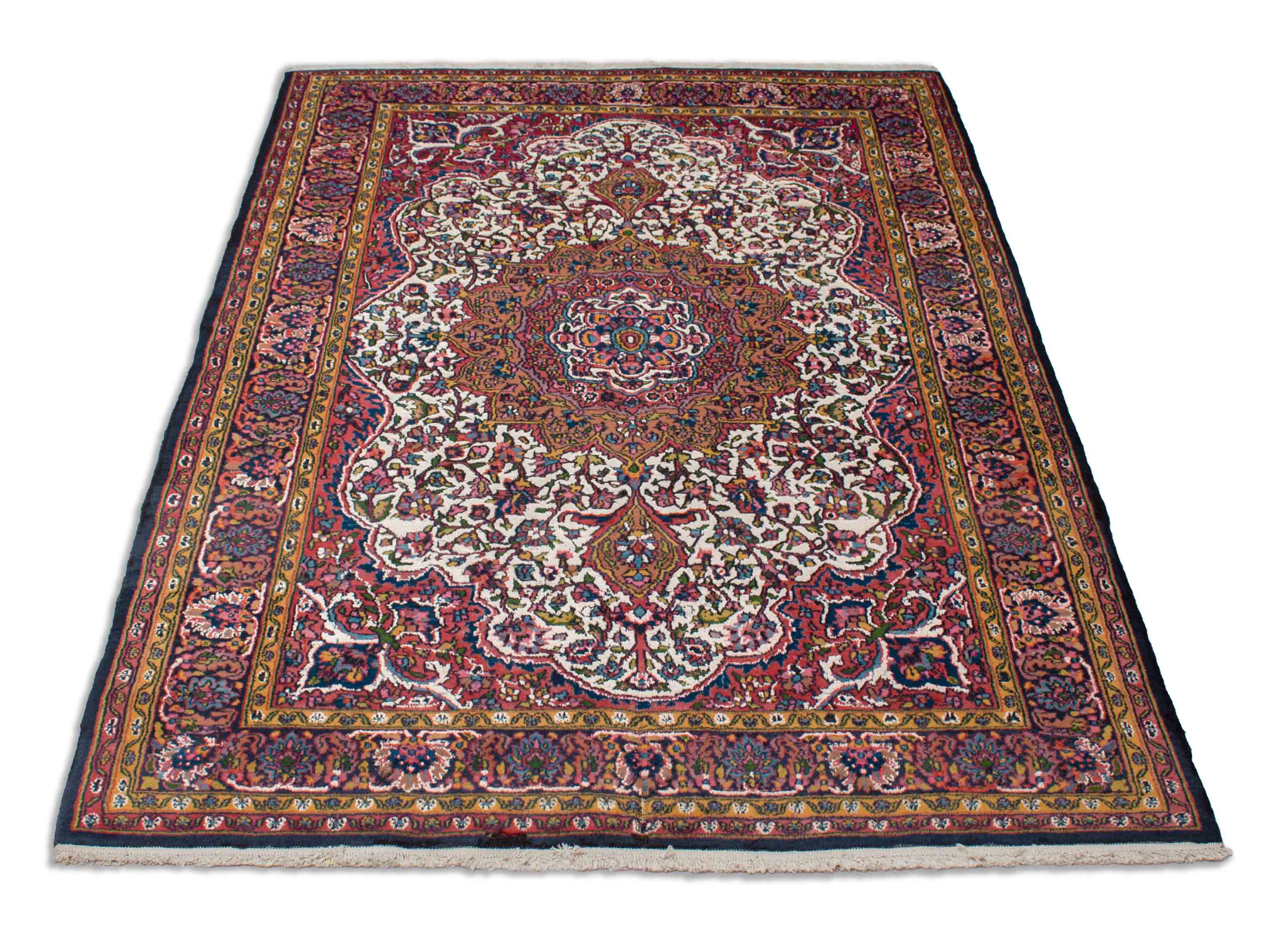
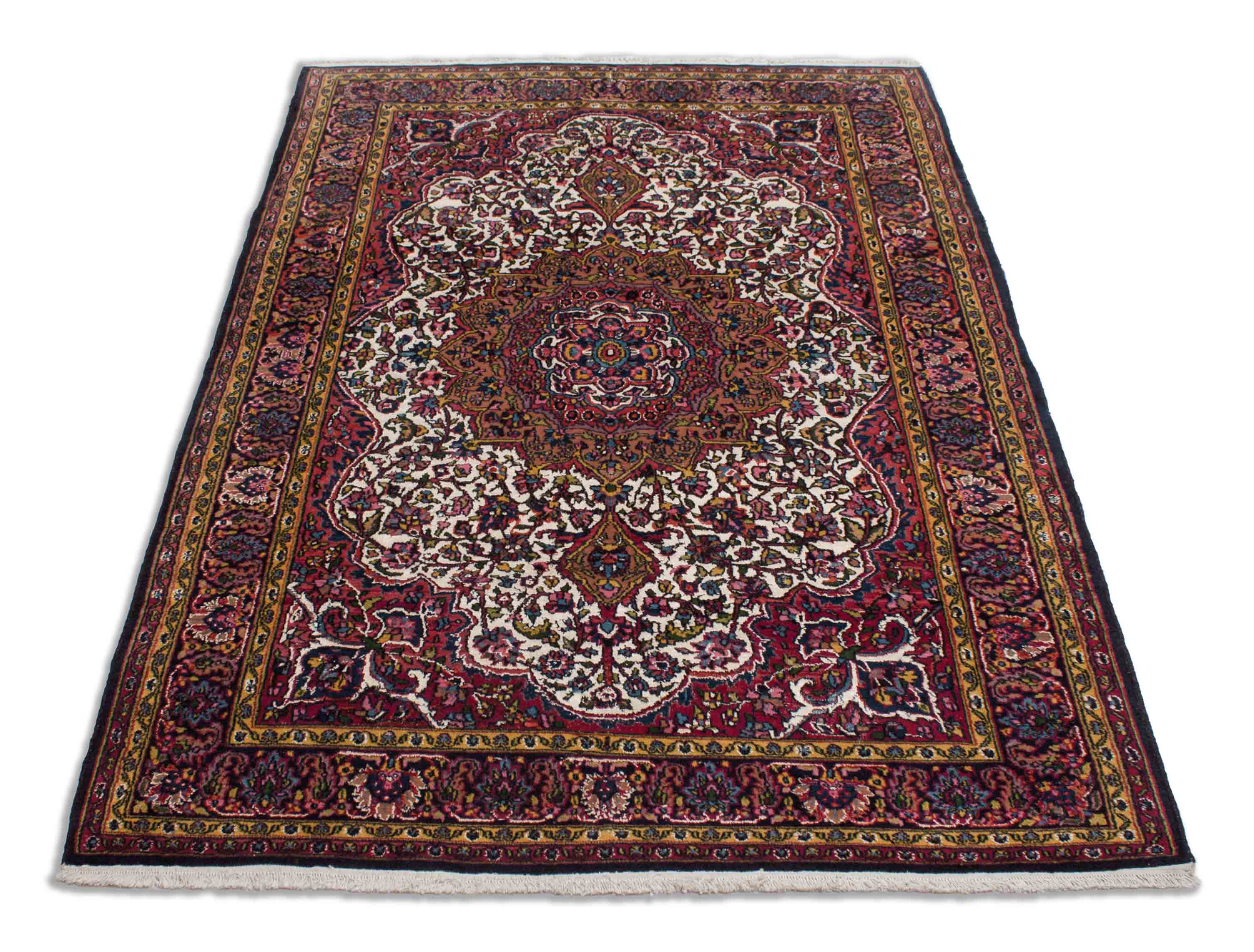
Old Kaschmar | 183 x 123 cm | Nr. 19680


|
1-3 working days delivery time (within Germany) |

|
14-day home trial |

|
Free delivery & returns within the EU |
Old Kaschmar
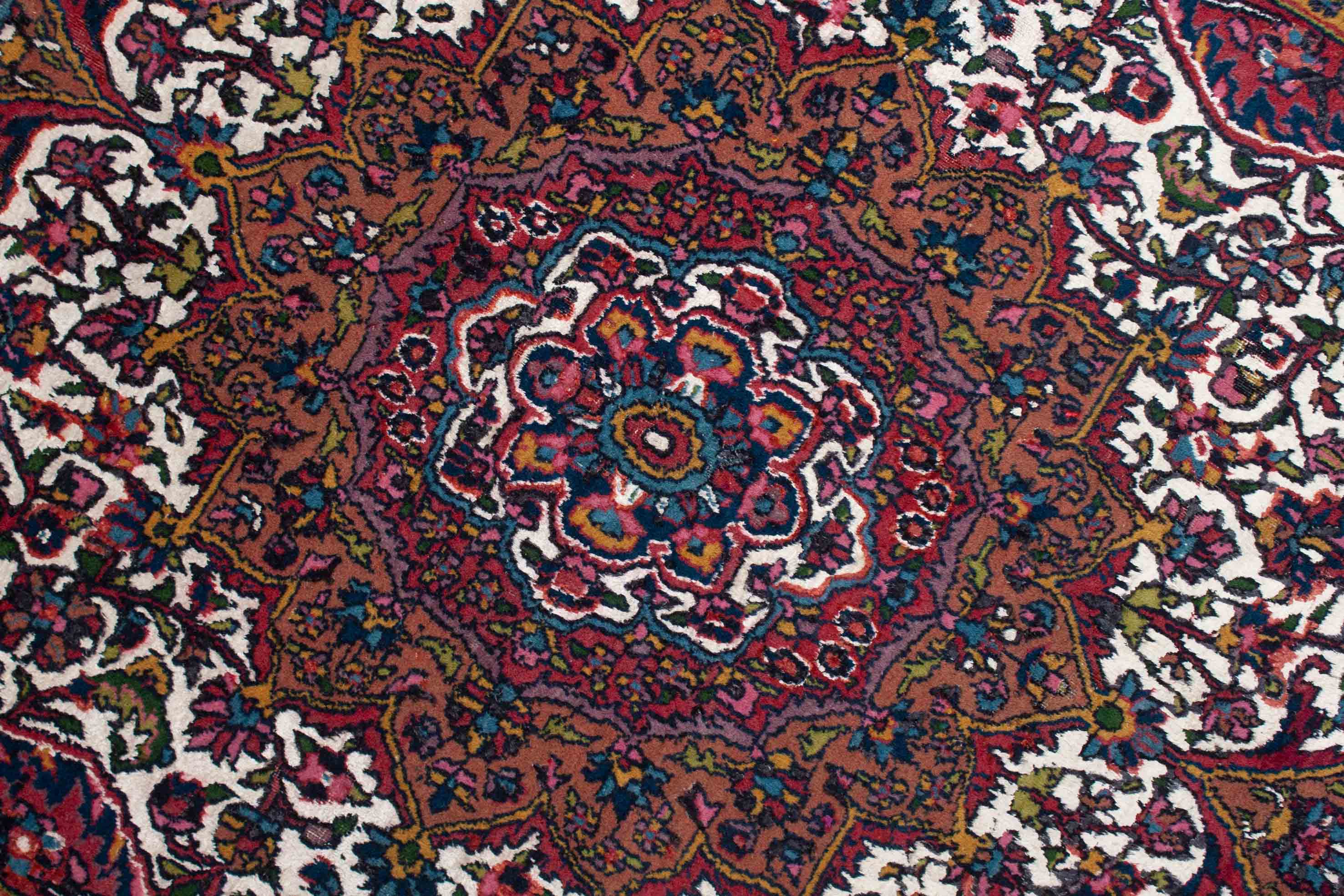
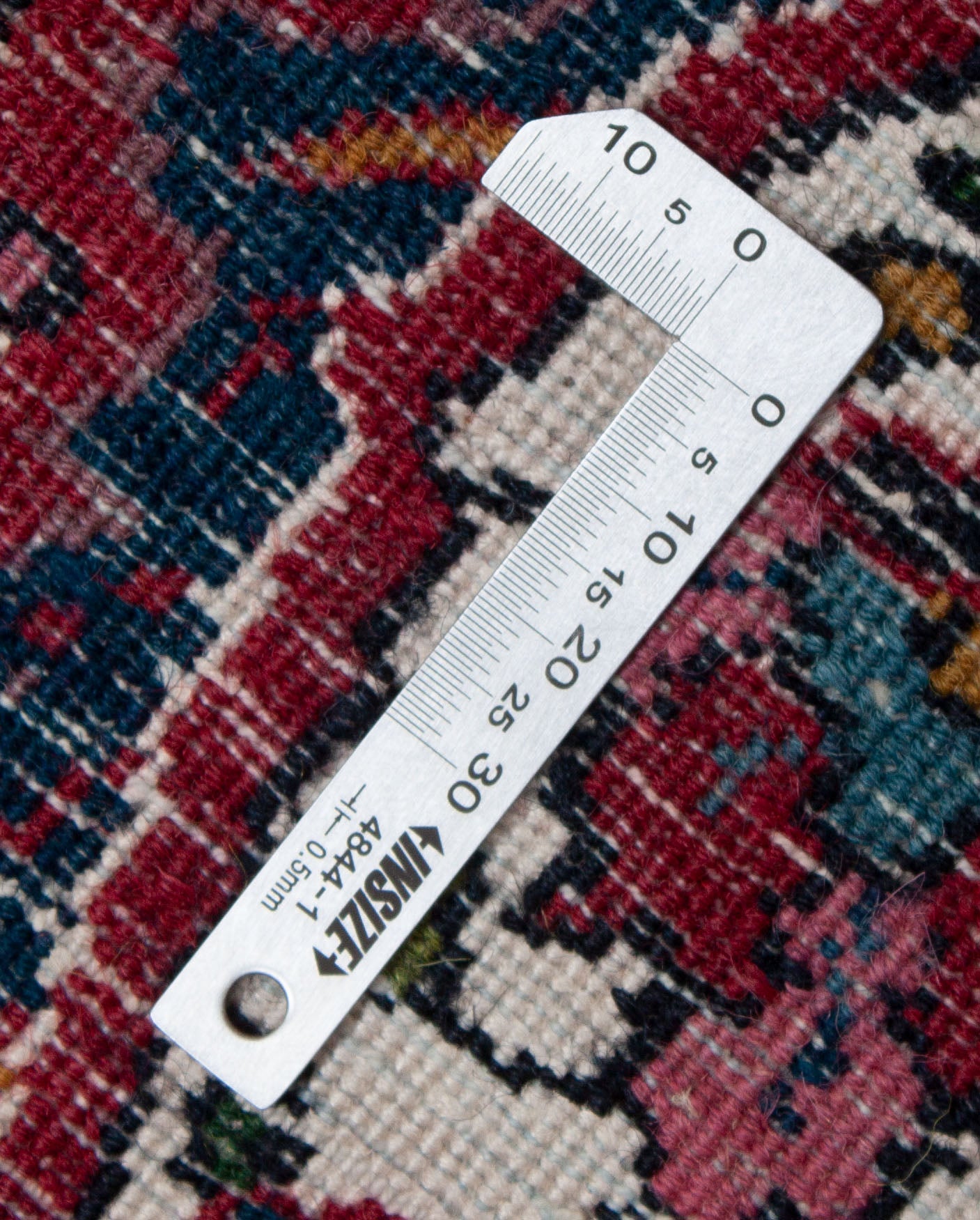
This one-of-a-kind piece in wine red combines traditional craftsmanship with timeless elegance. A knot density of around 250,000 knots per m² makes the elaborate workmanship visible – right down to the fine execution of the details. Measuring 183 × 123 cm, it is well placed as a rug for the bedroom or study. It shows just as well in a child's room or a dressing room. The harmonious colouring and the distinctive texture give any room an exclusive, homely atmosphere. A rug of this quality is far more than a piece of furnishing – it is a piece of traditional textile art with a character of its own and lasting value.
| Availability | In stock | Delivery time: 1–3 working days |
| Origin | Persia |
| Dimensions | 183 cm x 123 cm (= 2.25 m²) |
| Construction | hand-knotted |
| Material |
Pile: wool with mercerised cotton Weft & Warp: cotton |
| knots | 250,000 knots |
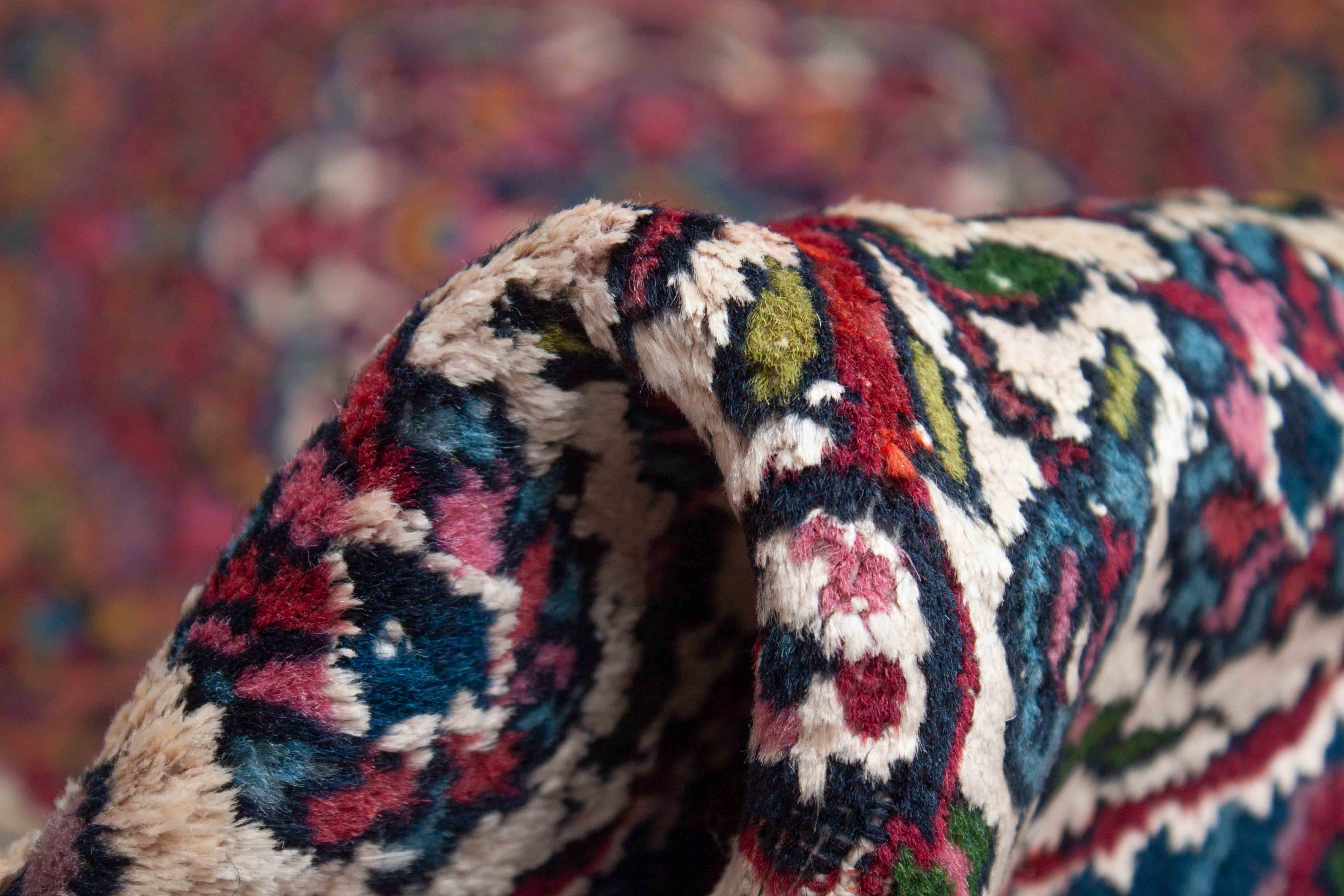
| Pile height | 5 mm |
| Year of manufacture | 1950 |
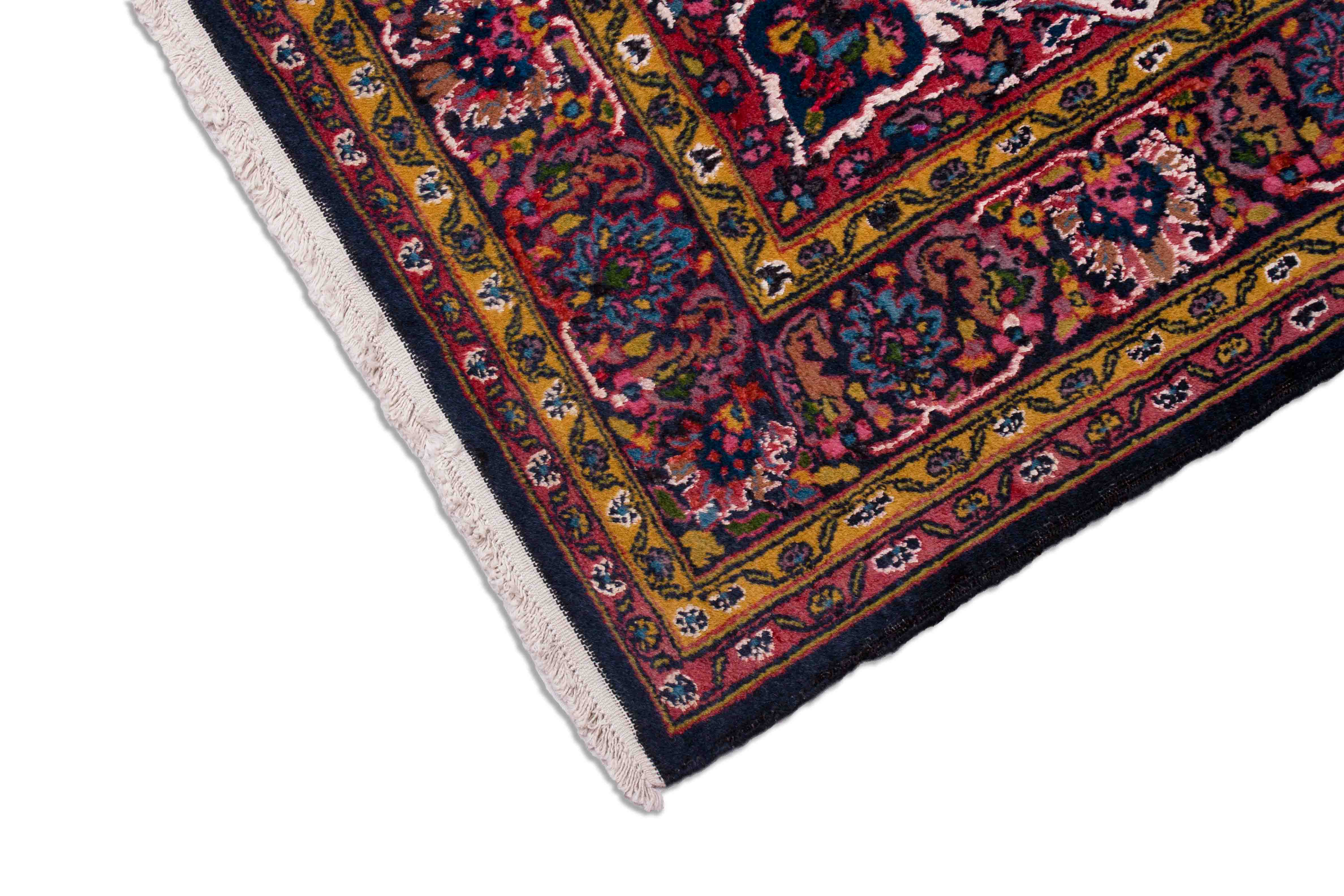
| Condition | pre-owned, but in very good condition (cleaned & restored) |
| Colour | Wine red |
| Edition | one-of-a-kind piece |

Origin
The town of Kaschmar lies in eastern Persia in the province of Khorasan and is the capital of the district of the same name. It was originally called Turschis and was renamed Kaschmar in the time of Reza Shah. That is why Kaschmar rugs are sometimes still traded under their old name, Turschis.Until a good twenty years ago, it was mainly the Herati pattern that was knotted here, which was then taken up above all by the nearby provenances (source, origin) of Mood and Birjand. Today the so-called Sirchaki pattern prevails. The Sirchaki pattern depicts antique excavation finds such as vases, weapons, jugs, bowls and the like, usually on a blue or beige ground. The arrangement is almost always four-fold symmetrical with a central medallion that is occasionally adorned with a small scene. All of this is framed by a very pronounced main border. The medallions are sometimes asymmetrical and depict landscapes.
In more recent times, however, rugs with all-over patterns and rugs with the Nain pattern have also been knotted in Kaschmar, in the beige-and-blue colour combinations typical of the provenance. You can recognise these Kaschmar Nains by their deep pile. Kaschmar rugs have a fairly coarse knot density, look somewhat coarse-grained and the pile is relatively long.
This old Kaschmar is around 76 years old and a true collector's piece.
Material
The pile of this old Kaschmar was hand-knotted from high-quality new wool. Individual details of the pattern are also brought out by the sheen of mercerised cotton.New wool is obtained by shearing live sheep. New wool is a renewable, natural raw material with a number of impressive qualities: thanks to the wool's natural grease content, the surface repels droplets of water and is therefore naturally proofed against dirt. Wool also offers excellent thermal insulation, helps regulate the indoor climate and dampens sound.
Cotton consists of lustrous fibres filled with cell sap. When this dries after the harvest, the surface of the fibre curls and loses its sheen through the refraction of light that results. In the middle of the 19th century, John Mercer invented the mercerisation process named after him. In the course of mercerisation, the cotton is held under tension in cold, concentrated caustic soda and takes on a new, higher-grade fibre structure. Mercerised cotton has shortened fibres with a round cross-section. The refined fabric no longer shrinks and is a pleasure for its high dimensional stability. The altered refraction of light gives it a silky sheen. Mercerised cotton also takes up dye more readily and is considerably more tear-resistant than the original material. Because mercerisation is laborious and costly, only high-quality cotton fibres are given this finish. Owing to the silky sheen of the yarn, mercerised cotton is, like viscose, often referred to as "artificial silk". The colloquial term "artificial silk" is, however, not permitted under the German Textile Labelling Act (Textilkennzeichnungsgesetz, TKG).
The weft and warp threads of this old Kaschmar are made of cotton. This versatile material is tear-resistant and elastic, which makes it particularly suitable for a hard-wearing foundation.
Condition
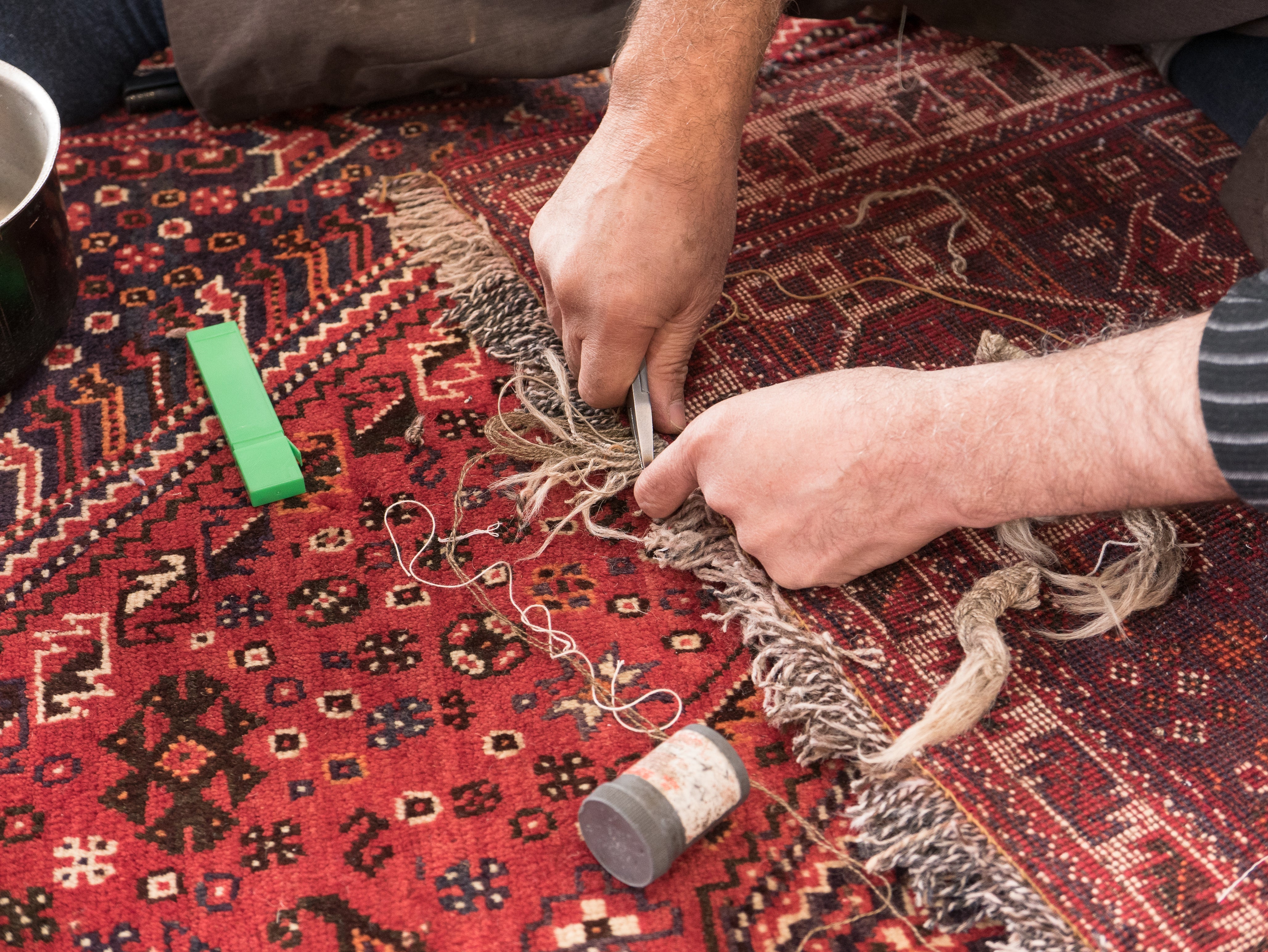
This Old Kaschmar has already had admirers before you. It was knotted around 1950. We have cleaned it thoroughly and restored it with care. Despite its age, it is therefore in very good condition.
A note on the photos
Child labour? No thanks.

The rug trade against child labour: Children belong in school, not at a knotting or weaving loom. For us it therefore goes without saying that we only offer rugs made under fair conditions and without child labour. We place particular importance on good working conditions and tolerate no child labour at our producers.
We are proud to be a member of the Care & Fair campaign against child labour.
The industry-wide campaign CARE & FAIR - the rug trade against child labour was founded in 1994. The initiative has made it its mission to fight the excesses of illegal child labour in the knotting countries and, at the same time, to improve the overall situation of rug knotters and their families in the knotting regions of India, Nepal and Pakistan.
Our goals:
- Ending illegal child labour in India and Pakistan.
- Creating better living conditions for knotters' families.
- Socially responsible production. We only accept goods that have been made under fair conditions. Working with our producers as partners, we want to make clear to them that taking on social responsibility benefits everyone.
Together with Care & Fair we currently support 10 schools, 6 adult education centres and 3 day clinics in India and Pakistan.
Choose options
|
|
1-3 working days delivery time (within Germany) |
|
|
14-day home trial |
|
|
Free delivery & returns within the EU |