
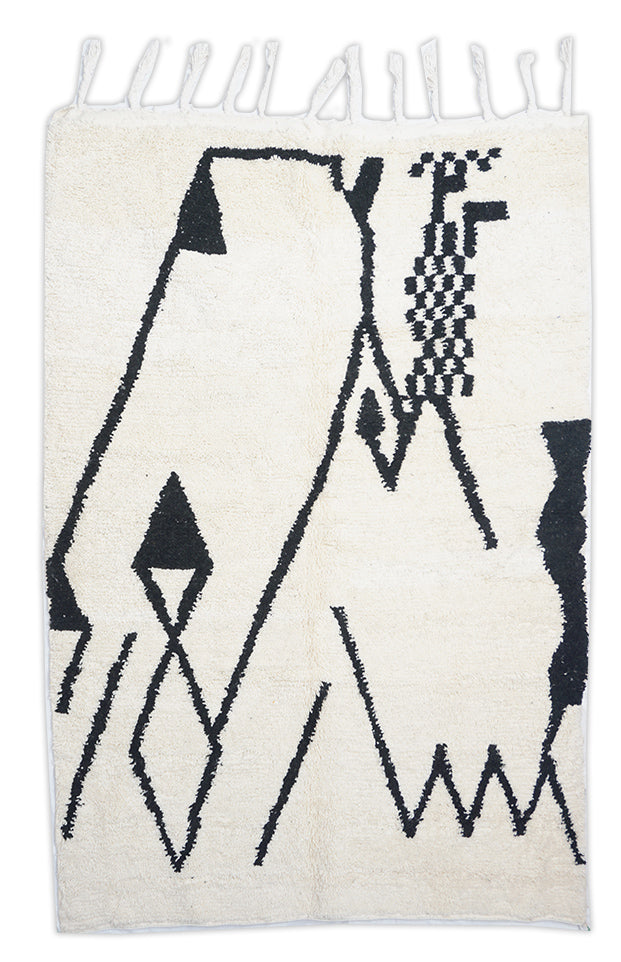
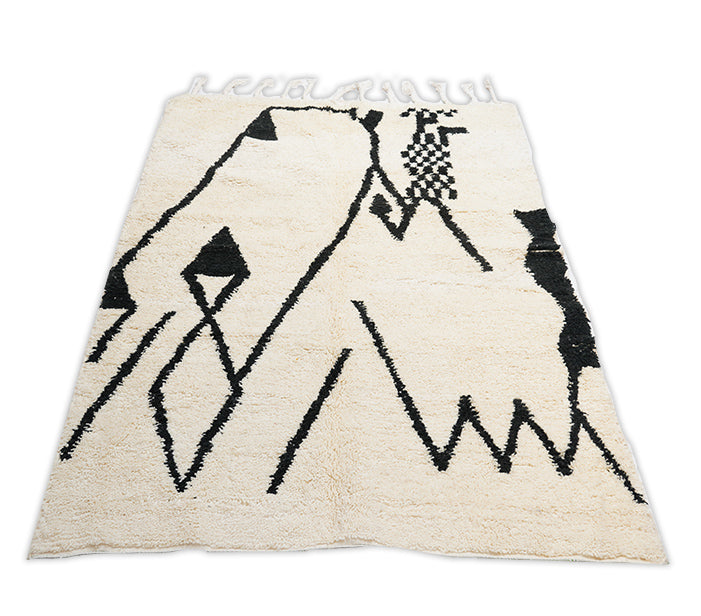
Moroccan Berber rug | 238 x 162 cm | Nr. Z-452


|
1-3 working days delivery time (within Germany) |

|
14-day home trial |

|
Free delivery & returns within the EU |
Moroccan Berber rug
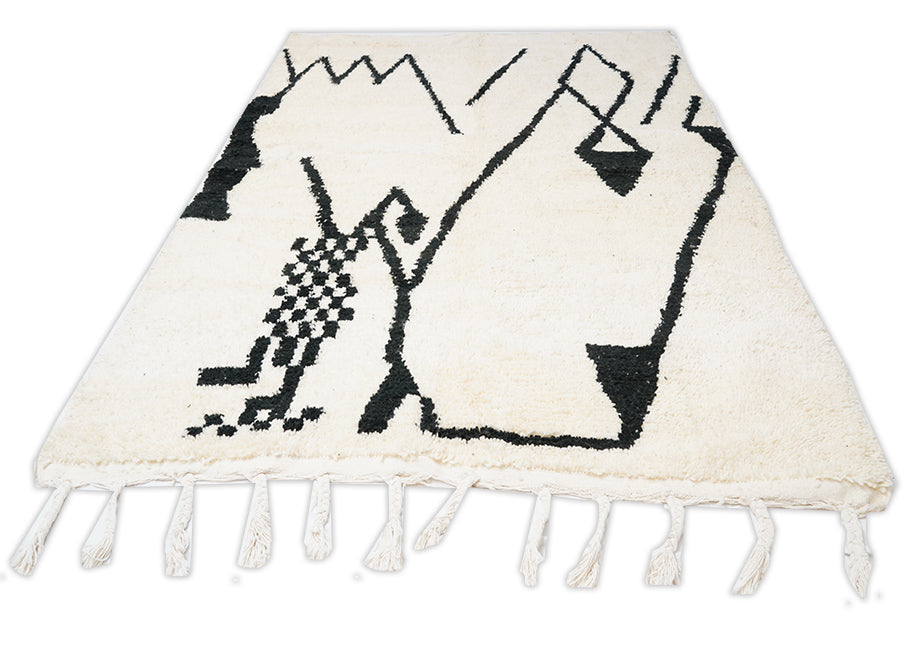
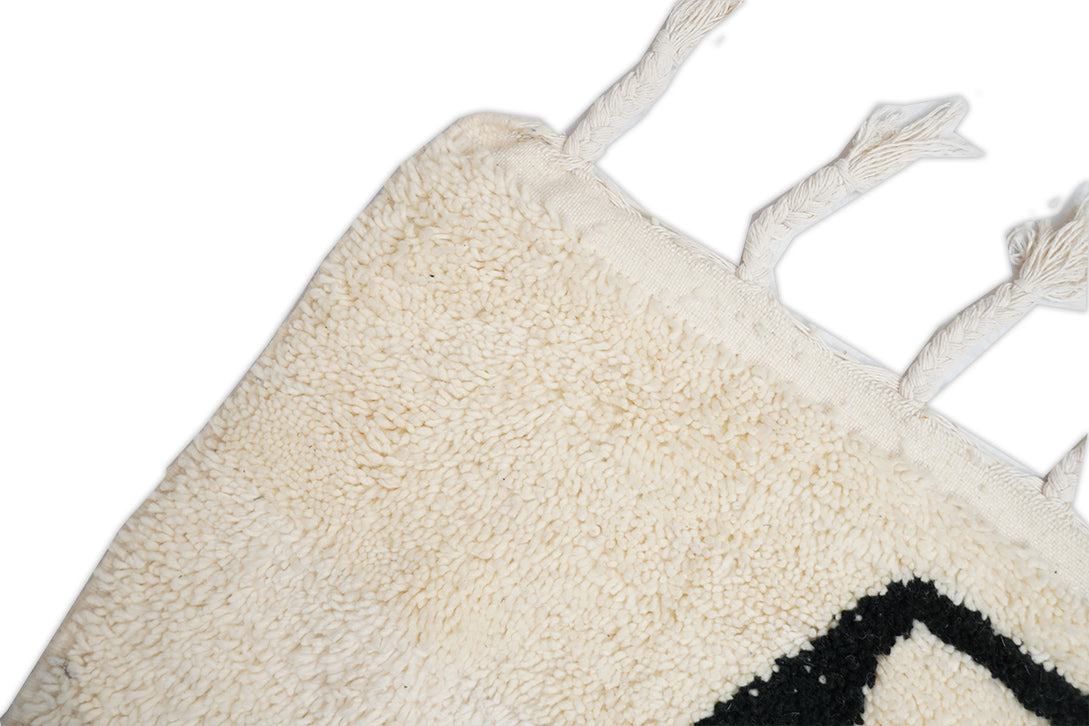
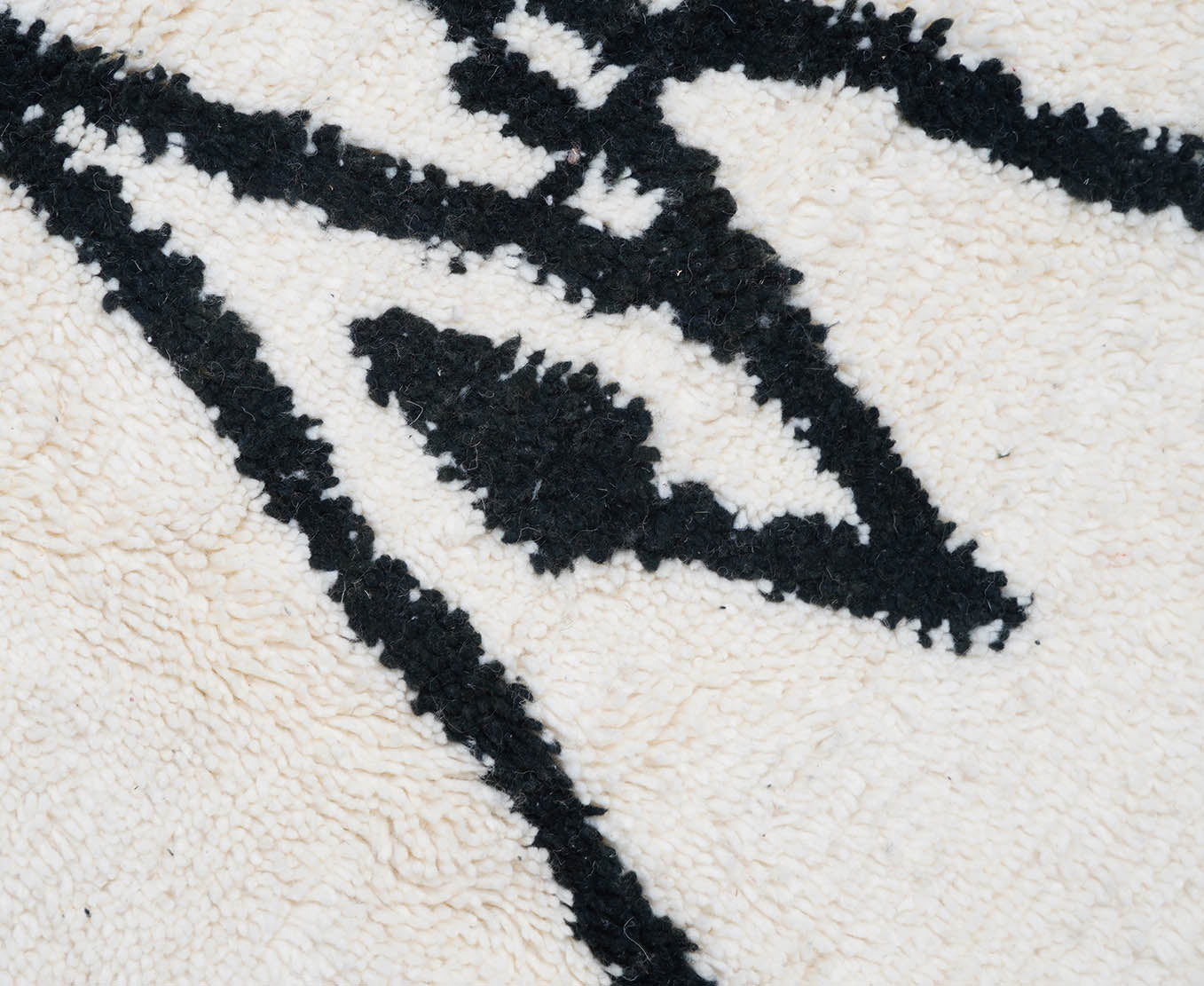
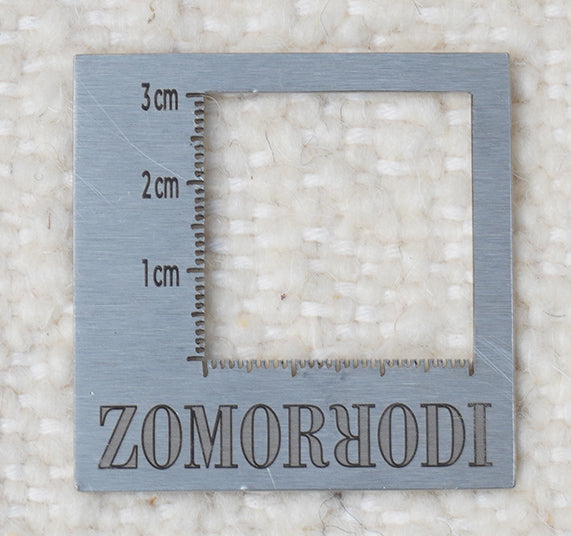
This one-of-a-kind piece in black and white unites traditional craftsmanship with timeless elegance. A knot density of approx. 60,000 knots per m² makes the painstaking workmanship visible – right down to the fine execution of the details. At 238 × 162 cm it is well placed as a living-room rug. It shows to equal advantage under a dining table for four to six people. The harmonious colouring and the characteristic texture give any room an exclusive, homely atmosphere. A rug of this quality is far more than a furnishing item – it is a piece of traditional textile art with individual character and lasting value.
| Availability | In stock | Delivery time: 1–3 working days |
| Origin | Morocco |
| Dimensions | 238 cm x 162 cm (= 3.86 m²) |
| Construction | hand-knotted |
| Material |
Pile: wool Weft: wool Warp: cotton |
| knots | 60,000 knots |
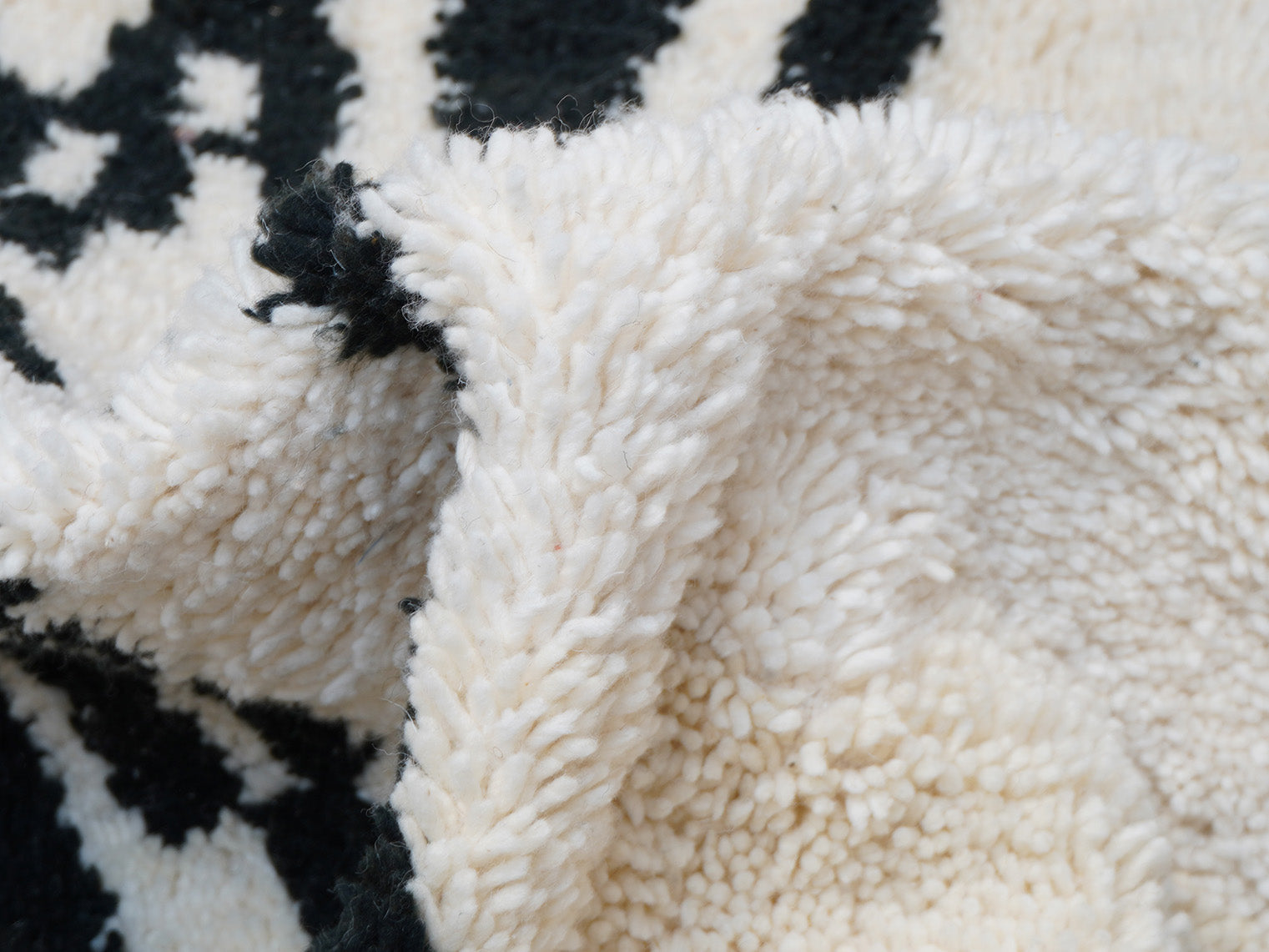
| Pile height | 15 mm |
| Colour | Black and White |
| Edition | one-of-a-kind piece |

Origin
Moroccan Berber tribes were usually semi-nomadic: as herders they kept their livestock high in the mountains and moved with their flocks from one pasture to the next. The old knotting techniques have been preserved within the Berber tribes for centuries and are passed on from mother to daughter.Moroccan Berber rugs were traditionally knotted for use in the home. This allowed the knotters, most of them women, to play freely and spontaneously with shapes and colours – without any pattern templates – following their own ideas and their individual intuition. The traditional pattern of Moroccan Berber rugs consists of geometric, sometimes colourful, abstract shapes and lines on monochrome backgrounds. Architects and designers such as Alvar Aalto, Le Corbusier, Charles and Ray Eames, Frank Lloyd Wright, Marcel Breuer and Arne Jacobsen admired the naive, clear design of these high-pile Moroccan nomad rugs. The powerful artistic expression of the Berber women has an extraordinary presence and makes Berber rugs one of a kind – quite apart from their fluffy feel.
Material
The hand-spun wool of this Moroccan Berber rug's pile, dyed with natural colours, creates fascinating, shifting patterns. Moroccan Berber rugs are hand-knotted and last a lifetime. Even so, their long pile makes them unusually soft and fluffy. Antique Moroccan Berbers almost feel like a soft blanket that you would happily take to bed with you.The weft threads of this Moroccan Berber rug are made of wool. Cotton was used for the warp threads.
A note on the photos
Child labour? No thanks.

The rug trade against child labour: Children belong in school, not at a knotting or weaving loom. For us it therefore goes without saying that we only offer rugs made under fair conditions and without child labour. We place particular importance on good working conditions and tolerate no child labour at our producers.
We are proud to be a member of the Care & Fair campaign against child labour.
The industry-wide campaign CARE & FAIR - the rug trade against child labour was founded in 1994. The initiative has made it its mission to fight the excesses of illegal child labour in the knotting countries and, at the same time, to improve the overall situation of rug knotters and their families in the knotting regions of India, Nepal and Pakistan.
Our goals:
- Ending illegal child labour in India and Pakistan.
- Creating better living conditions for knotters' families.
- Socially responsible production. We only accept goods that have been made under fair conditions. Working with our producers as partners, we want to make clear to them that taking on social responsibility benefits everyone.
Together with Care & Fair we currently support 10 schools, 6 adult education centres and 3 day clinics in India and Pakistan.
Choose options
|
|
1-3 working days delivery time (within Germany) |
|
|
14-day home trial |
|
|
Free delivery & returns within the EU |