

Ziegler | 232 x 169 cm | Nr. 274459


|
1-3 working days delivery time (within Germany) |

|
14-day home trial |

|
Free delivery & returns within the EU |
Floral Ziegler, beige with border
| Origin |
|
| Dimensions | 232 cm x 169 cm (= 3.92 m²) |
| Construction | hand-knotted |
| Material |
Pile: wool (hand-spun, natural dyes)
|
| knots per m²2 | 160.000 |
| Pile height | 5mm |
| Condition | new |
| Colour | Beige, dark brown |
| Edition | one-of-a-kind piece |

Origin
In 1883, a Swiss merchant by the name of Ziegler founded an English import house called Company Messrs. Ziegler & Co. Ltd. in Manchester, England, and at the same time a rug manufactory in Sultanabad (today Arak, Iran) in the Mahallat region.
This is one reason why the area around the city of Sultanabad grew into an important centre for knotting Persian export rugs. The rugs known as Ziegler-Mahal, or simply Ziegler, were knotted in the surrounding villages to Western specifications for colour and pattern. This mixture of European design briefs in a lighter, calmer palette with classic patterns in the style of Farahan and Sultanabad rugs went down very well in Europe.
The success was enormous, and Ziegler rugs became an international mark of quality. The exquisite flow of the many-petalled flowers is particularly impressive in Ziegler rugs. Well-preserved antique Ziegler rugs fetch record prices today – above all in the USA. For some years now, these antique Ziegler designs have been re-knotted in high quality in Pakistan and India.
The newly revived Ziegler rugs, made from hand-spun wool dyed with natural colours, are part of a revival of hand-knotted rugs. The return to traditional techniques began in the early 1980s, driven not least by the so-called DOBAG initiative. At first, this reproduction work focused on the Ziegler rugs described above. In time, almost every traditional Persian pattern came to be reproduced. This gave rise to adaptations of antique rugs as well as contemporary designs with the charm of an antique piece.
The colour shifts between dark brown and black.
Pattern
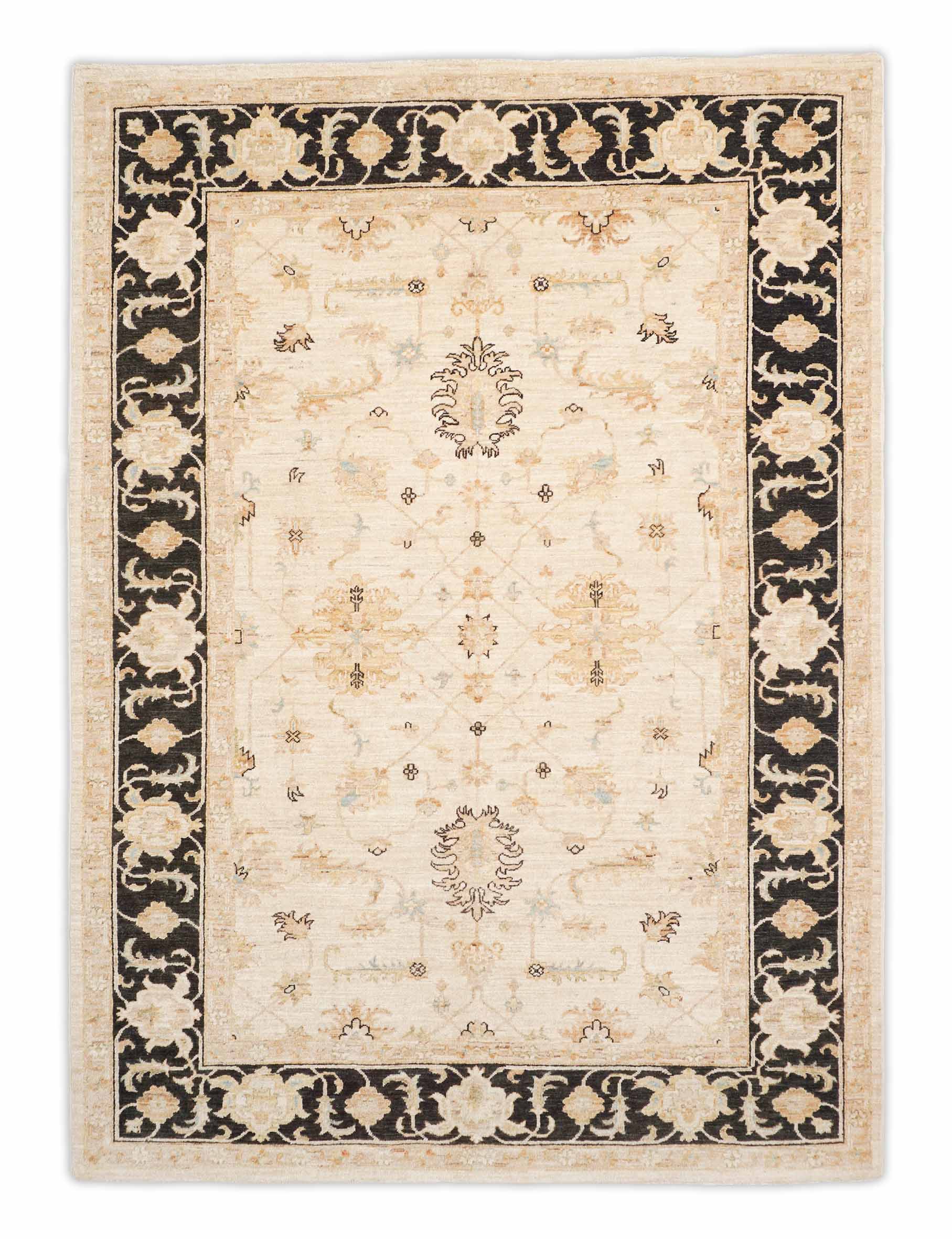
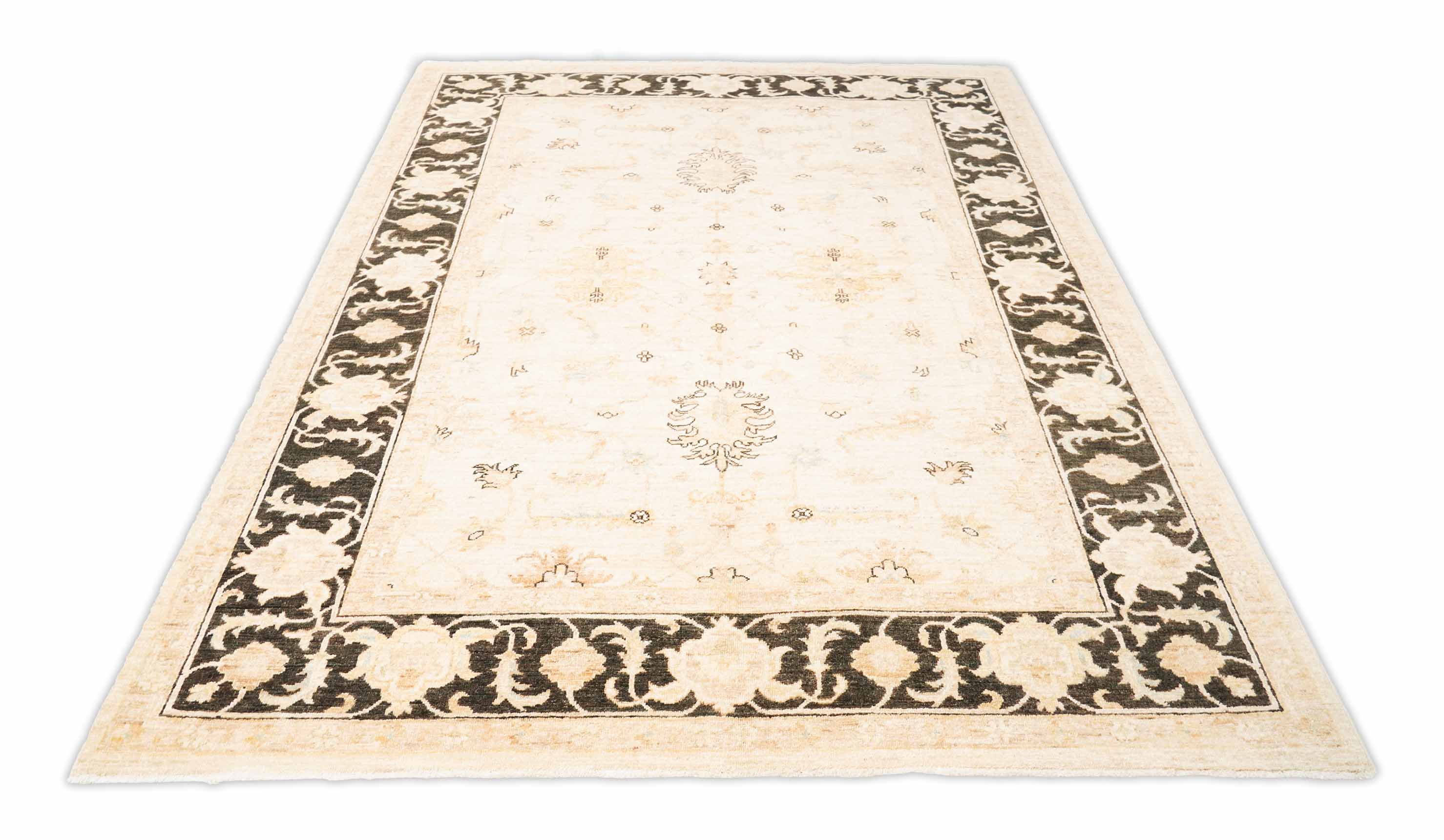
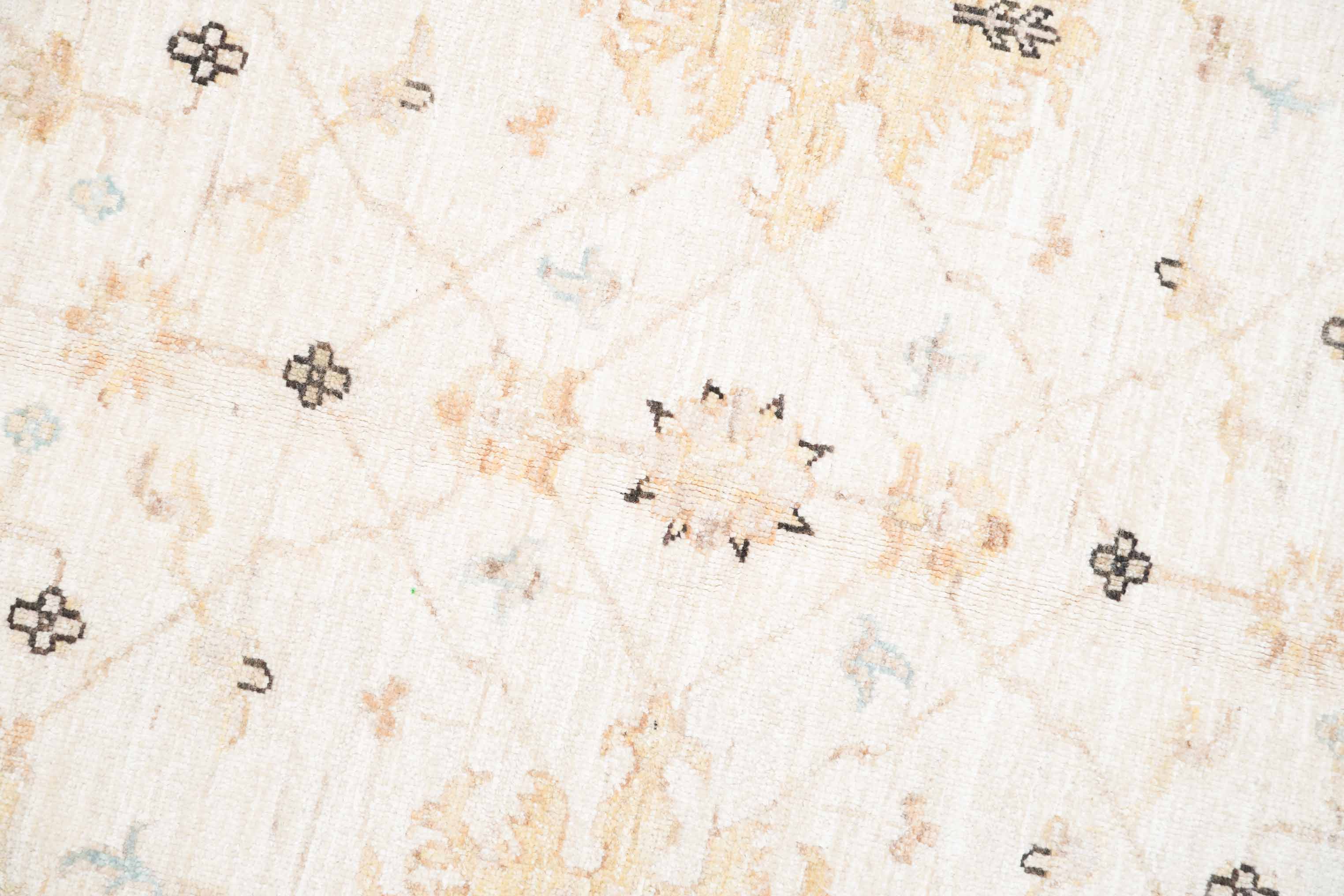
The lavish floral motifs of this Ziegler are elegantly drawn and full of variety. The graceful plant symbols, depicting blossoms, leaves and branches, are artfully intertwined.
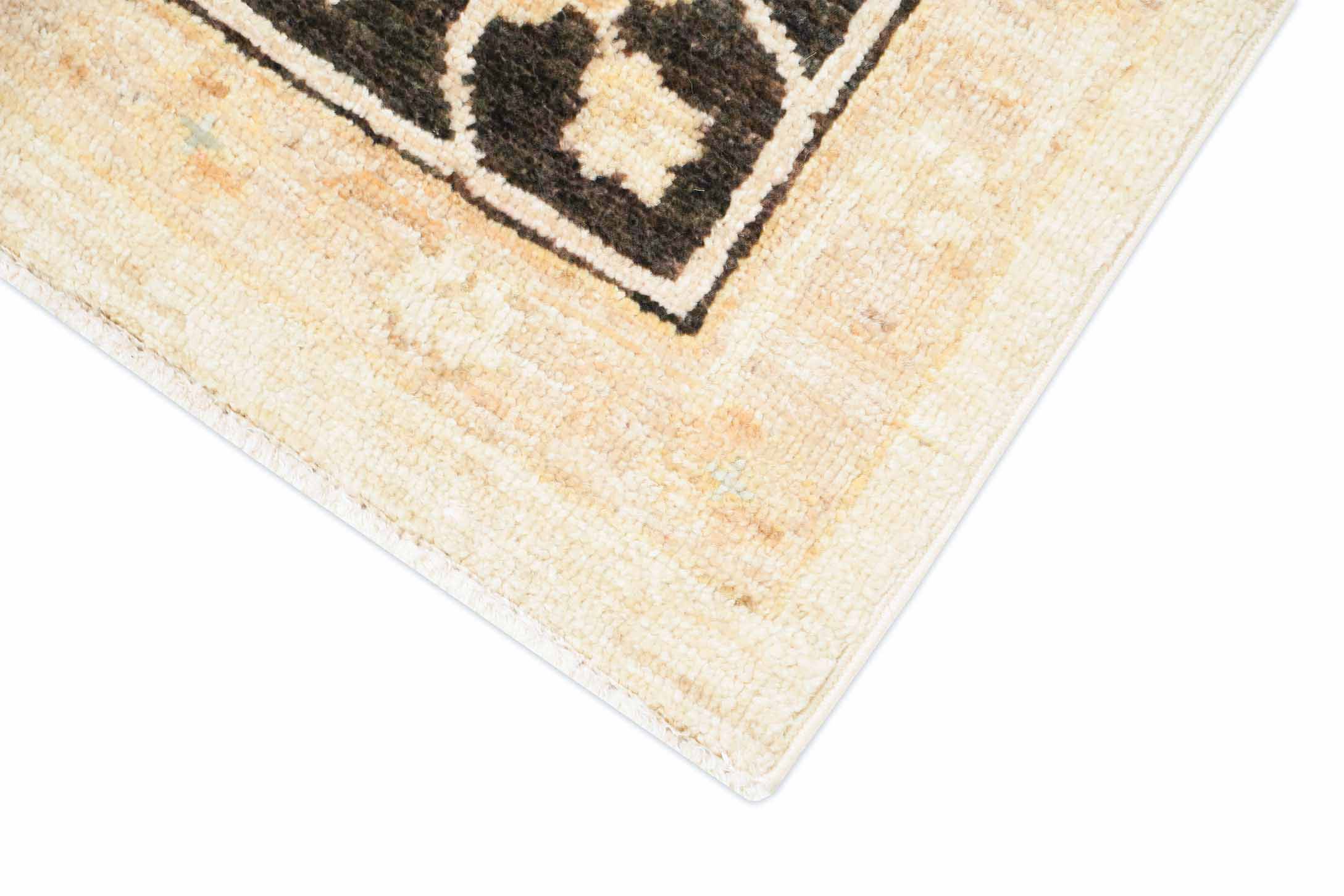
The edge of the rug is framed by a decorative border. The border forms a beautiful contrast with the centre.
The background of this Ziegler is beige. The border is kept in dark brown.
Material
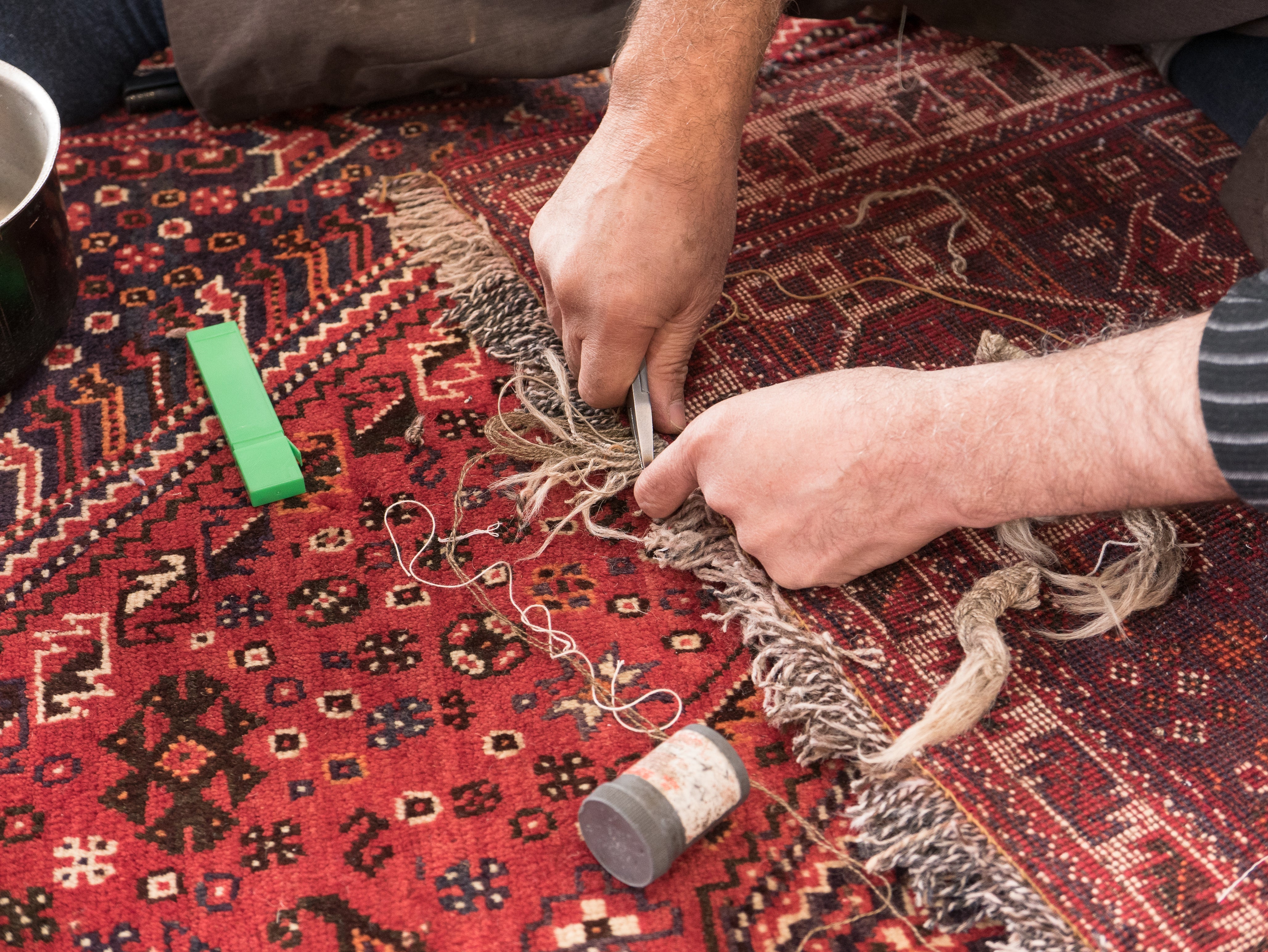
The technique used to make the materials for the pile of this Ziegler is more than 200 years old. The wool was dyed with natural colours and spun by hand. Dyeing with natural or plant colours is more involved, more expensive and more time-consuming than dyeing with chemical colours. For a luminous red, for example, you need around one kilo of ground madder root as dyestuff per kilo of wool. For a strong yellow that is not too pale, it even takes two kilograms of weld dyestuff per kilo of wool. Spinning the wool is time-consuming and labour-intensive too. On top of that, fewer and fewer people still master spinning wool by hand.
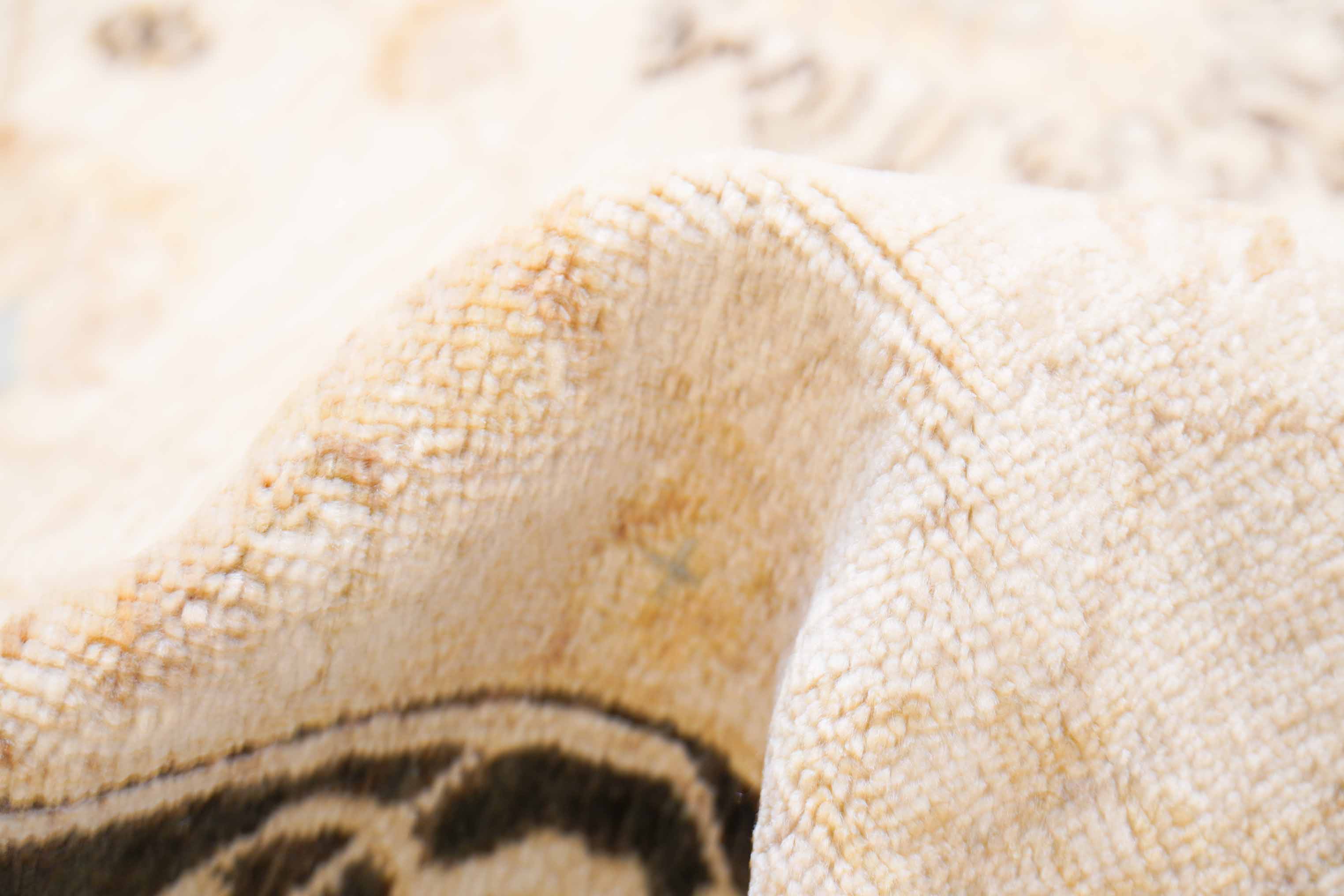
But the effort is worth it: because it is dyed with natural colours, the high-quality wool keeps its natural lanolin content. Wool dyed with natural colours and spun by hand creates fascinating, shifting patterns. The charm of hand-spun wool, with its slight irregularities and natural shades, comes into its own as a contrast in modern interiors, but also in rooms furnished in a more traditional or country style. The weft and warp threads of this Ziegler are made of cotton. This versatile material is tear-resistant and elastic, which makes it especially suited to a hard-wearing foundation weave.
A note on the photos
Child labour? No thanks.

The rug trade against child labour: Children belong in school, not at a knotting or weaving loom. For us it therefore goes without saying that we only offer rugs made under fair conditions and without child labour. We place particular importance on good working conditions and tolerate no child labour at our producers.
We are proud to be a member of the Care & Fair campaign against child labour.
The industry-wide campaign CARE & FAIR - the rug trade against child labour was founded in 1994. The initiative has made it its mission to fight the excesses of illegal child labour in the knotting countries and, at the same time, to improve the overall situation of rug knotters and their families in the knotting regions of India, Nepal and Pakistan.
Our goals:
- Ending illegal child labour in India and Pakistan.
- Creating better living conditions for knotters' families.
- Socially responsible production. We only accept goods that have been made under fair conditions. Working with our producers as partners, we want to make clear to them that taking on social responsibility benefits everyone.
Together with Care & Fair we currently support 10 schools, 6 adult education centres and 3 day clinics in India and Pakistan.
Choose options
|
|
1-3 working days delivery time (within Germany) |
|
|
14-day home trial |
|
|
Free delivery & returns within the EU |