

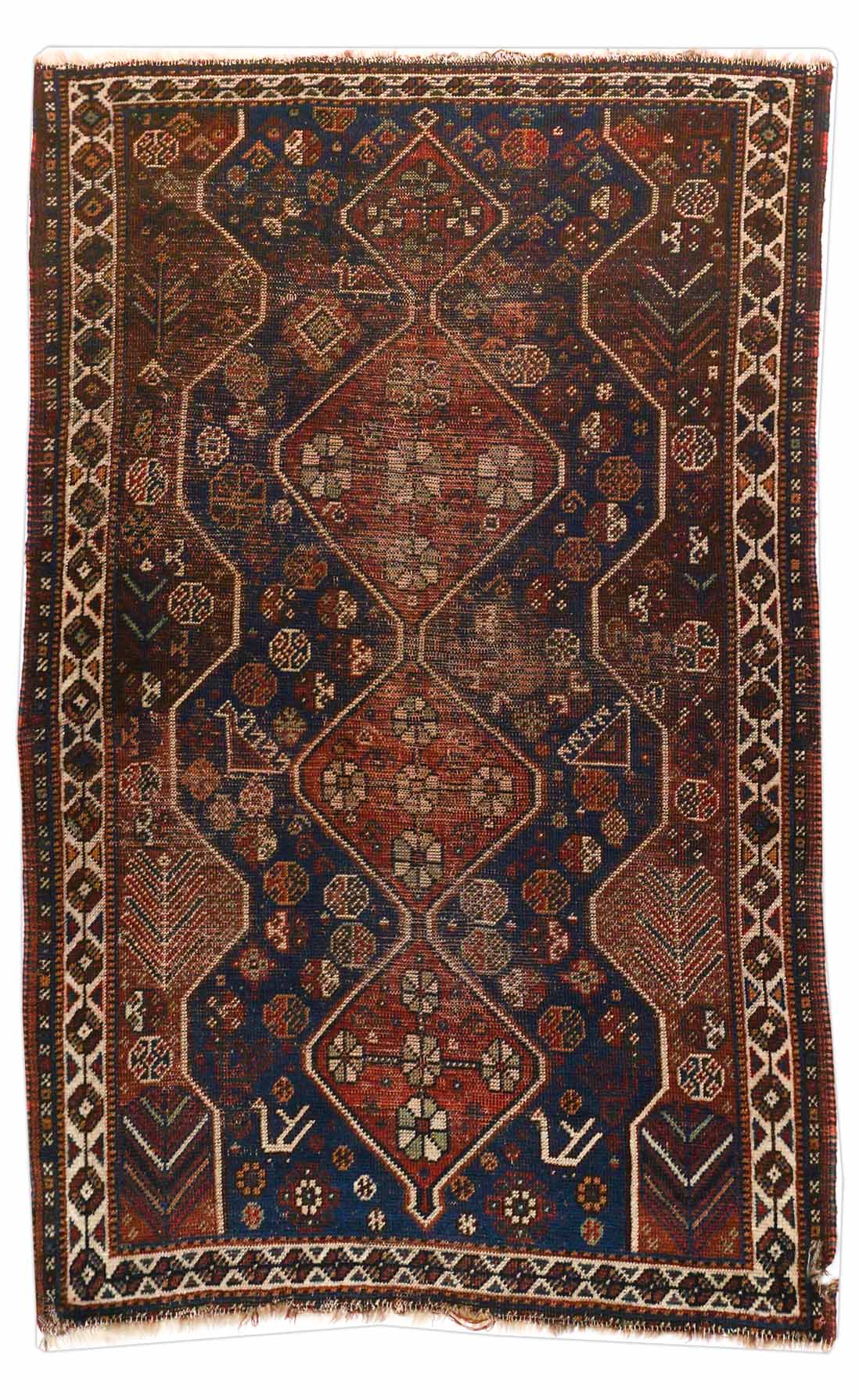

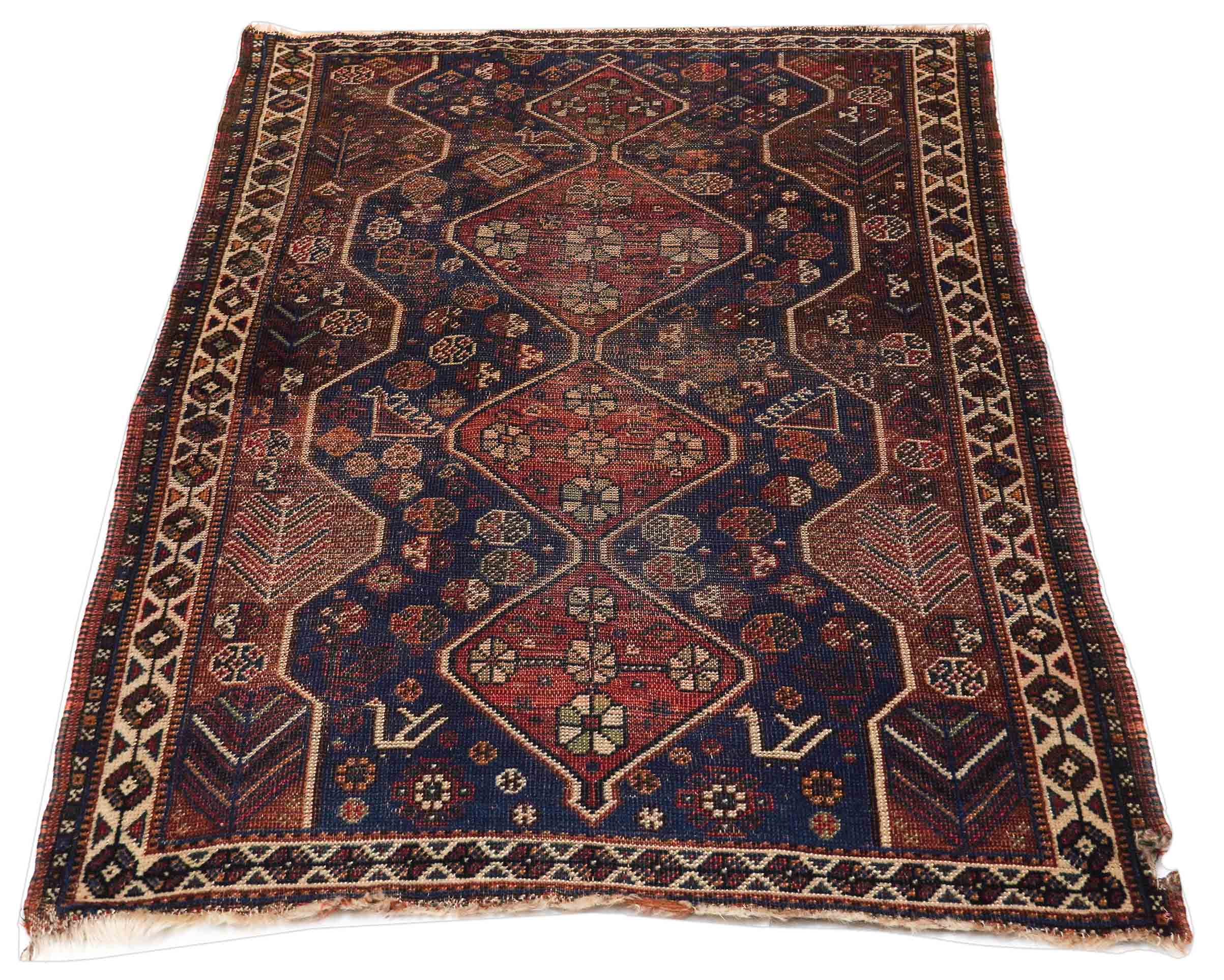
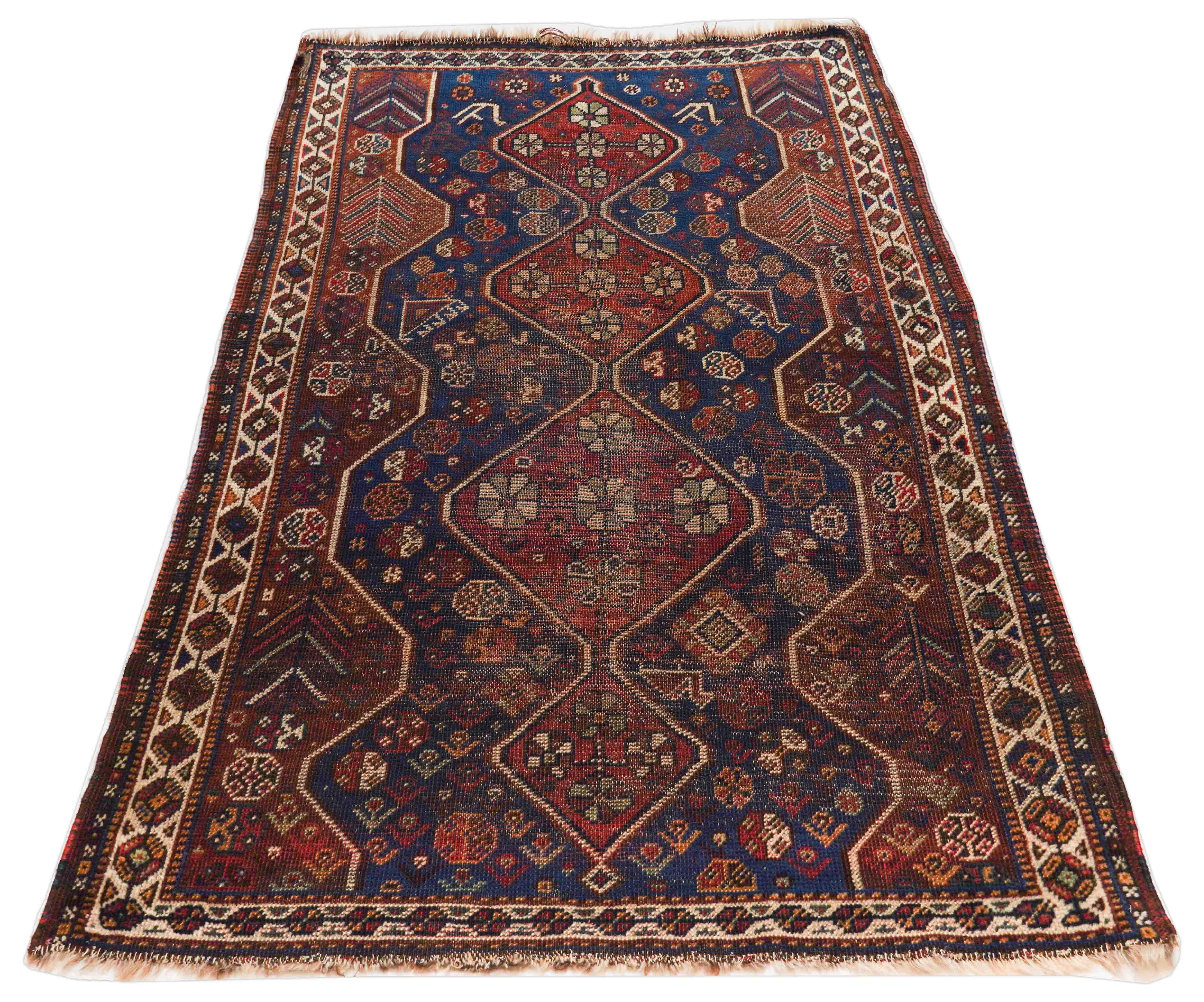
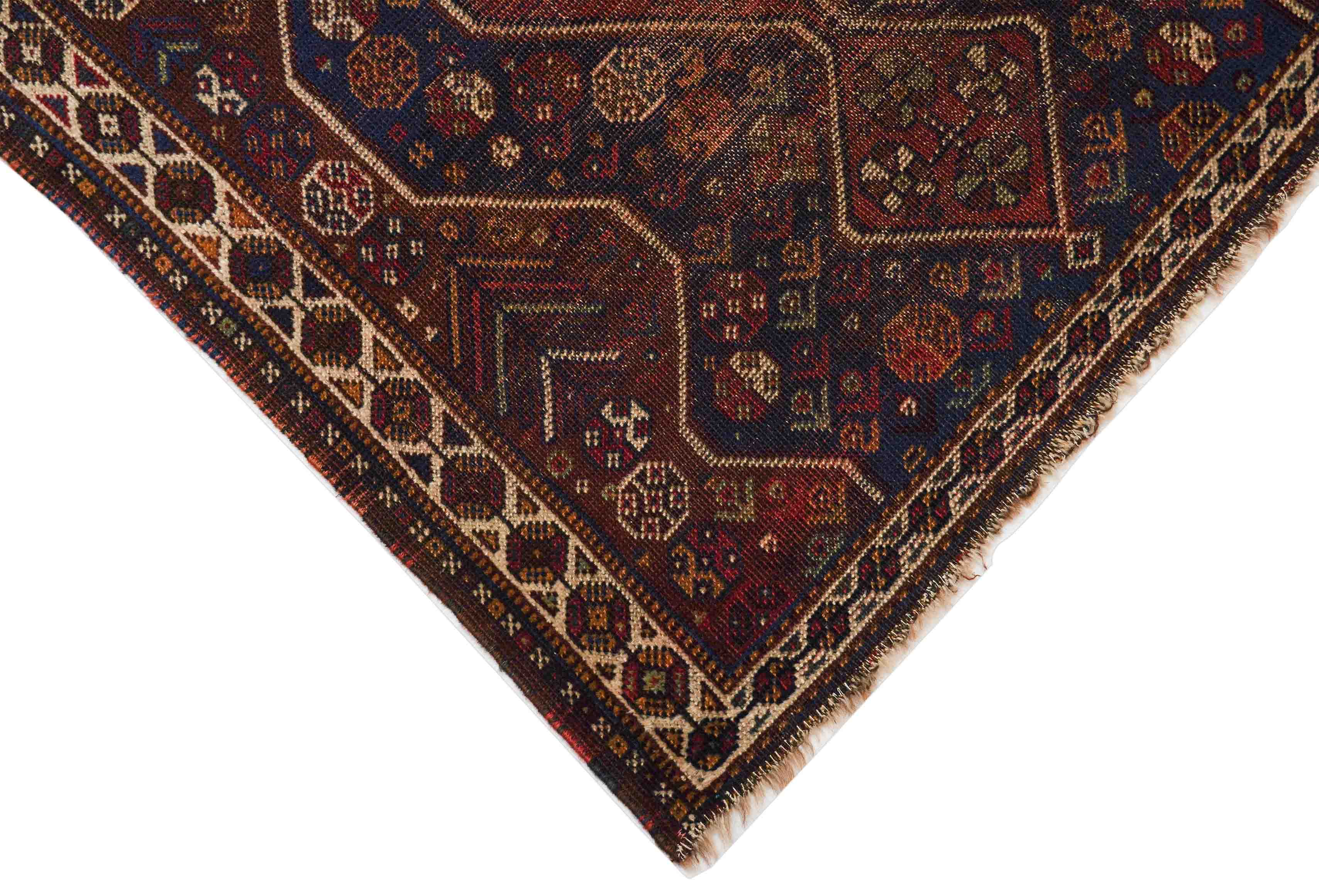
Old Afshari | 157 x 102 cm | Nr. Z-3100


|
14-day home trial |

|
Free delivery & returns within the EU |
Old Afshari
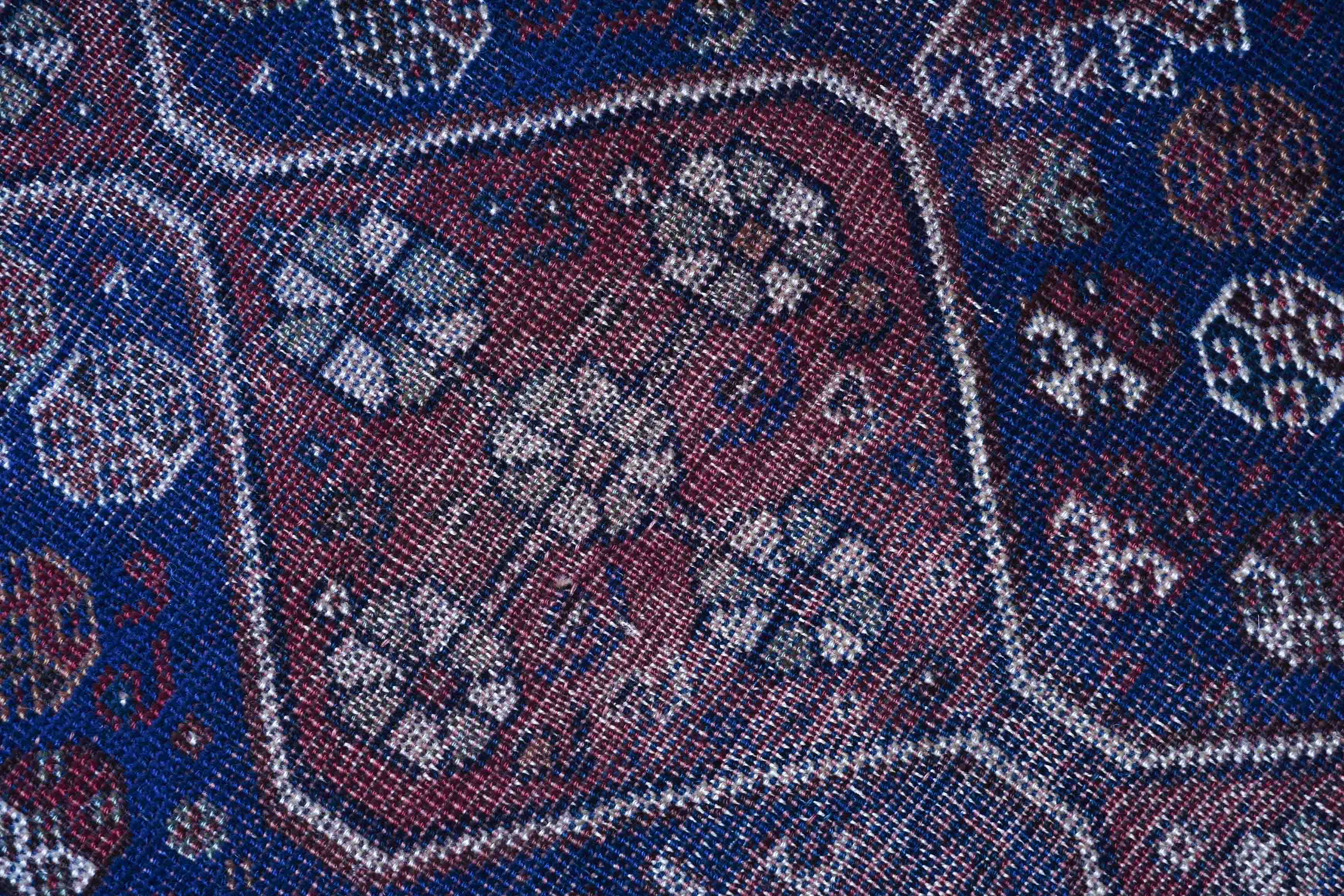
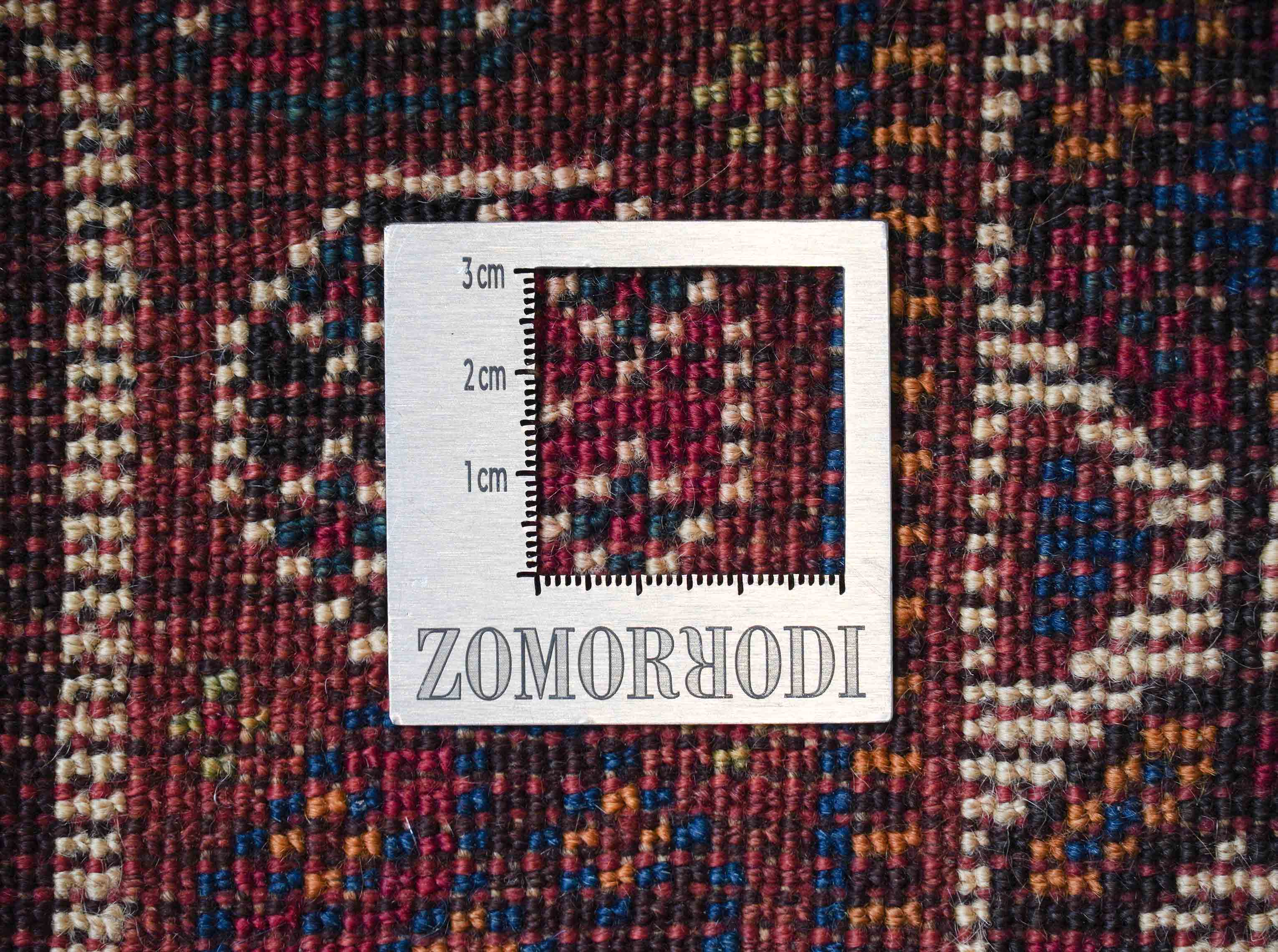
Craftsmanship and timeless elegance come together in this rug in dark blue and rust red. A knot density of approx. 180,000 knots per m² makes the painstaking workmanship visible – right down to the finely worked details. At 157 × 102 cm, it is well placed as a rug for the bedroom or study. It also cuts a fine figure in a child's room or a dressing room. Colouring and texture give any room a homely, exclusive note – a one-of-a-kind piece that will last for years.
| Availability | In stock | Delivery time: 1–3 working days |
| Origin | Persia |
| Dimensions | 157 cm x 102 cm (= 1.6 m²) |
| Construction | hand-knotted |
| Material |
Pile: wool (hand-spun, natural dyes) Weft & Warp: wool |
| knots | 180,000 knots |
| Pile height | 5 mm |
| Year of manufacture | 1930 |
| Condition | pre-owned, cleaned & partially restored |
| Colour | Dark blue, rust red |
| Edition | one-of-a-kind piece |

Origin
The Afshar (also spelled Afschar) were an important Oghuz tribe. The "i" in the name Afshari corresponds to our preposition "of". Afshari therefore means rug of the Afshar. Originally the Persian Afshar lived in the north-west of Iran, on the Afghan border. Part of the tribe was forcibly resettled in the south-east of Iran, near the city of Kerman on the Silk Road. Here knotting rugs became an important source of income for the Afshar. Ever since the resettlement, the Afshar have also been known for their distinctive hand-knotted Afshar rugs. Afshar rugs are sometimes traded as Sirdjan rugs as well. The rugs come in red and blue tones and mostly geometric patterns. The most widespread pattern has a field in the middle holding one or several square rosettes. It is thought that this central field depicts a stretched animal hide.This Old Afshari is around 96 years old and a true collector's piece.
Material
The technique used to make the materials for the pile of this Old Afshari is more than 200 years old. The wool was dyed with natural dyes and spun by hand. Dyeing with natural or plant dyes is more complicated, more expensive and more time-consuming than dyeing with chemical colours. For a luminous red, for example, around one kilo of ground madder root is needed as dyestuff for every kilo of wool. For a strong yellow that is not too pale, it even takes two kilograms of the dyestuff weld per kilo of wool. Spinning the wool is just as time- and labour-intensive. On top of that, fewer and fewer people still master the craft of spinning wool by hand.But the effort is worth it: dyeing with natural colours allows the high-quality wool to keep its natural oil content. Wool that has been dyed with natural colours and spun by hand creates fascinating, shimmering patterns. The charm of hand-spun wool, with its slight irregularities and natural shades, comes into its own as a contrast in modern interiors, but equally in rooms furnished in a more traditional or country style.
The foundation (weft and warp threads) of this Old Afshari is made of new wool.
Condition
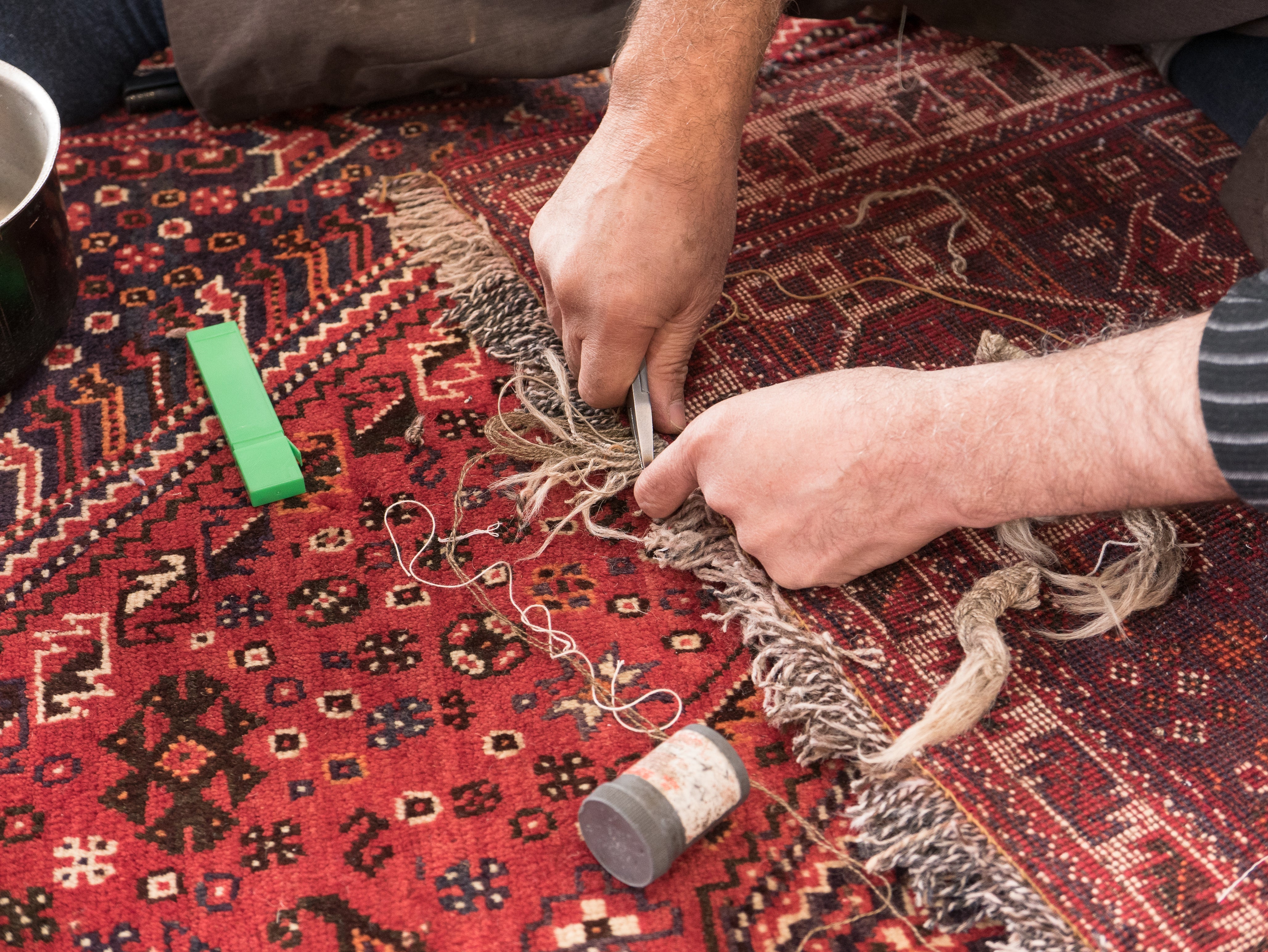
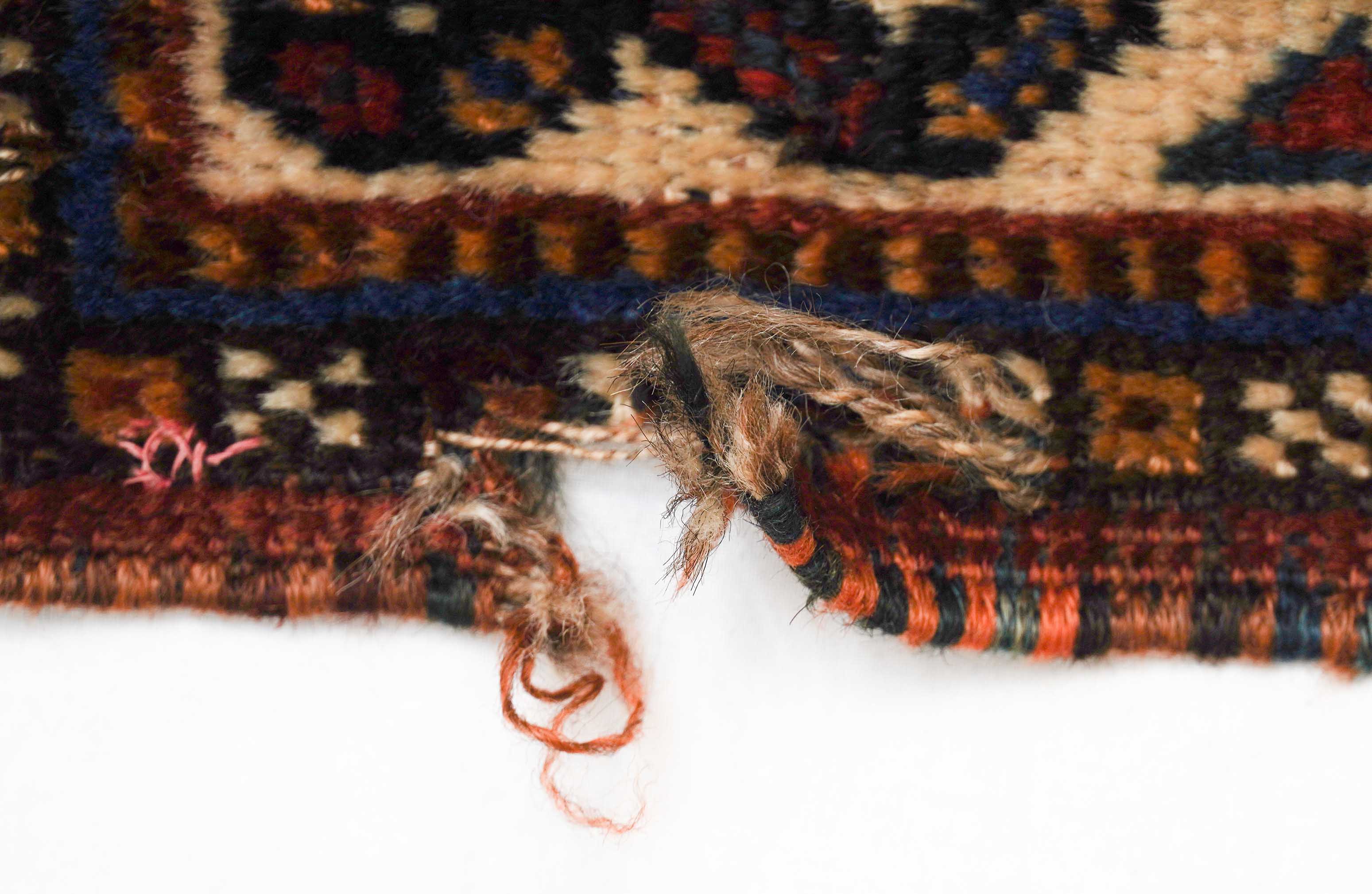
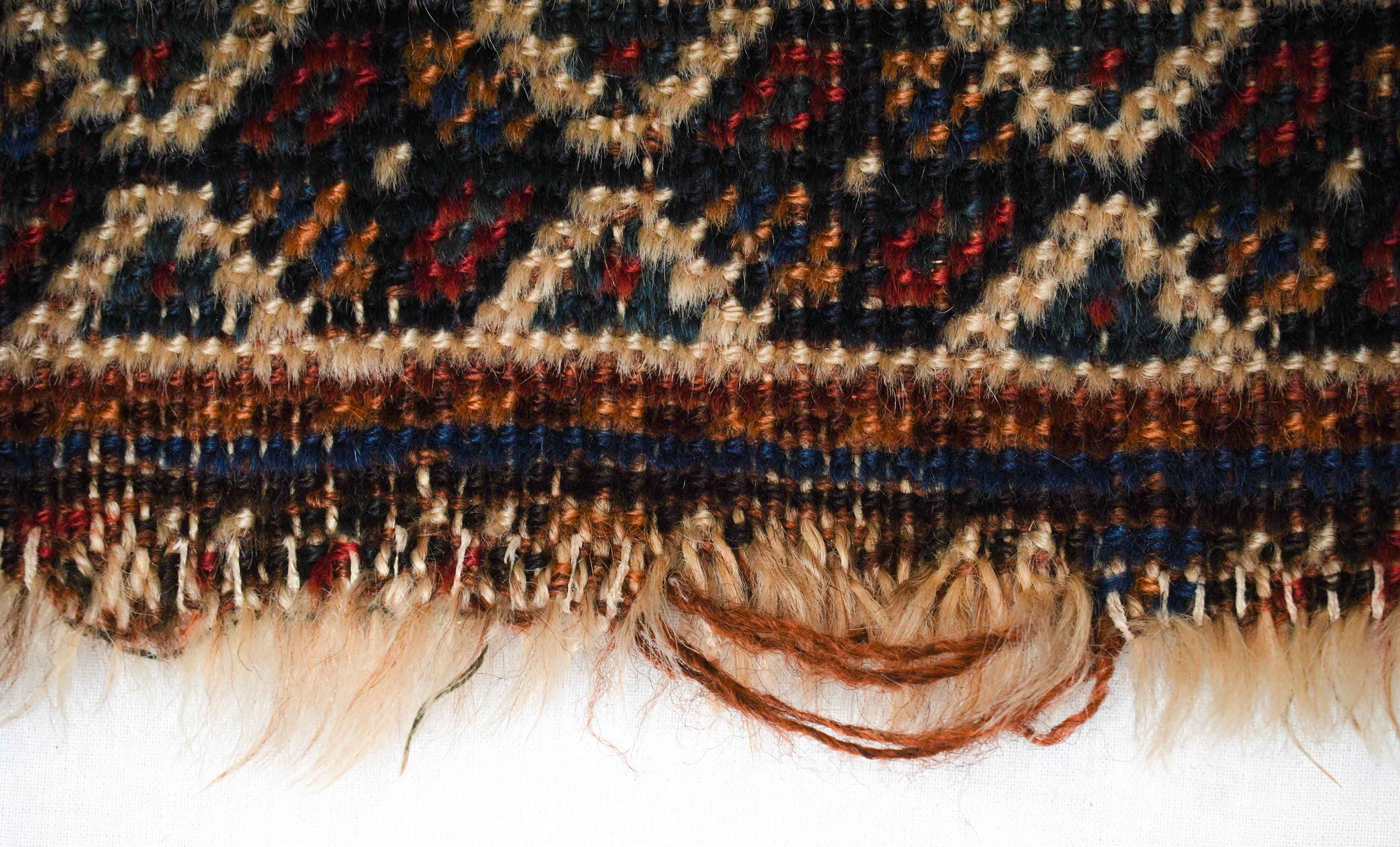
This Old Afshari has had admirers before you. It was knotted around 1930. It has been thoroughly cleaned and is in good but only partially restored condition. The fringes could do with a repair. The edges are damaged in places. The pile is evenly worn. We have not fully restored this Old Afshari, because we feel it has a special charm just as it is. If that is what you would like, we are of course happy to carry on restoring the rug for you. We can bring almost any rug back to near-perfect condition.
A note on the photos
Child labour? No thanks.

The rug trade against child labour: Children belong in school, not at a knotting or weaving loom. For us it therefore goes without saying that we only offer rugs made under fair conditions and without child labour. We place particular importance on good working conditions and tolerate no child labour at our producers.
We are proud to be a member of the Care & Fair campaign against child labour.
The industry-wide campaign CARE & FAIR - the rug trade against child labour was founded in 1994. The initiative has made it its mission to fight the excesses of illegal child labour in the knotting countries and, at the same time, to improve the overall situation of rug knotters and their families in the knotting regions of India, Nepal and Pakistan.
Our goals:
- Ending illegal child labour in India and Pakistan.
- Creating better living conditions for knotters' families.
- Socially responsible production. We only accept goods that have been made under fair conditions. Working with our producers as partners, we want to make clear to them that taking on social responsibility benefits everyone.
Together with Care & Fair we currently support 10 schools, 6 adult education centres and 3 day clinics in India and Pakistan.
Choose options
|
|
14-day home trial |
|
|
Free delivery & returns within the EU |