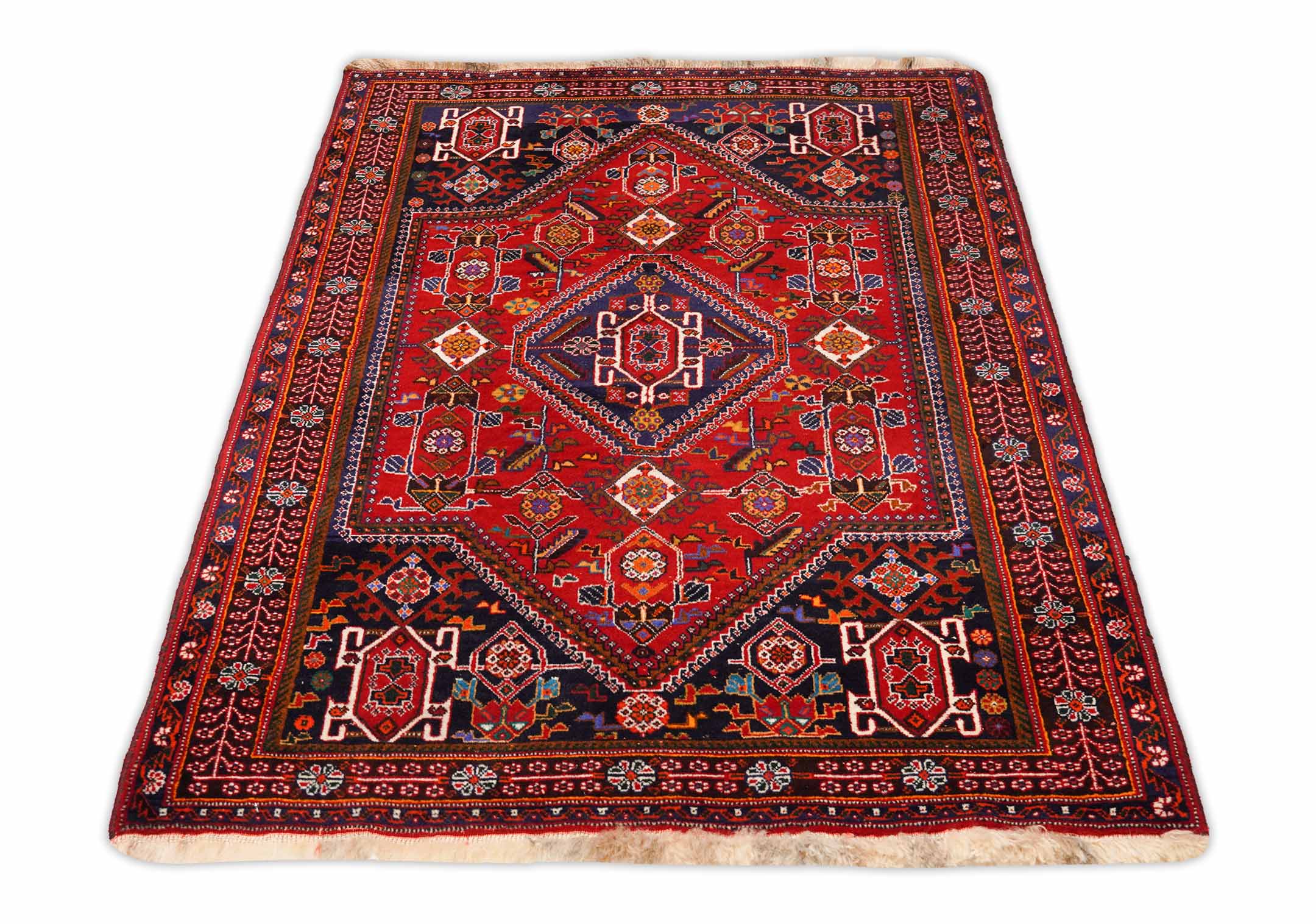
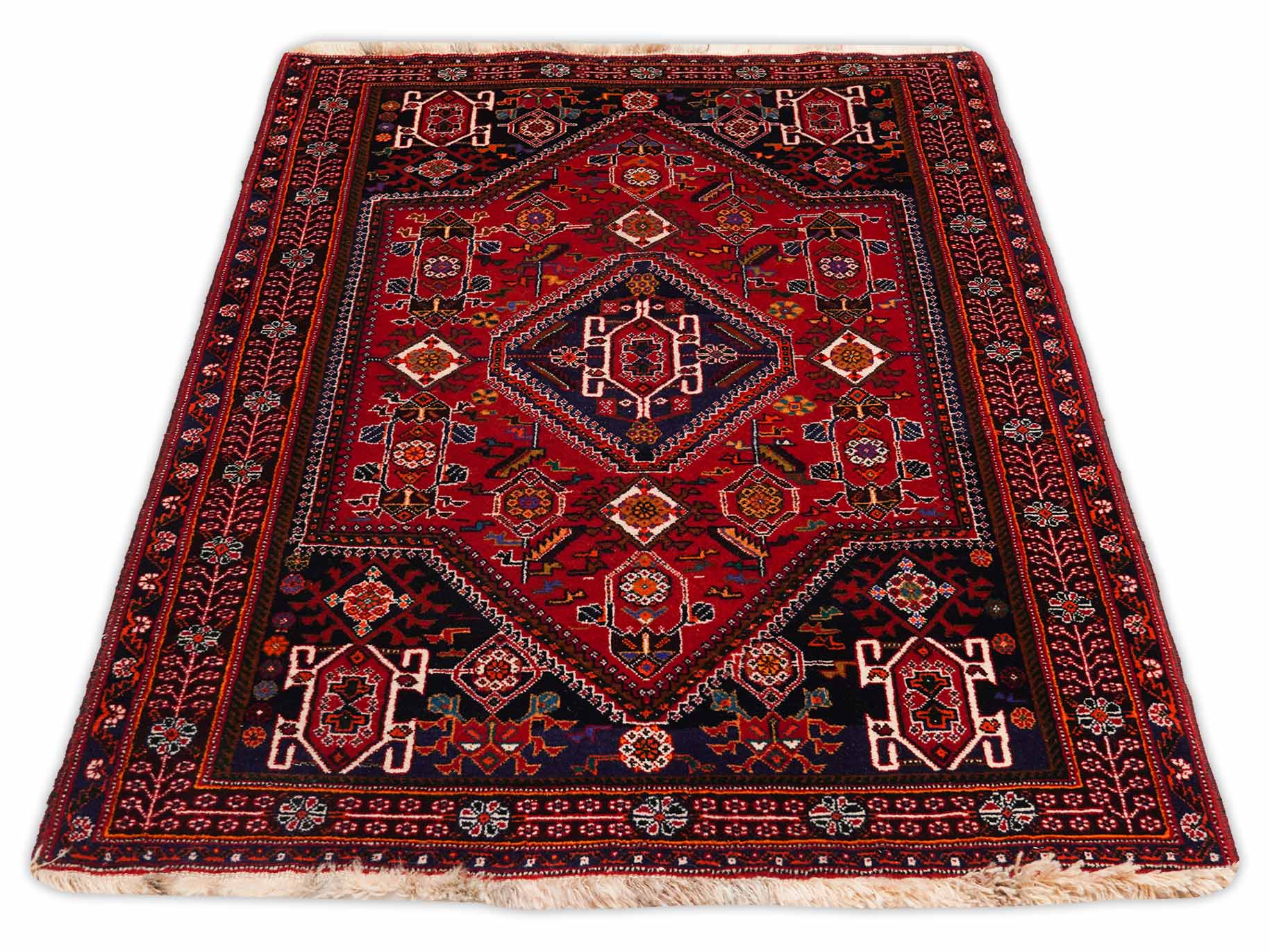
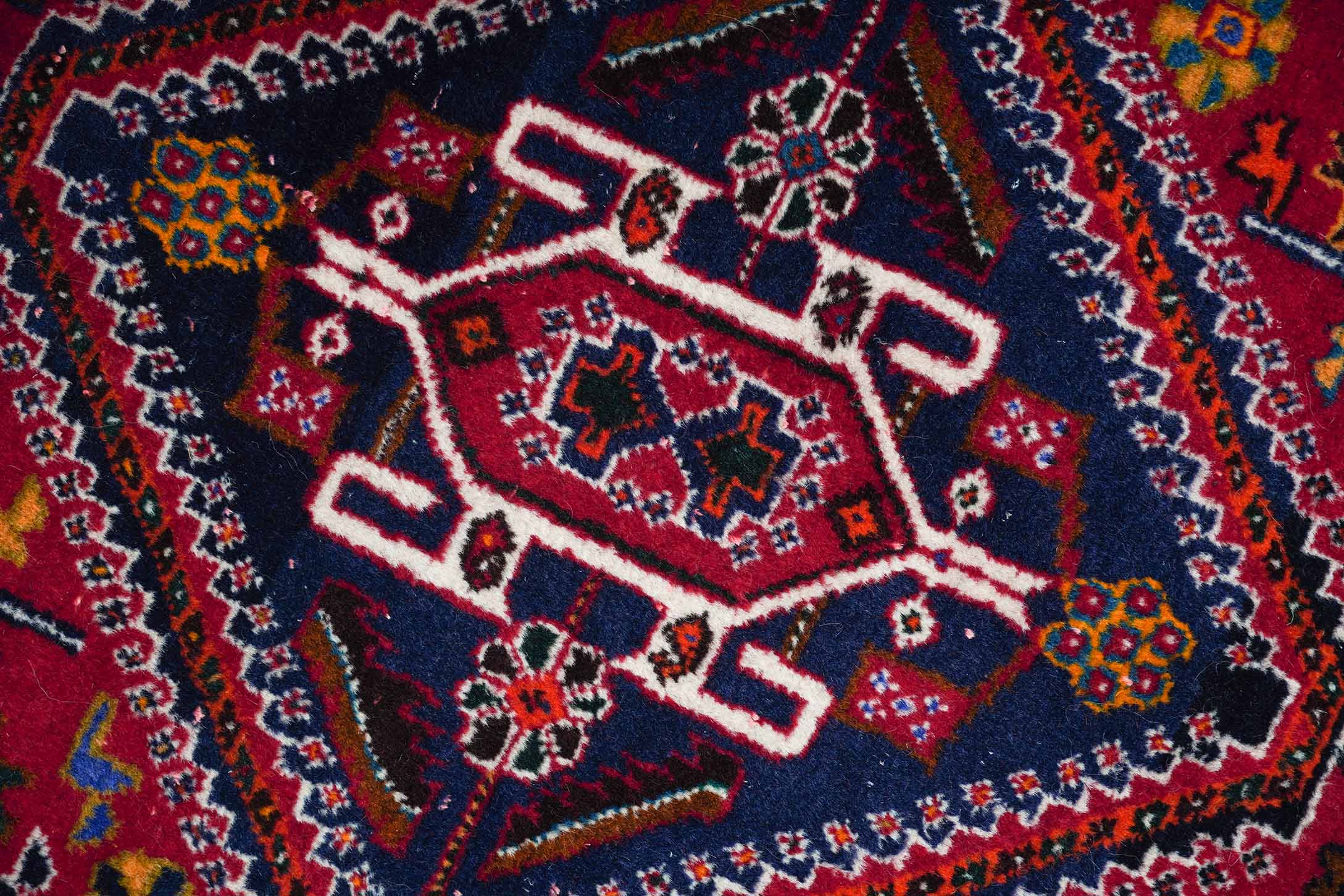
Ghashghai | 150 x 105 cm | Nr. Z-484
Due to US sanctions, PayPal is not available for Persian rugs. You can use all other payment methods.


|
14-day home trial |

|
Free delivery & returns within the EU |
Ghashghai
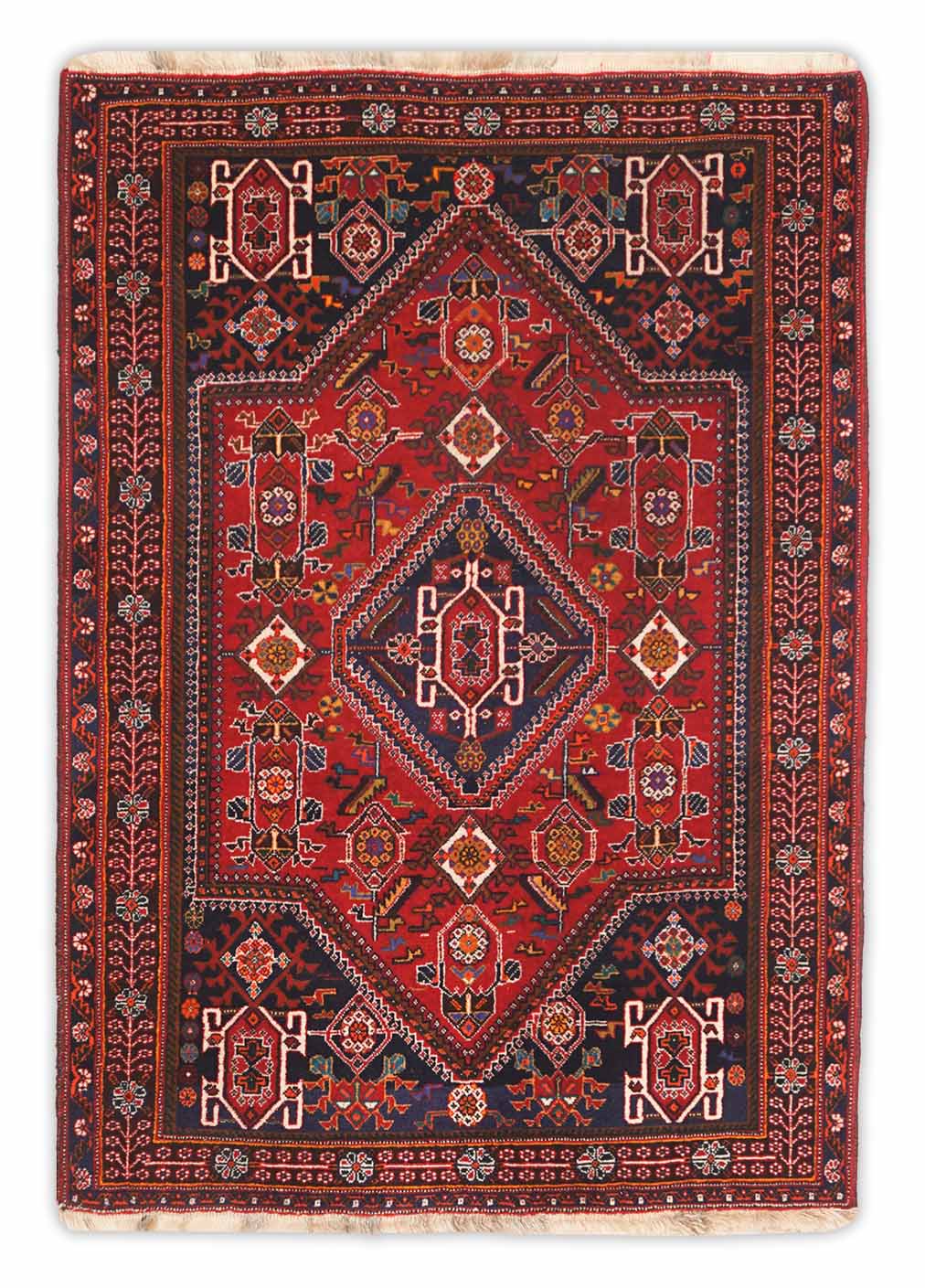
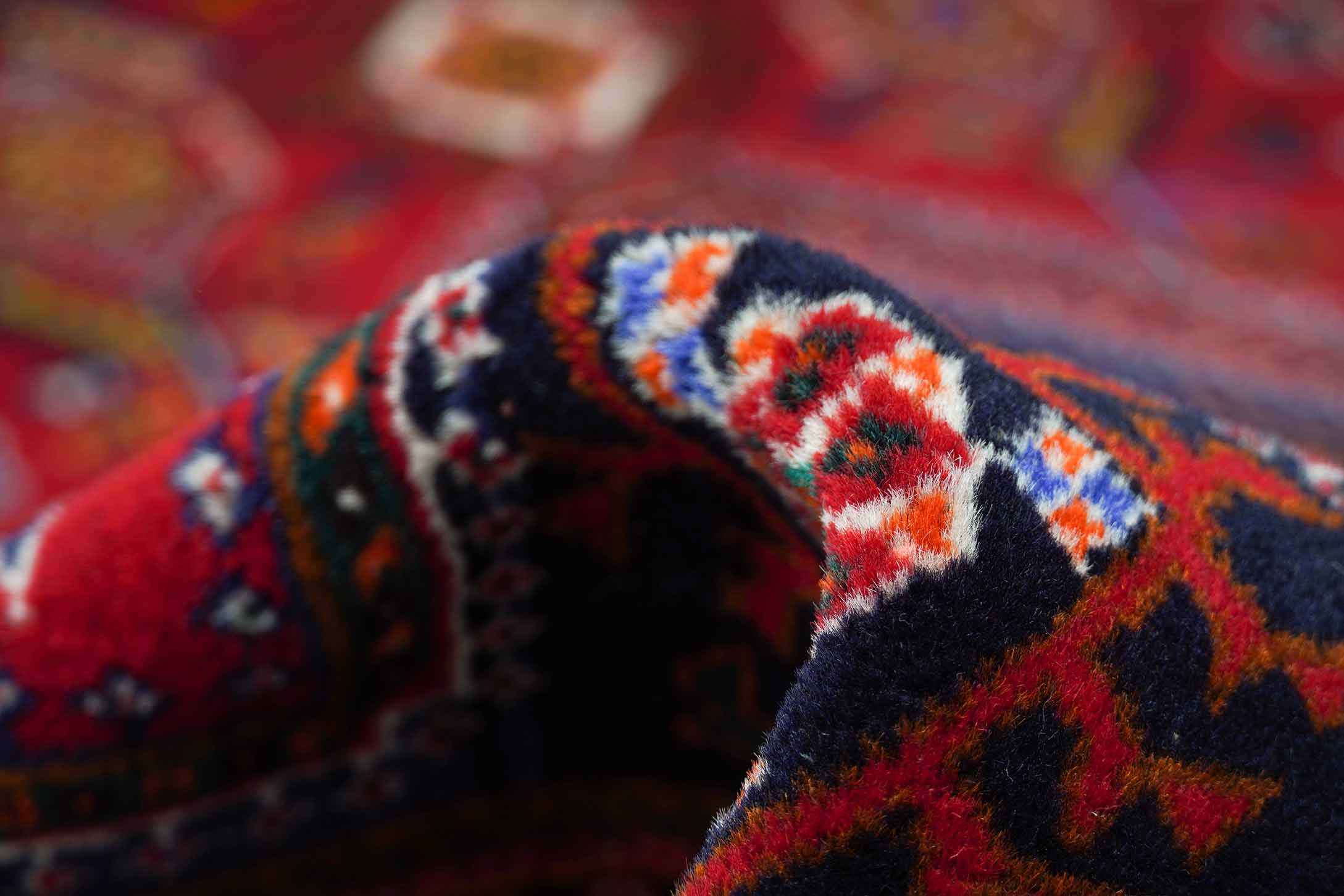
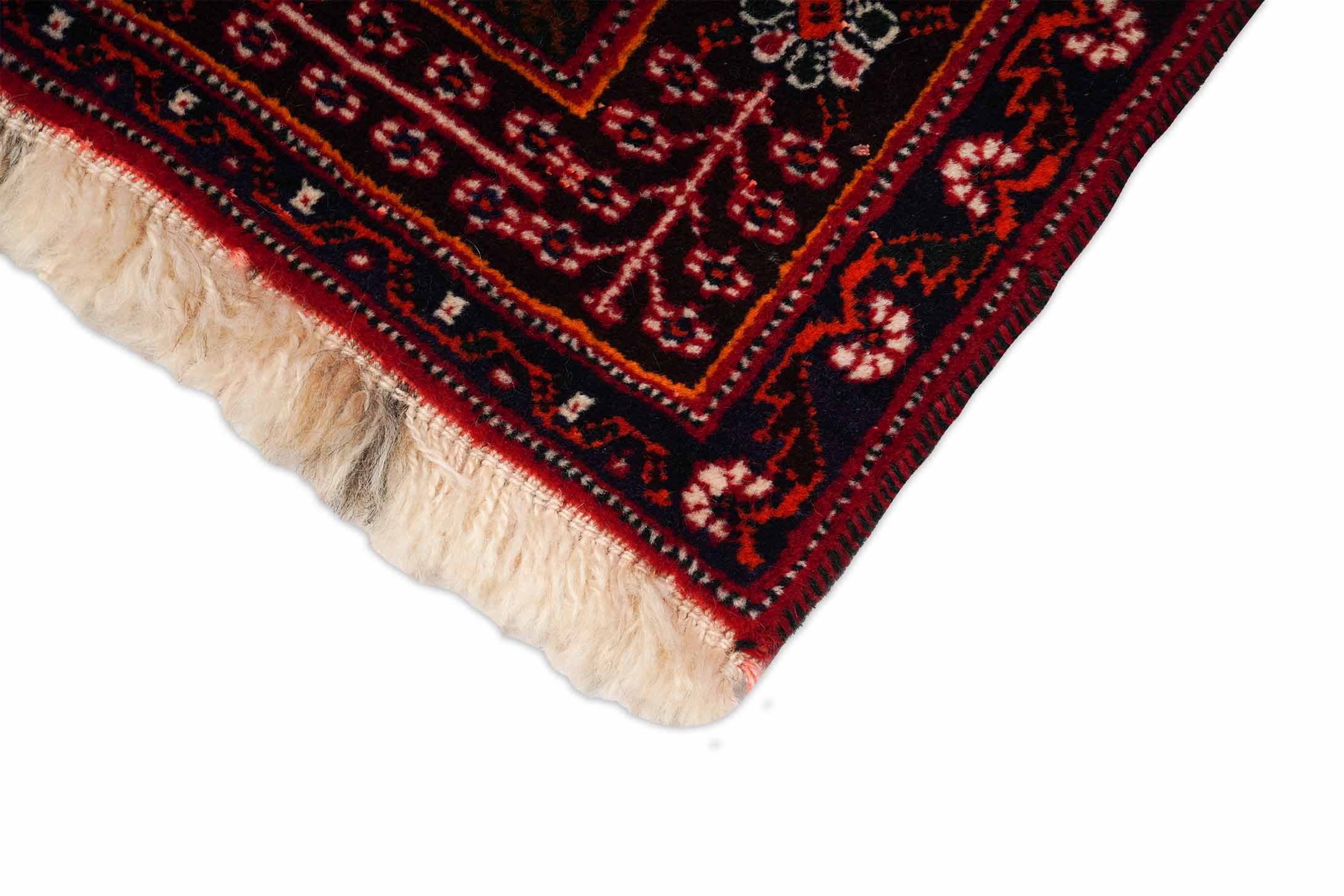
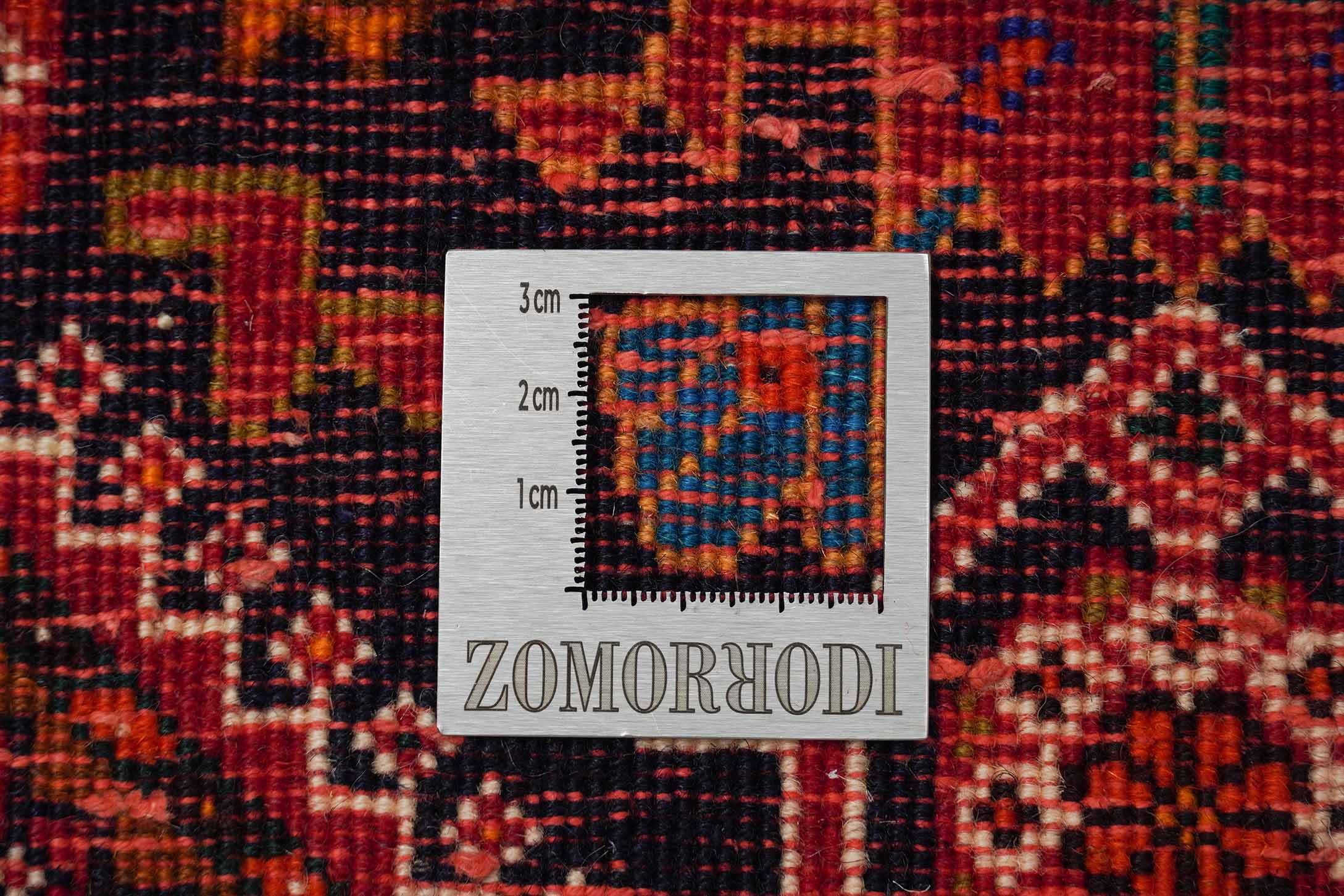
Craftsmanship and timeless elegance meet in this rug in dark red and dark blue. A knot density of approx. 300,000 knots per m² makes the painstaking workmanship visible – right down to the fine execution of the details. At 150 × 105 cm it is well placed as a rug for the bedroom or study. It also looks good in a child's room or dressing room. Colouring and texture give any room a homely, exclusive note – a one-of-a-kind piece that will last for years.
| Availability | In stock | Delivery time: 1–3 working days |
| Origin | Persia |
| Dimensions | 150 cm x 105 cm (= 1.57 m²) |
| Construction | hand-knotted |
| Material |
Pile: wool Weft & Warp: wool |
| knots | 300,000 knots |
| Pile height | 10 mm |
| Year of manufacture | 1960 |
| Condition | pre-owned, but in very good condition (cleaned & restored) |
| Colour | Dark red, dark blue |
| Edition | one-of-a-kind piece |
Origin
The Ghashghai are the great Persian nomadic people and have lived in the south of Iran, in the province of Fars, for centuries. They are made up of seven tribes in all. The most important tribe of the Ghashghai – at least as far as rug making goes – are the Kashghuli (also Kaschguli, Kashguli, Qashguli). Old and antique Ghashghai rugs are sought-after collectors' pieces today. Ghasghai rugs are known as the king among Persian nomadic rugs.A large share of Ghashgai rugs is adorned with the so-called geometric Heibathlou pattern: a diamond-shaped central field with a rather plain medallion that is repeated in the corners. The inner field is filled with an unusually large number of ornaments. The motifs range from stars, lions and camels to trees, blossoms and boteh or paisley symbols. Some motifs are stylised, others rendered true to life. The frequently repeated motifs are never entirely alike. They differ considerably in their colouring. The symbols are rarely arranged symmetrically. Symmetry along the length is often ignored. The individual elements in the borders, too, alternate in different colours. Small rows of little boxes at the ends of the rugs are typical. The variation in the pattern comes from the fact that the Ghashgai had no knotting templates: every rug was knotted from memory and filled with interesting motifs.
By now most Ghashghai have settled down. It is only because they have largely become settled that the Ghashghai can also make rugs in large formats. The few clans still living as nomads head up to the summer pastures in the Zagros Mountains twice a year. In autumn they return to the milder winter quarters down in the valley. The Ghashghai have a reputation for being especially proud, hard-working and honourable. Even though the Ghashghai come across as less wild and warlike today, they still have an influence on Iranian domestic politics that shouldn't be underestimated.
Material
The pile of this Ghashghai was hand-knotted from high-quality new wool. New wool is obtained by shearing sheep gently. It is a renewable, natural raw material with a number of impressive qualities: thanks to the natural lanolin in the wool, the surface repels drops of water and is therefore naturally protected against dirt. Wool also insulates extremely well, has a regulating effect on the indoor climate and absorbs sound.The foundation (weft and warp threads) of this Ghashghai is made of new wool.
Condition
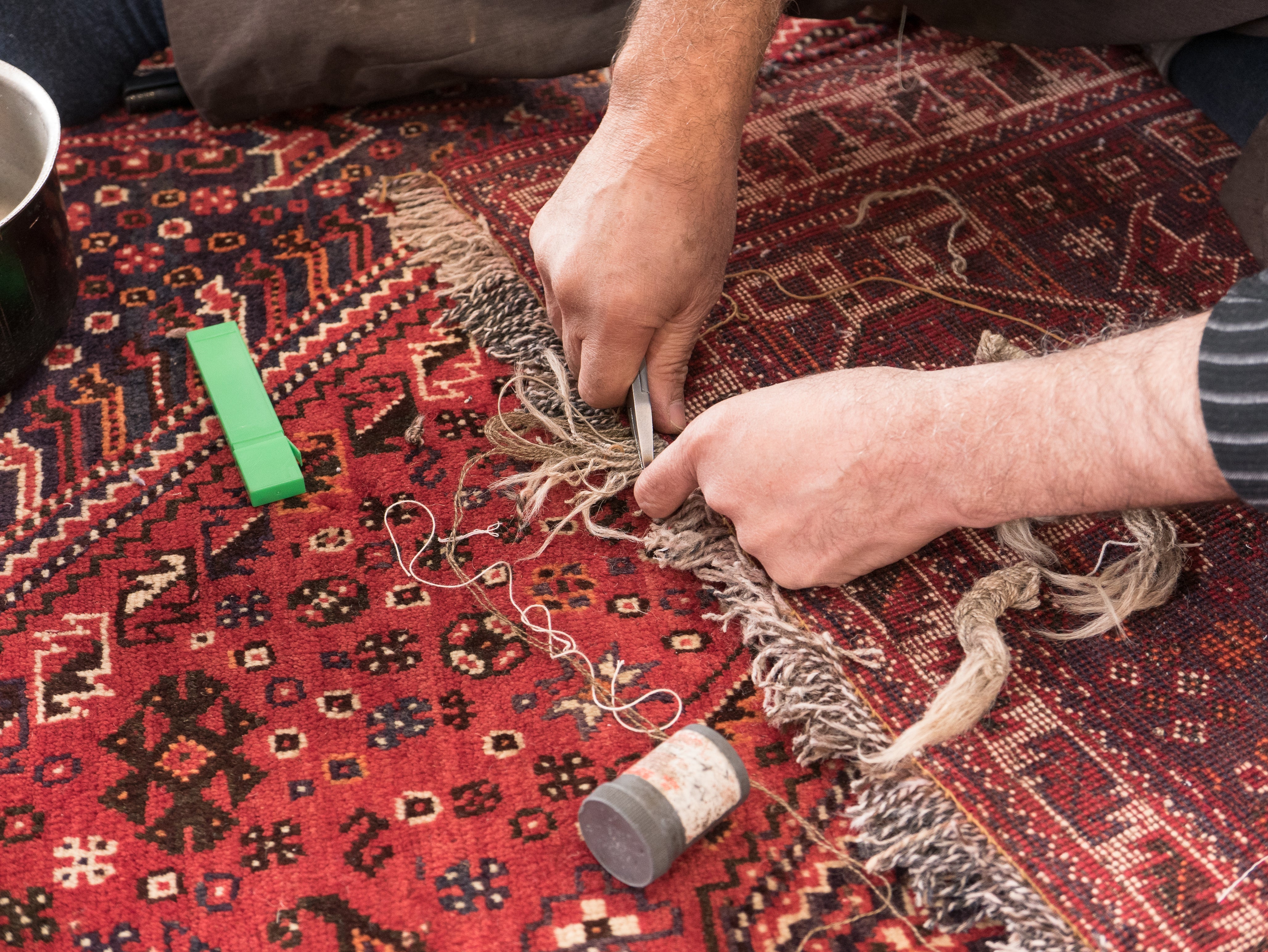
You are not the first to take a liking to this Ghashghai. It had owners before you who valued and used it. It was knotted around 1960. We have cleaned it thoroughly and restored it with care. Despite its age, it is therefore in very good condition.
A note on the photos
Child labour? No thanks.

The rug trade against child labour: Children belong in school, not at a knotting or weaving loom. For us it therefore goes without saying that we only offer rugs made under fair conditions and without child labour. We place particular importance on good working conditions and tolerate no child labour at our producers.
We are proud to be a member of the Care & Fair campaign against child labour.
The industry-wide campaign CARE & FAIR - the rug trade against child labour was founded in 1994. The initiative has made it its mission to fight the excesses of illegal child labour in the knotting countries and, at the same time, to improve the overall situation of rug knotters and their families in the knotting regions of India, Nepal and Pakistan.
Our goals:
- Ending illegal child labour in India and Pakistan.
- Creating better living conditions for knotters' families.
- Socially responsible production. We only accept goods that have been made under fair conditions. Working with our producers as partners, we want to make clear to them that taking on social responsibility benefits everyone.
Together with Care & Fair we currently support 10 schools, 6 adult education centres and 3 day clinics in India and Pakistan.
Choose options
Due to US sanctions, PayPal is not available for Persian rugs. You can use all other payment methods.
|
|
14-day home trial |
|
|
Free delivery & returns within the EU |