
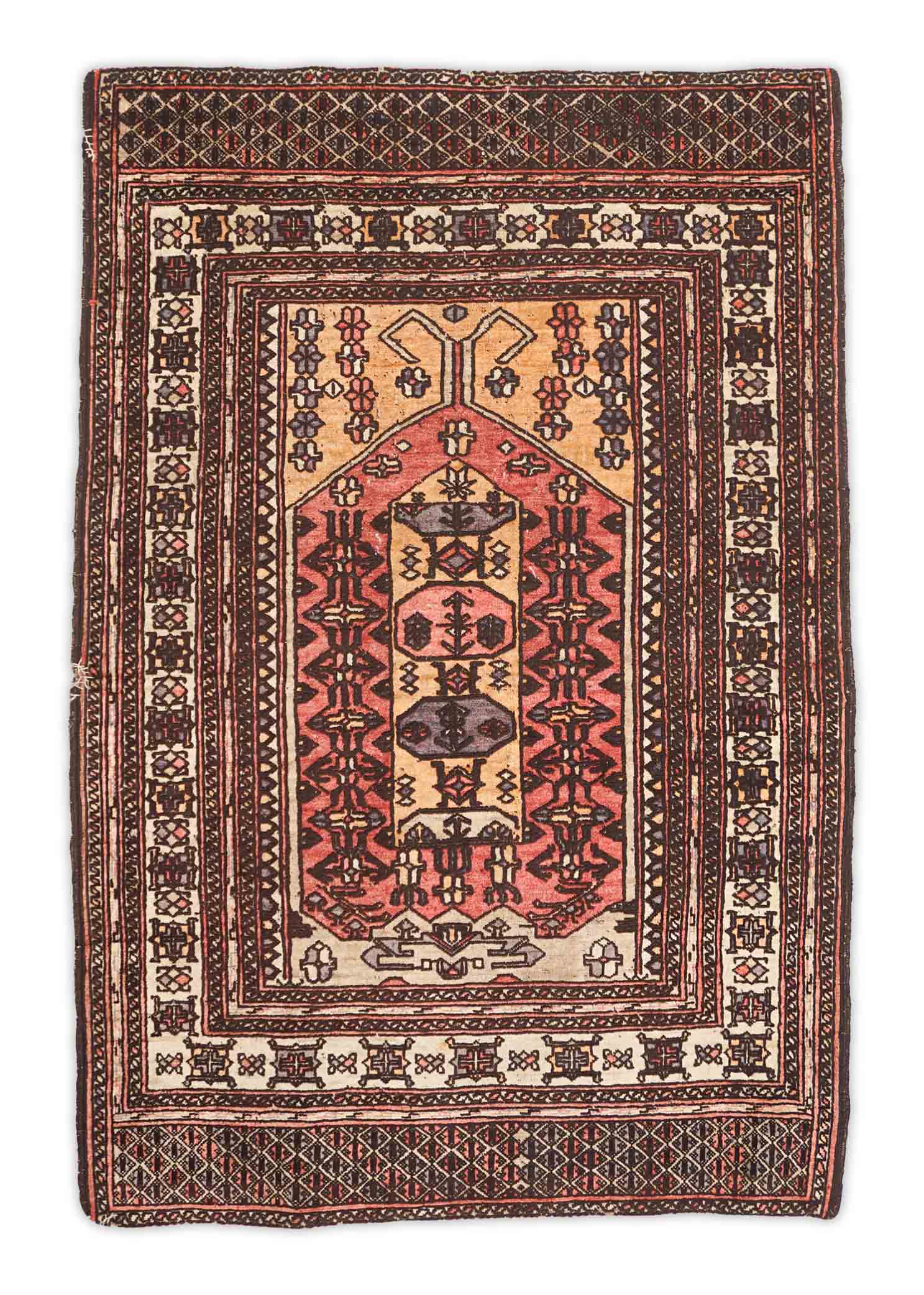
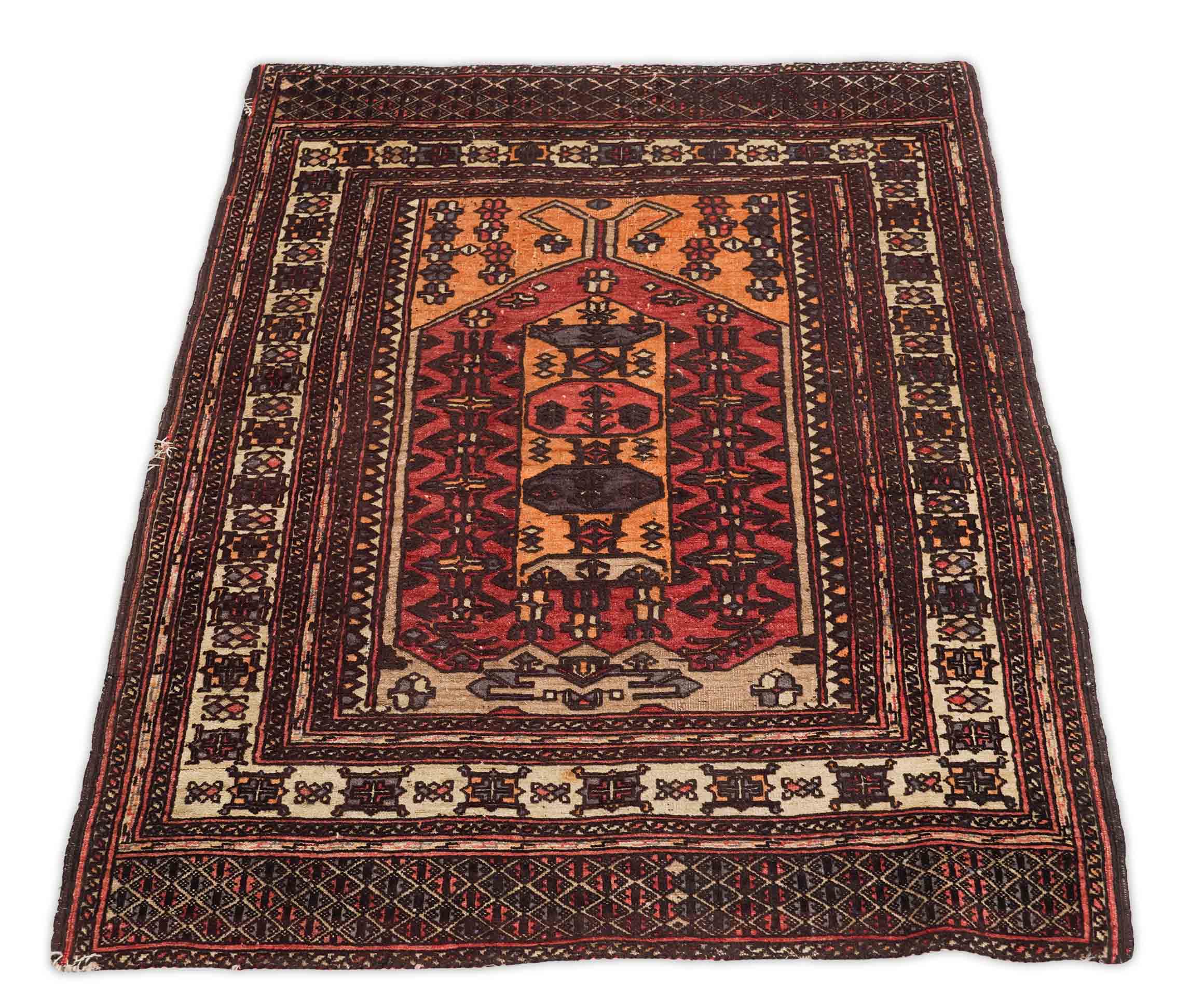
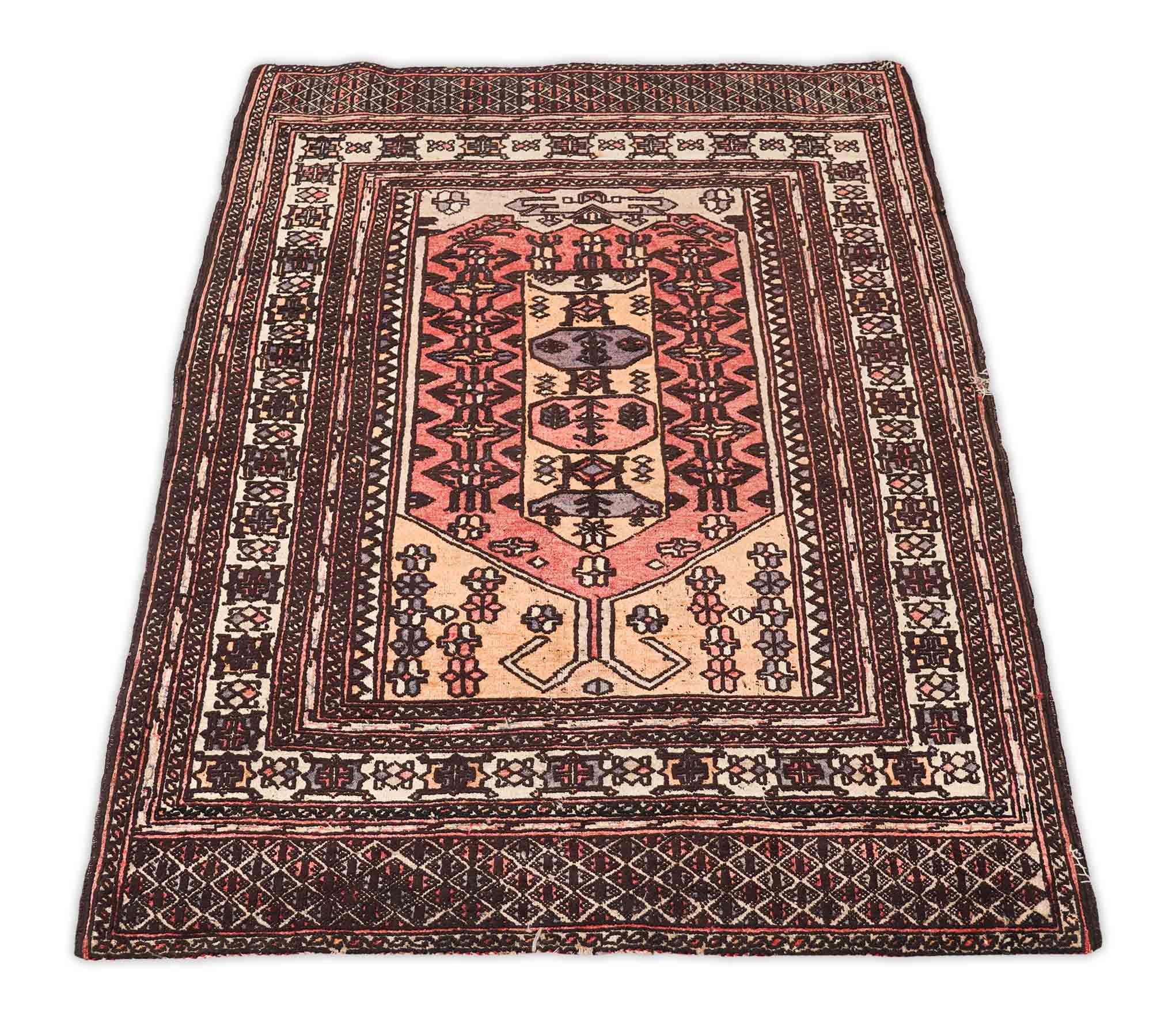
Afghan in pure silk | 122 cm x 82 cm | Nr. 20733


|
1-3 working days delivery time (within Germany) |

|
14-day home trial |

|
Free delivery & returns within the EU |
Afghan in pure silk
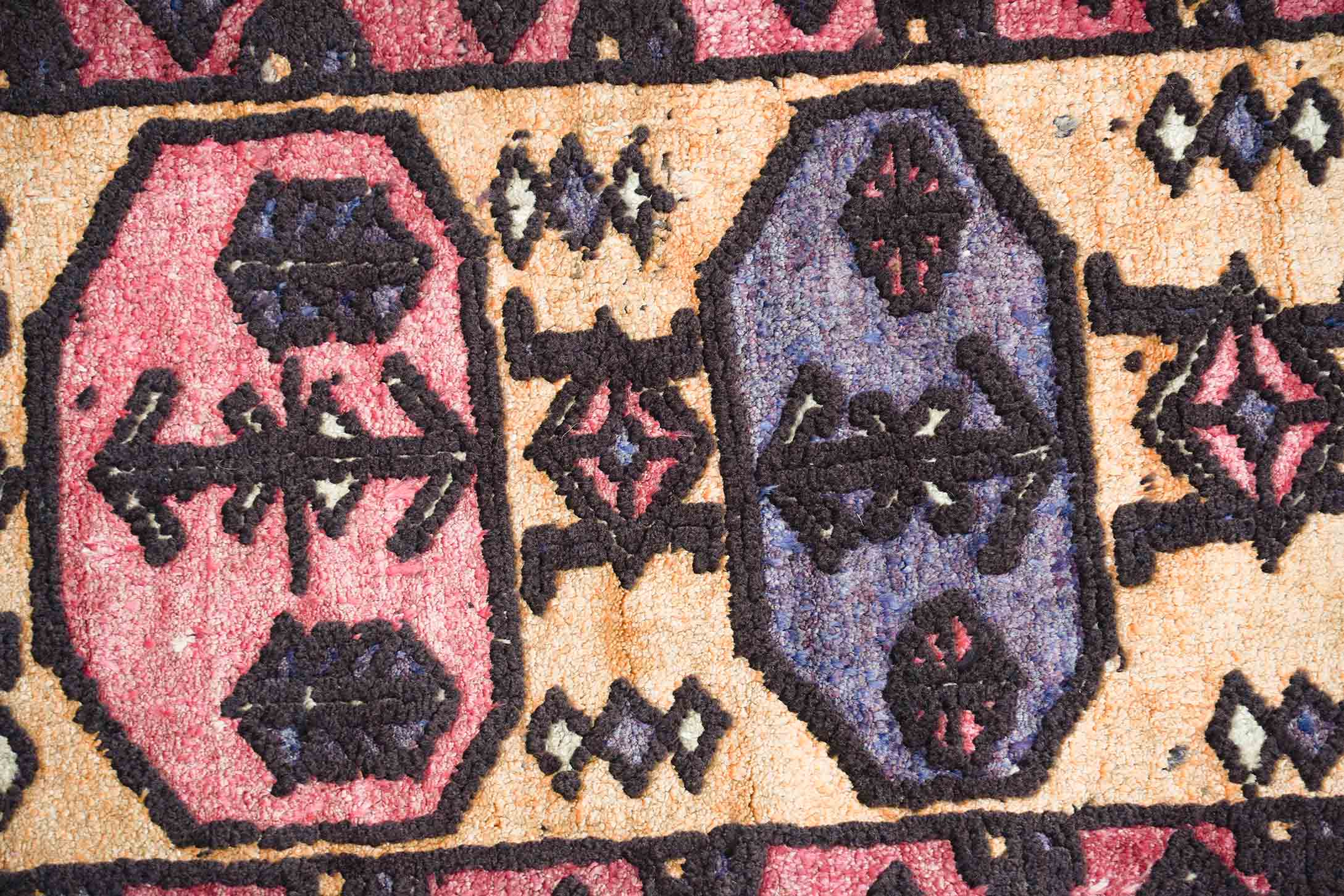
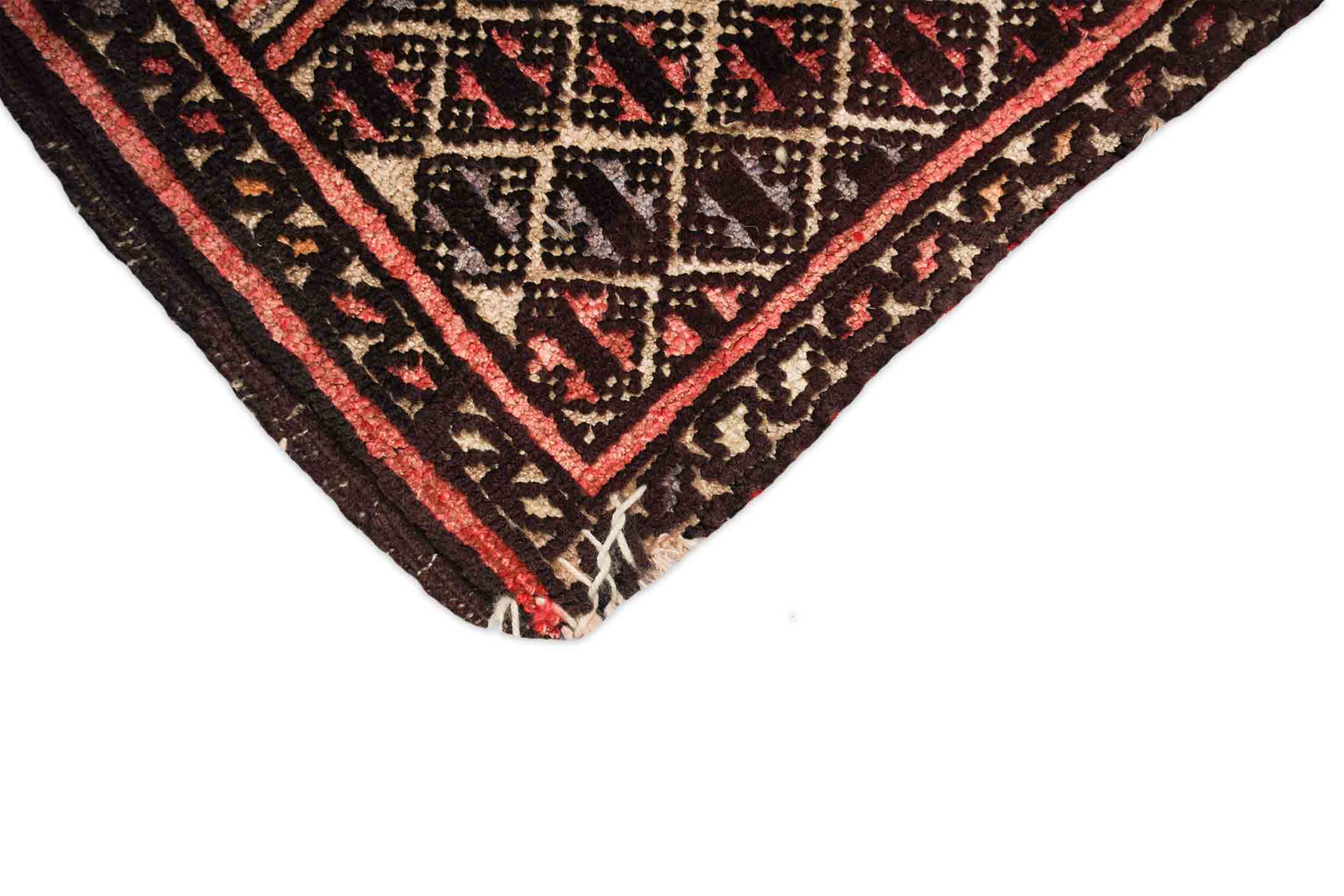
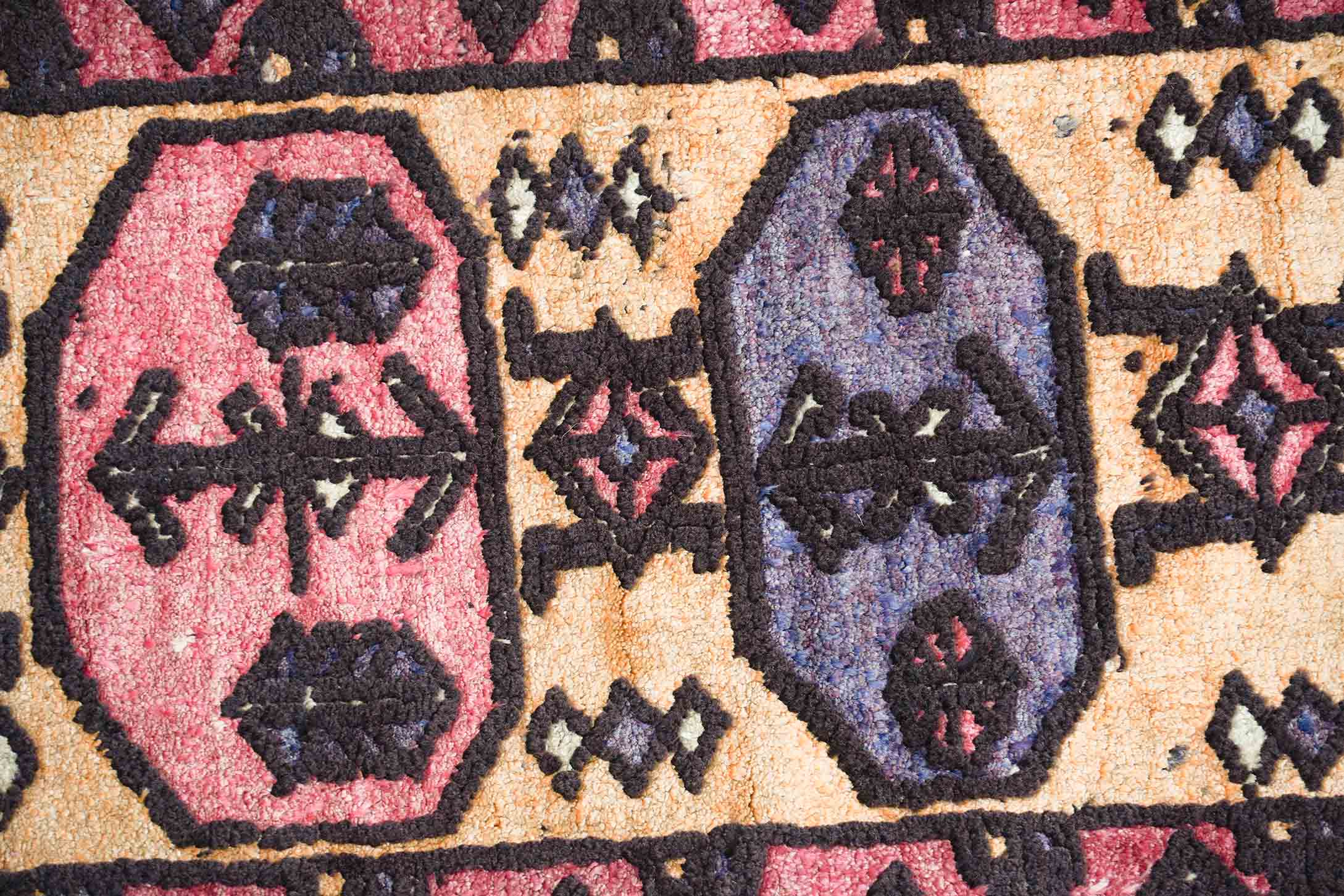
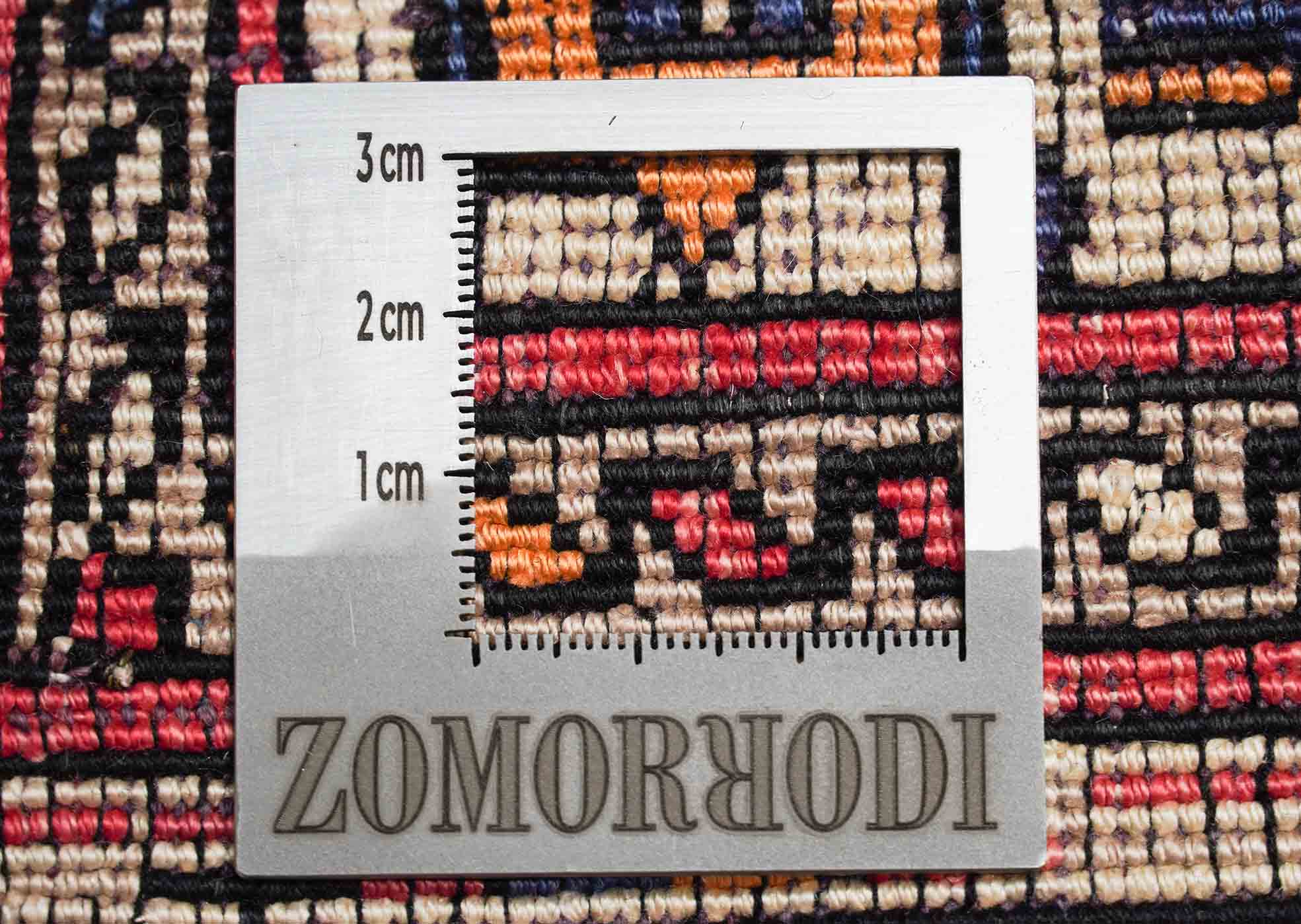
This one-of-a-kind piece in dark brown and light red unites traditional craftsmanship with timeless elegance. With a knot density of approx. 360,000 knots per m², the painstaking workmanship shows above all in the precise drawing of the design and the finely worked details. At 122 × 82 cm, it suits use as a bedside rug. It also cuts a fine figure in a reading corner. The harmonious colouring and the characteristic texture lend any room an exclusive, homely atmosphere. A rug of this quality is far more than a furnishing item – it is a piece of traditional textile art with individual character and lasting value.
| Availability | In stock | Delivery time: 1–3 working days |
| Origin | Afghanistan |
| Dimensions | 122 cm x 82 cm (= 1.0 m²) |
| Construction | hand-knotted |
| Material |
Pile: pure silk Weft & Warp: cotton |
| knots | 360,000 knots |
| Pile height | 3 mm |
| Year of manufacture | 2000 |
| Condition | pre-owned, cleaned & partially restored |
| Colour | Dark brown, light red |
| Edition | one-of-a-kind piece |

Origin
Rugs made in Afghanistan – known as Afghan rugs, or simply Afghans – are unmistakable. In Afghanistan's cultural melting pot, Baluch, Turkmen, Kazakh and Uzbek weavers came together, each bringing influences from their homelands. During the 19th century, Turkoman tribes settled villages in Afghanistan, which brought Turkoman weaving styles into the region. The designs of the various tribal groups – among them Esari, Salor, Tekke and Yomut – are wonderfully varied. What holds them together stylistically is the use of intricate elephant's foot motifs (known as guls), lively reds, decorative bands and ornamental end panels.Tribal weavers used natural dyes to create an enormous range of reds, from deep aubergine brown to warm burnt orange. These glowing colours are traditionally combined with clear blues and ivory accents. While the tribes of Afghanistan frequently use guls and serrated stars, it is in the decorative borders and end panels that weavers have traditionally worked a little of themselves and their culture into the design. The same is true of the decorative rugs from Bukhara, where all-over gul motifs are widespread.
The gul is a versatile motif, used as a medallion or for repeating patterns. It can be set against a monochrome field or linked into a striking tile pattern. The rich colours and bold design of antique Afghan rugs make them spectacular statement pieces that complement a wide variety of interior styles perfectly.
Because of the political situation in Afghanistan, only a few Afghan rugs are still made today.
Material
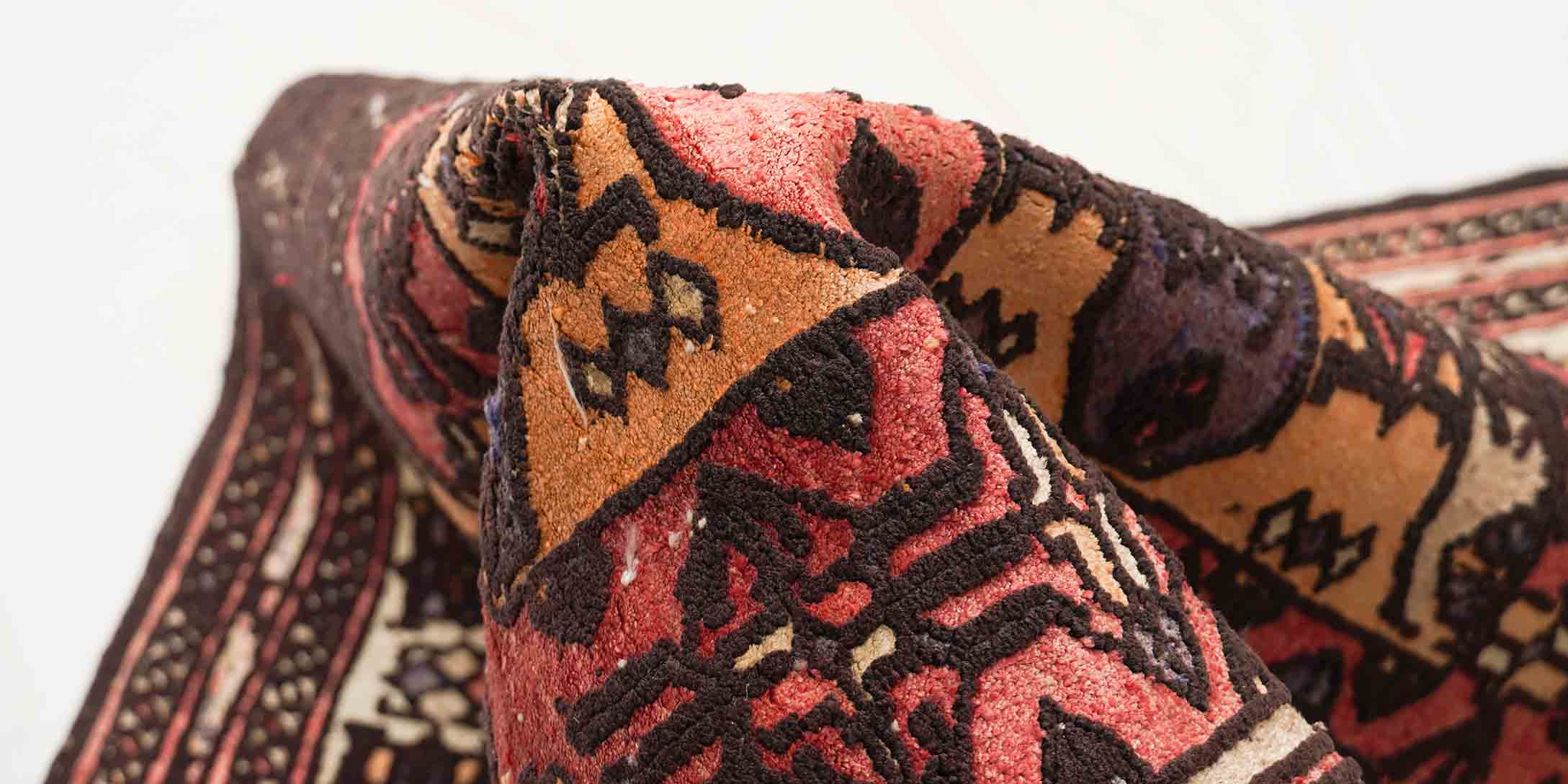
The silk of the pile of this Afghan in pure silk makes the colours of the pattern shine – depending on the light – in a variety of facets. It turns this Afghan in pure silk into a real jewel and creates an atmosphere in the room that is cosy and at the same time very elegant and refined. Silk is obtained by hand from the cocoons of the silkworm. Because the individual silk filaments are extremely long, very fine yarns can be made that are light in weight yet still tear-resistant. The fine yarn makes it possible to tie smaller rug knots and so to create finer patterns. This is why the finest rugs in the world are hand-knotted from pure silk.The weft and warp threads of this Afghan in pure silk are made of cotton. This versatile material is tear-resistant and elastic and therefore particularly well suited to a hard-wearing foundation.
Condition
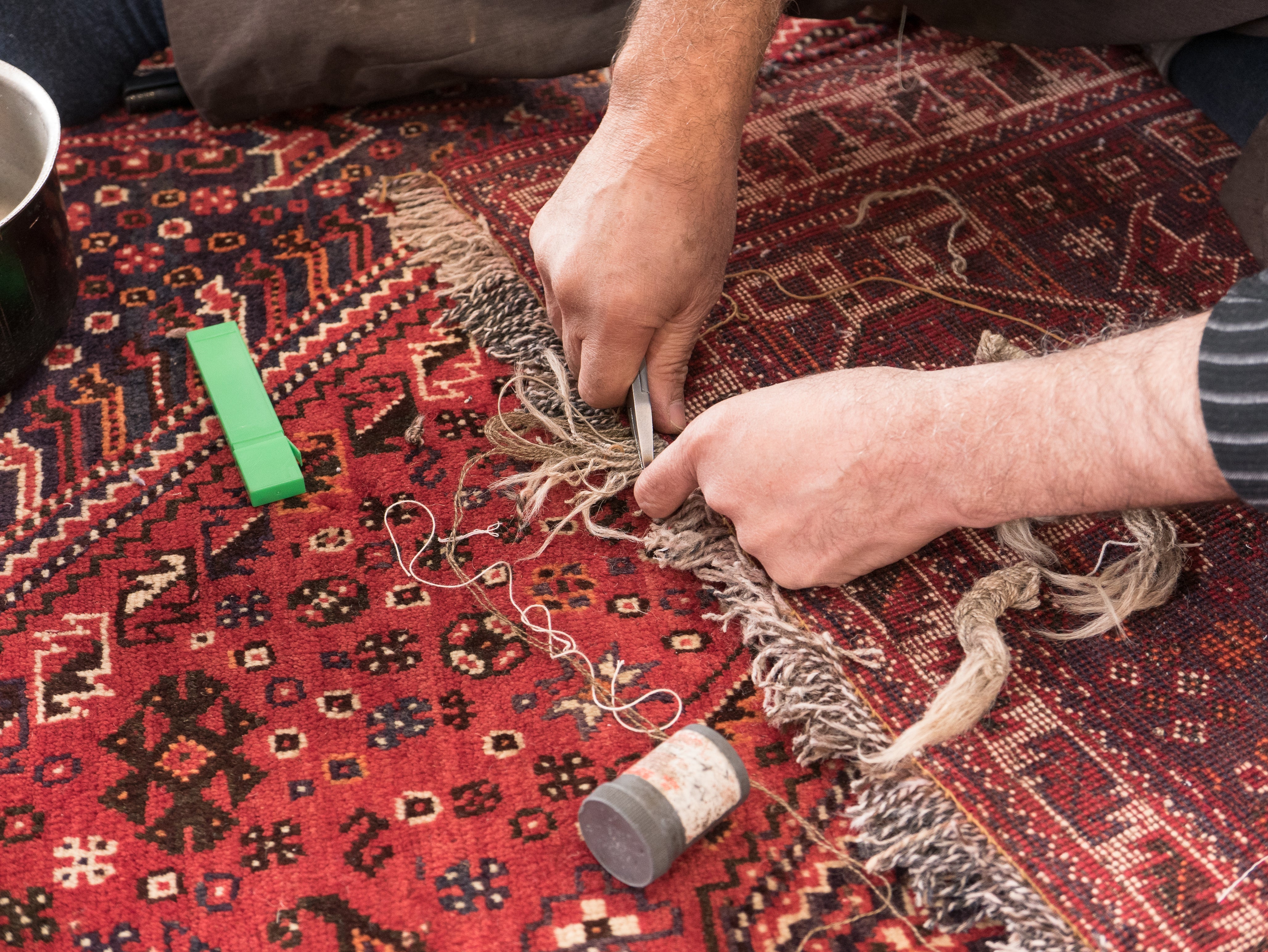
This Afghan in pure silk has a history. It was knotted around 2000. It has been cleaned thoroughly and is in good, though only partly restored, condition. The fringes could do with a little repair here and there. We have not fully restored this Afghan in pure silk, because we feel it has a special charm just as it is. If that is what you would like, we are of course happy to restore the rug further for you. We can bring almost any rug back to near-perfect condition.
A note on the photos
Child labour? No thanks.

The rug trade against child labour: Children belong in school, not at a knotting or weaving loom. For us it therefore goes without saying that we only offer rugs made under fair conditions and without child labour. We place particular importance on good working conditions and tolerate no child labour at our producers.
We are proud to be a member of the Care & Fair campaign against child labour.
The industry-wide campaign CARE & FAIR - the rug trade against child labour was founded in 1994. The initiative has made it its mission to fight the excesses of illegal child labour in the knotting countries and, at the same time, to improve the overall situation of rug knotters and their families in the knotting regions of India, Nepal and Pakistan.
Our goals:
- Ending illegal child labour in India and Pakistan.
- Creating better living conditions for knotters' families.
- Socially responsible production. We only accept goods that have been made under fair conditions. Working with our producers as partners, we want to make clear to them that taking on social responsibility benefits everyone.
Together with Care & Fair we currently support 10 schools, 6 adult education centres and 3 day clinics in India and Pakistan.
Choose options
|
|
1-3 working days delivery time (within Germany) |
|
|
14-day home trial |
|
|
Free delivery & returns within the EU |