
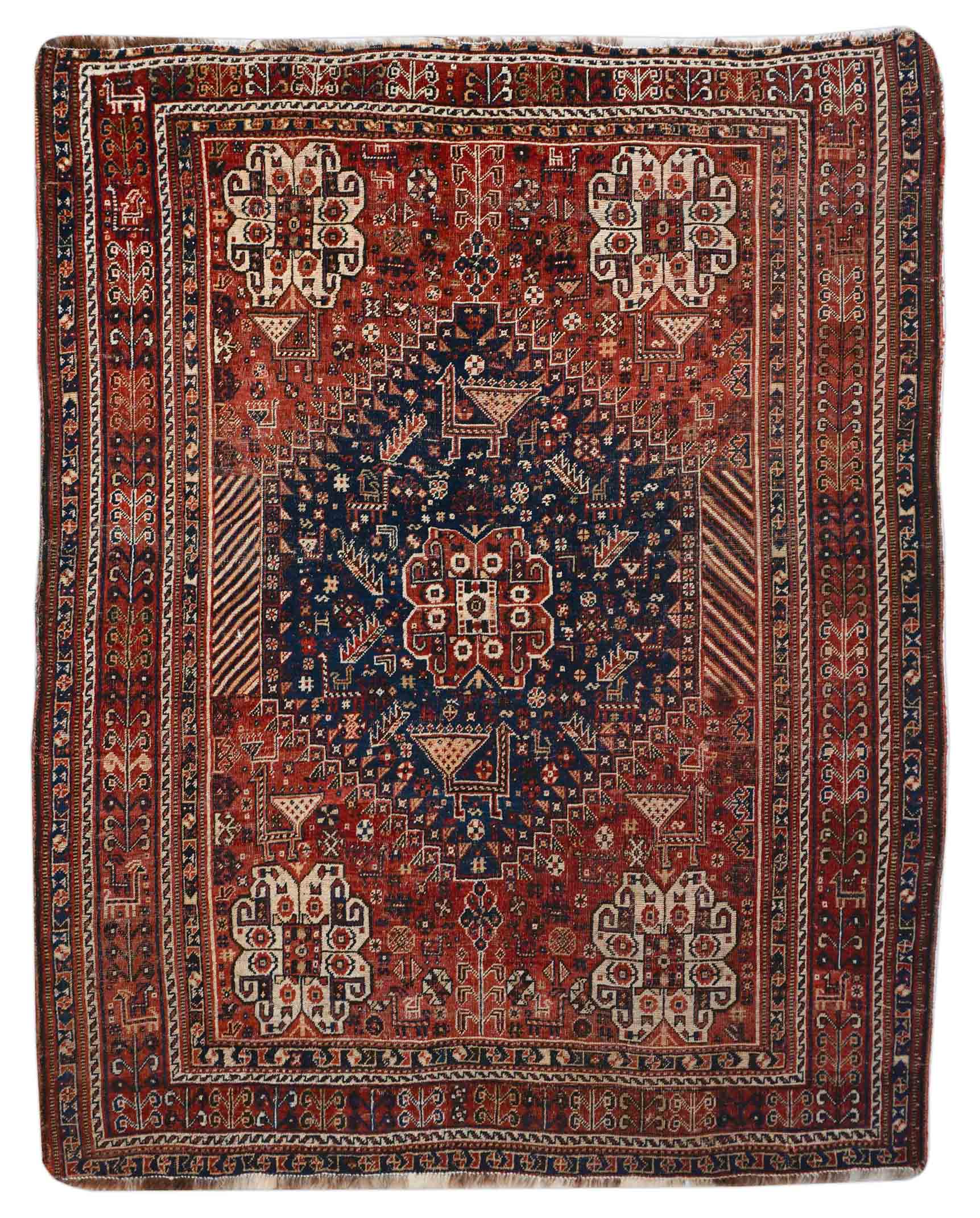
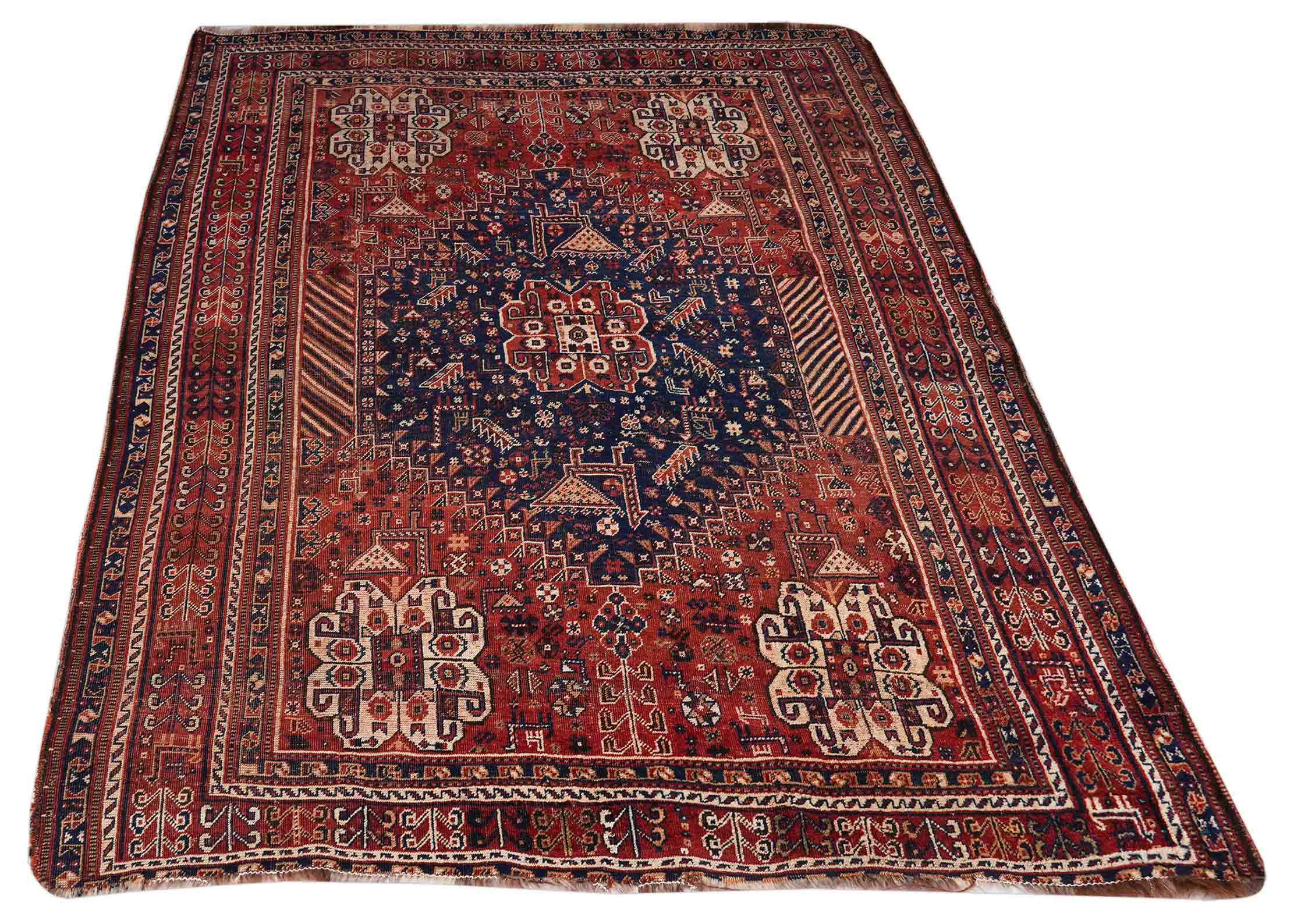
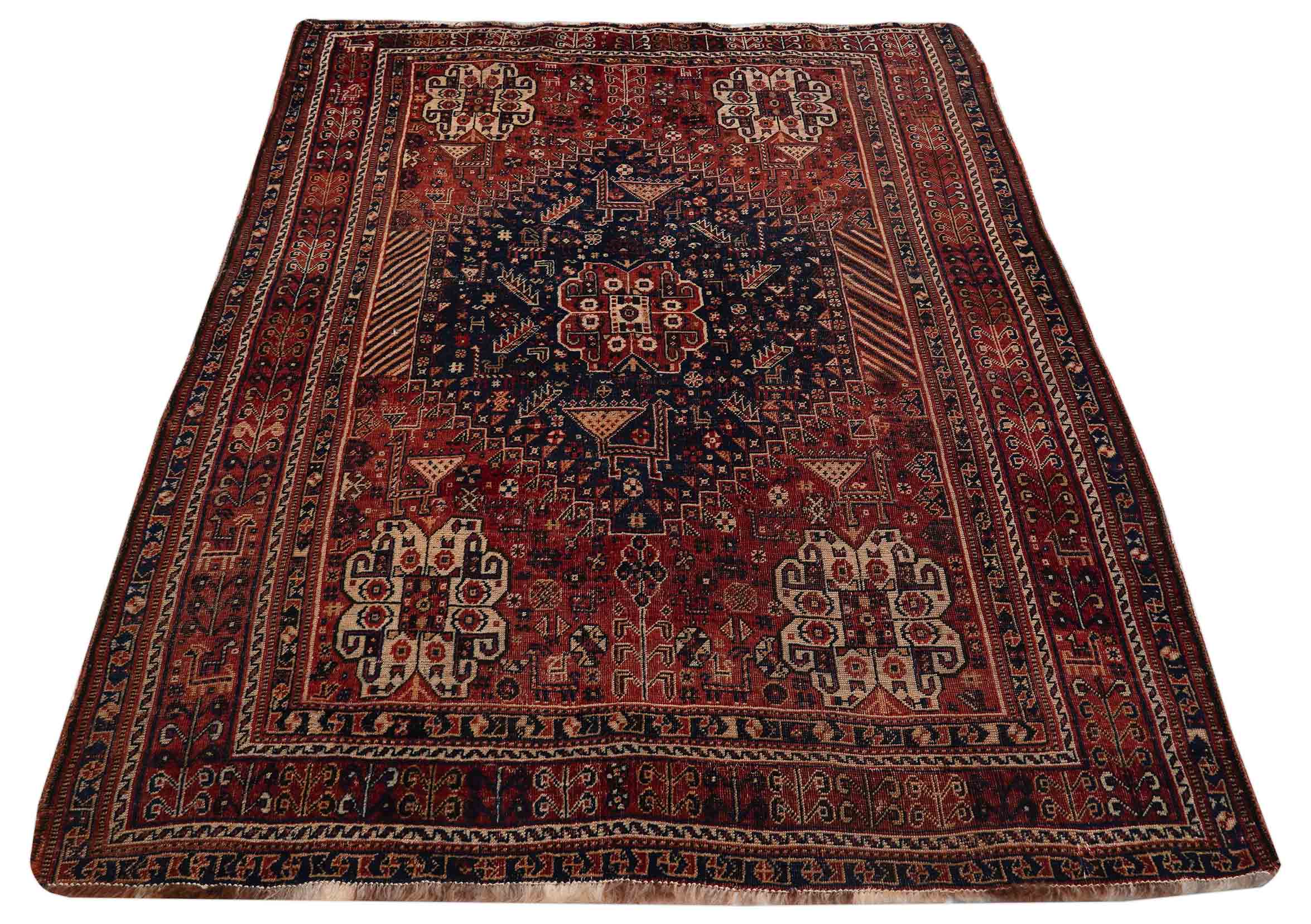
Old Ghashghai | 208 x 163 cm | Nr. Z-2454
Due to US sanctions, PayPal is not available for Persian rugs. You can use all other payment methods.


|
1-3 working days delivery time (within Germany) |

|
14-day home trial |

|
Free delivery & returns within the EU |
Old Ghashghai
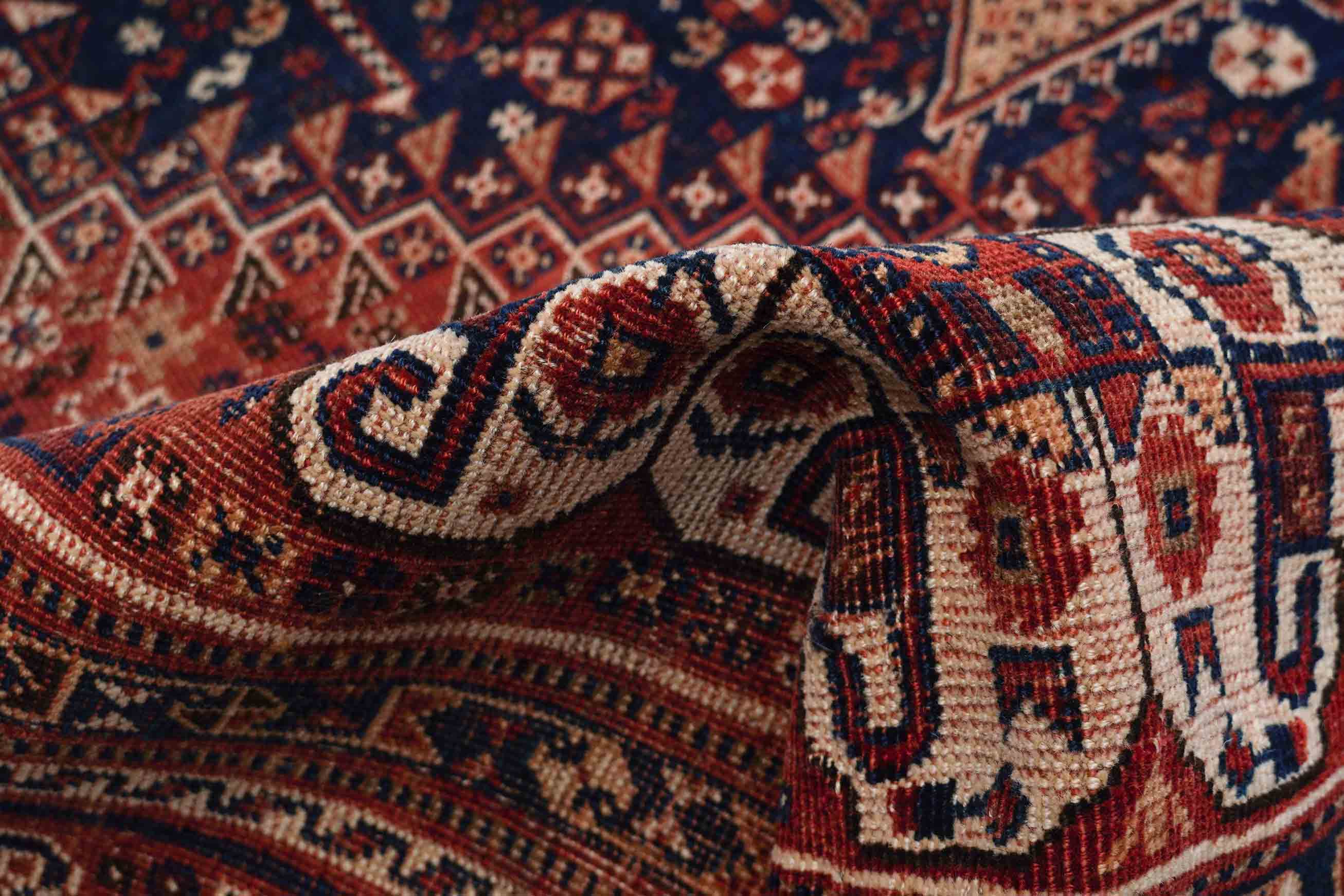
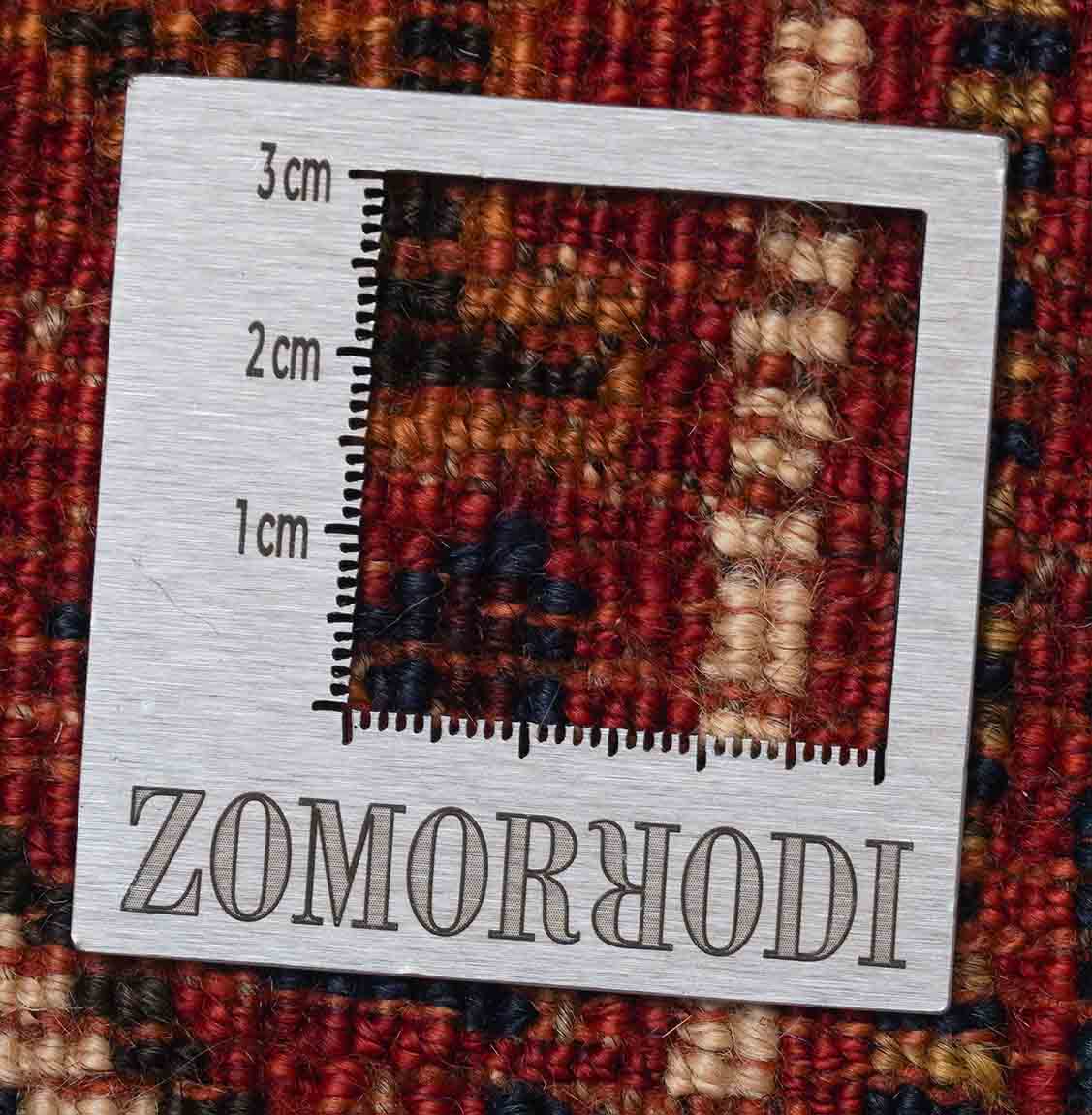
There is only one rug like this one in rust red: it brings together traditional craftsmanship and timeless elegance. The knot density of approx. 160,000 knots per m² makes the elaborate workmanship visible – right down to the fine execution of the details. At 208 × 163 cm it is well placed as a living room rug. It comes into its own just as well in an office. Colouring and texture give the room a homely atmosphere – with a character no other rug shares.
| Availability | In stock | Delivery time: 1–3 working days |
| Origin | Persia |
| Dimensions | 208 cm x 163 cm (= 3.39 m²) |
| Construction | hand-knotted |
| Material |
Pile: wool (hand-spun, natural dyes) Weft & Warp: wool |
| knots | 160,000 knots |
| Pile height | 5 mm |
| Year of manufacture | 1920 |
| Condition | pre-owned, but in very good condition (cleaned & restored) |
| Colour | Rust red |
| Edition | one-of-a-kind piece |

Origin
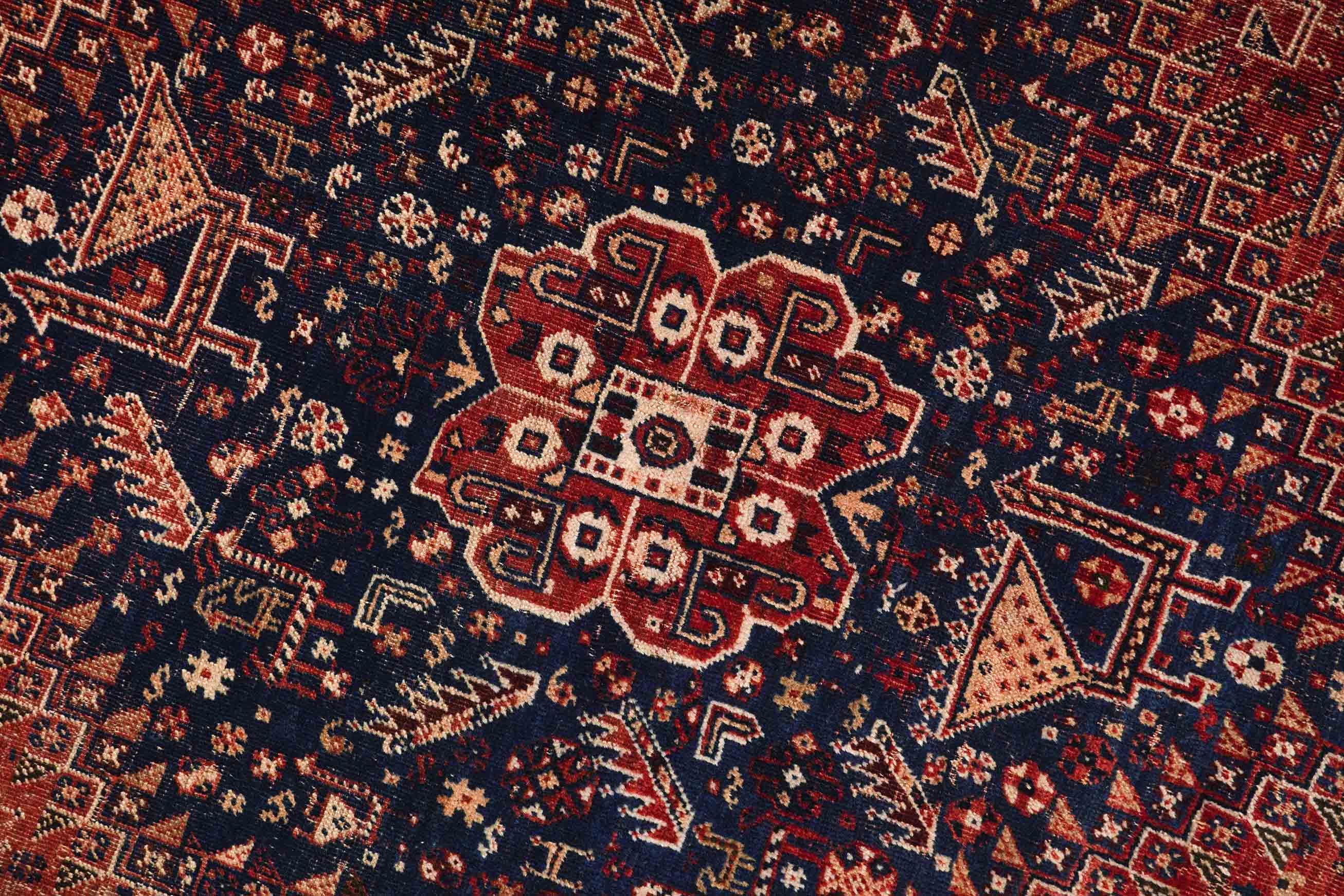
The Ghashghai are the great Persian nomadic people and have lived in the south of Iran, in the province of Fars, for centuries. They are made up of seven tribes in all. The most important tribe of the Ghashghai – at least as far as rug making goes – are the Kashghuli (also Kaschguli, Kashguli, Qashguli). Old and antique Ghashghai rugs are sought-after collectors' pieces today. Ghasghai rugs are known as the king among Persian nomadic rugs.A large share of Ghashgai rugs is adorned with the so-called geometric Heibathlou pattern: a diamond-shaped central field with a rather plain medallion that is repeated in the corners. The inner field is filled with an unusually large number of ornaments. The motifs range from stars, lions and camels to trees, blossoms and boteh or paisley symbols. Some motifs are stylised, others rendered true to life. The frequently repeated motifs are never entirely alike. They differ considerably in their colouring. The symbols are rarely arranged symmetrically. Symmetry along the length is often ignored. The individual elements in the borders, too, alternate in different colours. Small rows of little boxes at the ends of the rugs are typical. The variation in the pattern comes from the fact that the Ghashgai had no knotting templates: every rug was knotted from memory and filled with interesting motifs.
By now most Ghashghai have settled down. It is only because they have largely become settled that the Ghashghai can also make rugs in large formats. The few clans still living as nomads head up to the summer pastures in the Zagros Mountains twice a year. In autumn they return to the milder winter quarters down in the valley. The Ghashghai have a reputation for being especially proud, hard-working and honourable. Even though the Ghashghai come across as less wild and warlike today, they still have an influence on Iranian domestic politics that shouldn't be underestimated.
This Old Ghashghai is around 106 years old and a real collector's piece.
Material
The technique used to produce the materials for the pile of this Old Ghashghai is more than 200 years old. The wool was dyed with natural dyes and spun by hand. Dyeing with natural or plant dyes is more complicated, more expensive and more time-consuming than dyeing with chemical colours. For a luminous red, for example, you need around one kilo of ground madder root as dye for every kilo of wool. For a strong yellow that is not too pale, you even need two kilograms of weld dye per kilo of wool. Spinning the wool is just as time-consuming and labour-intensive. On top of that, fewer and fewer people still know how to spin wool by hand.But the effort is worth it: dyeing with natural colours allows the high-quality wool to keep its natural oil content. Wool that has been dyed with natural colours and spun by hand creates fascinating, shimmering patterns. The charm of hand-spun wool, with its slight irregularities and natural shades, comes into its own as a contrast in modern interiors, but equally in rooms furnished in a more traditional or country style.
The foundation (weft and warp threads) of this Old Ghashghai is made of new wool.
Condition
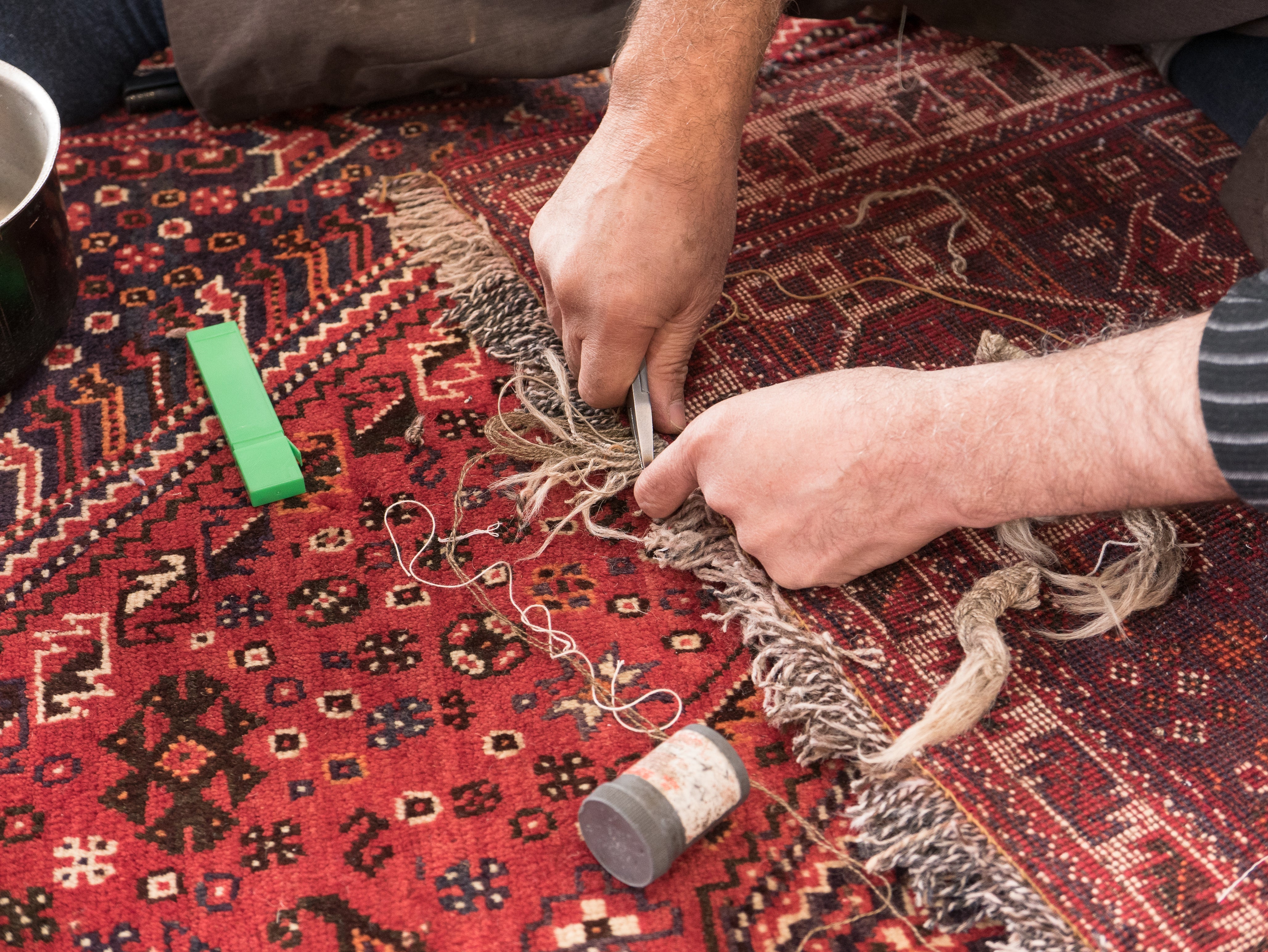
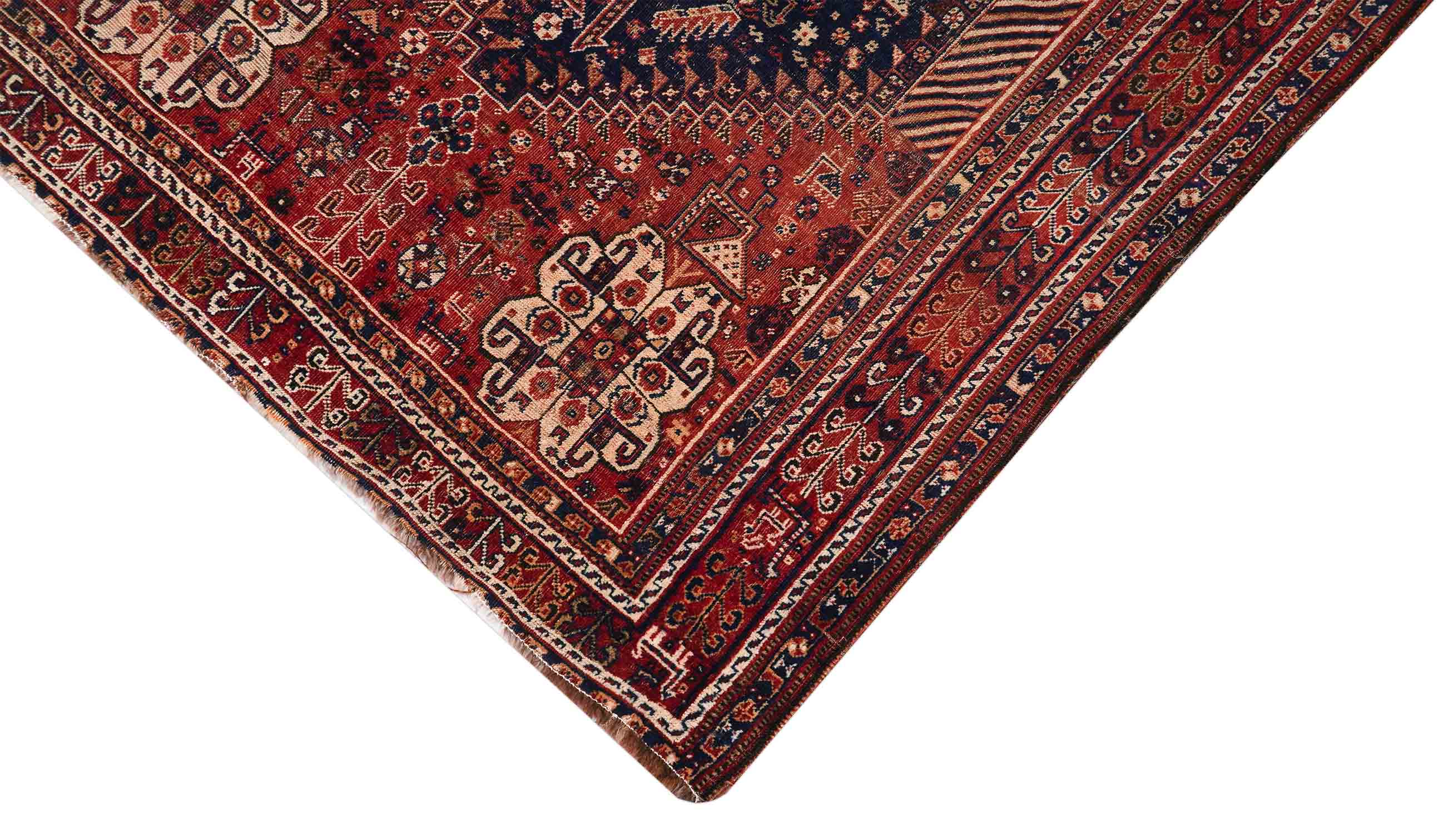
This Old Ghashghai has had admirers before you. The pile has become evenly thinner over the years. It was knotted around 1920. We have cleaned it thoroughly and restored it with care. Despite its age, it is therefore in very good condition.
A note on the photos
Child labour? No thanks.

The rug trade against child labour: Children belong in school, not at a knotting or weaving loom. For us it therefore goes without saying that we only offer rugs made under fair conditions and without child labour. We place particular importance on good working conditions and tolerate no child labour at our producers.
We are proud to be a member of the Care & Fair campaign against child labour.
The industry-wide campaign CARE & FAIR - the rug trade against child labour was founded in 1994. The initiative has made it its mission to fight the excesses of illegal child labour in the knotting countries and, at the same time, to improve the overall situation of rug knotters and their families in the knotting regions of India, Nepal and Pakistan.
Our goals:
- Ending illegal child labour in India and Pakistan.
- Creating better living conditions for knotters' families.
- Socially responsible production. We only accept goods that have been made under fair conditions. Working with our producers as partners, we want to make clear to them that taking on social responsibility benefits everyone.
Together with Care & Fair we currently support 10 schools, 6 adult education centres and 3 day clinics in India and Pakistan.
Choose options
Due to US sanctions, PayPal is not available for Persian rugs. You can use all other payment methods.
|
|
1-3 working days delivery time (within Germany) |
|
|
14-day home trial |
|
|
Free delivery & returns within the EU |