
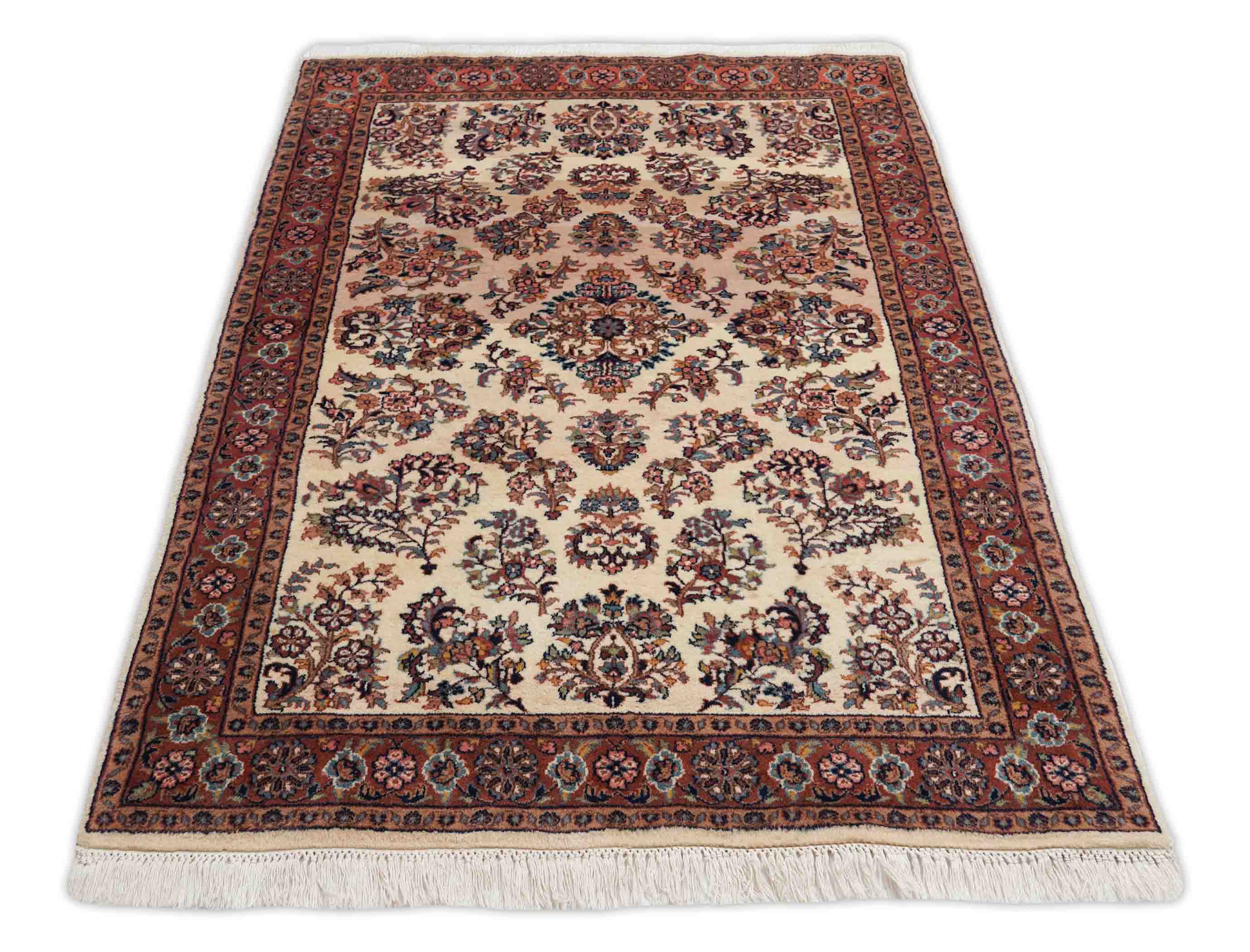
Indian Tabriz | 180 x 123 cm | Nr. Z-573
Due to US sanctions, PayPal is not available for Persian rugs. You can use all other payment methods.


|
1-3 working days delivery time (within Germany) |

|
14-day home trial |

|
Free delivery & returns within the EU |
Indian Tabriz
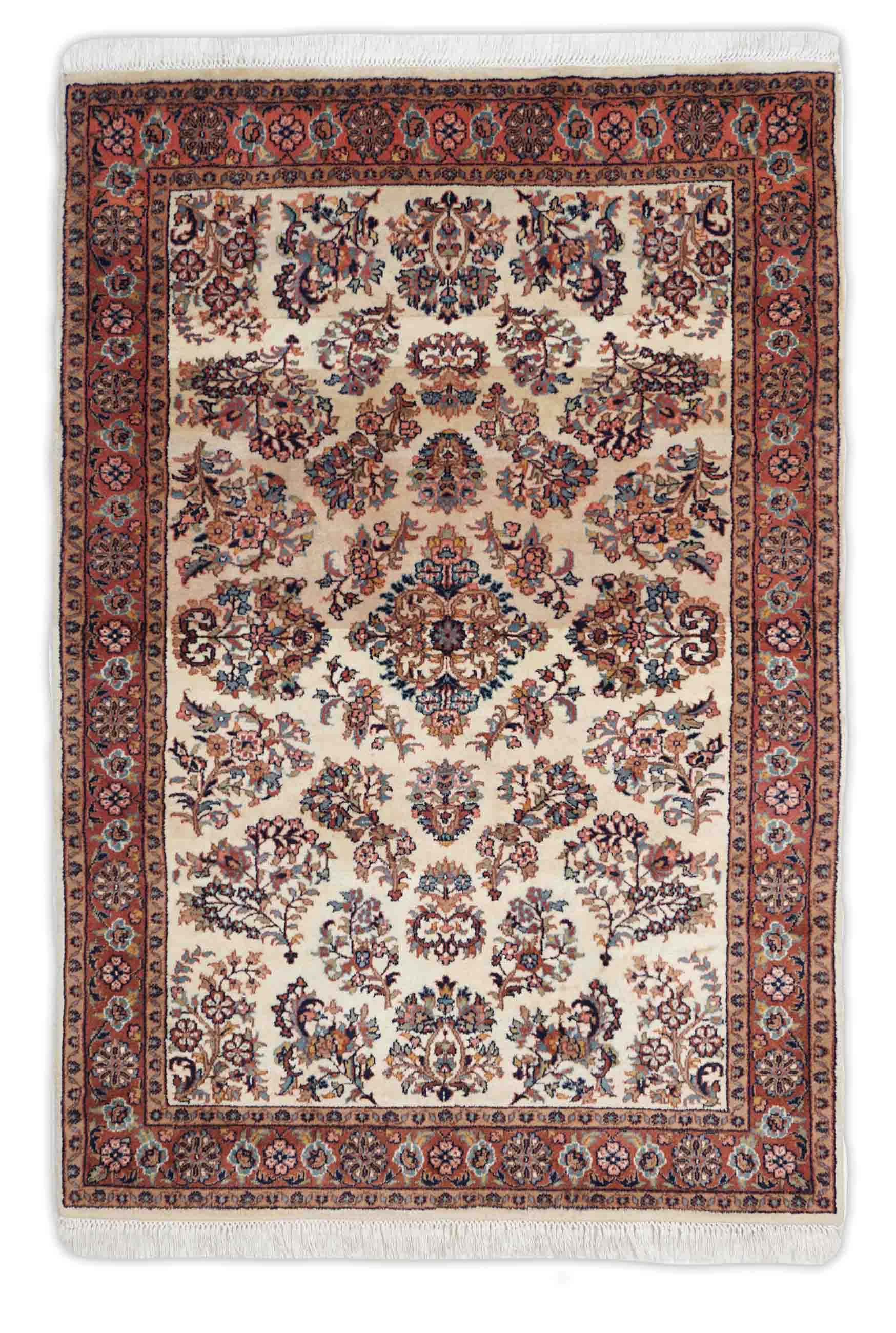
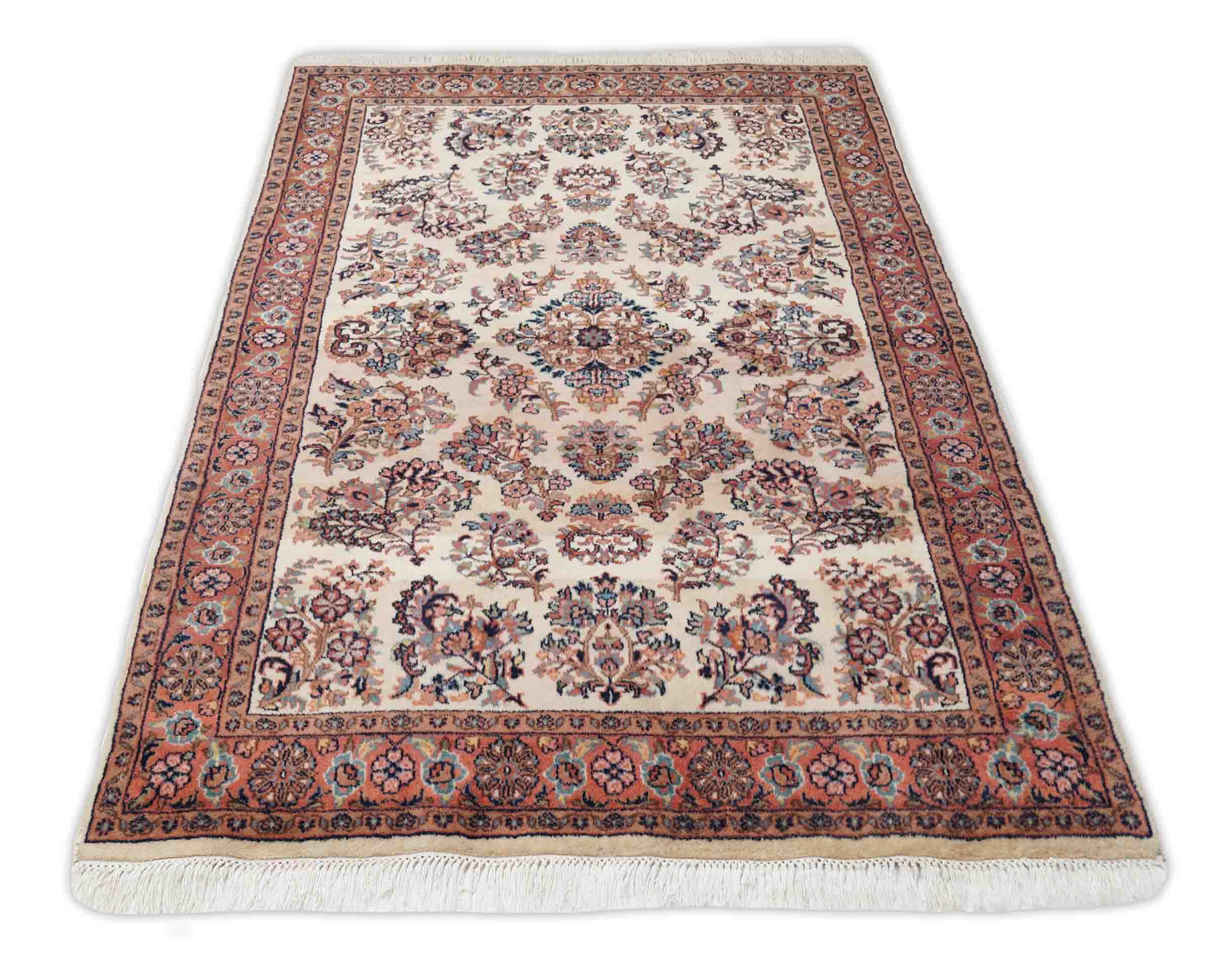
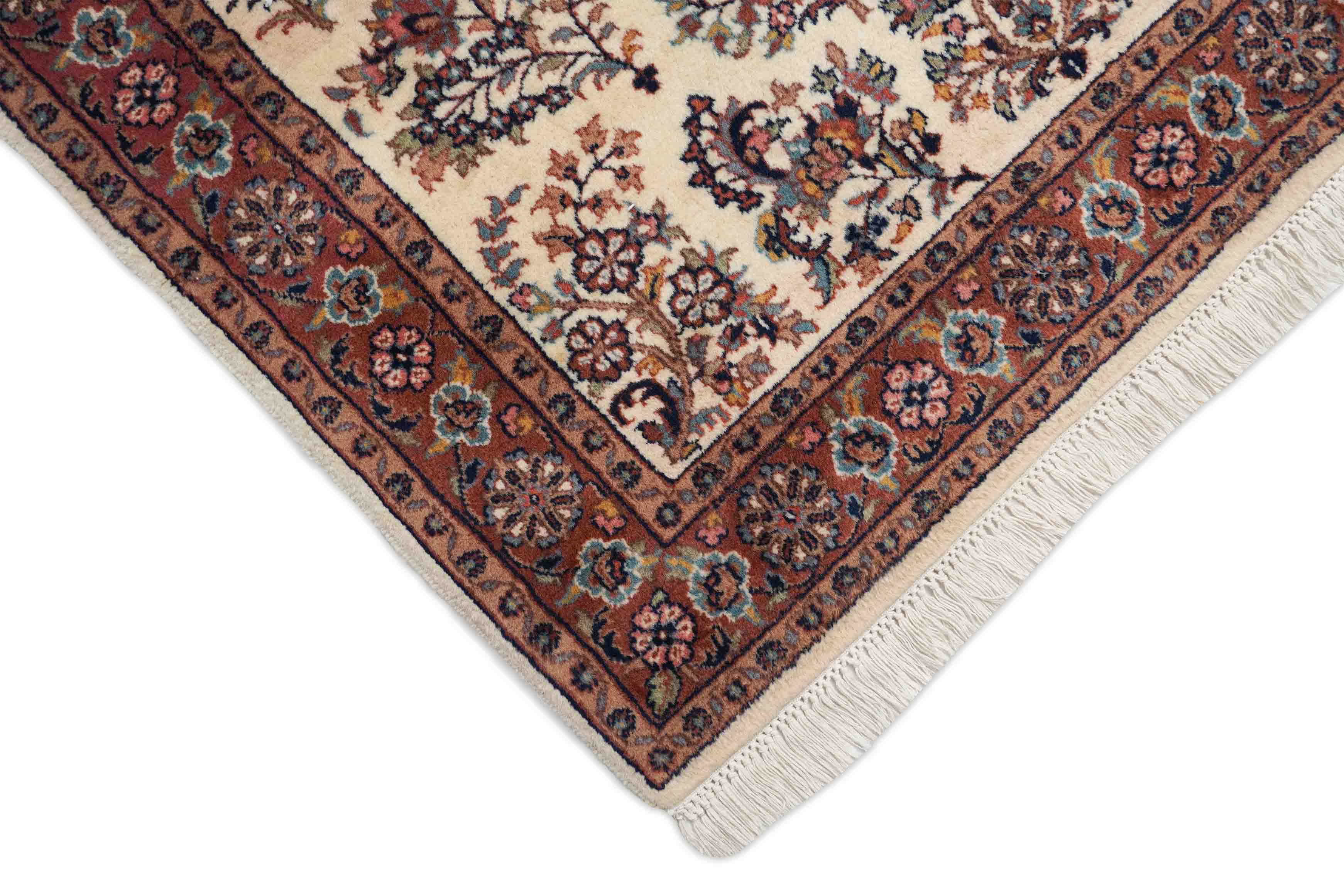
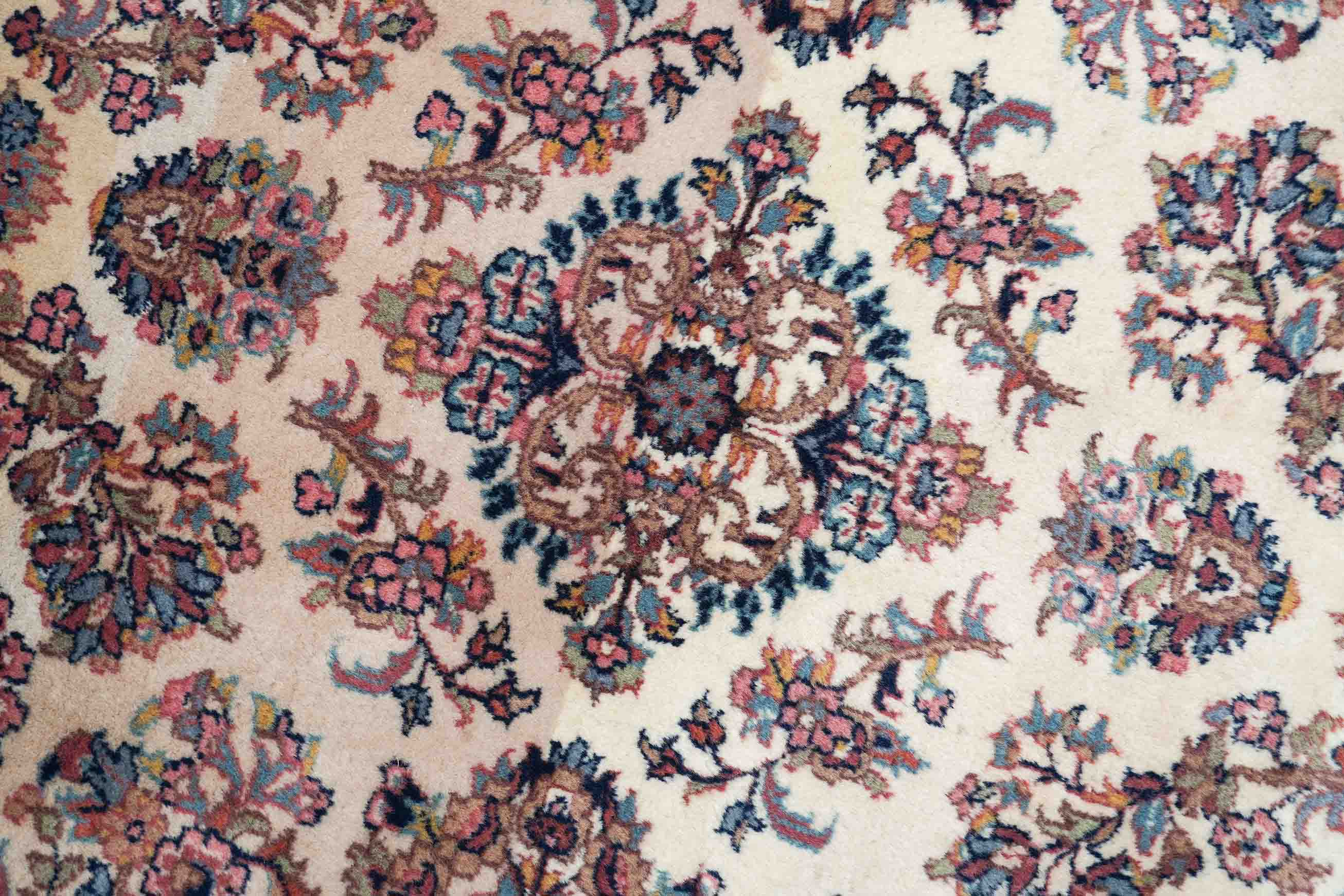
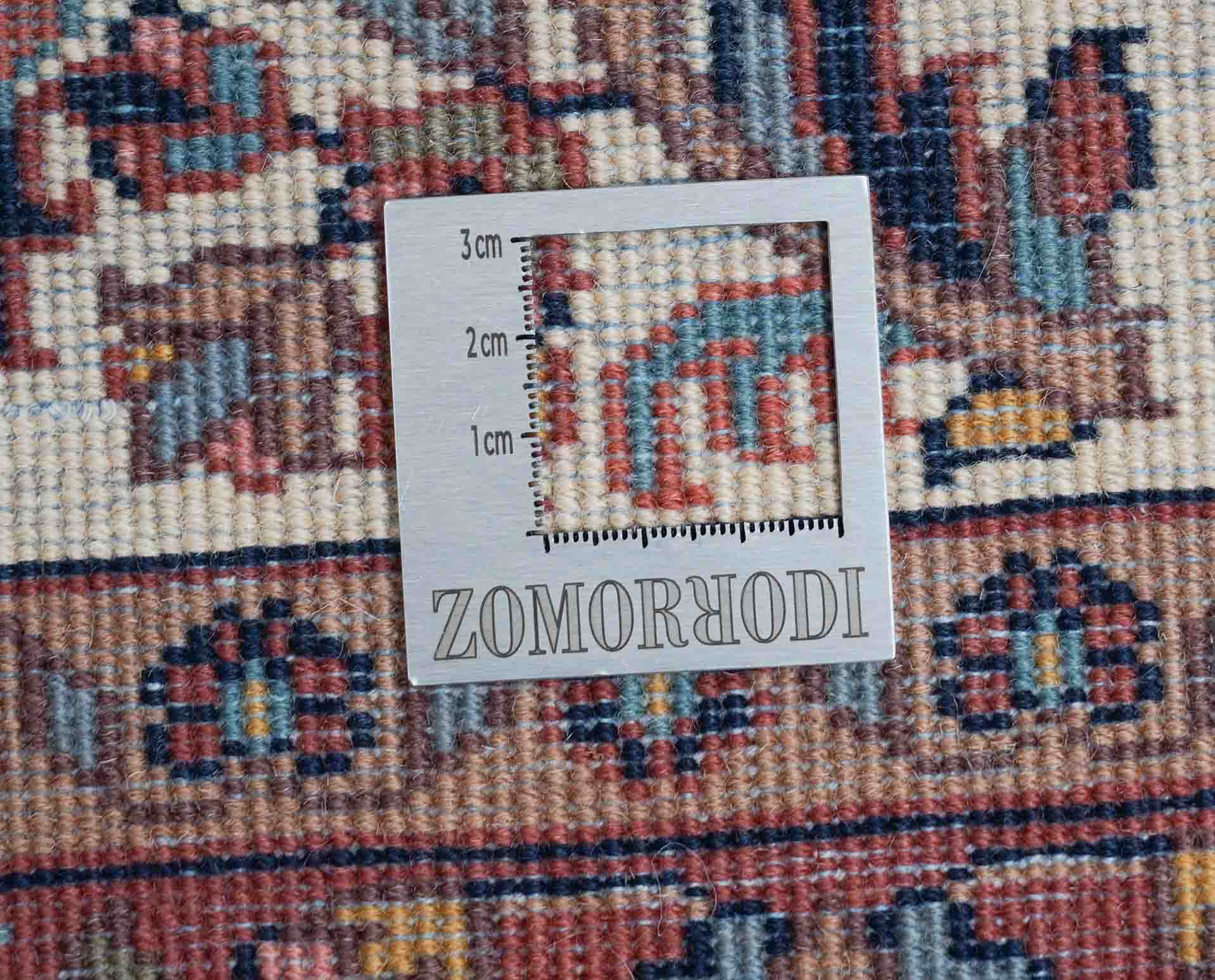
This one-of-a-kind piece in beige brings together traditional craftsmanship and timeless elegance. A knot density of around 250,000 knots per m² makes the painstaking work visible – right down to the fine working of the details. At 180 × 123 cm it is well placed as a rug for the bedroom or study. It also cuts a fine figure in a seating corner. The harmonious colouring and the characteristic texture give any room an exclusive, homely atmosphere. A rug of this quality is far more than a furnishing item – it is a piece of traditional textile art with a character of its own and lasting value.
| Availability | In stock | Delivery time: 1–3 working days |
| Origin | India |
| Dimensions | 180 cm x 123 cm (= 2.21 m²) |
| Construction | hand-knotted |
| Material |
Pile: wool Weft & Warp: cotton |
| knots | 250,000 knots |
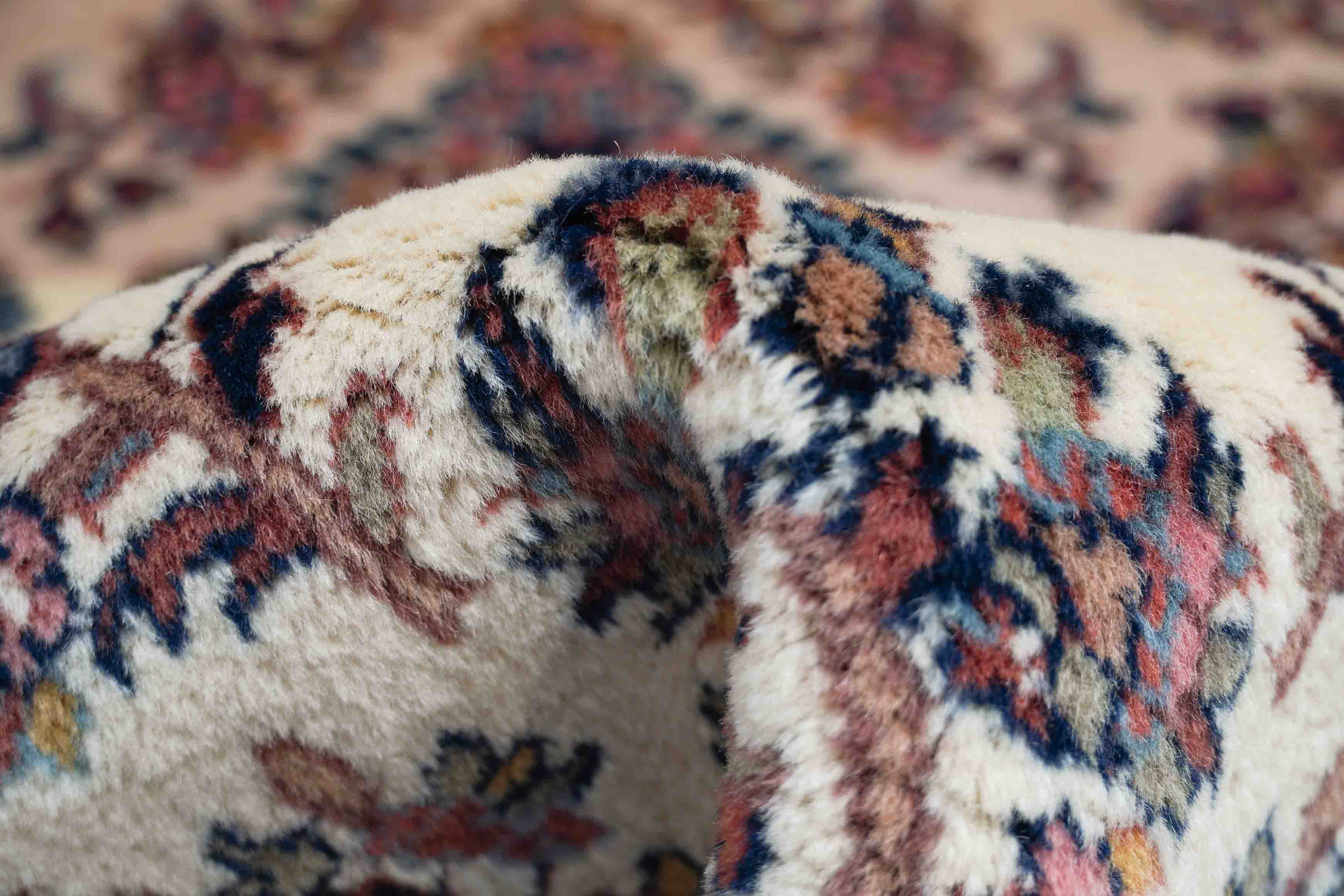
| Pile height | 10 mm |
| Year of manufacture | 2010 |
| Condition | pre-owned, but in very good condition (cleaned & restored) |
| Colour | Beige |
| Edition | one-of-a-kind piece |

Origin
Standing on Persia's northern border at the crossroads of countless caravan routes, the city of Tabriz (also written Tabris or Täbriz) has always been a melting pot of different ethnic and religious groups. Although the city lies on the border with Azerbaijan, the dialect spoken in Tabriz is related to Turkish. The bazaars of Tabriz have traded in craftwork for centuries, and above all in rugs from the surrounding villages.The pattern of this rug is inspired by the designs of classic Indian Tabriz rugs. This particular rug, however, was knotted in India.
Exactly when rug production in India began is unknown. The first rugs in India were probably made during the cultural flowering of the Mughal dynasty in the middle of the 16th century. In the middle of the 19th century, with the decline of the Mughal dynasty, Indian rug production fell into crisis. European companies whose only aim was export to the West took the place of the traditional court manufactories. Very similar rugs were produced in different towns, and standardisation set in. Today, the designs of hand-knotted Indian rugs can scarcely be attributed to individual regions. Instead, the workshops have come to specialise in rendering European and traditional Iranian designs adapted to Western taste. In terms of quality, rugs from India benefit from the long tradition of craftsmanship and the high quality of Indian materials.
Material
The pile of this Indian Tabriz was hand-knotted from high-quality new wool. New wool is obtained by shearing sheep gently. It is a renewable, natural raw material with a whole range of impressive properties: thanks to the natural lanolin in the wool, the surface repels droplets of water and is therefore naturally protected against dirt. Wool also offers excellent thermal insulation, has a regulating effect on the indoor climate and dampens sound.The weft and warp threads of this Indian Tabriz are made of cotton. This versatile material is tear-resistant and yet has some give, which makes it particularly well suited to a hard-wearing foundation.
Condition
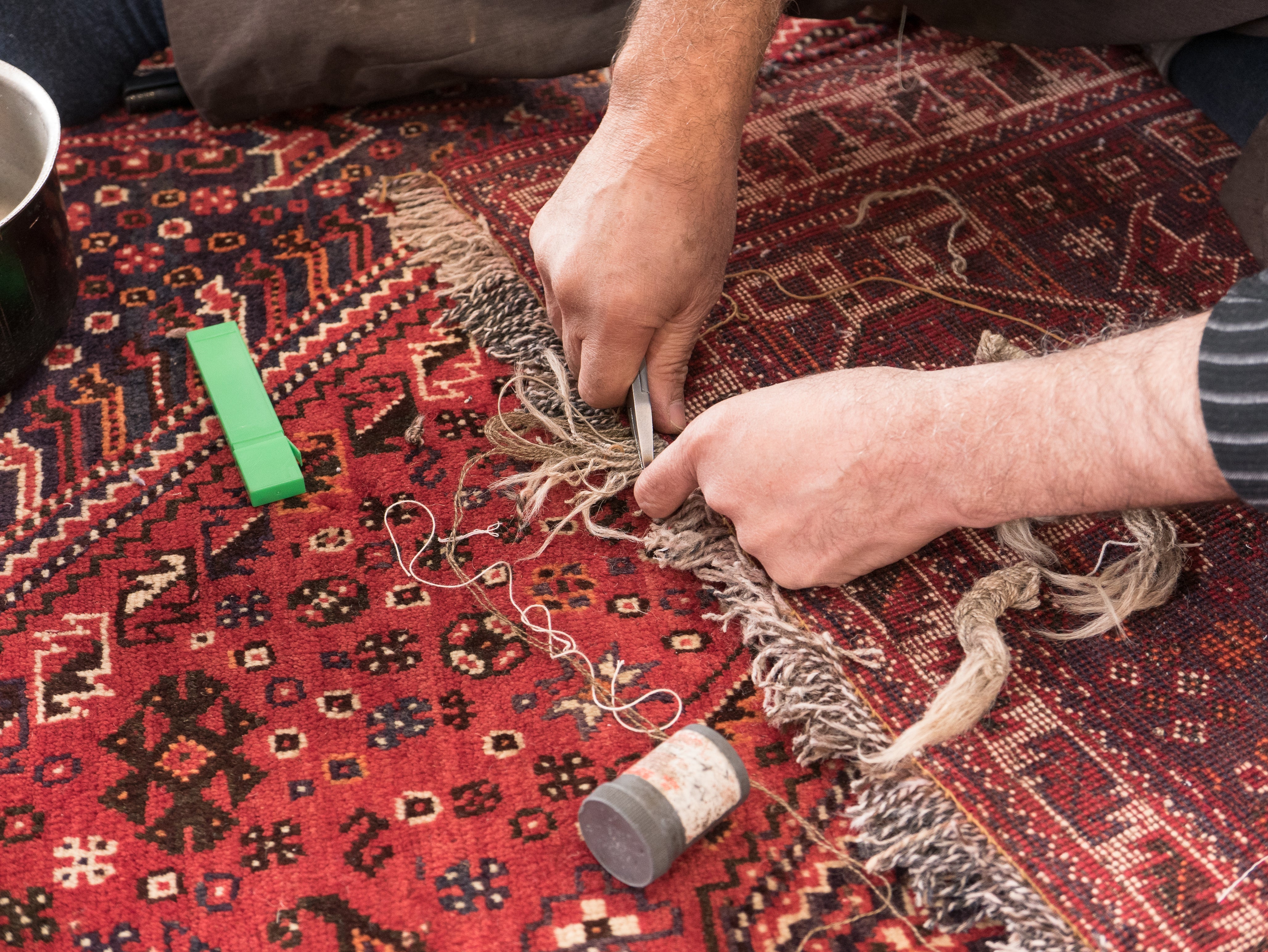
This Indian Tabriz has had admirers before you. It was knotted around 2010. We have cleaned it thoroughly and restored it with care. That is why – despite its age – it is in very good condition.
A note on the photos
Child labour? No thanks.

The rug trade against child labour: Children belong in school, not at a knotting or weaving loom. For us it therefore goes without saying that we only offer rugs made under fair conditions and without child labour. We place particular importance on good working conditions and tolerate no child labour at our producers.
We are proud to be a member of the Care & Fair campaign against child labour.
The industry-wide campaign CARE & FAIR - the rug trade against child labour was founded in 1994. The initiative has made it its mission to fight the excesses of illegal child labour in the knotting countries and, at the same time, to improve the overall situation of rug knotters and their families in the knotting regions of India, Nepal and Pakistan.
Our goals:
- Ending illegal child labour in India and Pakistan.
- Creating better living conditions for knotters' families.
- Socially responsible production. We only accept goods that have been made under fair conditions. Working with our producers as partners, we want to make clear to them that taking on social responsibility benefits everyone.
Together with Care & Fair we currently support 10 schools, 6 adult education centres and 3 day clinics in India and Pakistan.
Choose options
Due to US sanctions, PayPal is not available for Persian rugs. You can use all other payment methods.
|
|
1-3 working days delivery time (within Germany) |
|
|
14-day home trial |
|
|
Free delivery & returns within the EU |