
Old Afghan | 280 x 92 cm | Nr. 19901

|
1-3 working days delivery time (within Germany) |

|
14-day home trial |

|
Free delivery & returns within the EU |
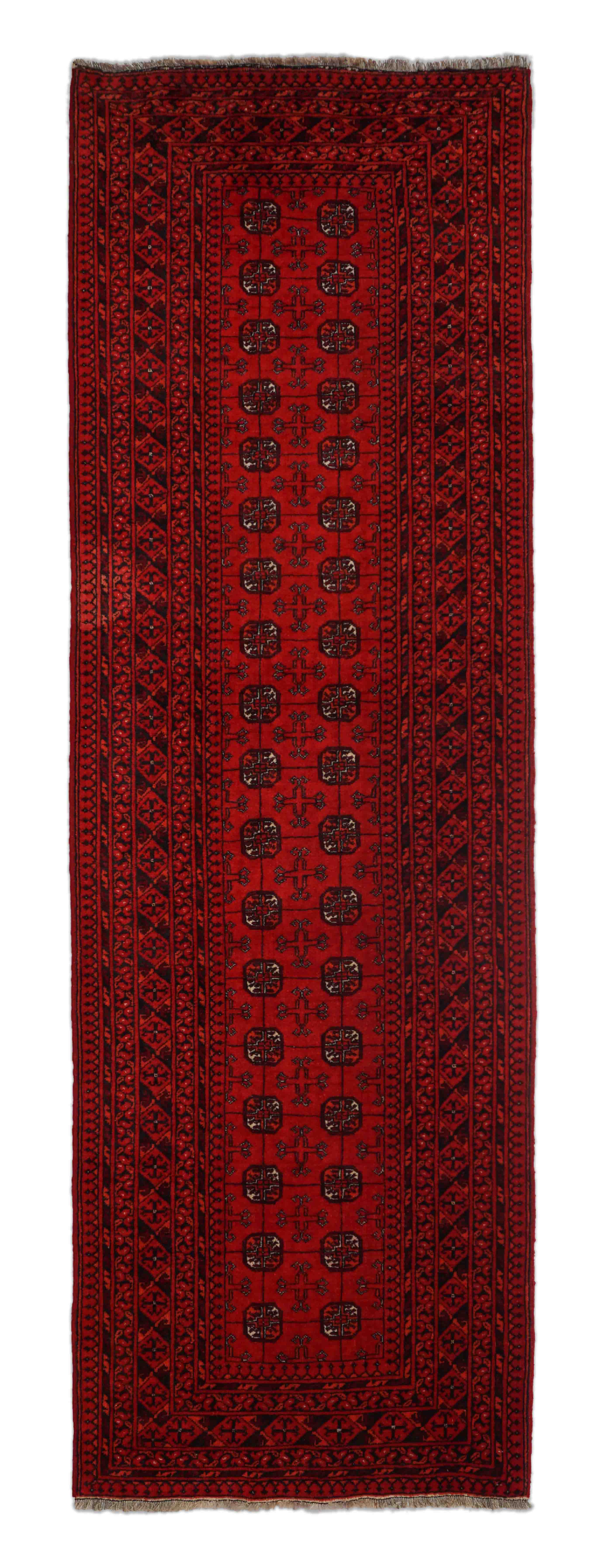
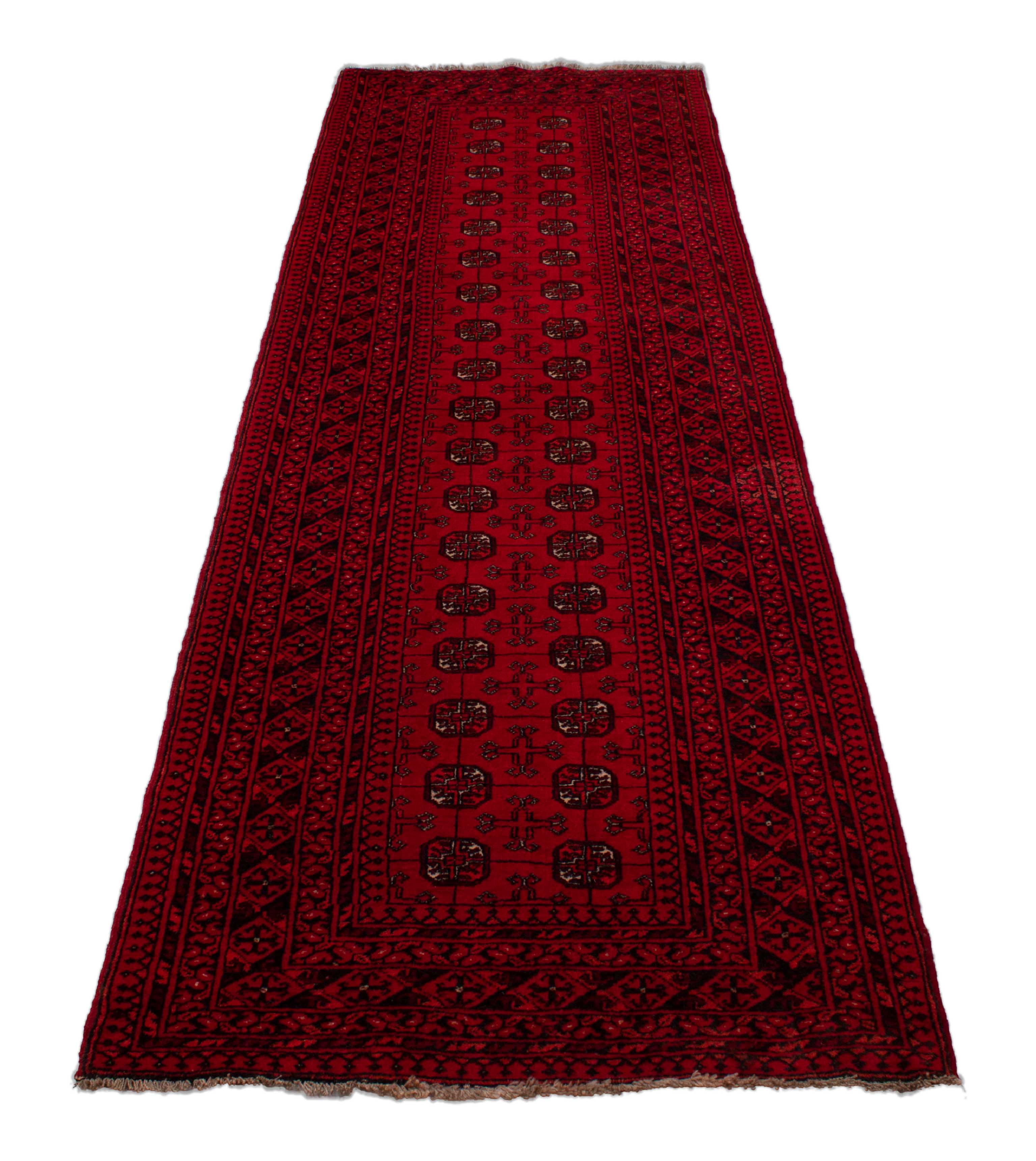
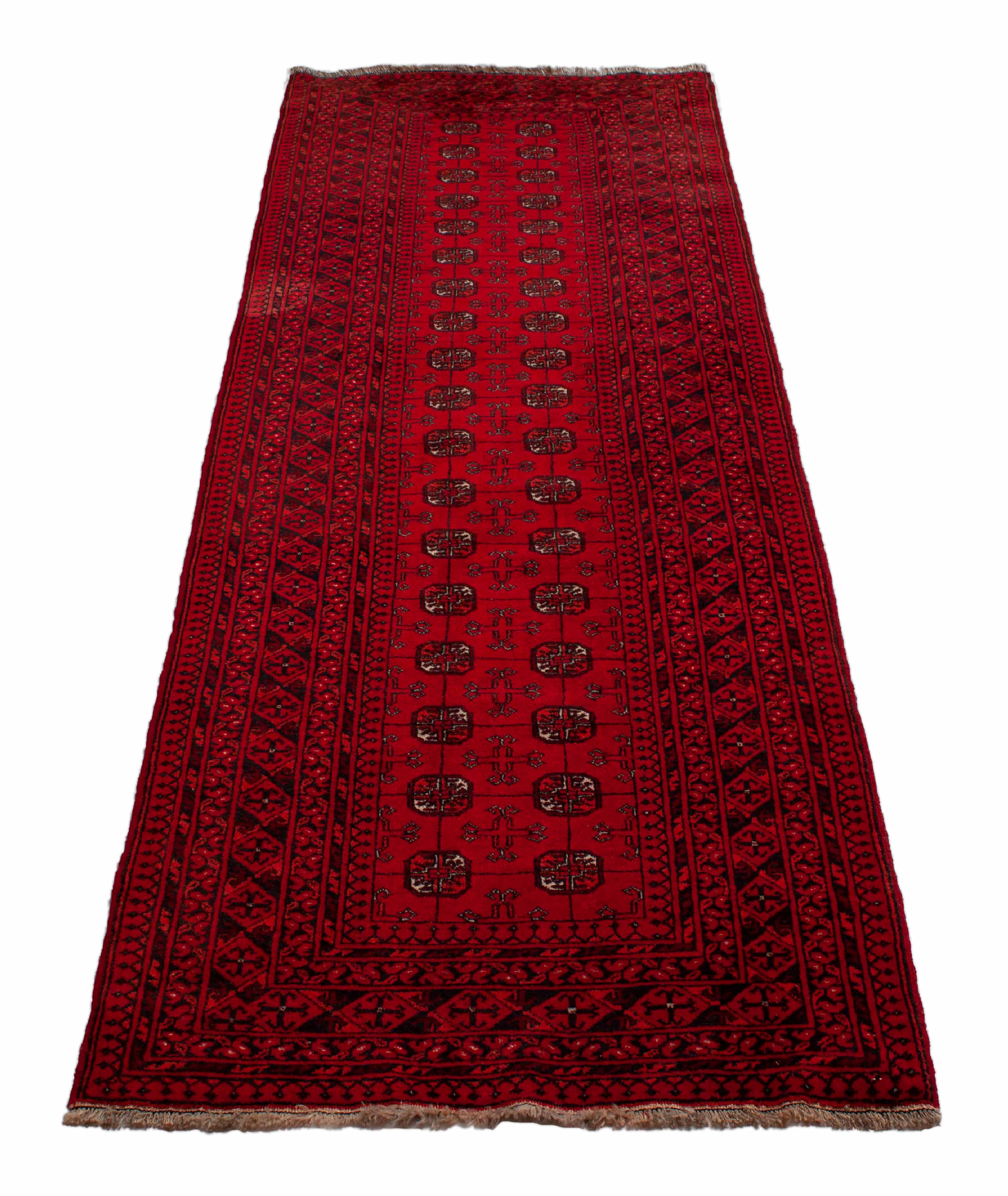
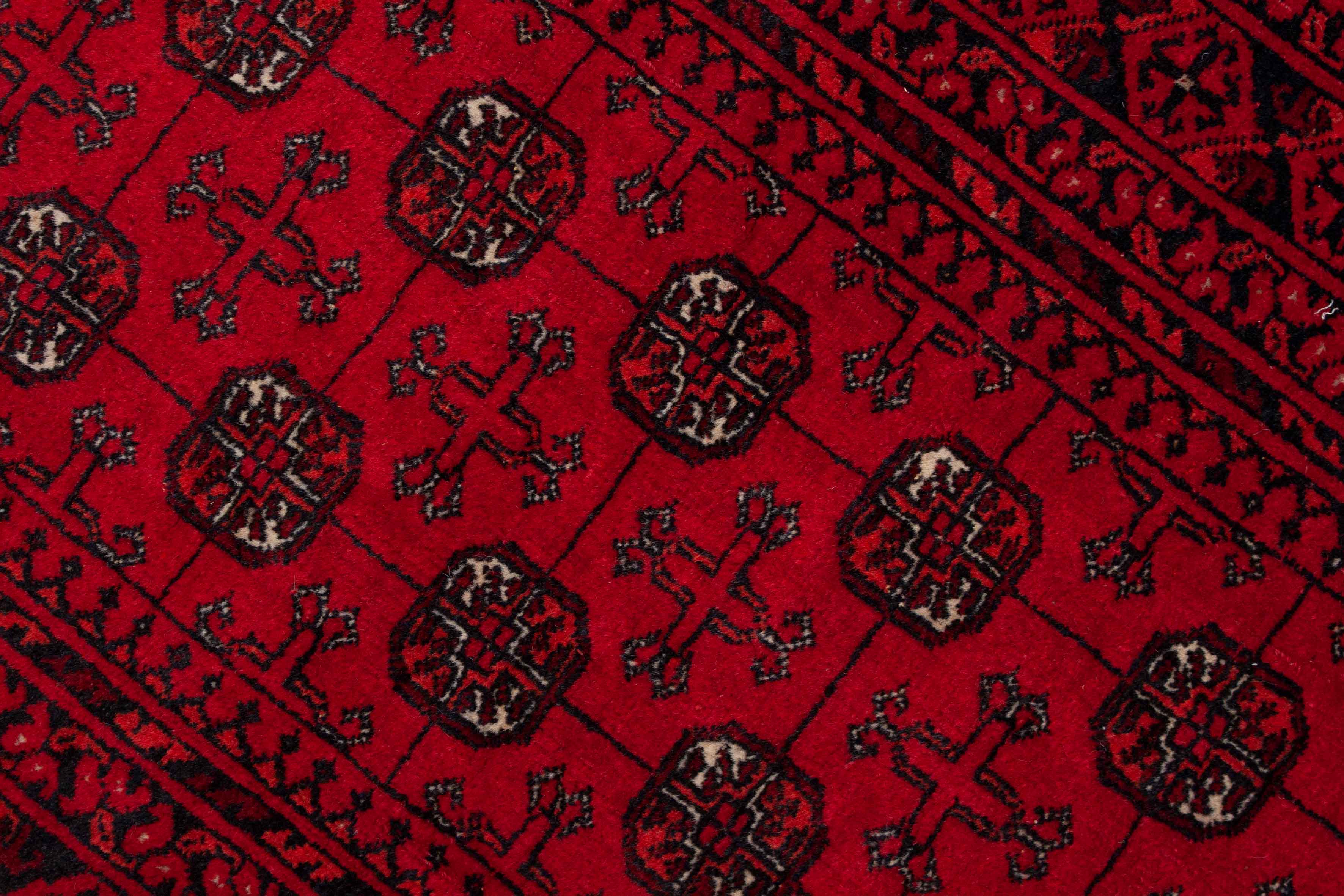
Geometric old Afghan runner, light red with border
| Origin |
|
| Dimensions | 280 cm x 92 cm (= 2.58 m²) |
| Construction | hand-knotted |
| Material |
Pile: wool (hand-spun, natural dyes)
|
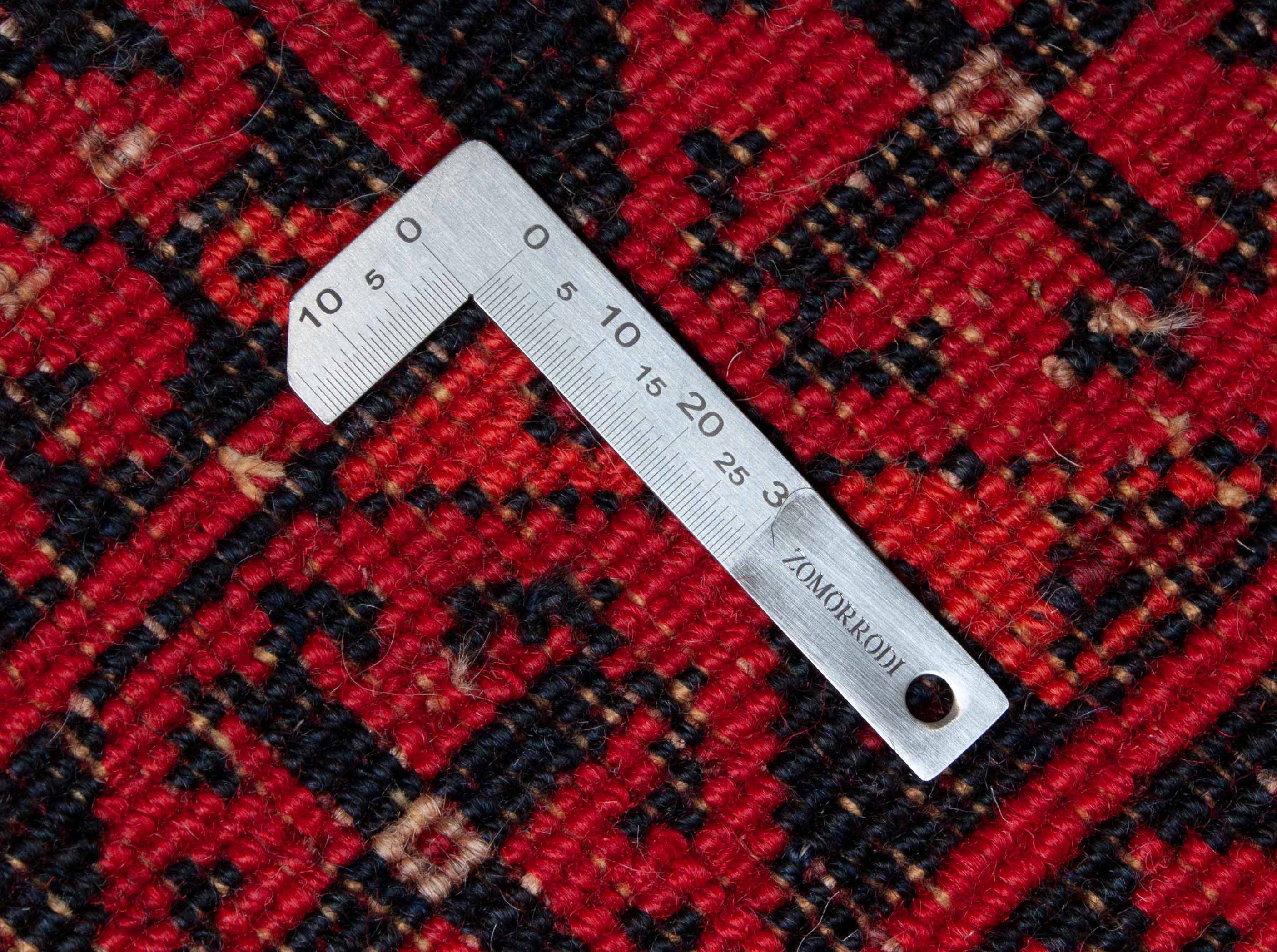
| knots per m²2 | 200.000 |
| Pile height | 6mm |
| Year of manufacture | 1980 |
| Colour | Light red, Black |
| Edition | one-of-a-kind piece |

Origin
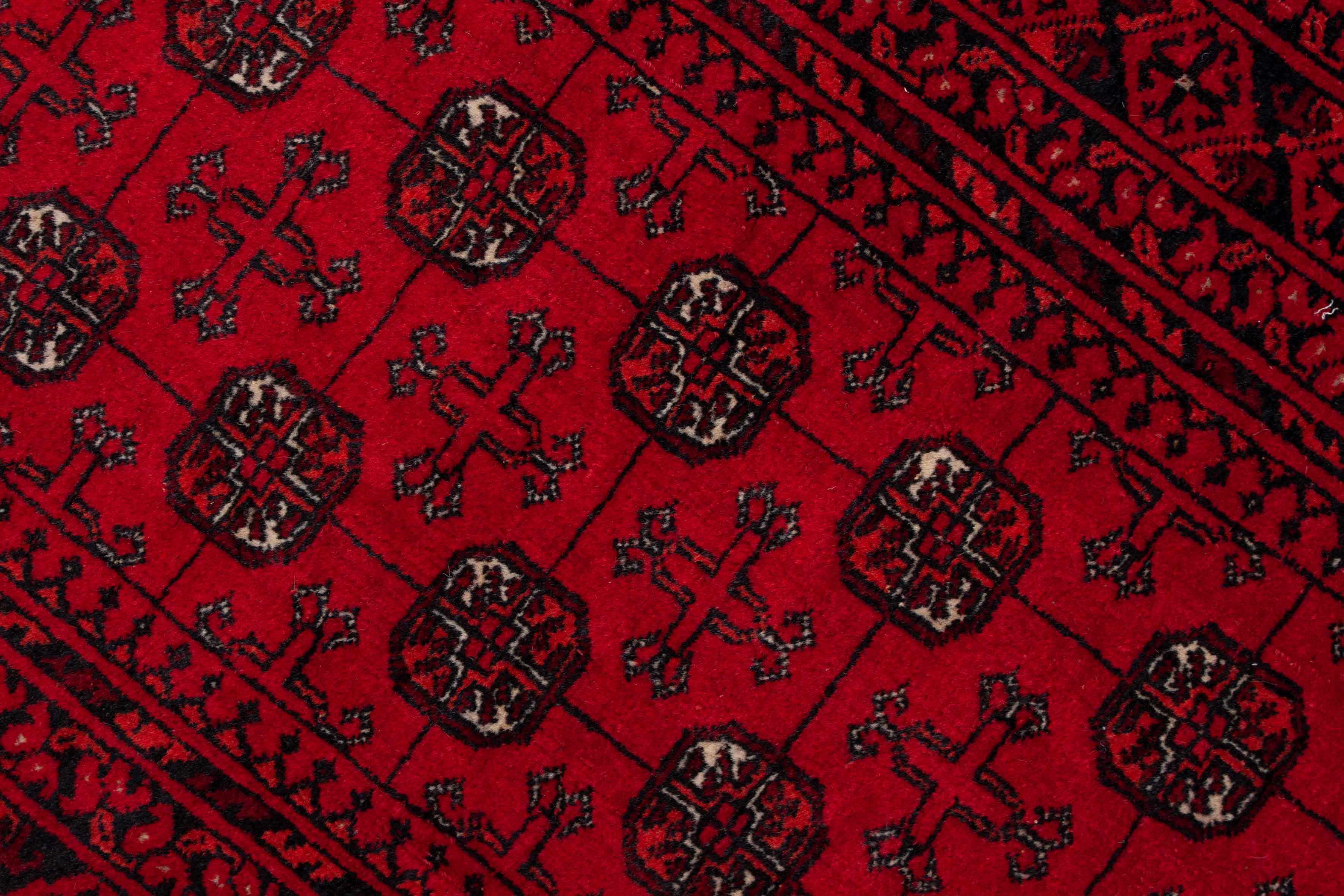
Rugs made in Afghanistan – known as Afghan rugs, or simply Afghans – are unmistakable. In Afghanistan's cultural melting pot, Baluch, Turkmen, Kazakh and Uzbek weavers came together, each bringing influences from their homelands. During the 19th century, Turkoman tribes settled villages in Afghanistan, which brought Turkoman weaving styles into the region. The designs of the various tribal groups – among them Esari, Salor, Tekke and Yomut – are wonderfully varied. What holds them together stylistically is the use of intricate elephant's foot motifs (known as guls), lively reds, decorative bands and ornamental end panels.
Tribal weavers used natural dyes to create an enormous range of reds, from deep aubergine brown to warm burnt orange. These glowing colours are traditionally combined with clear blues and ivory accents. While the tribes of Afghanistan frequently use guls and serrated stars, it is in the decorative borders and end panels that weavers have traditionally worked a little of themselves and their culture into the design. The same is true of the decorative rugs from Bukhara, where all-over gul motifs are widespread.
The gul is a versatile motif, used as a medallion or for repeating patterns. It can be set against a monochrome field or linked into a striking tile pattern. The rich colours and bold design of antique Afghan rugs make them spectacular statement pieces that complement a wide variety of interior styles perfectly.
Because of the political situation in Afghanistan, only a few Afghan rugs are still made today. This old Afghan is around 40 years old and a real collector's favourite.
Pattern
The abstract, geometric composition is what gives this Afghan its understated elegance. The pattern flatters the way a room is arranged and never draws attention away from the furniture, the décor or the architectural details. It creates a pleasant atmosphere without dominating the style of the room.
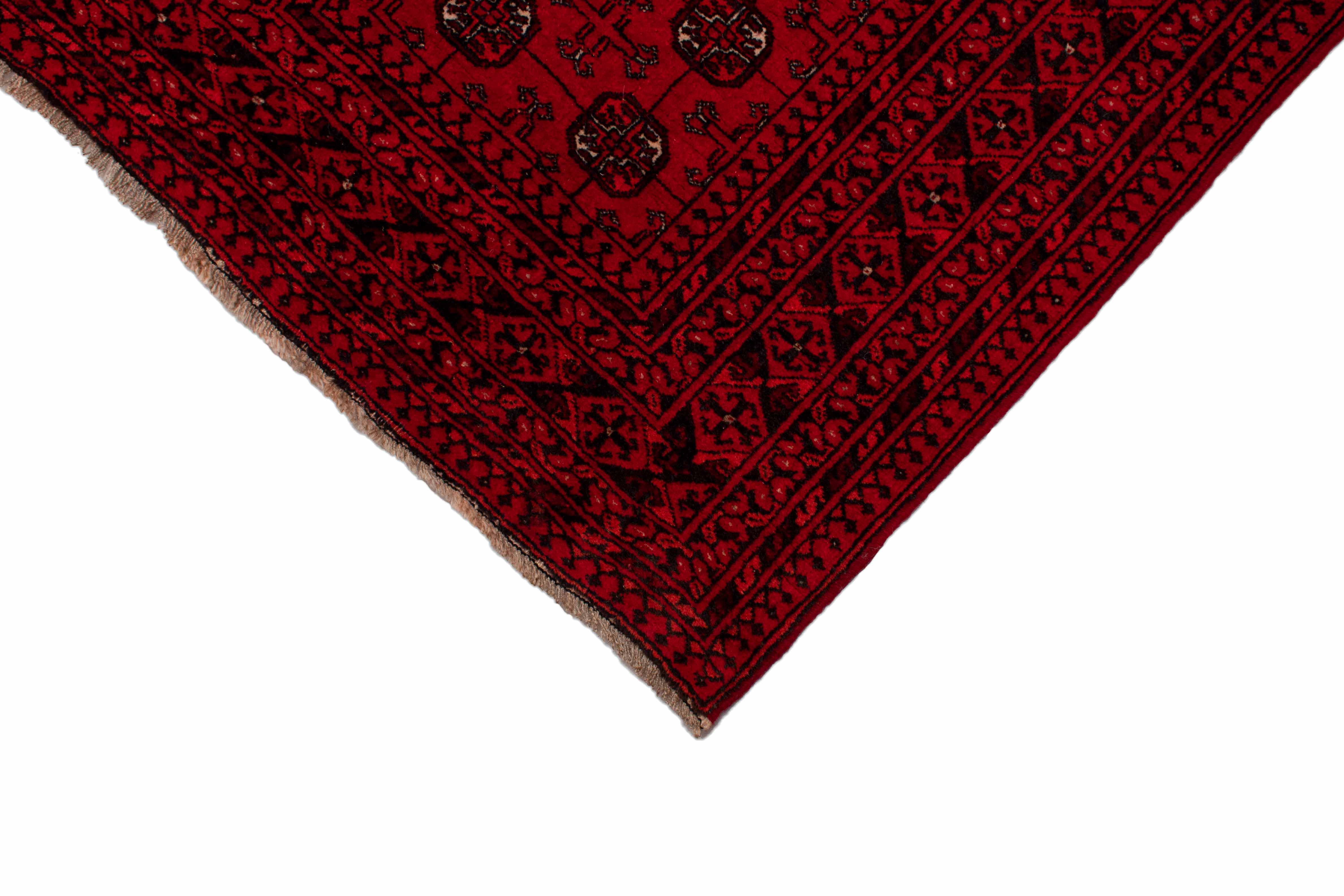
The decorated surround (border) forms a beautiful contrast to the centre and shapes the transition at the edge of the rug.
The repeating elements of this Afghan rug have no particular centre. The recurring repeat pattern feels calming, but never dull. Rugs with a repeat pattern are also described as all-over patterned.
The background of this Afghan is light red. The border is worked in black and light red.
Condition
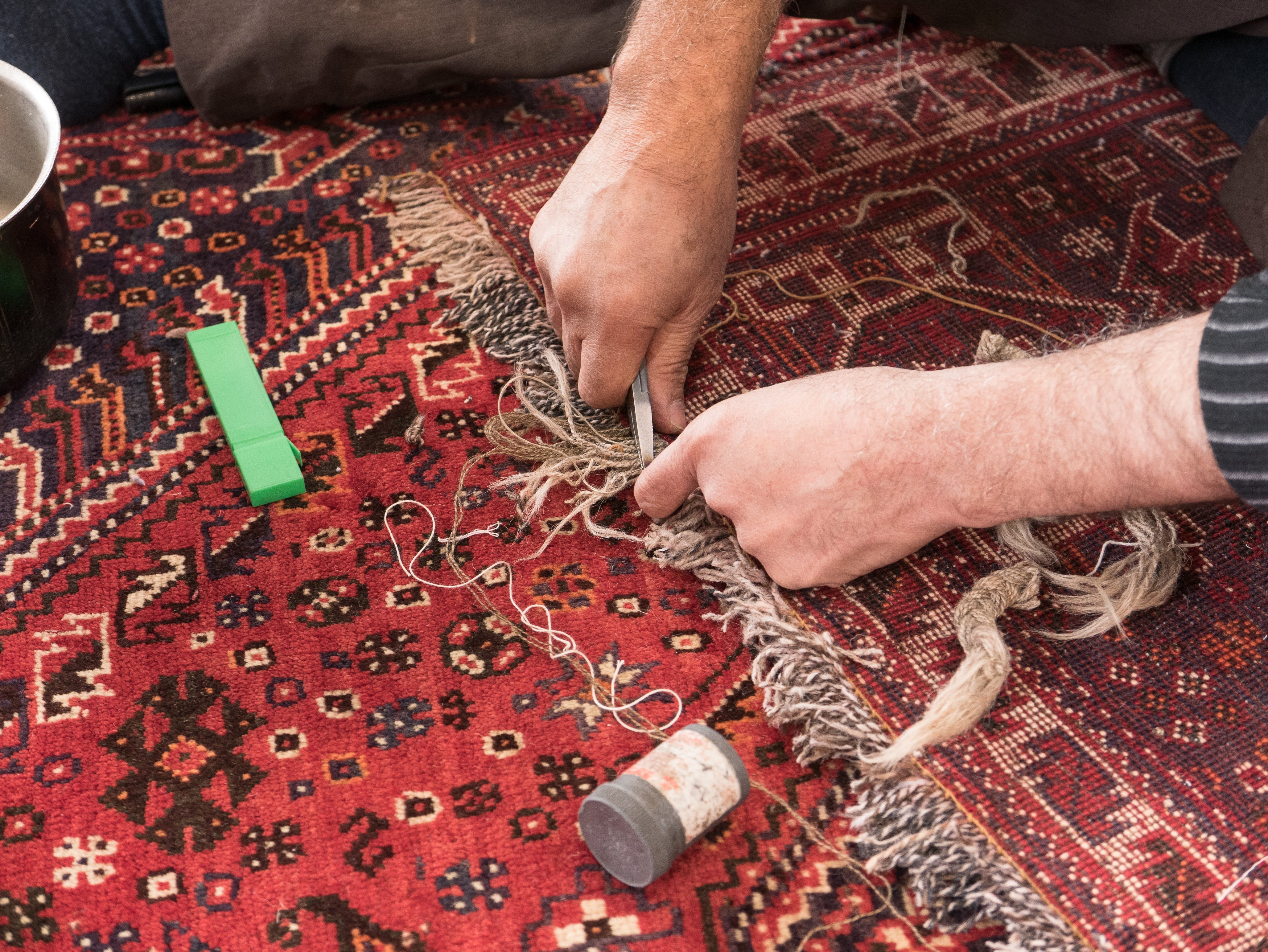
You are not the first to take a liking to this Afghan. It had owners before you who valued and used it. It was hand-knotted around 1980. We have cleaned it thoroughly and restored it with care. Despite its age, it is therefore in very good condition.
Material
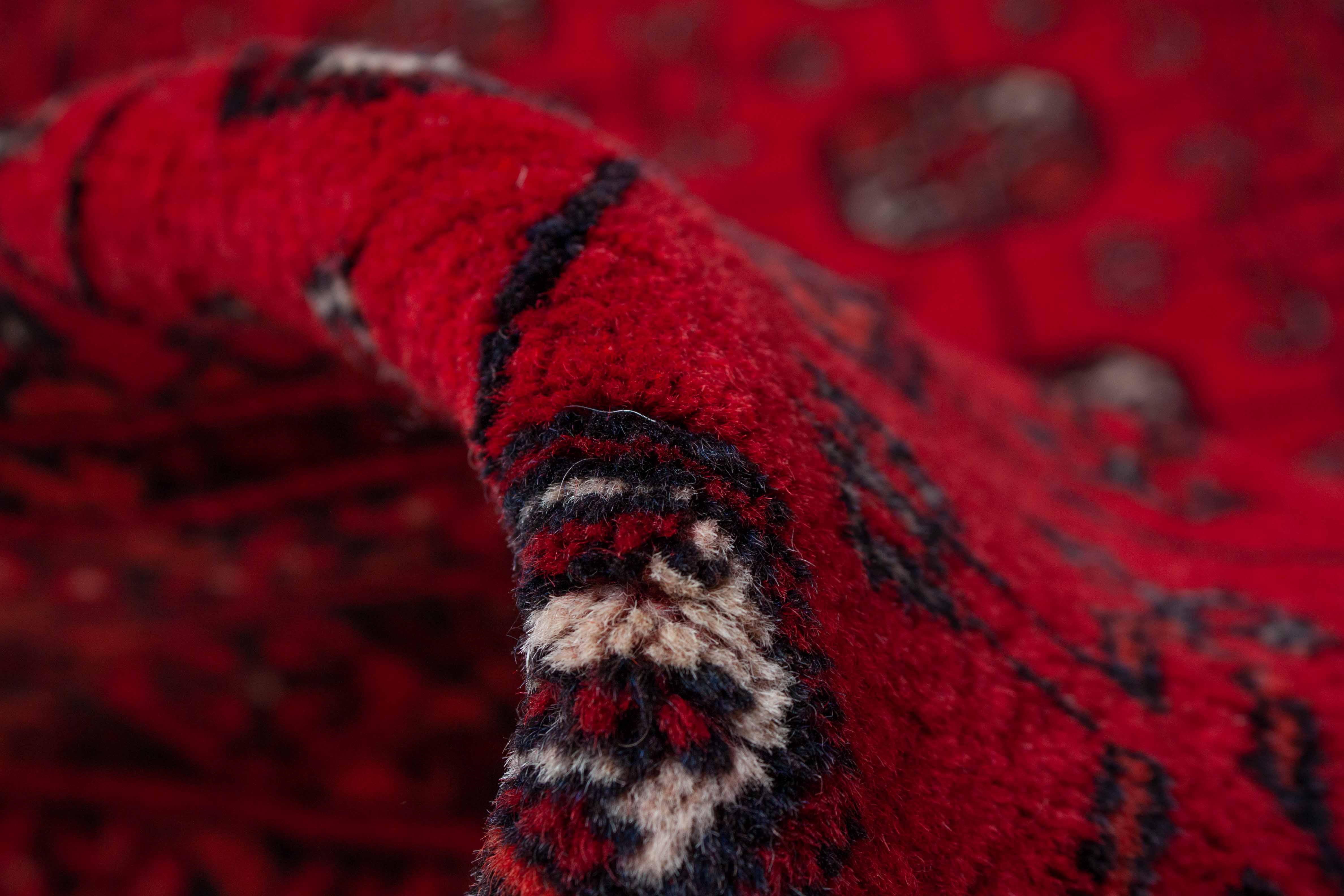
The technique used to make the materials for this Afghan's pile is more than 200 years old. The wool was dyed with natural colours and spun by hand. Dyeing with natural or plant-based colours is more complicated, more expensive and more time-consuming than dyeing with chemical dyes. For a luminous red, for example, you need around one kilo of ground madder root as a dyestuff per kilo of wool. For a strong yellow that isn't too pale, you even need two kilograms of weld per kilo of wool. Spinning the wool is just as time-consuming and labour-intensive. And fewer and fewer people still know how to spin wool by hand.
But the effort is worth it: dyeing with natural colours lets the high-quality wool keep its natural lanolin content. Wool that has been dyed with natural colours and spun by hand creates fascinating, shifting patterns. The charm of hand-spun wool, with its slight irregularities and natural shades, unfolds as a contrast in modern interiors, but equally in rooms furnished in a more traditional or country style. The foundation (weft and warp threads) of this Afghan is made of new wool.
A note on the photos
Child labour? No thanks.
Child labour? No thanks. Children belong in school, not at a knotting frame or a loom. For us it therefore goes without saying that we only offer rugs made under fair conditions and without child labour.
We attach particular importance to humane working conditions and tolerate no child labour at any of our producers. Thank you for helping us to ensure fair conditions.
That is why we support the initiative Care & Fair against child labour in the rug trade.

Choose options
|
|
1-3 working days delivery time (within Germany) |
|
|
14-day home trial |
|
|
Free delivery & returns within the EU |