
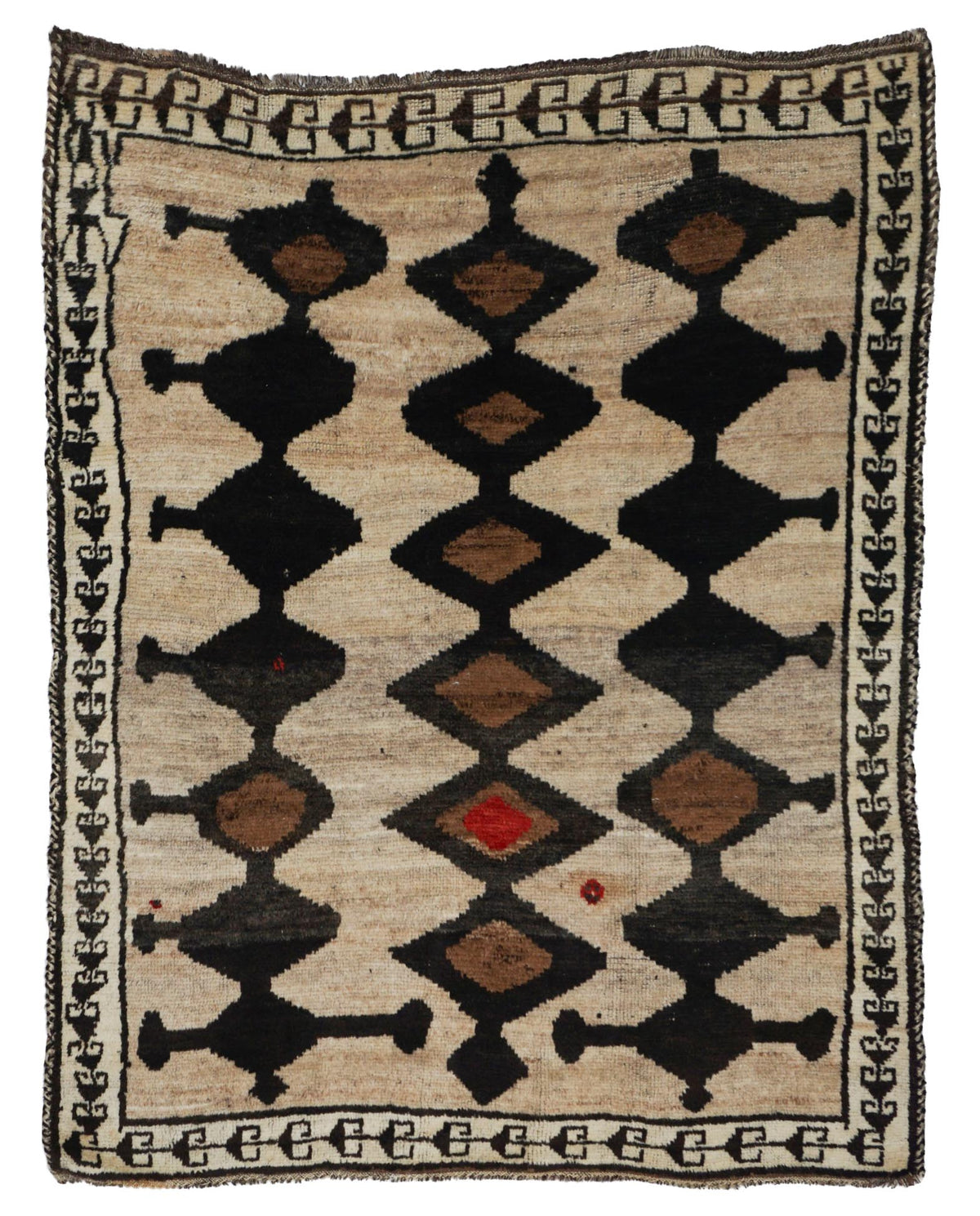
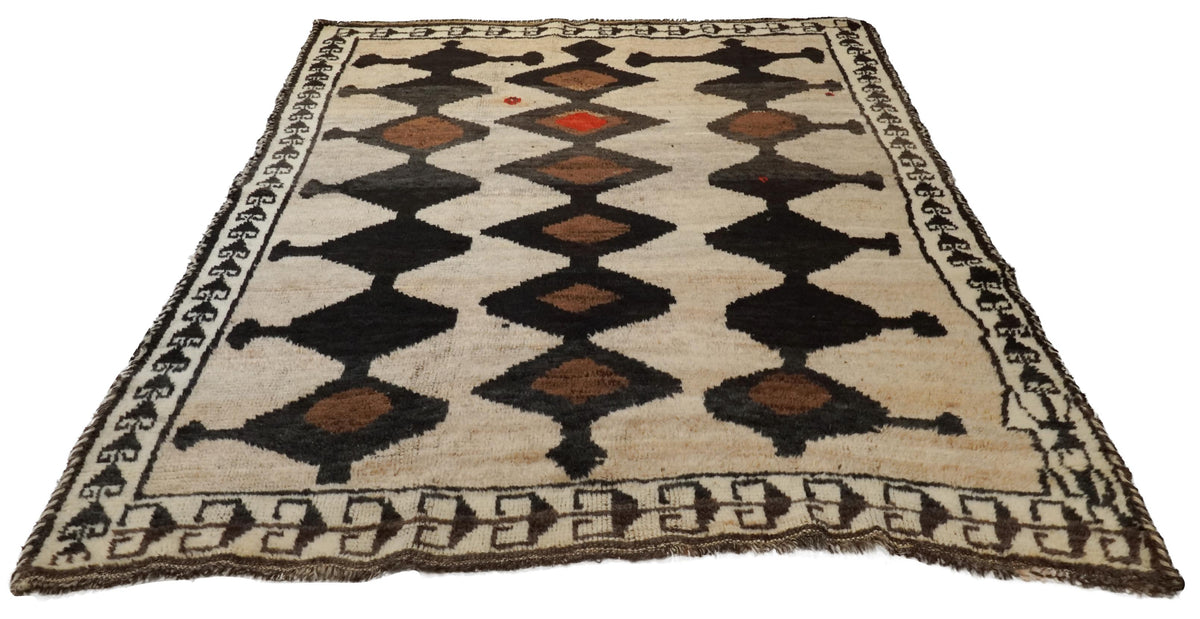
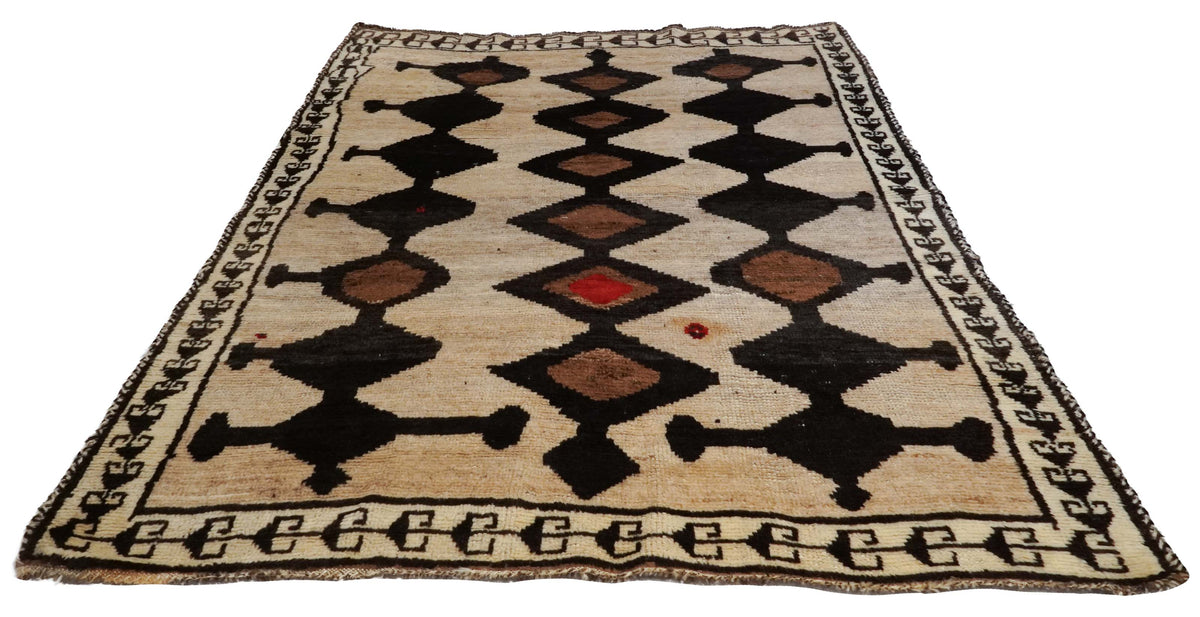
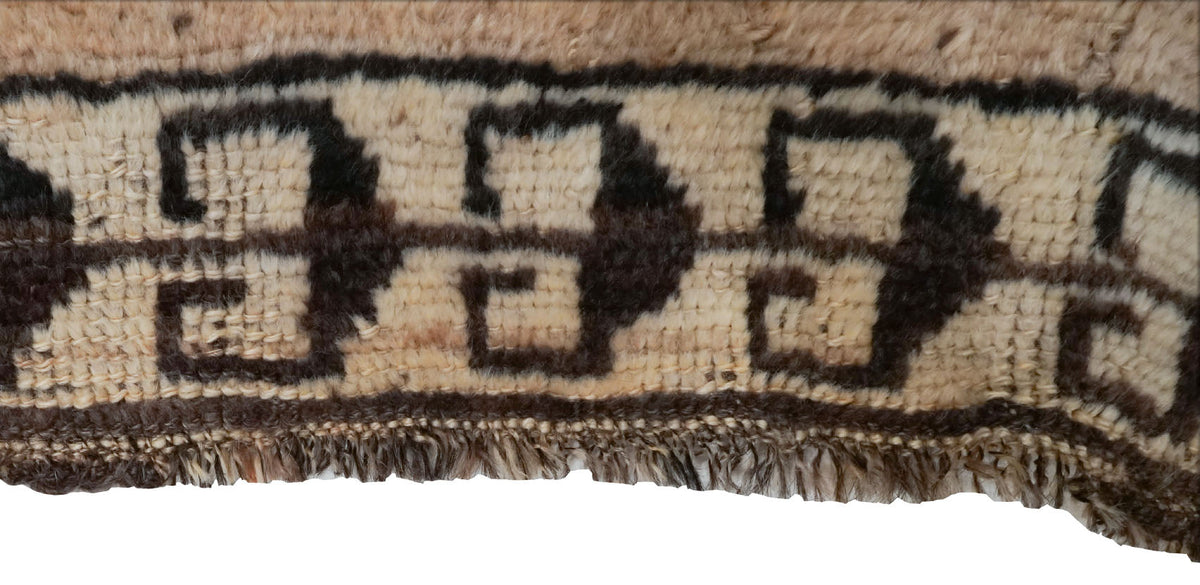
Old Gabbeh | 185 x 145 cm | Nr. Z-4651


|
14-day home trial |

|
Free delivery & returns within the EU |
Old Gabbeh
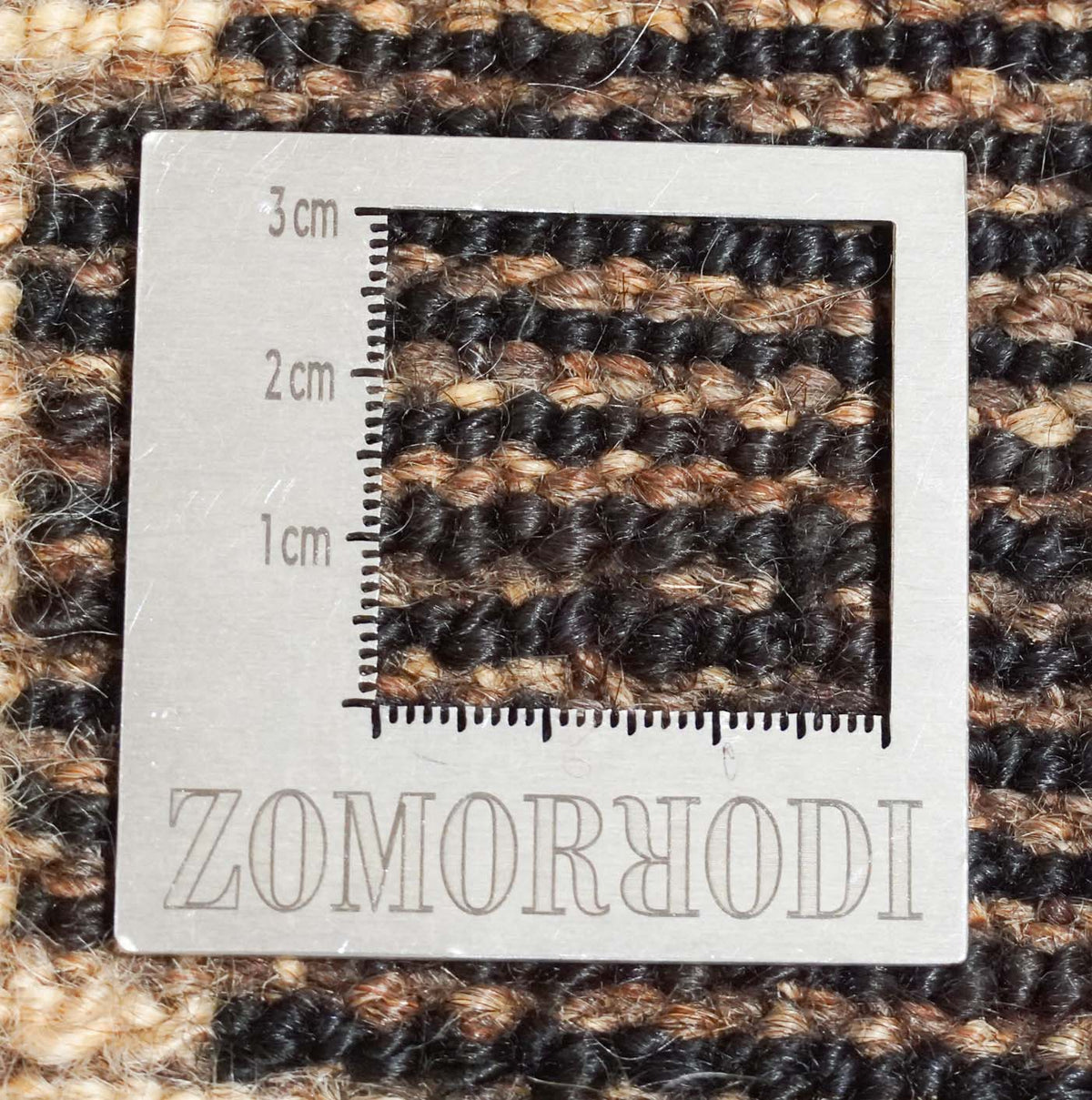
Craftsmanship and timeless elegance come together in this rug in beige and black and white. A knot density of approx. 60,000 knots per m² makes the elaborate workmanship visible – right down to the fine execution of the details. At 185 × 145 cm, it is well placed as a rug for the bedroom or study. It also looks just as good in a small living room. Colouring and texture give any room a homely, exclusive note – a one-of-a-kind piece that will last for years.
| Delivery time | 2 days |
| Origin | Persia |
| Dimensions | 185 cm x 145 cm (= 2.68 m²) |
| Construction | hand-knotted |
| Material |
Pile: wool (hand-spun, natural dyes) Weft & Warp: goat wool |
| knots | 60.000 |
| Year of manufacture | 1940 |
| Condition | pre-owned, but in very good condition (cleaned & restored) |
| Edition | one-of-a-kind piece |

Origin
Gabbeh rugs are knotted by nomads living in the province of Fars, near the city of Shiraz. In Persian, Gabbeh is the name for high-pile rugs that were slept on. Classic Gabbeh have inventive, naive geometric patterns and are full of colour. Modern Gabbeh today mostly come in plain and monochrome designs. Even now, though, the rugs also carry stylised patterns from everyday nomadic life, such as goats, camels, dogs, plants or people. Gabbeh rugs usually come in natural cream, brown and grey tones, but you can also find lively yellow, red or blue.This old Gabbeh is around 86 years old and a real collector's piece.
Material
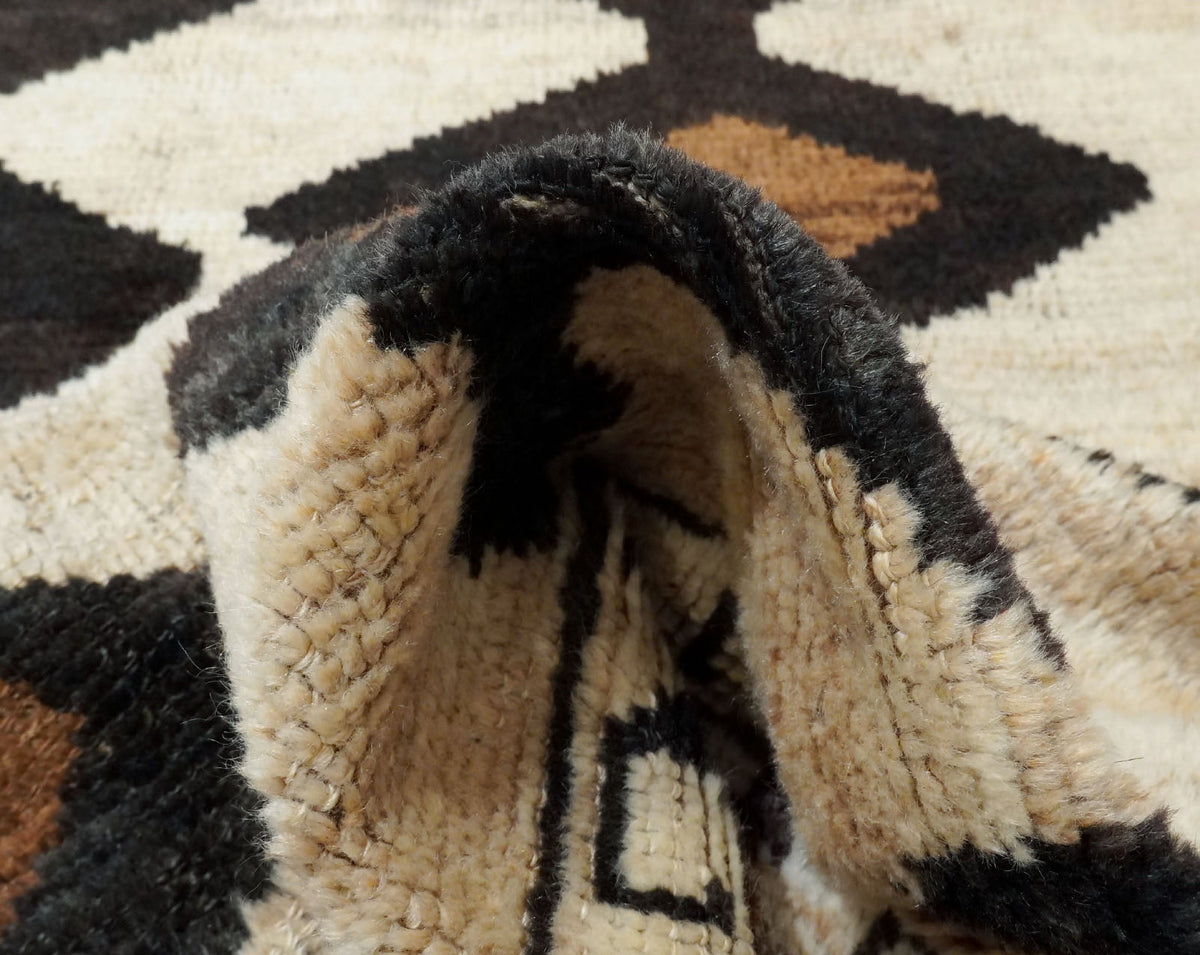
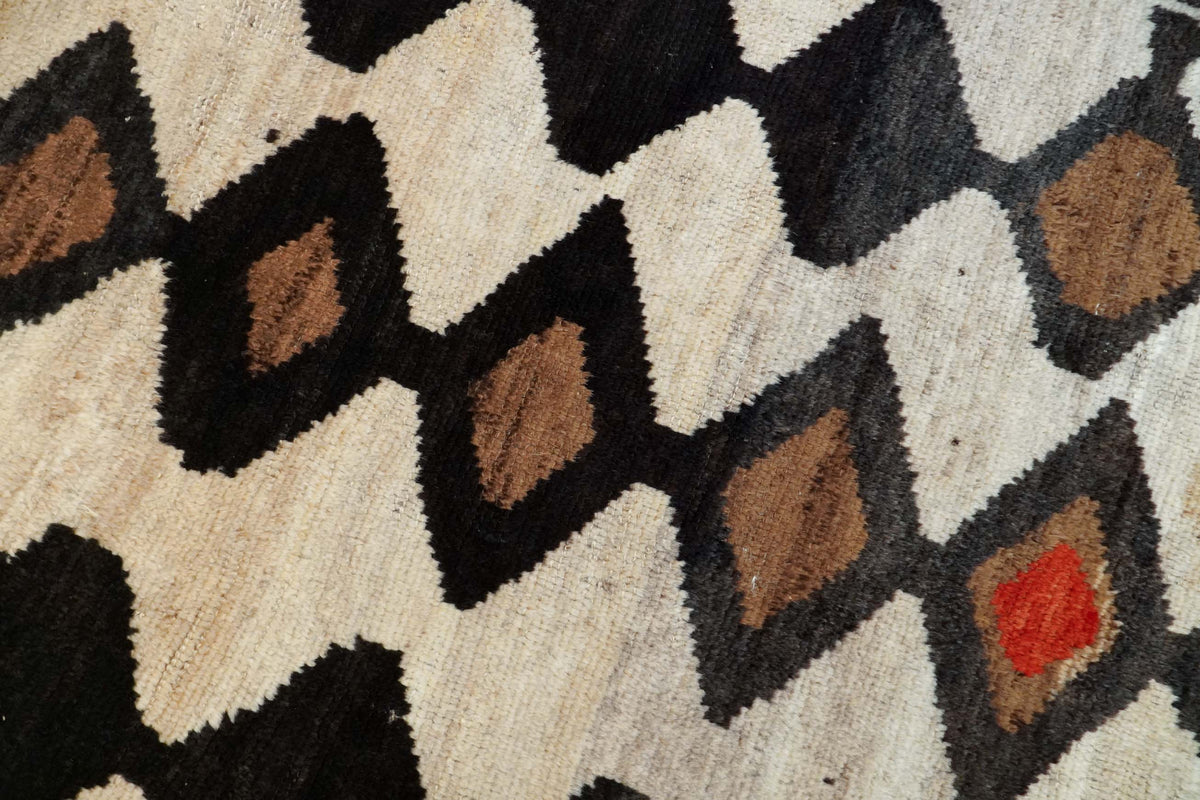
Gabbehs are knotted by hand from hand-spun wool and dyed with natural colours. The hand-spun wool gives the rugs a grainy yet soft surface. Traditionally, Gabbeh rugs were used for sleeping. They invite you to sit and lounge about in the living room, but they are also excellent in hallways and dining areas.Hand-spun wool is always a little irregular. When it is dyed, the natural dyestuffs are absorbed to differing degrees. The rug looks more lively as a result, with what are known as colour shifts (abrash), i.e. light-and-dark shadings of colour. These changes in the shade of the pile yarn always run across the length of the old Gabbeh and make the rug less prone to showing dirt.
The foundation (weft and warp threads) of this Old Gabbeh was made from goat wool.
Condition
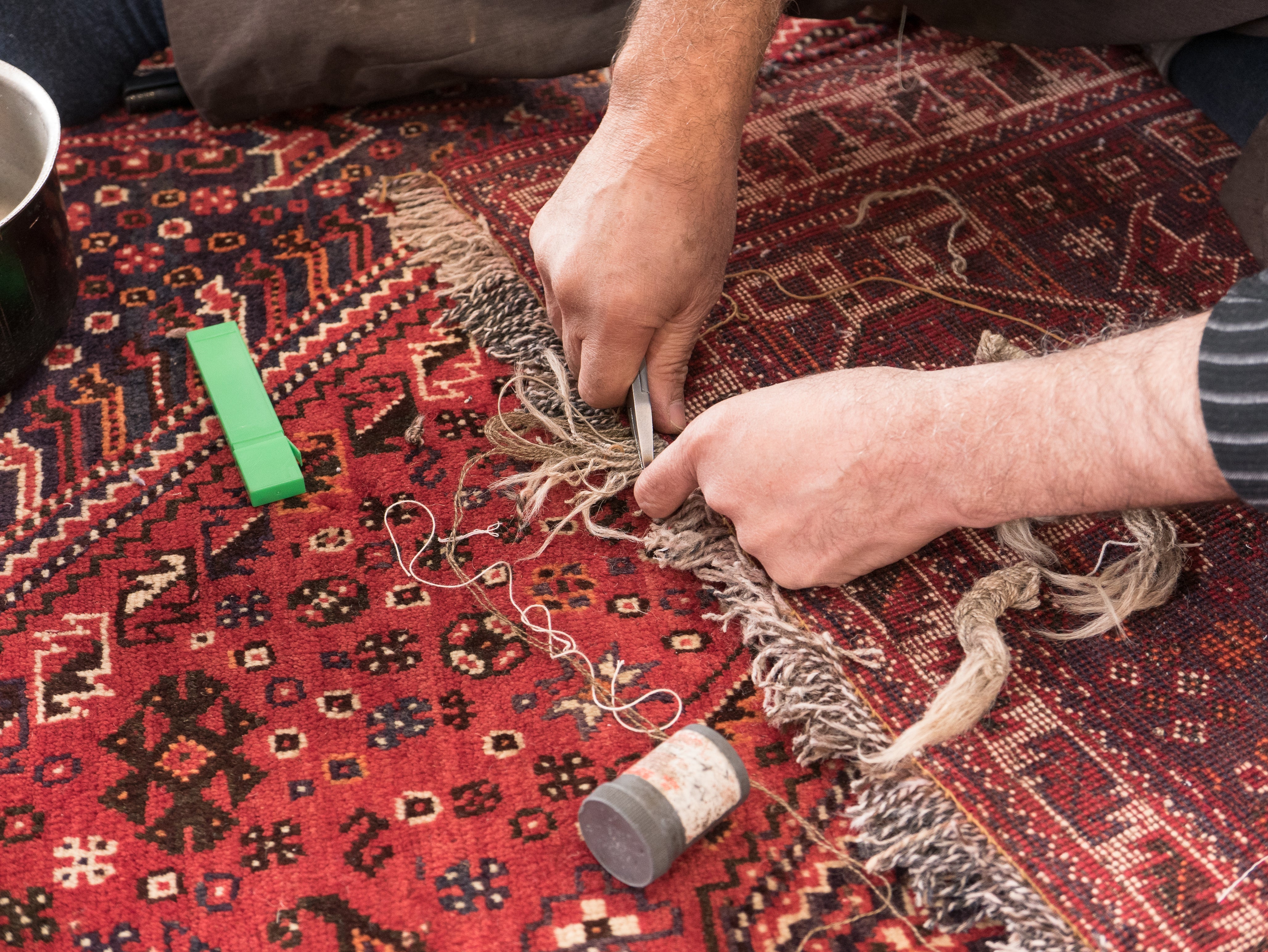
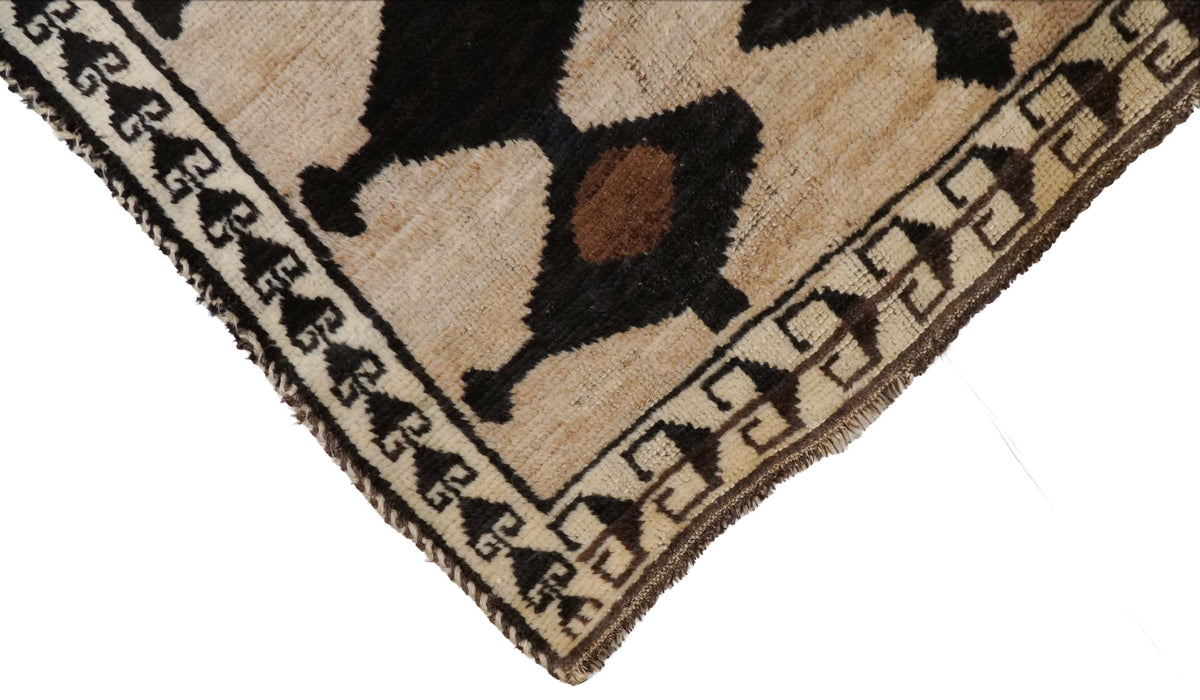
You are not the first to take a liking to this Old Gabbeh. It has had owners before you who valued and used it. The pile has become a little thinner in places. The fringes could do with a repair. The edges are damaged in places. In some spots a few white threads are visible. That is perfectly normal with older rugs. They are the knot ends of the weft and warp weave, which work their way to the surface over the years. In substance, this is not a major problem. It was knotted around 1940. We have cleaned it thoroughly and restored it with care. Despite its age, it is therefore in very good condition.
A note on the photos
Child labour? No thanks.
Child labour? No thanks. Children belong in school, not at a knotting frame or a loom. For us it therefore goes without saying that we only offer rugs made under fair conditions and without child labour.
We attach particular importance to humane working conditions and tolerate no child labour at any of our producers. Thank you for helping us to ensure fair conditions.
That is why we support the initiative Care & Fair against child labour in the rug trade.

Choose options
|
|
14-day home trial |
|
|
Free delivery & returns within the EU |