
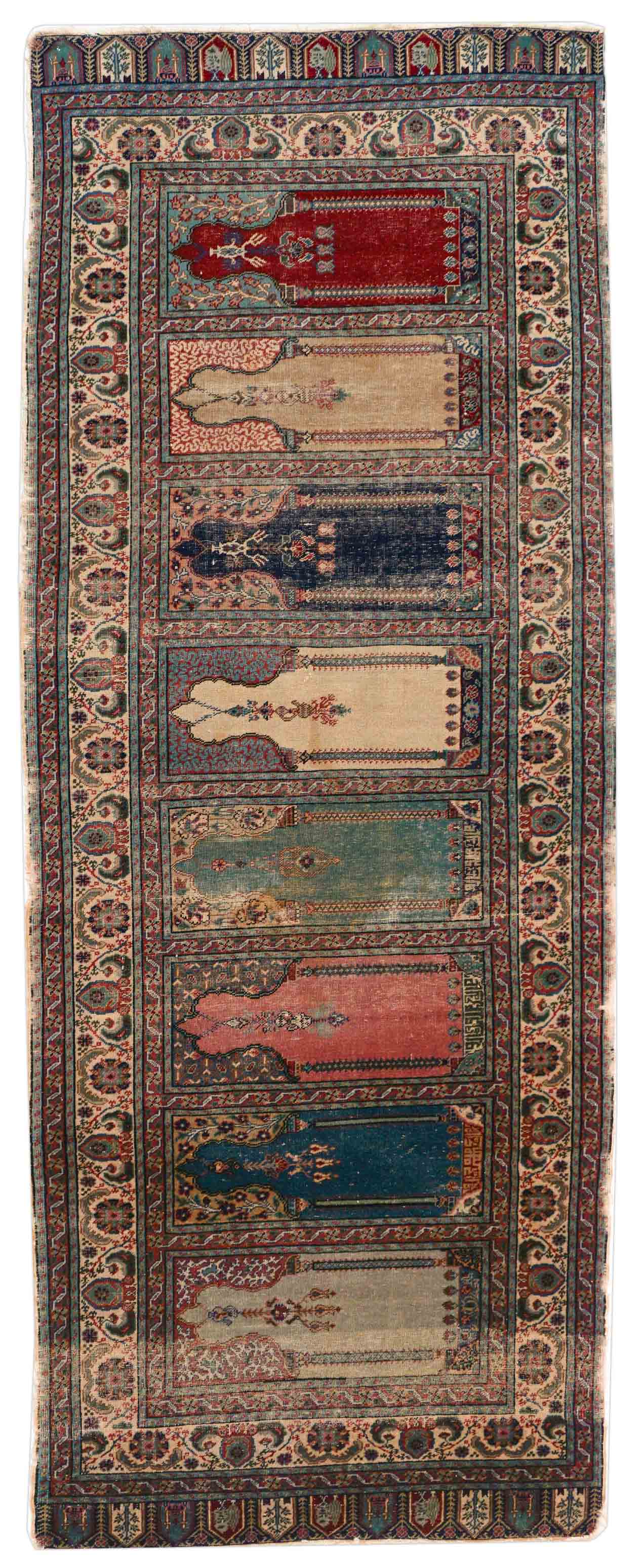
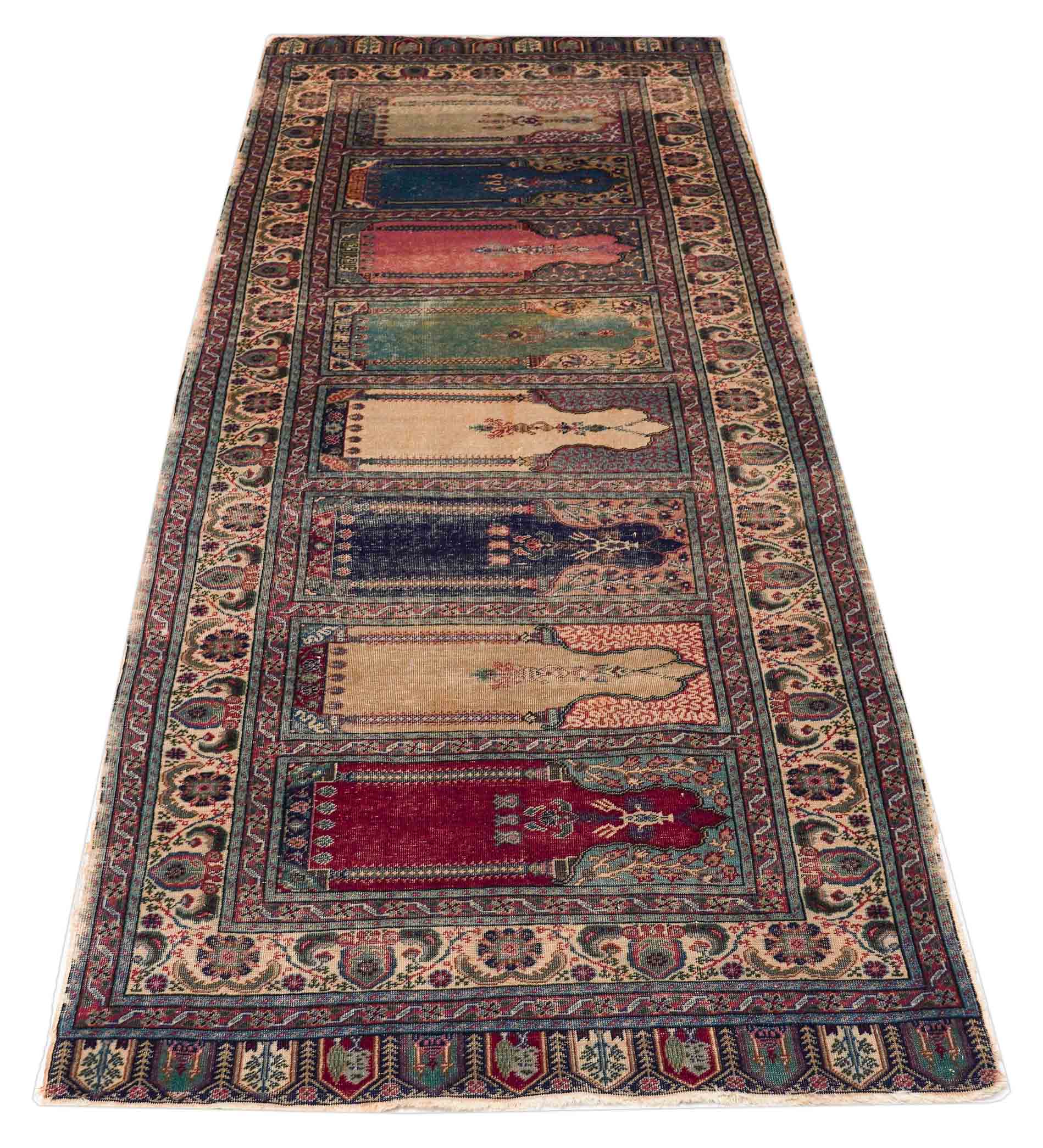
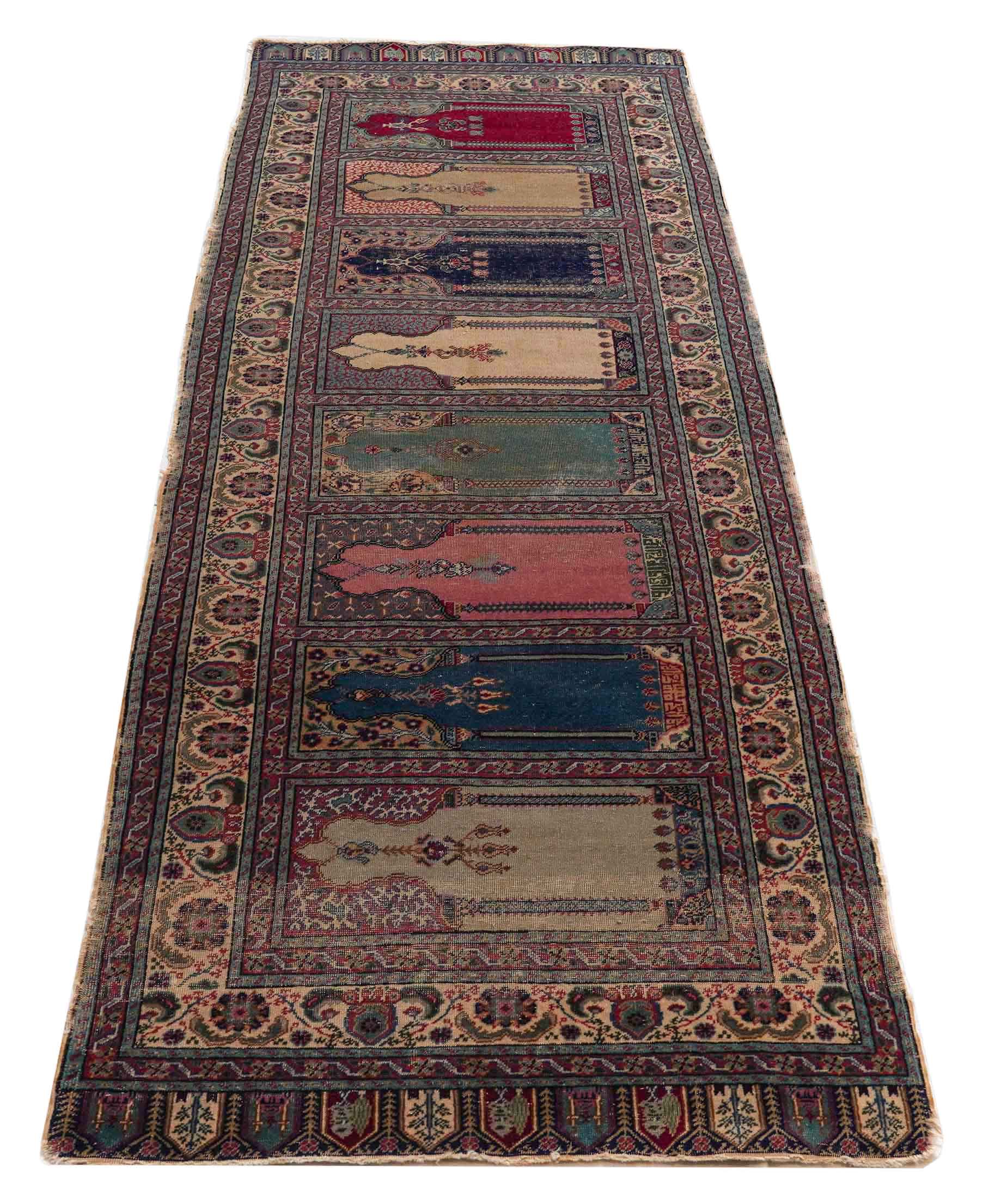
Old Kayseri | 210 x 83 cm | Nr. Z-3117


|
14-day home trial |

|
Free delivery & returns within the EU |
Old Kayseri
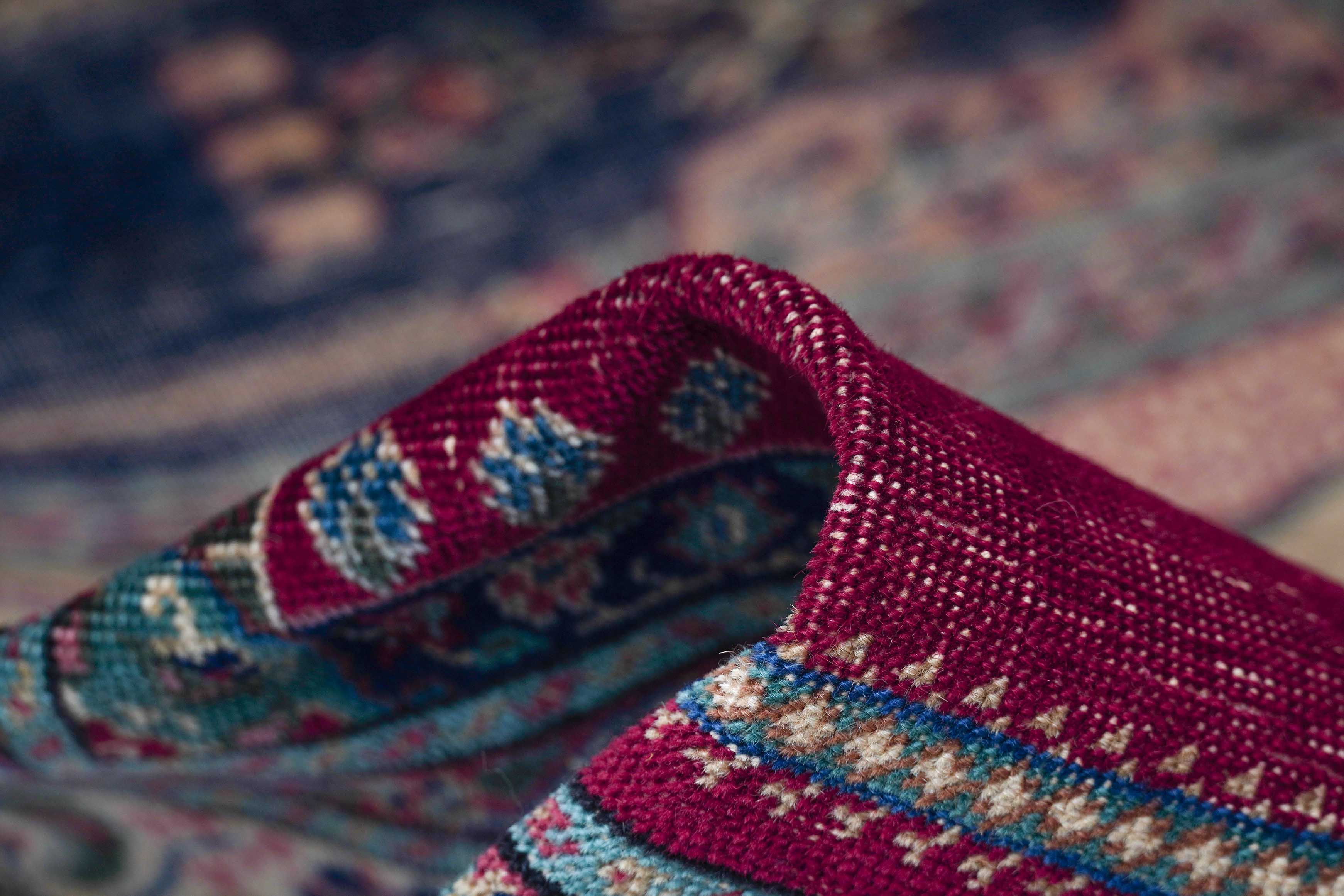
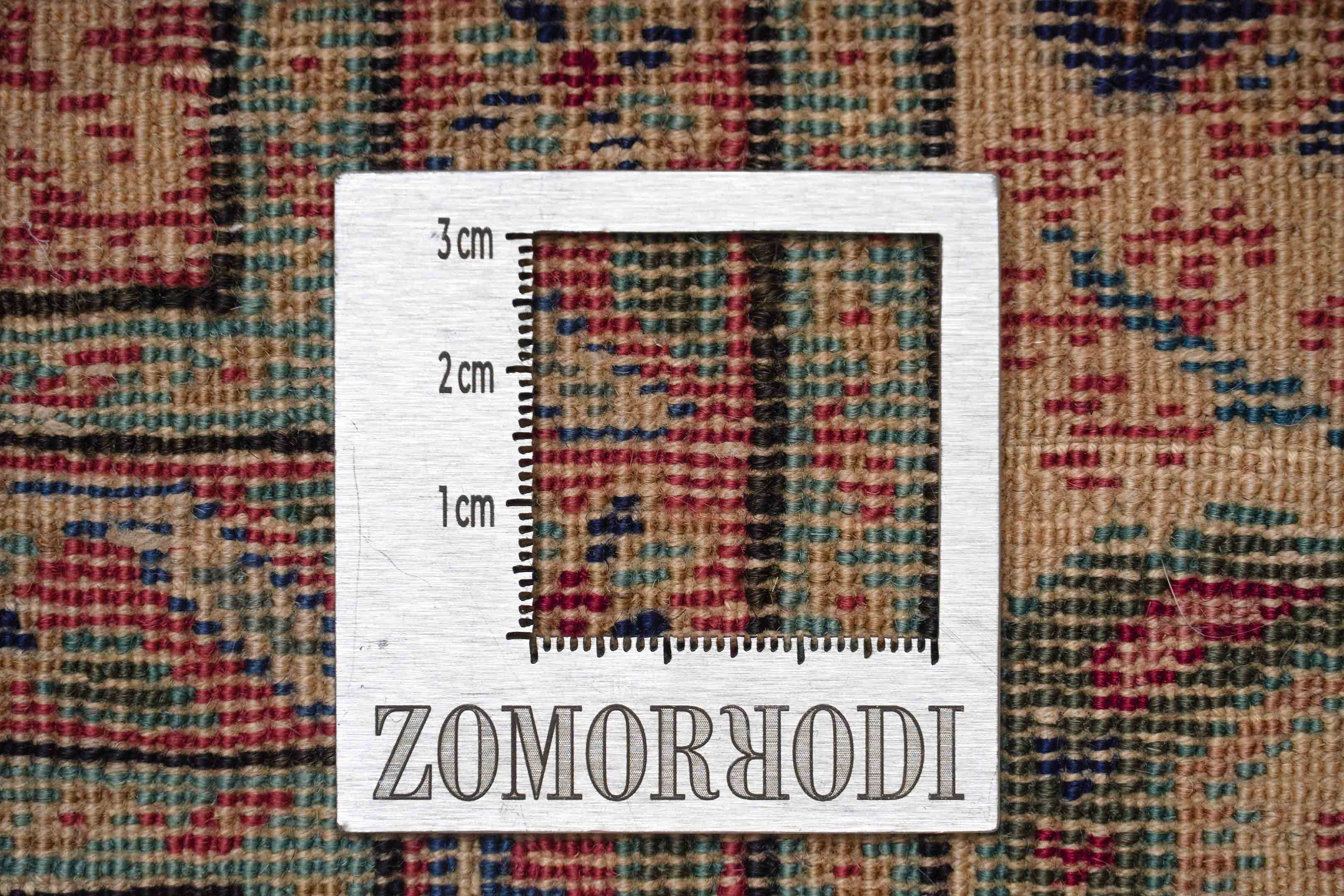
This one-of-a-kind piece with its multi-coloured design brings together traditional craftsmanship and timeless elegance. With a knot density of approx. 360,000 knots per m², the elaborate workmanship shows above all in the precise drawing and the fine execution of the details. At 210 × 83 cm it suits a runner or hallway setting. The harmonious colours and the distinctive texture lend any room an exclusive, homely atmosphere. A rug of this quality is far more than a furnishing item – it is a piece of traditional textile art with individual character and lasting value.
| Delivery time | 2 days |
| Origin | Turkey |
| Dimensions | 210 cm x 83 cm (= 1.74 m²) |
| Construction | hand-knotted |
| Material | Pile: mercerised cotton |
| knots | 360.000 |
| Condition | pre-owned and cleaned |
| Edition | one-of-a-kind piece |

Origin
Kayseri (Latin Caesarea, named in honour of the Roman emperor Tiberius) is the capital of the province of the same name, Kayseri, in Cappadocia in Turkey. Kayseri rugs (also Kaiseri rugs) are usually made of pure silk. They are highly valuable and decorative. Kayseri rugs are typically knotted in smaller sizes and used as wall hangings or prayer rugs.This Old Kayseri is around 96 years old and a true collector's piece.
Material
The pile of this old Kayseri is made of mercerised cotton. Cotton consists of lustrous fibres filled with cell sap. Once the cell sap dries after the harvest, the surface of the fibre buckles and loses its sheen because of the way light is then refracted. In the middle of the 19th century, John Mercer invented the process named after him, mercerisation (also spelled mercerization). In the course of mercerisation, the cotton is held under tension in cold concentrated caustic soda and takes on a new, higher-grade fibre structure. Mercerised cotton has shortened fibres with a round cross-section. The treated fabric no longer shrinks and holds its shape very well. The altered refraction of light gives the fibre a silky sheen. Mercerised cotton also takes up dye more readily and is far more tear-resistant than untreated cotton. Because mercerisation is involved and costly, only high-grade cotton fibres are refined in this way. Owing to the silky sheen of the yarn, mercerised cotton – like viscose – is often referred to as "artificial silk". The colloquial term "artificial silk" is not permitted under the German Textile Labelling Act (TKG), however.The weft and warp threads of this Old Kayseri are made of cotton. This versatile material is tear-resistant and elastic, which makes it particularly well suited to a hard-wearing foundation weave.
Condition
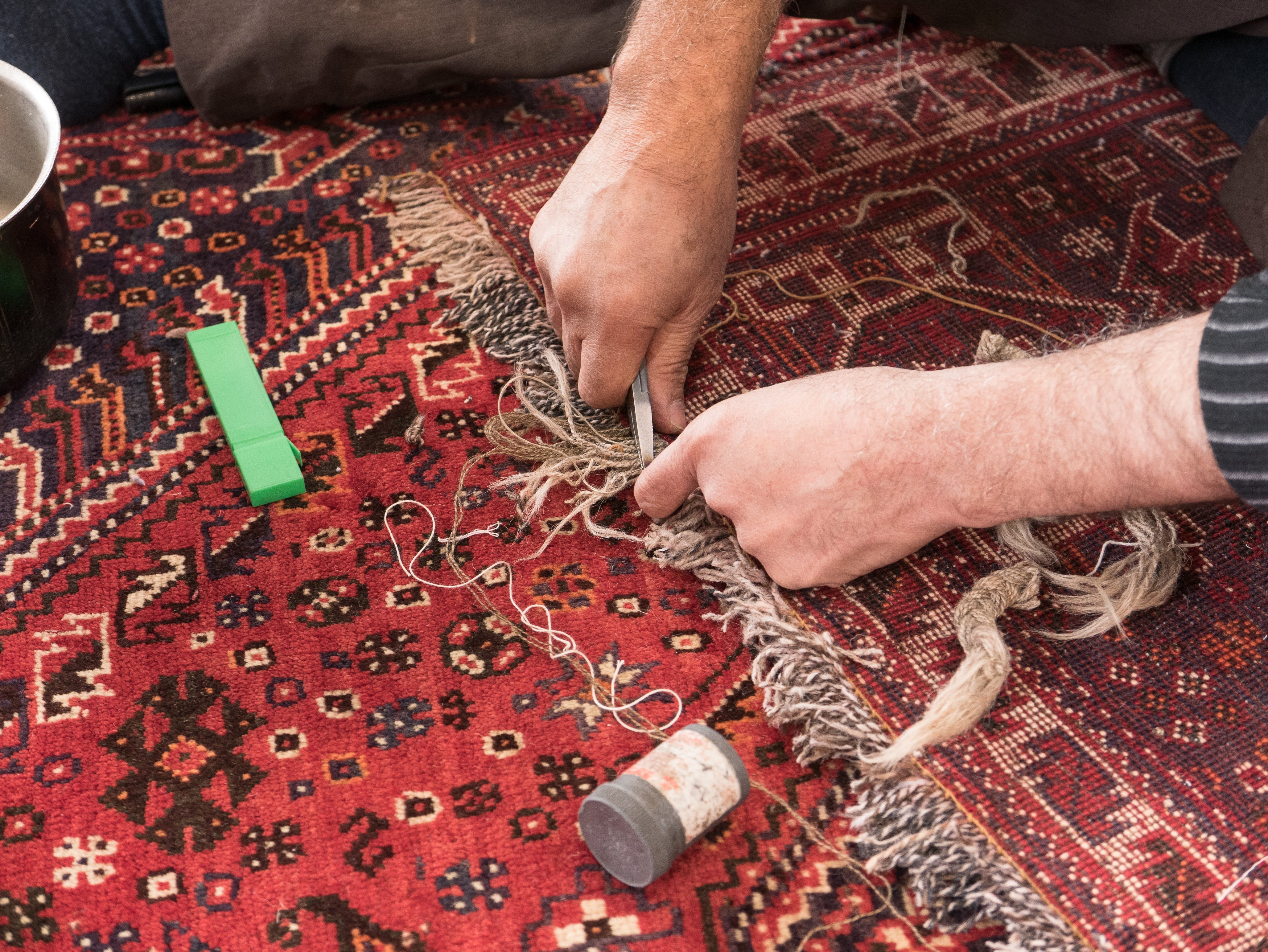
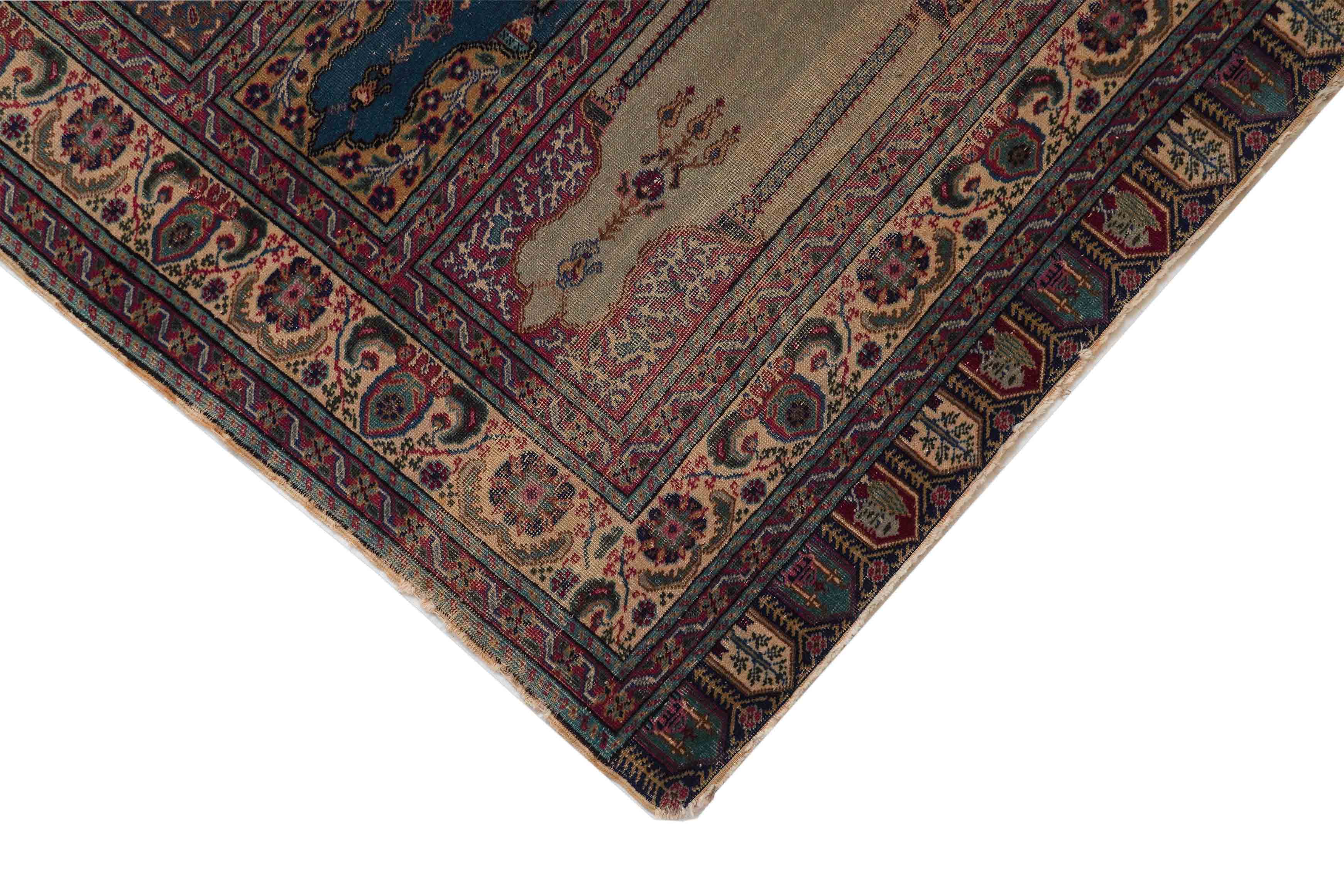
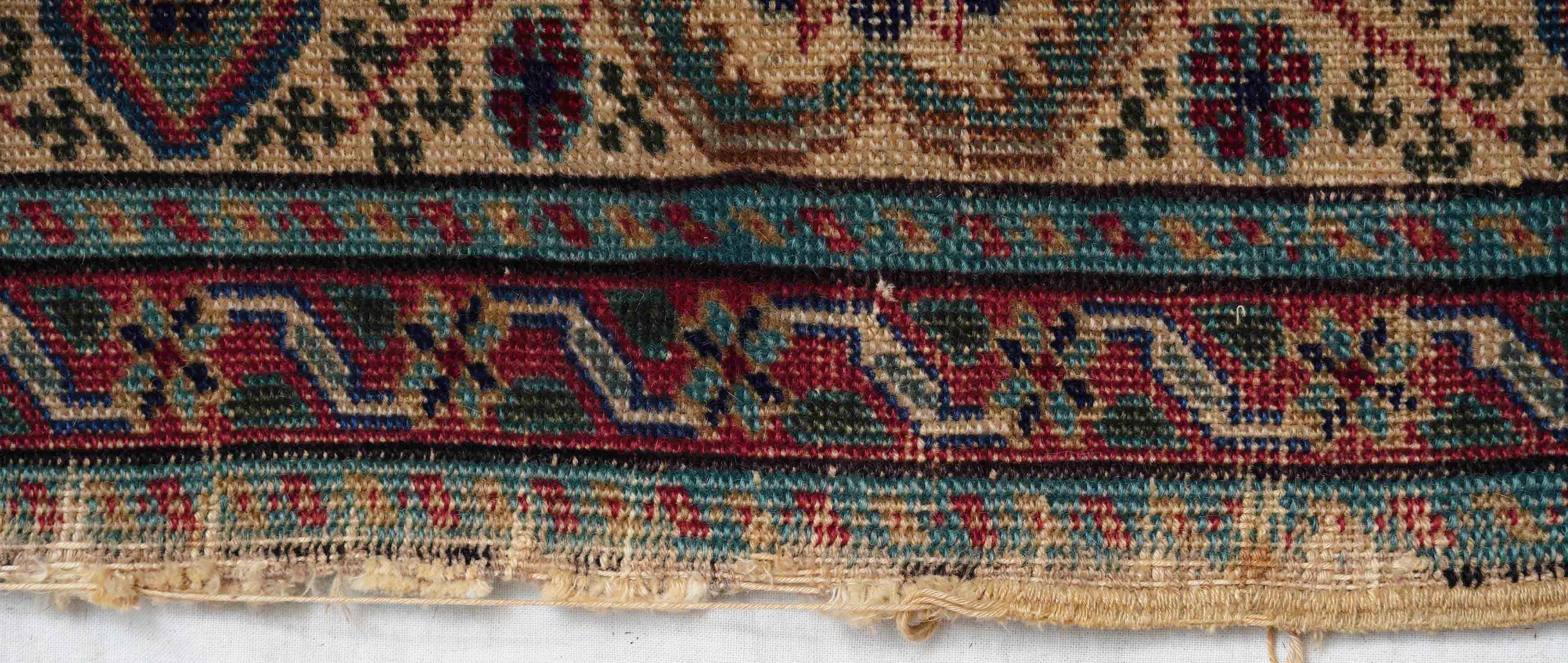
This Old Kayseri has already had admirers before you. It was knotted around 96. It has been thoroughly cleaned and is in good but unrestored condition. The edges are heavily worn in some places. The pile is considerably worn down. The rug has a few smaller stains. We have not restored this Old Kayseri, because we feel it has a special charm just as it is. If that is what you would like, we will of course happily restore the rug for you. Either way, this Old Kayseri will give you pleasure for decades to come.
A note on the photos
Child labour? No thanks.
Child labour? No thanks. Children belong in school, not at a knotting frame or a loom. For us it therefore goes without saying that we only offer rugs made under fair conditions and without child labour.
We attach particular importance to humane working conditions and tolerate no child labour at any of our producers. Thank you for helping us to ensure fair conditions.
That is why we support the initiative Care & Fair against child labour in the rug trade.

Choose options
|
|
14-day home trial |
|
|
Free delivery & returns within the EU |