


Old Kerman | 299 x 189 cm | Nr. Z-4730


|
14-day home trial |

|
Free delivery & returns within the EU |
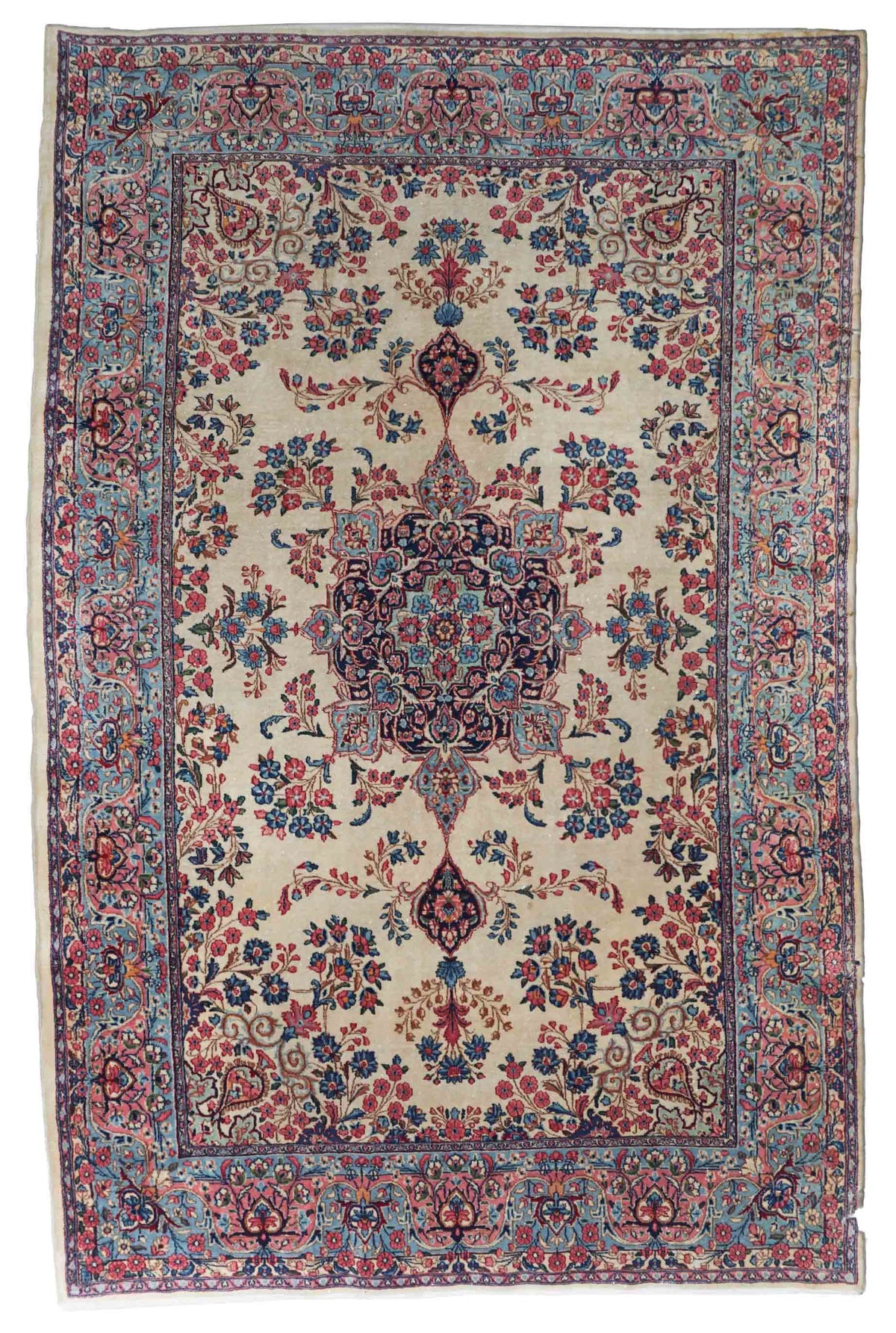
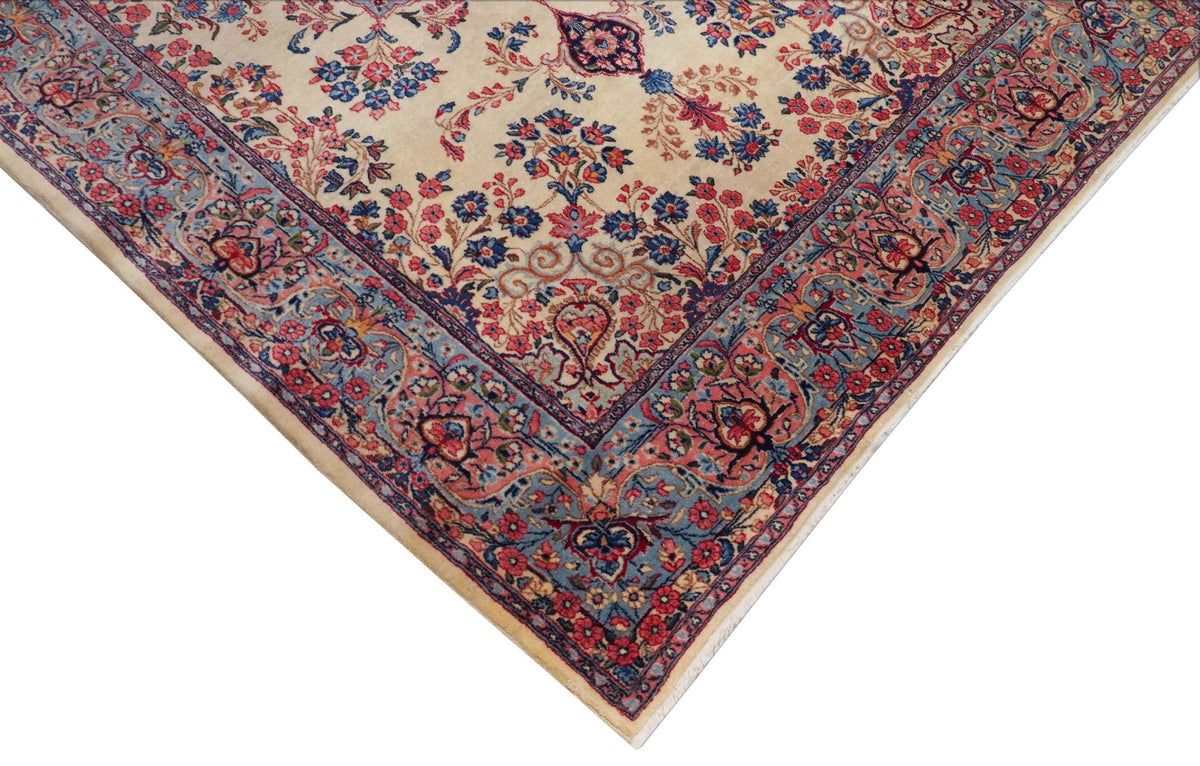
Floral old Kerman, beige with border and medallion
| Origin |
|
| Dimensions | 299 cm x 189 cm (= 5.6511 m²) |
| Construction | hand-knotted |
| Material |
Pile: wool
|
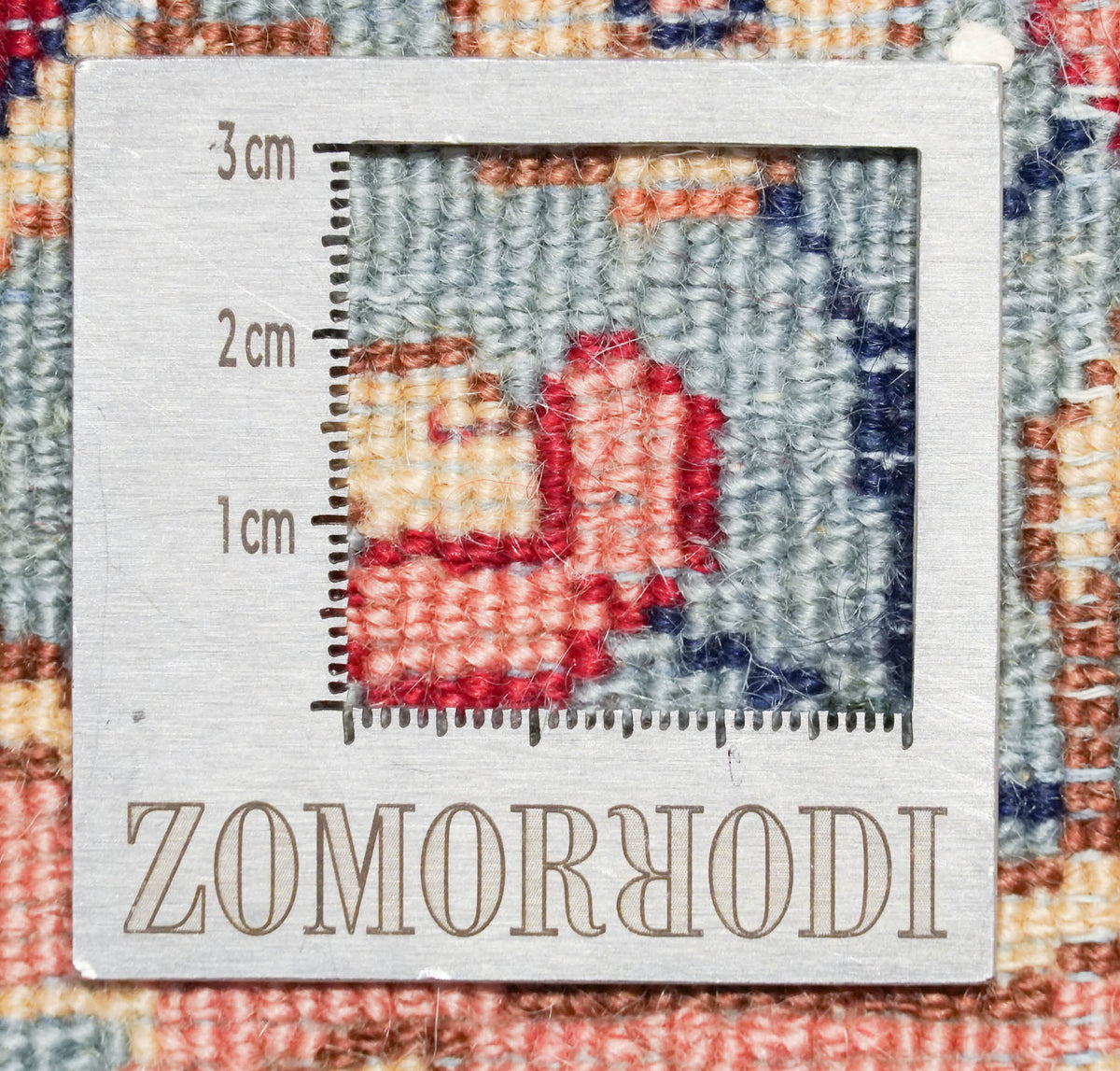
| knots per m²2 | 360.000 |
| Pile height | 7mm |
| Year of manufacture | 1950 |
| Colour | Beige, Pink |
| Edition | one-of-a-kind piece |
Origin
The city of Kerman (also Kirman) lies in the south-east of Persia at an altitude of around 2,000 metres. Kerman sits on the old caravan routes and has a centuries-old tradition in both craftsmanship and trade. Kerman is mentioned in Marco Polo's travel account Il Milione. Rugs from Kerman are marked by fine patterns, winding lines and soft gradations of colour. The classic patterns of the 19th century are often figurative. Hunting scenes and animals were depicted, as were mythological figures and historical personages. The broad palette of Kerman rugs is enriched above all by its many shades of red, traditionally obtained from the cochineal insect. This old Kerman is around 70 years old and a true collector's piece.
Pattern
The edge of the rug is framed by a surround (border). The border forms a splendid contrast to the centre.
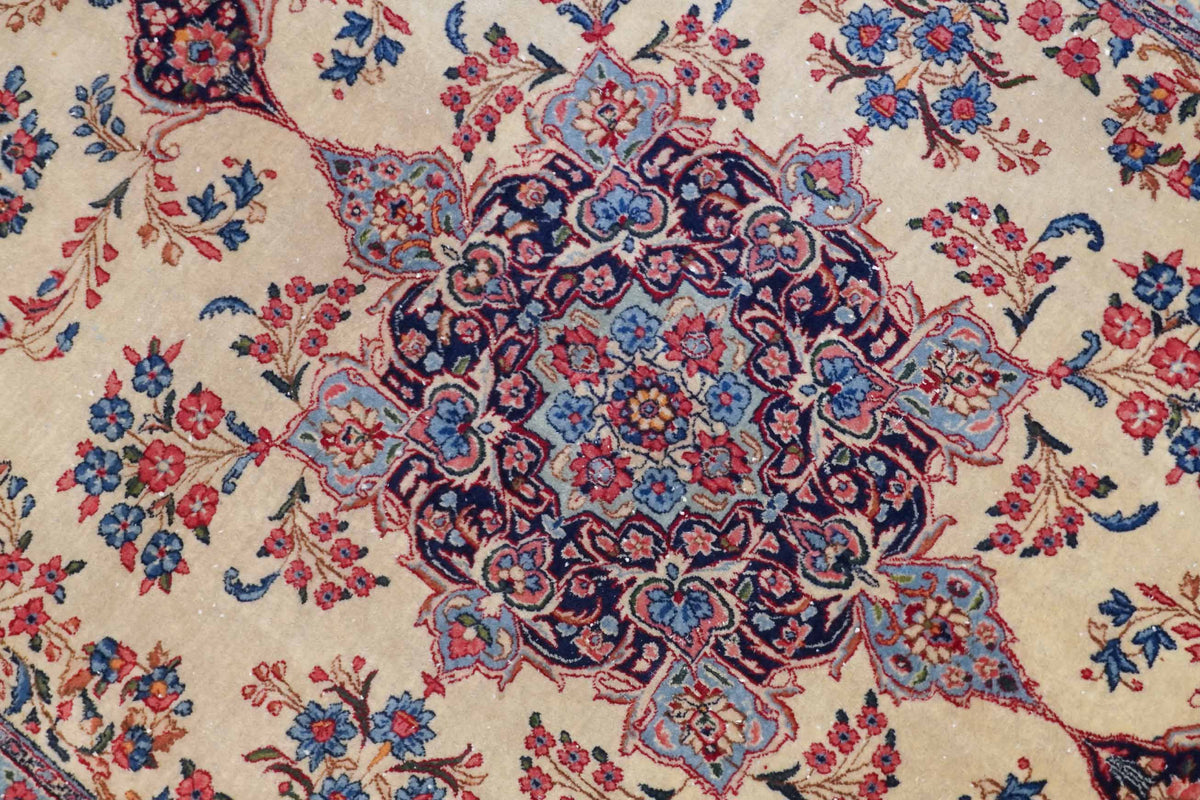
The lush floral motifs of this Kerman are elegant and full of variety. The graceful plant symbols, depicting blossoms, leaves and branches, are artfully intertwined.
At the heart of this Kerman's central field lies the symmetrical centre, also known as the medallion. The design of the field is subordinate to the medallion, so that the medallion seems to float on the field.
The background of this Kerman is beige. The border is worked in beige, turquoise and pink.
Condition
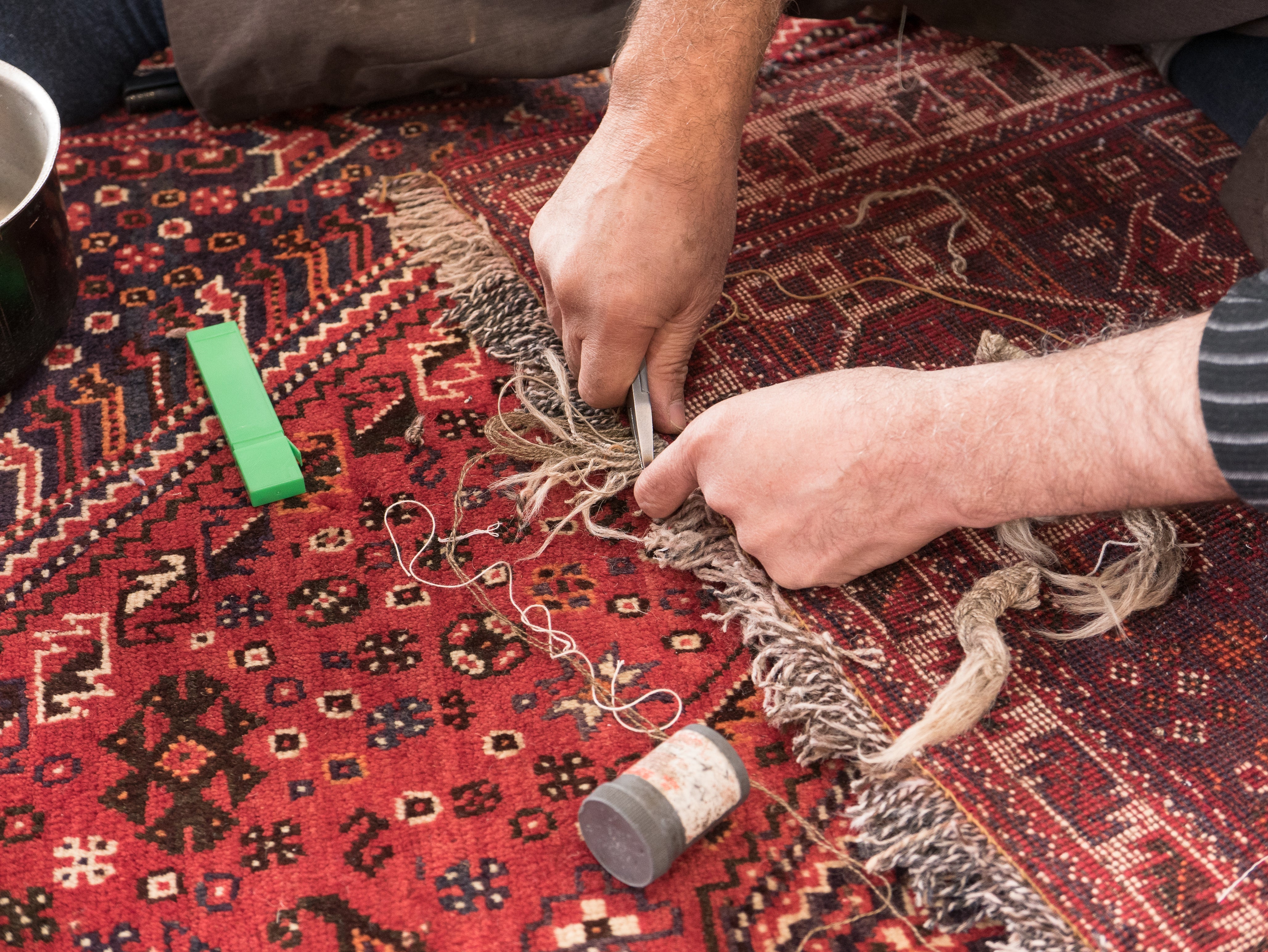
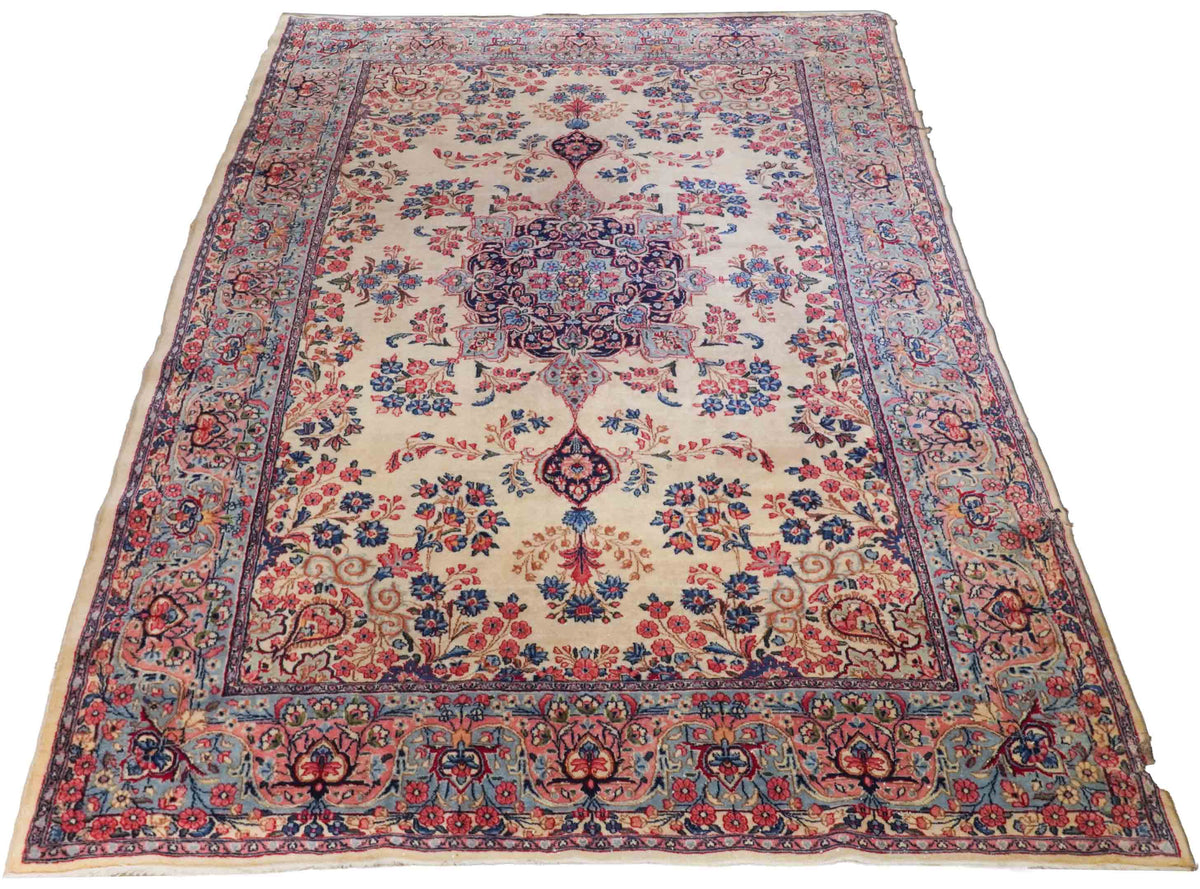
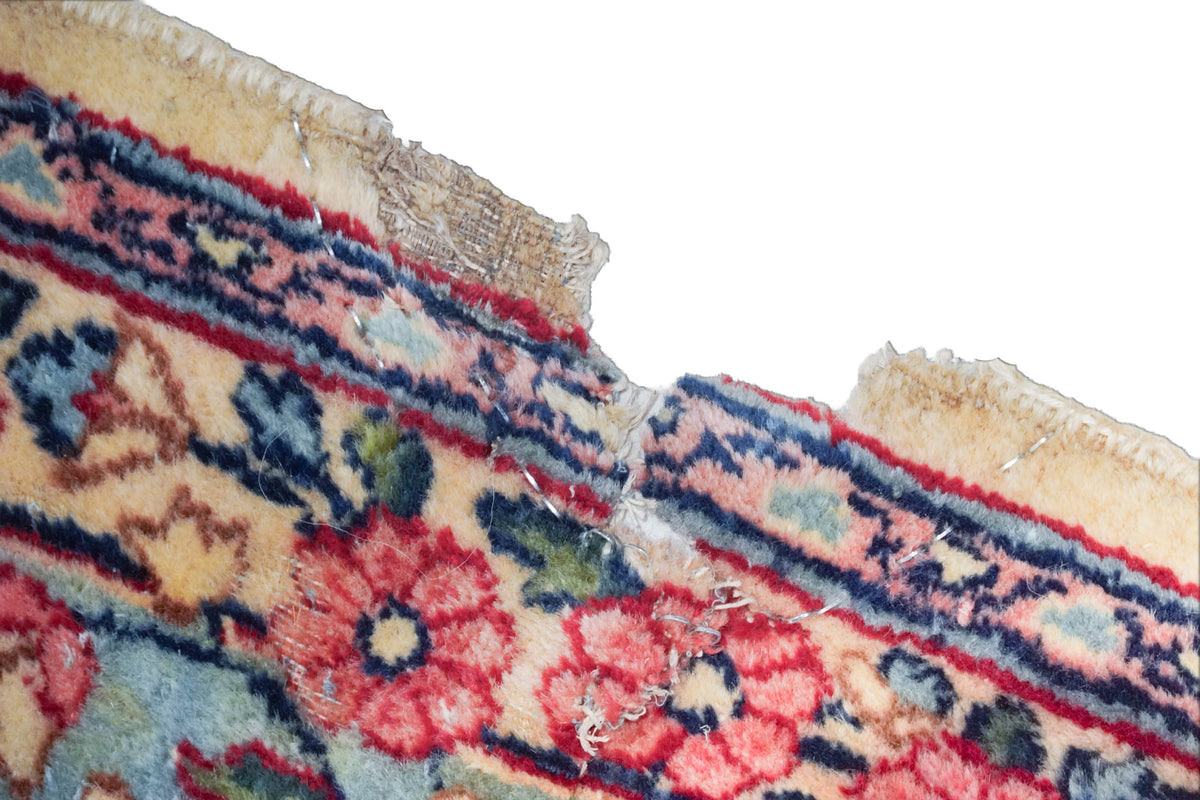
This Kerman has a history. It was hand-knotted around 1950. It has been cleaned thoroughly and is in good but unrestored condition. The edges are damaged in places. One corner of about 20x20cm is badly damaged. The rug has several tears along the side edges. The pile is worn in places. In some places a few white threads are visible. That is quite normal in older rugs. They are the knot ends of the weft and warp, which work their way to the surface over the years. Structurally it is not a major problem. We have not restored this Kerman because we feel it has a special charm just as it is. If you would like us to, we will of course gladly restore the rug for you. Either way, this Kerman will give you pleasure for decades to come.
Material
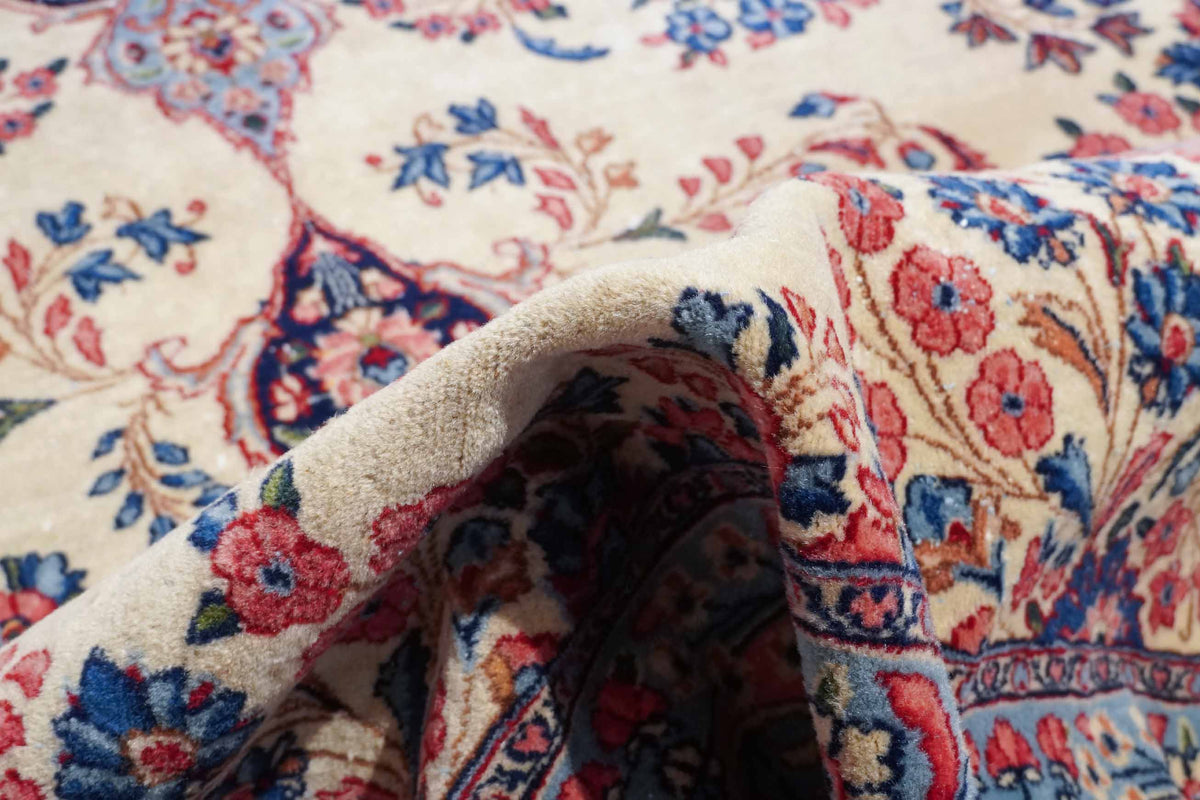
The pile of this Kerman was hand-knotted from high-quality new wool. New wool is obtained by shearing sheep gently. New wool is a renewable, natural raw material with a number of impressive qualities: thanks to the natural lanolin in the wool, the surface repels droplets of water and is naturally protected against dirt. Wool also offers excellent thermal insulation, helps regulate the indoor climate and dampens sound. The weft and warp threads of this Kerman are made of cotton. This versatile material is tear-resistant and elastic, which makes it particularly suited to a hard-wearing foundation.
A note on the photos
Child labour? No thanks.
Child labour? No thanks. Children belong in school, not at a knotting frame or a loom. For us it therefore goes without saying that we only offer rugs made under fair conditions and without child labour.
We attach particular importance to humane working conditions and tolerate no child labour at any of our producers. Thank you for helping us to ensure fair conditions.
That is why we support the initiative Care & Fair against child labour in the rug trade.

Choose options
|
|
14-day home trial |
|
|
Free delivery & returns within the EU |