

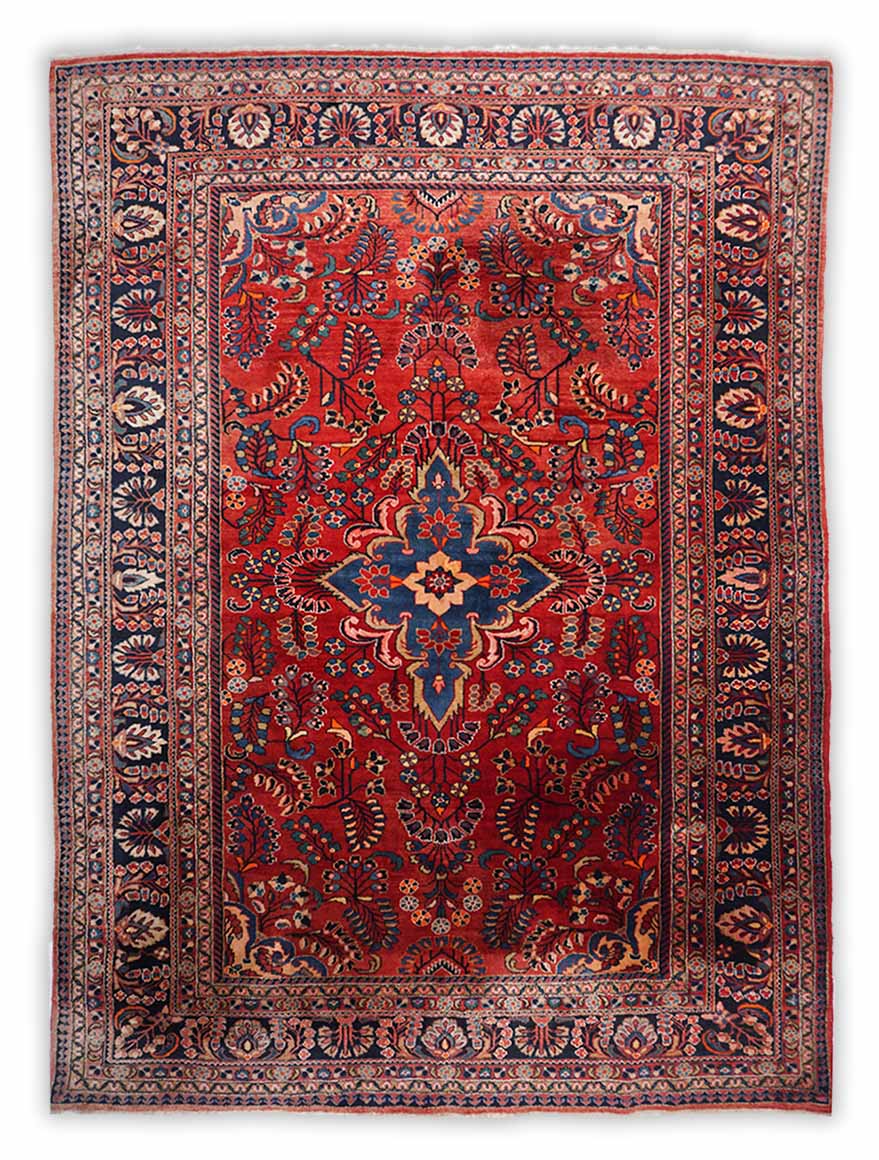
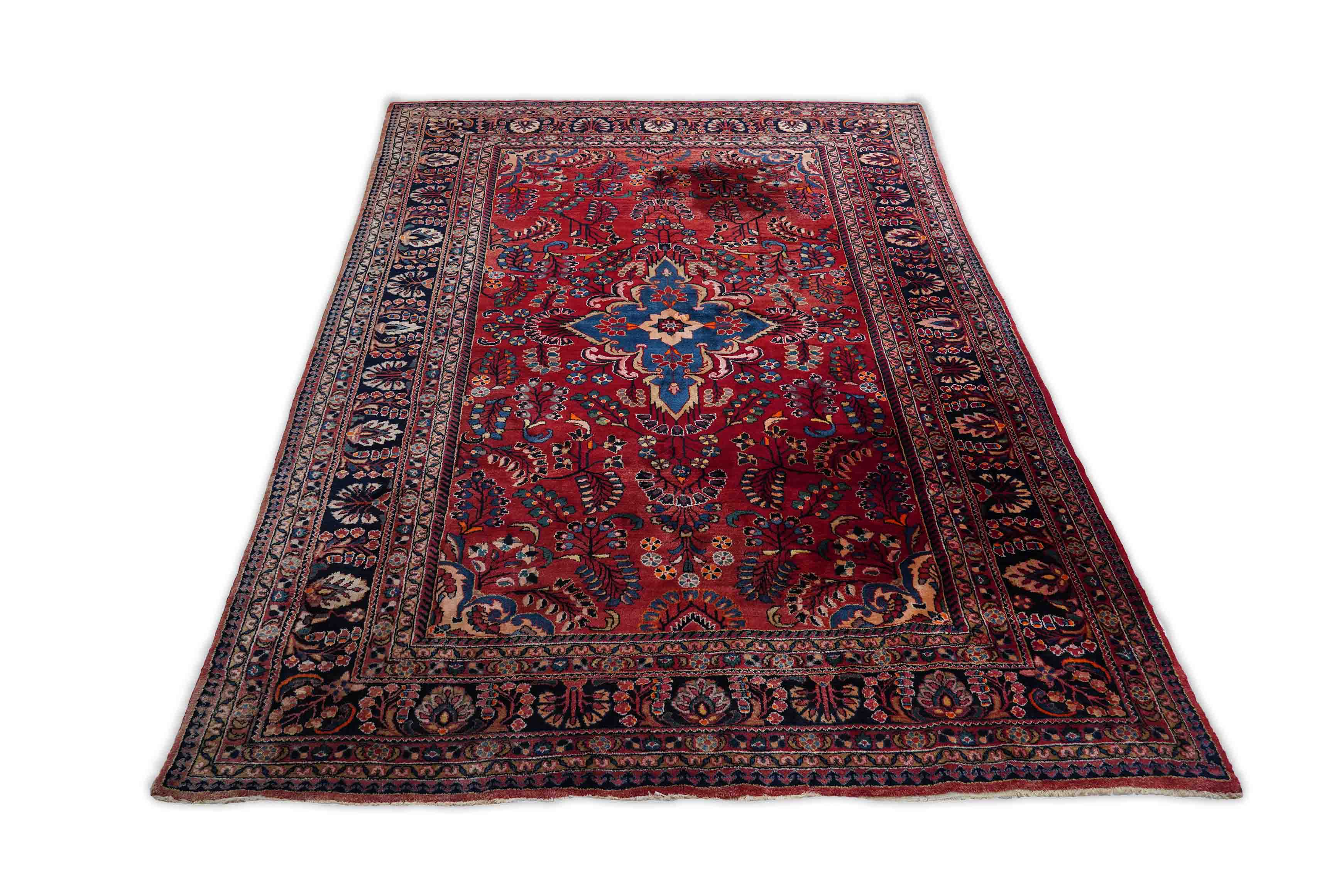
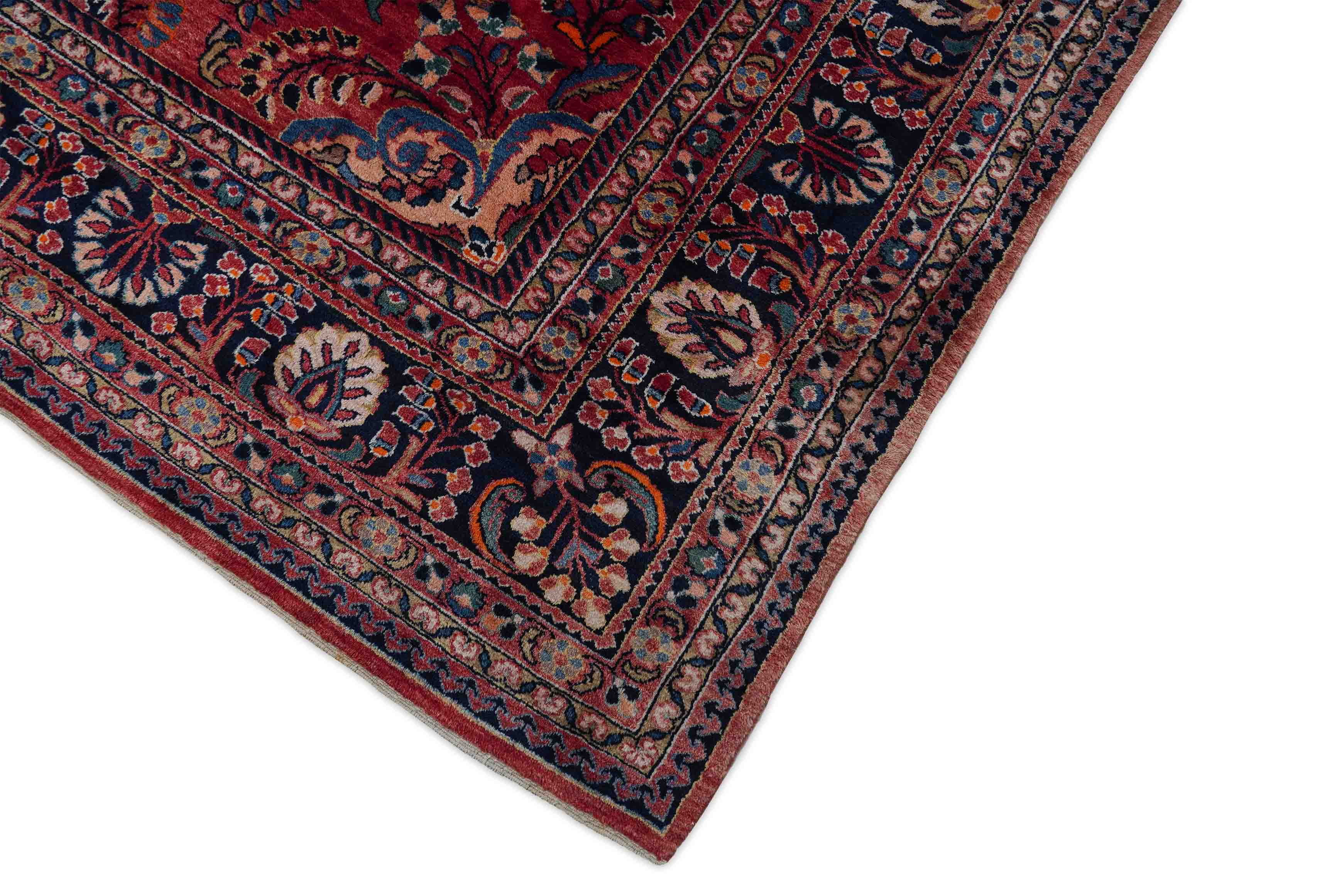
Old Lilian | 363 x 266 cm | Nr. Z-551


|
1-3 working days delivery time (within Germany) |

|
14-day home trial |

|
Free delivery & returns within the EU |
Old Lilian
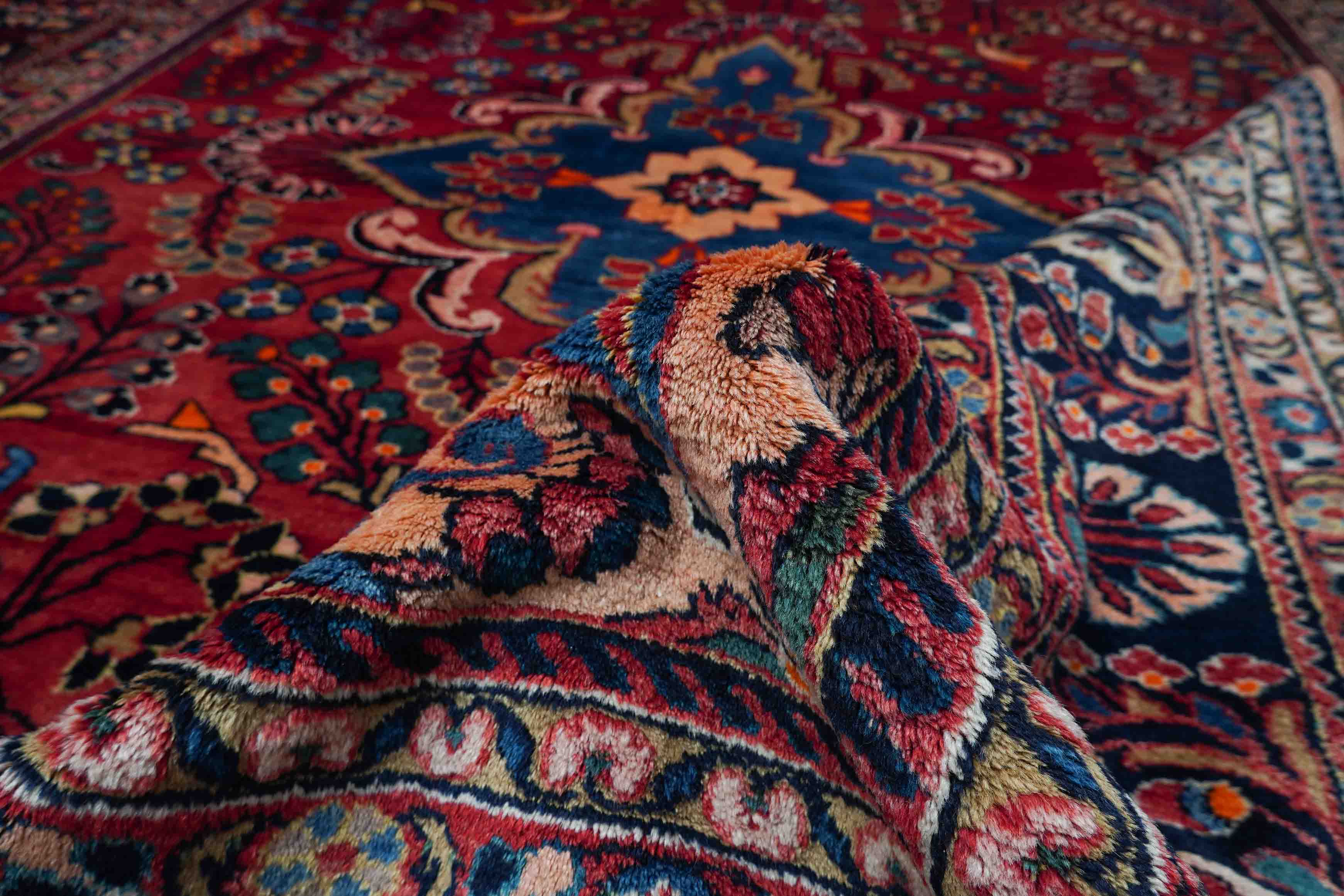
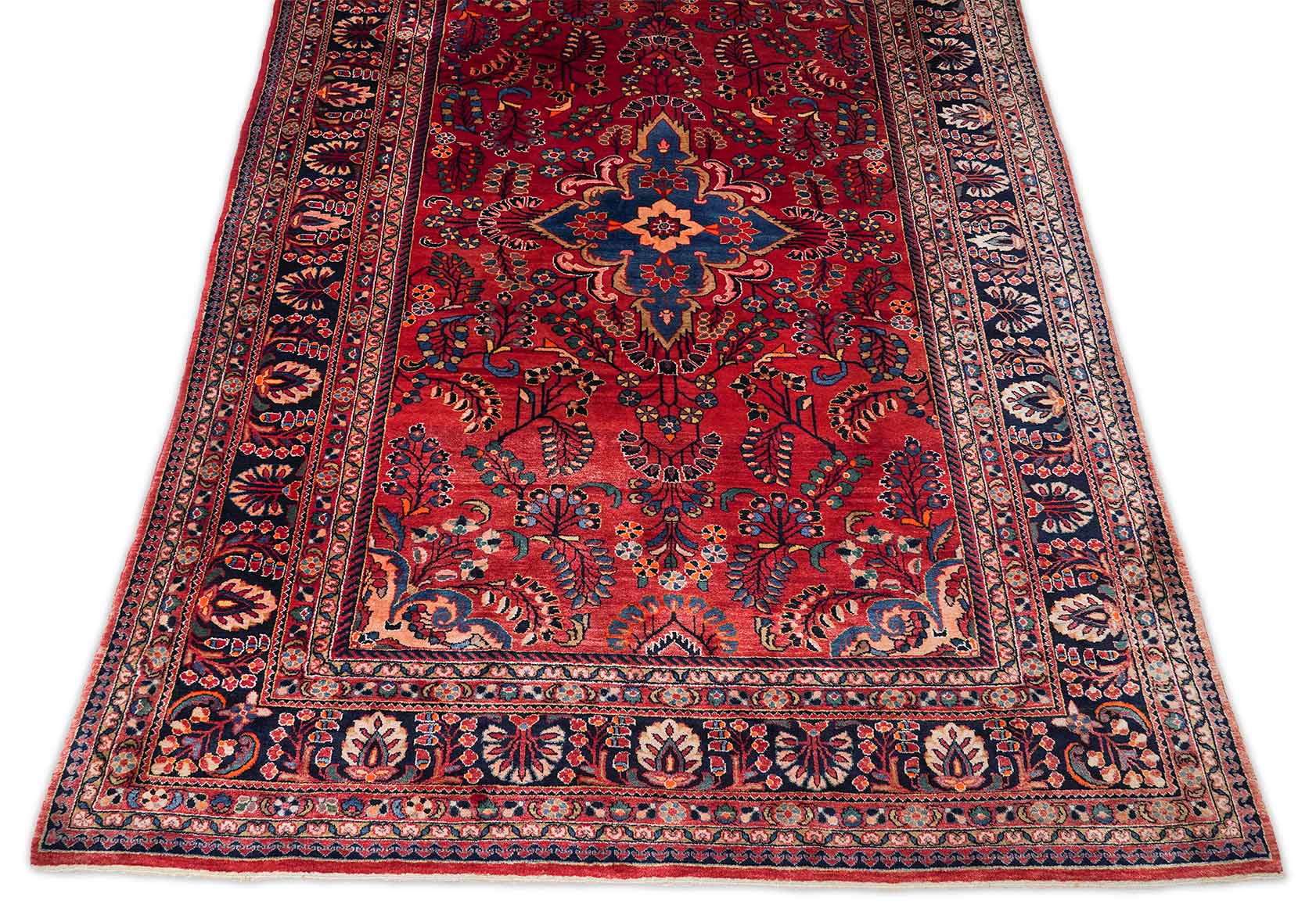
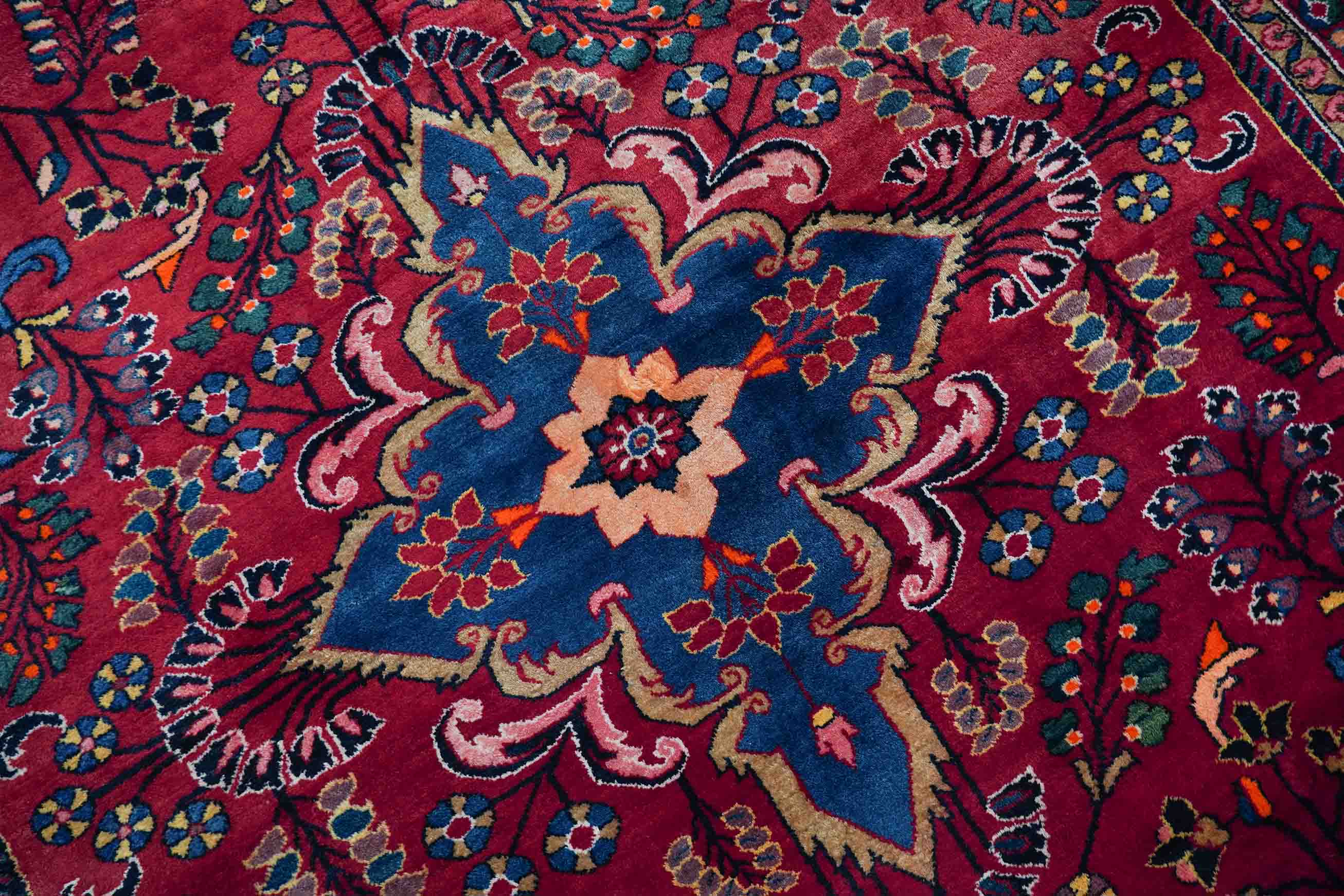
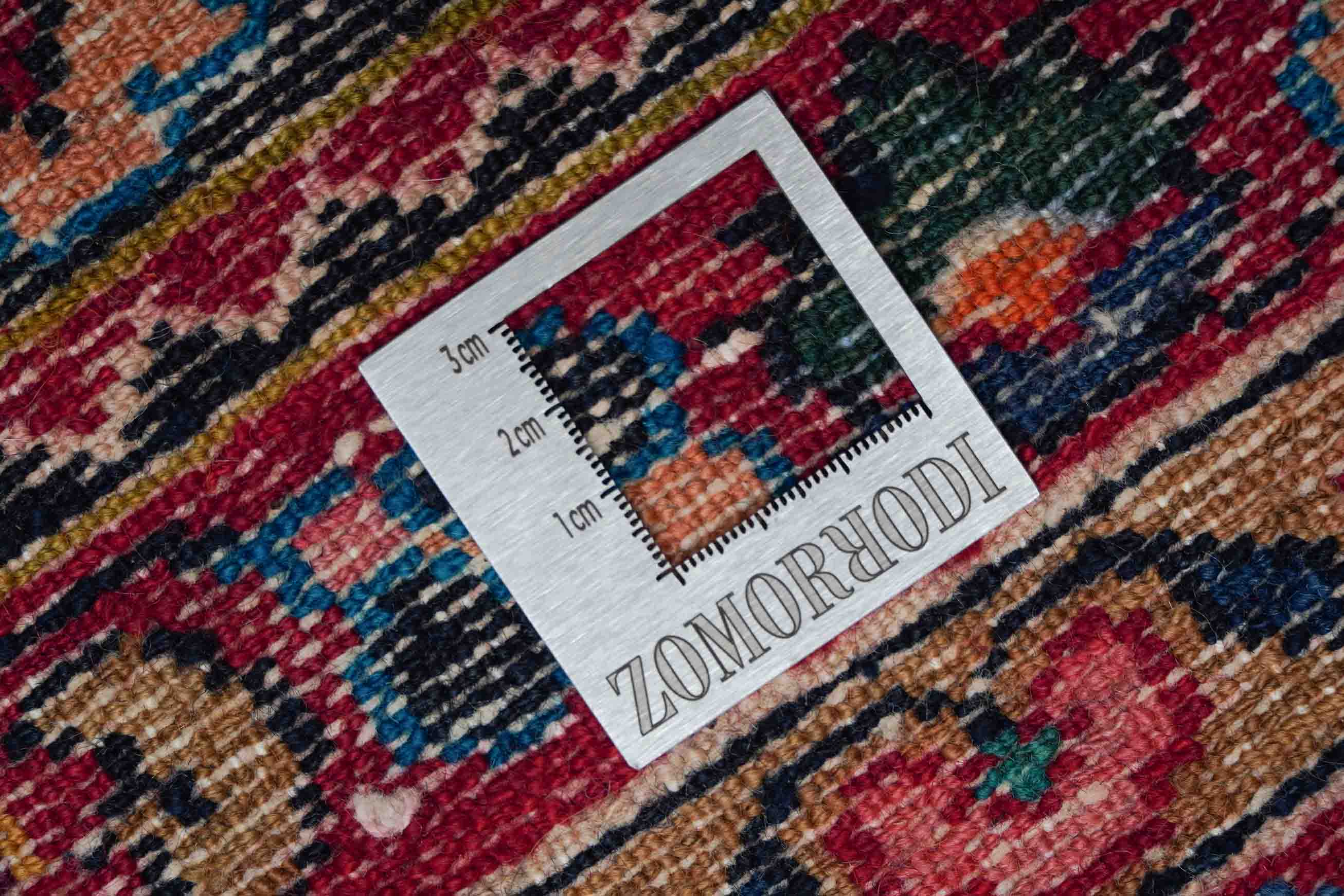
This one-of-a-kind piece in light red unites traditional craftsmanship with timeless elegance. With a knot density of approx. 200,000 knots per m², the elaborate workmanship shows above all in the precise drawing of the design and the fine execution of the details. At 363 × 266 cm it is well suited as a large living room rug. The harmonious colouring and the characteristic texture give any room an exclusive, welcoming atmosphere. A rug of this quality is far more than a piece of furnishing – it is a piece of traditional textile art with individual character and lasting value.
| Delivery time | 2 days |
| Origin | Persia |
| Dimensions | 363 cm x 266 cm (= 9.66 m²) |
| Construction | hand-knotted |
| Material | Pile: wool & viscose |
| knots | 200.000 |
| Condition | pre-owned, but in very good condition (cleaned & restored) |
| Edition | one-of-a-kind piece |

Origin
Lilian rugs come – like Hamadan rugs – from north-west Iran. Unlike the weavers of Hamadan rugs, though, the makers of Lilian rugs are of Armenian descent. In Iran they are therefore also called Armenibaft Lilian. Lilian rugs made over the past few decades are for the most part knotted fairly coarsely. The pile wool, which is usually good and is knotted into a cotton foundation (cotton weft & warp), nevertheless makes Lilians very good, hard-wearing rugs.The most striking feature of Lilian rugs is the cross-shaped floral medallion used so often, surrounded by large flower and leaf tendrils in a four-fold symmetrical layout of the field. The colouring is usually a strong red with details picked out in dark blue. More rarely, you also come across Lilian rugs with a large-scale all-over Herati motif.
This Old Lilian is around 66 years old and a real collector's piece.
Material
The pile of this Old Lilian is made of a hard-wearing blend of wool and viscose. Viscose (also spelled viscose, and known as acetate silk or rayon) is obtained from cellulose, a natural product, and therefore from the raw material wood. In India the cellulose pulp is obtained from bamboo. In an elaborate process the pulpy cellulose is drawn into a continuous textile yarn. This is why viscose is also described as continuous filament yarn. Because of the silky sheen of the yarn, viscose obtained from bamboo is also called "bamboo silk". The colloquial term "artificial silk" is not permitted under the German Textile Labelling Act (TKG).The weft and warp threads of this Old Lilian are made of cotton. This versatile material is tear-resistant and elastic, which makes it particularly well suited to a hard-wearing foundation.
Condition
You are not the first to take a liking to this Old Lilian. It has had owners before you who valued it and used it. The fringes could do with a repair. It was knotted around 66. We have cleaned it thoroughly and restored it with care. As a result it is – despite its age – in very good condition.
A note on the photos
Child labour? No thanks.
Child labour? No thanks. Children belong in school, not at a knotting frame or a loom. For us it therefore goes without saying that we only offer rugs made under fair conditions and without child labour.
We attach particular importance to humane working conditions and tolerate no child labour at any of our producers. Thank you for helping us to ensure fair conditions.
That is why we support the initiative Care & Fair against child labour in the rug trade.

Choose options
|
|
1-3 working days delivery time (within Germany) |
|
|
14-day home trial |
|
|
Free delivery & returns within the EU |