
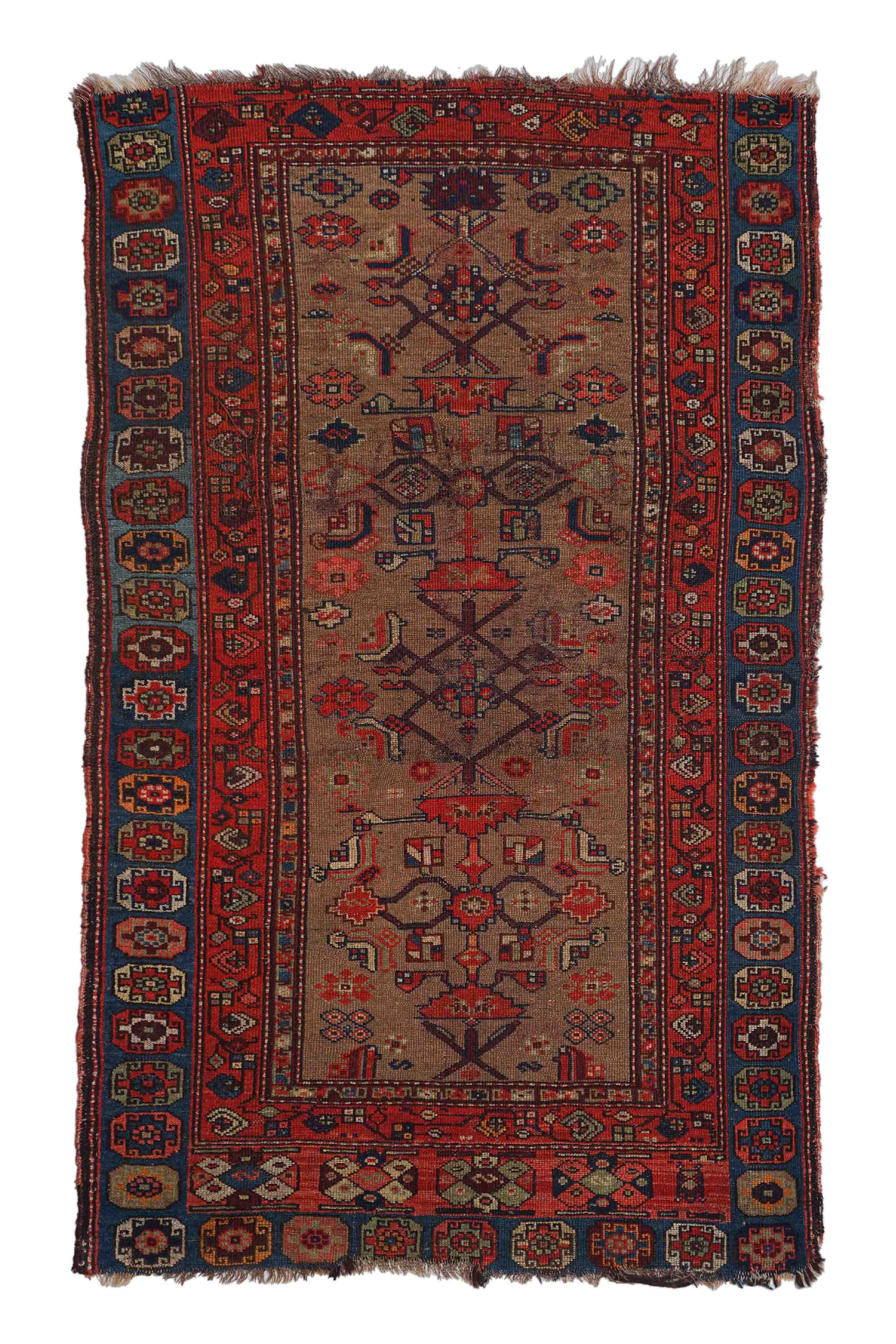
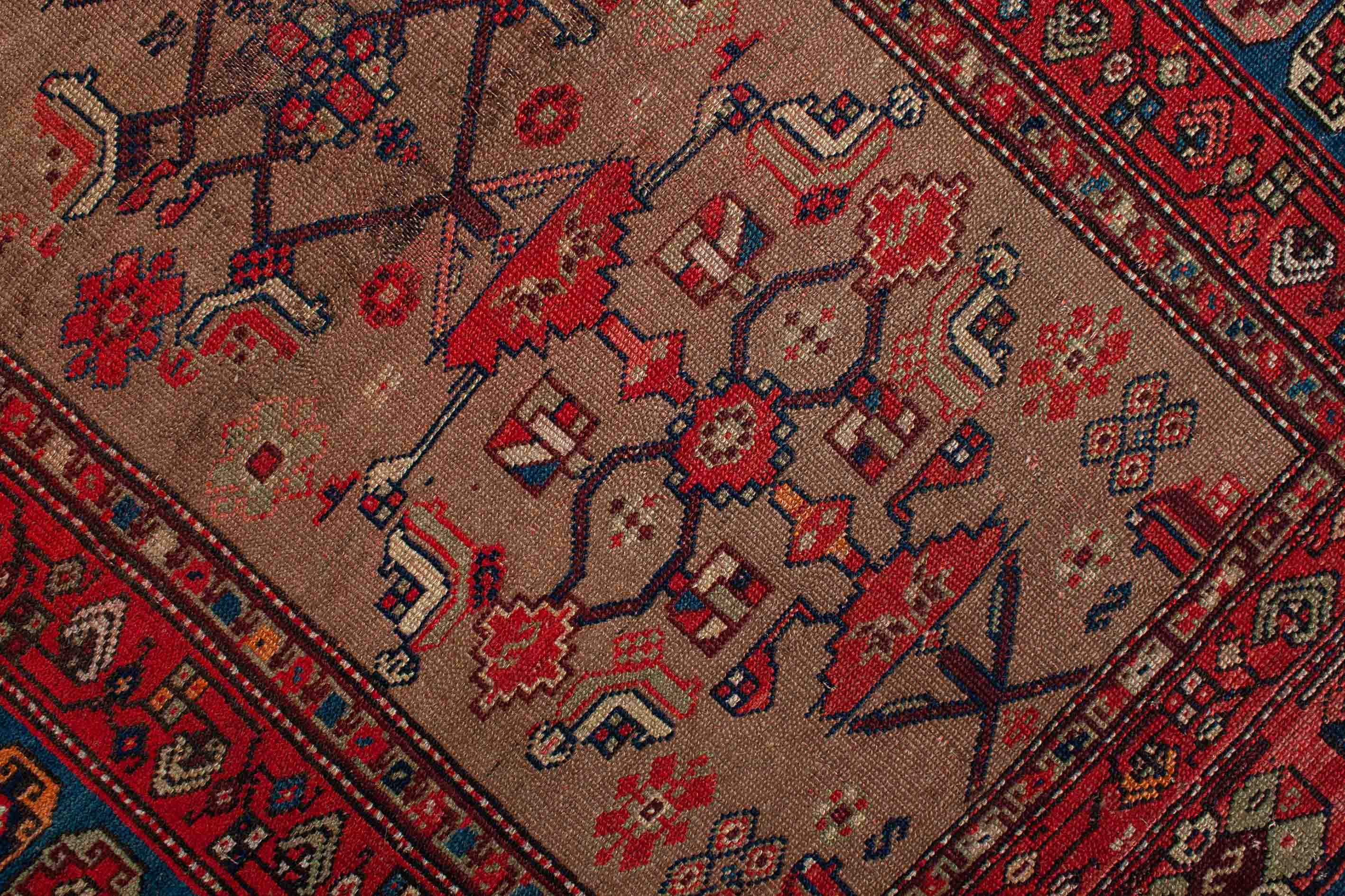
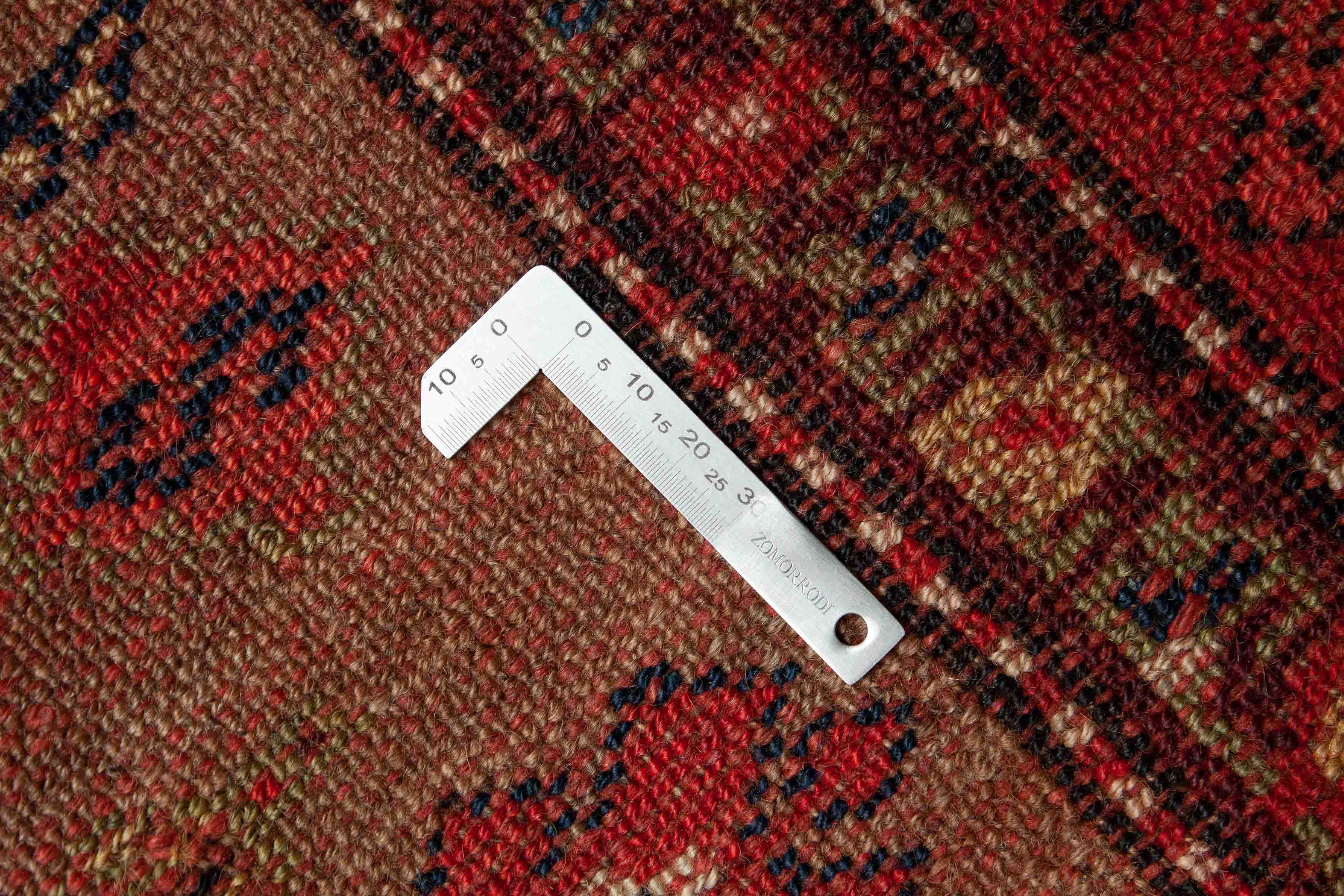
Old Lori | 174 x 106 cm | Nr. 15561

|
1-3 Werktage Lieferzeit (deutschlandweit) |

|
14 Tage Probelegen |

|
Kostenlose Lieferung & Retoure innerhalb der EU |
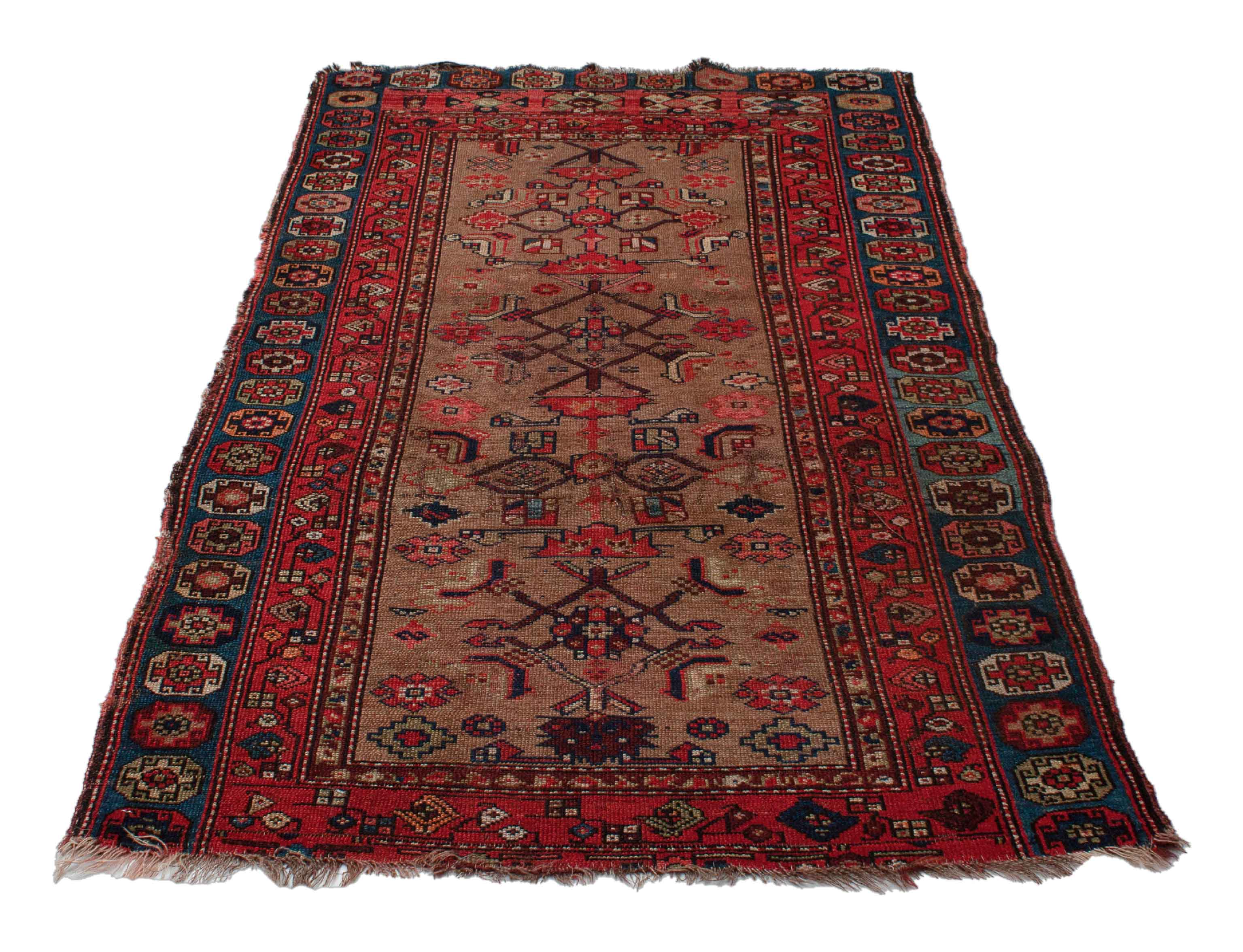
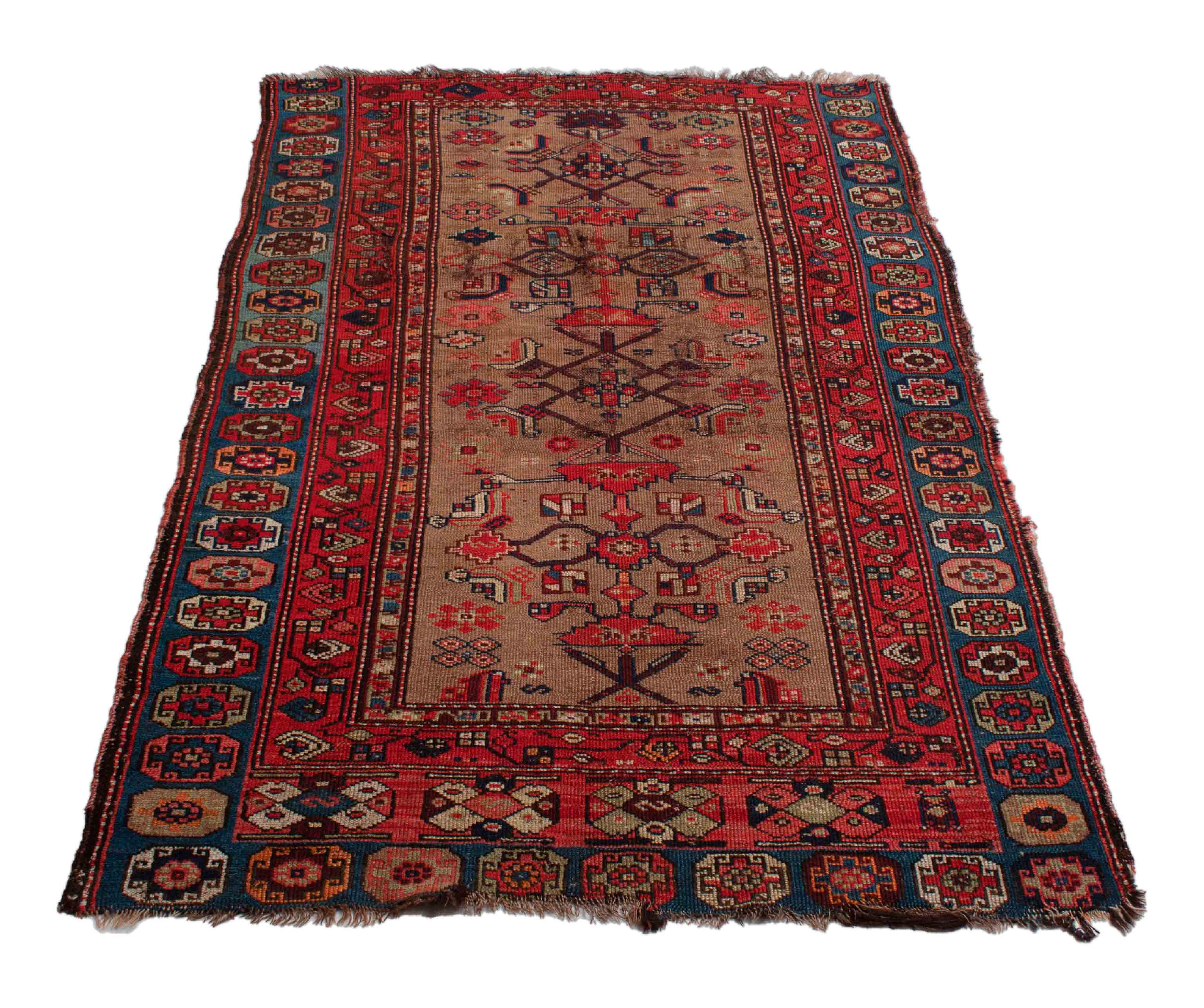
Geometric old Lori, light brown with border
| Origin |
|
| Dimensions | 174 cm x 106 cm (= 1.84 m²) |
| Construction | hand-knotted |
| Material |
Pile: wool
|
| knots per m²2 | 120.000 |
| Pile height | 4mm |
| Year of manufacture | 1920 |
| Colour | Light brown, light red |
| Edition | one-of-a-kind piece |

Origin
Lori rugs are a finer version of the Gabbeh, which was traditionally knotted by the Lurs. The Lurs are a tribal people in south-western Persia (also known as Loristan). Lori (or Luri) rugs are also referred to as Loribaft. The added syllable "baft" means roughly "knotted". Translated, Loribaft therefore means Lur knotting.
Lori rugs traditionally show inventive geometric patterns in cheerful colours. Modern Lori rugs are usually plainer today, with monochrome designs. Even so, you will still find traditional motifs from everyday nomadic life, stylised and reduced to geometric shapes: goats, camels, dogs, plants or people. The geometric pattern and the friendly colours create a pleasant, warm atmosphere in a room. This old Lori is around 100 years old and a true collector's piece.
Pattern
The abstract, geometric composition is what gives this Lori its understated elegance. The pattern flatters the design of the room and doesn't steal attention from the furniture, the décor and the architectural elements. It settles beautifully into any setting and complements a room's furnishings in a subtle way.
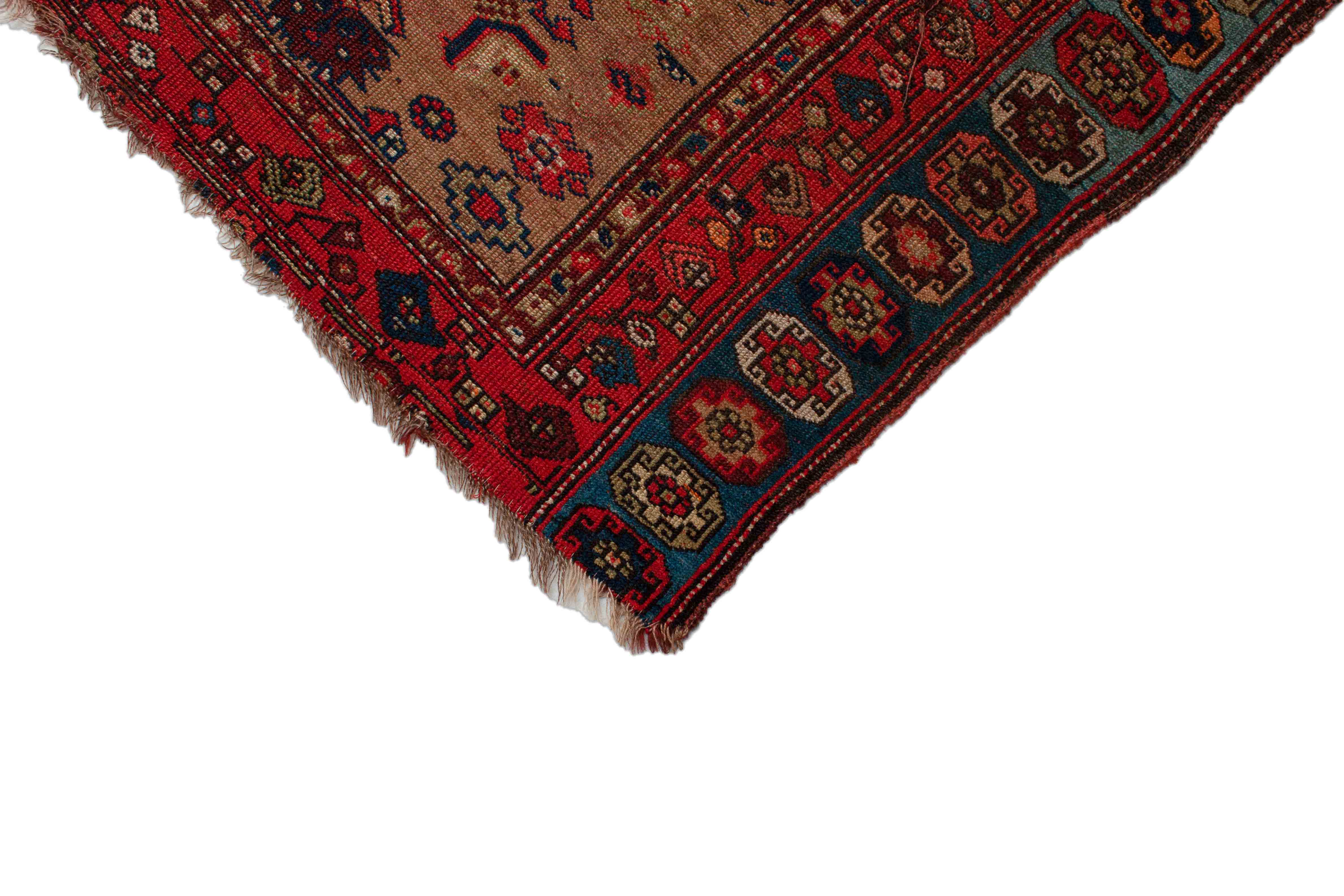
The edge of the rug is framed by a surround (border). The border forms a splendid contrast to the centre.
The repeating elements of this Lori rug have no specific centre. The recurring repeat pattern feels calming, yet never dull. Rugs with a repeat pattern are also described as all-over patterned.
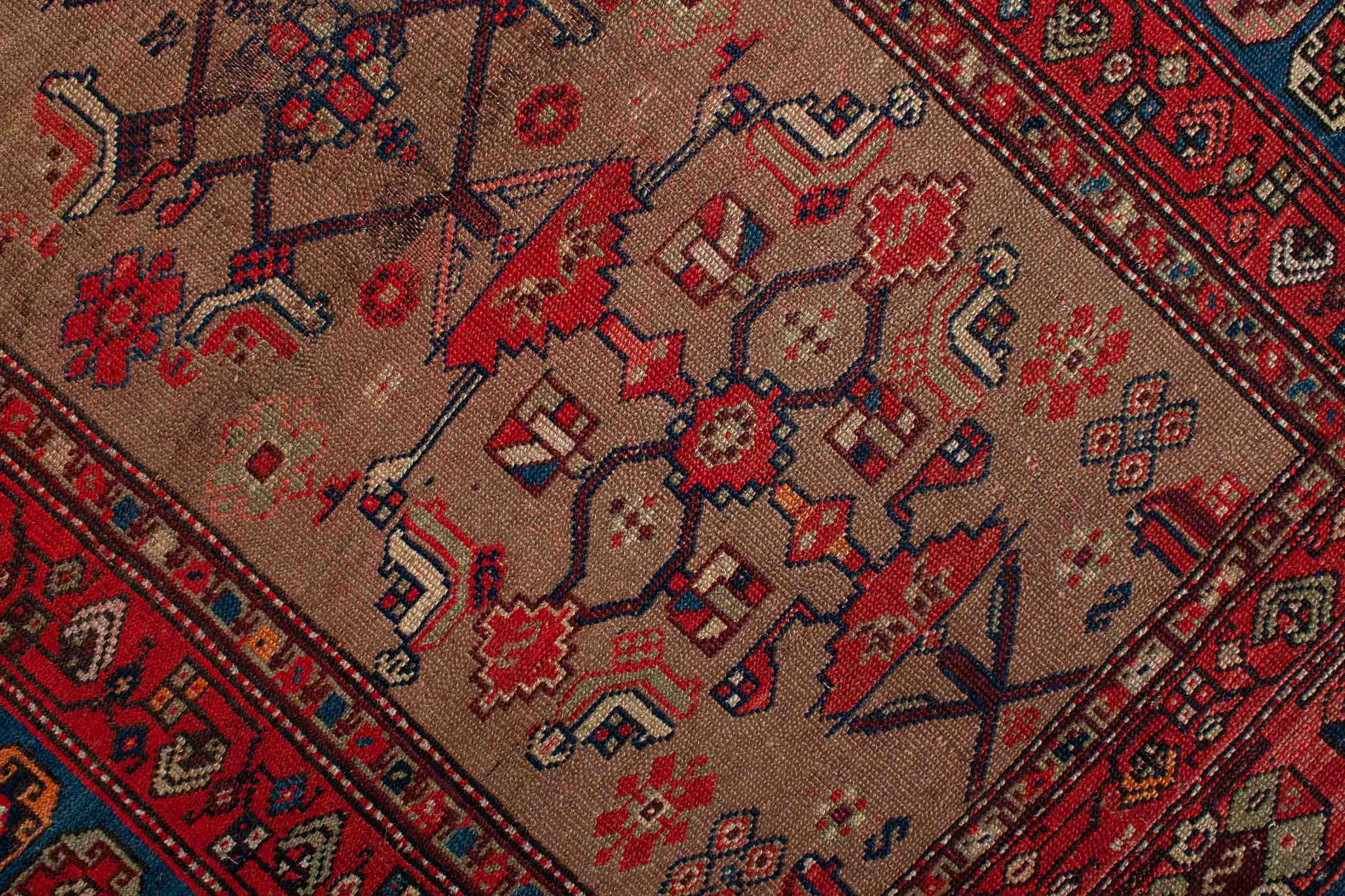
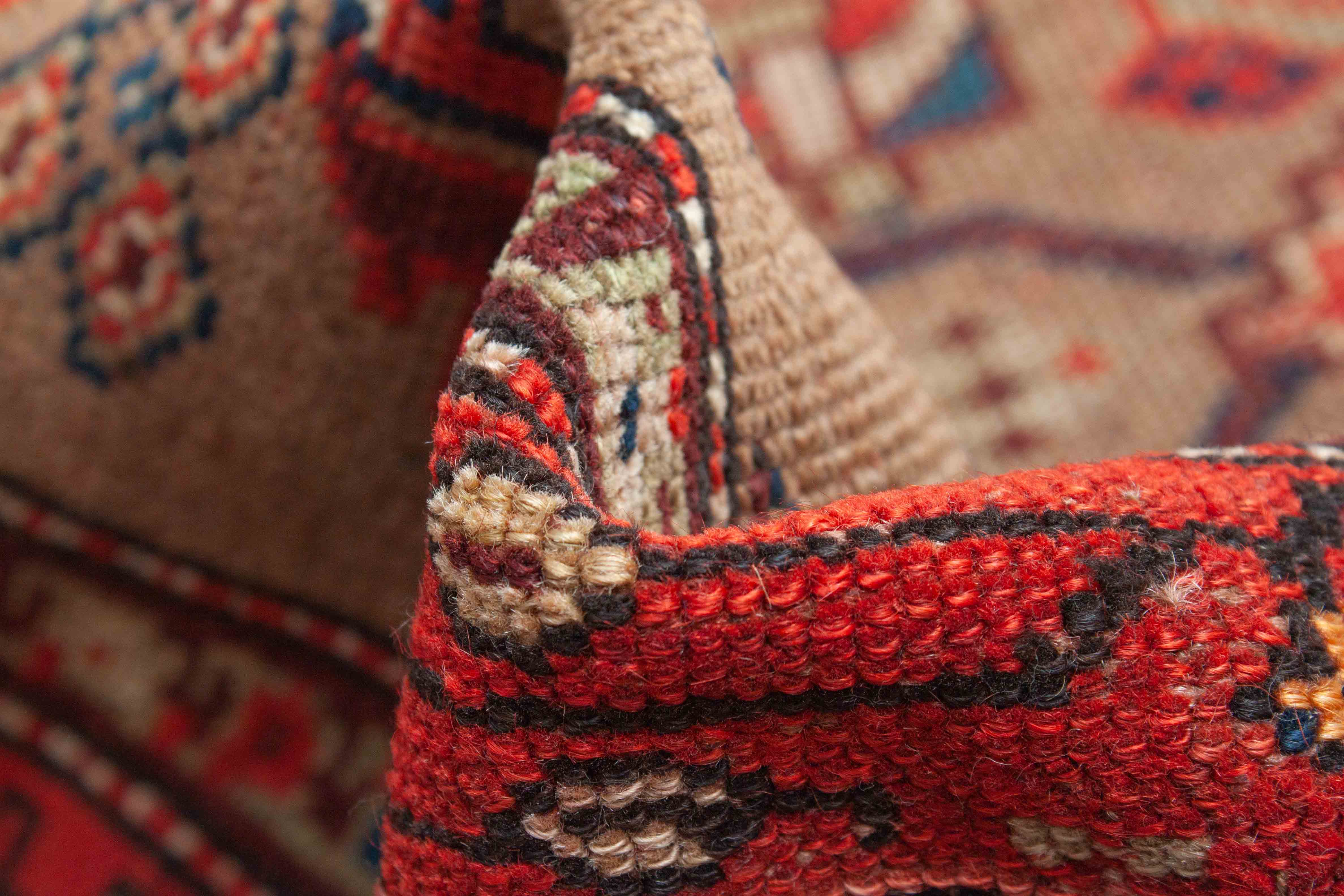
The surface of this Lori has a mottled look. The shifts in tone and the light-and-dark shading of the pile yarn make the colours shimmer and keep the rug forgiving when it comes to dirt. These so-called colour shifts, or abrash, make the rug look livelier. The mottling comes about because the wool of this Lori was hand-spun. During dyeing, the natural pigments are absorbed to differing degrees.
The background of this Lori is light brown. The border is worked in dark blue, light red and wine red.
Condition
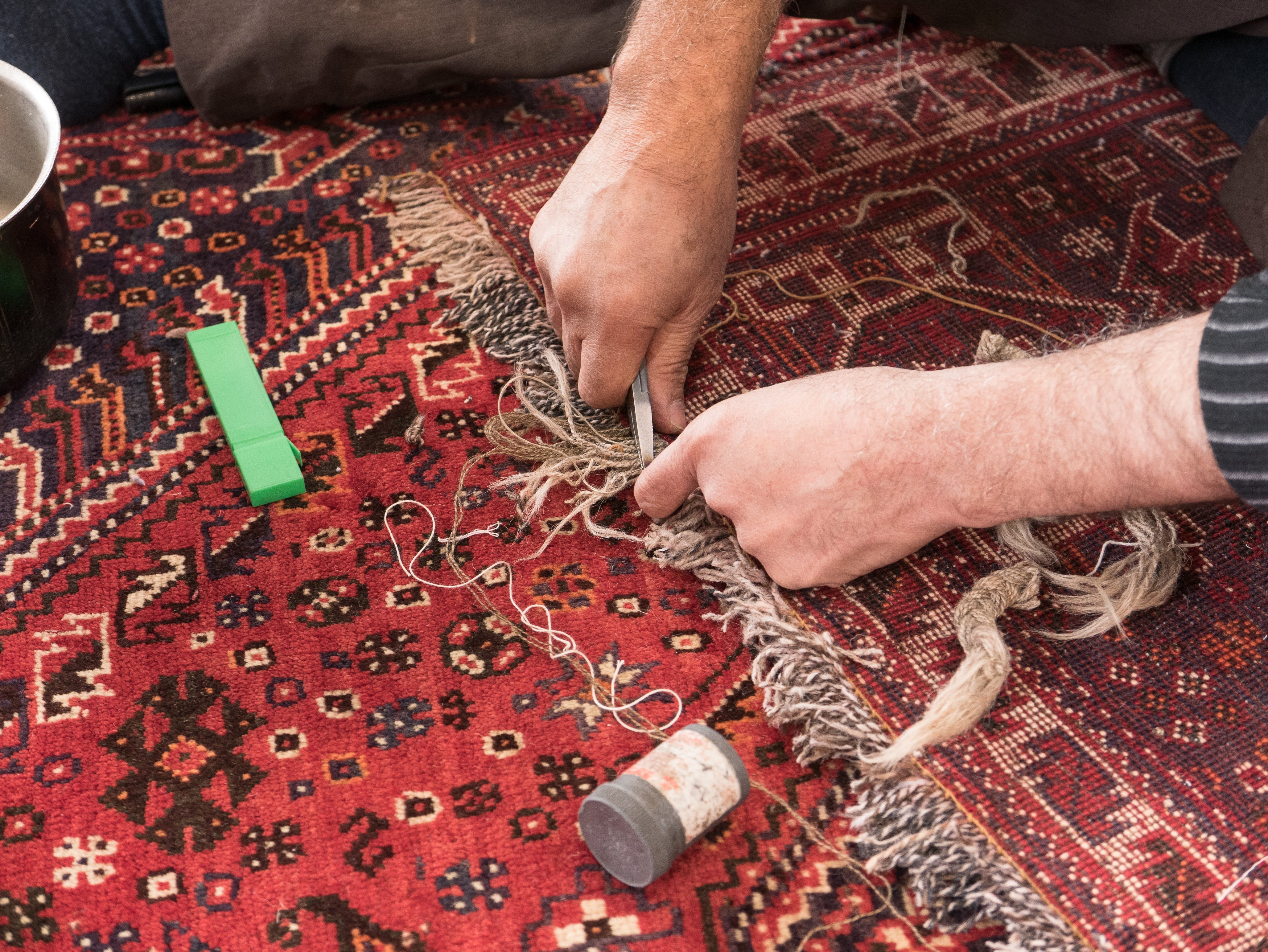
You are not the first to take a liking to this Lori. It had owners before you who valued it and lived with it. It was hand-knotted around 1920. It has been thoroughly cleaned and is in good, though unrestored, condition. The pile has grown fairly thin over the years. The edges and fringes of the rug are damaged and could do with a repair. The border is missing on both fringed ends. We have not restored this Lori because we think it has a special charm just as it is. If you would like us to, we will of course be glad to restore the rug for you. Either way, this Lori will give you pleasure for decades to come.
Material
This hand-knotted Lori rug has a dense, relatively high pile. The sheep's wool used for the pile of Lori rugs is particularly fine and rich in lanolin. Lori rugs are wonderfully cosy and hard-wearing. Traditionally, Lori rugs – just like Gabbeh – were used for sleeping on. They invite you to sit and lounge about in the living room, but they are also excellent for hallways and dining areas. The sheep's wool pile of Lori rugs is dyed with natural colours and spun by hand. That is what gives the Loris their soft surface. Hand-spun wool is always a little irregular. When it is dyed, the natural dyes are absorbed to differing degrees. The rug looks livelier for it, with so-called colour variations, or abrash – light-and-dark shading in the colours. The shifts in tone of the pile yarn always run across the length of the Lori and keep the rug from showing dirt. The foundation (weft and warp threads) of this Lori is made of new wool.
A note on the photos
Child labour? No thanks.
Child labour? No thanks. Children belong in school, not at a knotting frame or a loom. For us it therefore goes without saying that we only offer rugs made under fair conditions and without child labour.
We attach particular importance to humane working conditions and tolerate no child labour at any of our producers. Thank you for helping us to ensure fair conditions.
That is why we support the initiative Care & Fair against child labour in the rug trade.

Choose options
|
|
1-3 Werktage Lieferzeit (deutschlandweit) |
|
|
14 Tage Probelegen |
|
|
Kostenlose Lieferung & Retoure innerhalb der EU |