

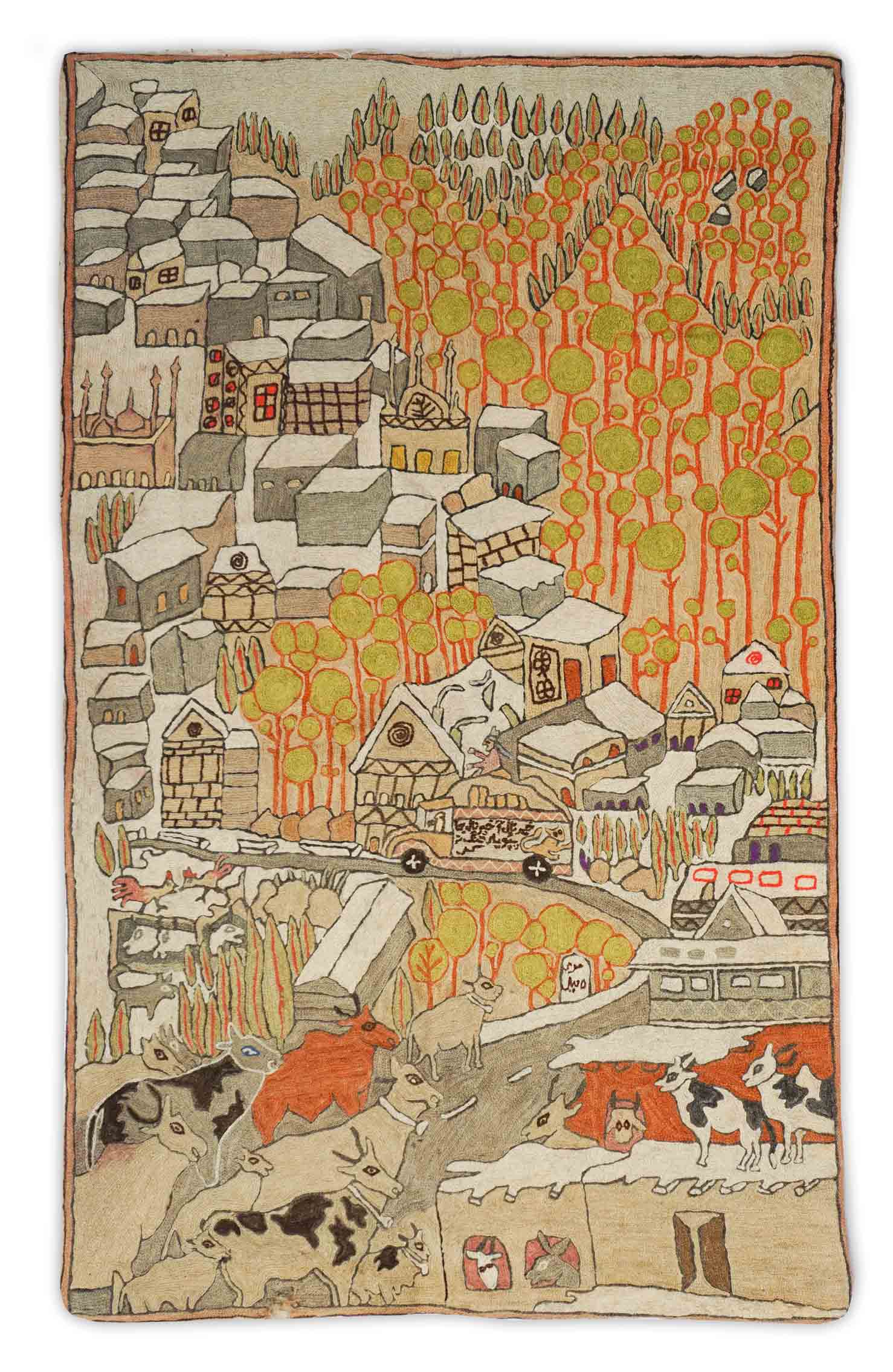
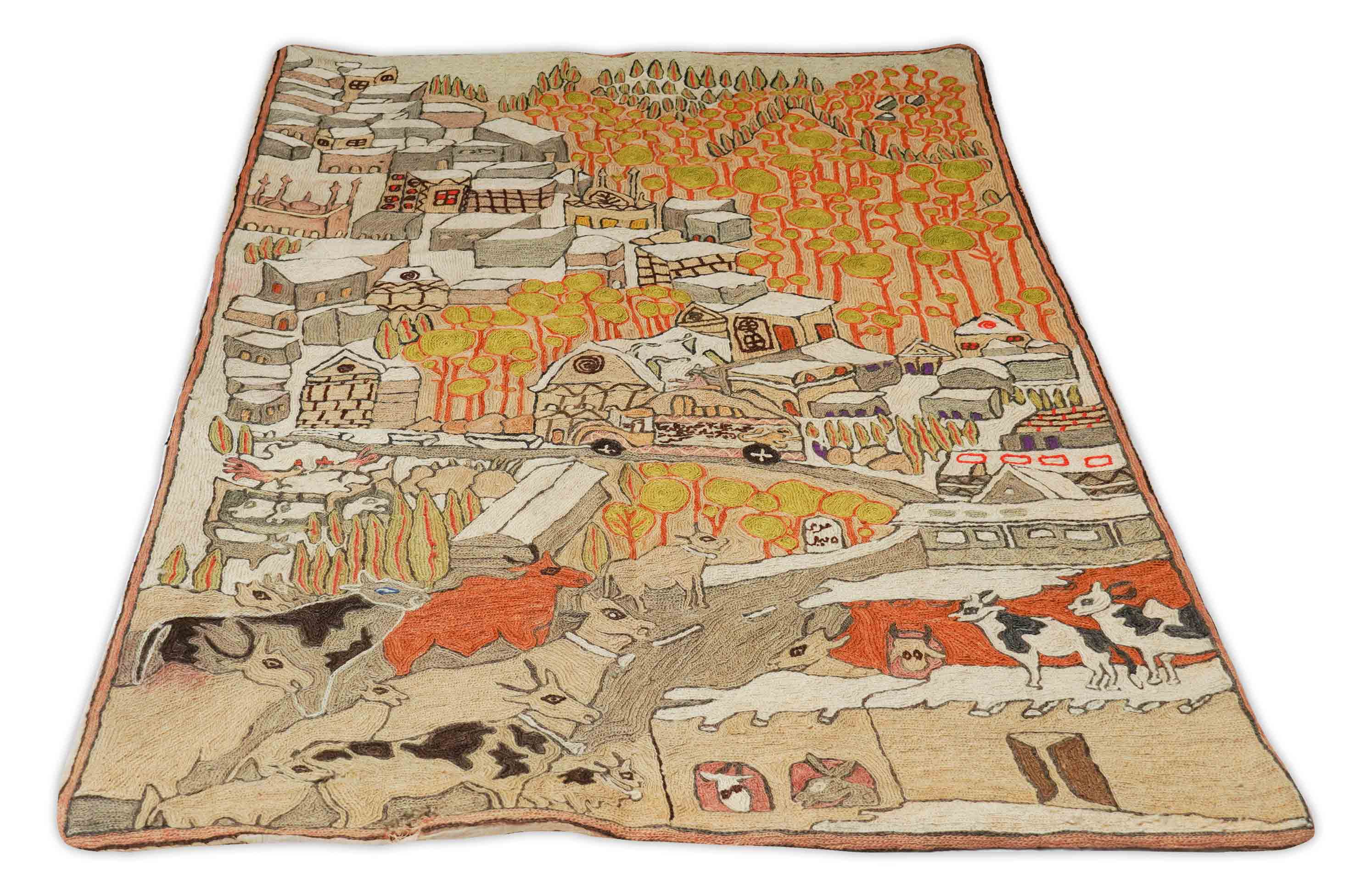
Old Suzani | 169 x 103 cm | Nr. Z-1431


|
1-3 working days delivery time (within Germany) |

|
14-day home trial |

|
Free delivery & returns within the EU |
Old Suzani
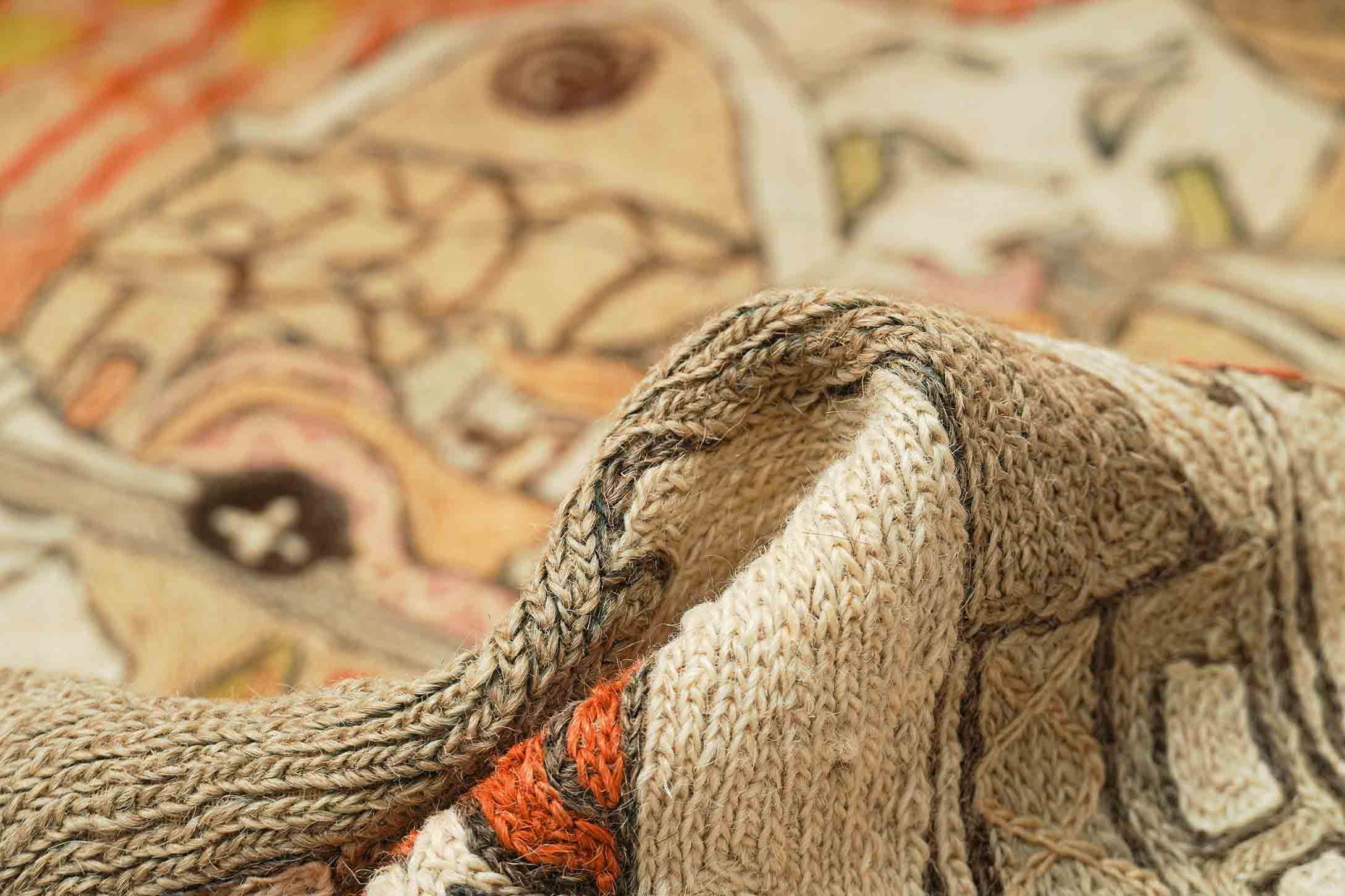
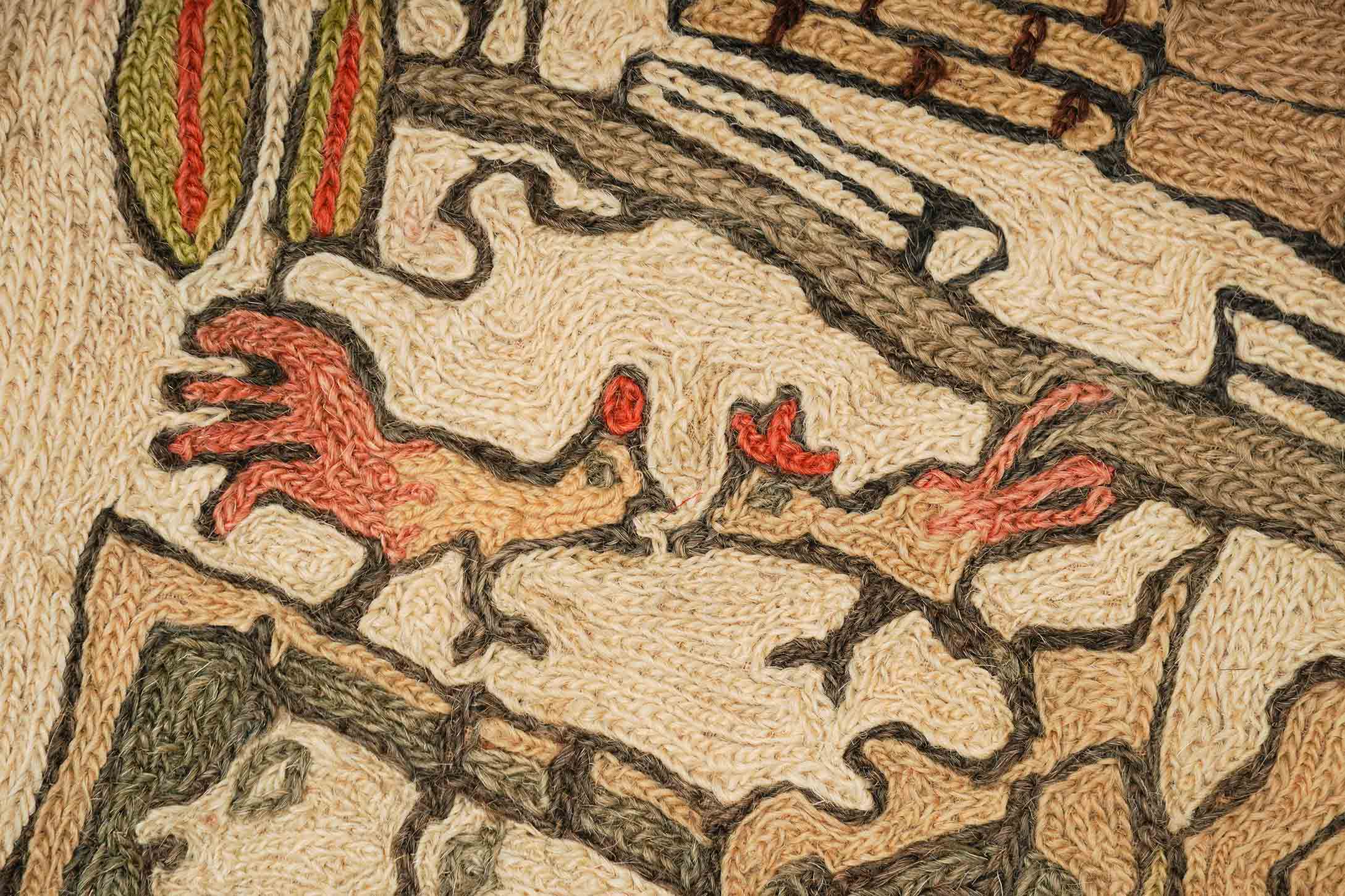
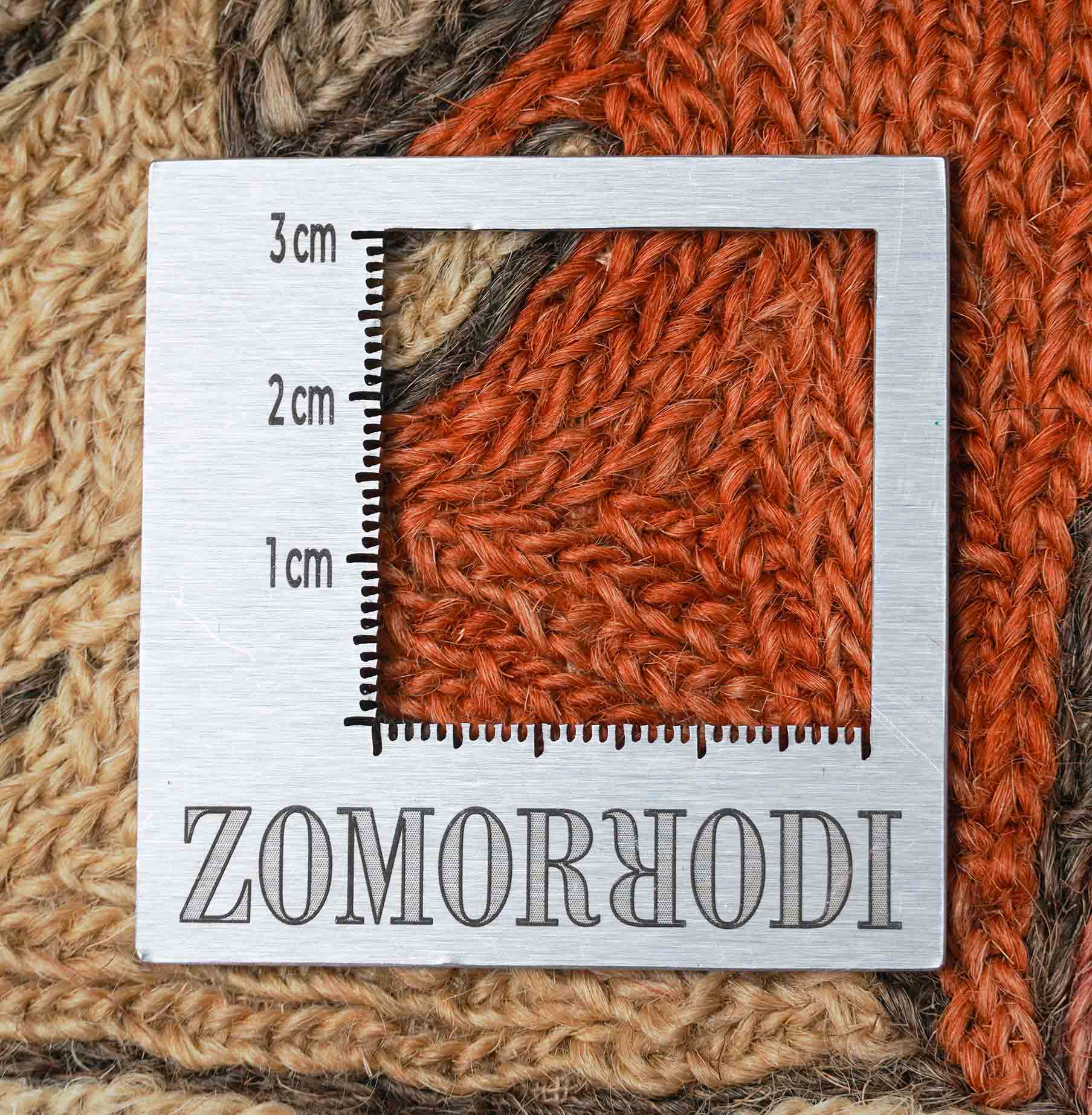
This rug in beige combines traditional craftsmanship with timeless elegance. With approx. X knots per m², the workmanship is correspondingly demanding, as you can see in the precise drawing of the design and the finely worked details. Its 169 × 103 cm make it a small living room rug. As a one-of-a-kind piece, it brings individual character to the room and holds its value far beyond short-lived trends.
| Delivery time | 2 days |
| Origin | Persia |
| Dimensions | 169 cm x 103 cm (= 1.74 m²) |
| Construction | hand-embroidered |
| Material | Pile: jute & cotton |
| knots | X |
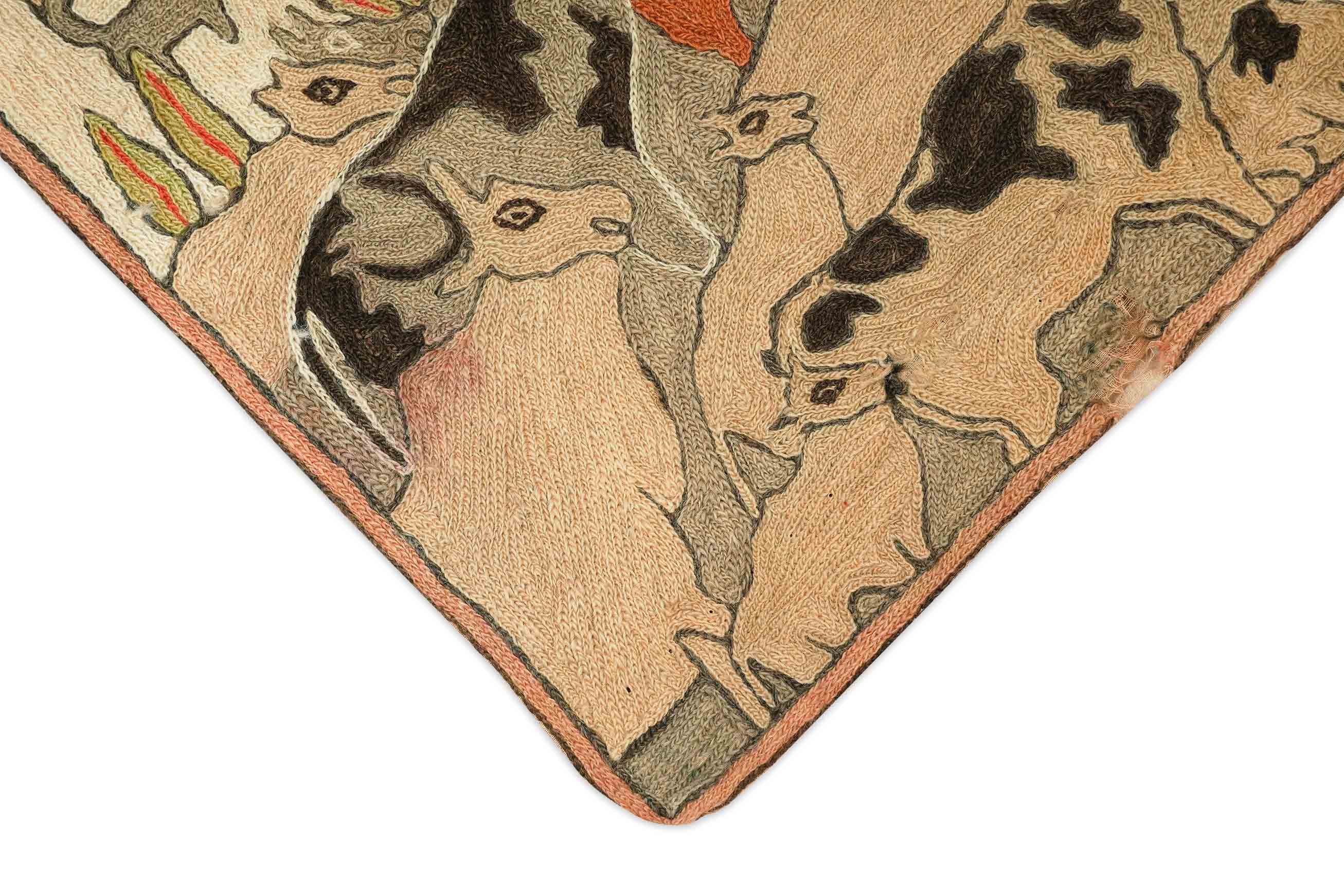
| Condition | pre-owned, but in very good condition (cleaned & restored) |
| Edition | one-of-a-kind piece |

Origin
The name Suzani comes from the Persian word "Suzan", which means needle. In Central Asia – above all in Uzbekistan (Bukhara Suzanis, or Suzanis from Nurota) and in Turkestan – cotton fabrics are made that are lavishly decorated with silk or wool embroidery. These hand-embroidered textiles are known as Suzani (also spelled Susani).Suzanis traditionally serve as wall hangings, decorating the houses and yurts of the nomads. They are a traditional part of a bride's dowry. Embroidered in luminous colours and with sumptuous, often floral patterns, these fabrics mirror the daily life and philosophy of the nomadic peoples in floral ornament. Making a Suzani is painstaking handwork. The more splendid the decoration, the greater the prestige it brought its owner. Old Suzanis in particular are treasured collector's pieces today, in Europe as much as in the United States.
This Old Suzani is around 66 years old and a true collector's piece.
Material
Originally, only hand-woven cotton fabrics were painstakingly decorated by hand with the lavish silk or wool embroidery that makes a Suzani. Traditionally, only natural dyes were used to colour the yarn. Blue yarns, for instance, were dyed with indigo from India, red tones with carmine imported from Russia, and black with pomegranate rinds. Towards the end of the 19th century, imported cotton fabrics increasingly took over, and with them aniline dyes, which gave the Suzani a more garish appearance. Today, Suzanis are made both by hand and by machine.
Condition
This Old Suzani has a story to tell. The rug has a hole 4 cm in diameter. It was knotted around 66. We have cleaned it thoroughly and restored it with care. Despite its age, it is therefore in very good condition.
A note on the photos
Child labour? No thanks.
Child labour? No thanks. Children belong in school, not at a knotting frame or a loom. For us it therefore goes without saying that we only offer rugs made under fair conditions and without child labour.
We attach particular importance to humane working conditions and tolerate no child labour at any of our producers. Thank you for helping us to ensure fair conditions.
That is why we support the initiative Care & Fair against child labour in the rug trade.

Choose options
|
|
1-3 working days delivery time (within Germany) |
|
|
14-day home trial |
|
|
Free delivery & returns within the EU |