
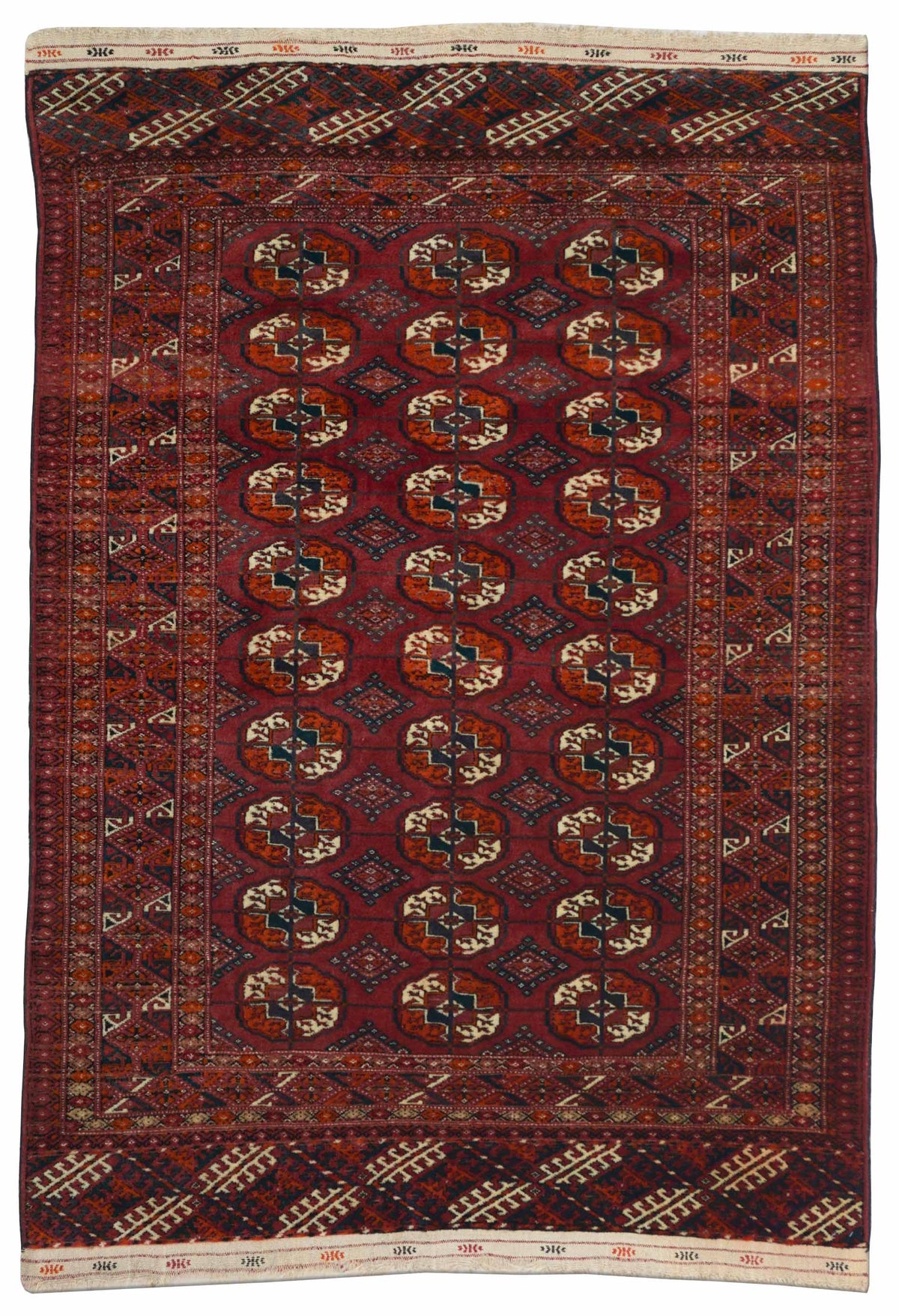
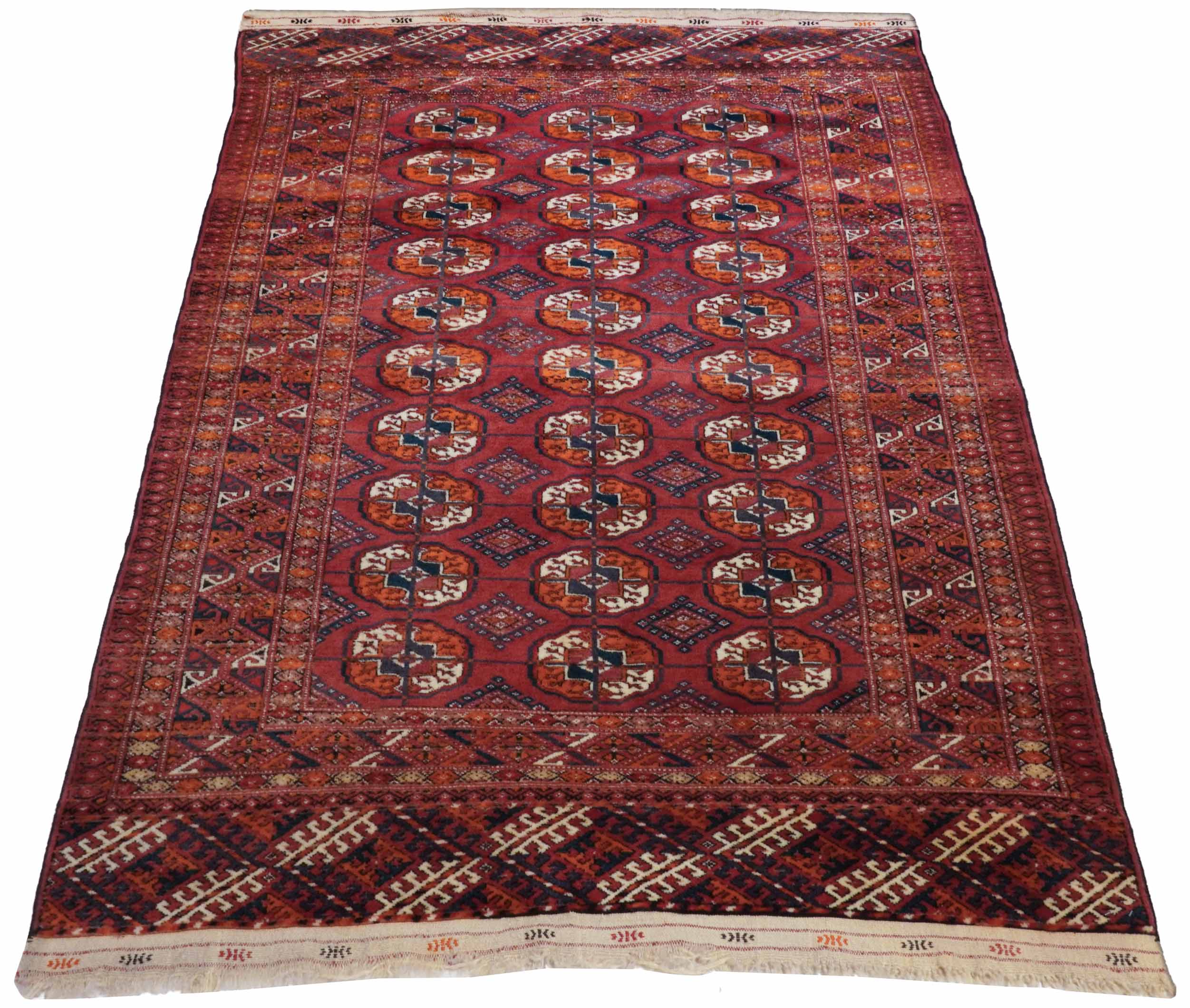
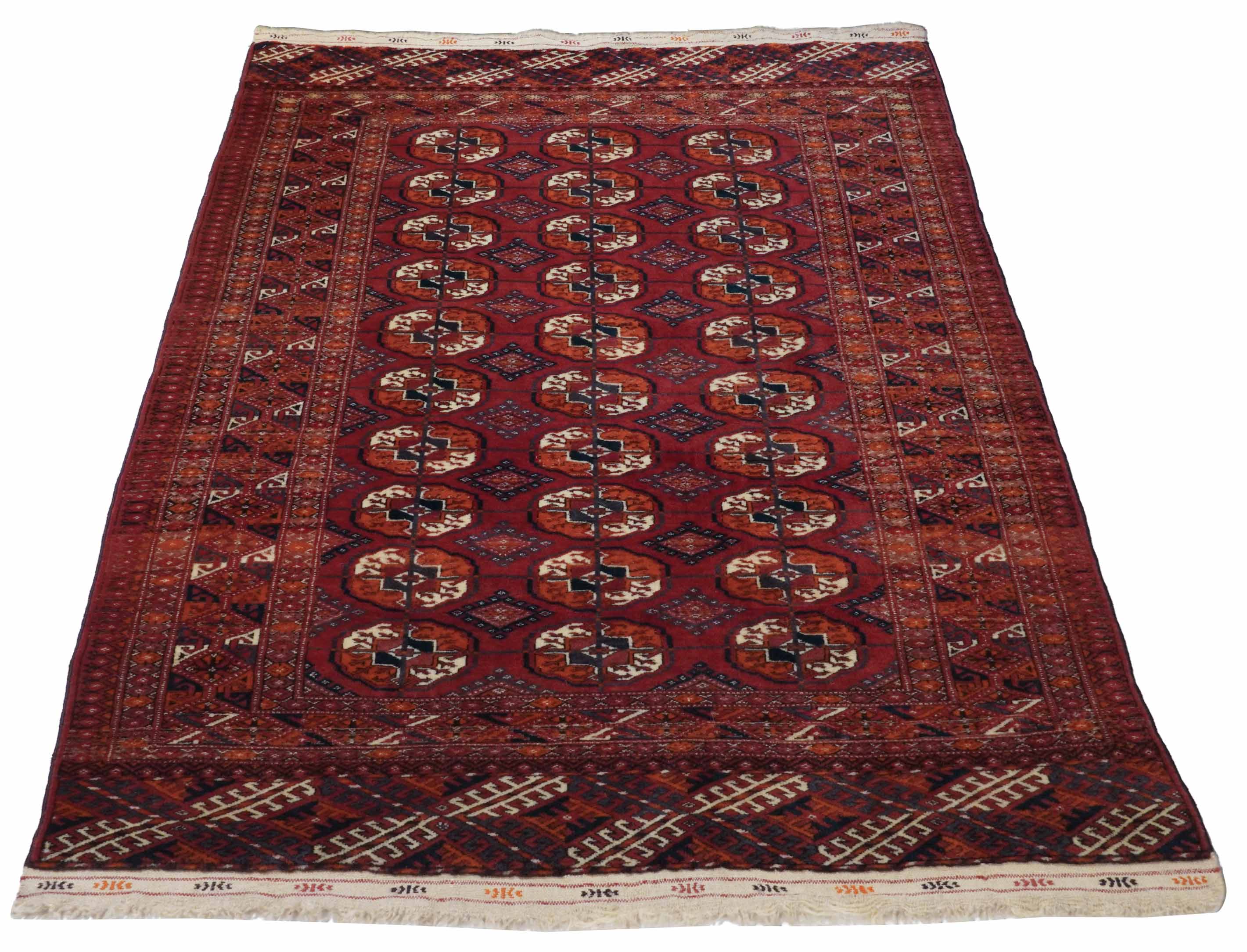
Old Tekke | 177 x 122 cm | Nr. Z-4510


|
14-day home trial |

|
Free delivery & returns within the EU |
Old Tekke
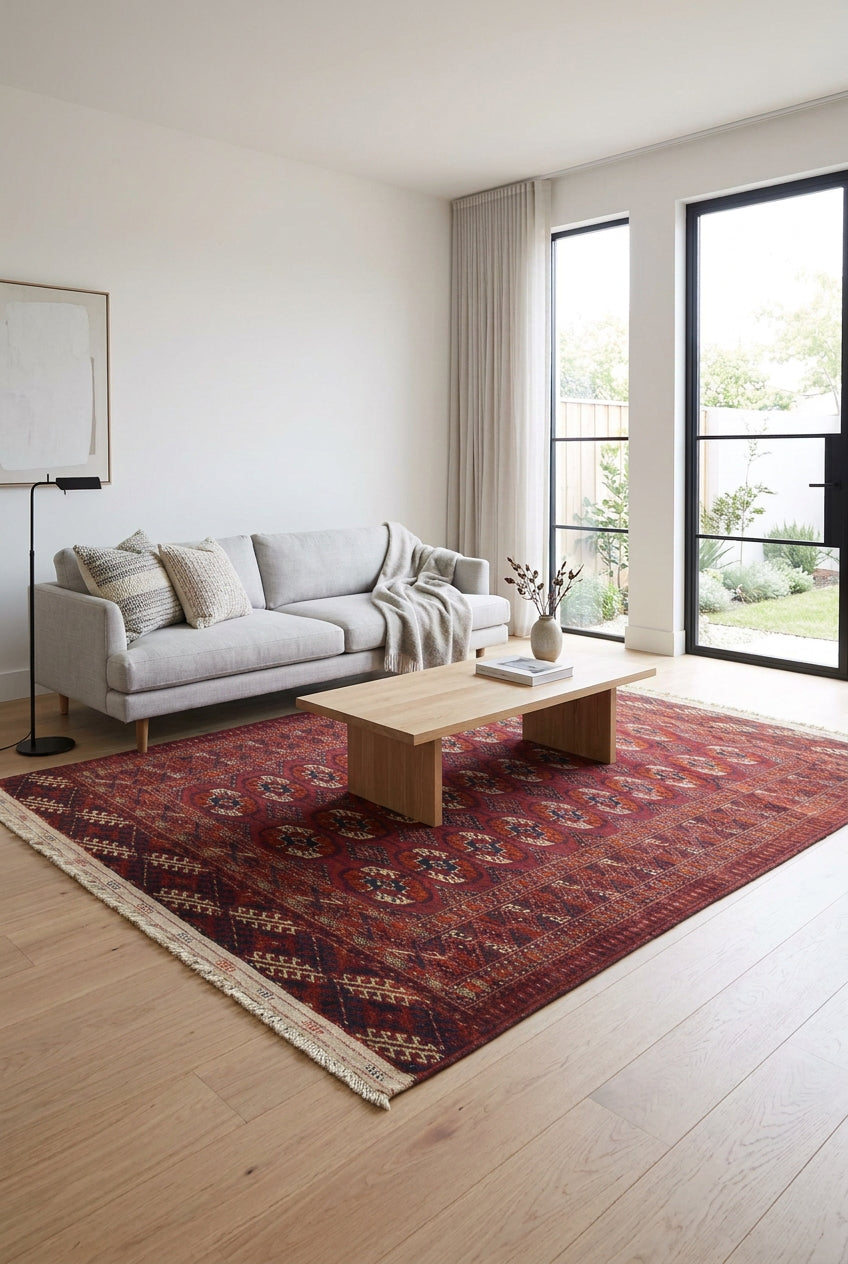
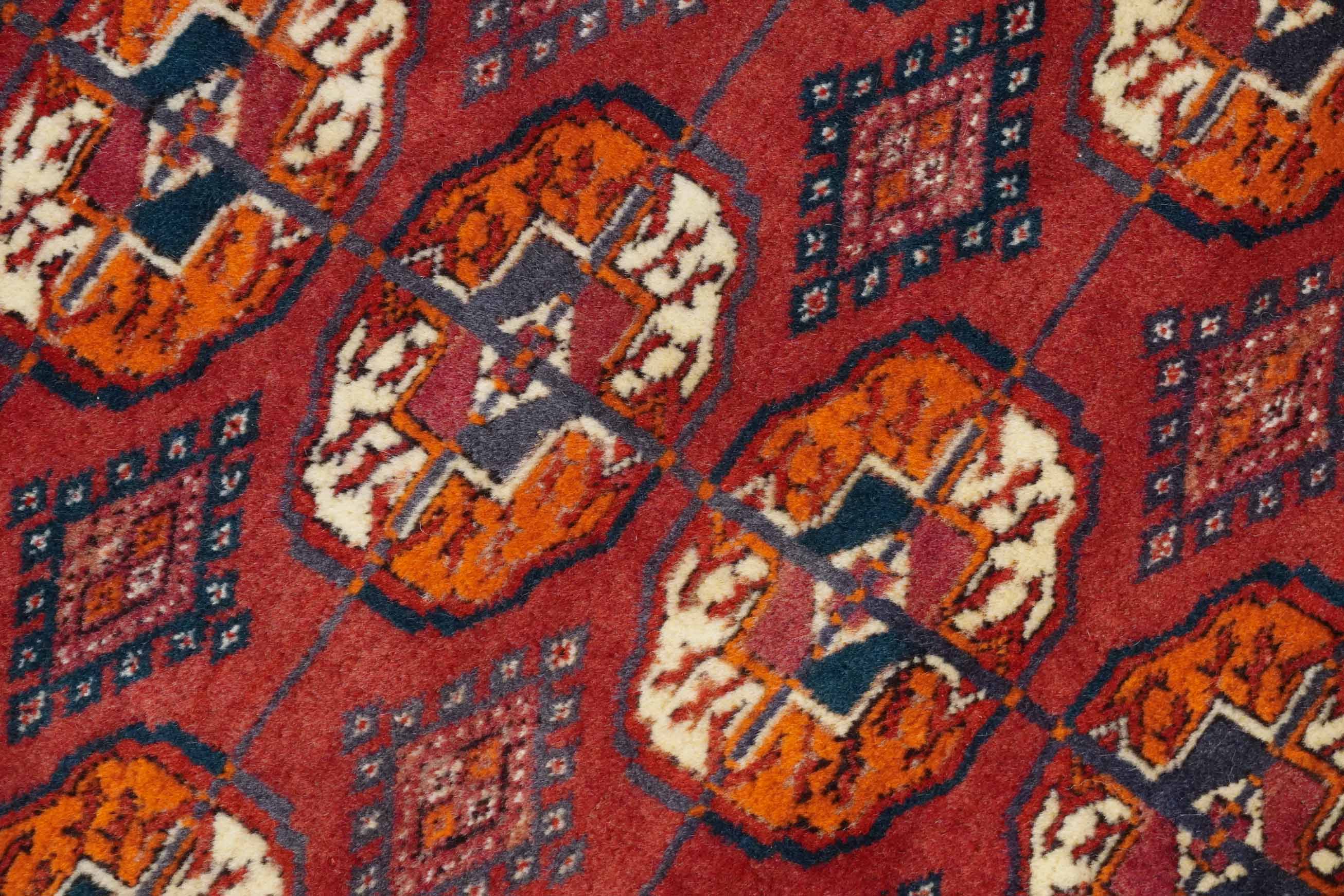
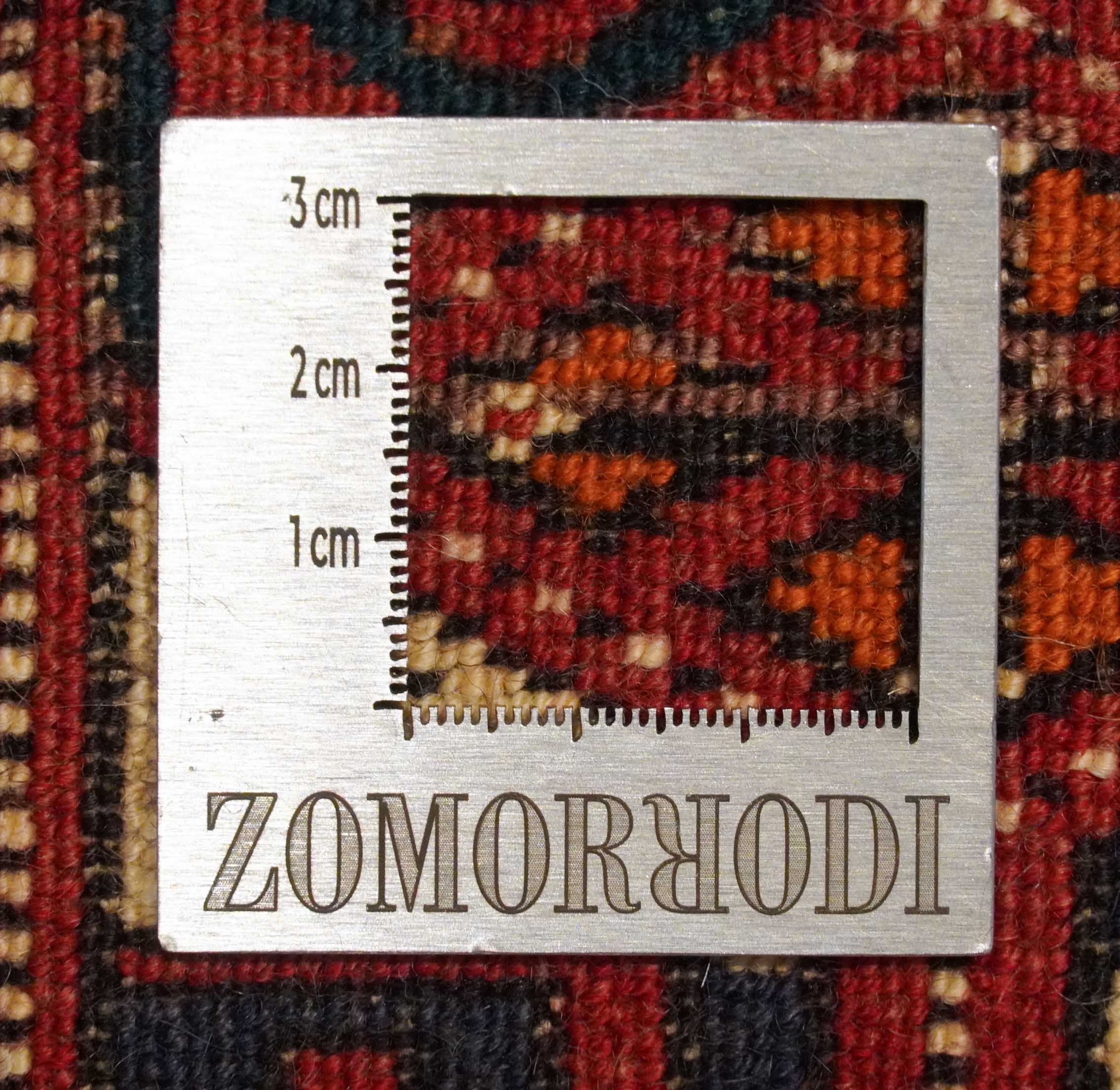
This rug in rust red and black and white brings together traditional craftsmanship and timeless elegance. With a knot density of approx. 240,000 knots per m², the painstaking workmanship is especially evident in the precise drawing of the design and the fine detailing. At 177 × 122 cm it is well suited as a rug for the bedroom or study. It also looks good in a child's room or a dressing room. This one-of-a-kind piece brings individual character into the room and holds its value far beyond short-lived trends.
| Availability | In stock | Delivery time: 1–3 working days |
| Origin | Turkmenistan |
| Dimensions | 177 cm x 122 cm (= 2.16 m²) |
| Construction | hand-knotted |
| Material |
Pile: wool (hand-spun, natural dyes) Weft: wool (hand-spun, natural dyes) Warp: wool |
| knots | 240,000 knots |
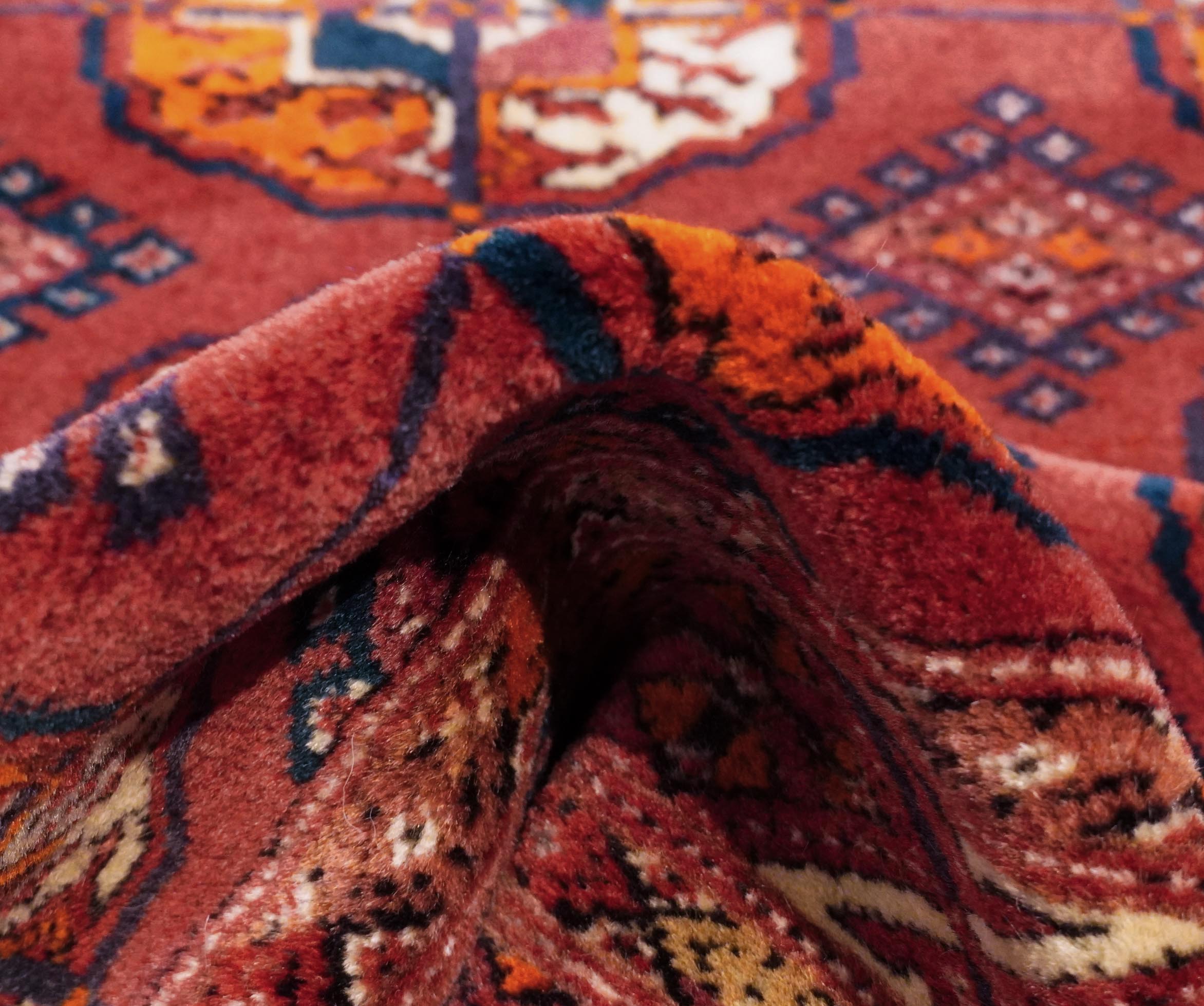
| Pile height | 5 mm |
| Year of manufacture | 1930 |
| Condition | pre-owned, cleaned & partially restored |
| Colour | Rust red, black and white |
| Edition | one-of-a-kind piece |

Origin
The Tekke are the main tribe of the Turkmen. They live in the Republic of Turkmenistan and in Afghanistan. In earlier times the Tekke were nomads and much given to raiding. Today most of them are settled and live peacefully as farmers. After the break-up of the Soviet empire, however, some returned to a nomadic way of life. The majority of the Tekke live in the now independent Republic of Turkmenistan, where they knot rugs in the cities of Ashgabat and Mary and the surrounding areas.During the communist revolution, numerous Tekke clans migrated to the neighbouring states of Afghanistan and Iran. Others settled in Uzbekistan and Tajikistan. Tekke rugs are among the celebrated Turkmen rugs, and their patterns are copied in Pakistan as well. Tekke rugs are also traded as Bukhara rugs. Bukhara (sometimes spelled Bokhara) is an oasis city in Uzbekistan on the former Silk Road. Although no rugs were ever knotted in Bukhara itself, the city gave its name to many Oriental rugs because they were traditionally exported to the West from there. These rugs were in fact knotted by Turkmen tribes such as the Yomud or the Tekke.
This Old Tekke is around 96 years old and a real collector's piece.
Material
The technique used to prepare the materials for the pile of this Old Tekke is more than 200 years old. The wool was dyed with natural dyes and spun by hand. Dyeing with natural or plant dyes is more complicated, more expensive and more time-consuming than dyeing with chemical colours. For a luminous red, for example, you need around one kilo of ground madder root as dyestuff per kilo of wool. For a strong yellow that is not too pale, it takes as much as two kilograms of weld per kilo of wool. Spinning the wool is time-consuming and labour-intensive too. On top of that, fewer and fewer people still know how to spin wool by hand.But the effort is worth it: dyeing with natural colours allows the high-quality wool to keep its natural oil content. Wool that has been dyed with natural colours and spun by hand creates fascinating, shimmering patterns. The charm of hand-spun wool, with its slight irregularities and natural shades, comes into its own as a contrast in modern interiors, but equally in rooms furnished in a more traditional or country style.
The weft threads of this Old Tekke are made of wool (hand-spun, natural dyes). Wool was used for the warp threads.
Condition
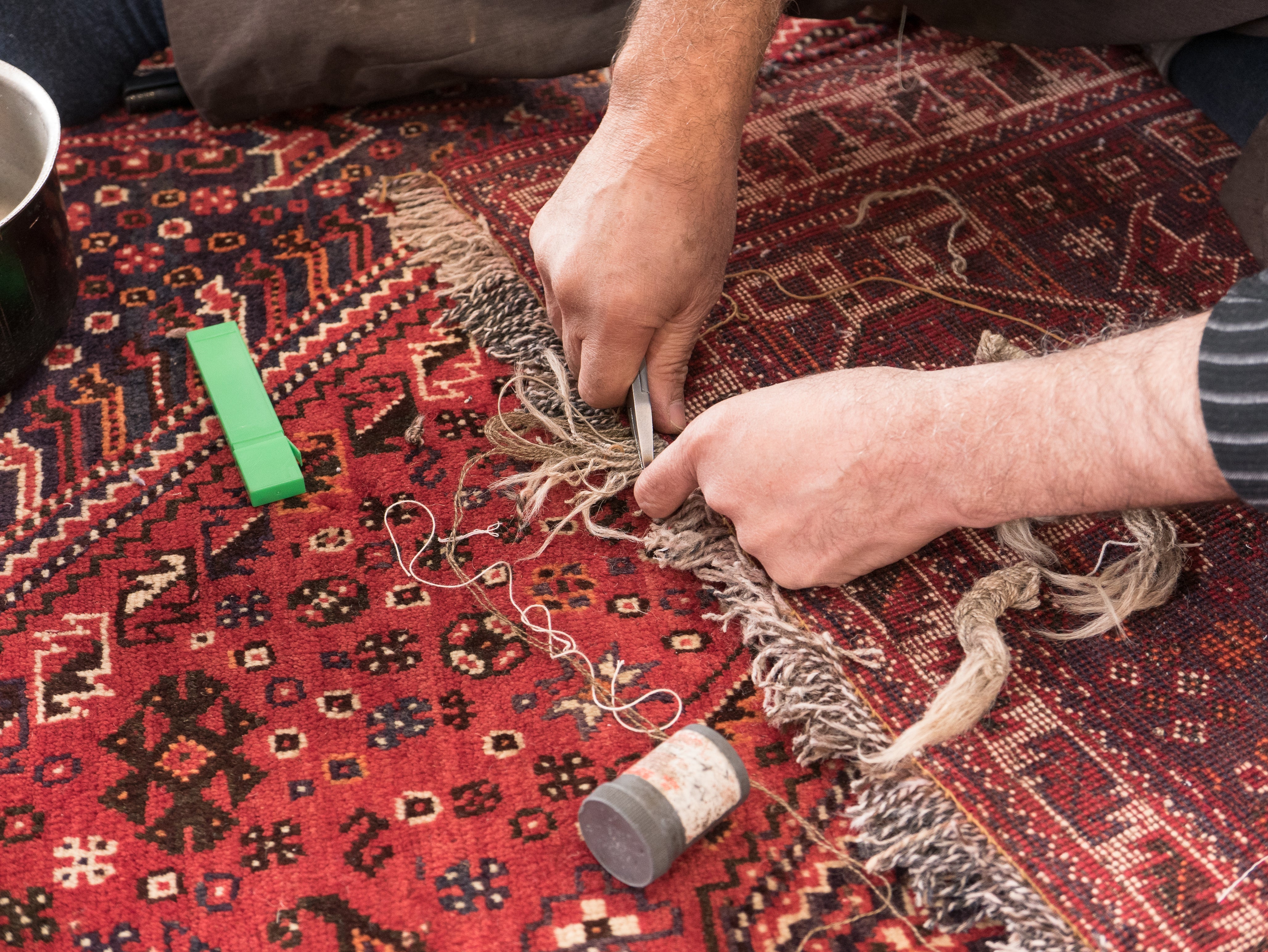
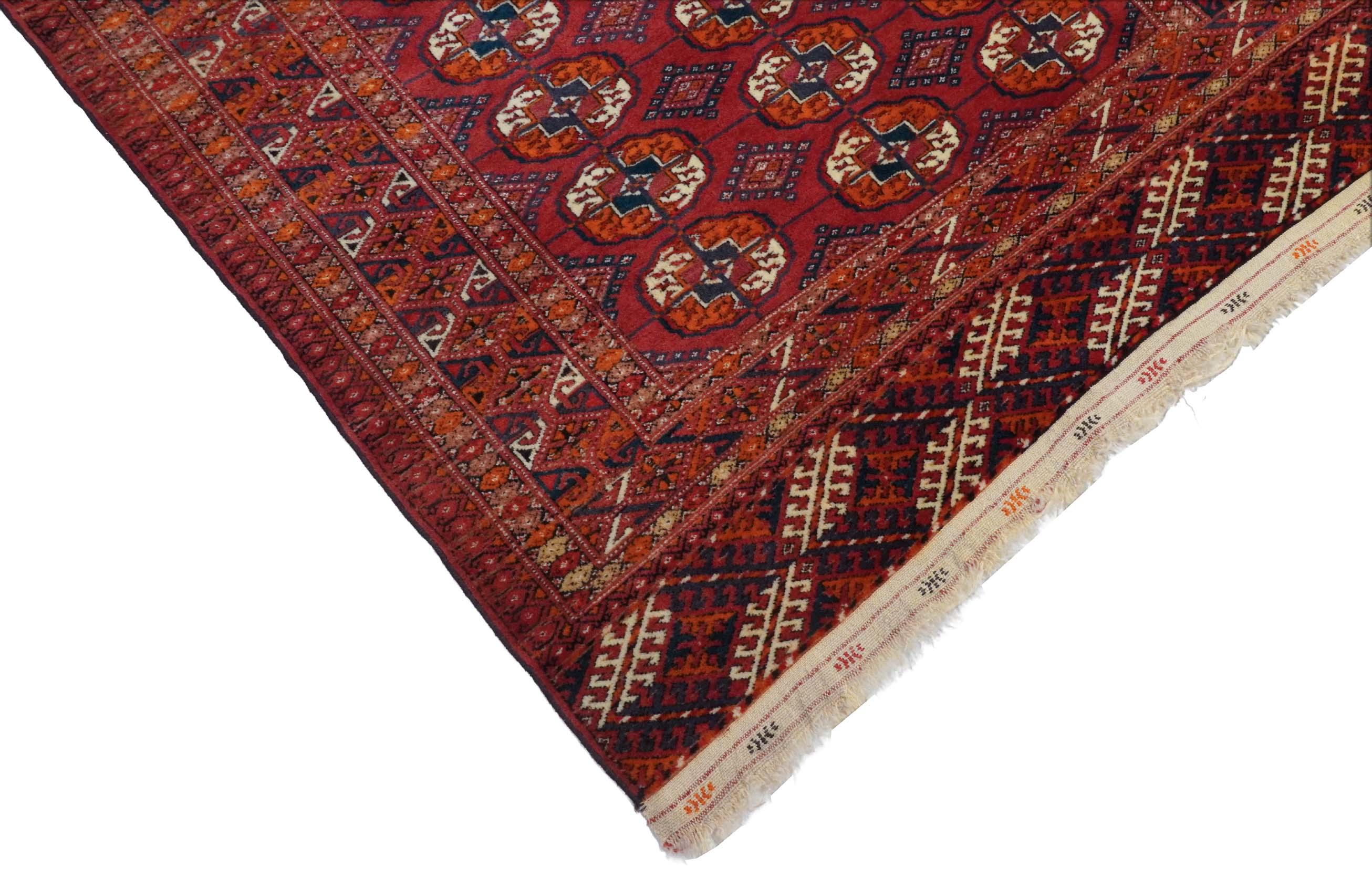
You are not the first to take a liking to this Old Tekke. It has had owners before you who valued it and lived with it. It was knotted around 1930. It has been thoroughly cleaned and is in good, though only partly restored, condition. The fringes could do with a repair. We have not fully restored this Old Tekke because we feel it has a special presence just as it is. If you would like us to, we will of course happily continue the restoration for you. We can bring almost any rug back to near-perfect condition.
A note on the photos
Child labour? No thanks.

The rug trade against child labour: Children belong in school, not at a knotting or weaving loom. For us it therefore goes without saying that we only offer rugs made under fair conditions and without child labour. We place particular importance on good working conditions and tolerate no child labour at our producers.
We are proud to be a member of the Care & Fair campaign against child labour.
The industry-wide campaign CARE & FAIR - the rug trade against child labour was founded in 1994. The initiative has made it its mission to fight the excesses of illegal child labour in the knotting countries and, at the same time, to improve the overall situation of rug knotters and their families in the knotting regions of India, Nepal and Pakistan.
Our goals:
- Ending illegal child labour in India and Pakistan.
- Creating better living conditions for knotters' families.
- Socially responsible production. We only accept goods that have been made under fair conditions. Working with our producers as partners, we want to make clear to them that taking on social responsibility benefits everyone.
Together with Care & Fair we currently support 10 schools, 6 adult education centres and 3 day clinics in India and Pakistan.
Choose options
|
|
14-day home trial |
|
|
Free delivery & returns within the EU |