



Antique Kazak | 170 x 128 cm | Nr. Z-2836

|
14 Tage Probelegen |

|
Kostenlose Lieferung & Retoure innerhalb der EU |
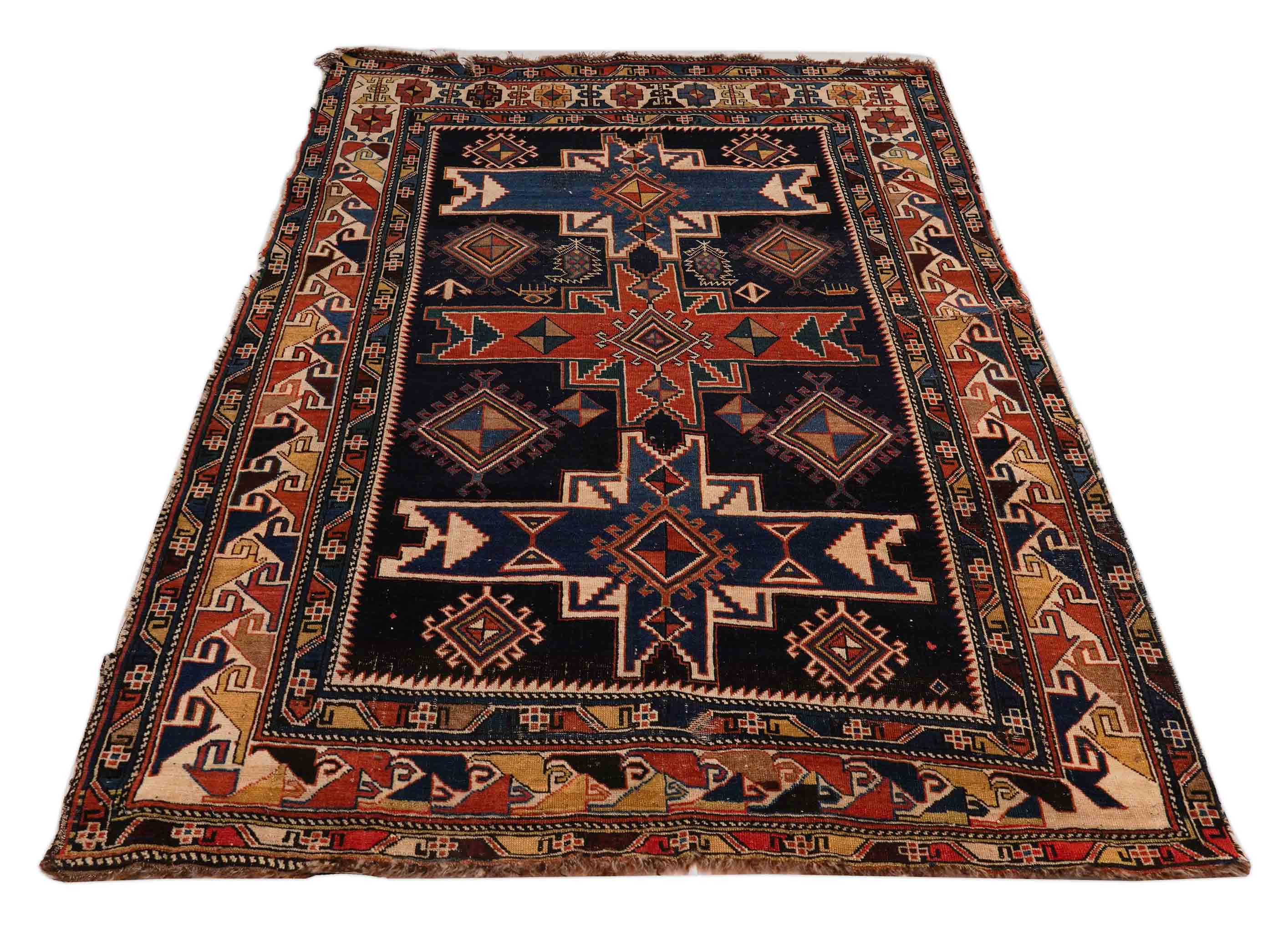
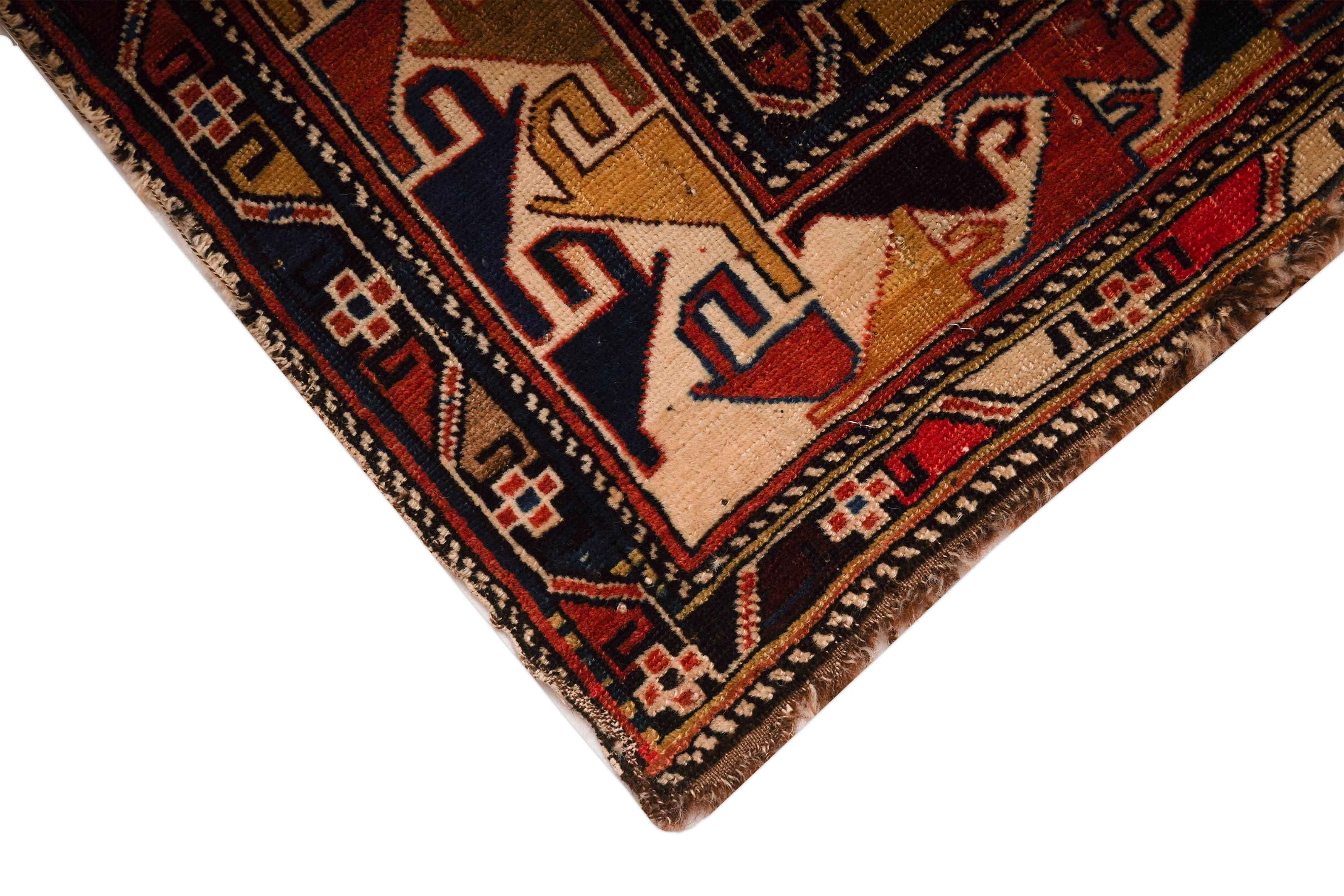
Geometric antique Kazak, dark blue with border and diamonds
| Origin |
|
| Dimensions | 170 cm x 128 cm (= 2.176 m²) |
| Construction | hand-knotted |
| Material |
Pile: wool (hand-spun, natural dyes)
|
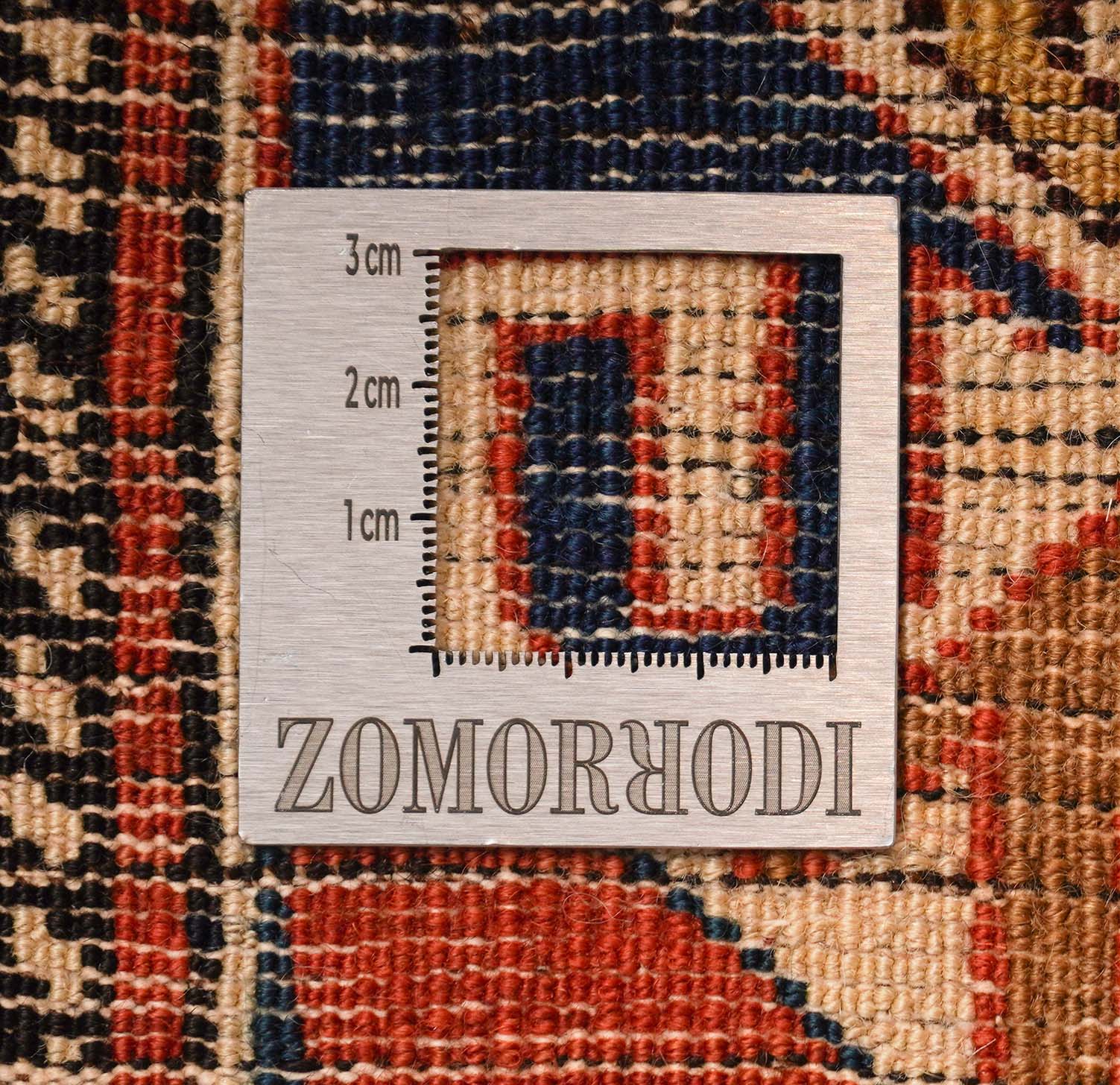
| knots per m²2 | 400.000 |
| Pile height | 4mm |
| Year of manufacture | 1880 |
| Colour | Dark blue, colourful shades |
| Edition | one-of-a-kind piece |

Origin
Kazak rugs (also spelled Kasak) belong to the group of Caucasian rugs. Rugs have been made in the Caucasus since the end of the 18th century. Their hallmark is the abstract geometric tribal patterning in primary colours. The geometric motifs — and, more rarely, floral ones — are typically rendered in intense, high-contrast colours. In the 19th century a considerable share of these rugs, produced mainly in villages, was exported to the West under Russian control. This antique Kazak is a collector's piece. It is around 140 years old, and that alone makes it a truly special piece. Antique rugs like this Kazak are as sought after as ever and fetch top prices at renowned auction houses.
Pattern
The edge of the rug is framed by a surround (border). The border forms a splendid contrast to the centre.
The abstract, geometric composition is what gives this Kazak its understated elegance. The pattern flatters the design of a room and never draws attention away from the furniture, the decoration or the architectural features. It settles beautifully into any setting and complements the furnishings of a room in a subtle way.
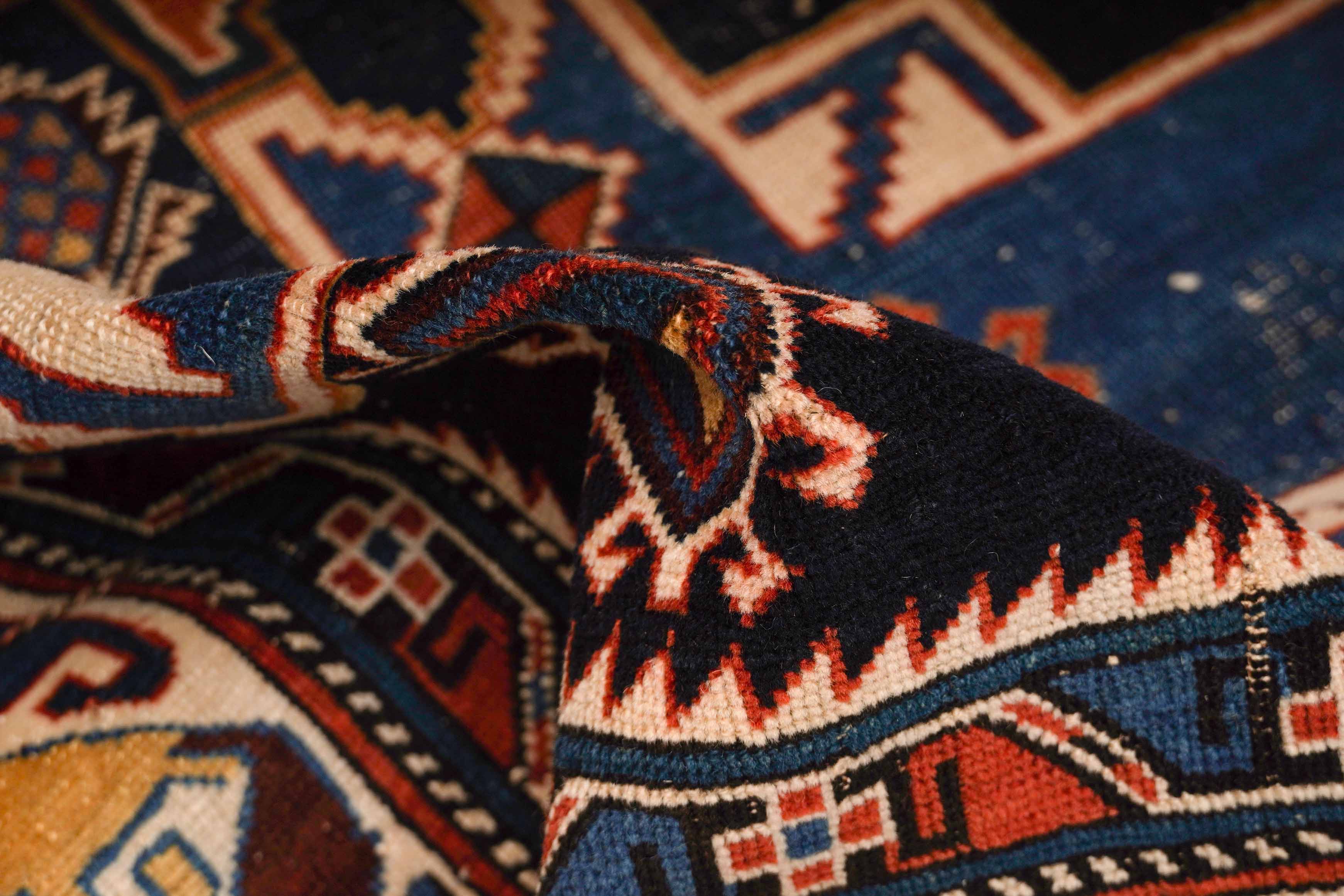
The surface of this Kazak has a mottled look. The shifts in tone and the light-and-dark shading of the pile yarn make the colours shimmer and keep the rug forgiving of dirt. These colour shifts, known as abrash, give the rug a livelier character. The mottling comes about because the wool of this Kazak was hand-spun. During dyeing, the natural pigments are taken up to differing degrees.
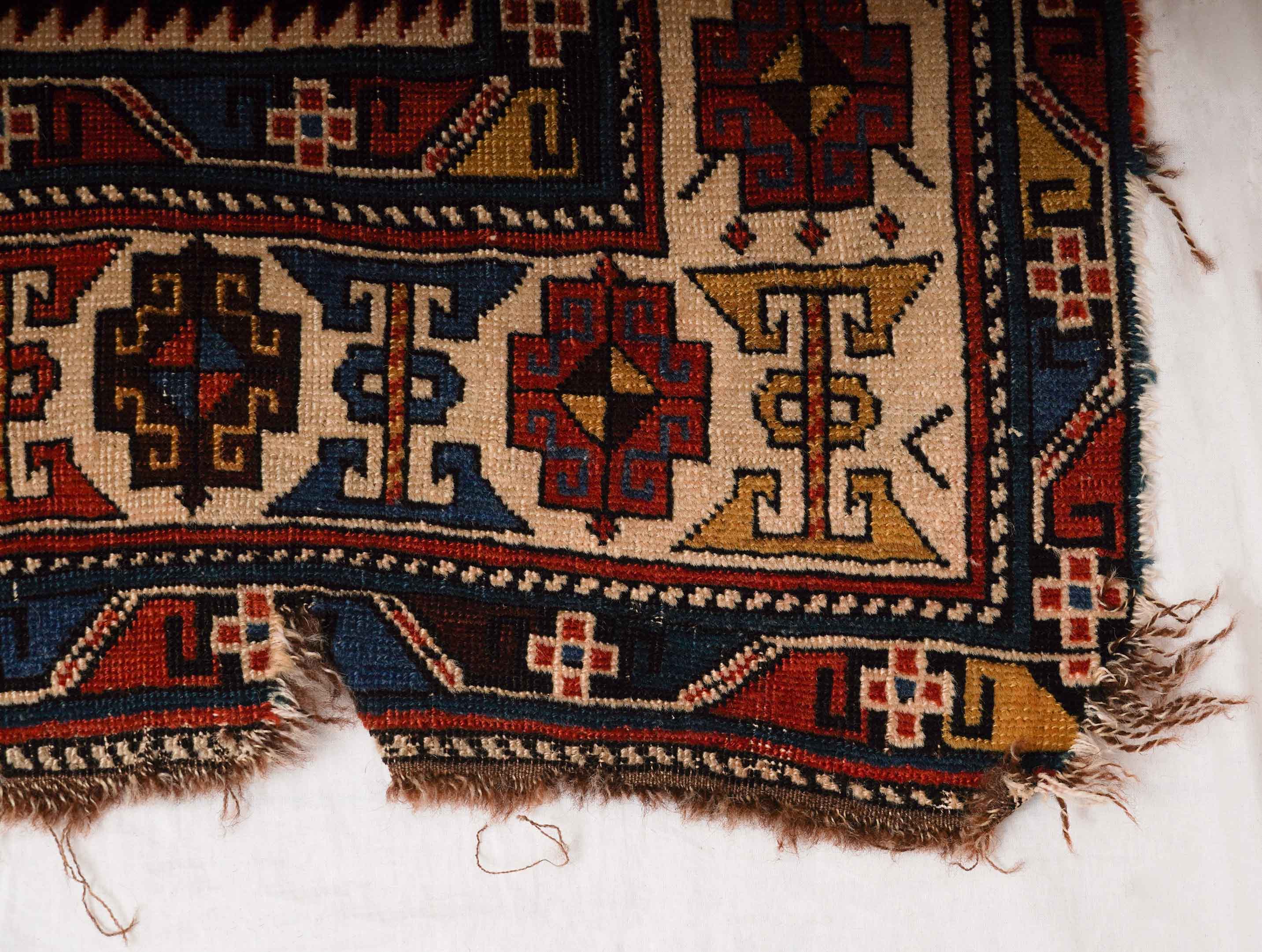
In the pattern of this Kazak it is above all the diamonds that catch the eye. A diamond is a rhombus standing on one of its points, and in an Oriental rug its four equal sides can be serrated, outlined or set with hooks. The diamond is one of the oldest basic forms in the Oriental rug. In the Islamic world it carries a symbolic meaning: it stands for the immortality of the soul. That is why it appears so often as a filler motif.
The background of this Kazak is dark blue. The border is done in dark blue, light red and beige.
Condition
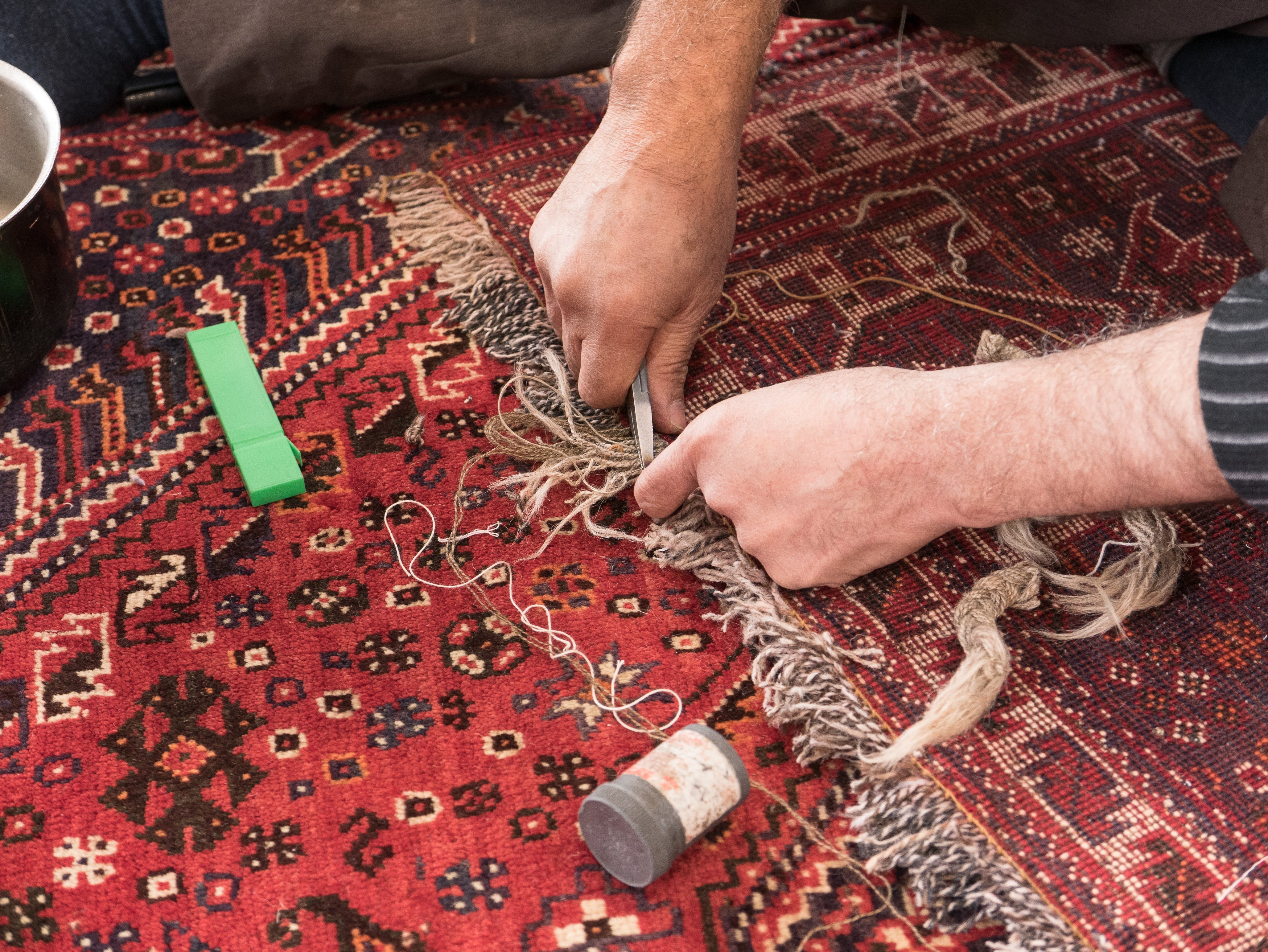
This Kazak has a story to tell. It was hand-knotted around 1880. It has been thoroughly cleaned and is in good but unrestored condition. The pile is evenly worn. The edges are damaged in places. The fringes could do with a repair. The rug has at least one tear 1 - 5 cm in length. We have not restored this Kazak because we feel it has a special charm just as it is. If that is what you want, we will of course be happy to restore the rug for you. Either way, this Kazak will give you pleasure for decades to come.
Material
The technique used to prepare the materials for the pile of this Kazak is more than 200 years old. The wool was dyed with natural colours and spun by hand. Dyeing with natural or plant dyes is more complicated, more expensive and more time-consuming than dyeing with chemical colours. For a luminous red, for instance, you need around one kilo of ground madder root as dyestuff per kilo of wool. For a strong yellow that is not too pale, it even takes two kilograms of the dyestuff dyer's weld per kilo of wool. Spinning the wool is time-consuming and labour-intensive as well. On top of that, fewer and fewer people still master the art of spinning wool by hand.
But the effort is worth it: dyeing with natural colours lets the high-quality wool keep its natural lanolin content. Wool that has been naturally dyed and hand-spun creates fascinating, shimmering patterns. The charm of hand-spun wool, with its slight irregularities and natural shades, comes into its own as a contrast in modern interiors, but equally in rooms furnished in a more traditional or country-house style. The foundation (weft and warp threads) of this Kazak is made of new wool.
A note on the photos
Child labour? No thanks.
Child labour? No thanks. Children belong in school, not at a knotting frame or a loom. For us it therefore goes without saying that we only offer rugs made under fair conditions and without child labour.
We attach particular importance to humane working conditions and tolerate no child labour at any of our producers. Thank you for helping us to ensure fair conditions.
That is why we support the initiative Care & Fair against child labour in the rug trade.

Choose options
|
|
14 Tage Probelegen |
|
|
Kostenlose Lieferung & Retoure innerhalb der EU |