
Antique Lankaran | 238 x 139 cm | Nr. Z-348

|
1-3 Werktage Lieferzeit (deutschlandweit) |

|
14 Tage Probelegen |

|
Kostenlose Lieferung & Retoure innerhalb der EU |
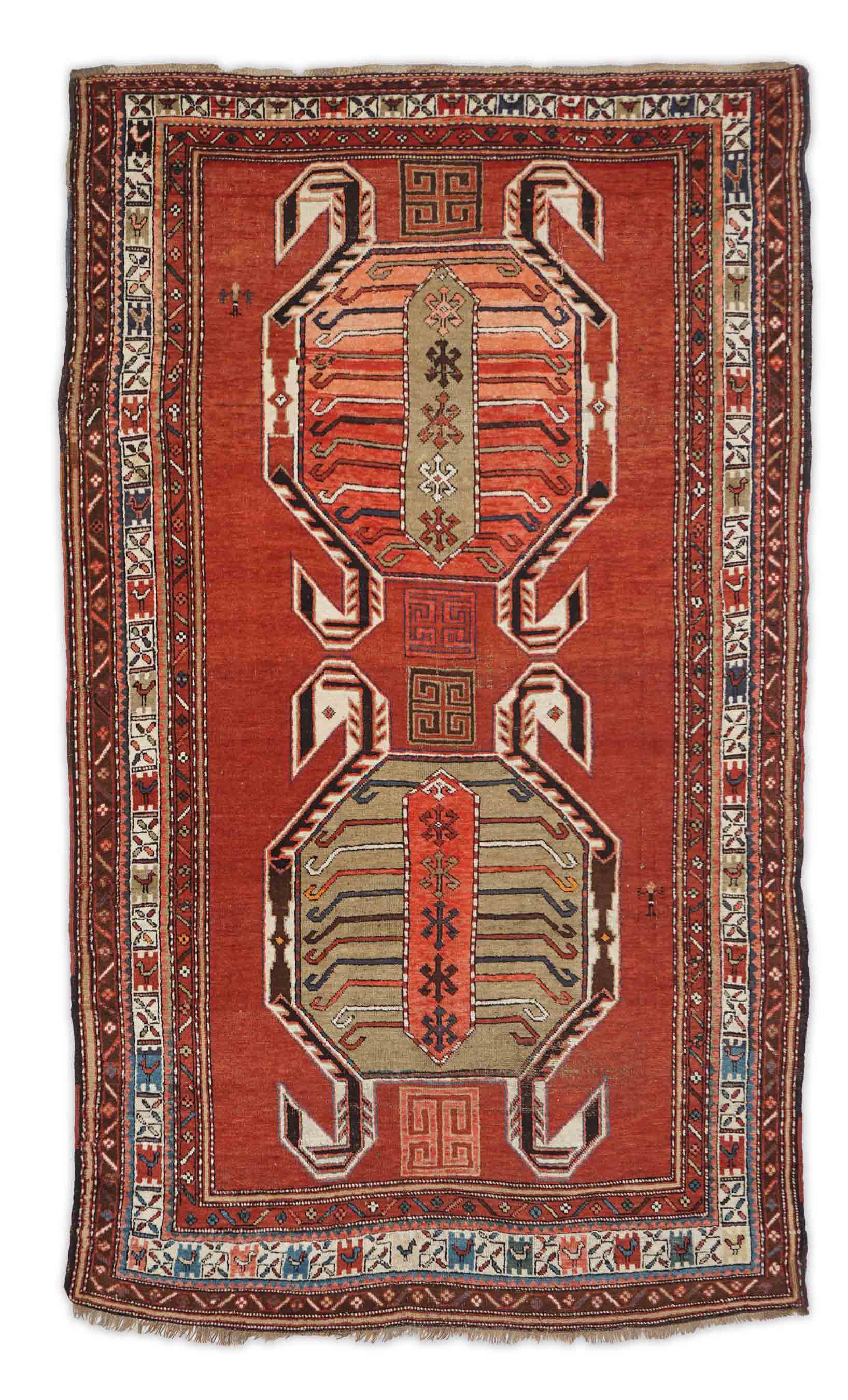
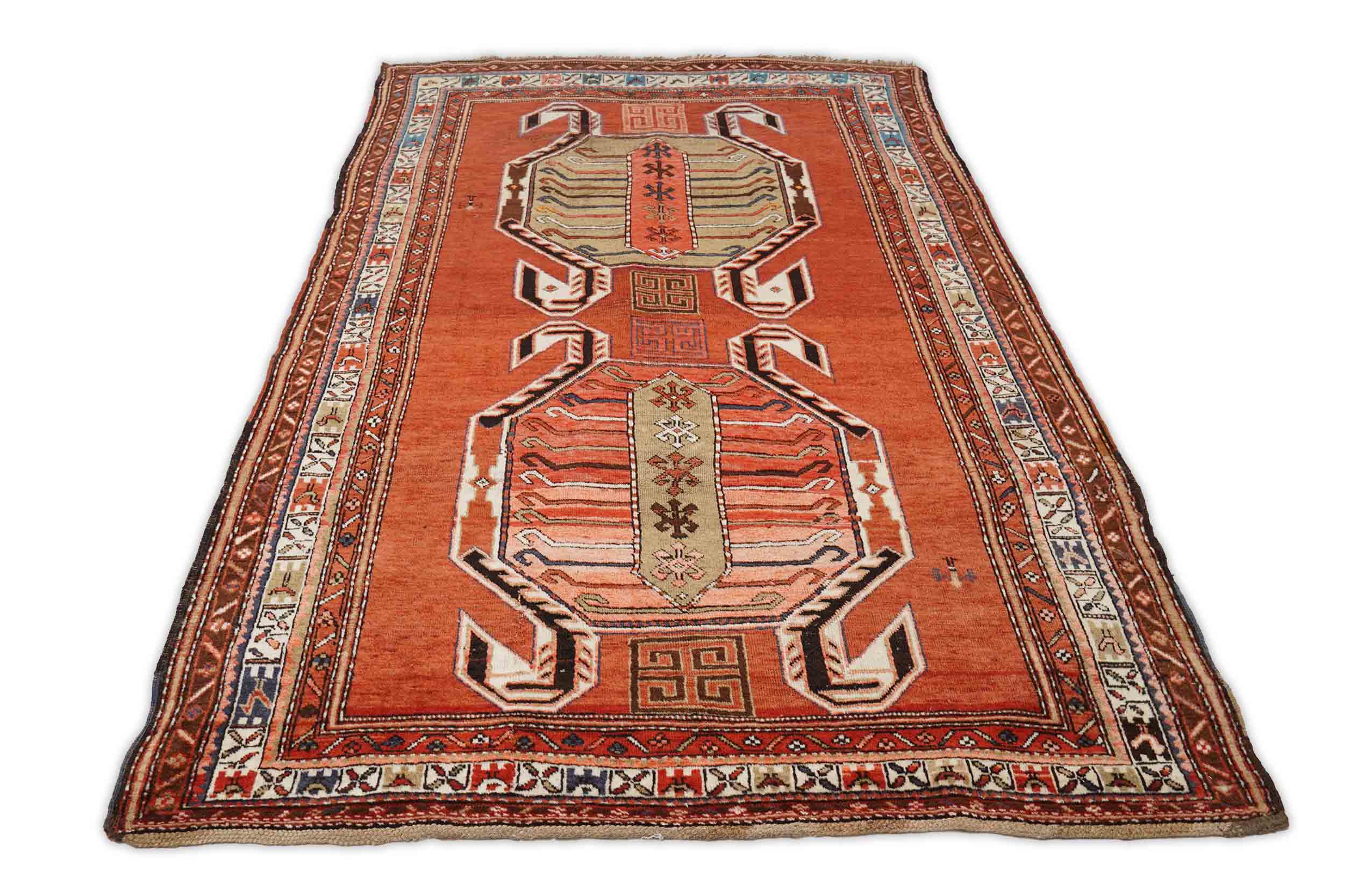
Geometric antique Lankaran, light red with border
| Origin |
|
| Dimensions | 238 cm x 139 cm (= 3.31 m²) |
| Construction | hand-knotted |
| Material |
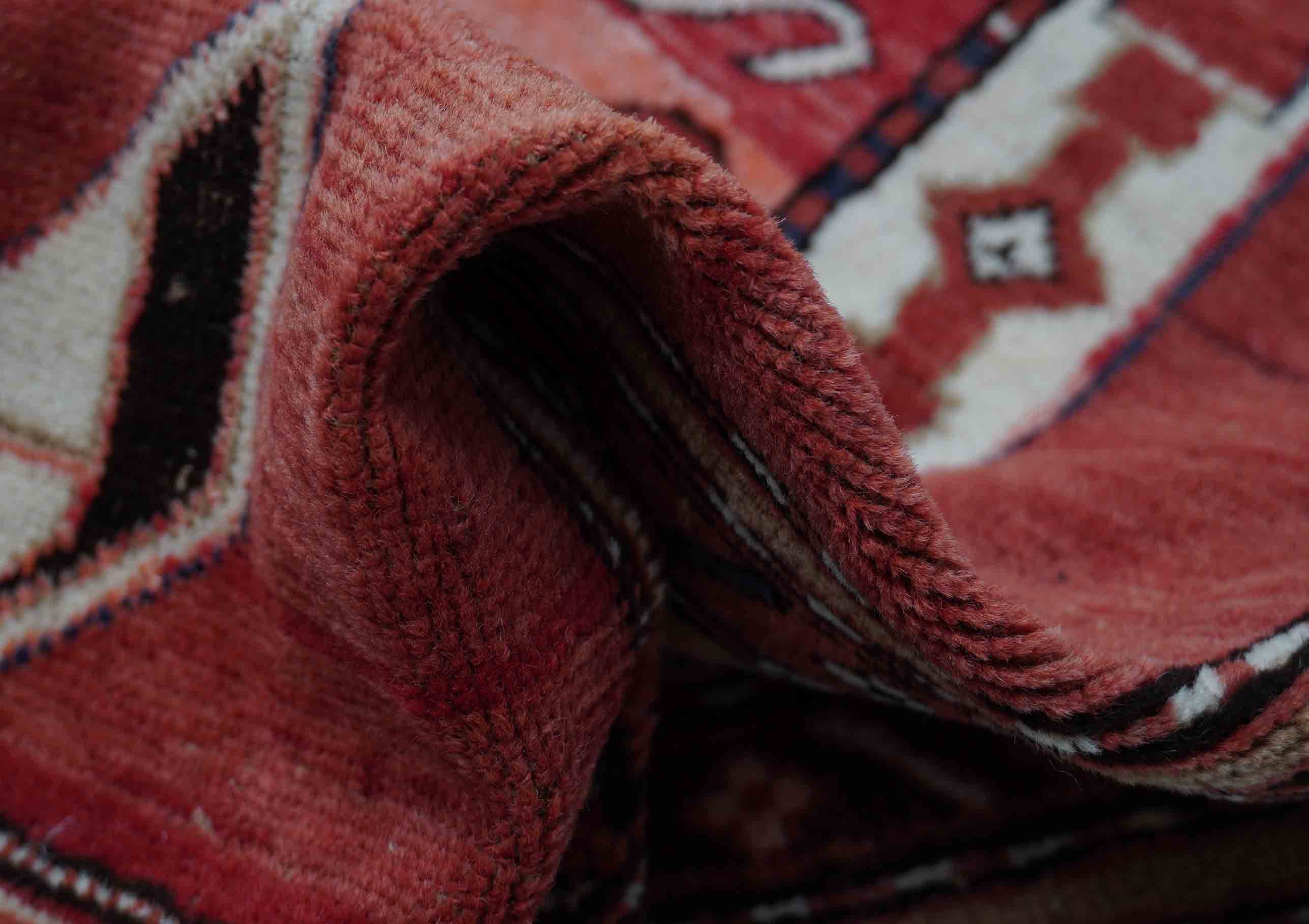
Pile: wool (hand-spun, natural dyes)
|
| knots per m²2 | 160.000 |
| Pile height | 4mm |
| Year of manufacture | 1910 |
| Colour | Light red |
| Edition | one-of-a-kind piece |

Origin
Lənkəran (also Länkäran in German, Lenkoran in Russian and Lankon in Talysh) is a town in southern Azerbaijan on the Caspian Sea, close to the Iranian border. Lenkoran rugs are hand-knotted in Lenkoran and the surrounding area in the eastern Caucasus, that is, the Shirvan region. Shirvan rugs are knotted from exceptionally fine wool and have a flat pile. Old Shirvans are greatly appreciated and highly valued by collectors in Europe. They not infrequently reach a knot count of up to 300,000 knots per m².
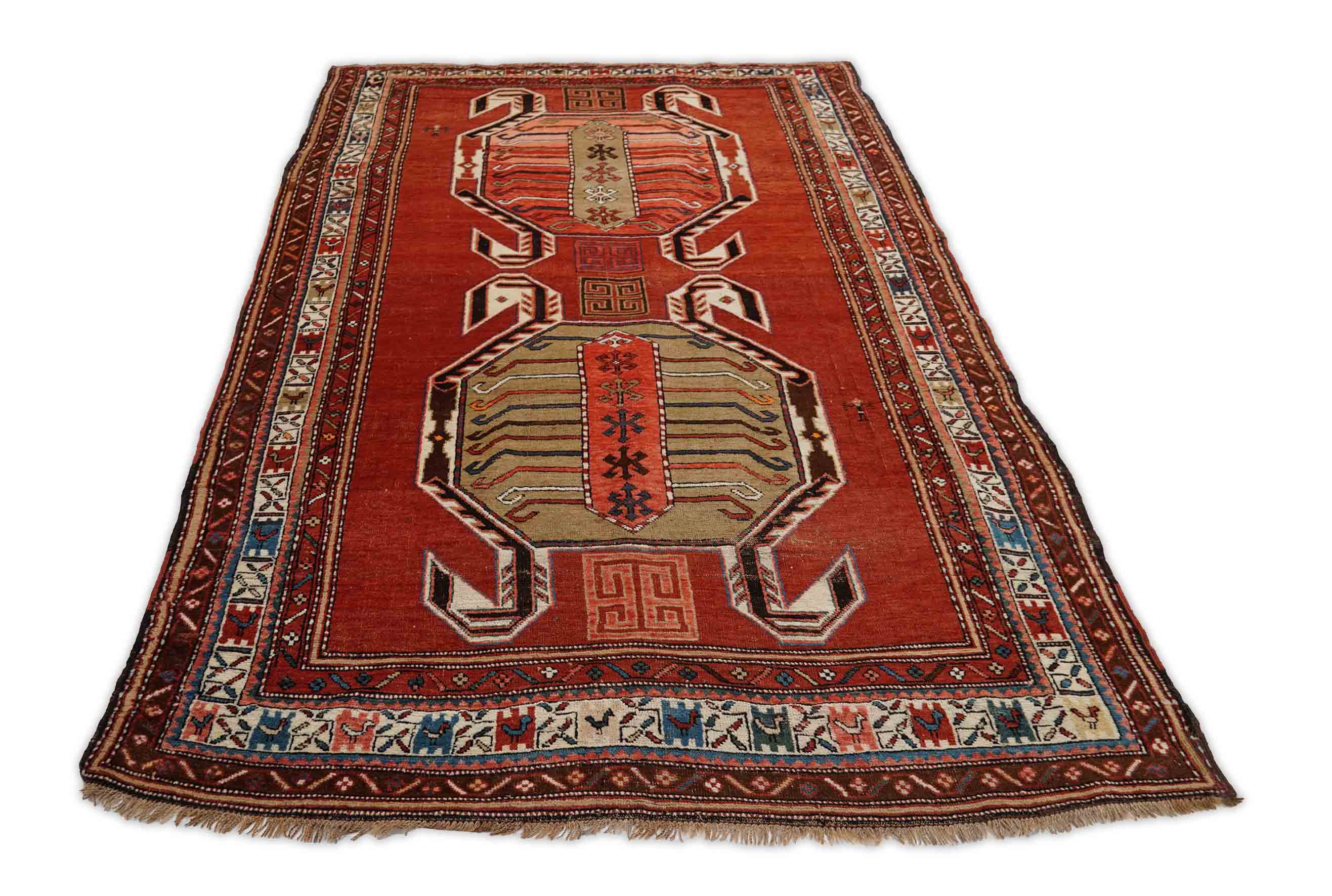
What characterises Lenkoran rugs is their imaginative geometric pattern. Typical of the egg-shaped medallions of Lenkoran rugs are two hooks projecting from the upper or lower tip of the medallions. The shape of the medallions derives from the dragon motif so typical of Caucasian rugs. This antique Lankaran is a collector's piece. It is around 110 years old, and that alone makes it a truly special piece. Antique rugs like this Lankaran remain hugely popular and fetch top prices at renowned auction houses.
Pattern
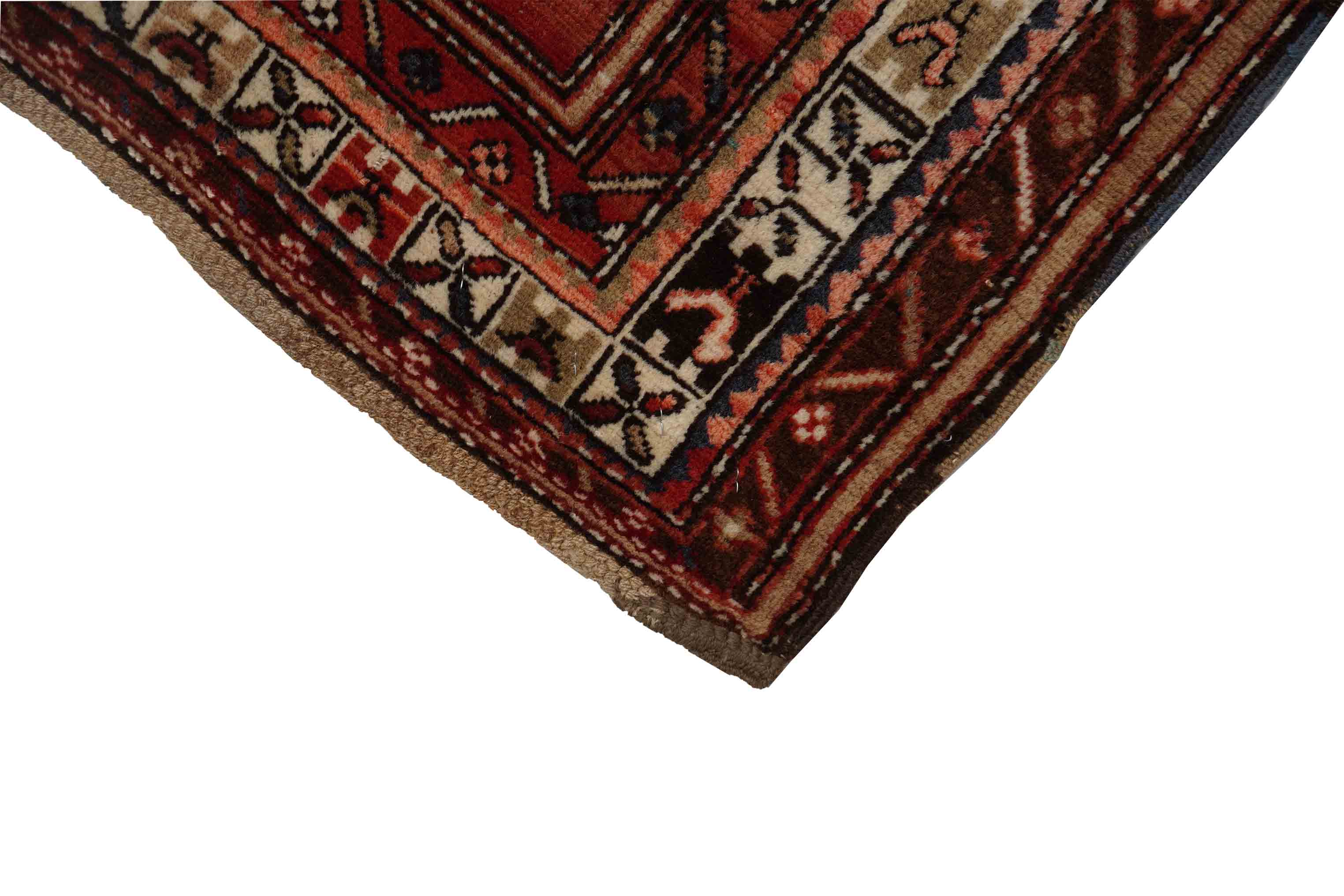
The edge of the rug is framed by a decorative border. The border forms a beautiful contrast with the centre.
The abstract, geometric composition is what gives this Lankaran its understated elegance. The pattern flatters the design of the room and never steals attention from the furniture, the décor and the architectural elements. It creates a pleasant atmosphere without dominating the style of the room.
The background of this Lankaran is light red.
Condition
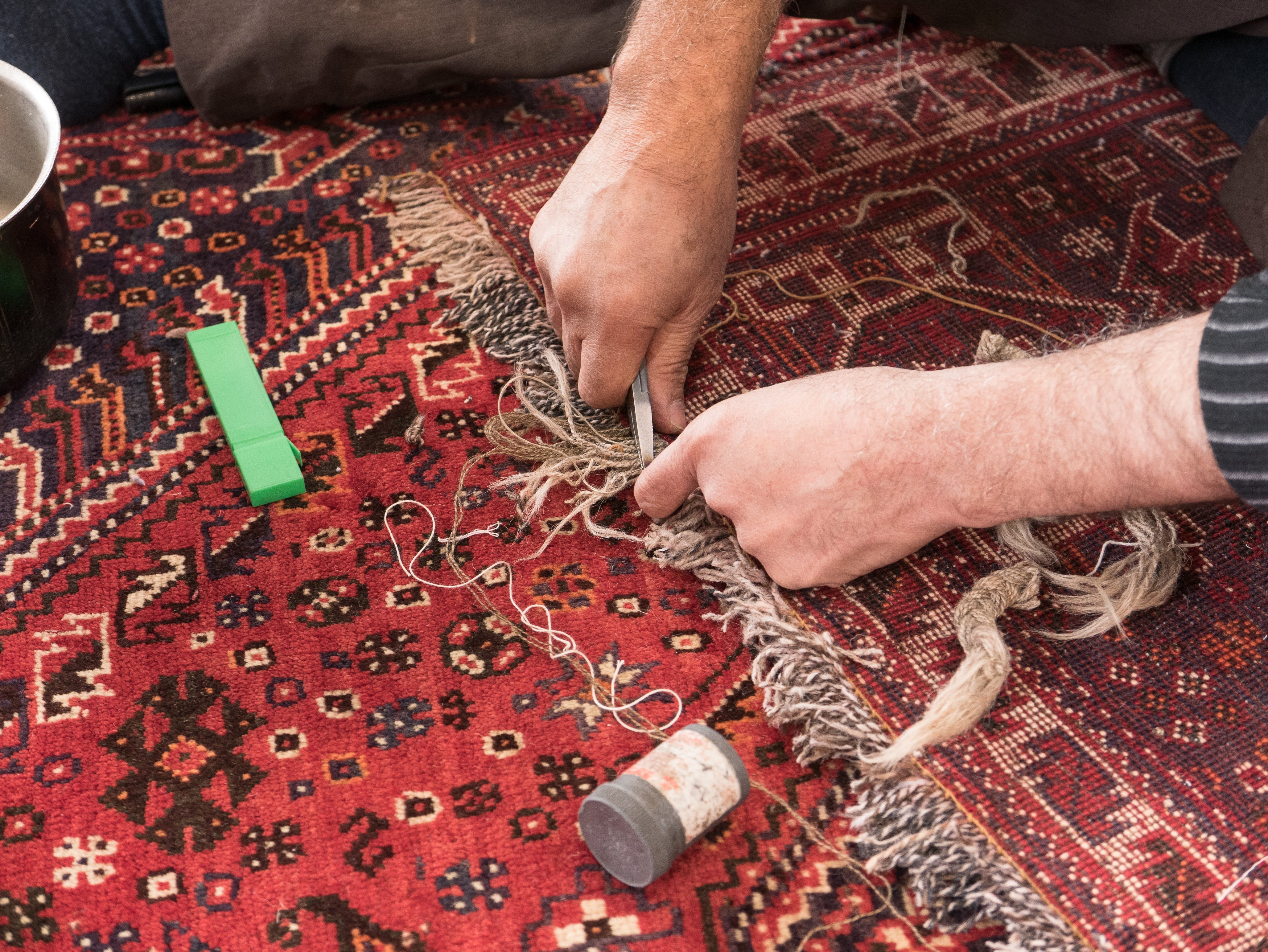
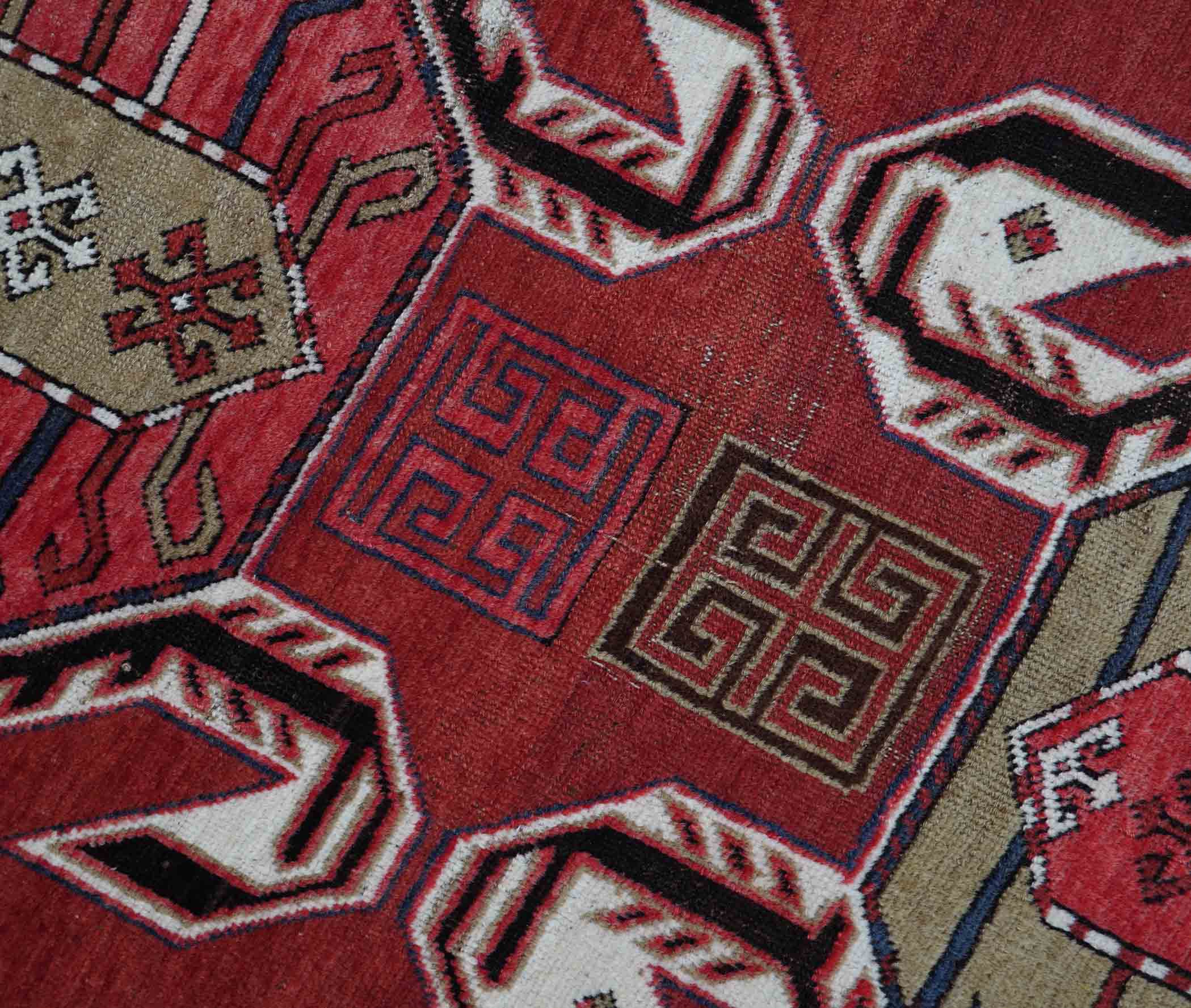
You are not the first to take a liking to this Lankaran. It had owners before you who valued and used it. The pile has grown a little thinner in places over the years. It was hand-knotted around 1910. We have cleaned it thoroughly and restored it with great care. Despite its age, it is therefore in very good condition.
Material
The technique used to make the materials for the pile of this Lankaran is more than 200 years old. The wool was dyed with natural dyes and spun by hand. Dyeing with natural or plant dyes is more complicated, more expensive and more time-consuming than dyeing with chemical colours. For a luminous red, for example, you need around one kilo of ground madder root as dyestuff per kilo of wool. For a strong yellow that isn't too pale, you even need two kilograms of the dyestuff weld per kilo of wool. Spinning the wool is time- and labour-intensive as well. What is more, fewer and fewer people still know how to spin wool by hand.
But the effort is worth it: because it is dyed with natural colours, the high-quality wool keeps its natural oil content. Wool dyed with natural colours and spun by hand creates fascinating, shimmering patterns. The charm of hand-spun wool, with its slight irregularities and natural shades, works as a contrast in modern interiors, but also in rooms furnished in a more traditional or country-house style. The foundation (weft and warp threads) of this Lankaran is made of new wool.
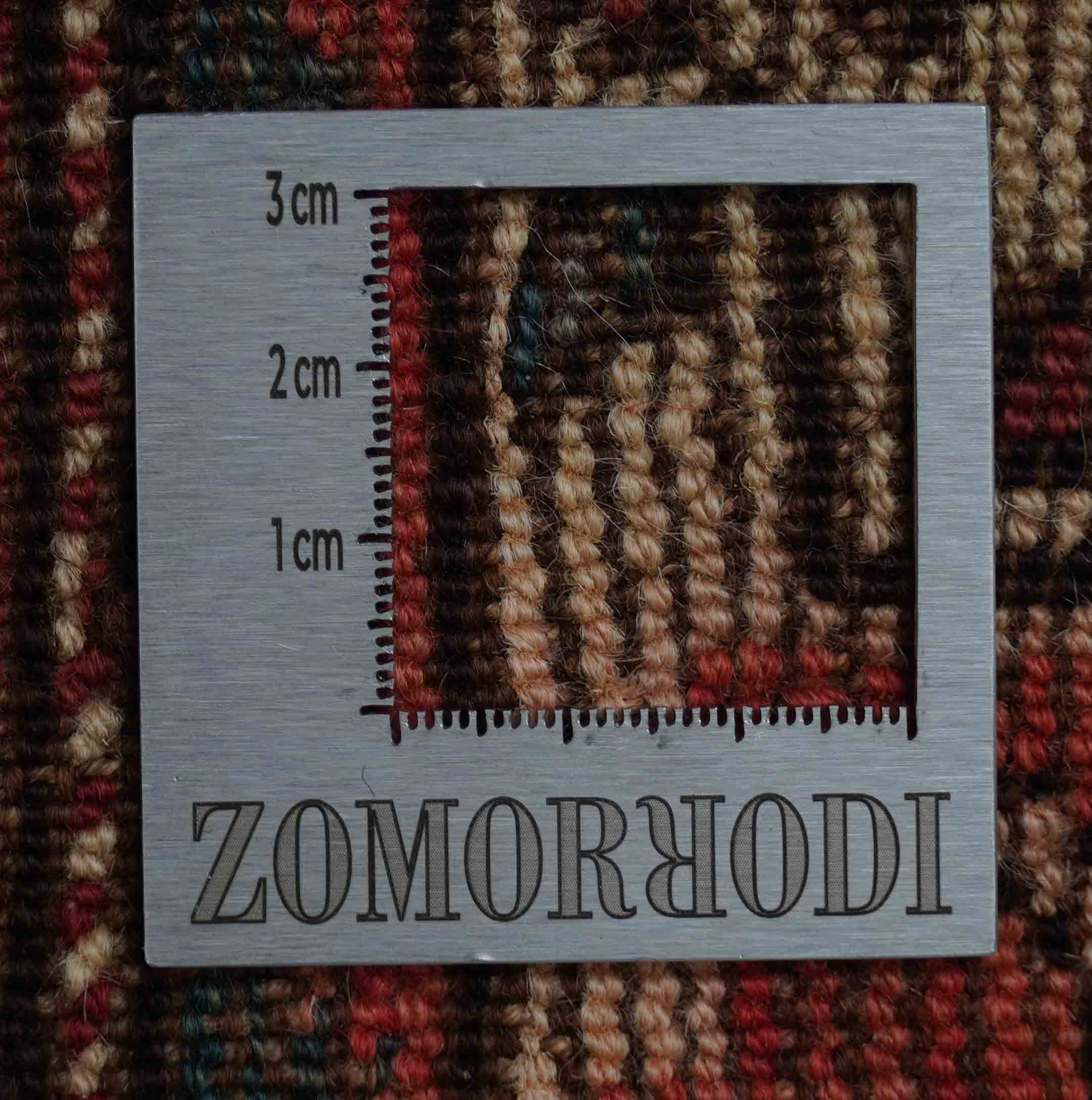
A note on the photos
Child labour? No thanks.
Child labour? No thanks. Children belong in school, not at a knotting frame or a loom. For us it therefore goes without saying that we only offer rugs made under fair conditions and without child labour.
We attach particular importance to humane working conditions and tolerate no child labour at any of our producers. Thank you for helping us to ensure fair conditions.
That is why we support the initiative Care & Fair against child labour in the rug trade.

Choose options
|
|
1-3 Werktage Lieferzeit (deutschlandweit) |
|
|
14 Tage Probelegen |
|
|
Kostenlose Lieferung & Retoure innerhalb der EU |