
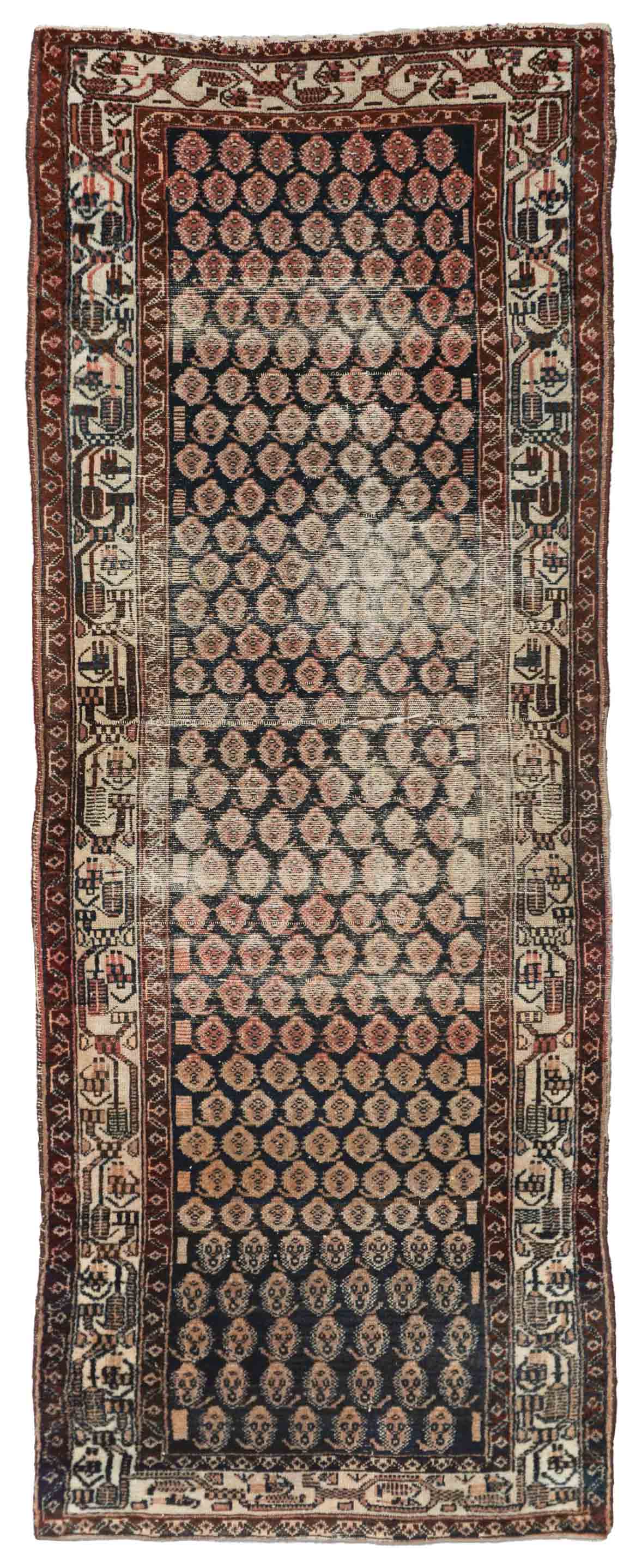
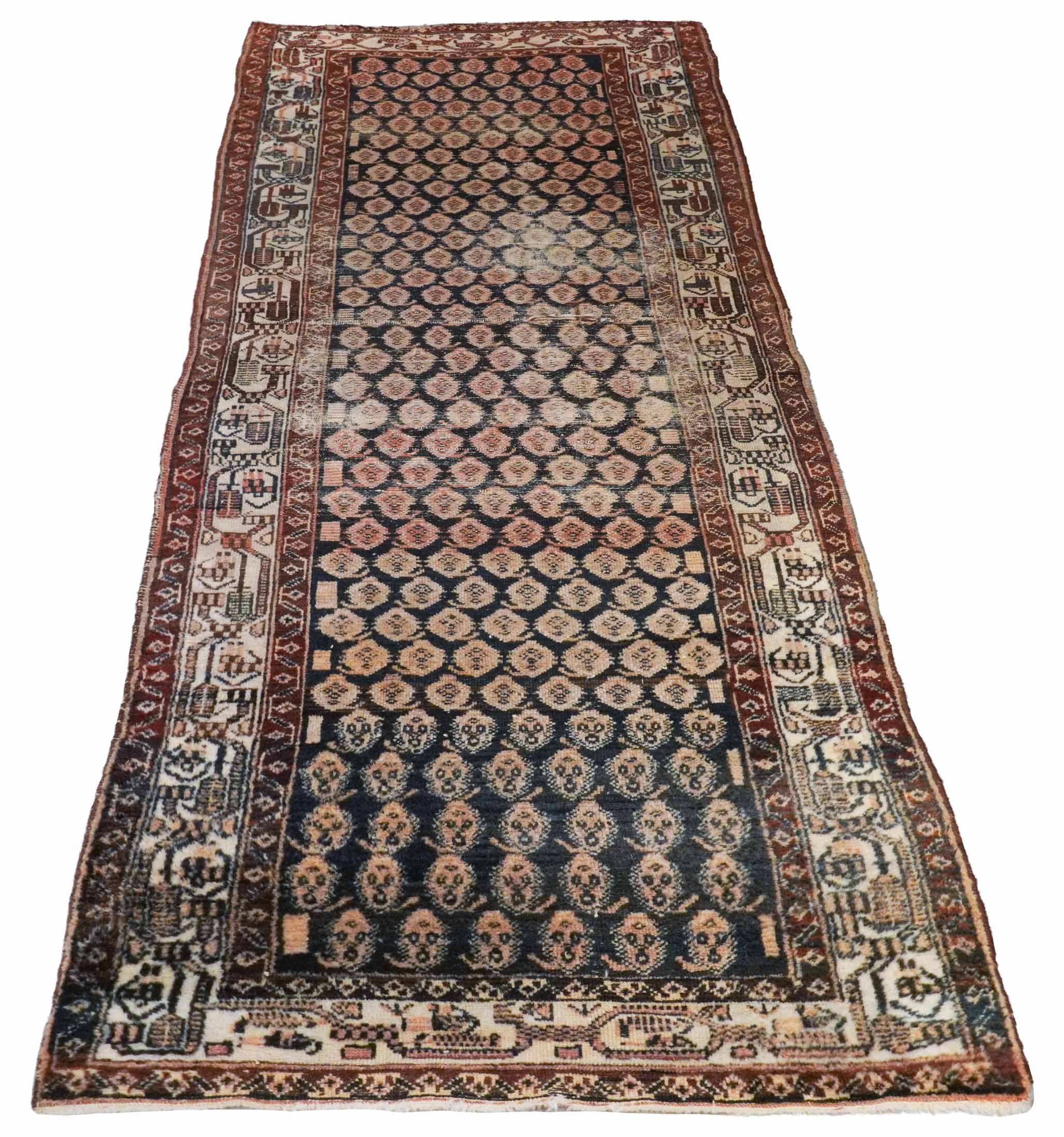
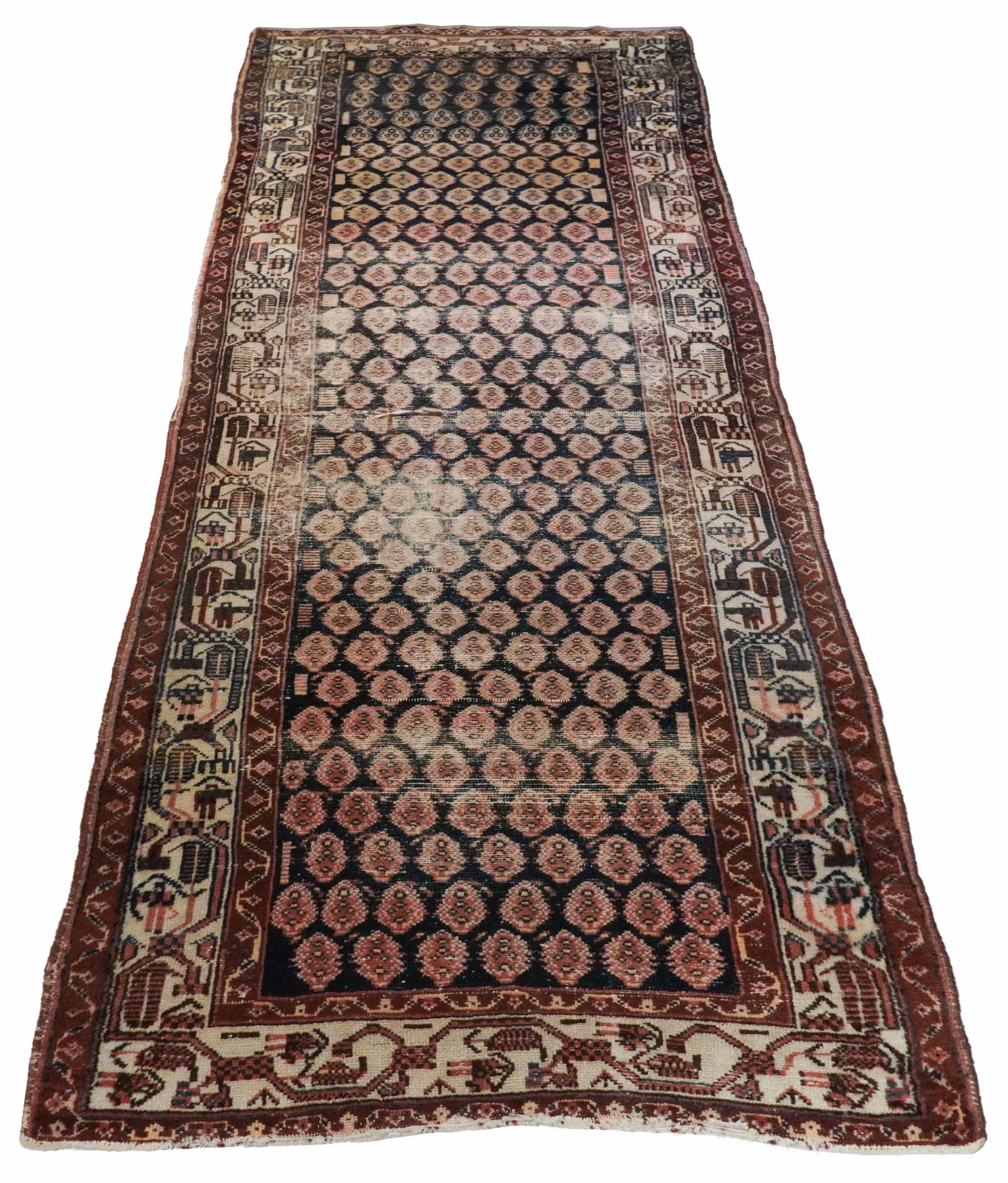
Antique Malayer | 268 x 105 cm | Nr. Z-4482


|
14-day home trial |

|
Free delivery & returns within the EU |
All-over patterned antique Malayer runner, dark blue with border and paisley
| Origin |
|
| Dimensions | 268 cm x 105 cm (= 2.81 m²) |
| Construction | hand-knotted |
| Material |
Pile: wool
|
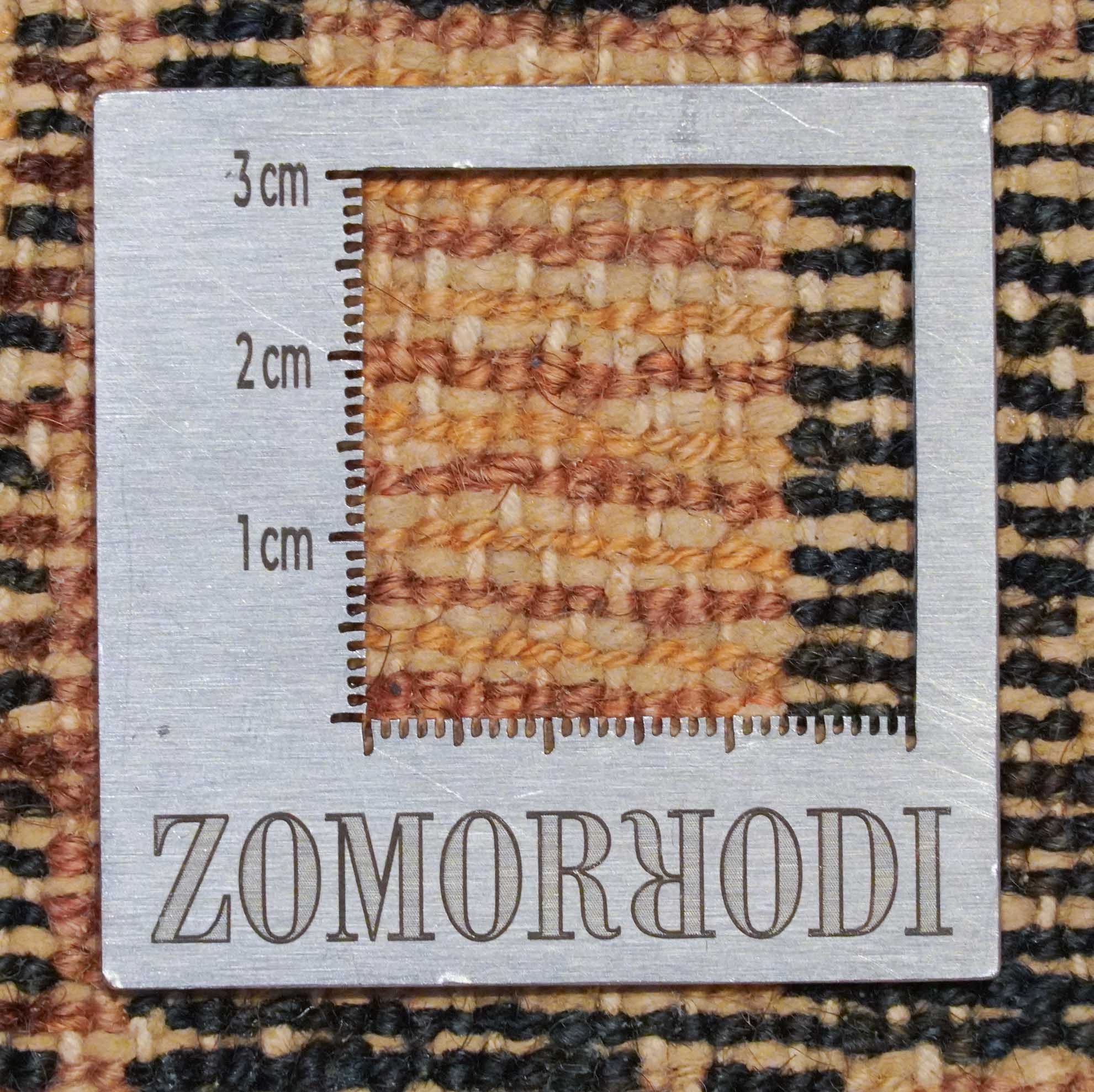
| knots per m²2 | 120.000 |
| Pile height | 7mm |
| Year of manufacture | 1910 |
| Colour | Dark blue, rust red |
| Edition | one-of-a-kind piece |

Origin
Malayer is the second-largest city in the province of Hamadan in western Iran and is known for its rug-knotting workshops. Malayer lies between Hamadan and Khorramabad, 380 km south-west of Tehran. The Malayer of today was founded in 1808 under the name Daulatabad, in order to bring the restless region along the Zagros Mountains under the control of the Persian state. This antique Malayer is a collector's item. It is around 110 years old, which alone makes it a truly special piece. Antique rugs like this Malayer are as sought after as ever and fetch top prices at renowned auction houses.
Pattern
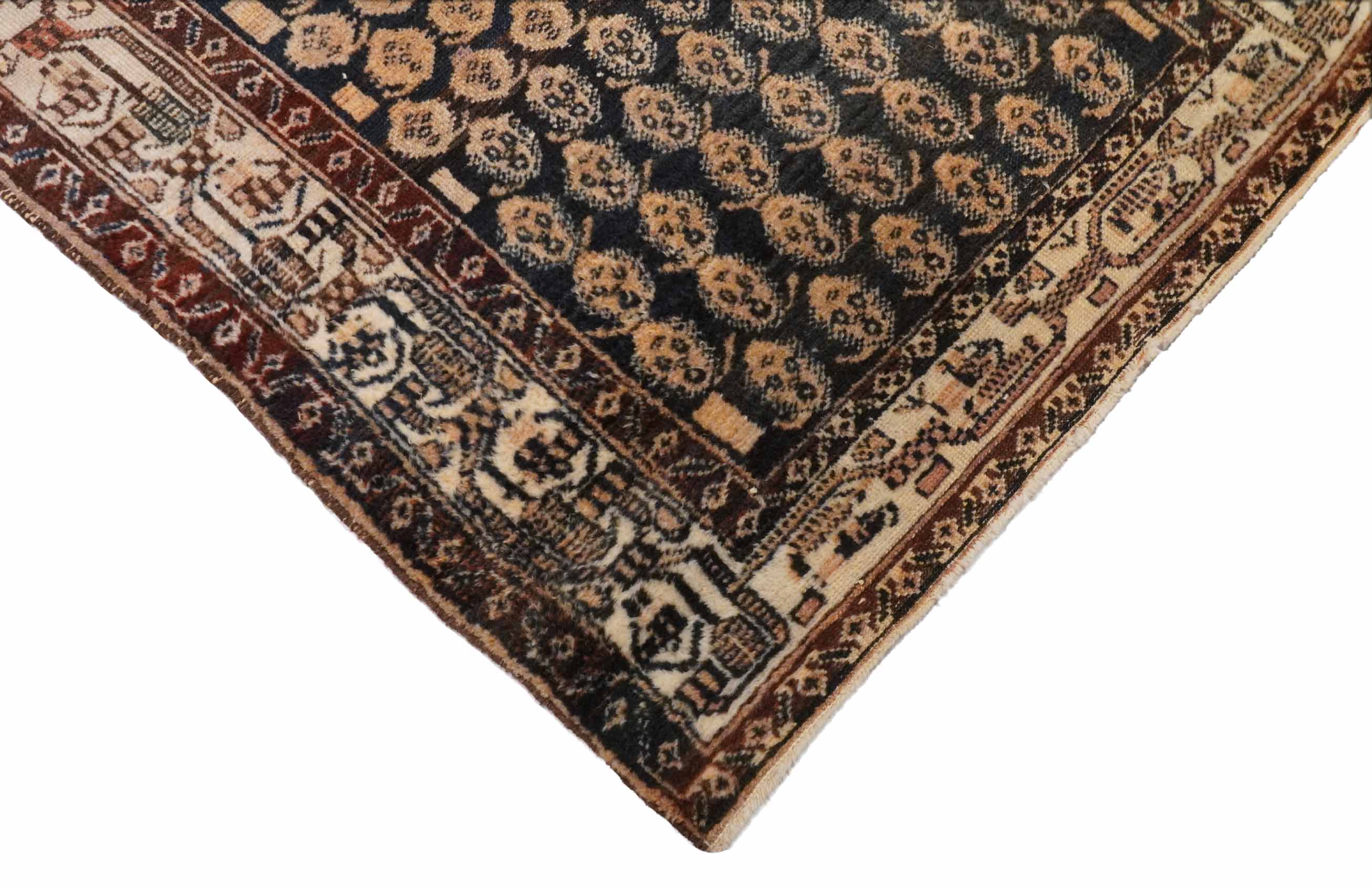
The edge of the rug is framed by a surround (border). The border forms a splendid contrast to the centre.
The repeating elements of this Malayer rug have no specific centre. The recurring repeat pattern feels calming, yet never dull. Rugs with a repeat pattern are also described as all-over patterned.
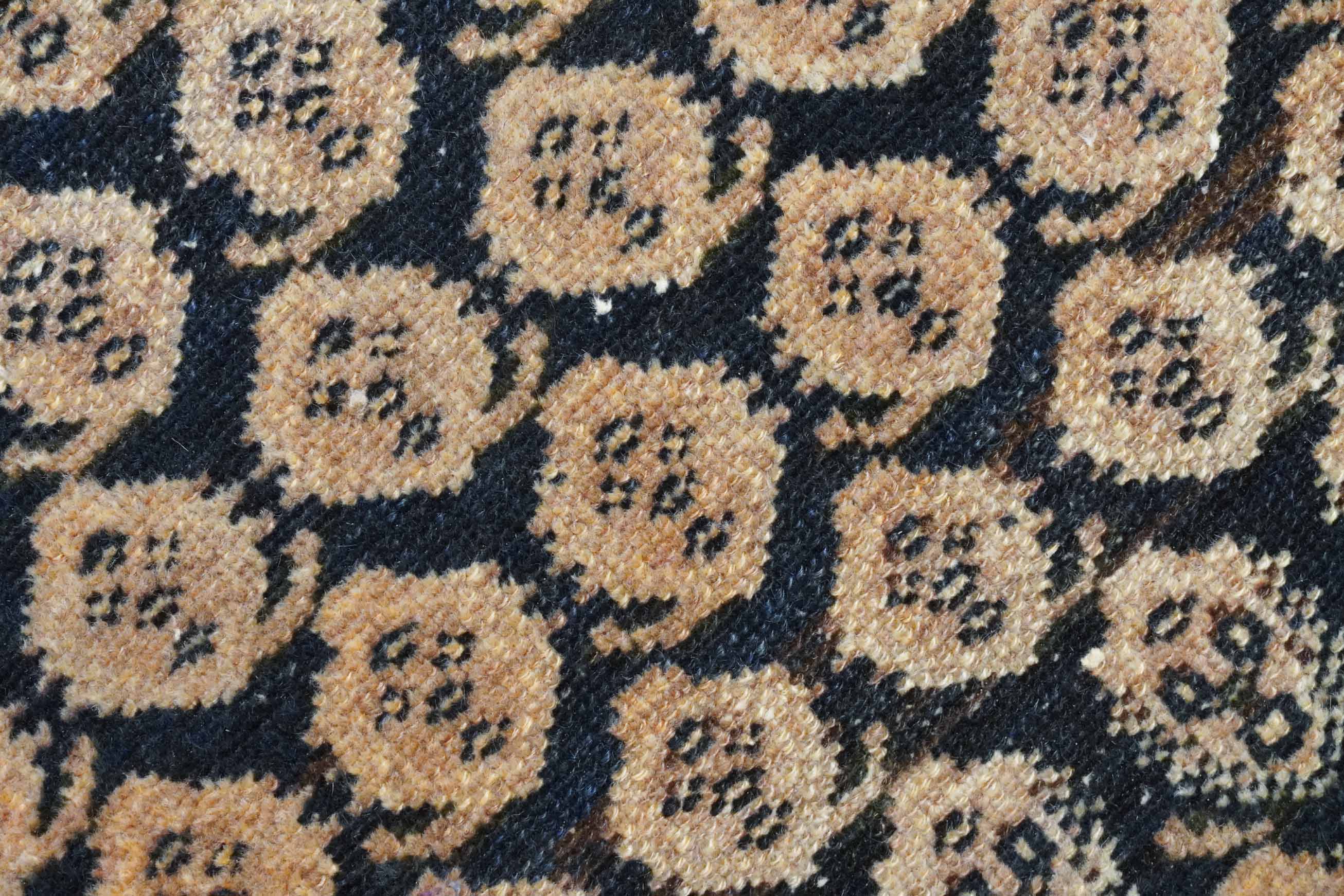
The design of this Malayer is adorned with wonderful paisley motifs. The paisley motif shows a leaf with a pointed, curving tip, rather like a large comma, and recalls the fish-bladder ornament of Gothic art. Its origins lie with the Chaldeans, who apparently used the motif to depict the shoot of the date palm that was vital to their survival. The motif spread as far as the Celts, but was pushed aside there again by Greek and Roman ornament. Rug patterns containing paisley ornaments are also called boteh patterns, in Persian Mir-e-butha or Mir-i-bota.
The background of this Malayer is dark blue. The border is worked in dark blue, beige and dark brown.
Condition
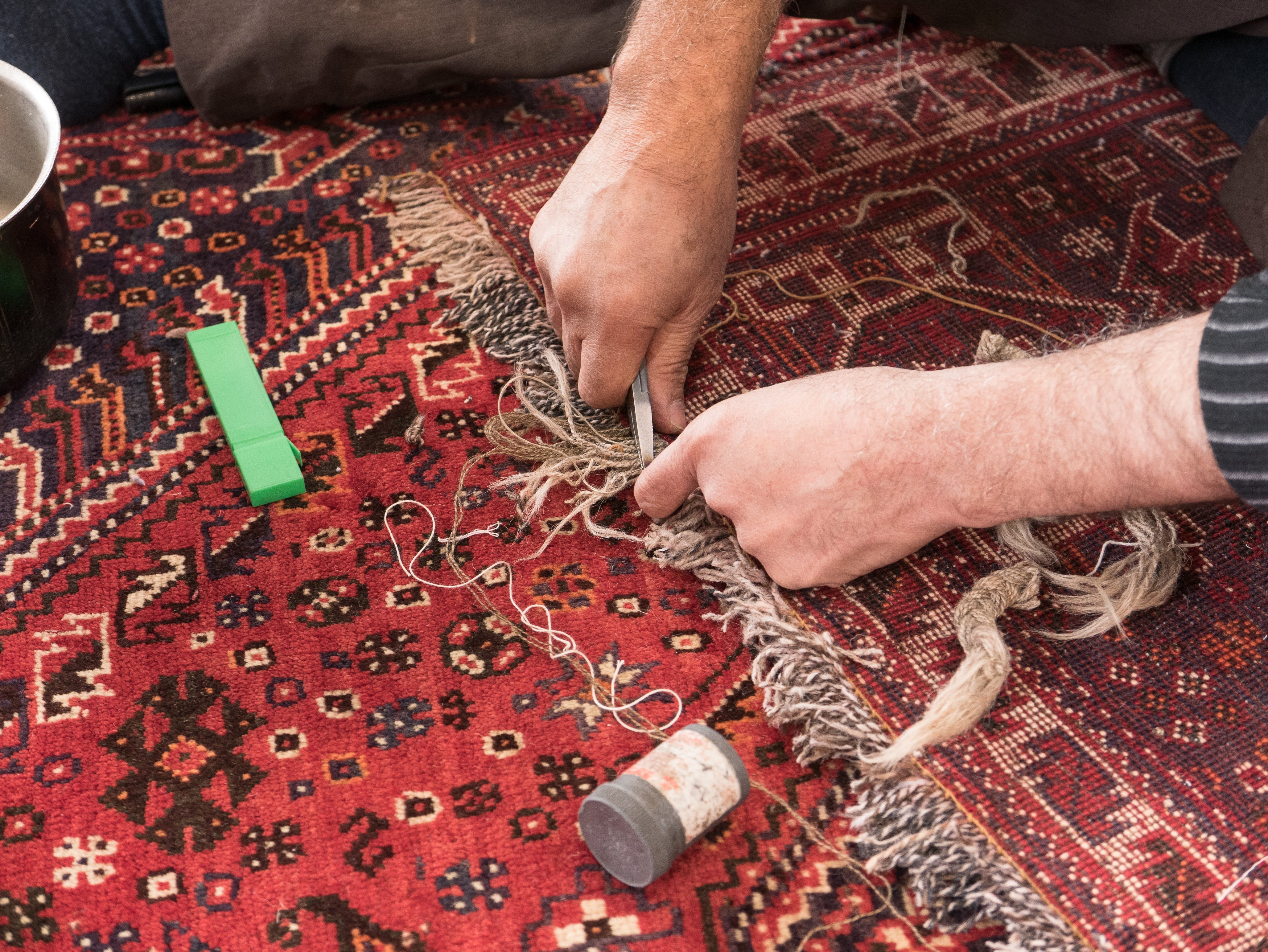
This Malayer has a history. It was hand-knotted around 1910. It has been cleaned thoroughly and is in good but unrestored condition. The fringes could do with a repair. The edges are damaged in places. The pile is worn in places. The rug has a tear 25 cm long. On one side, parts of the border are missing. We have not restored this Malayer because we feel it has a special presence exactly as it is. If you would like us to, we will of course be happy to restore the rug for you. Either way, this Malayer will give you pleasure for decades to come.
Material
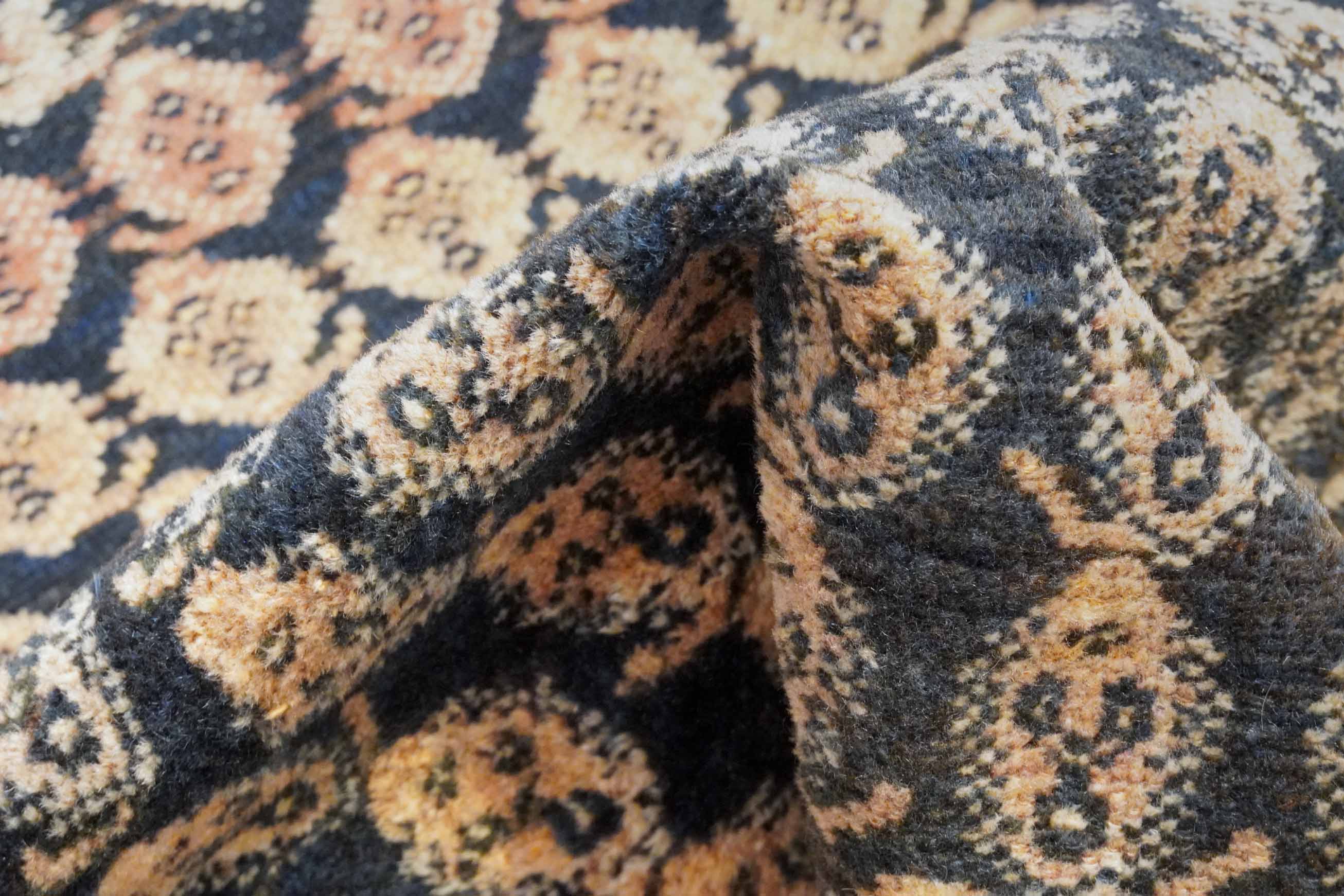
The pile of this Malayer was hand-knotted from high-quality new wool. New wool is obtained by gently shearing sheep. New wool is a renewable, natural raw material with a number of impressive qualities: thanks to the natural lanolin in the wool, the surface repels droplets of water and is naturally protected against dirt. Wool also offers excellent thermal insulation, helps regulate the indoor climate and dampens sound. The weft and warp threads of this Malayer are made of cotton. This versatile material is tear-resistant and elastic, which makes it particularly suitable for a hard-wearing foundation.
A note on the photos
Child labour? No thanks.
Child labour? No thanks. Children belong in school, not at a knotting frame or a loom. For us it therefore goes without saying that we only offer rugs made under fair conditions and without child labour.
We attach particular importance to humane working conditions and tolerate no child labour at any of our producers. Thank you for helping us to ensure fair conditions.
That is why we support the initiative Care & Fair against child labour in the rug trade.

Choose options
|
|
14-day home trial |
|
|
Free delivery & returns within the EU |