

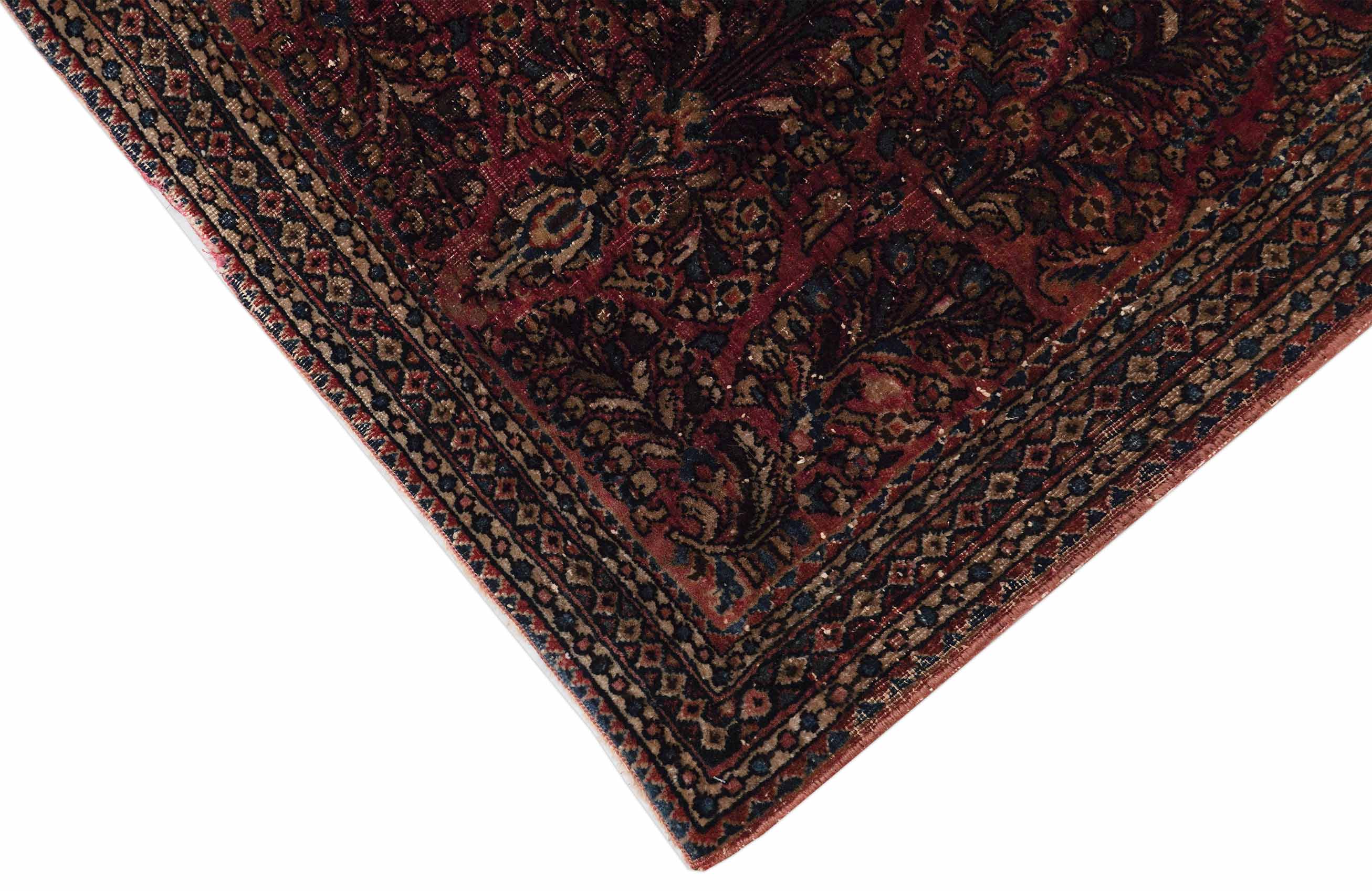

Antique Re-Import Sarough | 146 x 76 cm | Nr. Z-2898


|
14-day home trial |

|
Free delivery & returns within the EU |
Antique Re-Import Sarough
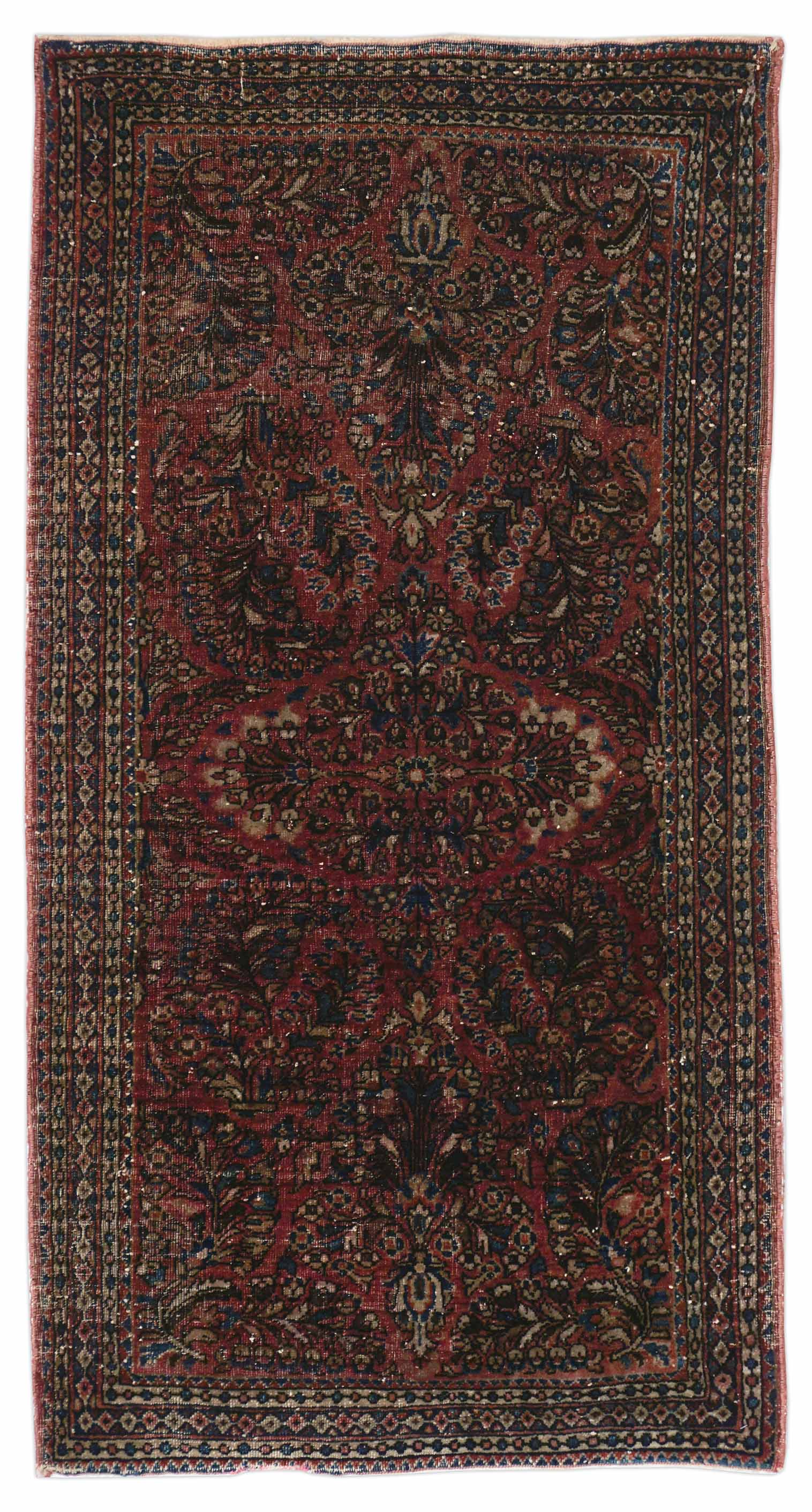
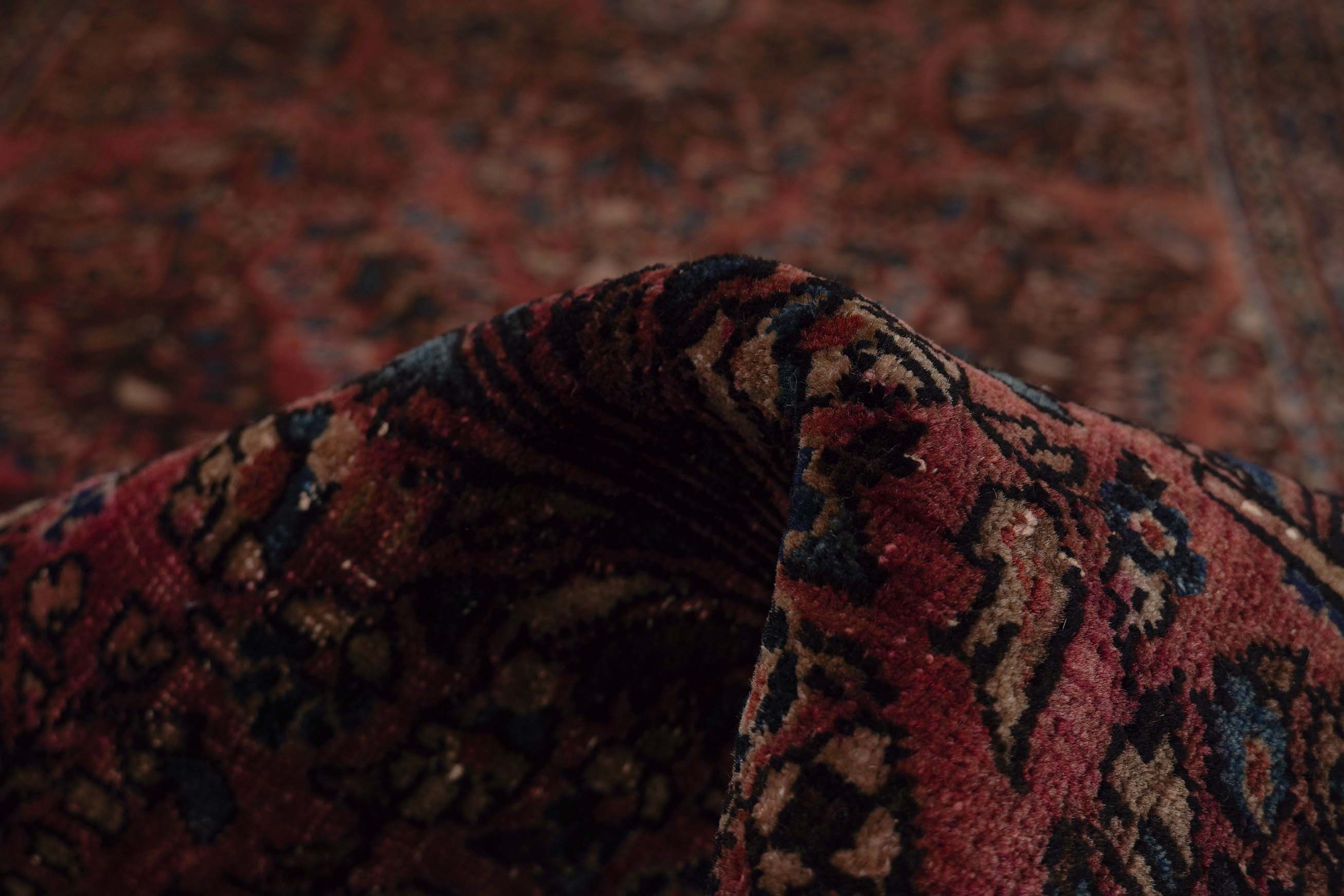
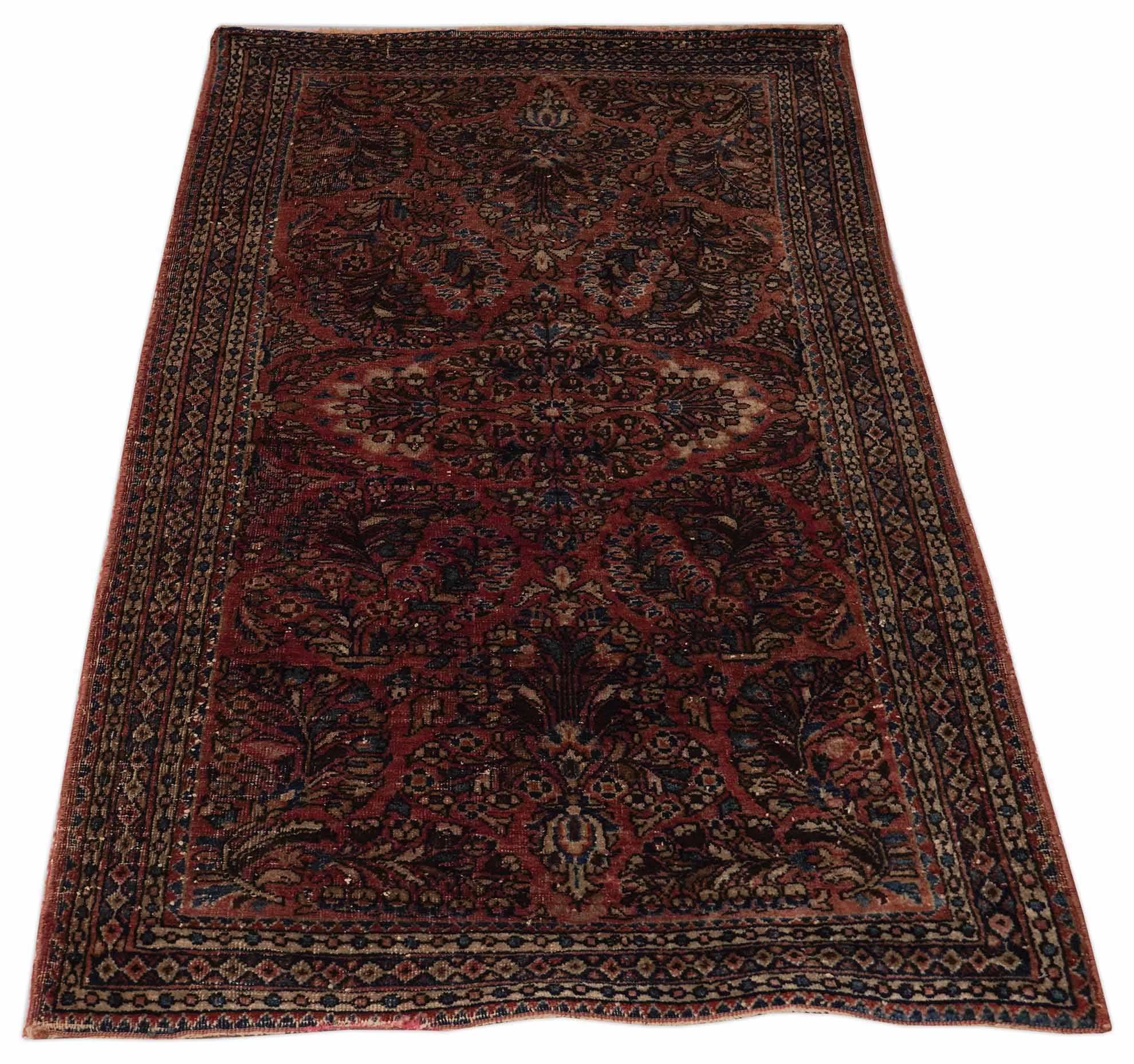
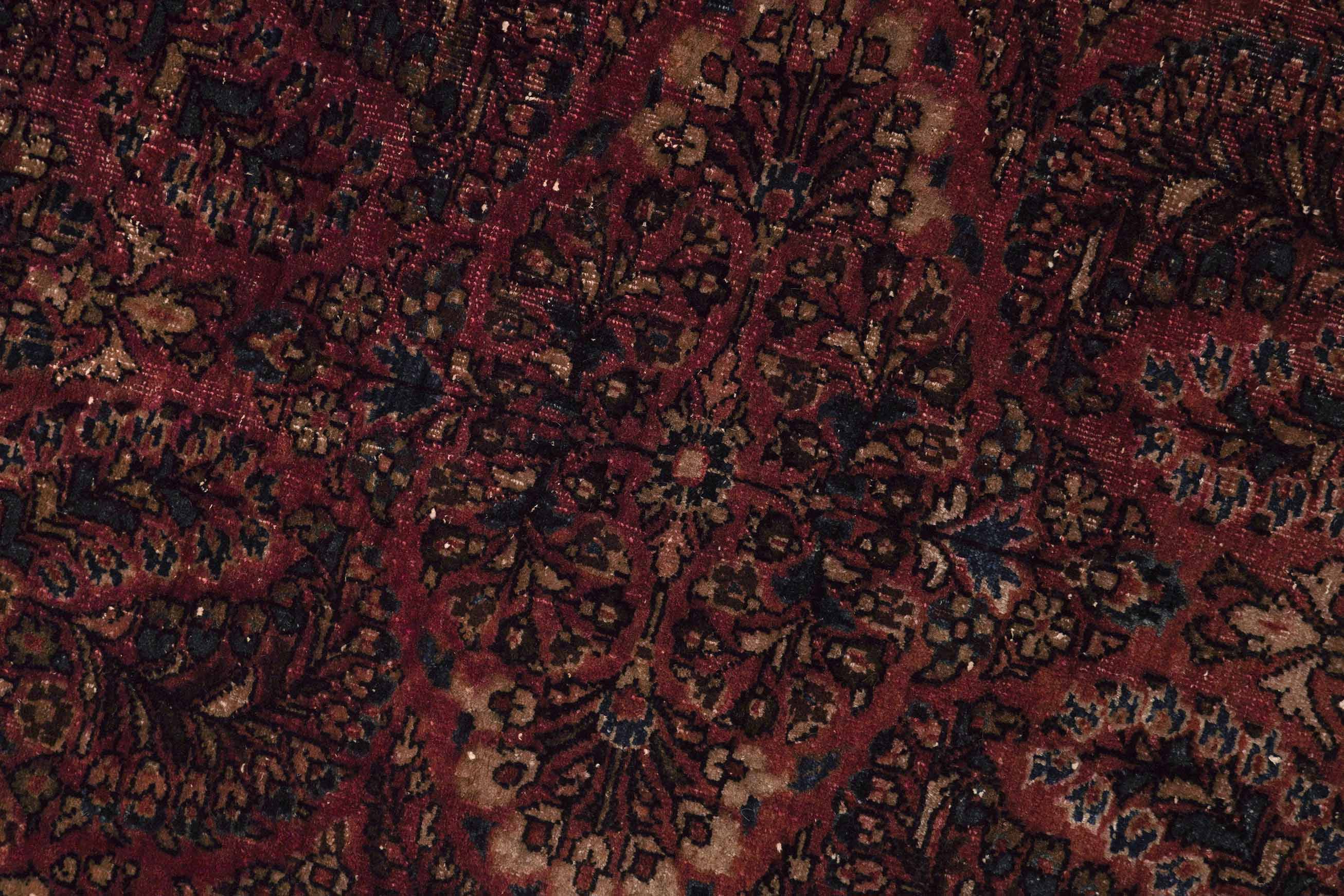
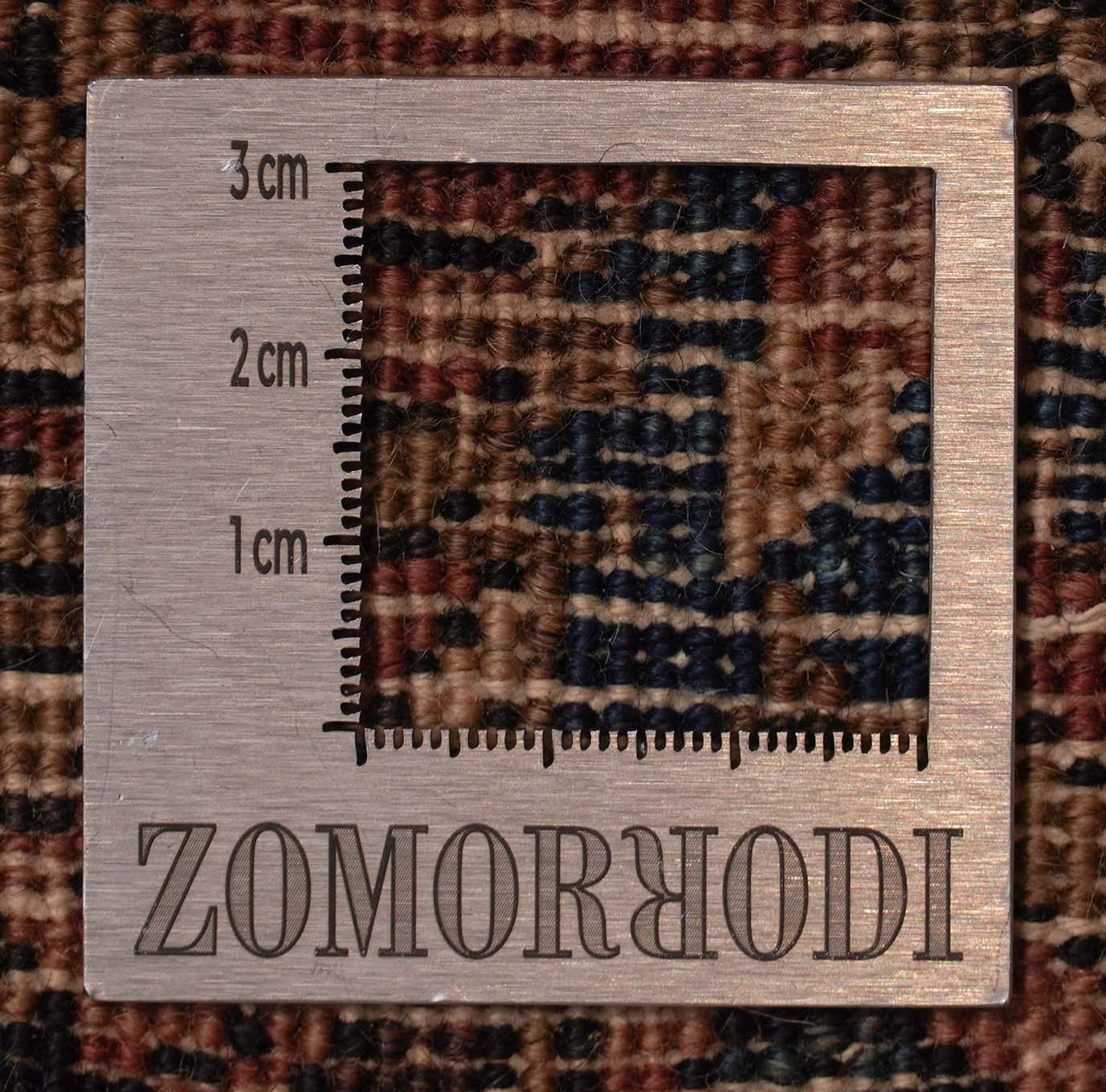
Craftsmanship and timeless elegance come together in this rug in rust red. The knot density of approx. 160,000 knots per m² makes the painstaking workmanship visible – right down to the fine execution of the details. At 146 × 76 cm it is well placed as a small living-room rug. Colouring and texture give any room a homely, exclusive note – a one-of-a-kind piece that will last for years.
| Delivery time | 2 days |
| Origin | Persia |
| Dimensions | 146 cm x 76 cm (= 1.11 m²) |
| Construction | hand-knotted |
| Material | Pile: wool (hand-spun, natural dyes) |
| knots | 160.000 |
| Condition | pre-owned and cleaned |
| Edition | one-of-a-kind piece |

Origin
This rug comes from Sarough (also spelled Sarouk, Saruk or Sarogh). Sarough is one of the best-known rug-knotting regions in Iran. Located in the western Persian province of Aarak, it takes in the provenances Arak, Djozan, Ghiasabad, Mahal, Malayer, Mohajeran, Sultanabad and Wiss. Persian patterns of every kind are knotted in Sarough, in some cases to the buyer's own specifications. Weavers there are especially fond of the neighbouring Farahan designs, of their own Sultanabad patterns and of the so-called Mir-i-Boteh pattern made up of paisley motifs. Typical of this type of rug is the very good wool quality of the pile, as the new wool comes from the Persian highlands. The foundation – warp and weft – is, however, usually made of cotton. In old and antique rugs you will often find a blue weft thread. The knotting is very fine and the pile relatively high.Especially sought after by collectors are the old and antique rugs of the Mahal and Malayer types that were knotted in Sarough between 1880 and 1930.
A special case in the art of rug knotting in Iran is the so-called American Saroughs, which were knotted between 1900 and 1940 specifically for the American market. The colours of the American Saroughs are limited to rust, red, blue and a few brown and beige tones, and they show a floral pattern that usually does without a central medallion. In the 1970s these pieces also became very popular in Iran and were re-imported there. Hence the name. Only a very few pieces found their way from Iran to Europe. This is why the pieces that were first re-imported into Iran are especially rare.
This antique Antique Re-Import Sarough is a collector's piece. It is around 106 years old and a truly special piece for that reason alone. Antique rugs such as this Antique Re-Import Sarough remain hugely popular and fetch top prices at renowned auction houses.
Material
The technique used to make the materials for the pile of this Antique Re-Import Sarough is more than 200 years old. The wool was dyed with natural dyes and spun by hand. Dyeing with natural or plant dyes is more complicated, more expensive and more time-consuming than dyeing with chemical colours. For a luminous red, for example, you need around one kilo of ground madder root as dyestuff per kilo of wool. For a strong yellow that is not too pale, you even need two kilograms of weld per kilo of wool. Spinning the wool is labour-intensive and time-consuming too. On top of that, fewer and fewer people still know how to spin wool by hand.But the effort is worth it: dyeing with natural colours allows the high-quality wool to keep its natural oil content. Wool that has been dyed with natural colours and spun by hand creates fascinating, shimmering patterns. The charm of hand-spun wool, with its slight irregularities and natural shades, comes into its own as a contrast in modern interiors, but equally in rooms furnished in a more traditional or country style.
The weft and warp threads of this Antique Re-Import Sarough are made of cotton. This versatile material is tear-resistant and elastic, which makes it particularly suitable for a hard-wearing foundation.
Condition
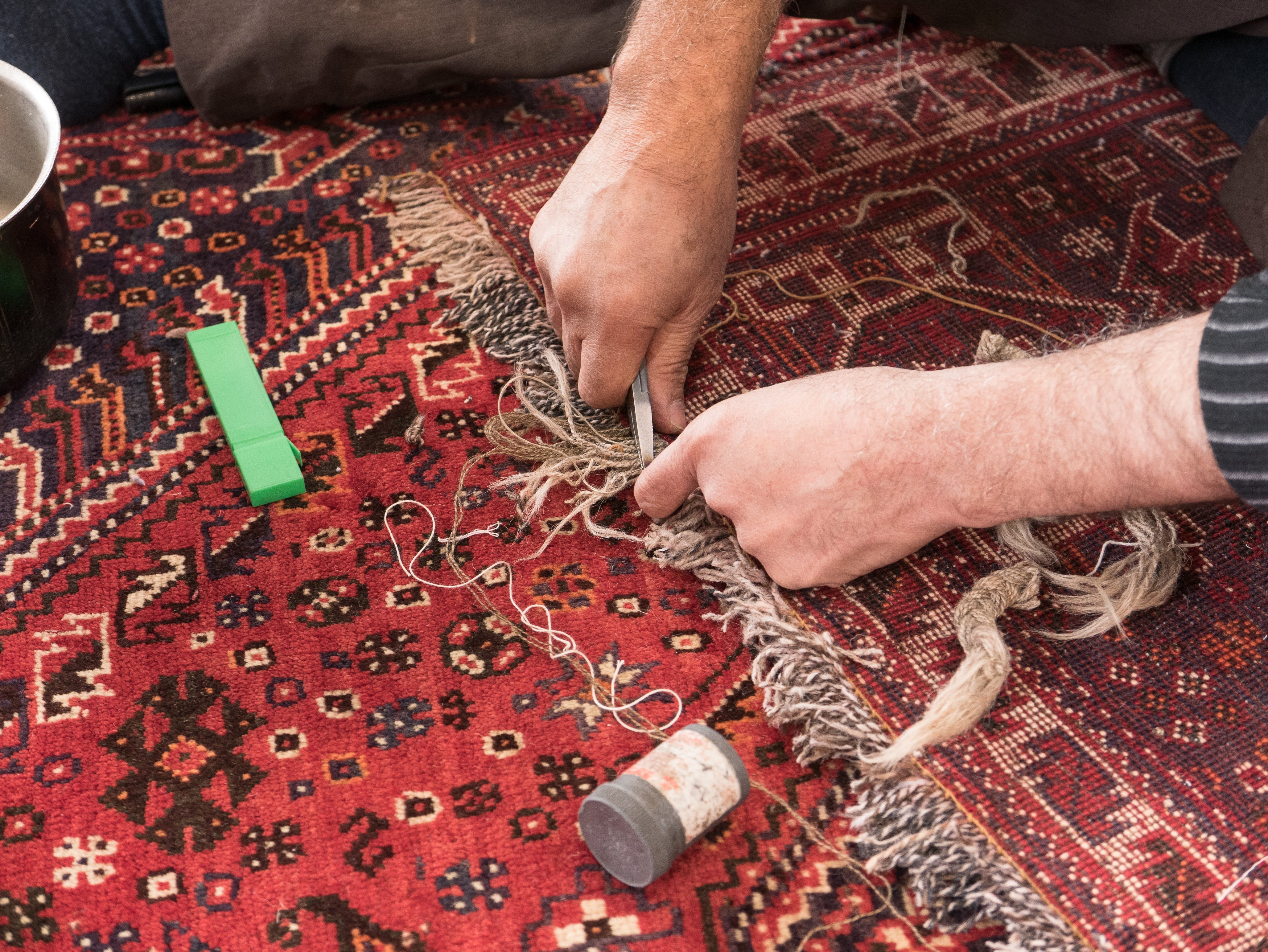
This Antique Re-Import Sarough has a story to tell. It was knotted around 106. It has been thoroughly cleaned and is in good but unrestored condition. The rug is heavily worn. The fringes on one side, as well as around 2.20m of one edge, are in need of repair. We have not restored this Antique Re-Import Sarough, because we feel it has a special charm exactly as it is. If you would prefer otherwise, we will of course gladly restore the rug for you. Either way, this Antique Re-Import Sarough will give you pleasure for decades to come.
A note on the photos
Child labour? No thanks.
Child labour? No thanks. Children belong in school, not at a knotting frame or a loom. For us it therefore goes without saying that we only offer rugs made under fair conditions and without child labour.
We attach particular importance to humane working conditions and tolerate no child labour at any of our producers. Thank you for helping us to ensure fair conditions.
That is why we support the initiative Care & Fair against child labour in the rug trade.

Choose options
|
|
14-day home trial |
|
|
Free delivery & returns within the EU |