
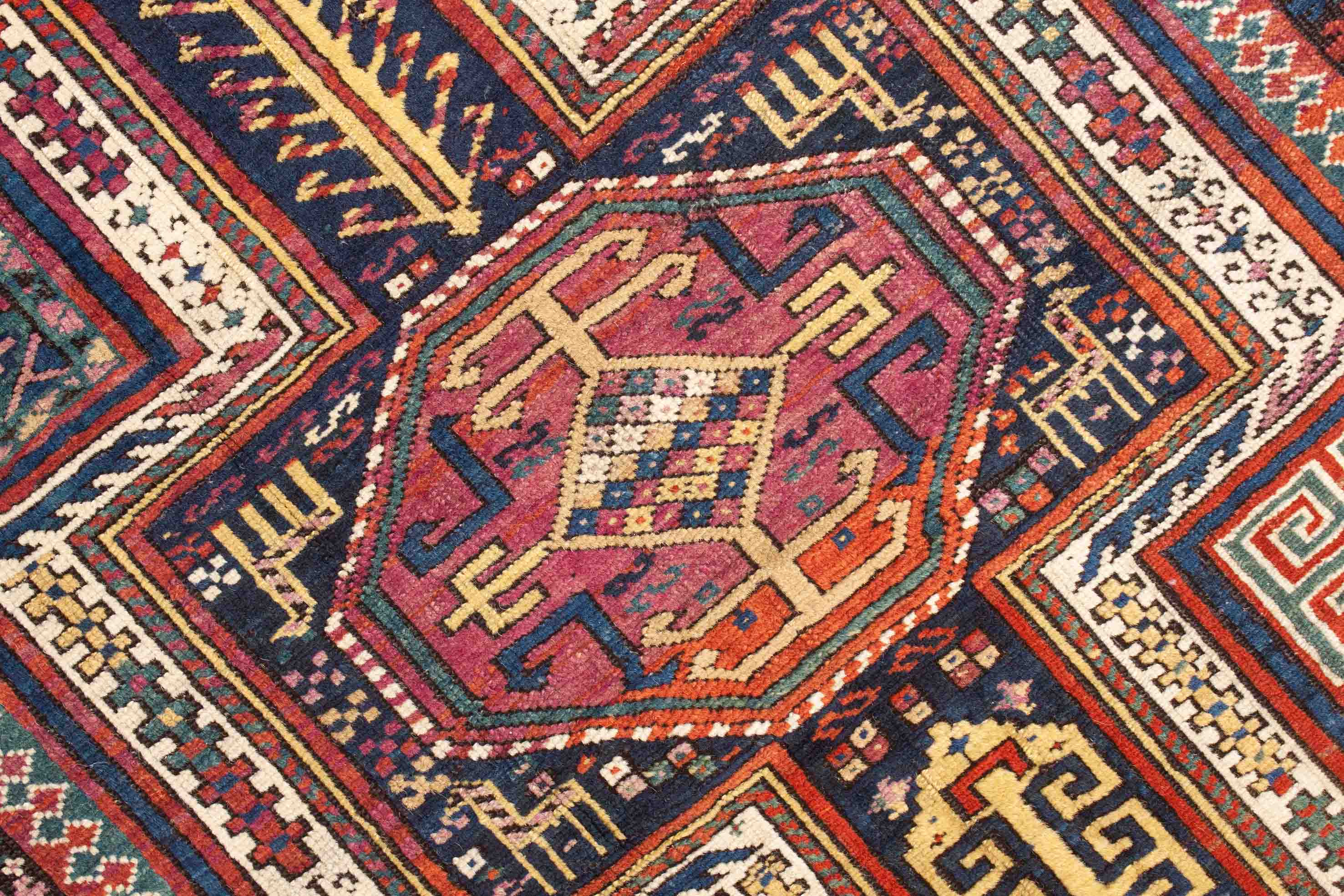
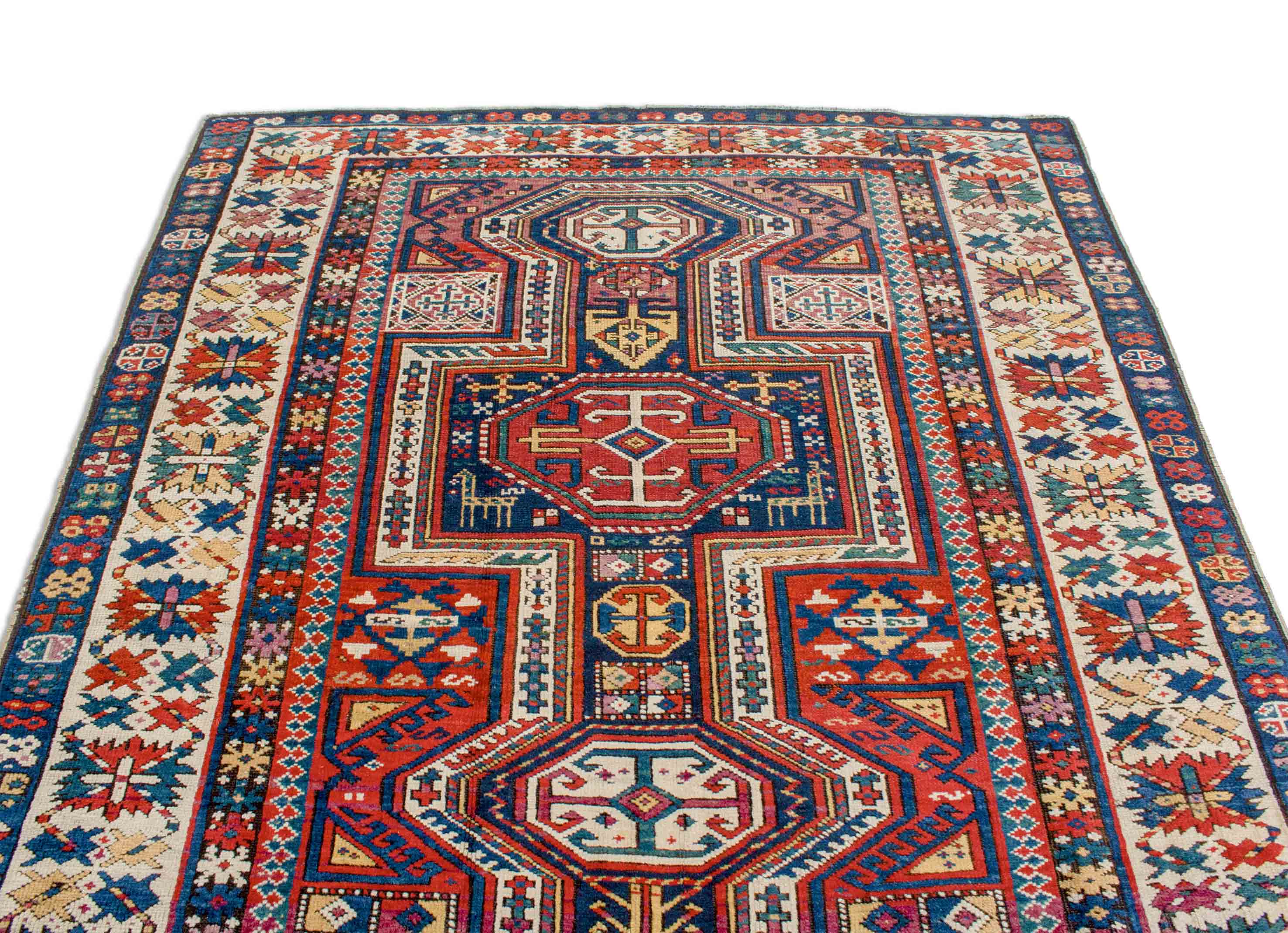
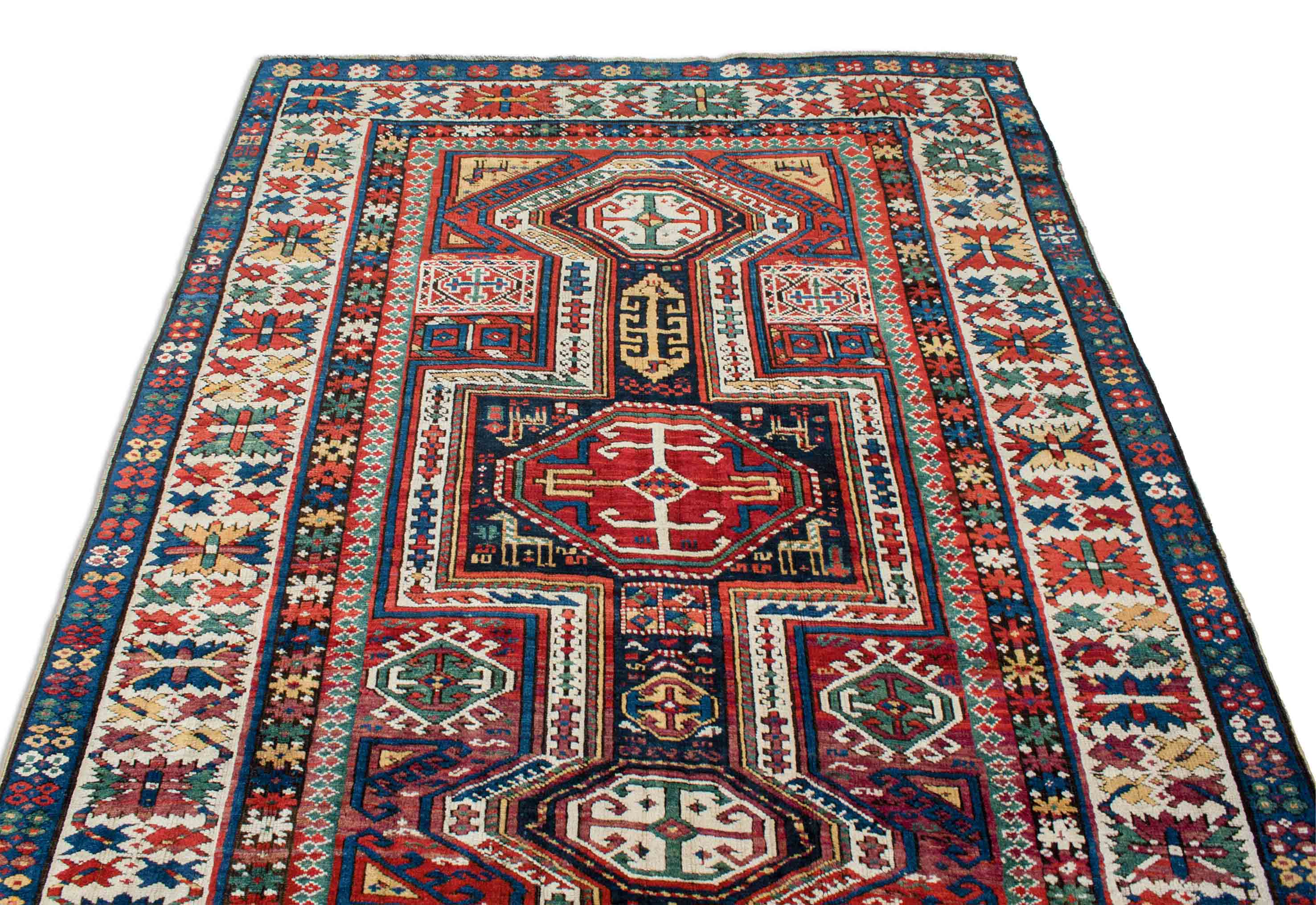
Antique Schirwan | 301 x 121 cm | Nr. 20440


|
1-3 working days delivery time (within Germany) |

|
14-day home trial |

|
Free delivery & returns within the EU |
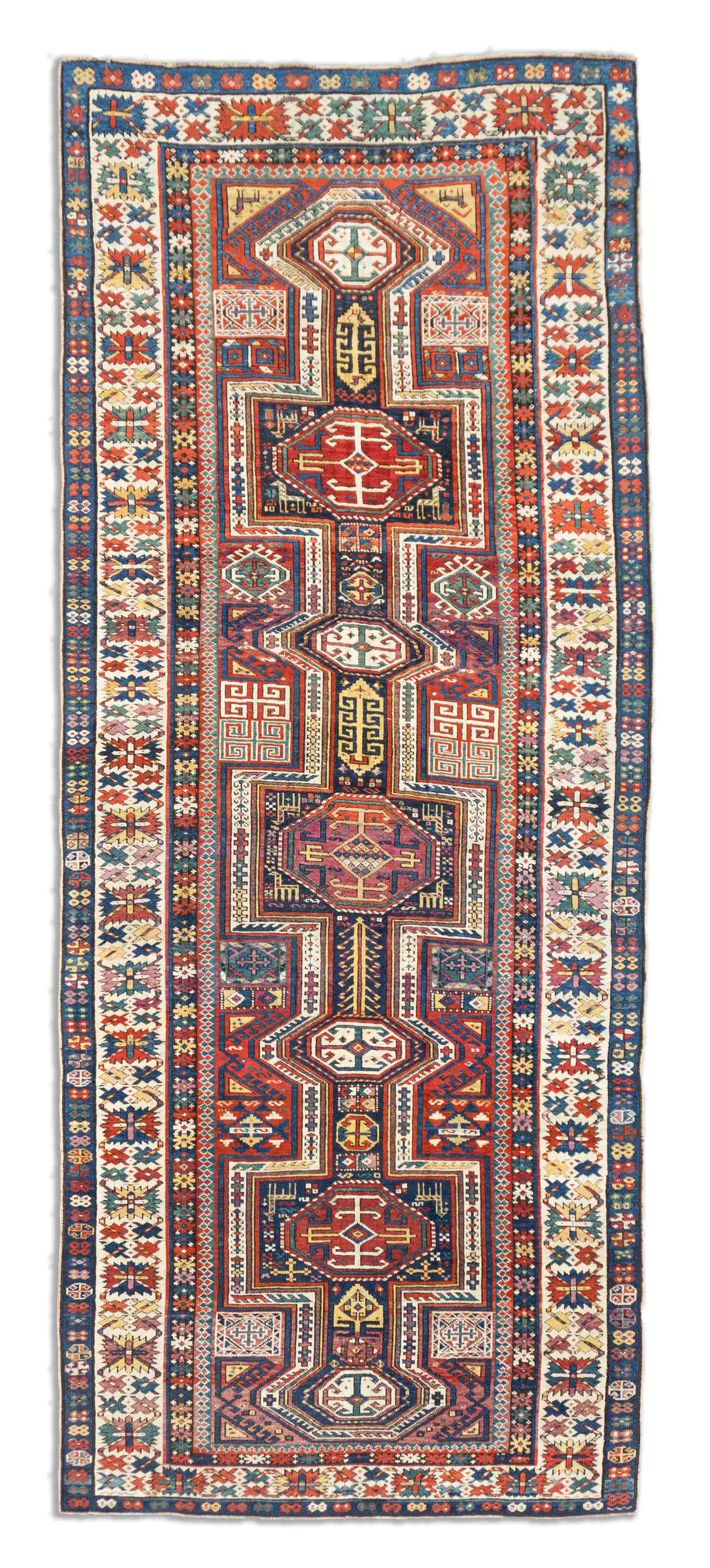
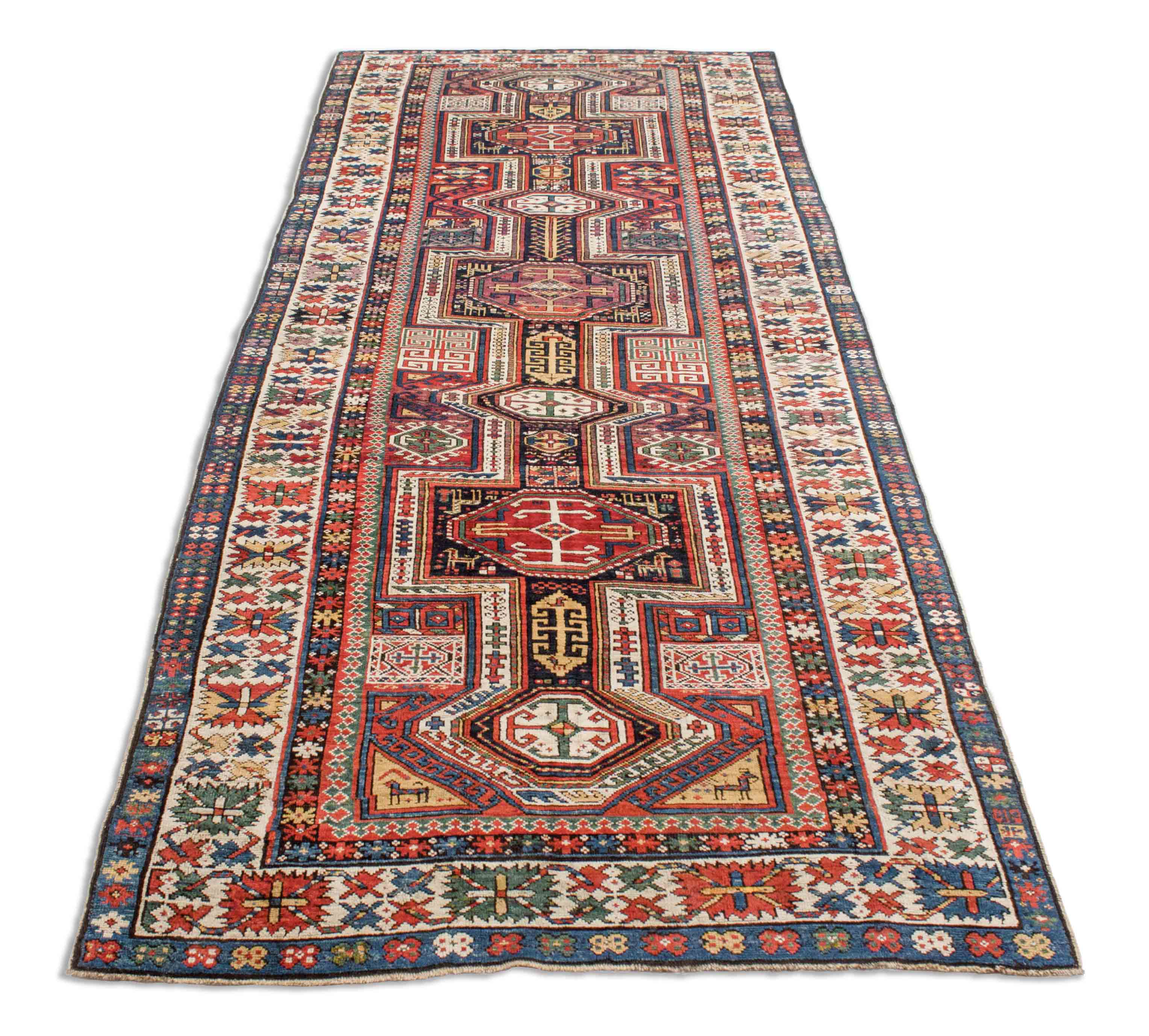
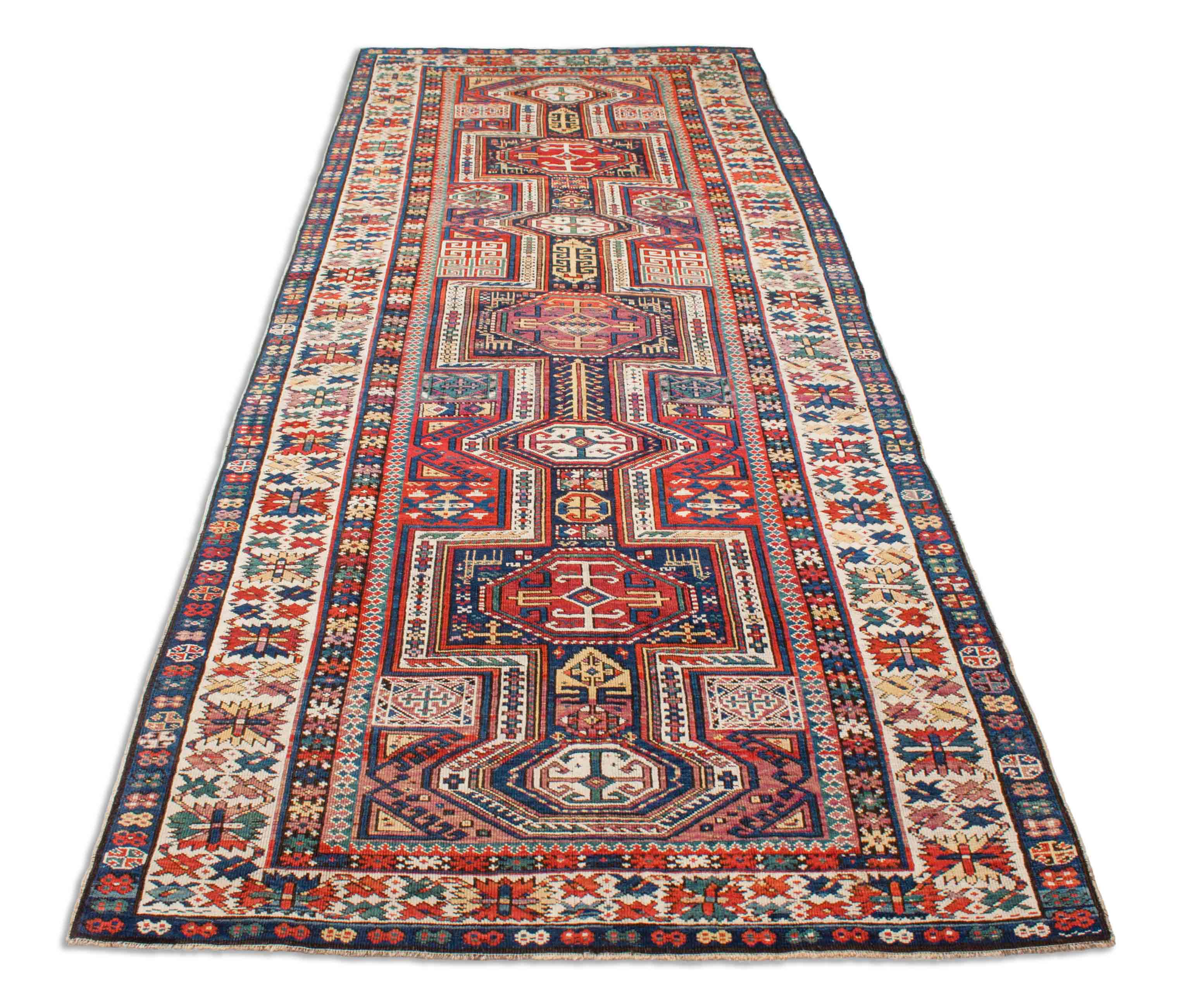
Geometric antique Schirwan runner, dark blue with border and diamonds
| Origin |
|
| Dimensions | 301 cm x 121 cm (= 3.64 m²) |
| Construction | hand-knotted |
| Material |
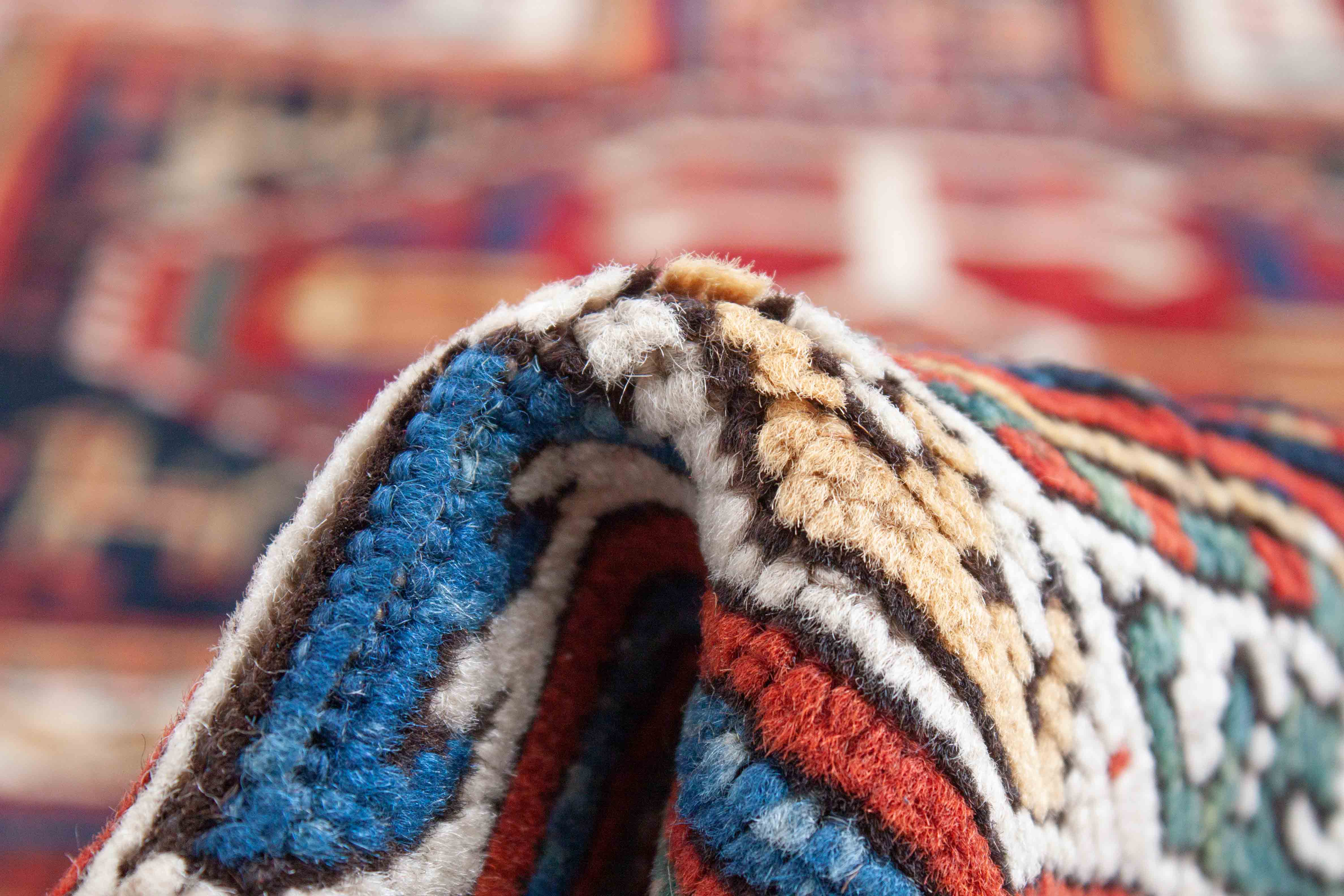
Pile: wool (hand-spun, natural dyes)
|
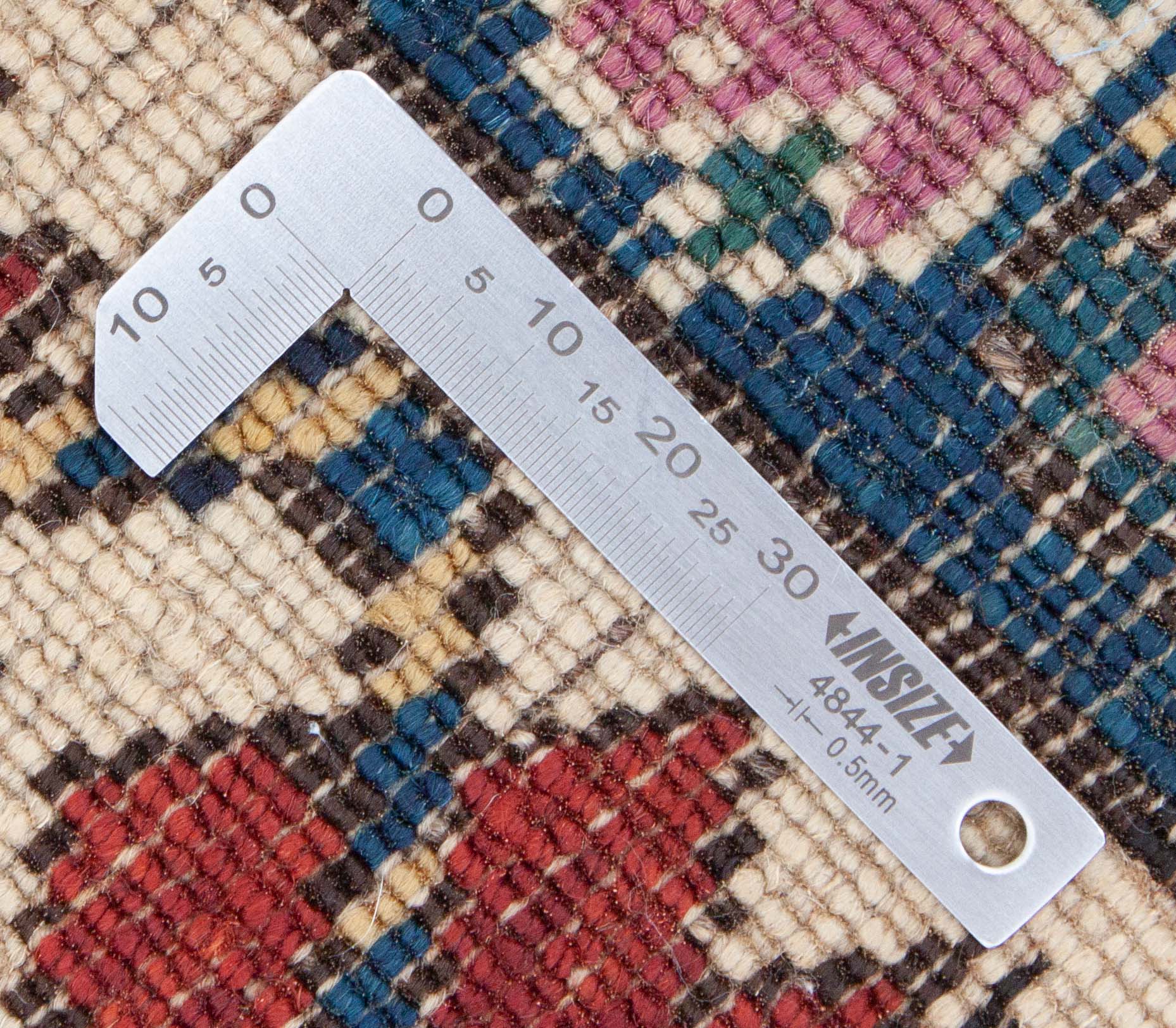
| knots per m²2 | 360.000 |
| Pile height | 3mm |
| Year of manufacture | 1885 |
| Colour | Dark blue, rust red |
| Edition | one-of-a-kind piece |

Origin
Shirvan (also Schirwan) rugs are knotted by hand in the eastern Caucasus, in the Shirvan region. Shirvan rugs are knotted from exceptionally fine wool and have a low pile. Old Shirvans are greatly valued and highly rated among collectors in Europe. They not infrequently reach a knot count of up to 300,000 knots per m².
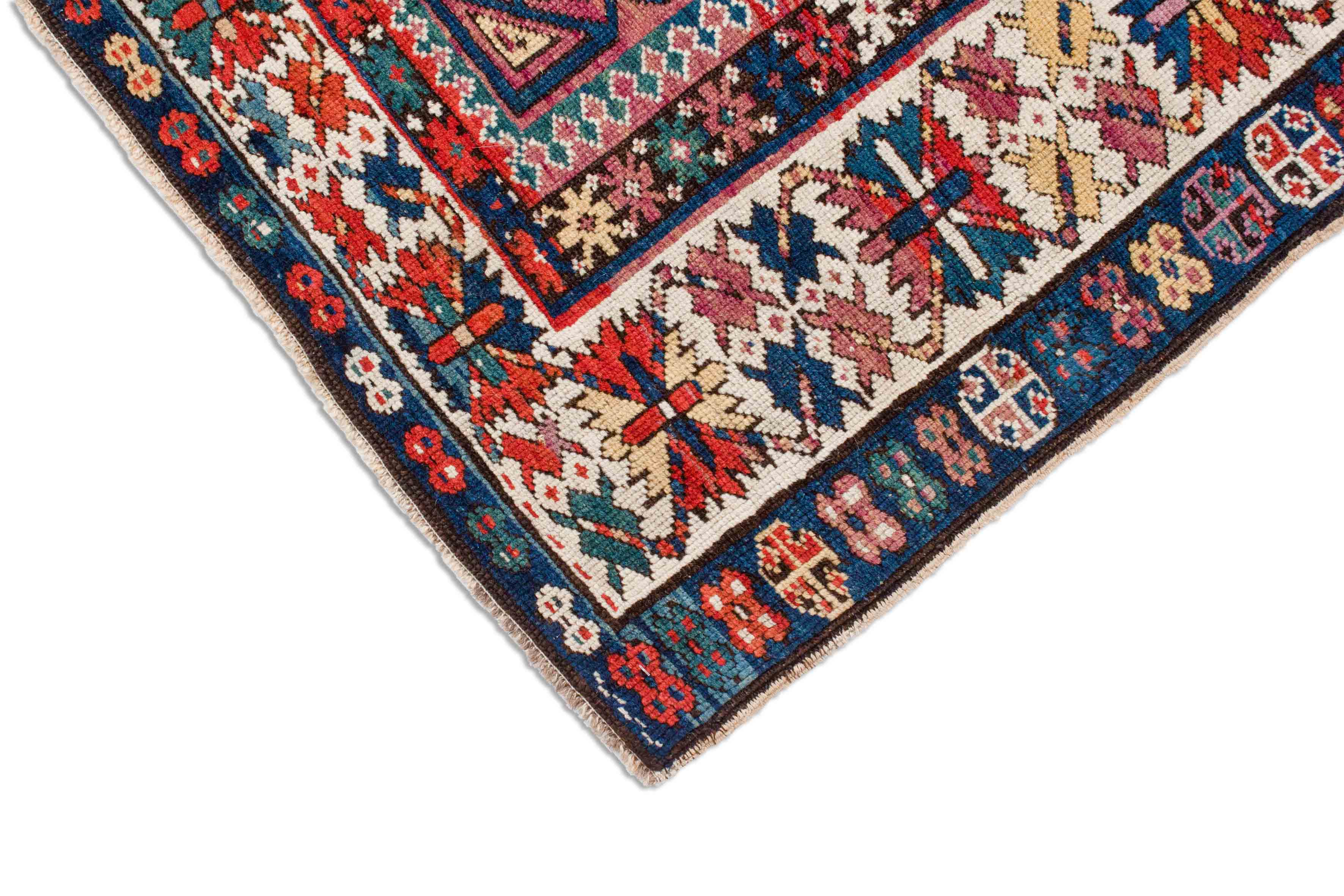
The wide border is characteristic of Schirwan rugs. A broad main stripe is framed by 2 – 6 guard stripes. The field is often given over to imaginative geometric patterns. In terms of colour, these rugs are typically knotted in blues, but reds and ivory tones appear as well. The many-coloured patterns give rise to a subtle and versatile palette. This antique Schirwan is a collector's piece. It is around 135 years old and a truly special piece for that reason alone. Antique rugs like this Schirwan are as sought after as ever and fetch top prices at renowned auction houses. The vividly colourful diamond border on a beige ground is exceptionally beautiful. In the central field, this antique piece carries an allover pattern in somewhat darker shades. The small, typically primitive animal figures are especially decorative and lighten the design.
Pattern
The abstract, geometric composition is what gives this Schirwan its understated elegance. The pattern flatters the design of the room and never draws attention away from the furniture, the décor or the architectural features. It sits beautifully in any setting and complements a room's furnishings in a subtle way.
The edge of the rug is graced by a surround (border). The border forms a wonderful contrast to the centre.
The repeating elements of this Schirwan rug have no particular centre. The recurring repeat pattern feels calming without ever becoming dull. Rugs with a repeat pattern are also described as all-over designs.
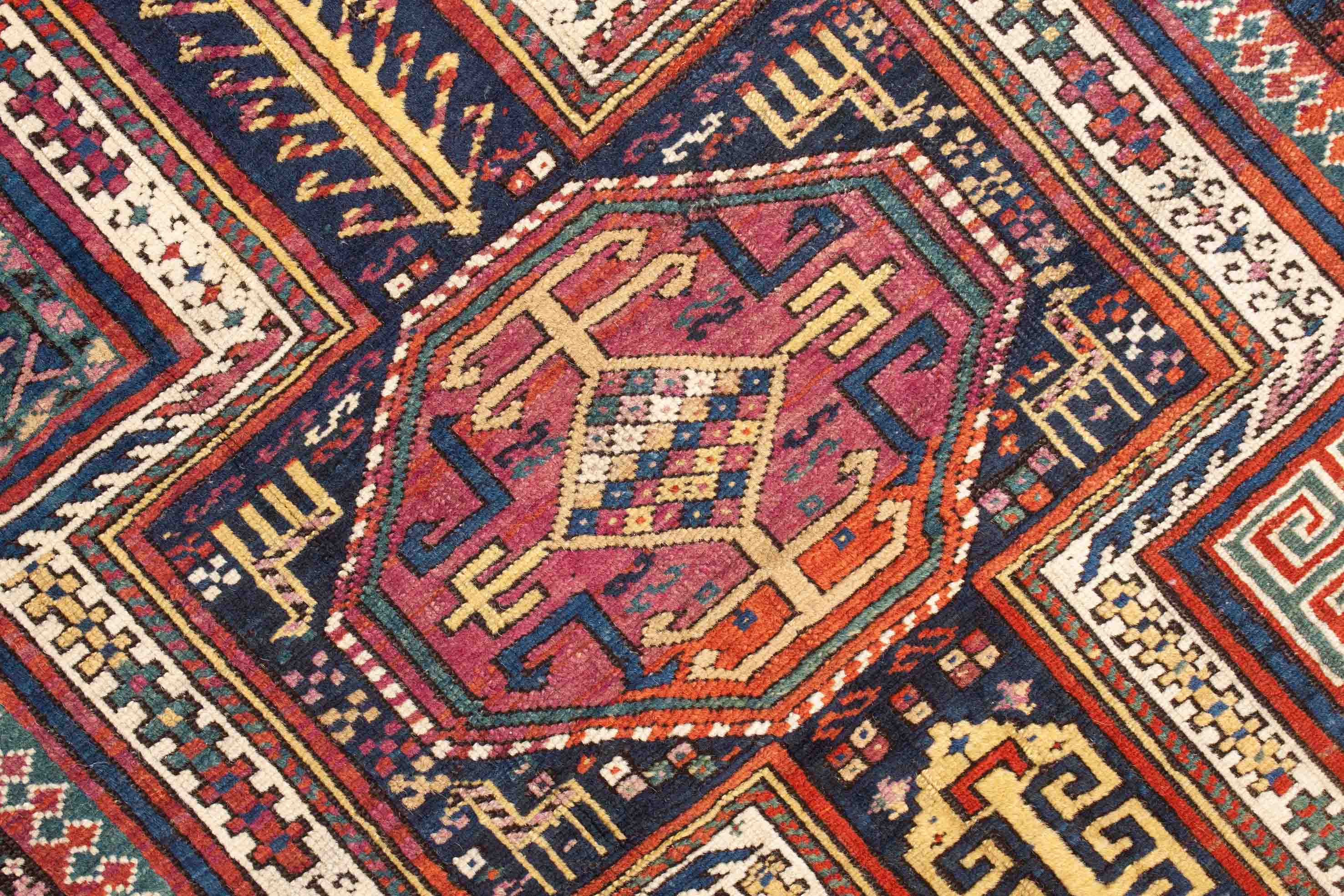
In the pattern of this Schirwan it is above all the diamonds that catch the eye. A diamond is a rhombus standing on one of its points, and in an Oriental rug its four equal sides can be serrated, stepped or set with hooks. The diamond is one of the oldest basic forms in the Oriental rug. In the Islamic world it carries a symbolic meaning: it stands for the immortality of the soul. That is why it is so often found as a filler motif.
Dark blue and rust red dominate the overall impression. The border is worked in dark blue and beige.
Condition
You aren't the first to take a liking to this Schirwan. It has had owners before you who valued it and lived with it. Age has left the pile thin. Otherwise this antique rug is extremely well preserved. It was hand-knotted around 1885. We have cleaned it thoroughly and restored it with great care. That is why it is – despite its age – in very good condition.
Material
The technique used to make the materials for this Schirwan's pile is over 200 years old. The wool was dyed with natural colours and spun by hand. Dyeing with natural or plant colours is more complicated, more expensive and more time-consuming than dyeing with chemical dyes. For a luminous red, for example, you need around one kilo of ground madder root as dyestuff per kilo of wool. For a strong yellow that isn't too pale, you even need two kilograms of weld per kilo of wool. Spinning the wool is just as time-consuming and labour-intensive. And fewer and fewer people still know how to spin wool by hand.
But the effort is worth it: dyeing with natural dyes lets the high-grade wool keep its natural lanolin content. Naturally dyed, hand-spun wool produces fascinating, shifting patterns. The charm of hand-spun wool, with its slight irregularities and natural shades, comes into its own as a contrast in modern interiors, but equally in rooms furnished in a traditional or country-house style. The foundation (weft and warp threads) of this Schirwan is made of new wool.
A note on the photos
Child labour? No thanks.
Child labour? No thanks. Children belong in school, not at a knotting frame or a loom. For us it therefore goes without saying that we only offer rugs made under fair conditions and without child labour.
We attach particular importance to humane working conditions and tolerate no child labour at any of our producers. Thank you for helping us to ensure fair conditions.
That is why we support the initiative Care & Fair against child labour in the rug trade.

Choose options
|
|
1-3 working days delivery time (within Germany) |
|
|
14-day home trial |
|
|
Free delivery & returns within the EU |