

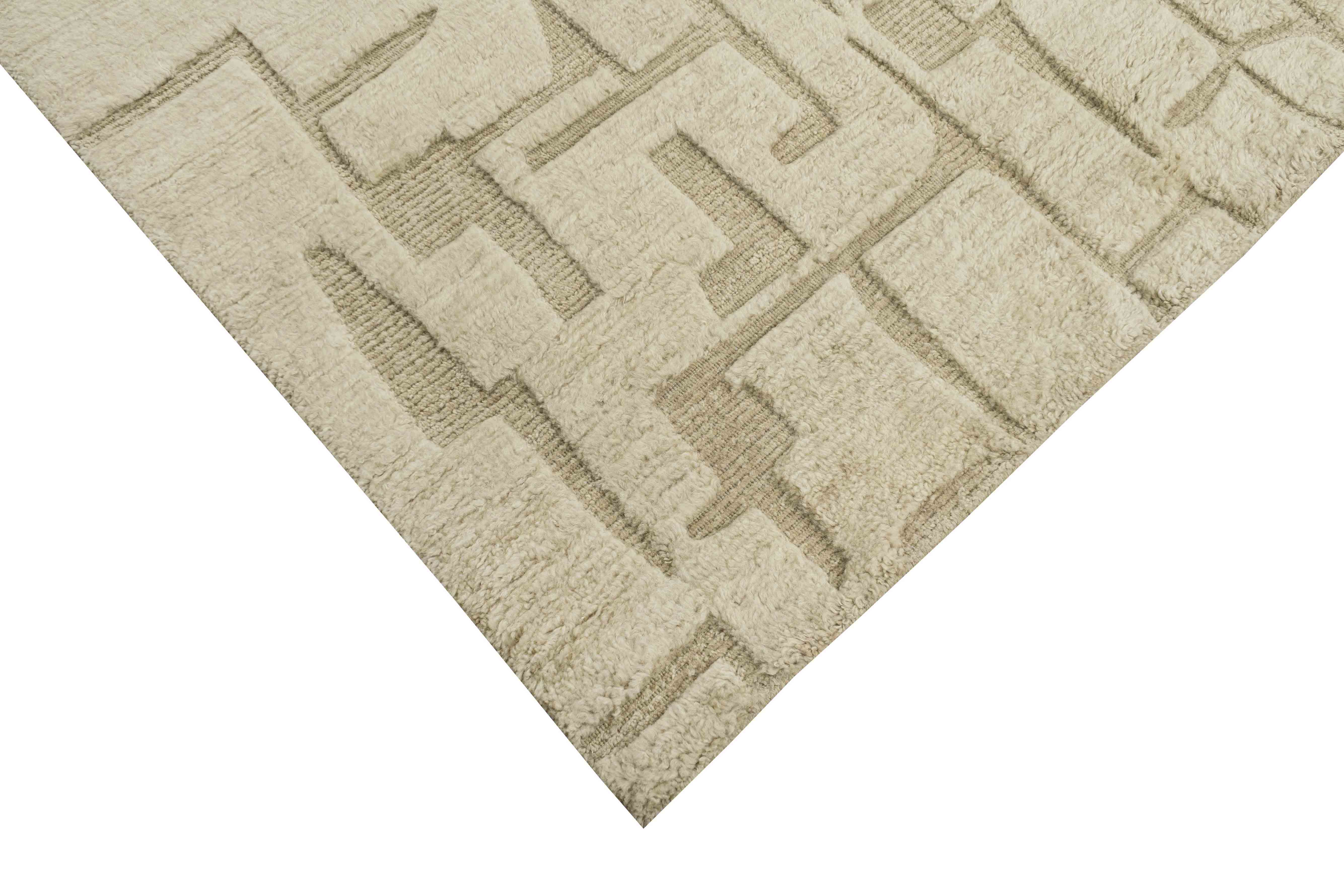
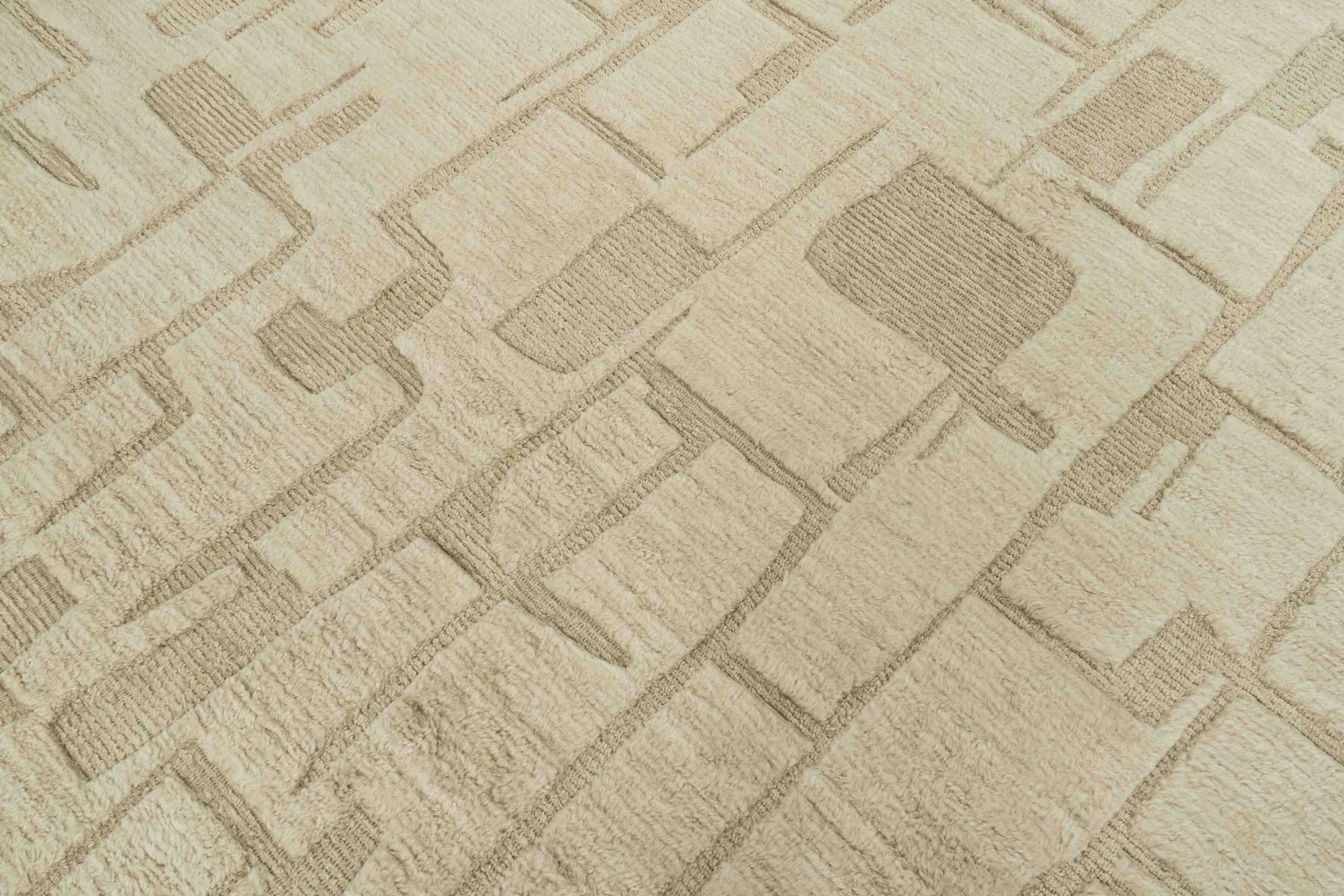
Berber Loom | 250 x 200 cm | Nr. Z-3065

|
14-day home trial |

|
Free delivery & returns within the EU |
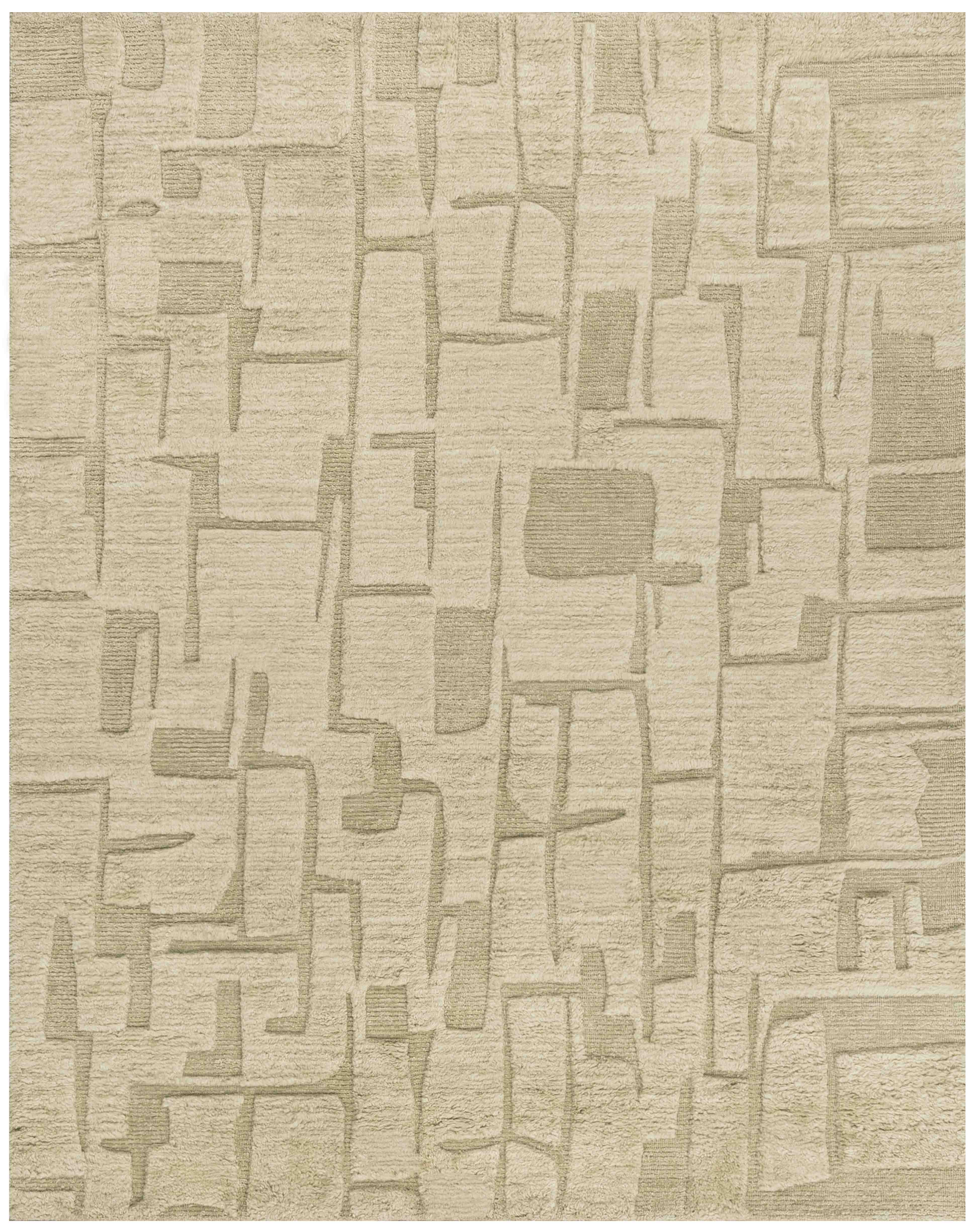
Plain Berber Loom, golden beige
| Origin |
|
| Dimensions | 250 cm x 200 cm (= 5 m²) |
| Construction | hand-looped |
| Material |
Pile: wool (hand-spun, natural dyes)
|
| knots per m²2 | 60.000 |
| Pile height | 15mm |
| Year of manufacture | 2024 |
| Colour | Gold-beige |
| Edition | one-of-a-kind piece |

Origin
Berber rugs were traditionally knotted for household use . The knotters, predominantly women, played freely and spontaneously – without pattern templates – with shapes and colours following their own personal ideas and their individual intuition. That is why the traditional pattern of Moroccan Berber rugs typically consists of geometric, partly colourful, abstract shapes and lines on monochrome backgrounds. Our Beni Berber rugs take their cue from these traditional patterns.
Architects and designers such as Alvar Aalto, Le Corbusier, Charles and Ray Eames, Frank Lloyd Wright, Marcel Breuer and Arne Jacobsen loved the naive and clear design of high-pile Moroccan nomadic rugs. Their powerful, artistic expression has an extraordinary presence and makes Berber rugs – quite apart from their fluffy feel – utterly distinctive.
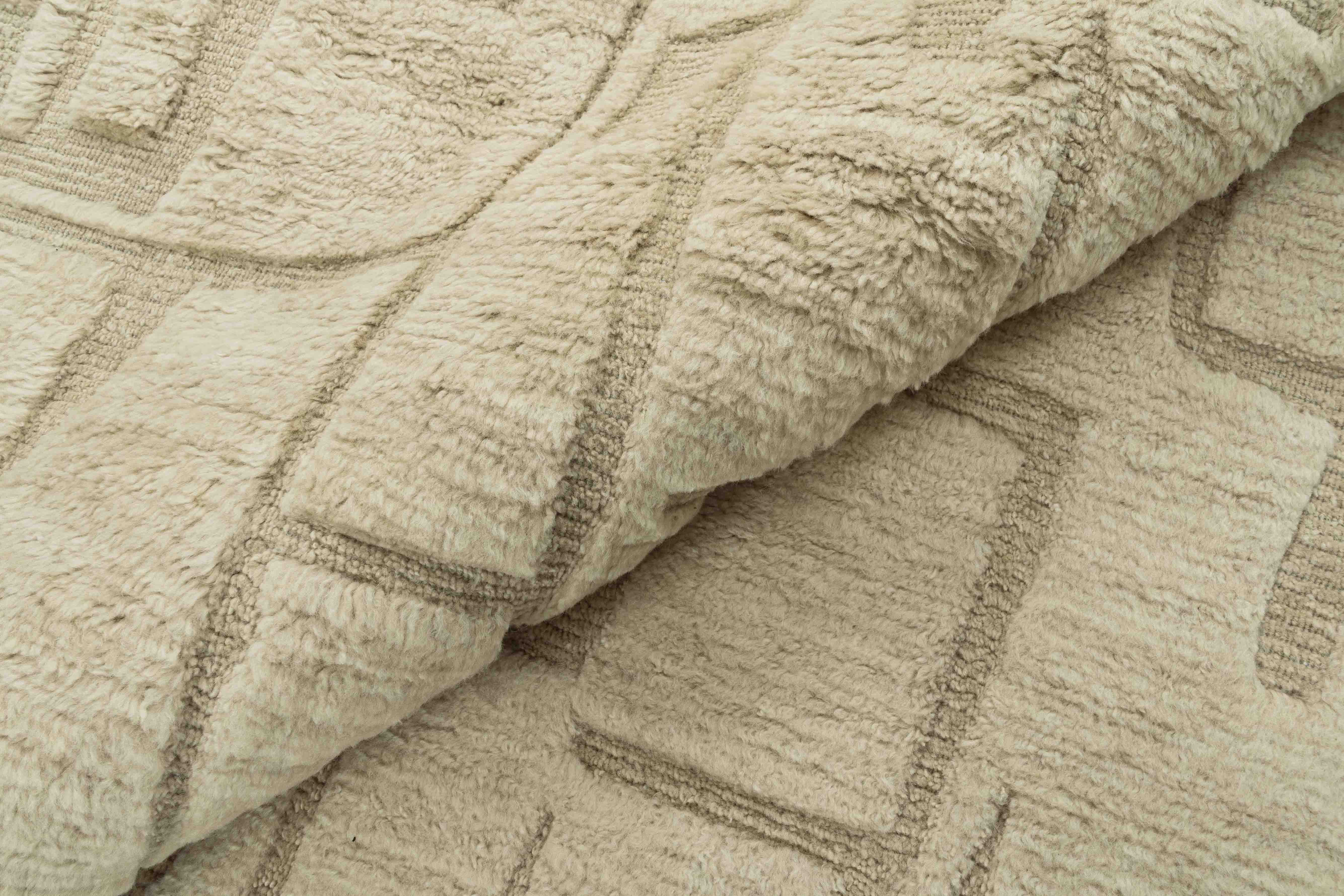
In its design and its traditional making, this rug is inspired by the classic Berber rugs, but it was produced in India. Instead of knotting the wool, the wool was hand-looped. This creates an equally fascinating, cosy look and structure.
Pattern
The pile is kept in a single shade of golden beige. The plain design is understated, yet it can also set a wonderful decorative accent. The monochrome look of this rug fits superbly into any setting.
Individual areas of the pattern have a higher pile than the rest of this rug. The patterns of modern rugs are tending to become simpler and more abstract. The play with different pile heights is new and has replaced more elaborate and more insistent patterns. Because parts of the pattern have been brought out two-dimensionally, however, the rug is anything but dull. The accentuation is out of the ordinary and creates an effect all of its own.
Material
The technique used to make the materials for the pile of this Berber Loom is over 200 years old. The wool was spun using natural dyes and spun by hand. Dyeing with natural or plant-based dyes is more complicated, more expensive and more time-consuming than dyeing with chemical colours. For a luminous red, for example, you need around one kilo of ground madder root as dyestuff per kilo of wool. For a strong yellow that isn't too pale, you even need two kilograms of the dye weld per kilo of wool. Spinning the wool is just as time-consuming and labour-intensive. And fewer and fewer people still master spinning wool by hand.
But the effort is worth it: dyeing with natural colours lets the high-quality wool keep its natural lanolin content. The wool dyed with natural dyes and spun by hand creates fascinating, shimmering patterns. The charm of hand-spun wool, with its slight irregularities and natural shades, unfolds as a contrast in modern interiors, but equally in rooms furnished more traditionally or in country style.
A note on the photos
Child labour? No thanks.
Child labour? No thanks. Children belong in school, not at a knotting frame or a loom. For us it therefore goes without saying that we only offer rugs made under fair conditions and without child labour.
We attach particular importance to humane working conditions and tolerate no child labour at any of our producers. Thank you for helping us to ensure fair conditions.
That is why we support the initiative Care & Fair against child labour in the rug trade.

Choose options
|
|
14-day home trial |
|
|
Free delivery & returns within the EU |