
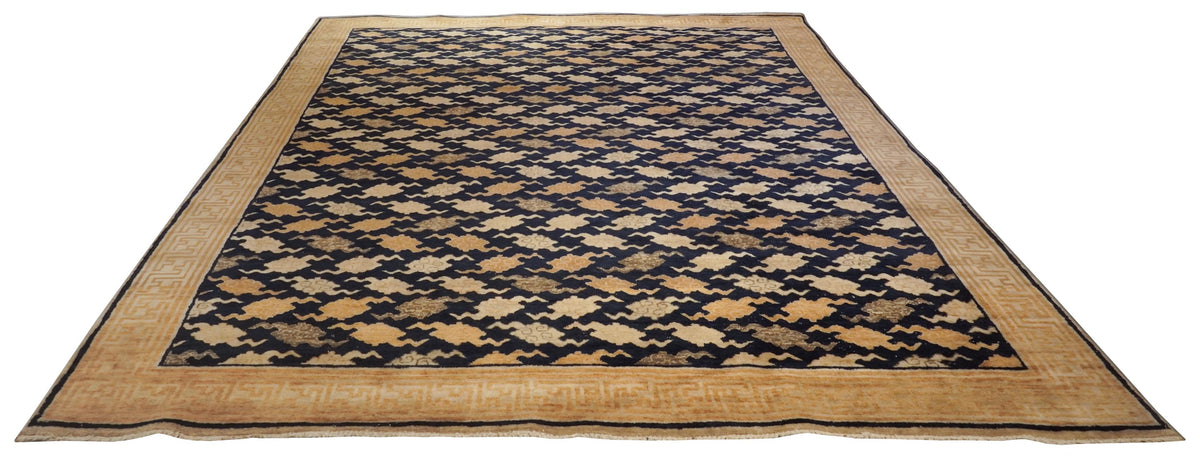
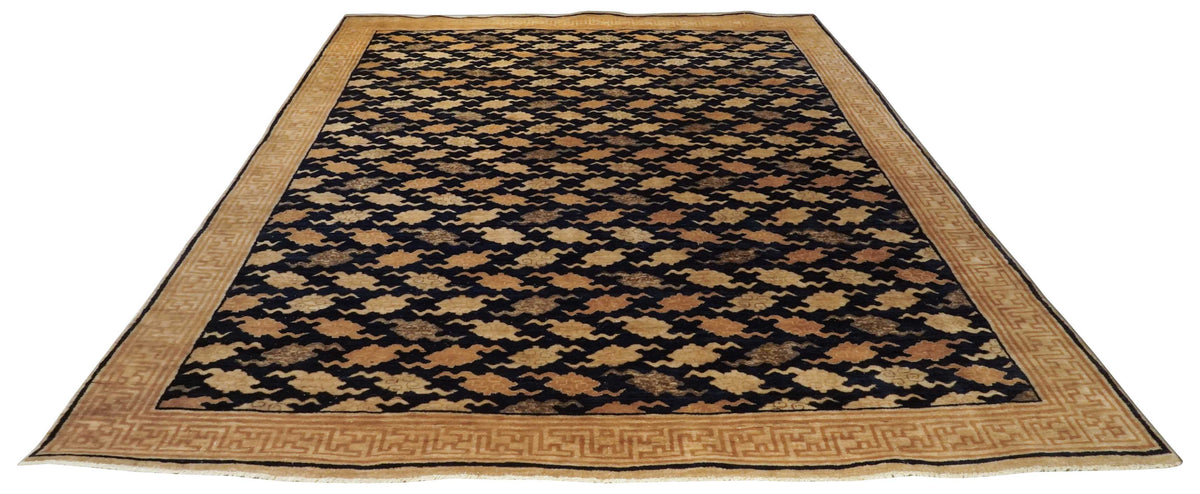
Farahan | 304 x 236 cm | Nr. Z-4649

|
14 Tage Probelegen |

|
Kostenlose Lieferung & Retoure innerhalb der EU |
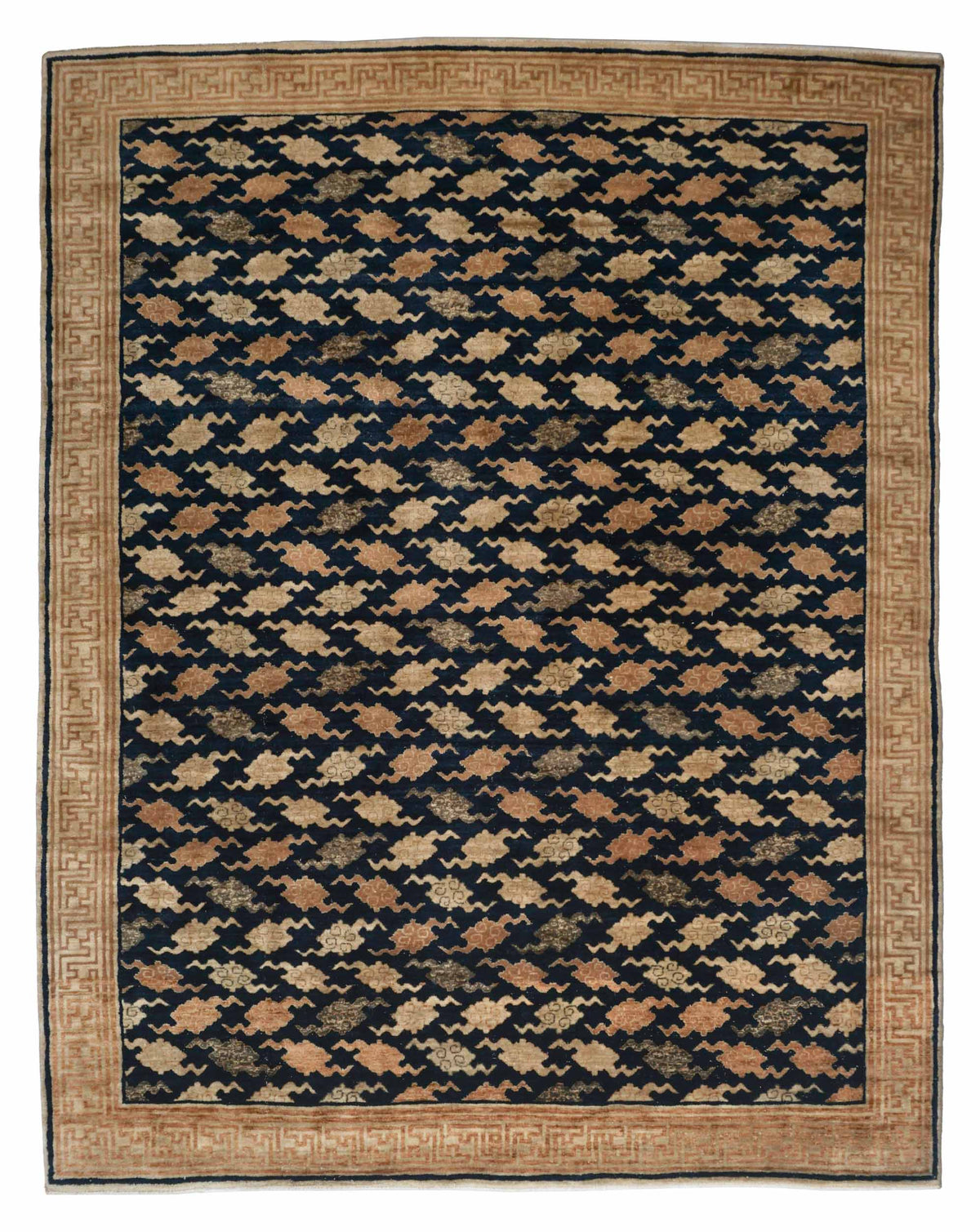
All-over patterned Farahan, dark blue with border
| Origin |
|
| Dimensions | 304 cm x 236 cm (= 7.17 m²) |
| Construction | hand-knotted |
| Material |
Pile: wool (hand-spun, natural dyes)
|
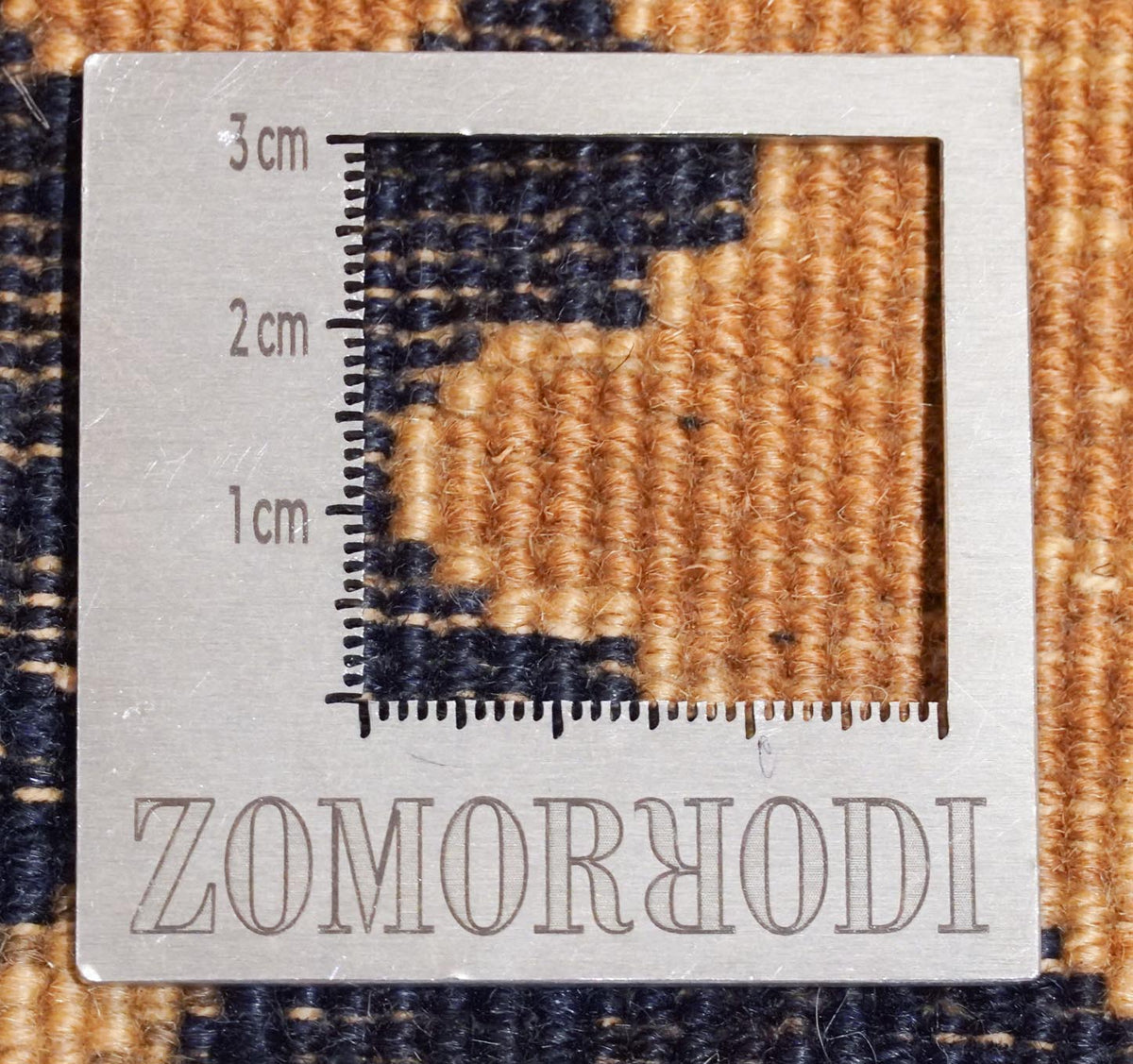
| knots per m²2 | 160.000 |
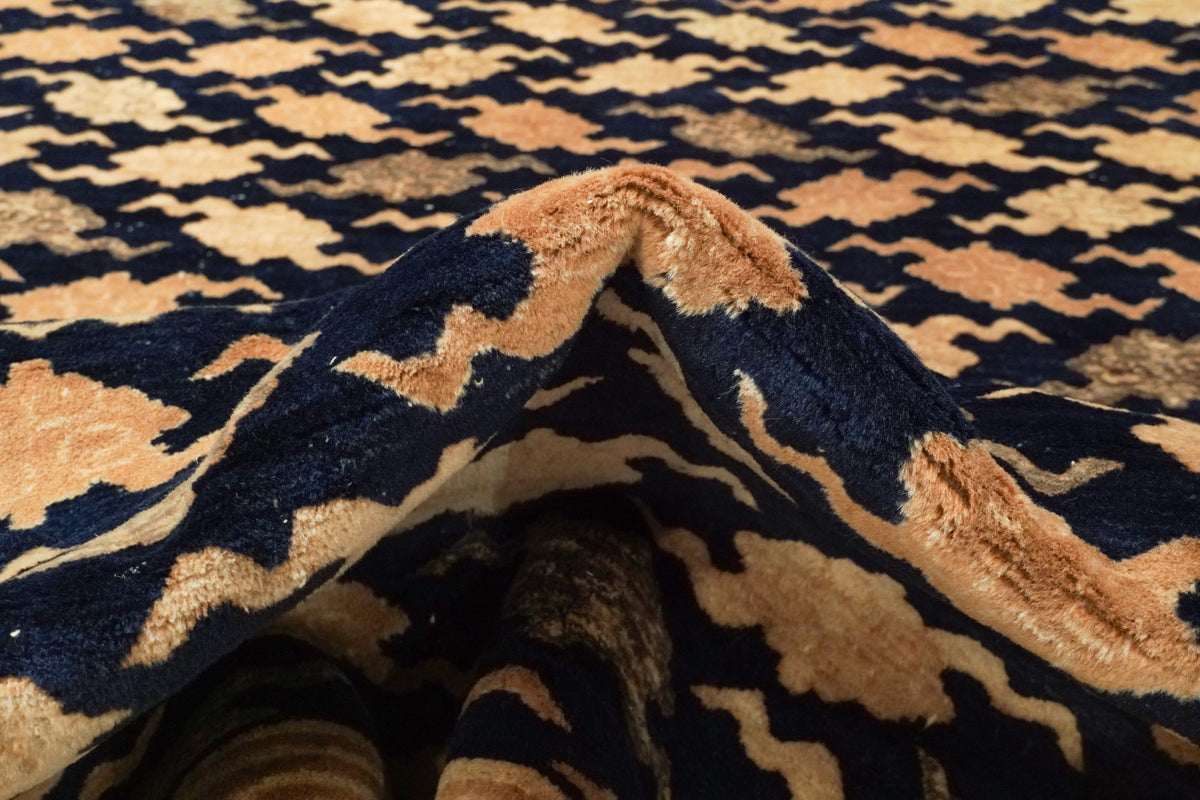
| Pile height | 9mm |
| Year of manufacture | 2010 |
| Colour | Dark blue, Beige |
| Edition | one-of-a-kind piece |
Origin
Farahan is a district in the central Iranian province of Markazi. It gave its name to a classic floral pattern found on rugs from the Mahallat region around the town of Sultanabad.
From the 1870s onwards, the Mahallat region around the town of Sultanabad (formerly Arak) grew into an important centre for knotting Persian rugs for export. A key role in this was played by the English import house Messrs. Ziegler & Co. Ltd., run by a Swiss merchant, which opened a branch in Mahallat in 1883.
These rugs — also called Mahal, Ziegler-Mahal or simply Ziegler — were knotted in the surrounding villages to Western colour and pattern specifications. The blend of European design briefs in lighter, calmer colouring with classic patterns in the style of Farahan and Sultanabad rugs was very well received in Europe.
The success was enormous, and Ziegler rugs became an international mark of quality. The exquisite flow of the many-petalled flowers is particularly impressive in Ziegler rugs. Well-preserved antique Ziegler rugs fetch record prices today – above all in the USA. For some years now, these antique Ziegler designs have been re-knotted in high quality in Pakistan and India.
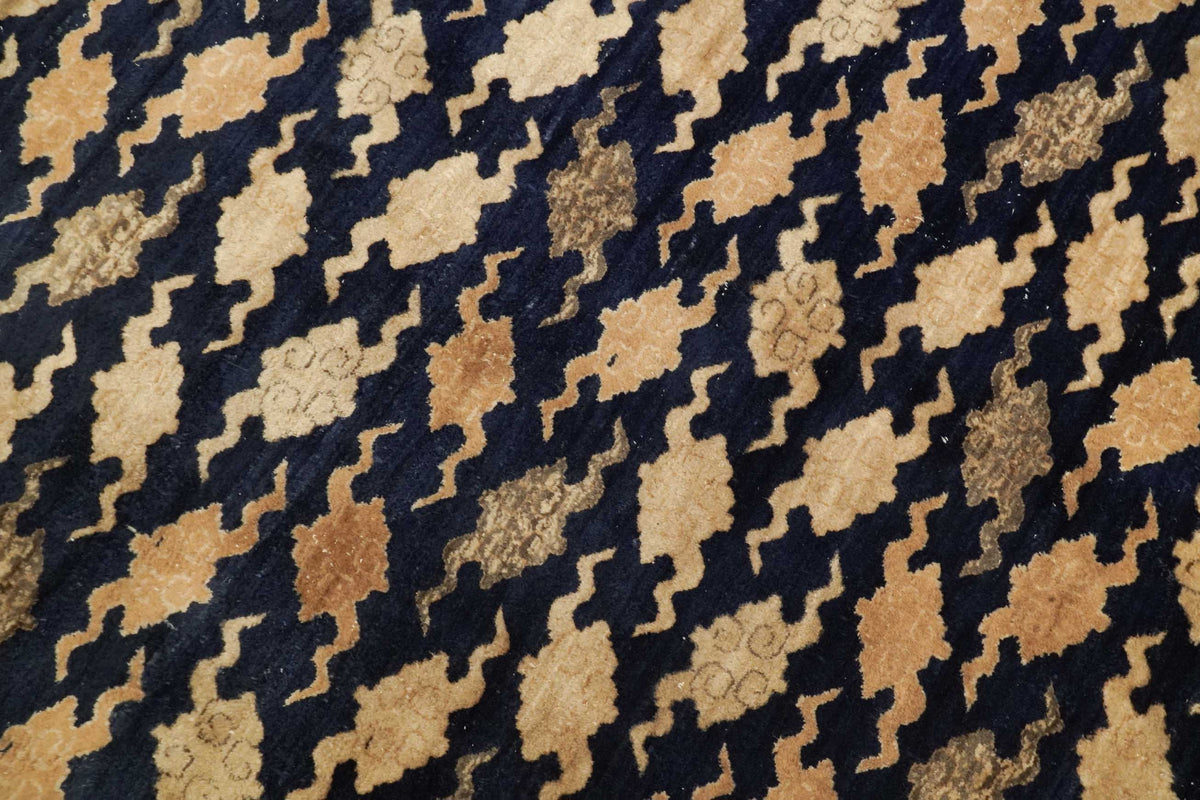
The newly made Ziegler rugs, worked from hand-spun wool dyed with natural colours, are part of a revival of hand-knotted rugs. The return to traditional techniques began in the early 1980s, driven among others by the so-called DOBAG initiative. At first, reproduction concentrated on the Ziegler rugs described above. After that, almost every traditional Persian pattern began to be reproduced. This gave rise to adaptations of antique rugs as well as contemporary designs with the charm of an antique rug. An exceptionally beautiful cloud-band pattern graces this wonderful rug.
Pattern
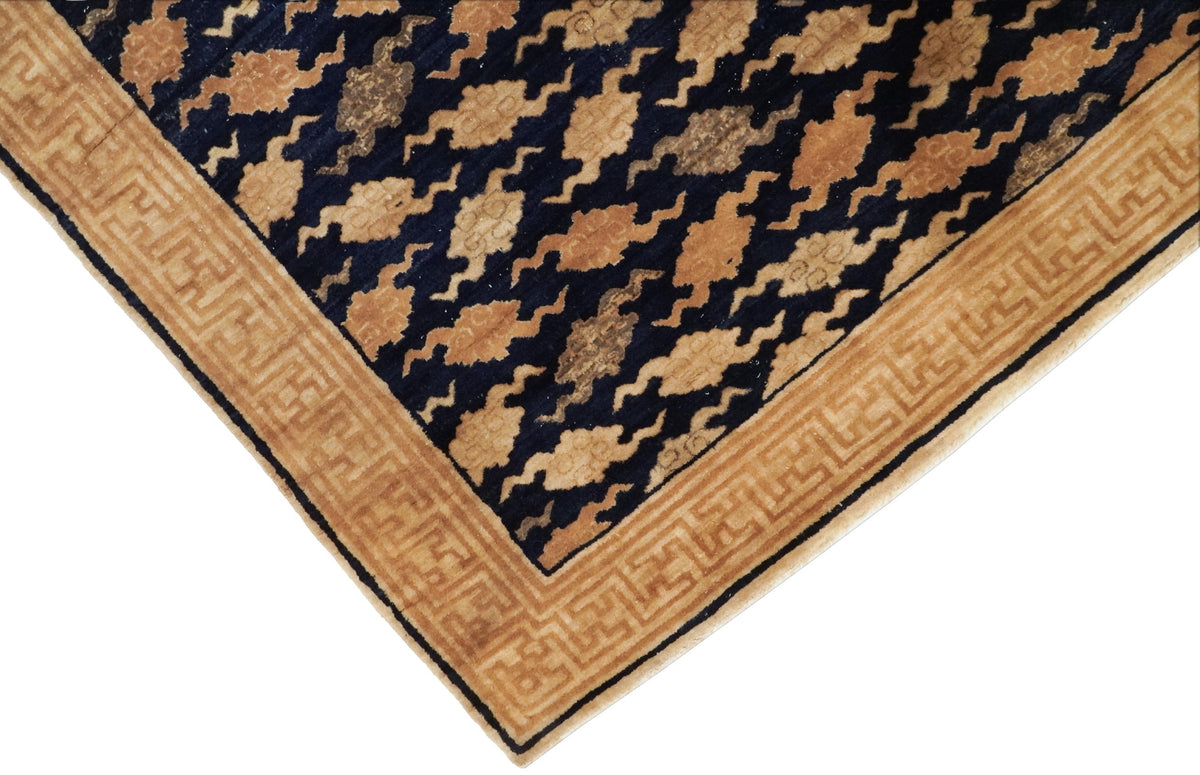
The edge of the rug is framed by a surround (border). The border forms a splendid contrast to the centre.
The repeating elements of this Farahan rug have no specific centre. The recurring repeat pattern feels calming, yet never dull. Rugs with a repeat pattern are also described as all-over patterned.
The surface of this Farahan has a mottled look. The shifts in tone and the light-and-dark shading of the pile yarn make the colours shimmer and keep the rug forgiving of dirt. These so-called colour shifts, known as abrash, give the rug a livelier feel. The mottling occurs because the wool of this Farahan was hand-spun. During dyeing, the natural pigments are absorbed to differing degrees.
The background of this Farahan is dark blue. The border is worked in dark blue and beige.
Condition
This Farahan has a history. The edges are damaged in places. This affects a length of: 6cm.In some spots a few white threads are visible. That is entirely normal with older rugs. They are the knot ends of the weft and warp weave that come to the surface over the years. In substance this is not a major problem.The pile is slightly worn. It was hand-knotted around 2010. We have cleaned it thoroughly and restored it with care. Despite its age, it is therefore in very good condition.
Material
The technique used to prepare the materials for this Farahan's pile is more than 200 years old. The wool was dyed with natural colours and spun by hand. Dyeing with natural or plant-based colours is more complex, more expensive and more time-consuming than dyeing with chemical dyes. For a luminous red, for example, you need around one kilo of ground madder root per kilo of wool. For a strong yellow that isn't too pale it even takes two kilograms of weld per kilo of wool. Spinning the wool is just as time-consuming and labour-intensive. And fewer and fewer people still know how to spin wool by hand.
But the effort pays off: dyeing with natural colours lets the high-quality wool keep its natural lanolin content. Wool dyed with natural colours and spun by hand creates fascinating, shimmering patterns. The charm of hand-spun wool, with its slight irregularities and natural shades, comes into its own as a contrast in modern interiors, but just as much in rooms furnished in a more traditional or country style. The weft and warp threads of this Farahan are cotton. This versatile material is tear-resistant and elastic, which makes it ideal for a hard-wearing foundation weave.
A note on the photos
Child labour? No thanks.
Child labour? No thanks. Children belong in school, not at a knotting frame or a loom. For us it therefore goes without saying that we only offer rugs made under fair conditions and without child labour.
We attach particular importance to humane working conditions and tolerate no child labour at any of our producers. Thank you for helping us to ensure fair conditions.
That is why we support the initiative Care & Fair against child labour in the rug trade.

Choose options
|
|
14 Tage Probelegen |
|
|
Kostenlose Lieferung & Retoure innerhalb der EU |