
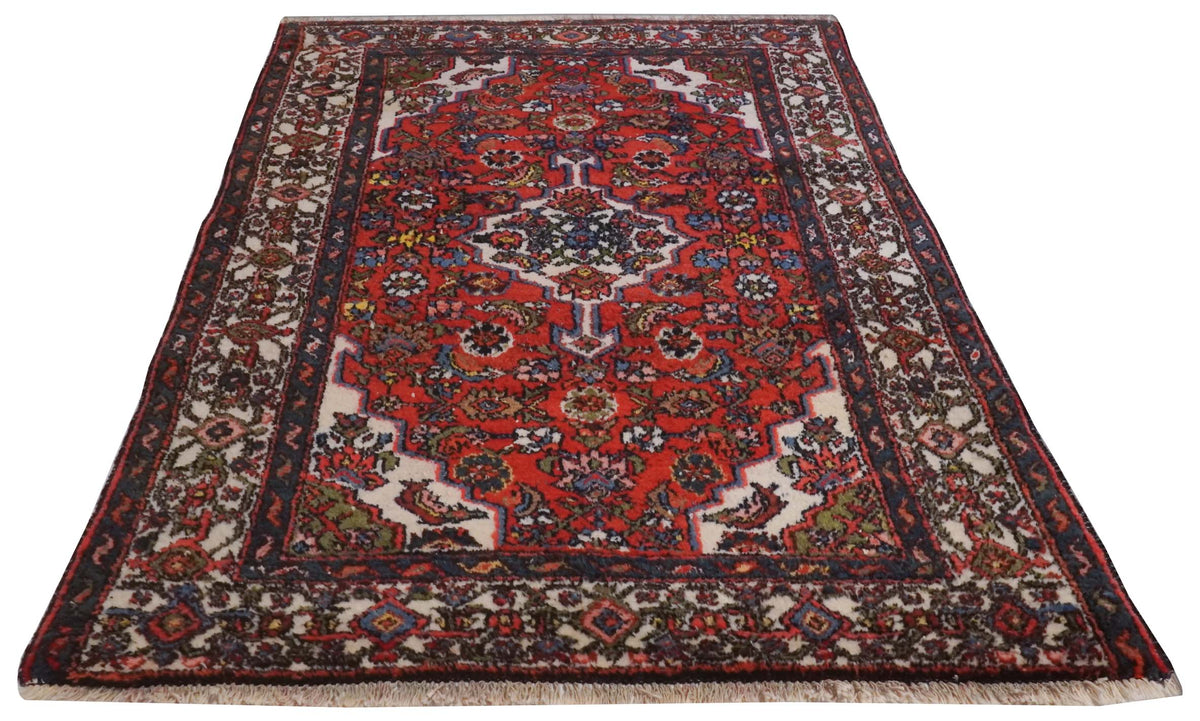
Hamadan | 153 x 98 cm | Nr. Z-4635

|
14 Tage Probelegen |

|
Kostenlose Lieferung & Retoure innerhalb der EU |
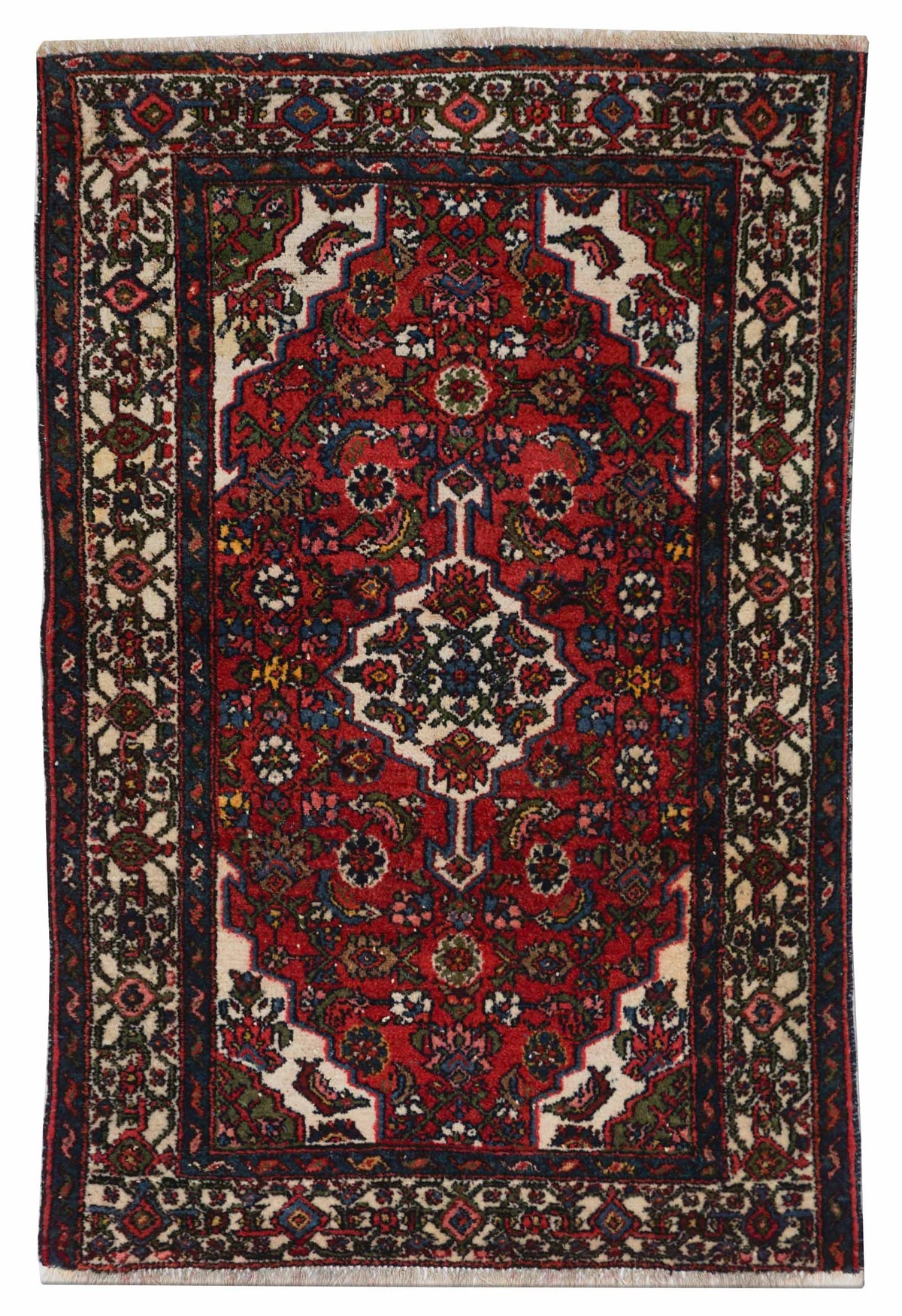
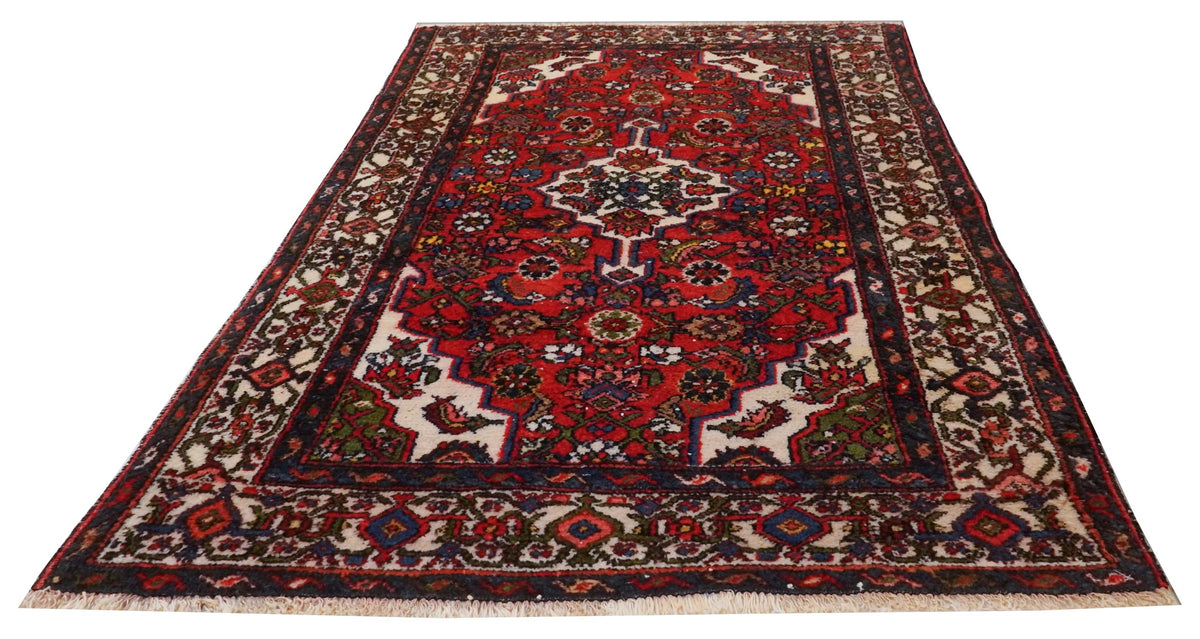
Hamadan, light red with border and medallion
| Origin |
|
| Dimensions | 153 cm x 98 cm (= 1.50 m²) |
| Construction | hand-knotted |
| Material |
Pile: wool (hand-spun, natural dyes)
|
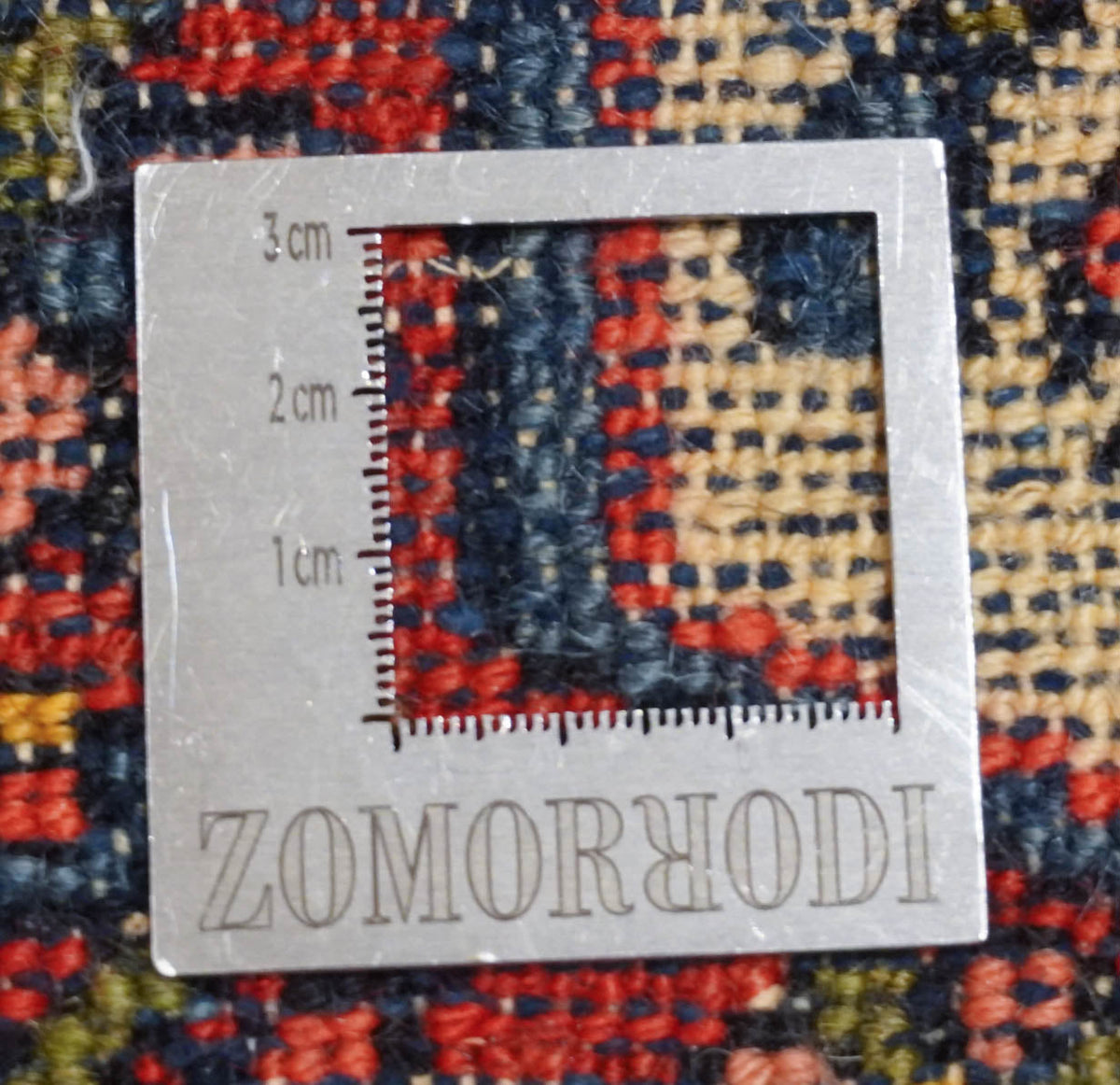
| knots per m²2 | 90.000 |
| Pile height | 7mm |
| Year of manufacture | 1980 |
| Colour | Light red, Beige |
| Edition | one-of-a-kind piece |
Origin
Hamadan (also Hamedan) rugs are knotted in the area around the city of Hamadan in north-western Iran. Hamadan is one of the oldest cities in Persia and lies amid a well-watered fruit-growing region on the banks of the Qareh, at the foot of the Zagros foothills. Rug knotting has a centuries-old tradition in this region. Hamedan is a collective name, for village and nomad rugs from many surrounding places come onto the market in Hamedan. What is typical of rugs from the Hamadan region is that they are knotted with a single weft using the Turkish knot. That is to say, one weft thread is inserted after every row of knots. Persian rugs are normally knotted with two or three wefts.
Pattern
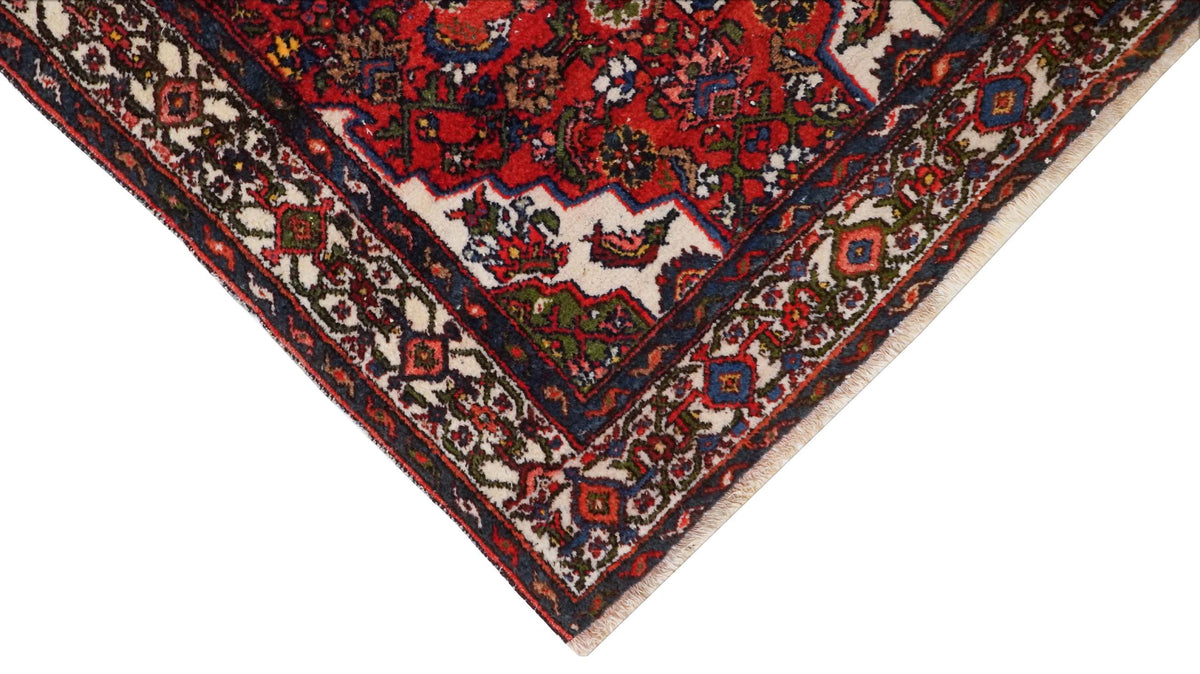
The ornate border forms a wonderful contrast with the centre and shapes the transition at the edge of the rug.
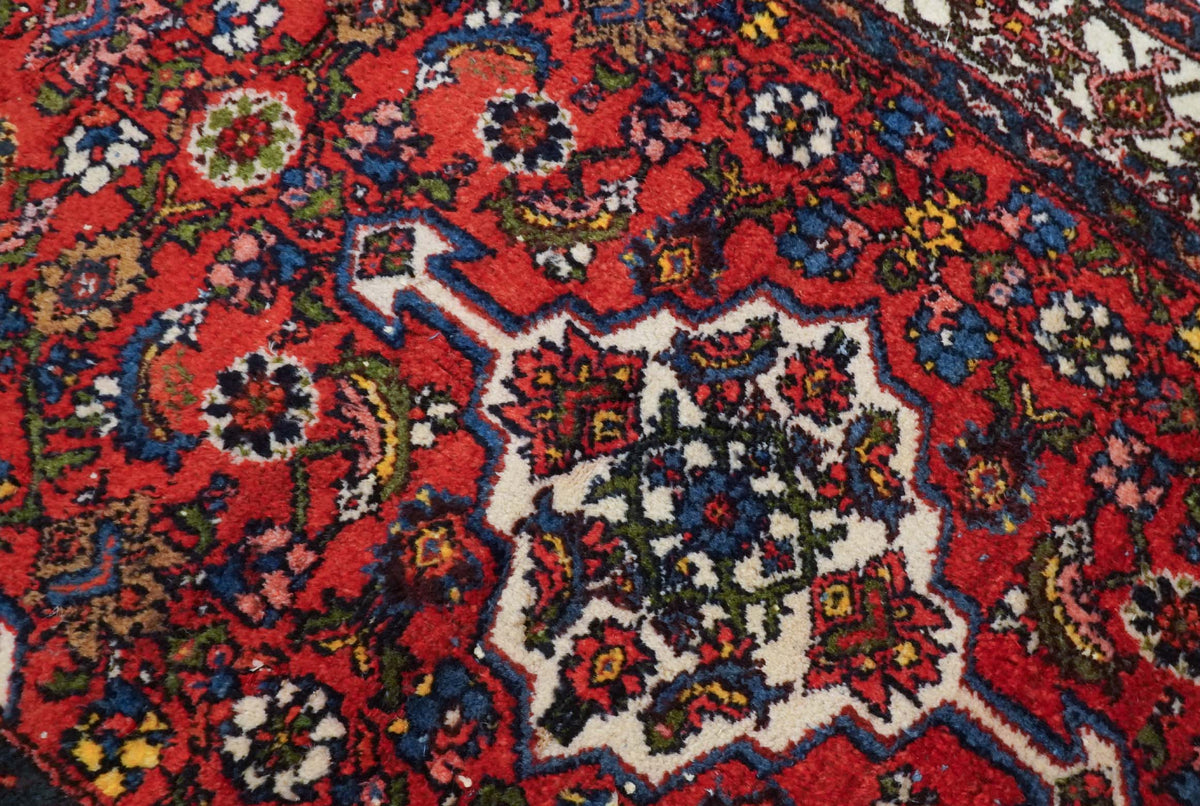
At the heart of this Hamadan's central field lies the symmetrical centre, also known as the medallion. The design of the field takes second place to the medallion, so that the medallion seems to float on the field.
The background of this Hamadan is light red. The border is worked in dark blue, beige and light red.
Condition
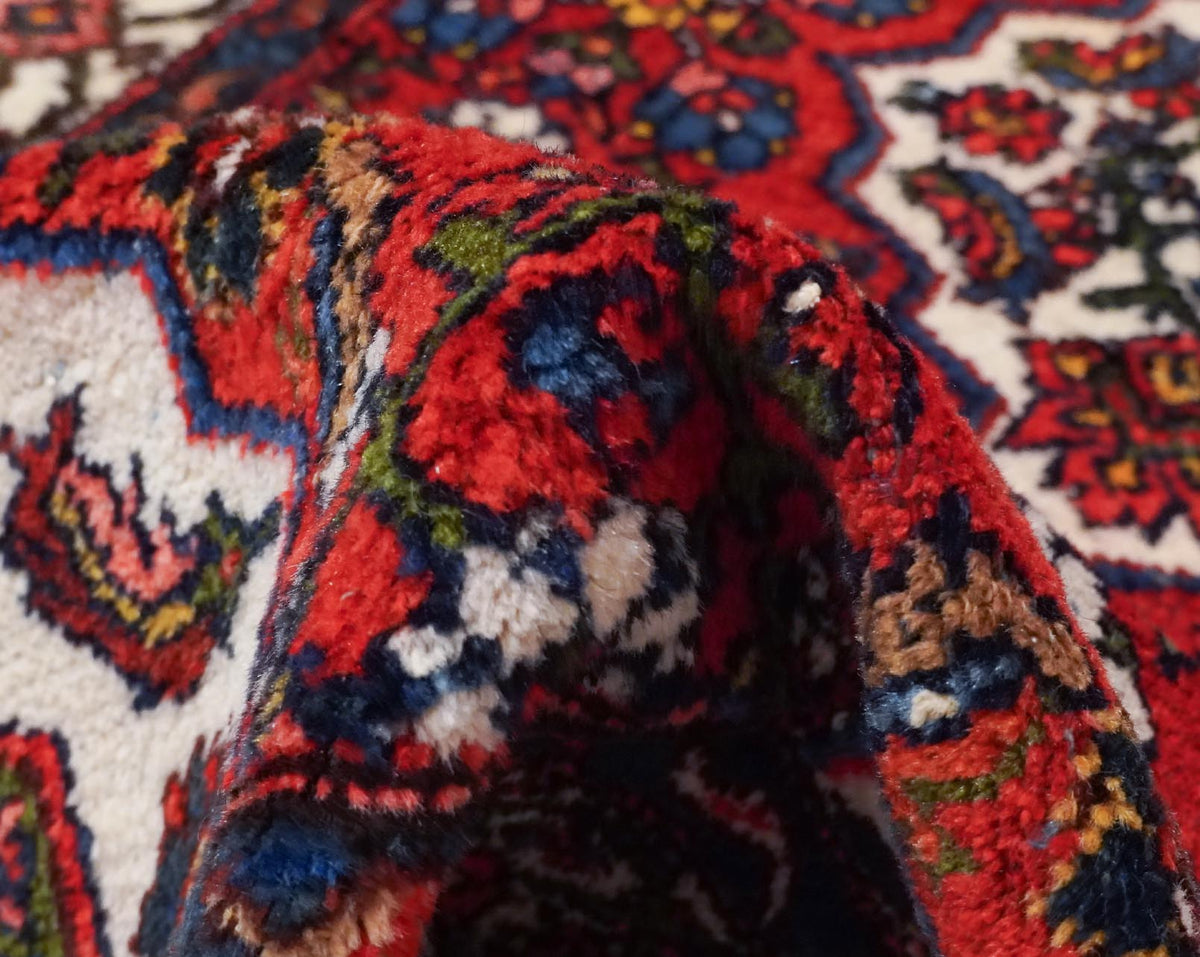
You aren't the first to take a liking to this Hamadan. It had owners before you who valued it and put it to use. It was hand-knotted around 1980. It has been thoroughly cleaned and is in good, though only partly restored, condition. The pile is worn in places. On one side, parts of the border are missing. In a few spots you can see some white threads. That is quite normal with older rugs. They are the knot ends of the weft and warp weave, which work their way to the surface over the years. In substance, that is no great problem. The edges are damaged in places. We haven't fully restored this Hamadan, because we feel it has a special presence just as it is. If that's what you'd like, we'll gladly carry on restoring the rug for you. We can bring almost any rug back to near-perfect condition.
Material
The technique used to make the materials for the pile of this Hamadan is over 200 years old. The wool was dyed with natural dyes and spun by hand. Dyeing with natural or plant dyes is more complicated, more expensive and more time-consuming than dyeing with chemical colours. For a luminous red, for example, you need around one kilo of ground madder root as dye per kilo of wool. For a strong yellow that isn't too pale, you even need two kilograms of weld dye per kilo of wool. Spinning the wool is time-consuming and labour-intensive as well. And fewer and fewer people still master the art of spinning wool by hand.
But the effort is worth it: dyeing with natural dyes lets the high-quality wool keep its natural lanolin content. Wool that has been dyed with natural dyes and spun by hand creates fascinating, shimmering patterns. The charm of hand-spun wool, with its slight irregularities and natural shades, unfolds as a contrast in modern interiors, but just as well in rooms furnished in a more traditional or country style. The weft and warp threads of this Hamadan are made of cotton. This versatile material is tear-resistant and stretchy, which makes it particularly suited to a hard-wearing foundation weave.
A note on the photos
Child labour? No thanks.
Child labour? No thanks. Children belong in school, not at a knotting frame or a loom. For us it therefore goes without saying that we only offer rugs made under fair conditions and without child labour.
We attach particular importance to humane working conditions and tolerate no child labour at any of our producers. Thank you for helping us to ensure fair conditions.
That is why we support the initiative Care & Fair against child labour in the rug trade.

Choose options
|
|
14 Tage Probelegen |
|
|
Kostenlose Lieferung & Retoure innerhalb der EU |