
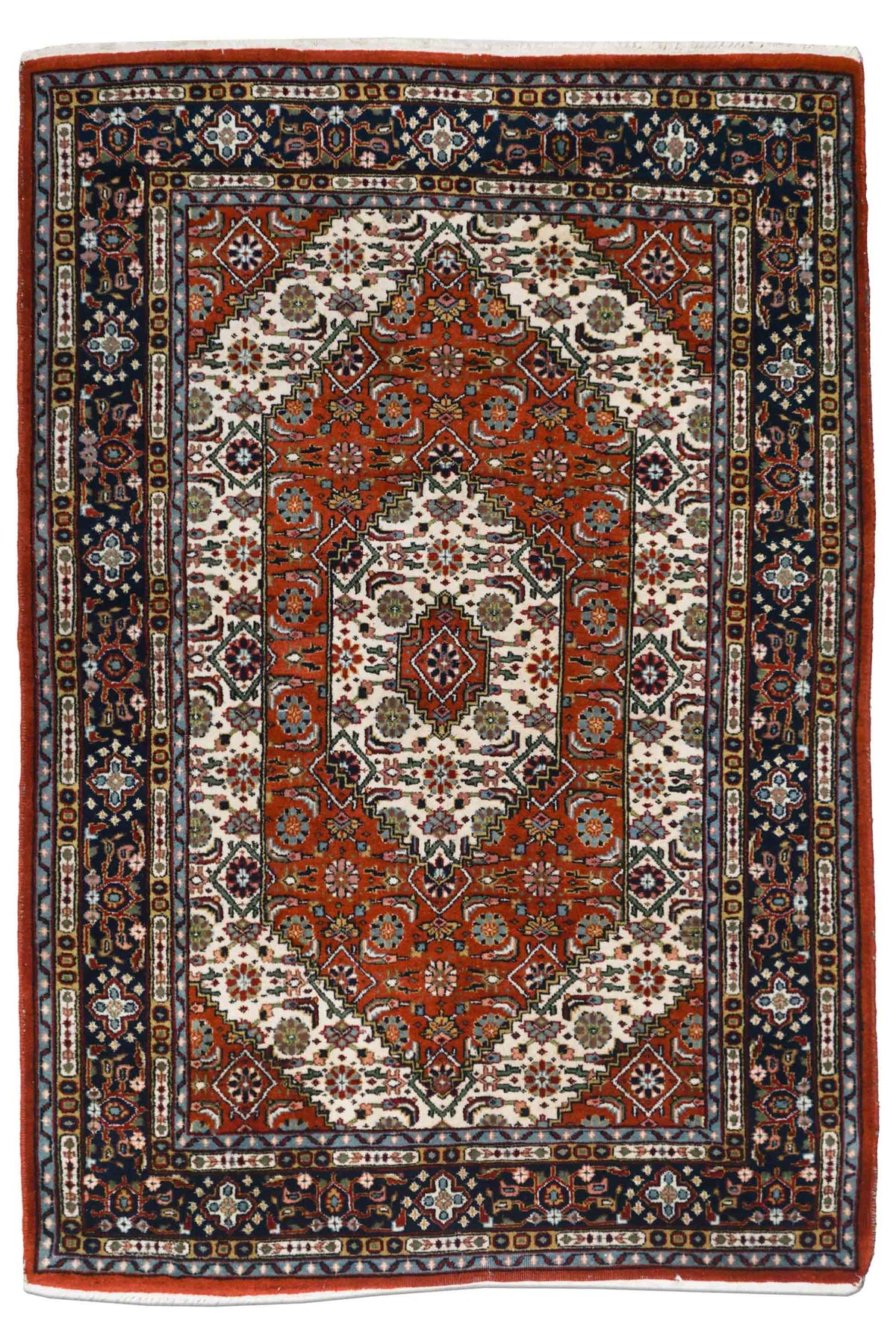
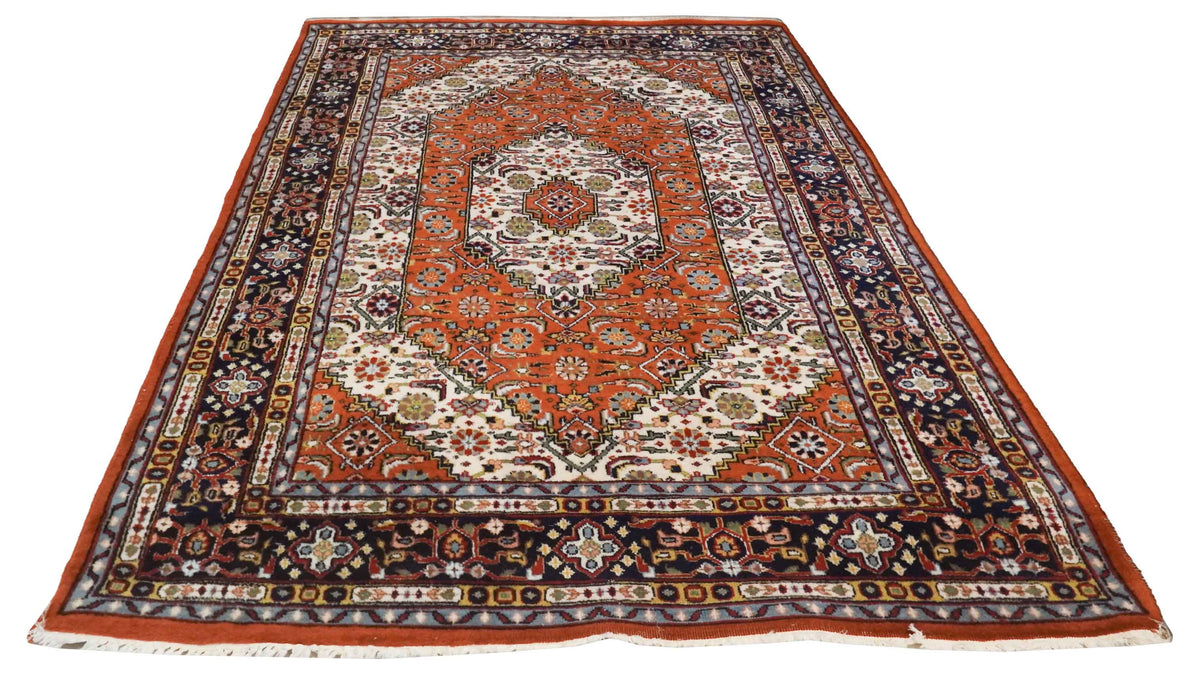
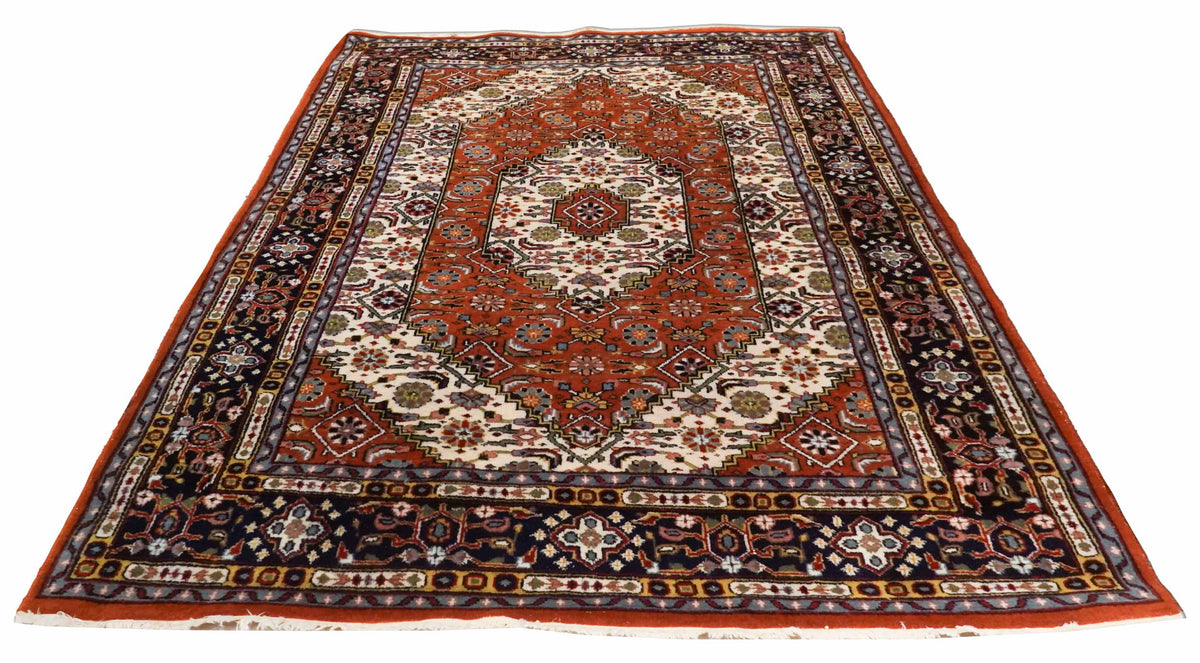
Indian Bijar | 180 x 126 cm | Nr. Z-4634


|
14-day home trial |

|
Free delivery & returns within the EU |
Indian Bijar
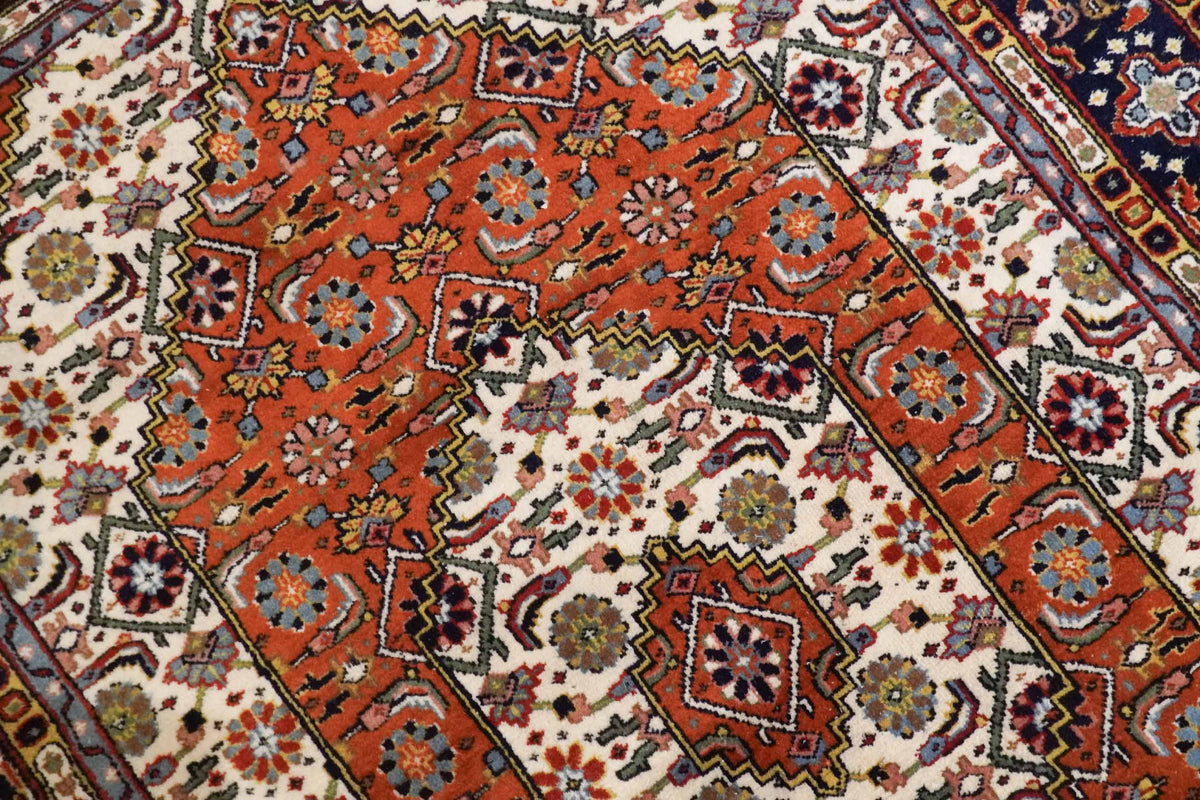
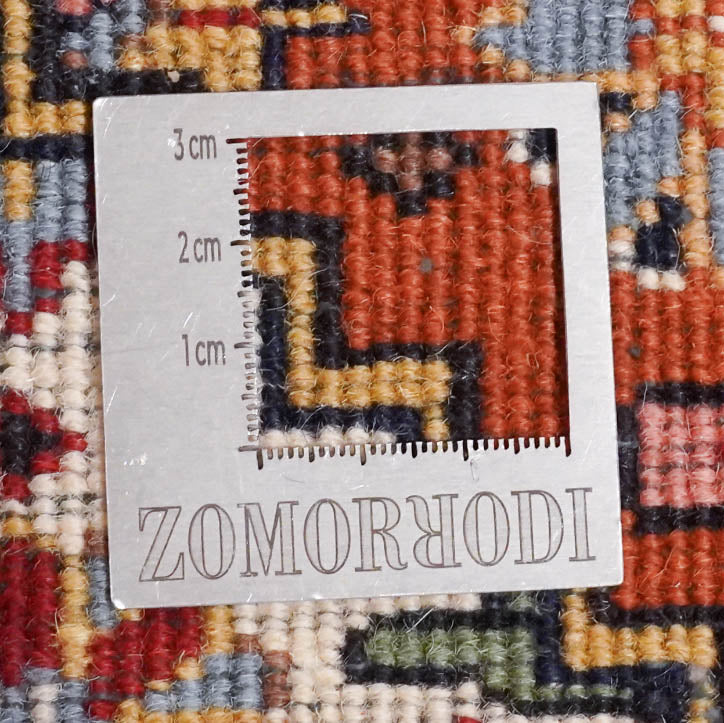
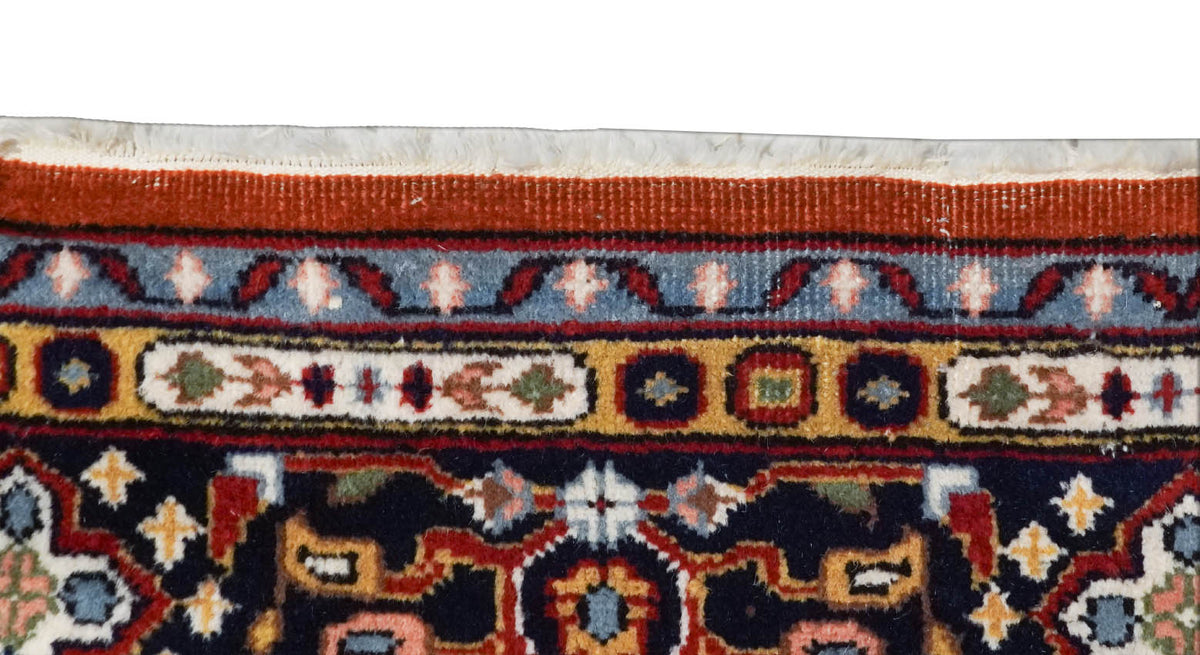
This rug in rust red and cream white brings together traditional craftsmanship and timeless elegance. With a knot density of approx. 200,000 knots per m², the elaborate workmanship shows above all in the precise drawing of the pattern and the fine execution of the details. At 180 × 126 cm it suits a bedroom or study. It also looks good in a child's room or a dressing room. This one-of-a-kind piece brings individual character to a room and holds its value far beyond short-lived trends.
| Delivery time | 2 days |
| Origin | India |
| Dimensions | 180 cm x 126 cm (= 2.27 m²) |
| Construction | hand-knotted |
| Material |
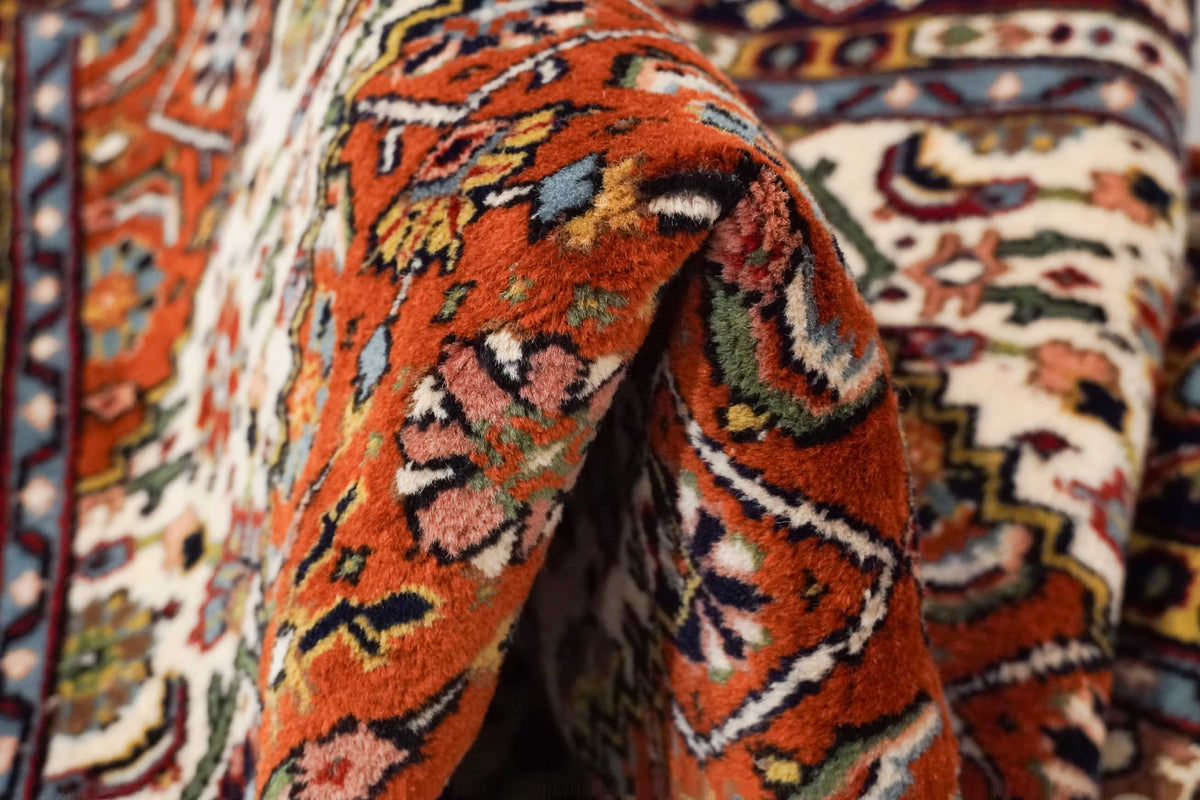
Pile: wool (hand-spun, natural dyes) Weft & Warp: cotton |
| knots | 200.000 |
| Year of manufacture | 1985 |
| Condition | pre-owned, but in very good condition (cleaned & restored) |
| Edition | one-of-a-kind piece |
Origin
This rug was knotted in Bijar, in the province of Kermanshah in north-western Iran. Bijar rugs are among the sturdiest and finest Oriental rugs. The majority of the population in Bijar are Kurds.In the Kurdish Bijar, a particularly thick and extremely hard weft yarn is beaten into the weave. The result is a board-stiff rug that is exceptionally hard-wearing. The younger Bijars in particular are decorated with the typical Herati pattern, also known as the fish pattern.
The pattern of this rug is inspired by the patterns of classic Indian Bijars. This particular rug, however, was knotted in India.
Exactly when rug production in India began is unknown. The first rugs in India were probably made during the cultural flowering of the Mughal dynasty in the middle of the 16th century. In the middle of the 19th century, with the decline of the Mughal dynasty, Indian rug production fell into crisis. European companies whose only aim was export to the West took the place of the traditional court manufactories. Very similar rugs were produced in different towns, and standardisation set in. Today, the designs of hand-knotted Indian rugs can scarcely be attributed to individual regions. Instead, the workshops have come to specialise in rendering European and traditional Iranian designs adapted to Western taste. In terms of quality, rugs from India benefit from the long tradition of craftsmanship and the high quality of Indian materials.
Material
The technique used to make the materials for the pile of this Indian Bijar is over 200 years old. The wool was dyed with natural dyes and spun by hand. Dyeing with natural or plant dyes is more complicated, more expensive and more time-consuming than dyeing with chemical colours. For a luminous red, for example, around one kilo of ground madder root is needed as dye for every kilo of wool. For a strong yellow that is not too pale, as much as two kilograms of weld dye are needed per kilo of wool. Spinning the wool is labour-intensive and time-consuming too. What is more, fewer and fewer people still know how to spin wool by hand.But the effort is worth it: dyeing with natural colours allows the high-quality wool to keep its natural oil content. Wool that has been dyed with natural colours and spun by hand creates fascinating, shimmering patterns. The charm of hand-spun wool, with its slight irregularities and natural shades, comes into its own as a contrast in modern interiors, but equally in rooms furnished in a more traditional or country style.
The weft and warp threads of this Indian Bijar are made of cotton. This versatile material is both tear-resistant and elastic, which makes it particularly well suited to a hard-wearing foundation.
Condition
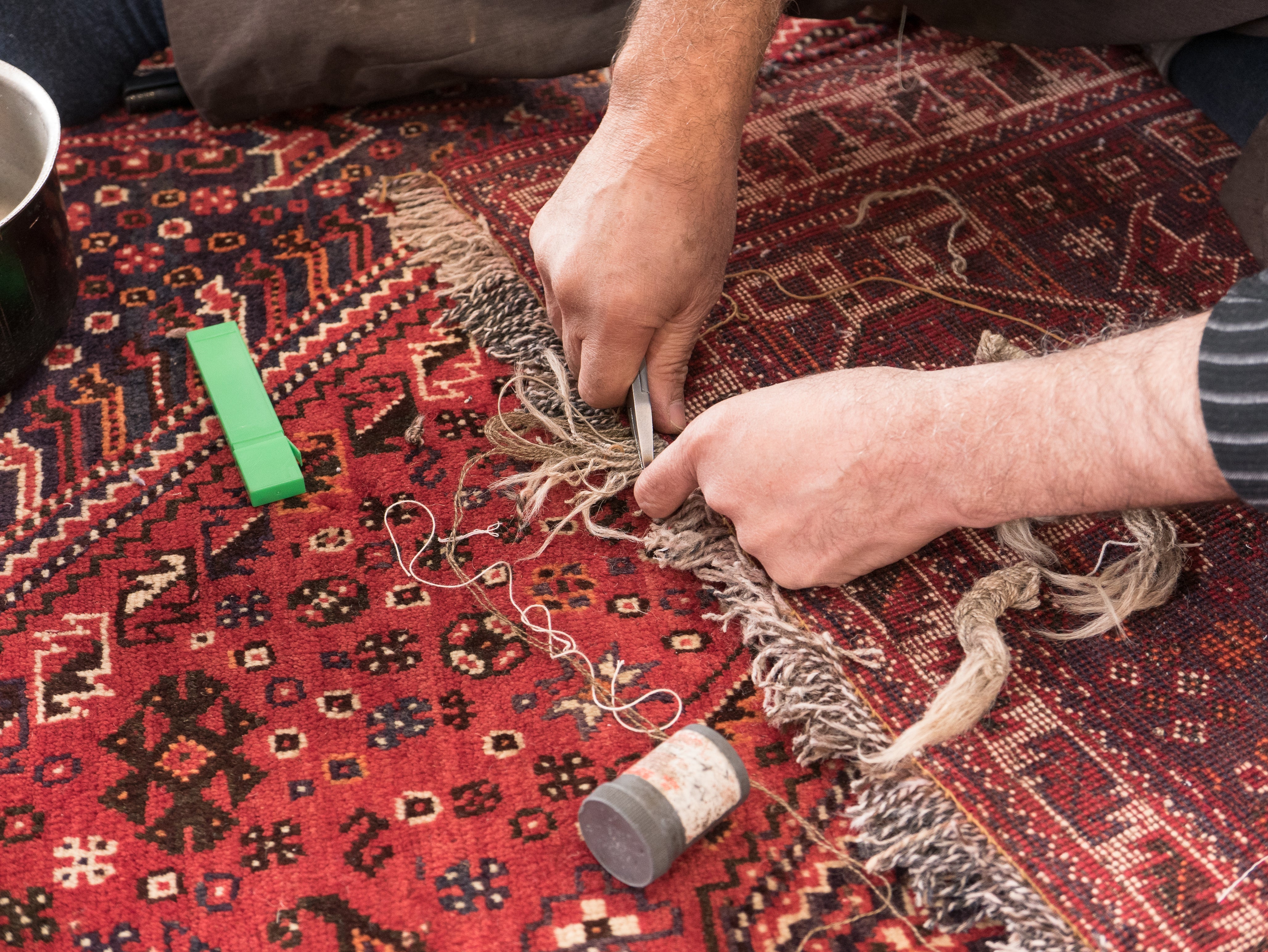
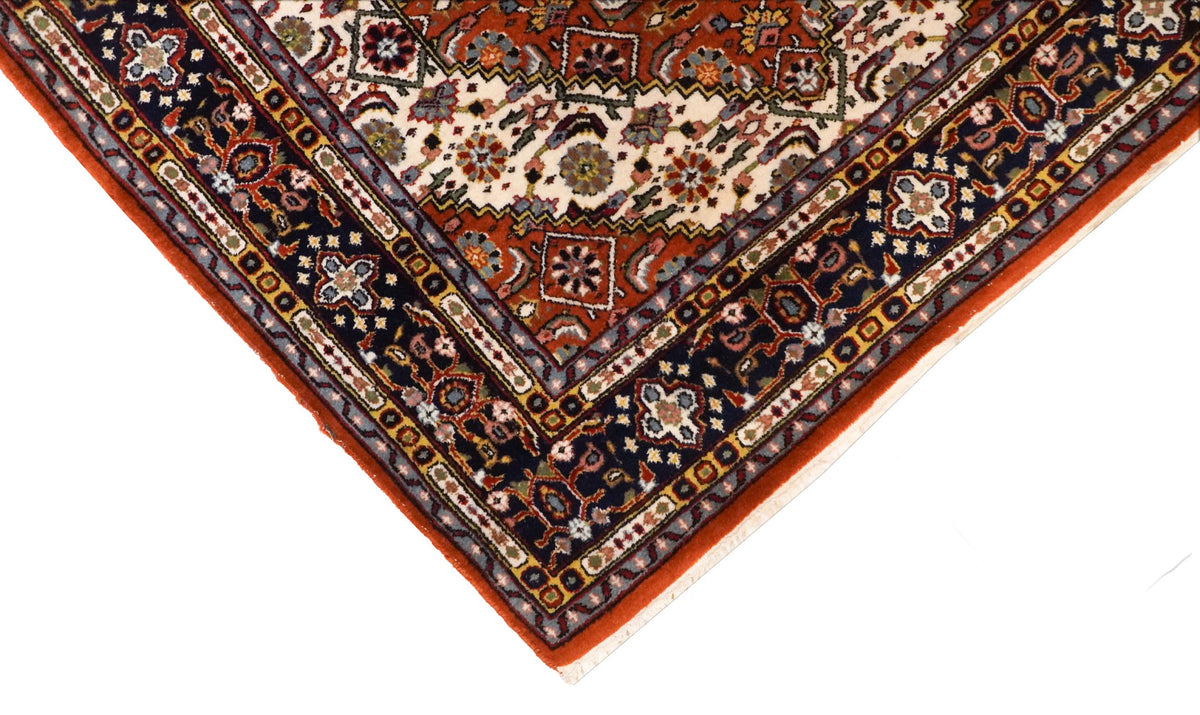
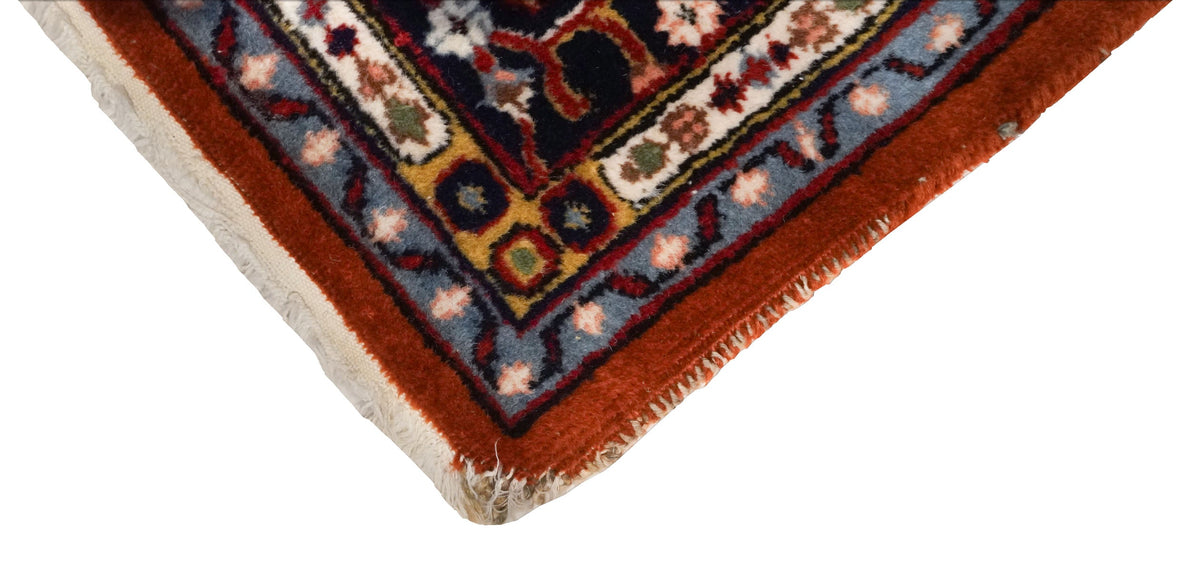
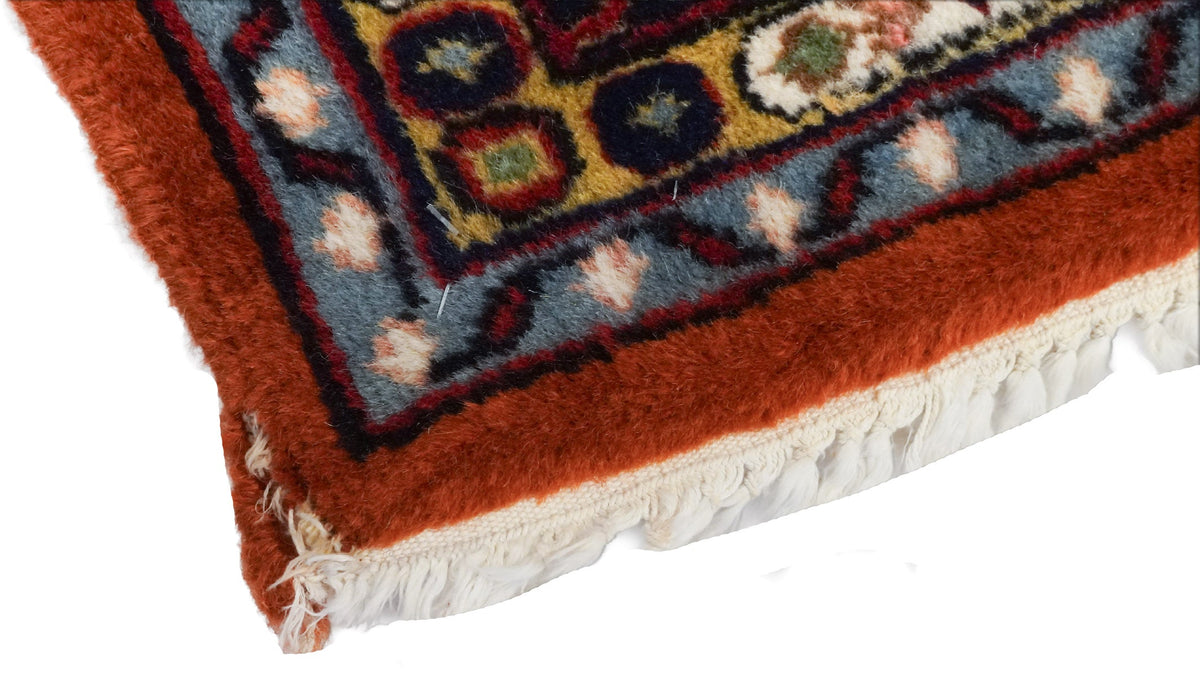
This Indian Bijar has a story to tell. The fringes could do with a repair.The edges are damaged in places. The pile is lightly worn.In some places you can see a few white threads. That is entirely normal with older rugs. They are the knot ends of the weft and warp weave, which come to the surface over the years. In substance, this is not a major problem. It was knotted around 1985. We have cleaned it thoroughly and restored it with care. Despite its age, it is therefore in very good condition.
A note on the photos
Child labour? No thanks.
Child labour? No thanks. Children belong in school, not at a knotting frame or a loom. For us it therefore goes without saying that we only offer rugs made under fair conditions and without child labour.
We attach particular importance to humane working conditions and tolerate no child labour at any of our producers. Thank you for helping us to ensure fair conditions.
That is why we support the initiative Care & Fair against child labour in the rug trade.

Choose options
|
|
14-day home trial |
|
|
Free delivery & returns within the EU |