
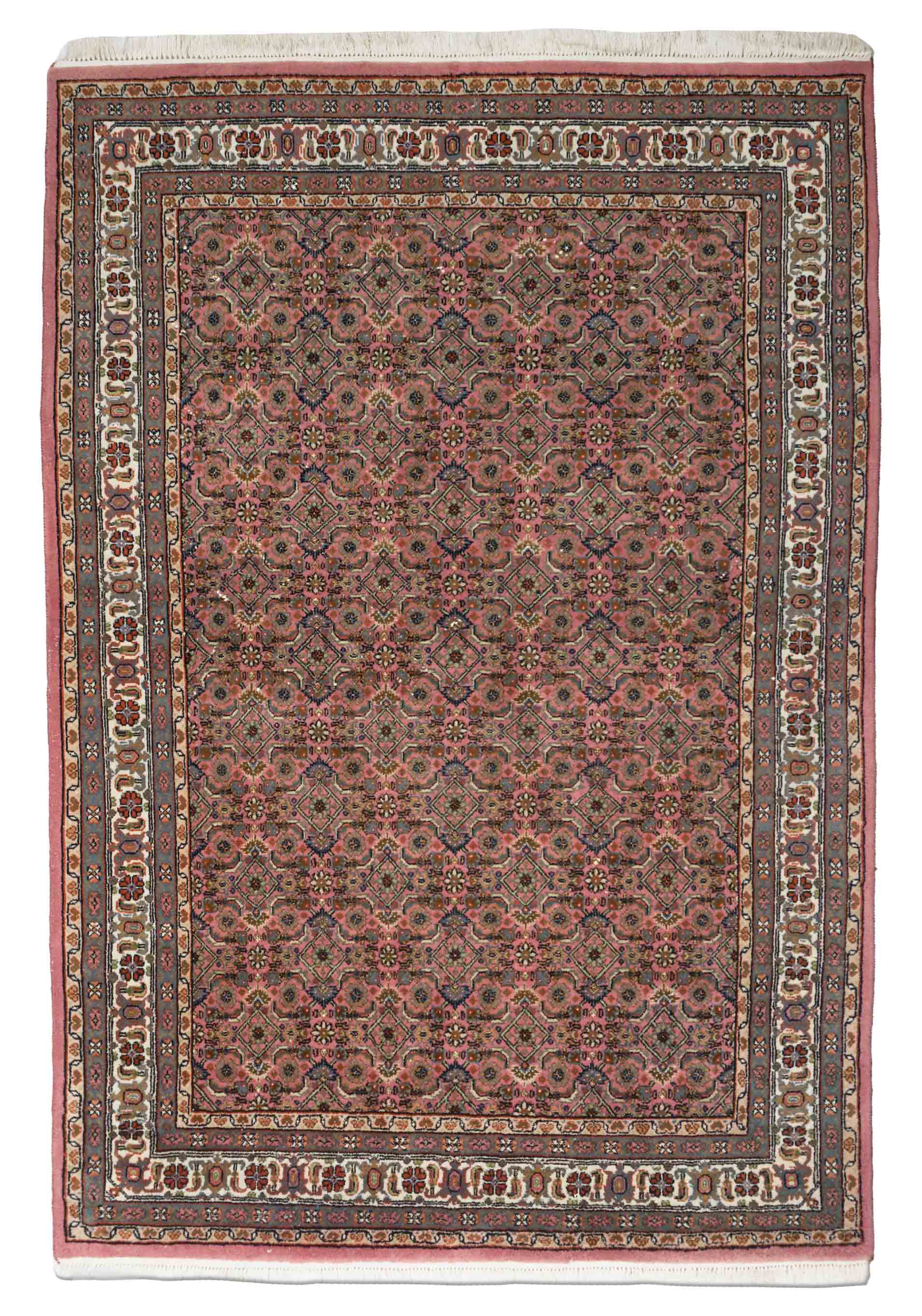
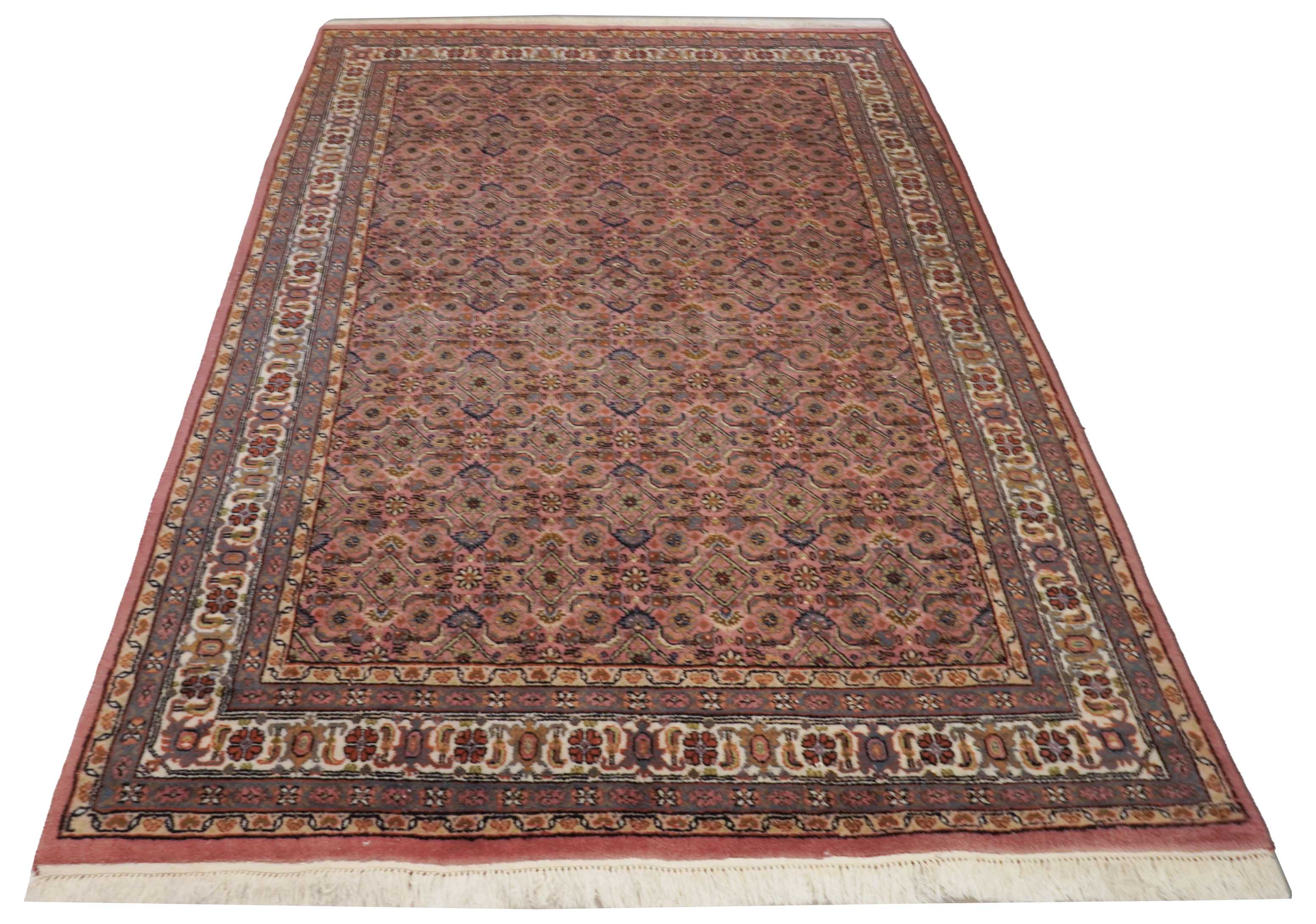
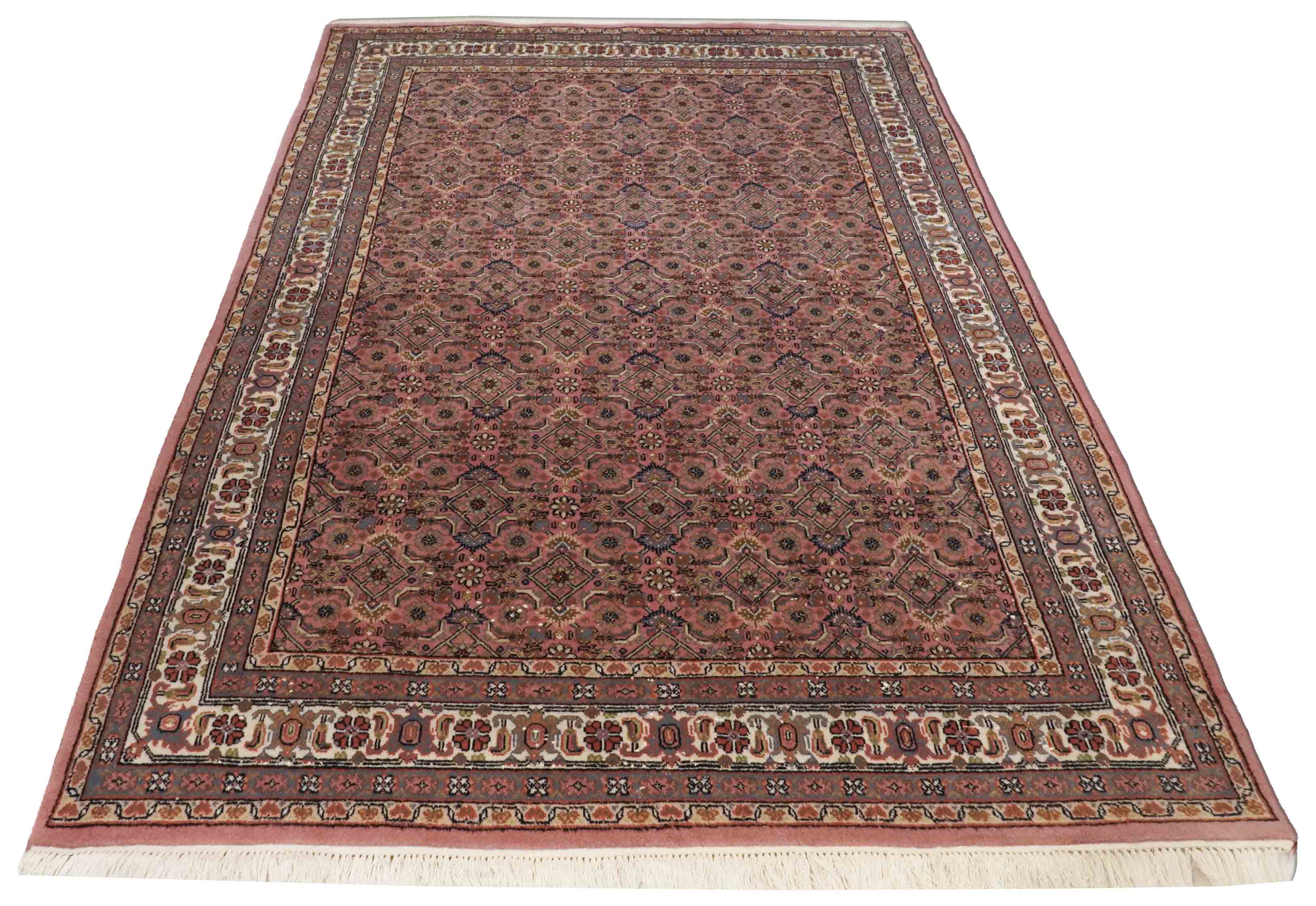
Indian Herati | 247 x 170 cm | Nr. Z-4461


|
14-day home trial |

|
Free delivery & returns within the EU |
Indian Herati, dusky pink with border and all-over pattern (delicate)
| Origin |
|
| Dimensions | 247 cm x 170 cm (= 4.20 m²) |
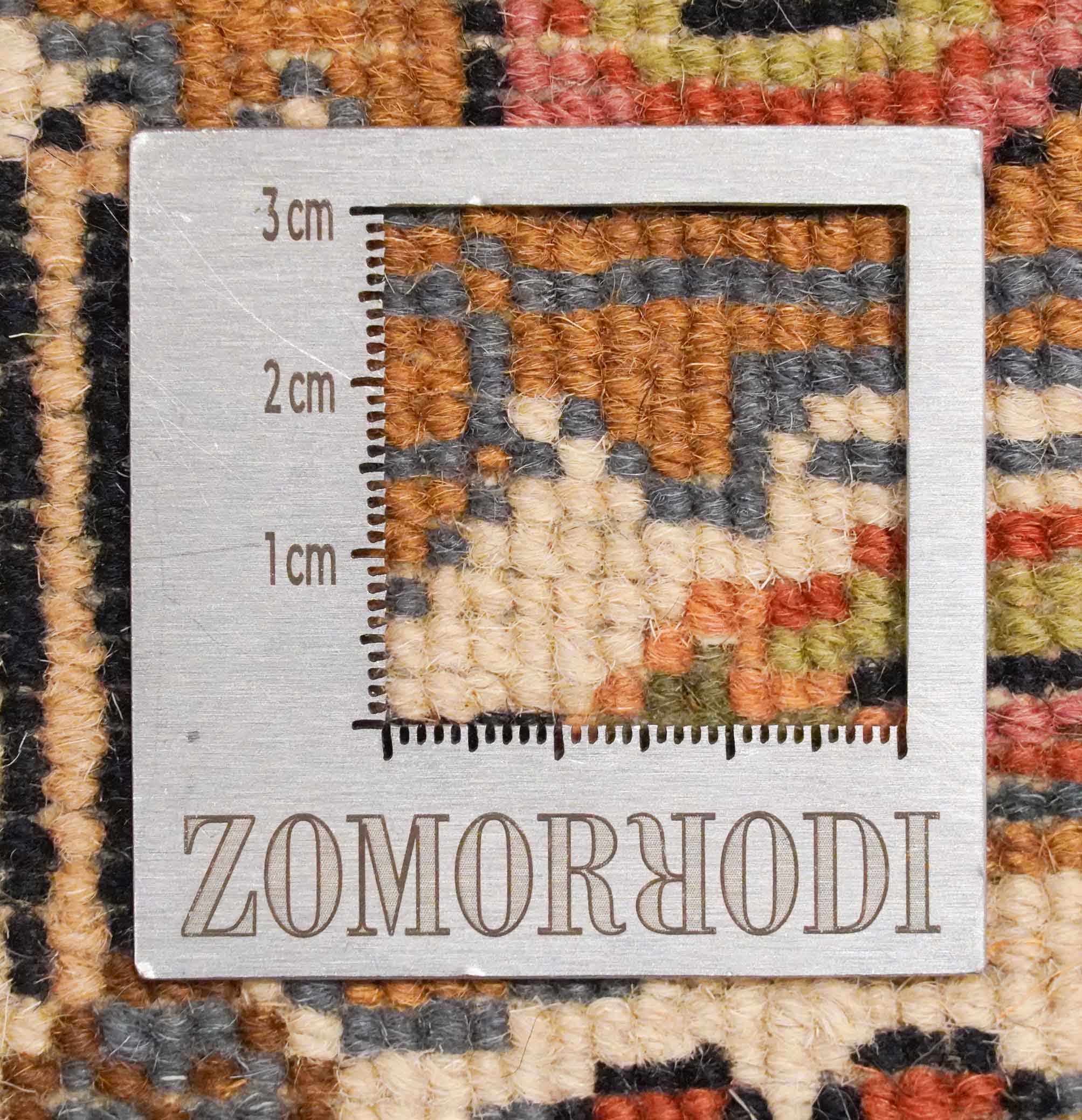
| Construction | hand-knotted |
| Material |
Pile: wool
|
| knots per m²2 | 160.000 |
| Pile height | 10mm |
| Year of manufacture | 2005 |
| Colour | Dusky pink, Pink |
| Edition | one-of-a-kind piece |

Origin
The pattern of this rug is inspired by the pattern of classic Herati. This rug, however, was knotted in India.
Exactly when rug production began in India is unknown. The first rugs were probably made in India during the cultural flowering of the Mughal dynasty in the middle of the 16th century. In the mid-19th century, with the decline of the Mughal dynasty, Indian rug production fell into crisis. European companies whose sole aim was to export to the West took the place of the traditional court manufactories. Very similar rugs were produced in different towns and standardisation set in. Today the designs of hand-knotted Indian rugs can hardly be attributed to individual regions any more. Instead, the workshops have specialised in interpreting European and traditional Iranian designs adapted to Western taste. In terms of quality, rugs from India benefit from the long tradition of craftsmanship and the high quality of Indian materials. The name Herati comes from Herat, a city in north-western Afghanistan. The Herati pattern is a very traditional repeat pattern found in hand-knotted rugs.
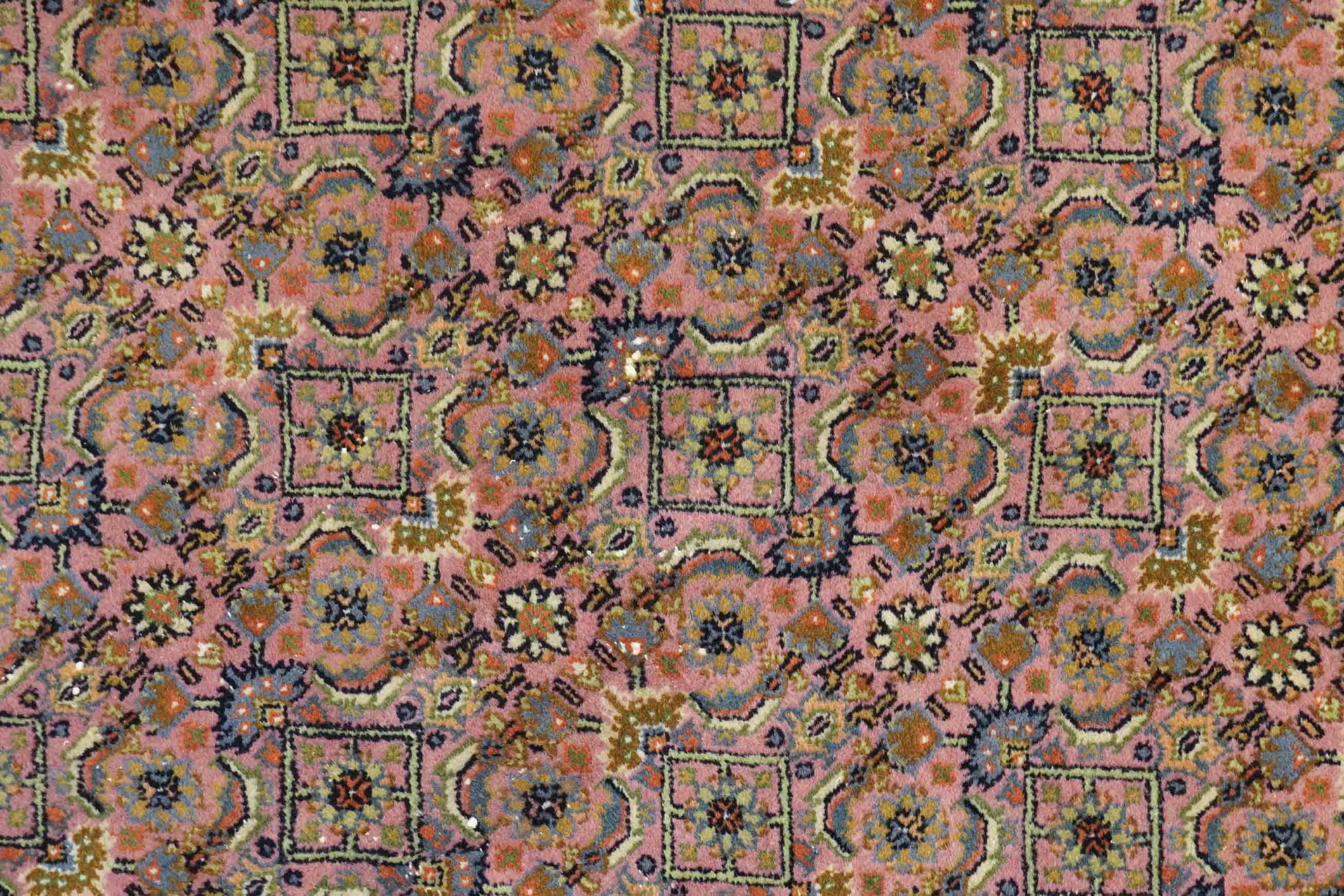
This age-old pattern ensemble is made up of several individual elements. At the heart of a rhombus set on its point sits a flower (commonly read as a daisy), framed by four acanthus leaves twining around it. Stylised lotus blossoms crown the upper and lower points, a hint at a connection with China. The points at the sides run out into peonies. This blossom, also known as the farmer's rose, holds the place of queen of flowers in China and travelled west along the Silk Road.
All four sides of the ensemble are flanked by crescent-shaped, lance-like leaves, which are also read as fish (Persian “Mahi”). This is where the Persian name Mahi-to-hos comes from, which translates as “fish in the pond”.
Pattern
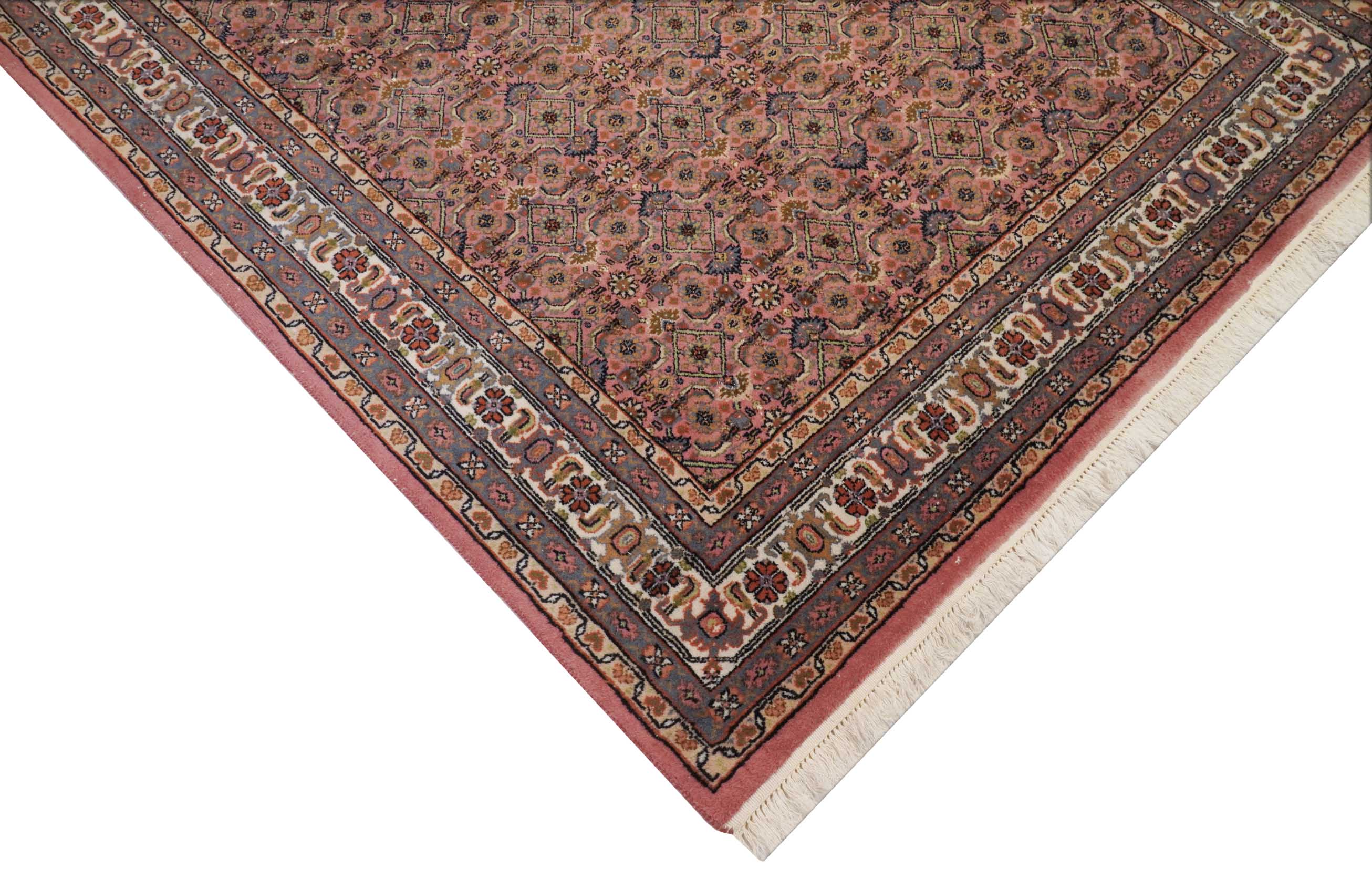
The ornate border forms a wonderful contrast with the centre and shapes the transition at the edge of the rug.
This Herati has a great deal of character. The intense, richly detailed pattern is almost hypnotic to look at. The repeating elements in the central field of this Herati rug have no specific centre (a so-called repeat pattern). The recurring pattern feels calming, yet never dull. Rugs with a repeat pattern are also described as all-over patterned.
The background of this Herati is dusky pink. The border is worked in dusky pink, pink and cream white.
Condition
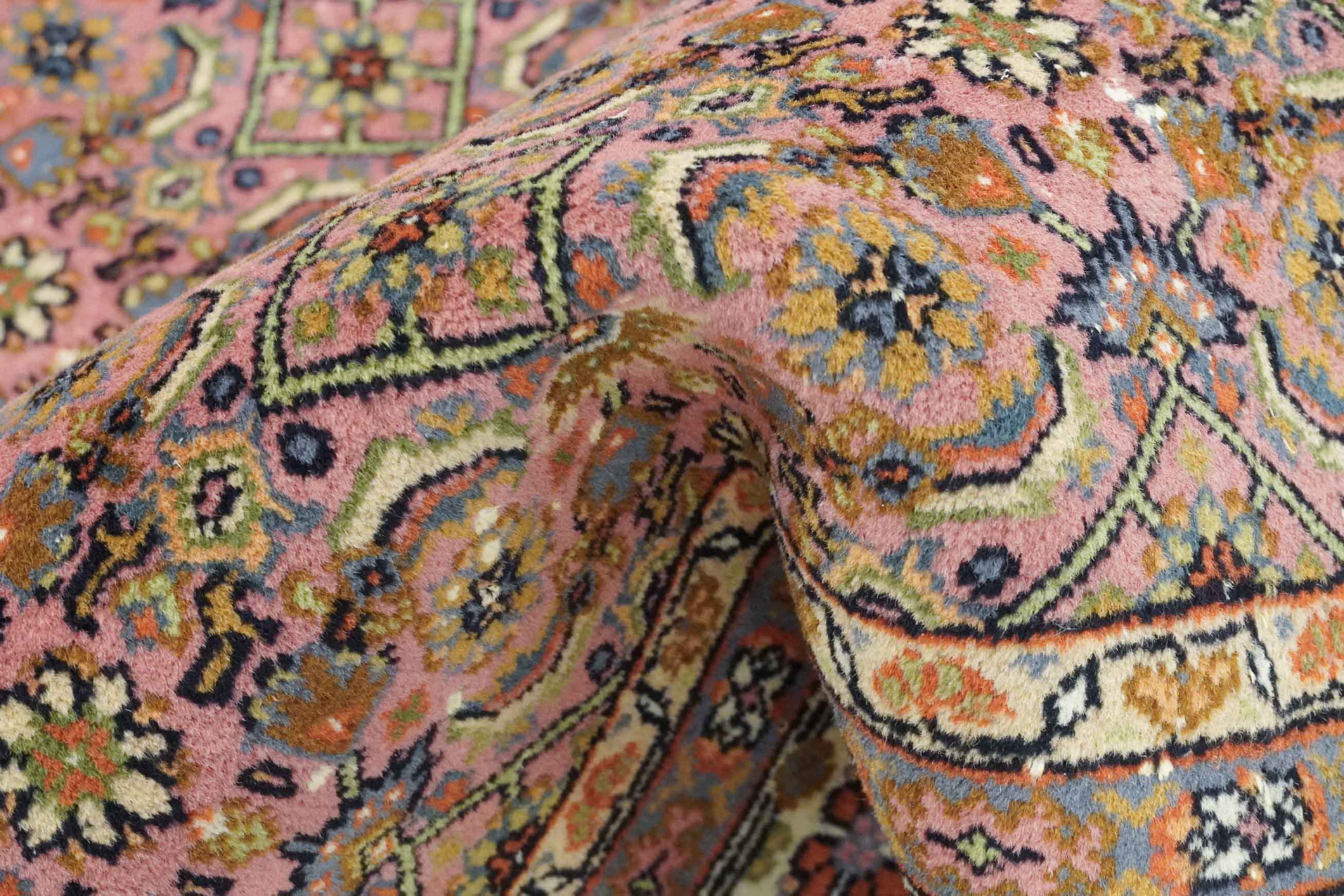
You're not the first to take a liking to this Herati. It had owners before you who valued it and put it to use. The pile is slightly worn down. In a few places you can see some white threads. That is perfectly normal with older rugs. These are the knot ends of the weft and warp weave, which work their way to the surface over the years. Structurally, this is no great cause for concern. It was hand-knotted around 2005. We have cleaned it thoroughly and lovingly restored it. So – despite its age – it is in very good condition.
Material
The pile of this Herati was hand-knotted from high-quality new wool. New wool is obtained by gently shearing sheep. New wool is a renewable, natural raw material with a number of impressive qualities: thanks to the natural lanolin in the wool, the surface repels drops of water and is naturally protected against dirt. Wool also offers excellent thermal insulation, helps regulate the indoor climate and dampens sound. The weft and warp threads of this Herati are made of cotton. This versatile material is tear-resistant and elastic, which makes it particularly well suited to a hard-wearing foundation.
A note on the photos
Child labour? No thanks.
Child labour? No thanks. Children belong in school, not at a knotting frame or a loom. For us it therefore goes without saying that we only offer rugs made under fair conditions and without child labour.
We attach particular importance to humane working conditions and tolerate no child labour at any of our producers. Thank you for helping us to ensure fair conditions.
That is why we support the initiative Care & Fair against child labour in the rug trade.

Choose options
|
|
14-day home trial |
|
|
Free delivery & returns within the EU |