

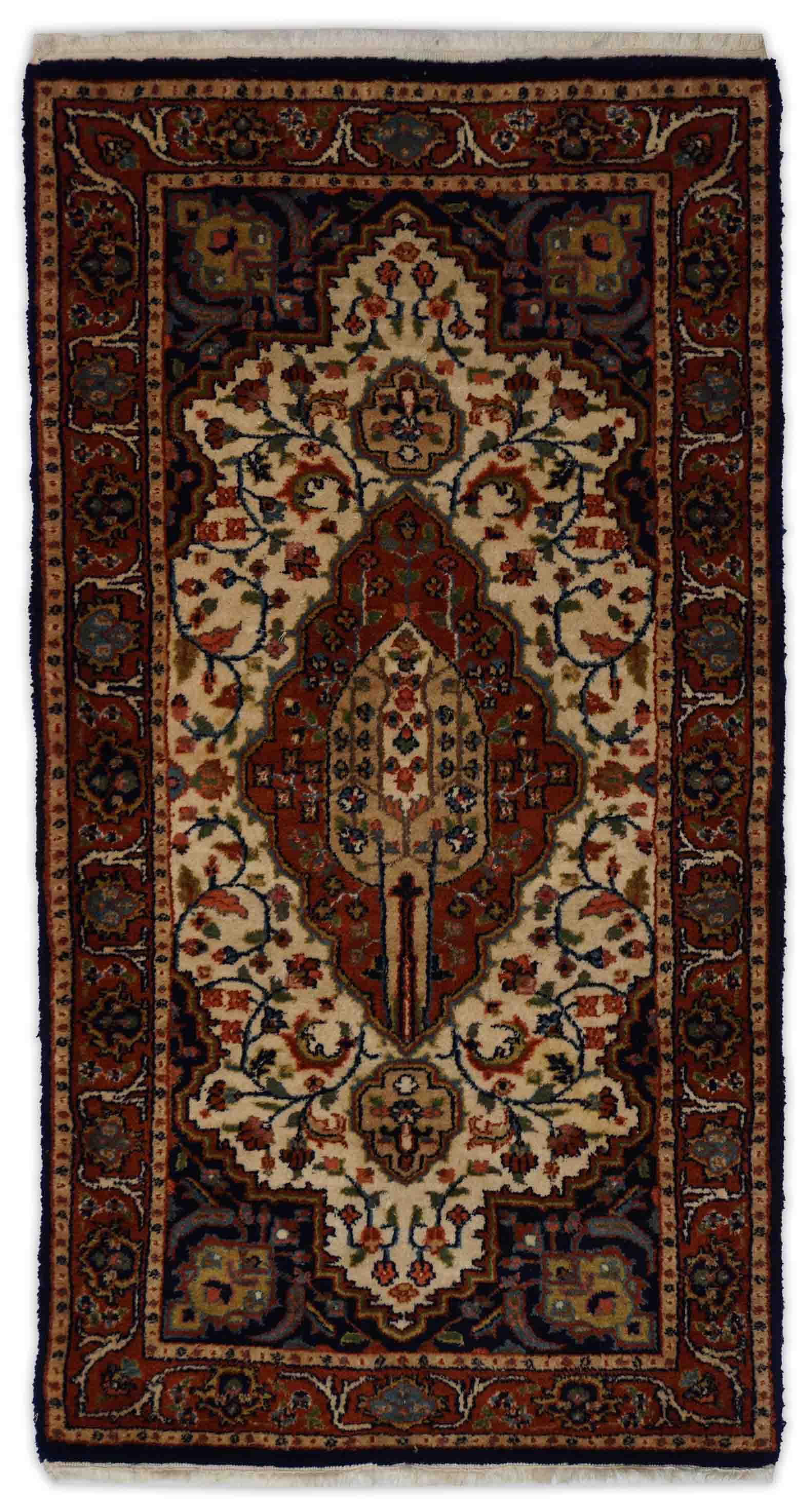
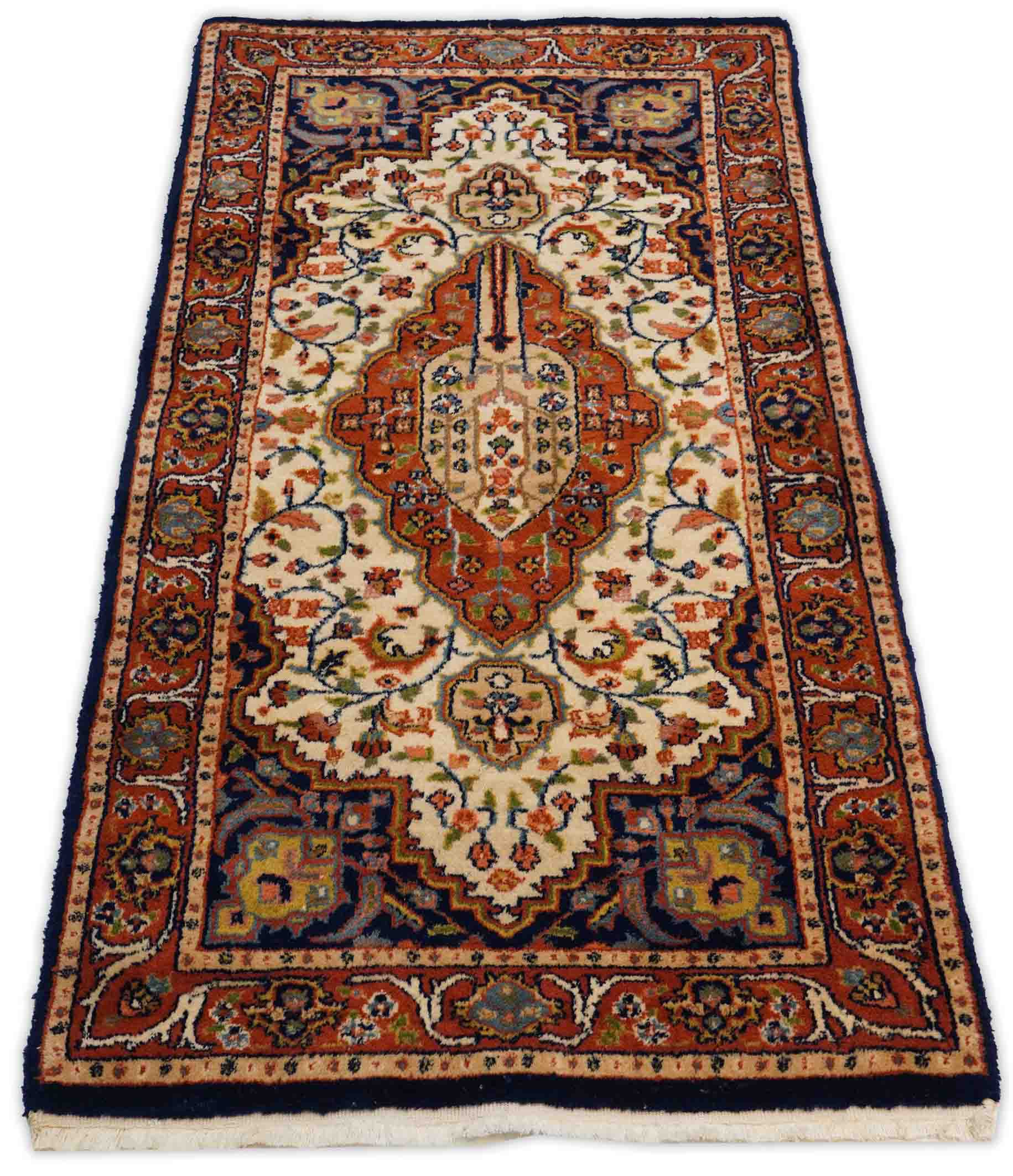
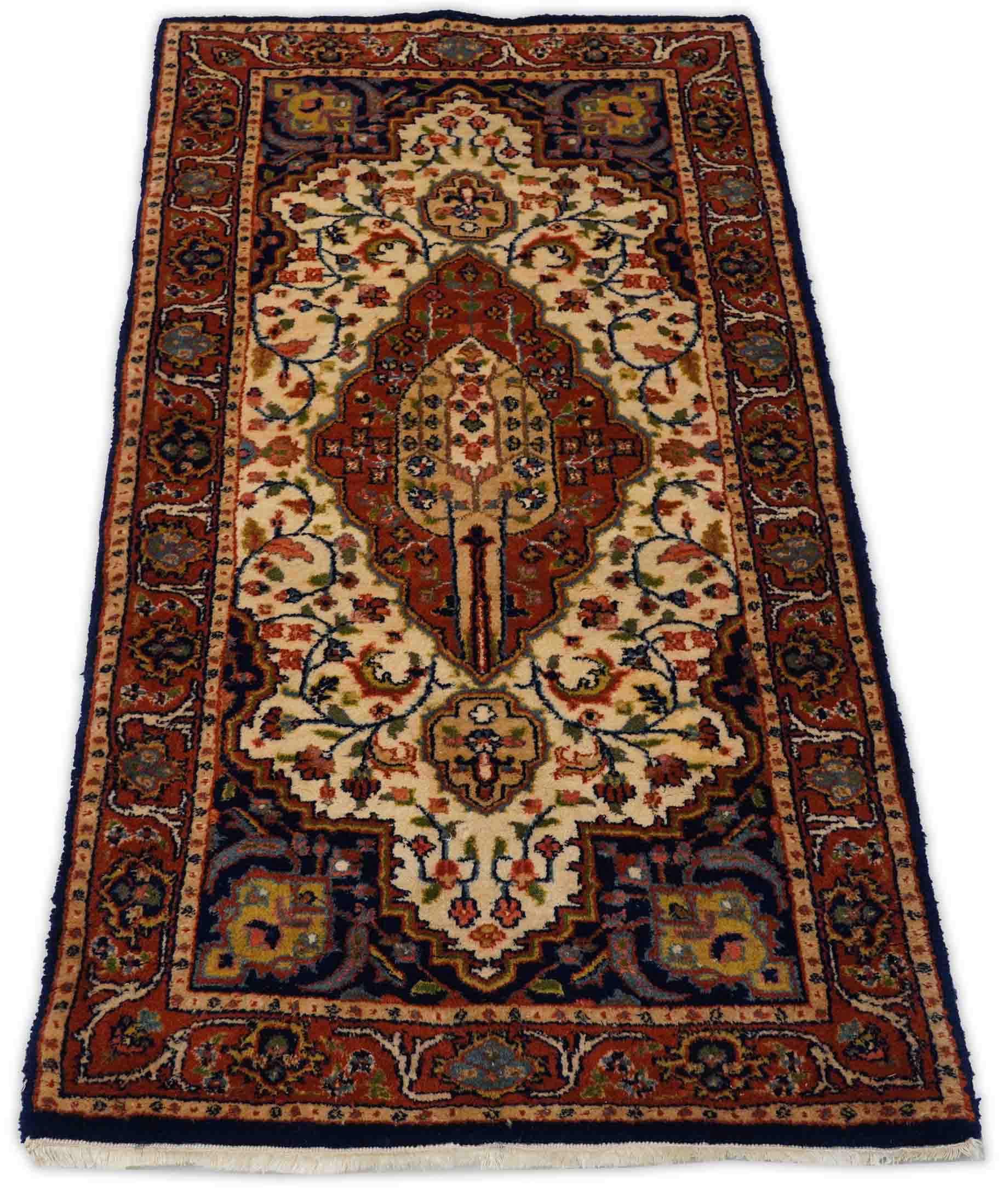
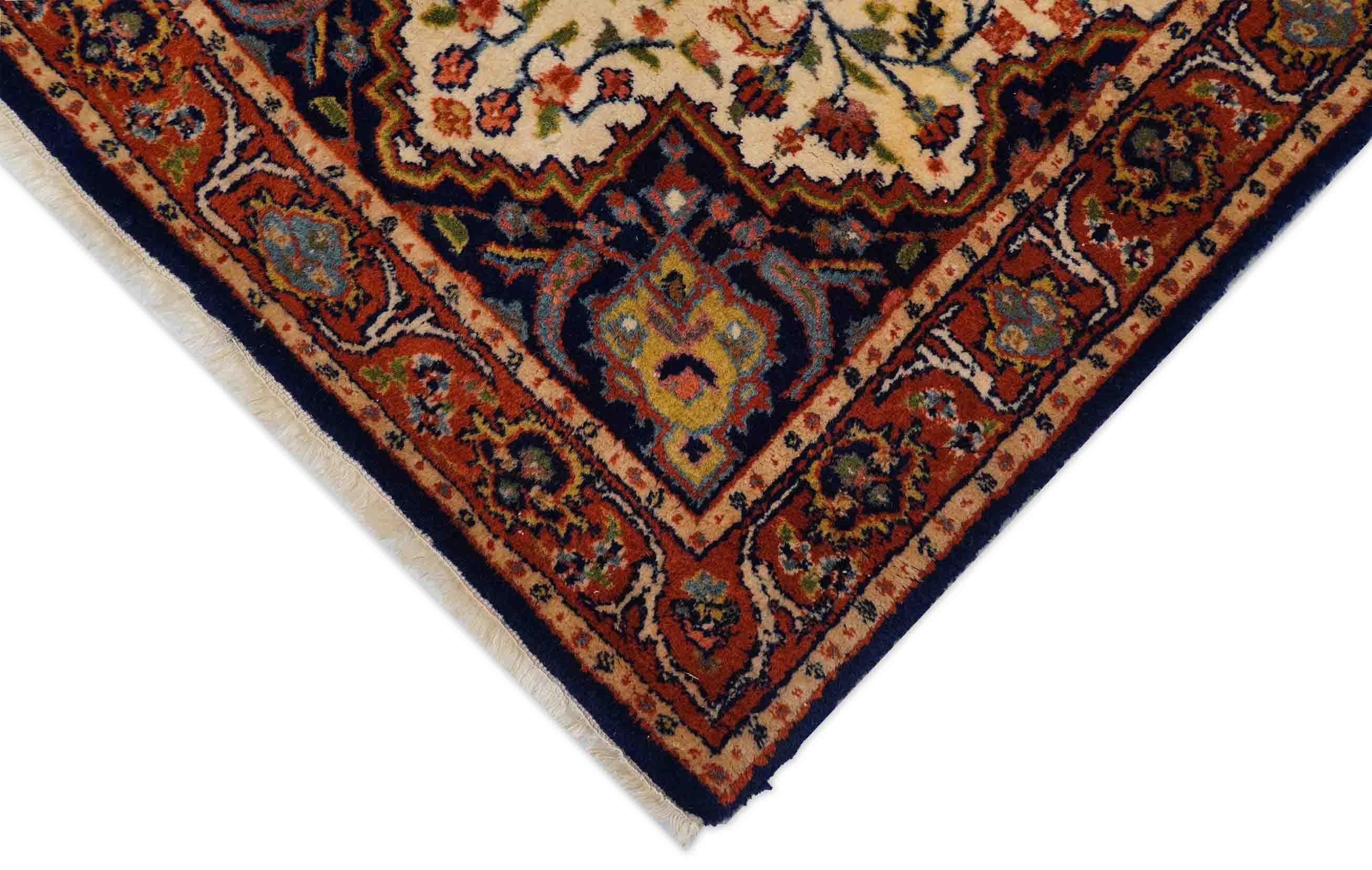
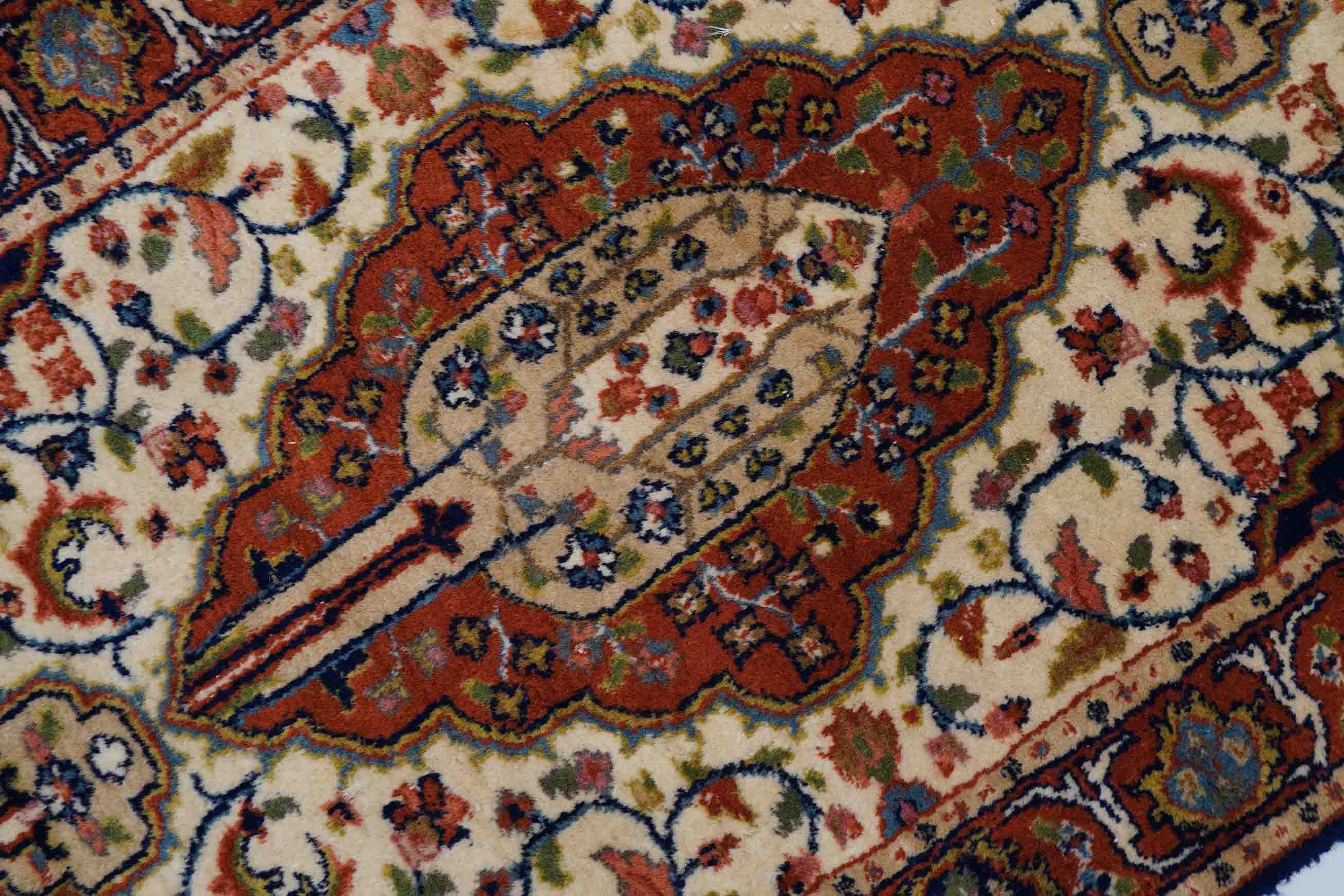
Indian Keshan | 137 x 72 cm | Nr. Z-655


|
1-3 working days delivery time (within Germany) |

|
14-day home trial |

|
Free delivery & returns within the EU |
Indian Keshan
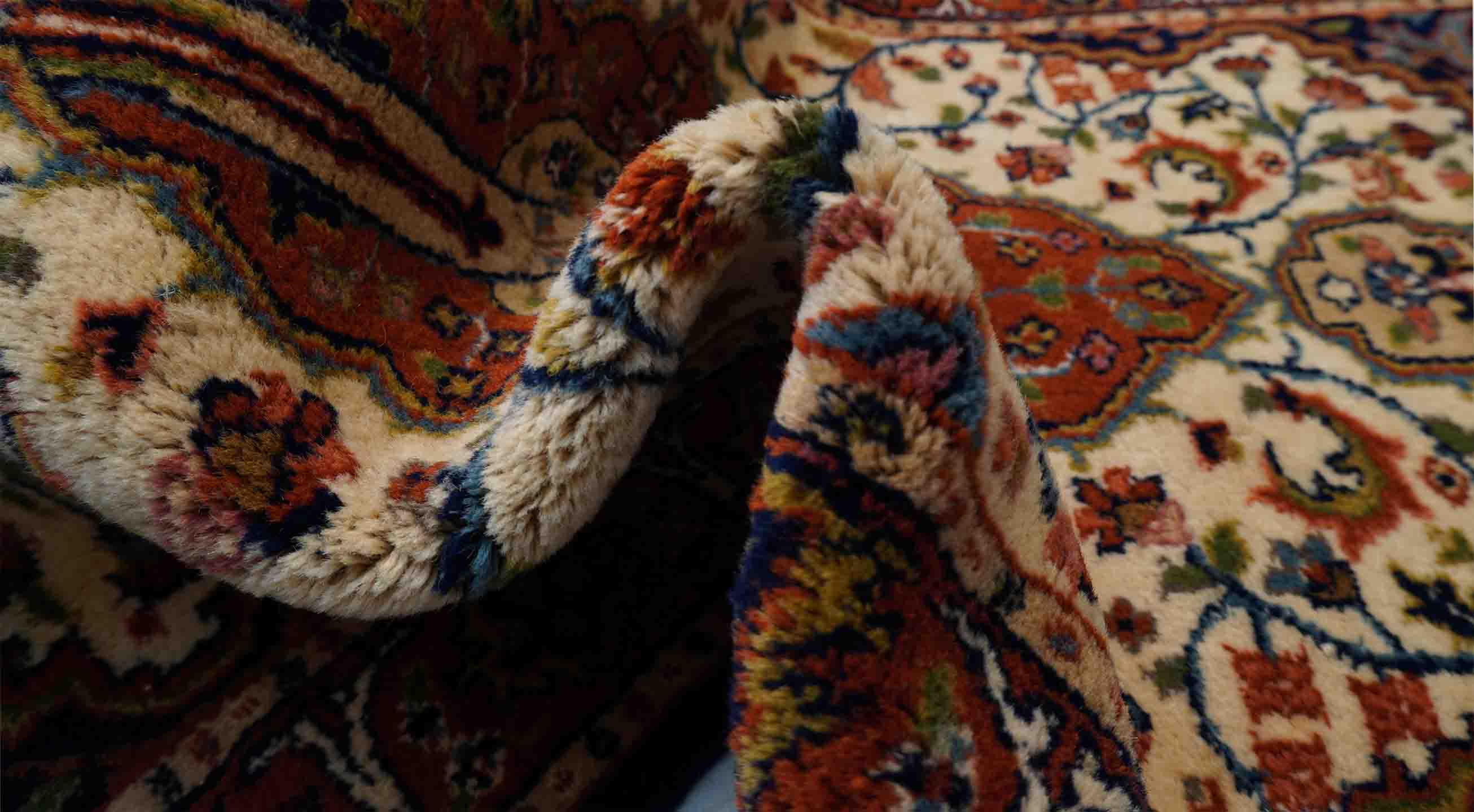
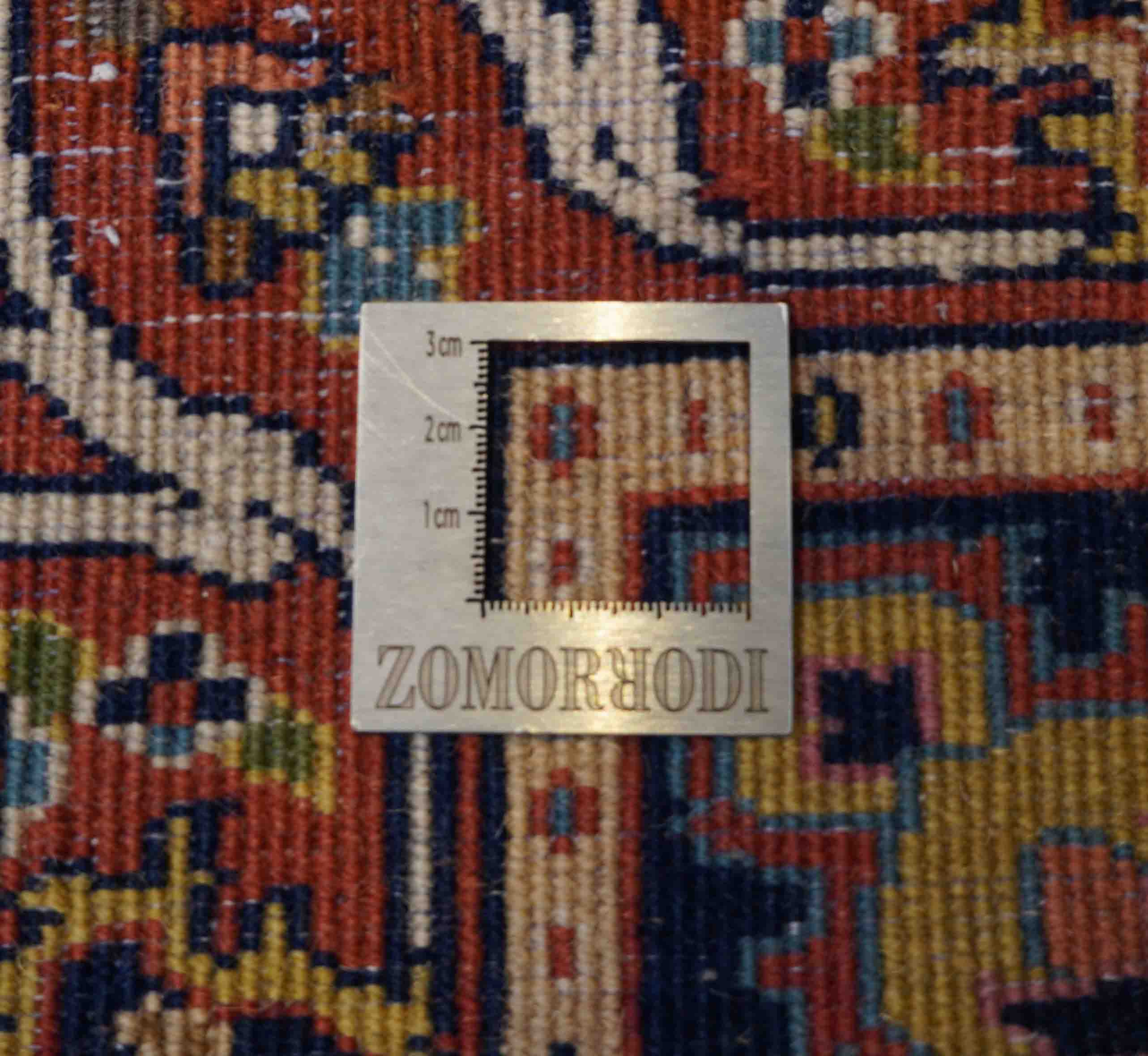
This one-of-a-kind piece in rust red brings together traditional craftsmanship and timeless elegance. With a knot density of around 200,000 knots per m², the elaborate workmanship shows above all in the precise drawing of the design and the fine execution of the details. At 137 × 72 cm it works beautifully as a small living-room rug. The harmonious colouring and the characteristic texture give any room an exclusive, homely atmosphere. A rug of this quality is far more than a furnishing item – it is a piece of traditional textile art with individual character and lasting value.
| Delivery time | 2 days |
| Origin | India |
| Dimensions | 137 cm x 72 cm (= 0.99 m²) |
| Construction | hand-knotted |
| Material | Pile: wool |
| knots | 200.000 |
| Condition | pre-owned, but in very good condition (cleaned & restored) |
| Edition | one-of-a-kind piece |

Origin
The central Persian city of Keshan (also written Kashan or Keschan) lies between the mountain slopes of the Zagros range and the Persian desert regions. Thanks to its climate and the caravans that crossed the country, it was – at least until the Safavids moved their seat of government to Isfahan – a flourishing metropolis, known above all for its fabric and rug production. To this day the city is shaped by the elegance and splendour of that era. Keshan rugs are artful textiles made in an age-old tradition. In Keshan, production traditionally took place in the weavers' own homes. The pile is typically knotted from extremely soft wool, which makes it particularly dense and compact.The pattern of this rug is inspired by the patterns of classic Indian Keshan rugs. This rug, however, was knotted in India.
Exactly when rug production in India began is unknown. The first rugs in India were probably made during the cultural flowering of the Mughal dynasty in the middle of the 16th century. In the middle of the 19th century, with the decline of the Mughal dynasty, Indian rug production fell into crisis. European companies whose only aim was export to the West took the place of the traditional court manufactories. Very similar rugs were produced in different towns, and standardisation set in. Today, the designs of hand-knotted Indian rugs can scarcely be attributed to individual regions. Instead, the workshops have come to specialise in rendering European and traditional Iranian designs adapted to Western taste. In terms of quality, rugs from India benefit from the long tradition of craftsmanship and the high quality of Indian materials.
Material
The pile of this Indian Keshan was hand-knotted from high-quality new wool. New wool is obtained by gently shearing sheep. New wool is a renewable, natural raw material with a number of impressive properties: thanks to the natural grease content of the wool, the surface repels water droplets and is therefore naturally protected against dirt. Wool also offers excellent thermal insulation, helps regulate the indoor climate and dampens sound.The weft and warp threads of this Indian Keshan are made of cotton. This versatile material is tear-resistant and elastic, which makes it particularly well suited to a hard-wearing foundation.
Condition
This Indian Keshan has a history. The edges are damaged in places. It was knotted around 24. We have cleaned it thoroughly and lovingly restored it. It is therefore – despite its age – in very good condition.
A note on the photos
Child labour? No thanks.
Child labour? No thanks. Children belong in school, not at a knotting frame or a loom. For us it therefore goes without saying that we only offer rugs made under fair conditions and without child labour.
We attach particular importance to humane working conditions and tolerate no child labour at any of our producers. Thank you for helping us to ensure fair conditions.
That is why we support the initiative Care & Fair against child labour in the rug trade.

Choose options
|
|
1-3 working days delivery time (within Germany) |
|
|
14-day home trial |
|
|
Free delivery & returns within the EU |