
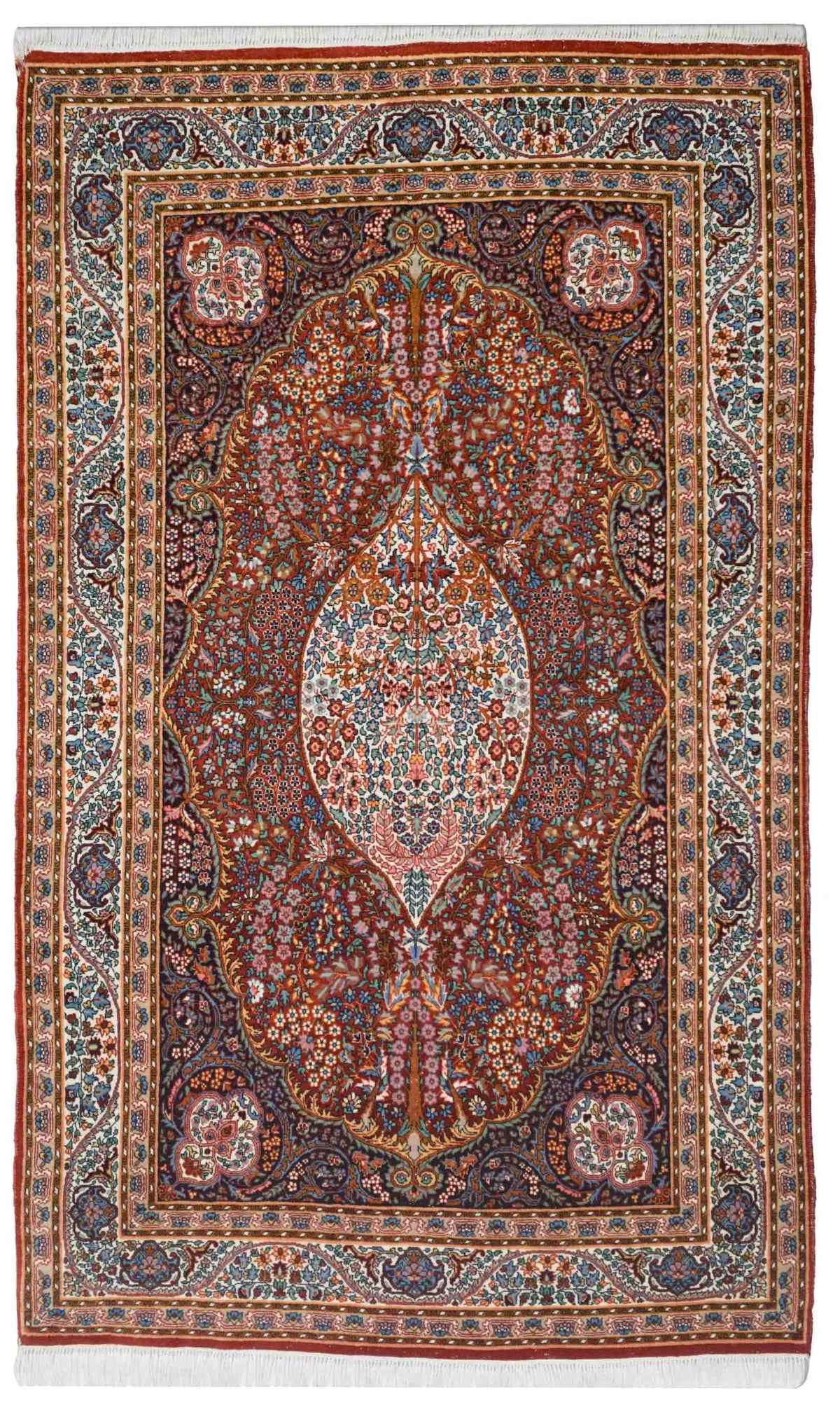
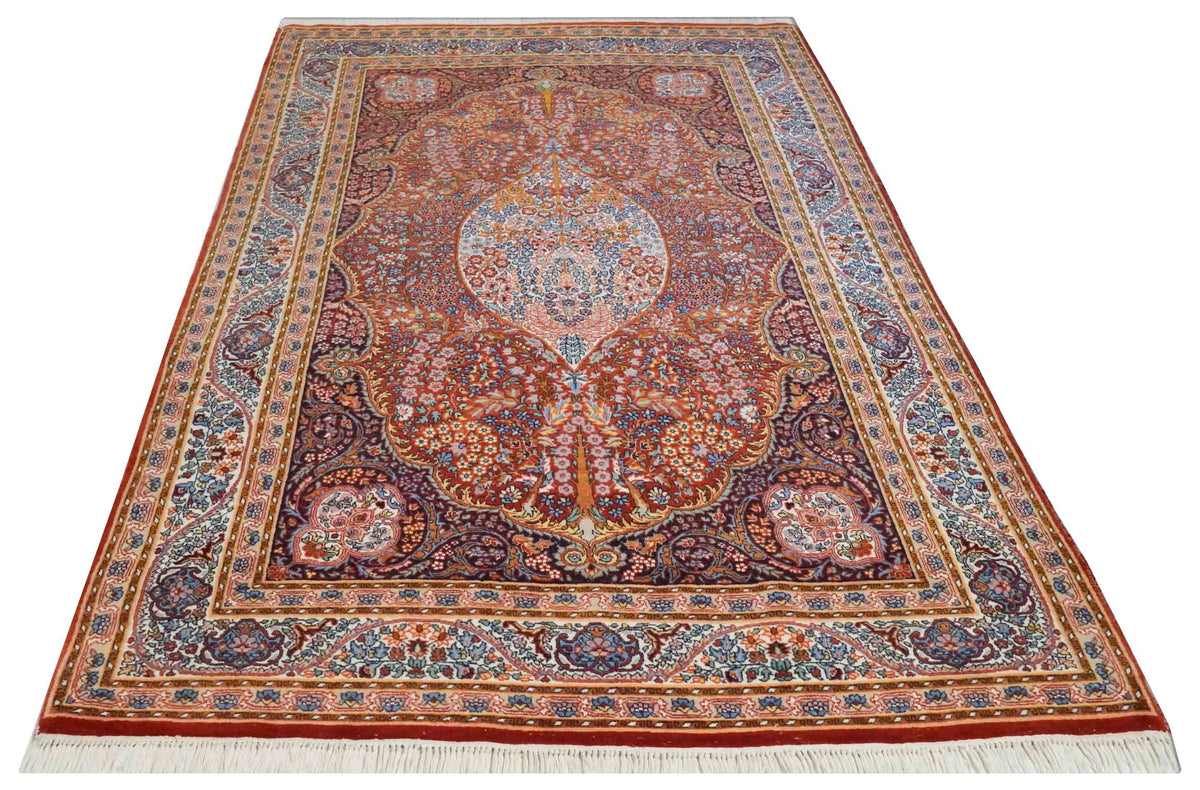
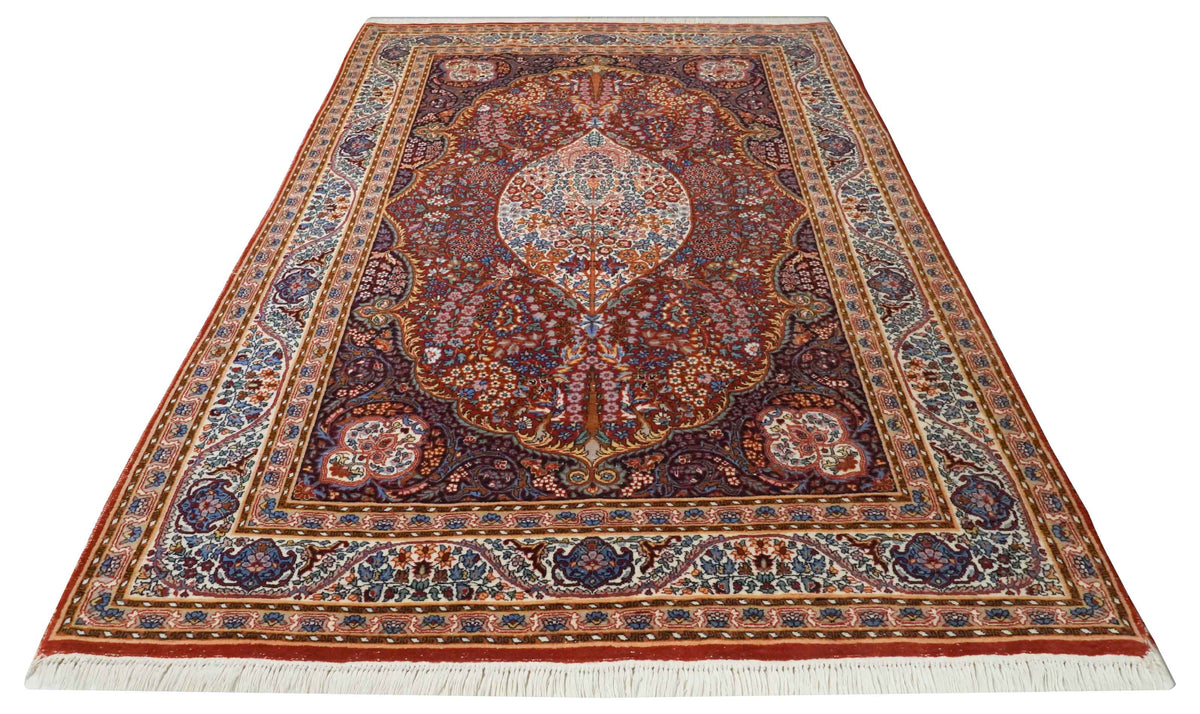
Kashmir rug | 228 x 137 cm | Nr. Z-4620


|
14-day home trial |

|
Free delivery & returns within the EU |
Kashmir Rug
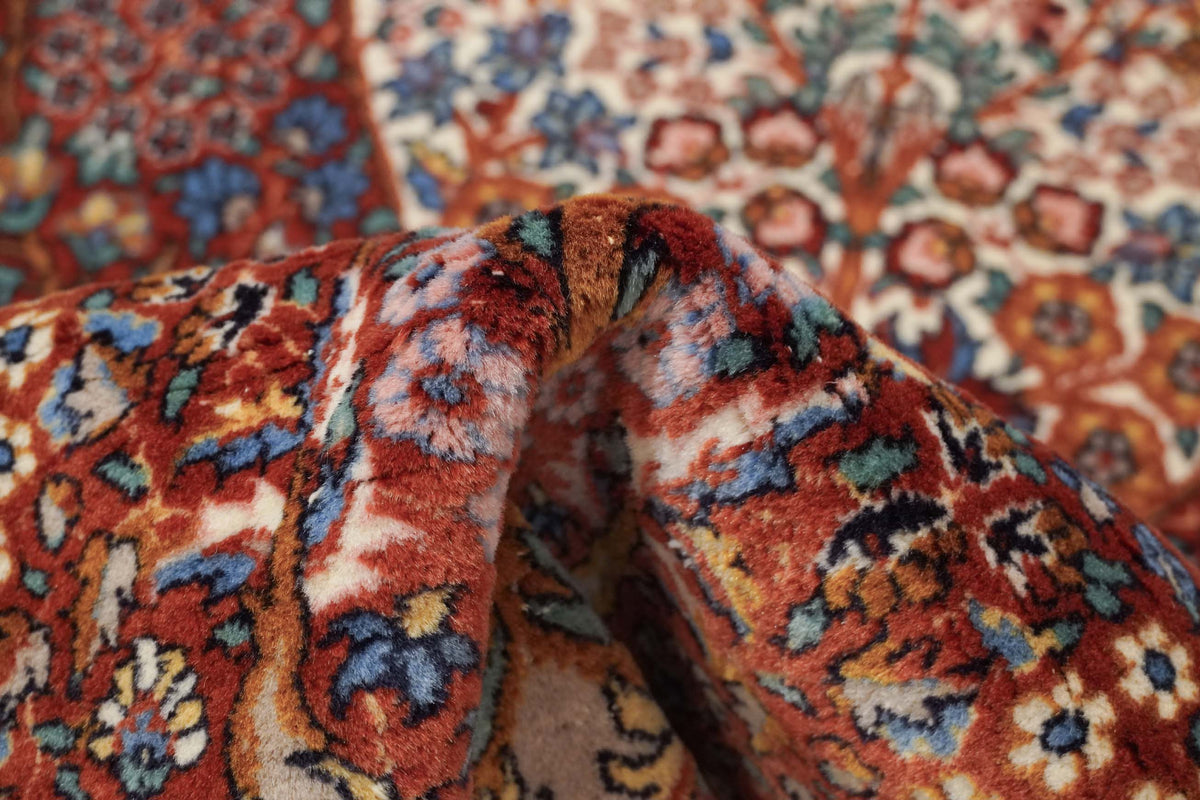
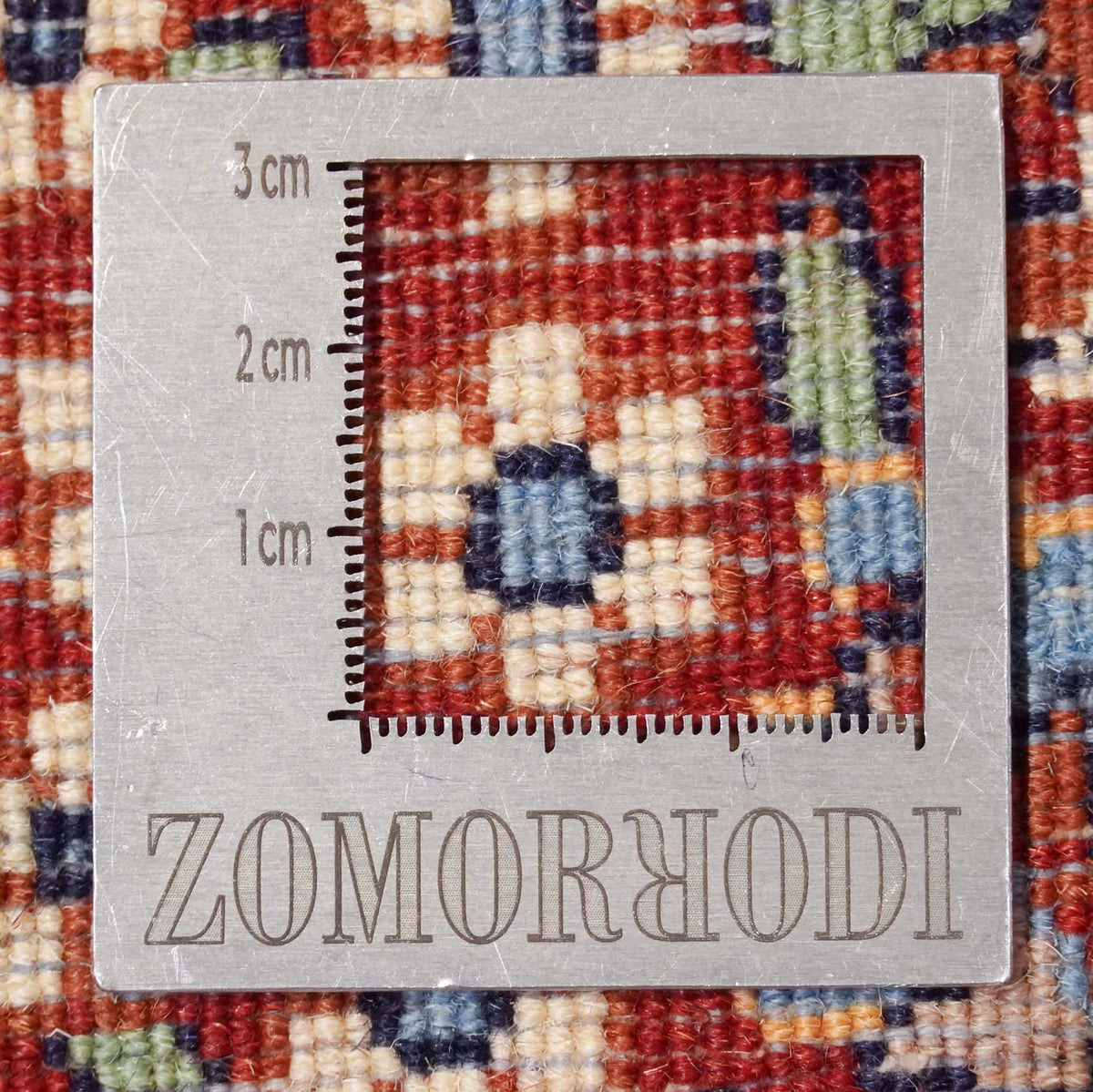
Craftsmanship and timeless elegance meet in this rug in rust red and turquoise. The knot density of approx. 360,000 knots per m² makes the demanding workmanship visible – right down to the fine execution of the details. At 228 × 137 cm it is right at home as a living room rug. It is equally effective beneath a dining table for four to six people. Colouring and texture give any room a homely, exclusive note – a one-of-a-kind piece made to last for years.
| Delivery time | 2 days |
| Origin | Kashmir |
| Dimensions | 228 cm x 137 cm (= 3.12 m²) |
| Construction | hand-knotted |
| Material |
Pile: wool (hand-spun, natural dyes) Weft & Warp: cotton |
| knots | 360.000 |
| Year of manufacture | 1985 |
| Condition | pre-owned, but in very good condition (cleaned & restored) |
| Edition | one-of-a-kind piece |
Origin
The mountainous land of Kashmir in the Himalayas is divided: one third belongs to Pakistan as a province, while the other two thirds form the union state of "Jammu and Kashmir", which is part of India. The population of the larger union state is predominantly Muslim and seeks independence. The hand-knotted rugs come exclusively from the Indian part of Kashmir and are knotted mainly in the provincial capital Srinagar and the surrounding area. Kashmir's silk rugs are famous, and they are usually made on a cotton foundation.The colours of Kashmir rugs are rather restrained, and the patterns are influenced by traditional Persian designs. This goes back a long way, as the Mughal emperors (1526-1857) once brought Persian rug knotters to their court in India. That is why people also speak of the Indo-Persian style. Another legend, however, has it that in 1398 the tribute-paying Sultan of Kashmir had to send his son as a hostage to Timur Lenk (Tamerlane) in Samarkand. There the young prince came to know the craft of knotting and, on his return, introduced it in Kashmir together with knotters from Samarkand.
Material
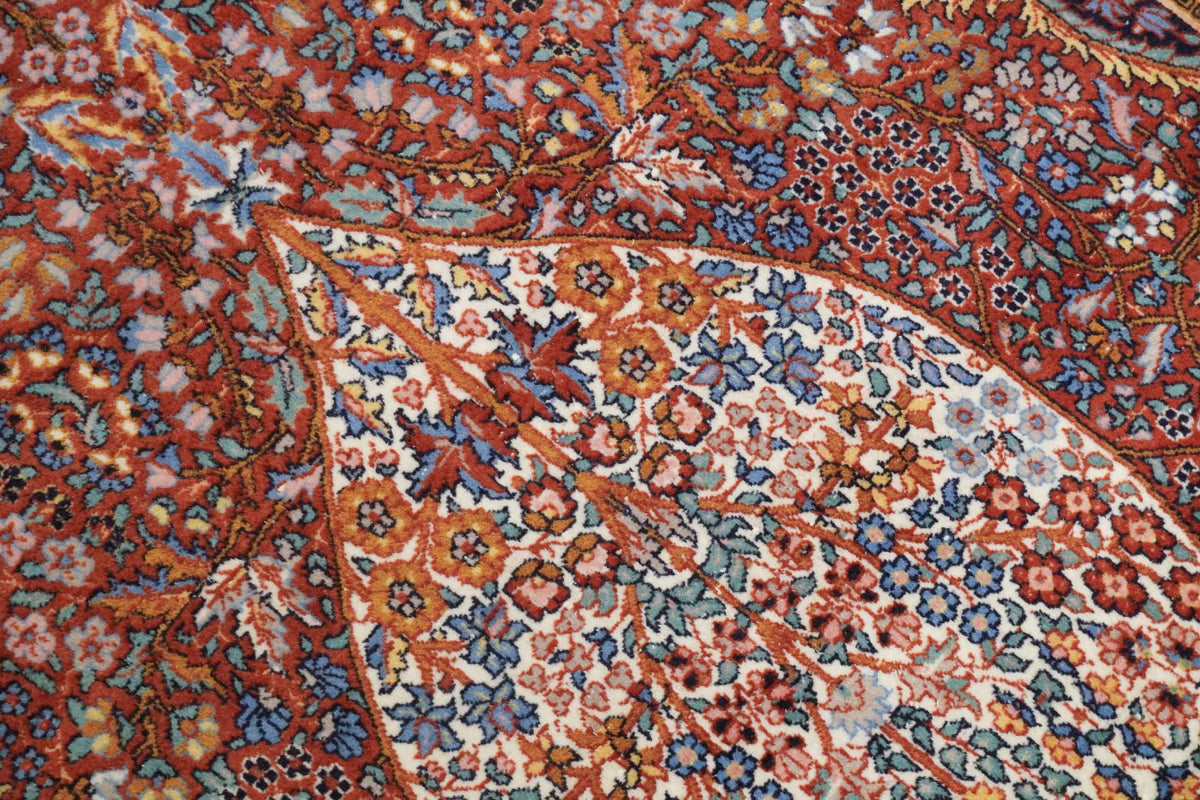
The technique used to make the materials for the pile of this Kashmir rug is over 200 years old. The wool was dyed with natural dyes and spun by hand. Dyeing with natural or plant dyes is more complicated, more expensive and more time-consuming than dyeing with chemical colours. For a luminous red, for example, you need around one kilo of ground madder root as dyestuff per kilo of wool. For a strong yellow that isn't too pale you even need two kilograms of the dyestuff weld per kilo of wool. Spinning the wool is time-consuming and labour-intensive as well. On top of that, fewer and fewer people still master the craft of spinning wool by hand.But the effort is worth it: dyeing with natural colours allows the high-quality wool to keep its natural oil content. Wool that has been dyed with natural colours and spun by hand creates fascinating, shimmering patterns. The charm of hand-spun wool, with its slight irregularities and natural shades, comes into its own as a contrast in modern interiors, but equally in rooms furnished in a more traditional or country style.
The weft and warp threads of this Kashmir rug are made of cotton. This versatile material is tear-resistant and elastic, which makes it especially well suited to a hard-wearing foundation weave.
Condition
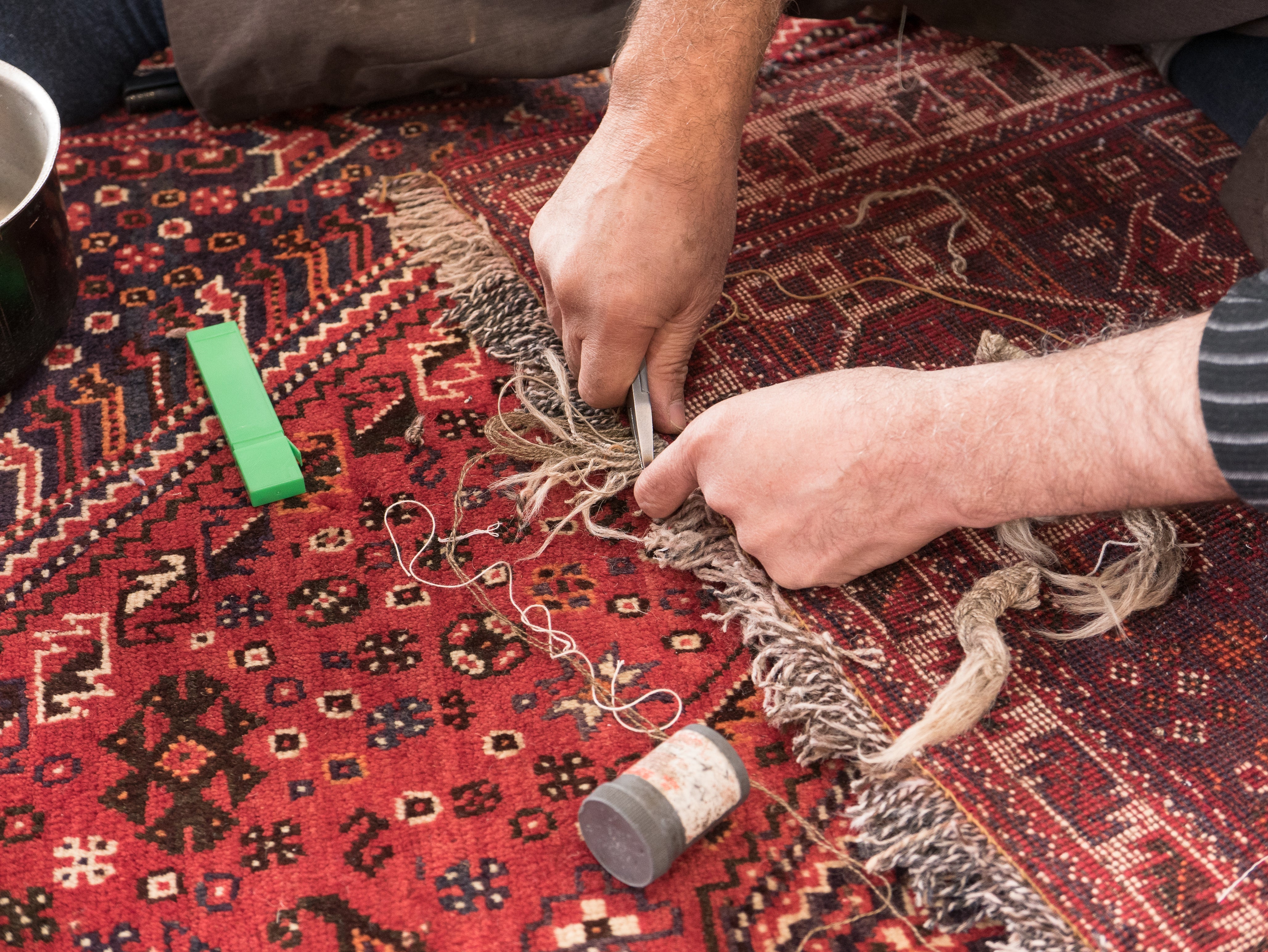
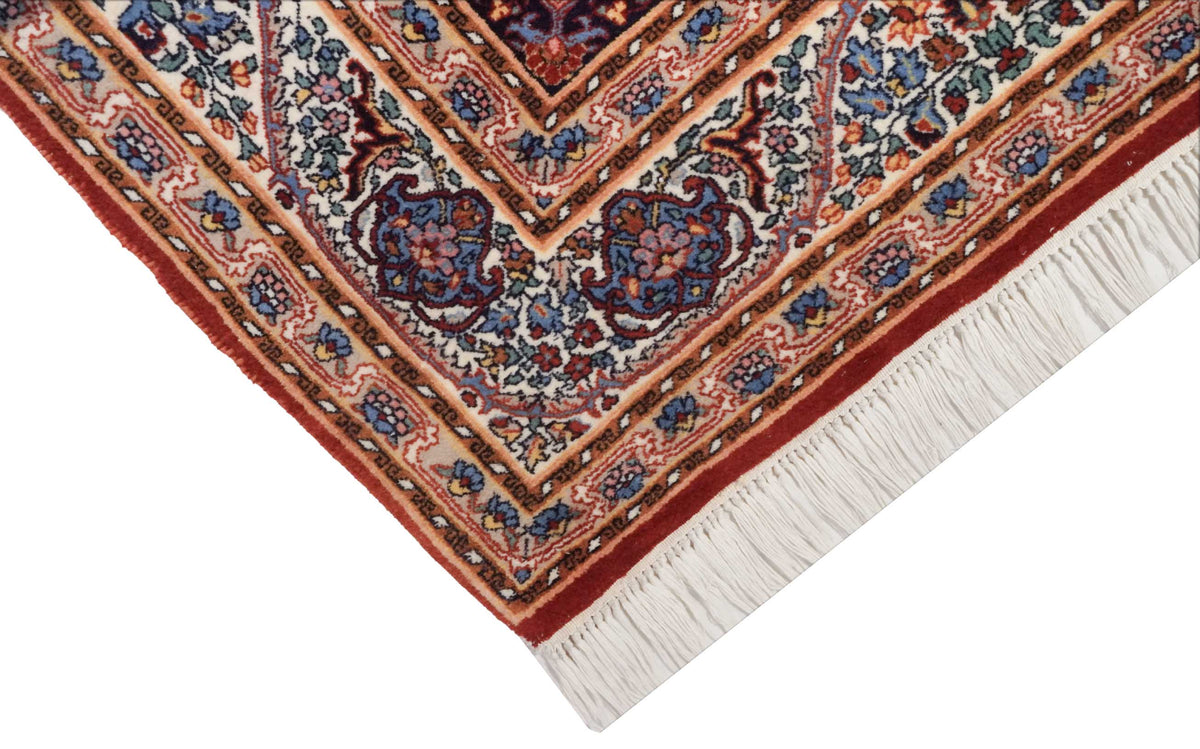
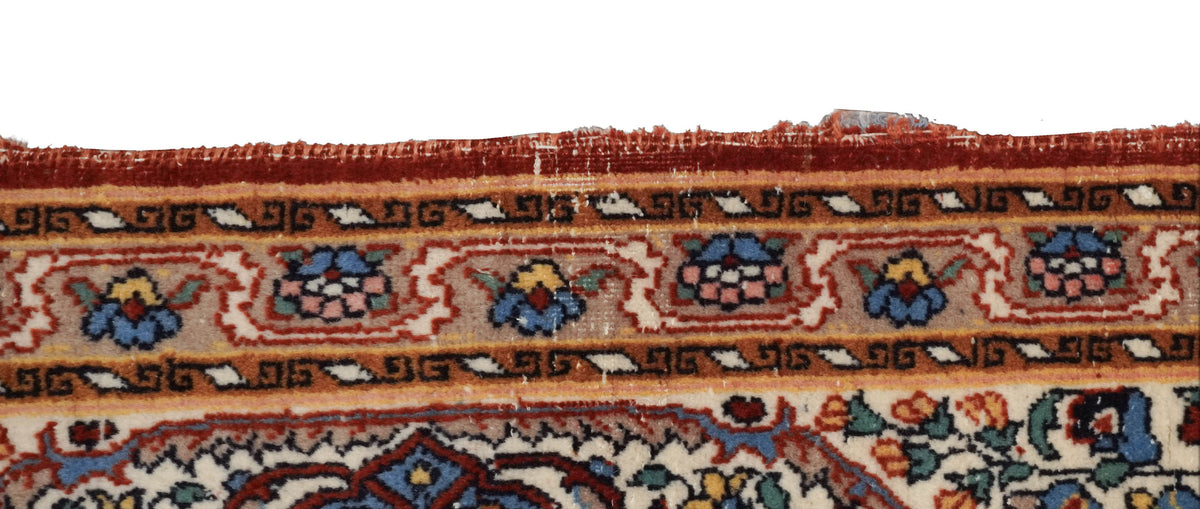
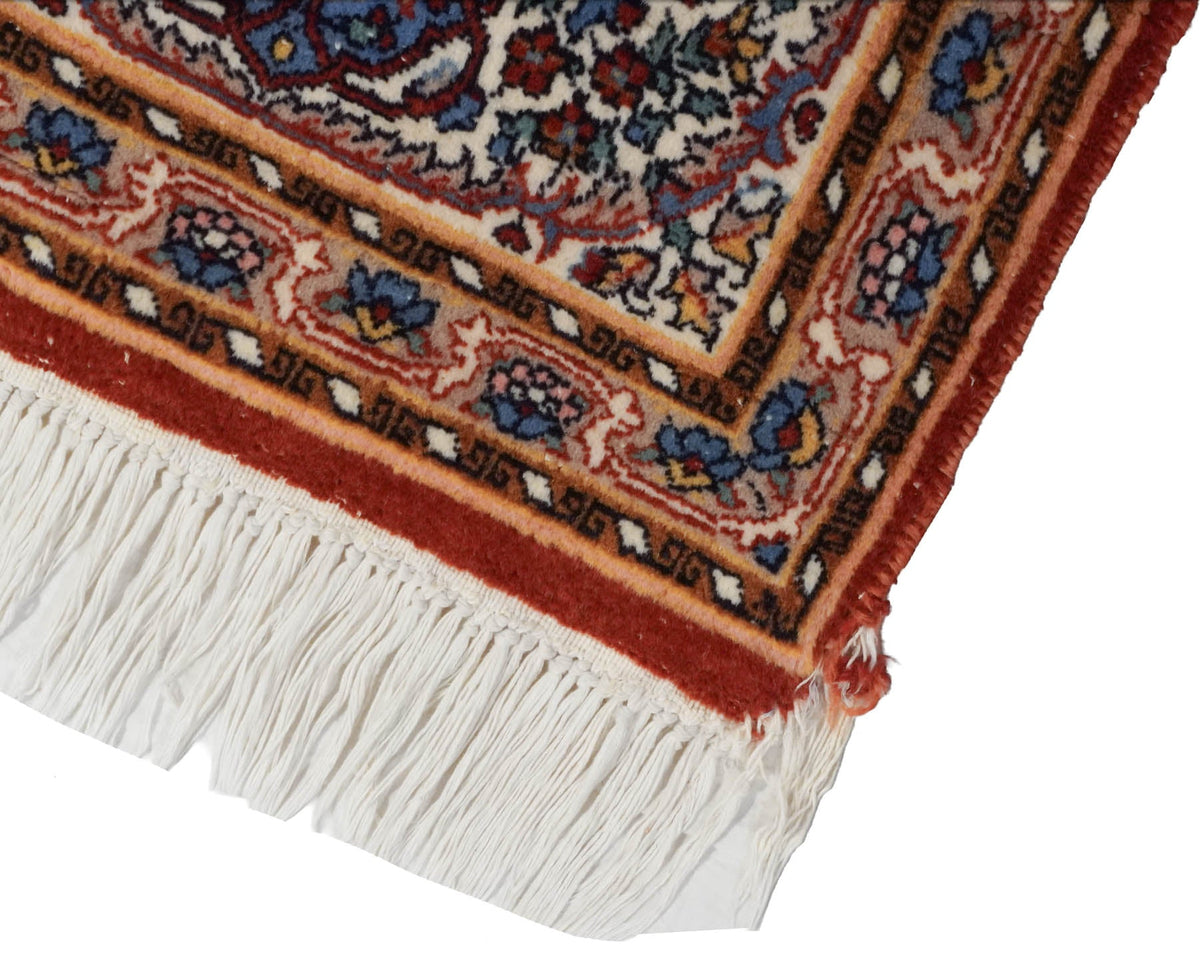
This Kashmir rug has a history. The fringes could do with a repair. This affects a length of: 5cm. The edges are partly damaged. In a few places you can see some white threads. That is quite normal in older rugs. These are the knot ends of the weft and warp weave that work their way to the surface over the years. Substantially, this is not a major problem. The pile is slightly worn. It was knotted around 1985. We have cleaned it thoroughly and restored it with care. Despite its age, it is therefore in very good condition.
A note on the photos
Child labour? No thanks.
Child labour? No thanks. Children belong in school, not at a knotting frame or a loom. For us it therefore goes without saying that we only offer rugs made under fair conditions and without child labour.
We attach particular importance to humane working conditions and tolerate no child labour at any of our producers. Thank you for helping us to ensure fair conditions.
That is why we support the initiative Care & Fair against child labour in the rug trade.

Choose options
|
|
14-day home trial |
|
|
Free delivery & returns within the EU |