
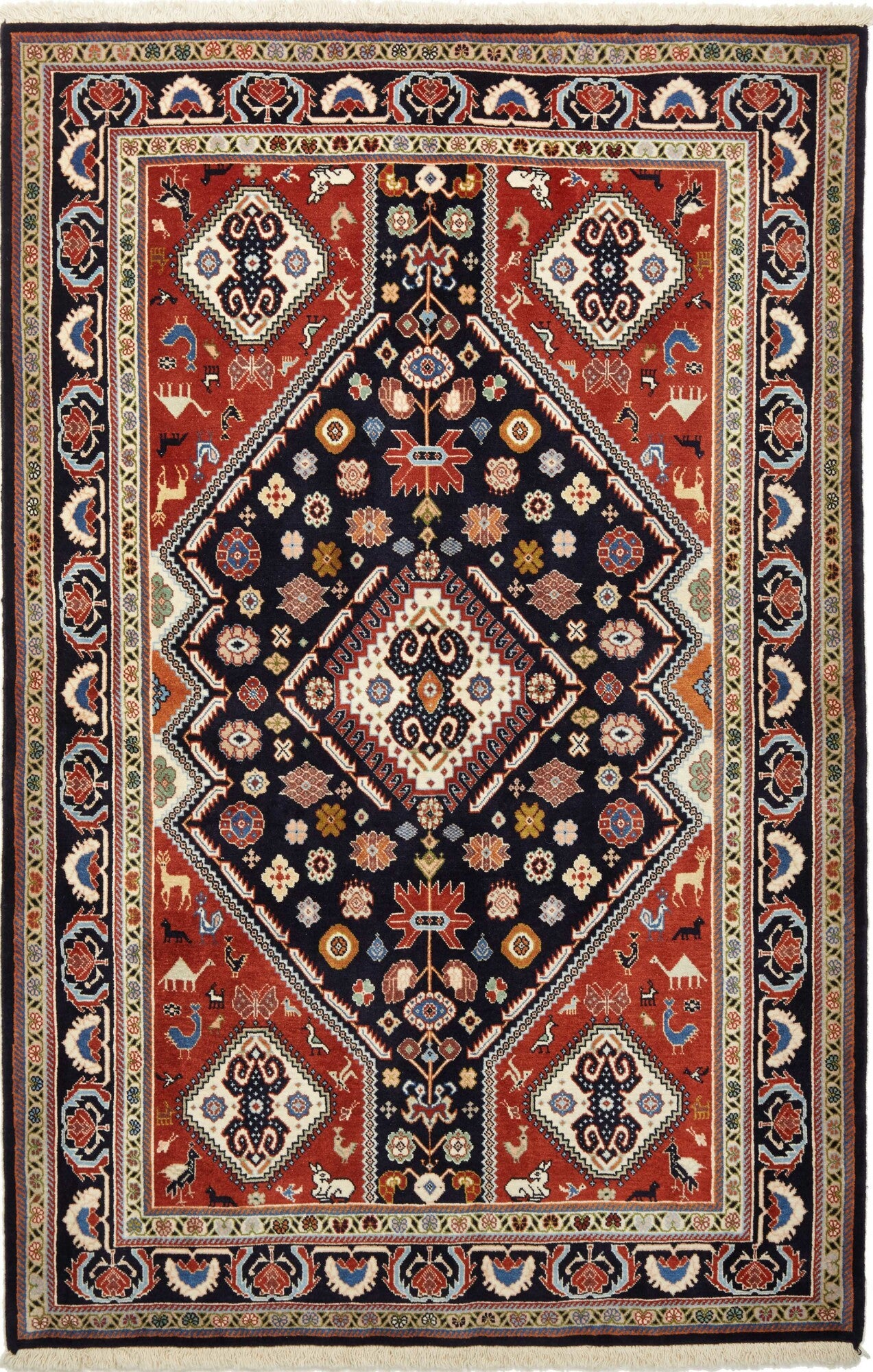
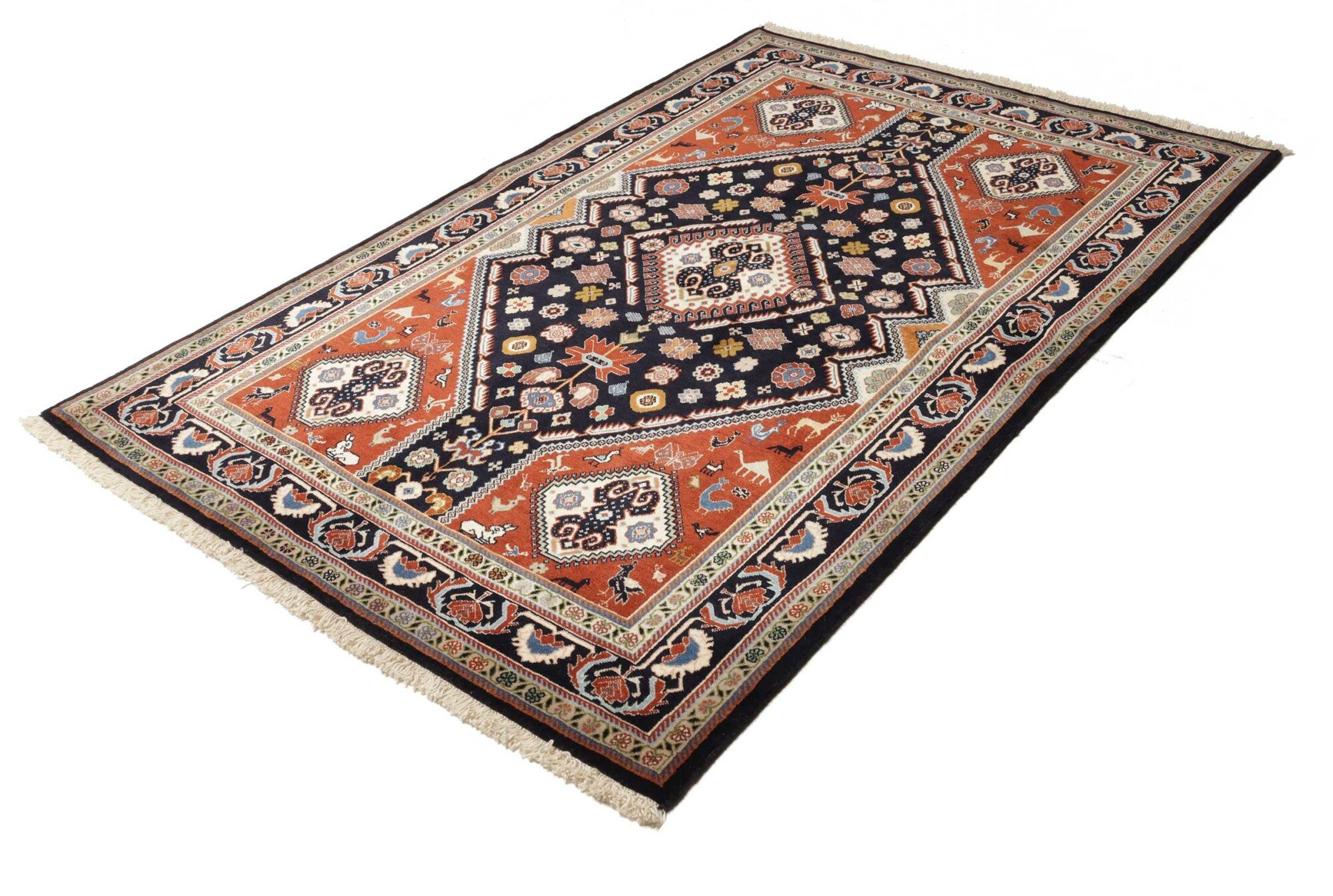
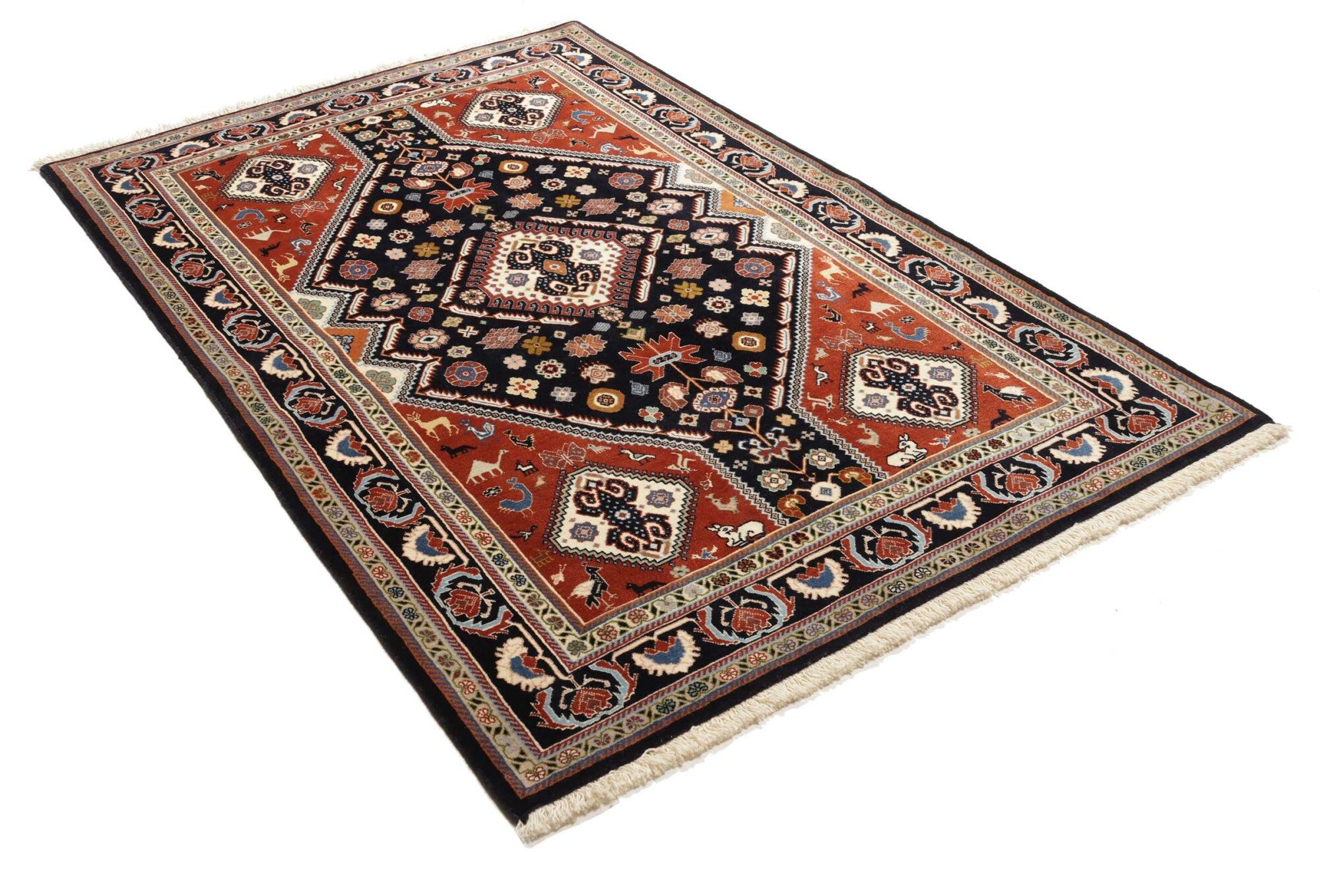
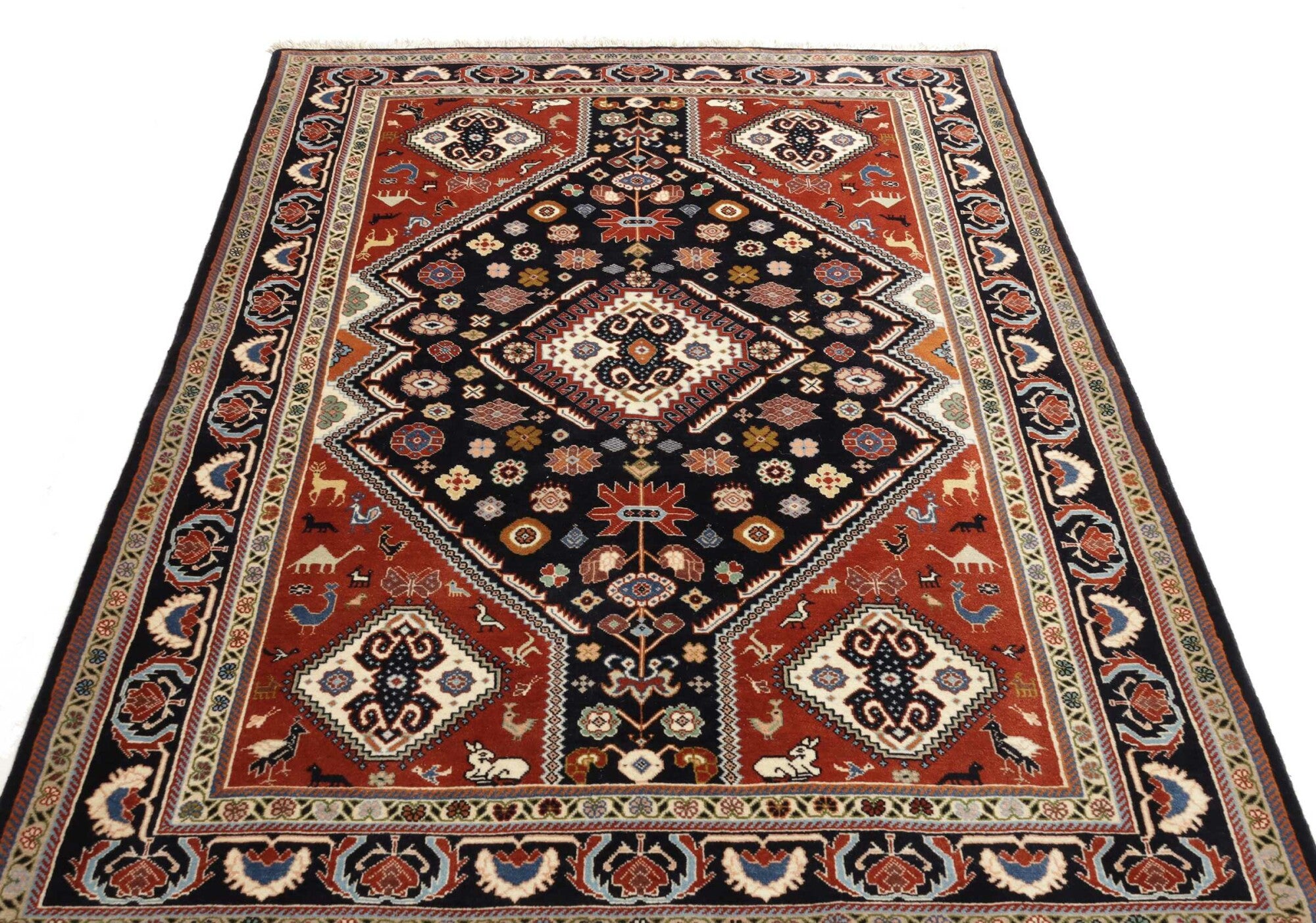
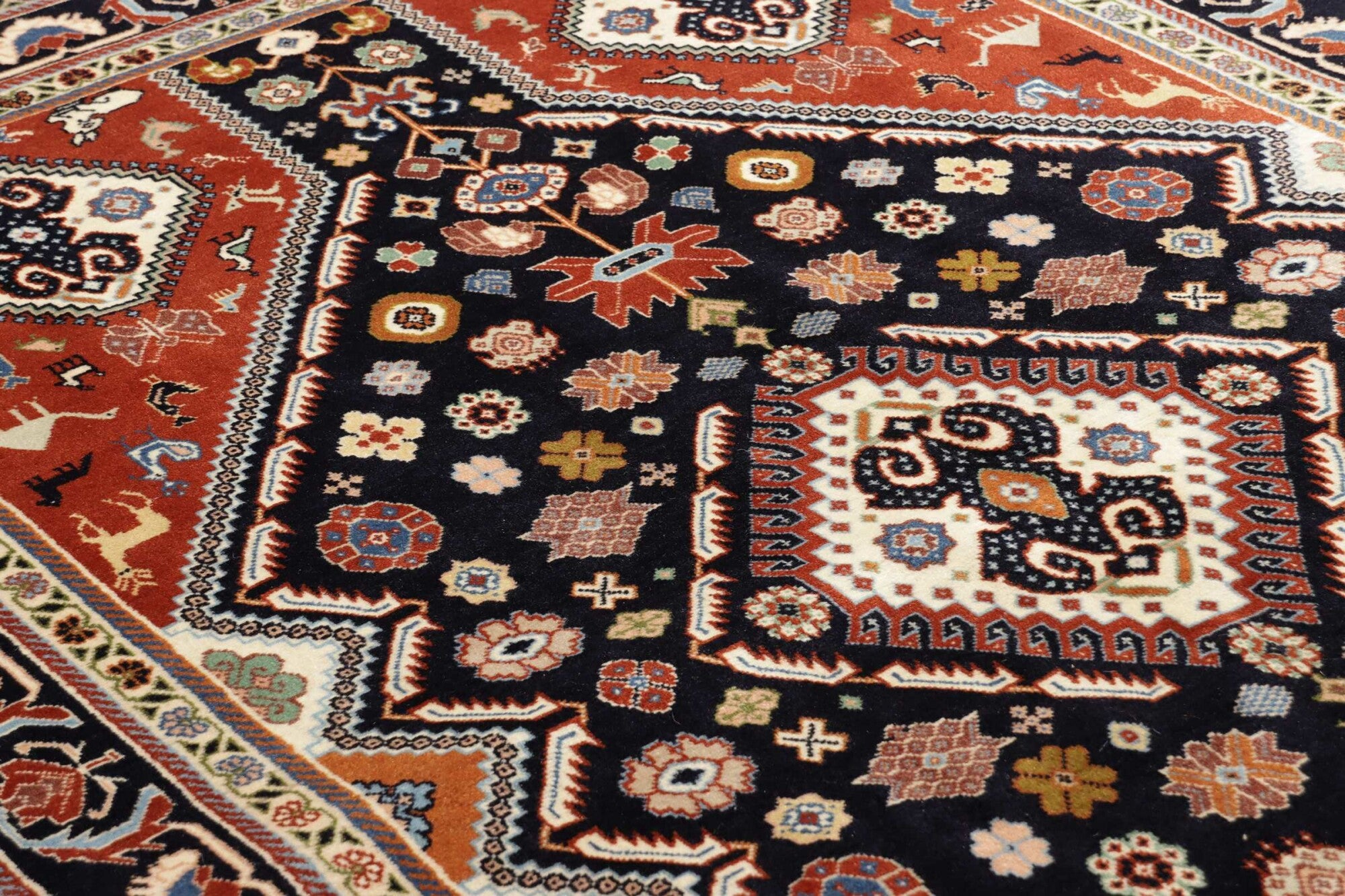
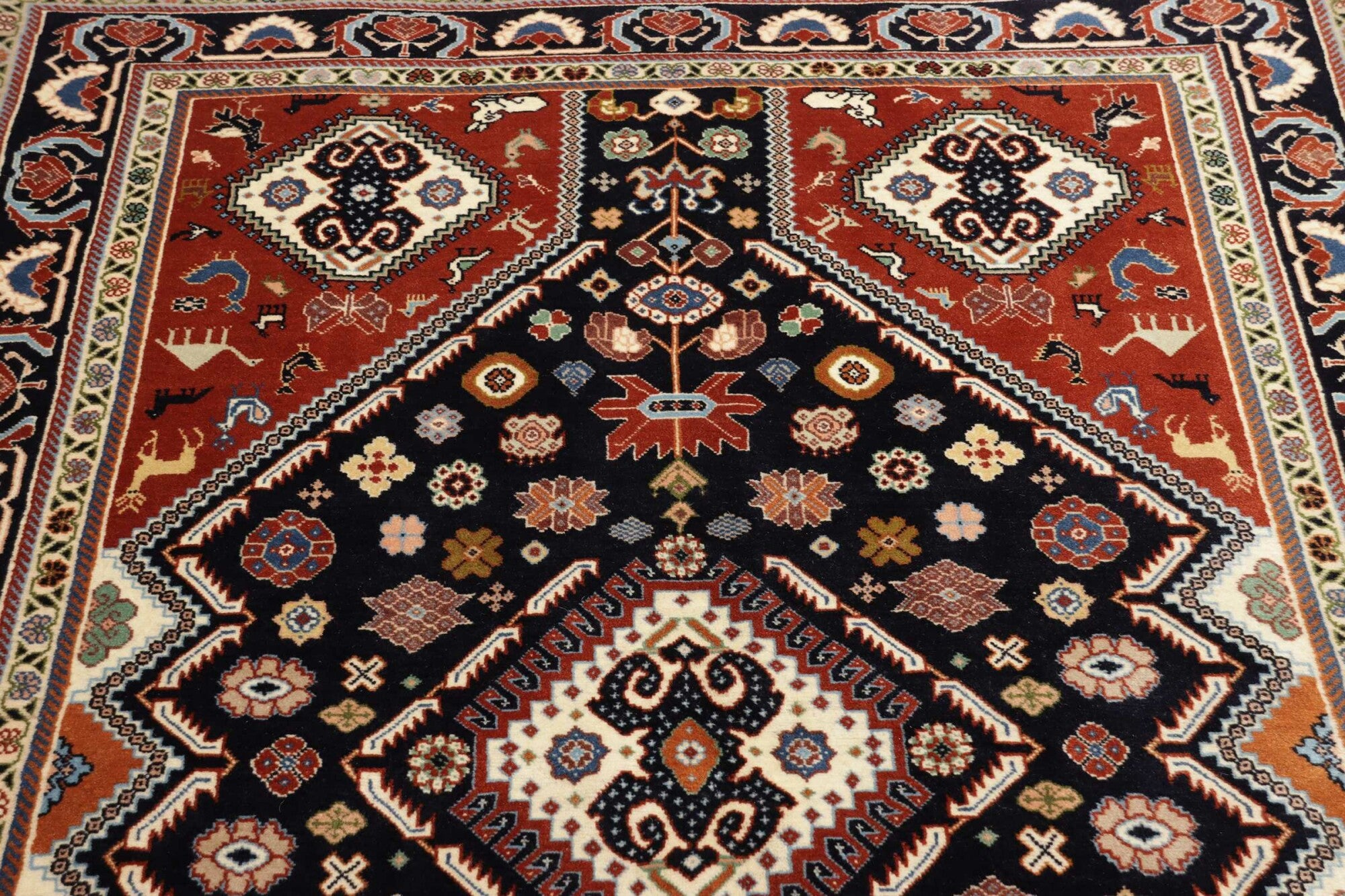
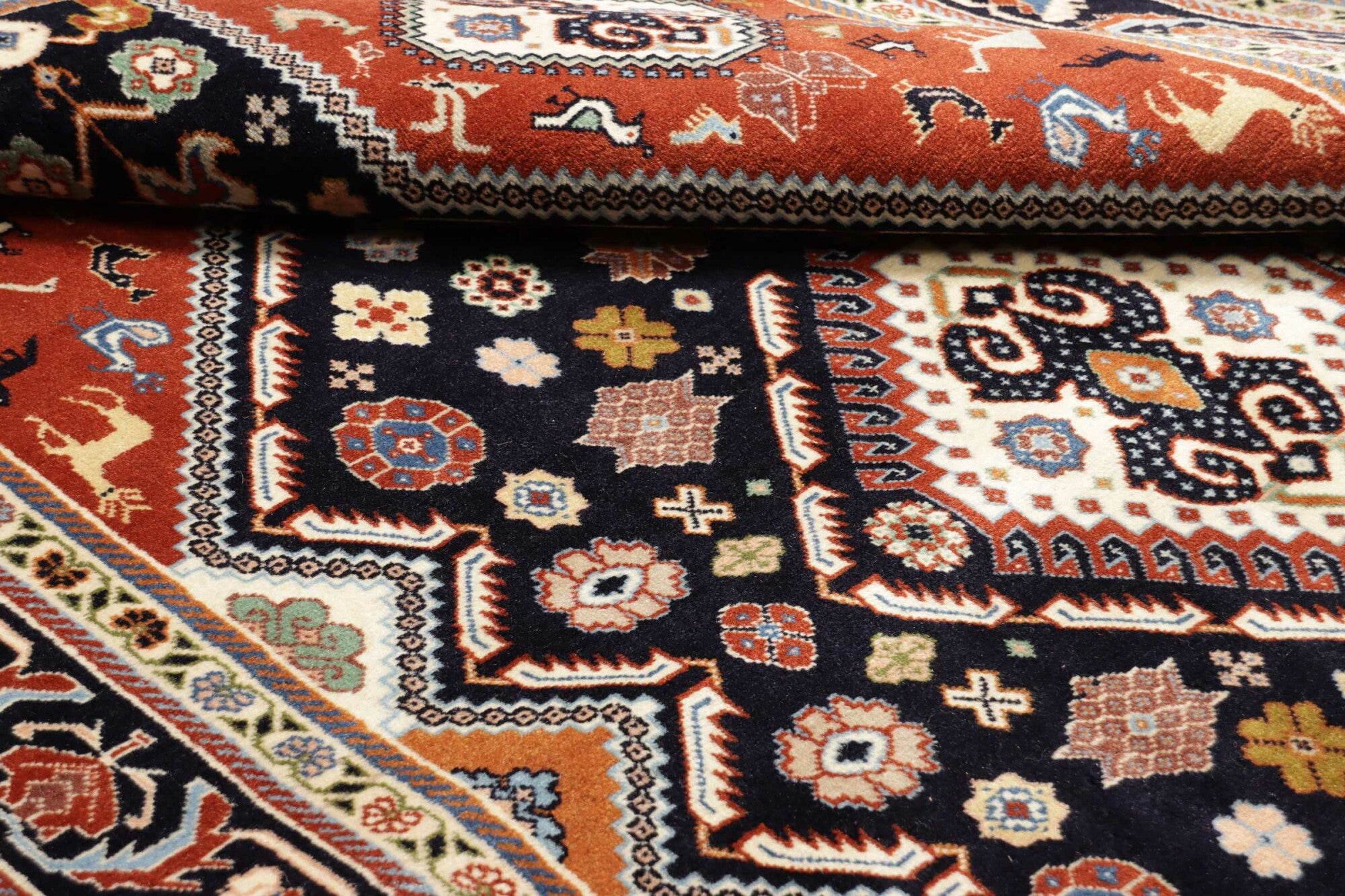
Kashghuli | 215 x 140 cm | Nr. 12-242867


|
1-3 working days delivery time (within Germany) |

|
14-day home trial |

|
Free delivery & returns within the EU |
Kashghuli
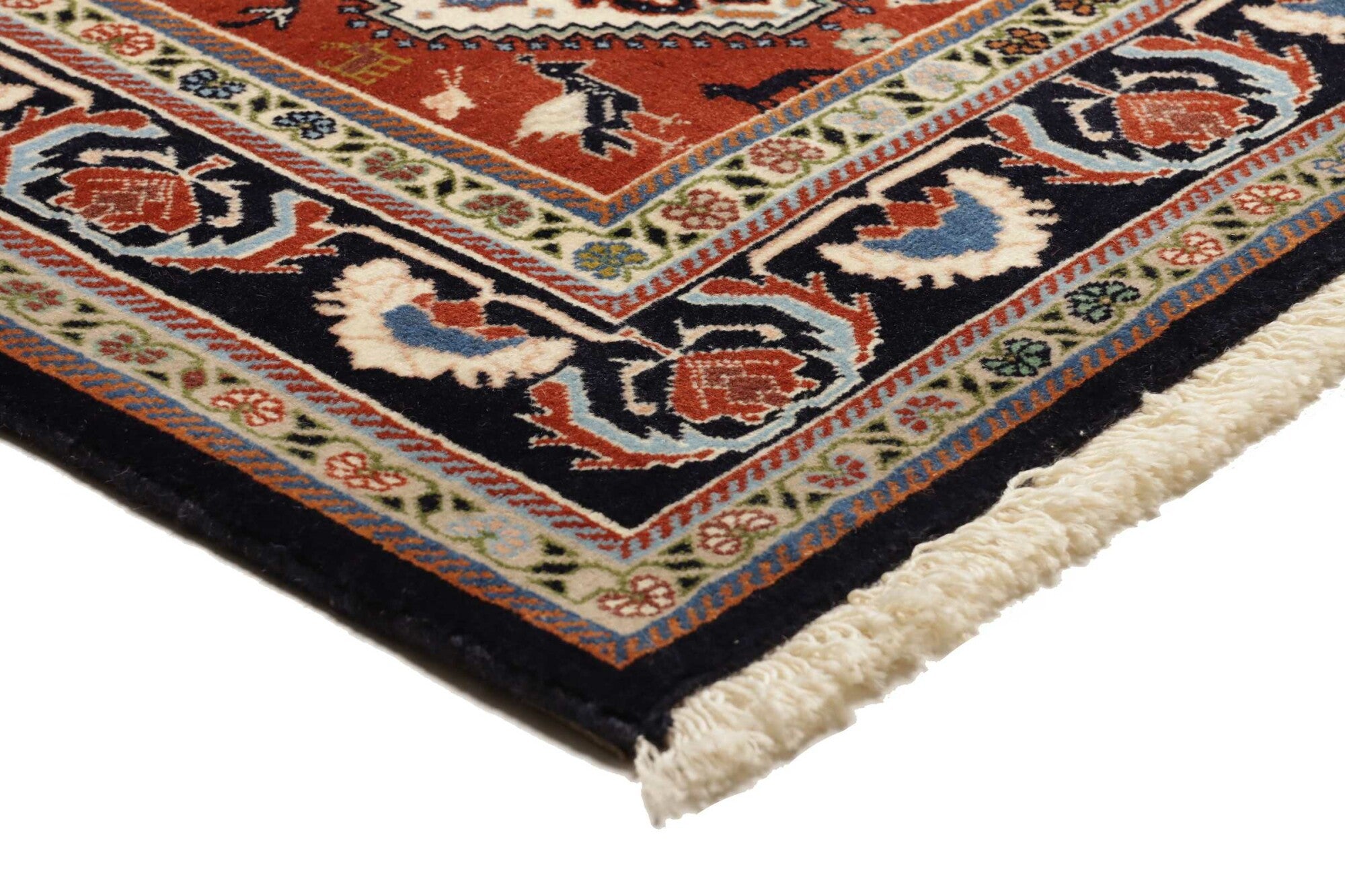
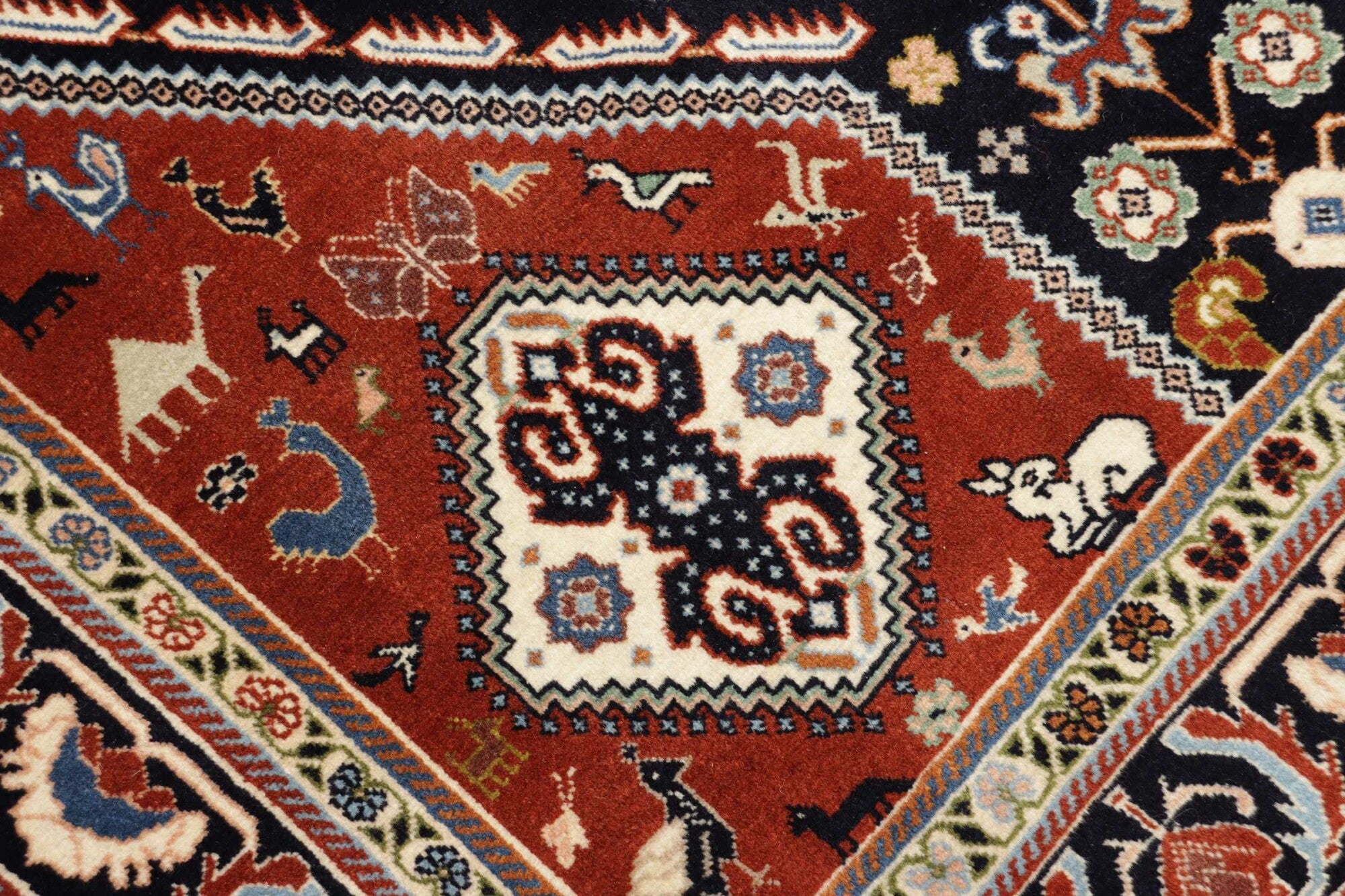
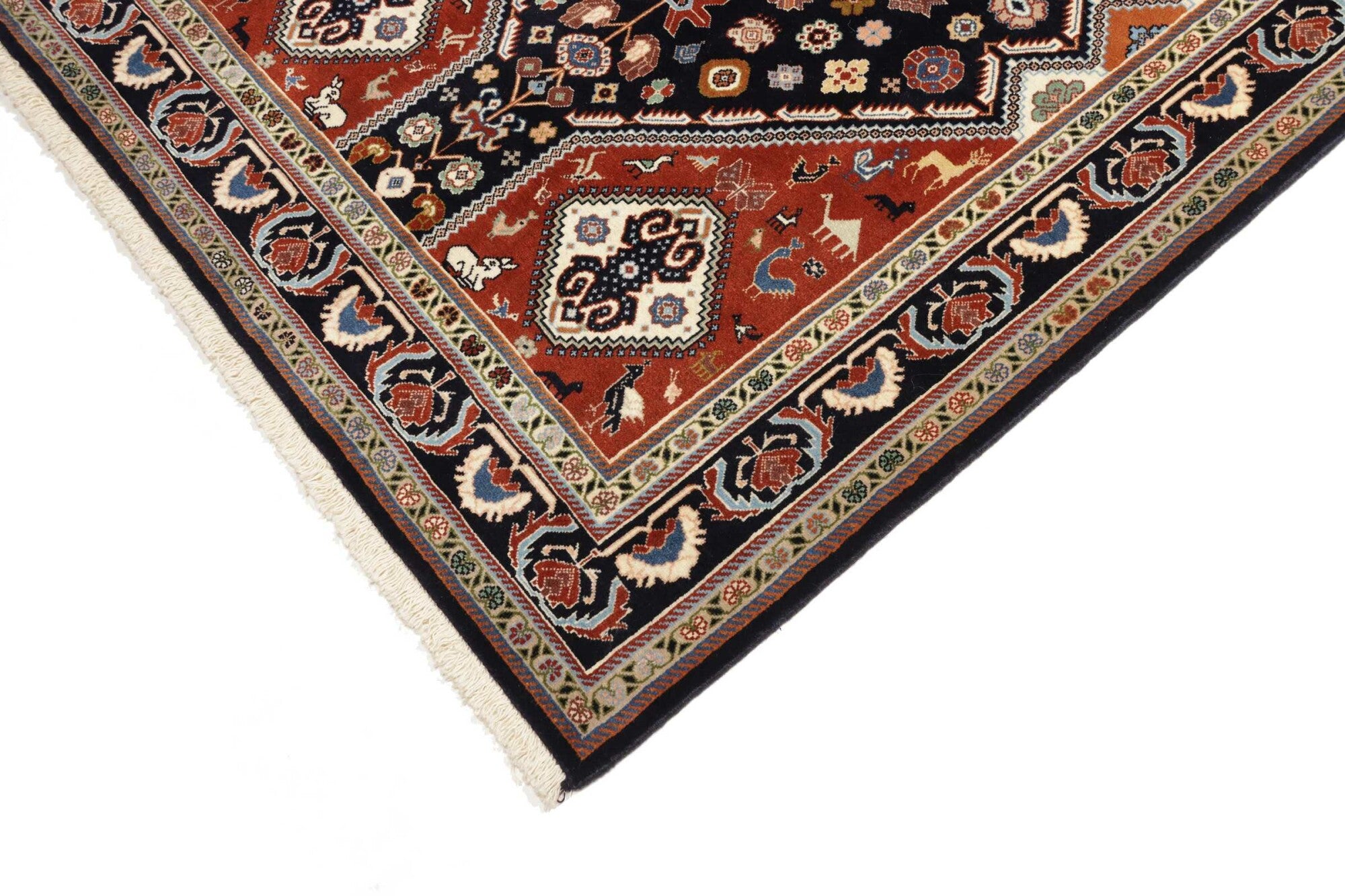
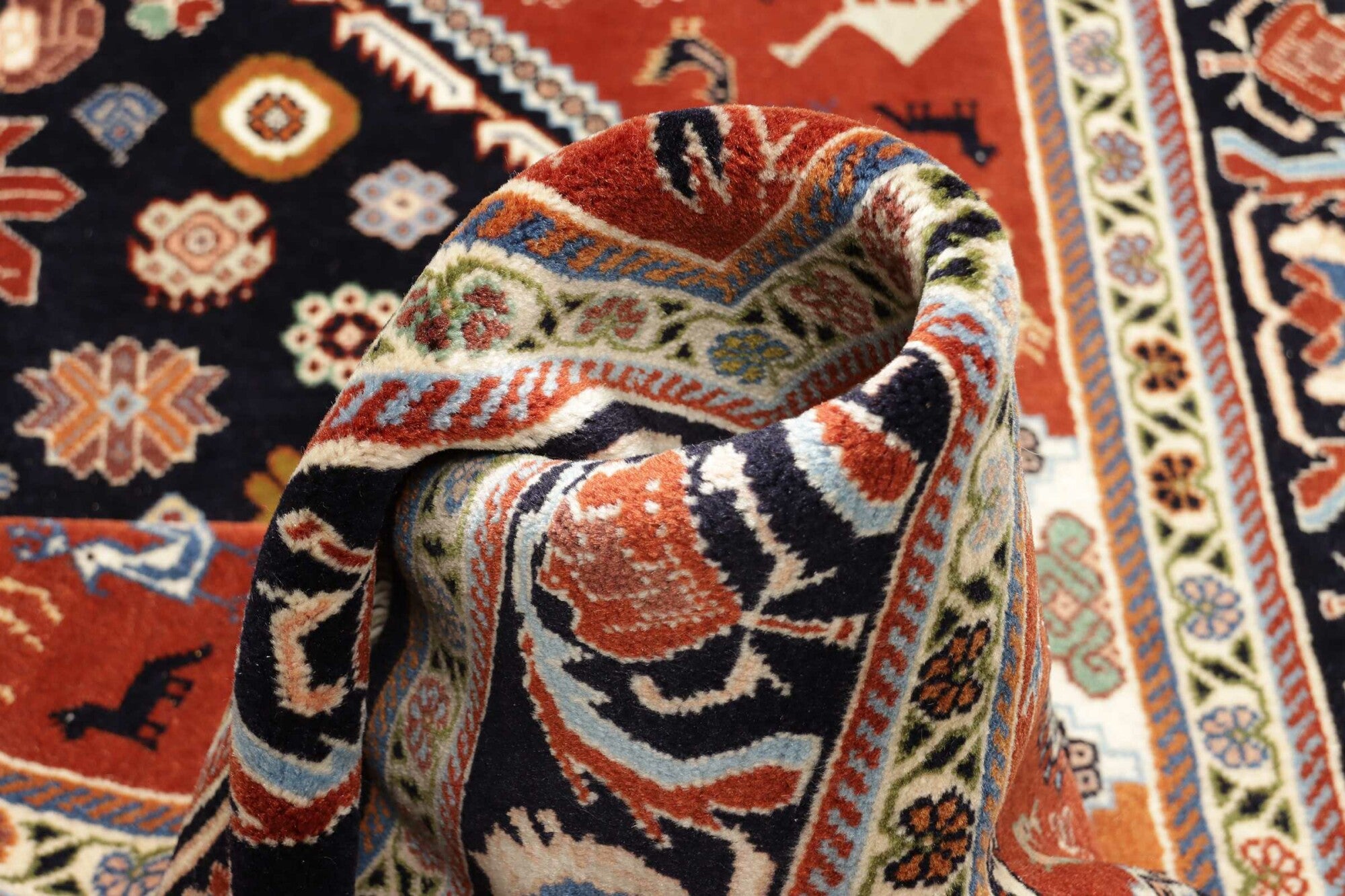
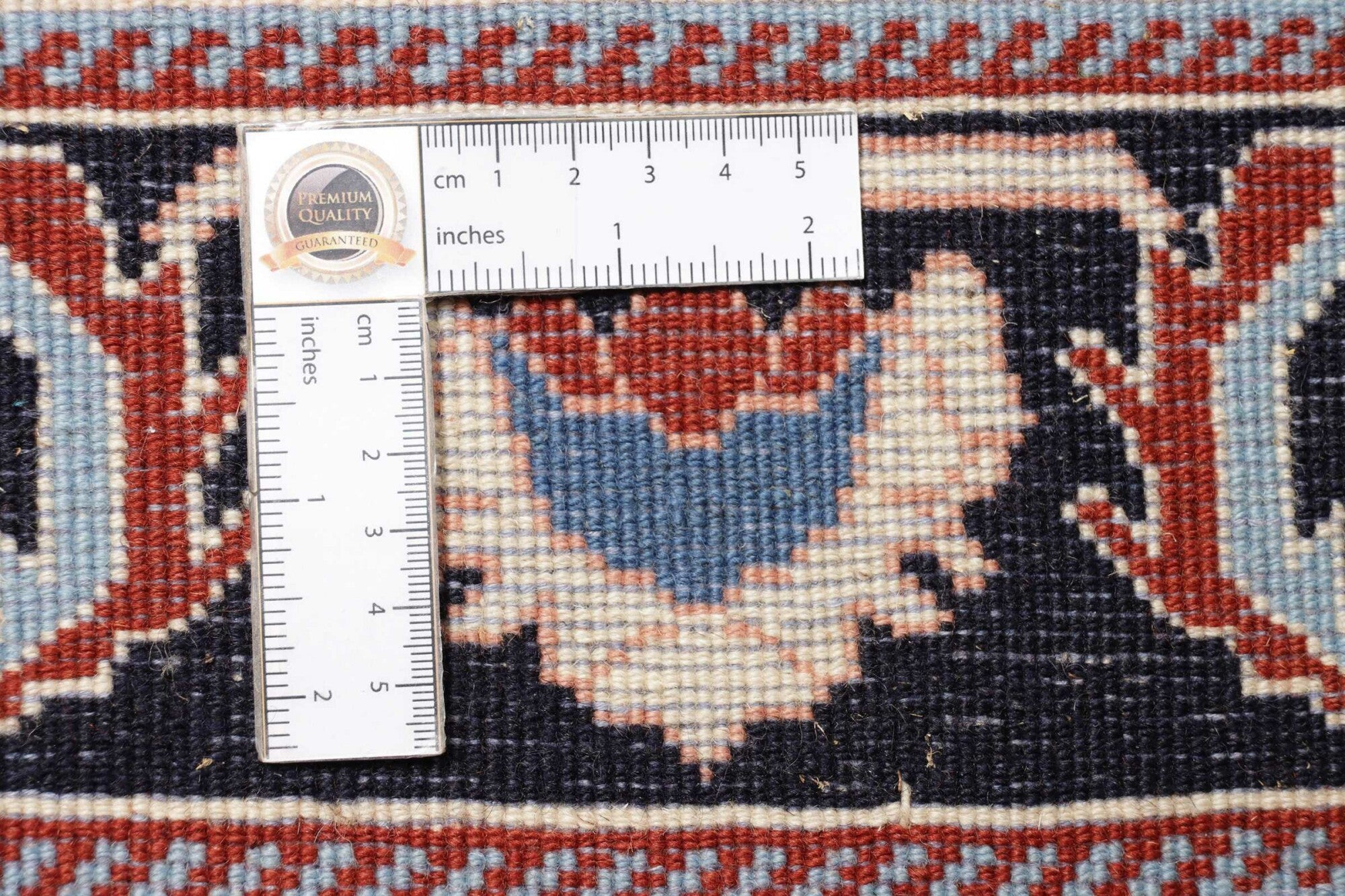
Craftsmanship and timeless elegance come together in this rug in blue. A knot density of approx. 160k-200k knots per m² makes the painstaking work visible – right down to the fine execution of the details. At 215 × 140 cm it is in its element as a living room rug. Colouring and texture give any room a homely, exclusive note – a one-of-a-kind piece made to last for years.
| Delivery time | 1-3 days |
| Origin | Persia |
| Dimensions | 215 cm x 140 cm (= 3.01 m²) |
| Construction | hand-knotted |
| Material | Pile: wool |
| knots | 160k-200k |
| Edition | one-of-a-kind piece |

Origin
The Ghashghai, an important nomadic people, have lived in the south of Iran, in the province of Fars, for centuries. All in all they consist of seven tribes. The most significant of the Ghashghai tribes – at least as far as rug production goes – are the Kashghuli (also Kaschguli, Kashguli, Qashguli).The hand-knotted rugs of the Kashghuli enjoy an outstanding reputation in Europe too. They usually have a deep pile and are hand-knotted with Turkish knots from the hard-wearing wool of fat-tailed sheep breeds.
By now most of the Ghashghai have settled and are known as the main producers of Persian Gabbeh rugs. It is only because the Ghashghai have become largely settled that they can also make rugs in large formats. The few clans still living as nomads head up to the summer pastures in the Zagros Mountains twice a year. In autumn they return to their milder winter quarters down in the valley. The Ghashghai have a reputation for being especially proud, hard-working and honourable. Even though the Ghashghai appear less wild and warlike today, they still have an influence on Iranian domestic politics that should not be underestimated.
The demand for traditional patterns has meant that the Kashghuli in particular have for some time been knotting their traditional tribal patterns once again. These are, however, constantly reworked with new, contemporary design ideas and a wider range of colours.
Material
The pile of this Kashghuli was hand-knotted from high-quality new wool. New wool is obtained by gently shearing sheep. It is a renewable, natural raw material with a whole range of impressive properties: thanks to the wool's natural lanolin content, the surface repels droplets of water and is naturally protected against dirt. Wool also provides excellent thermal insulation, has a balancing effect on the indoor climate and absorbs sound.
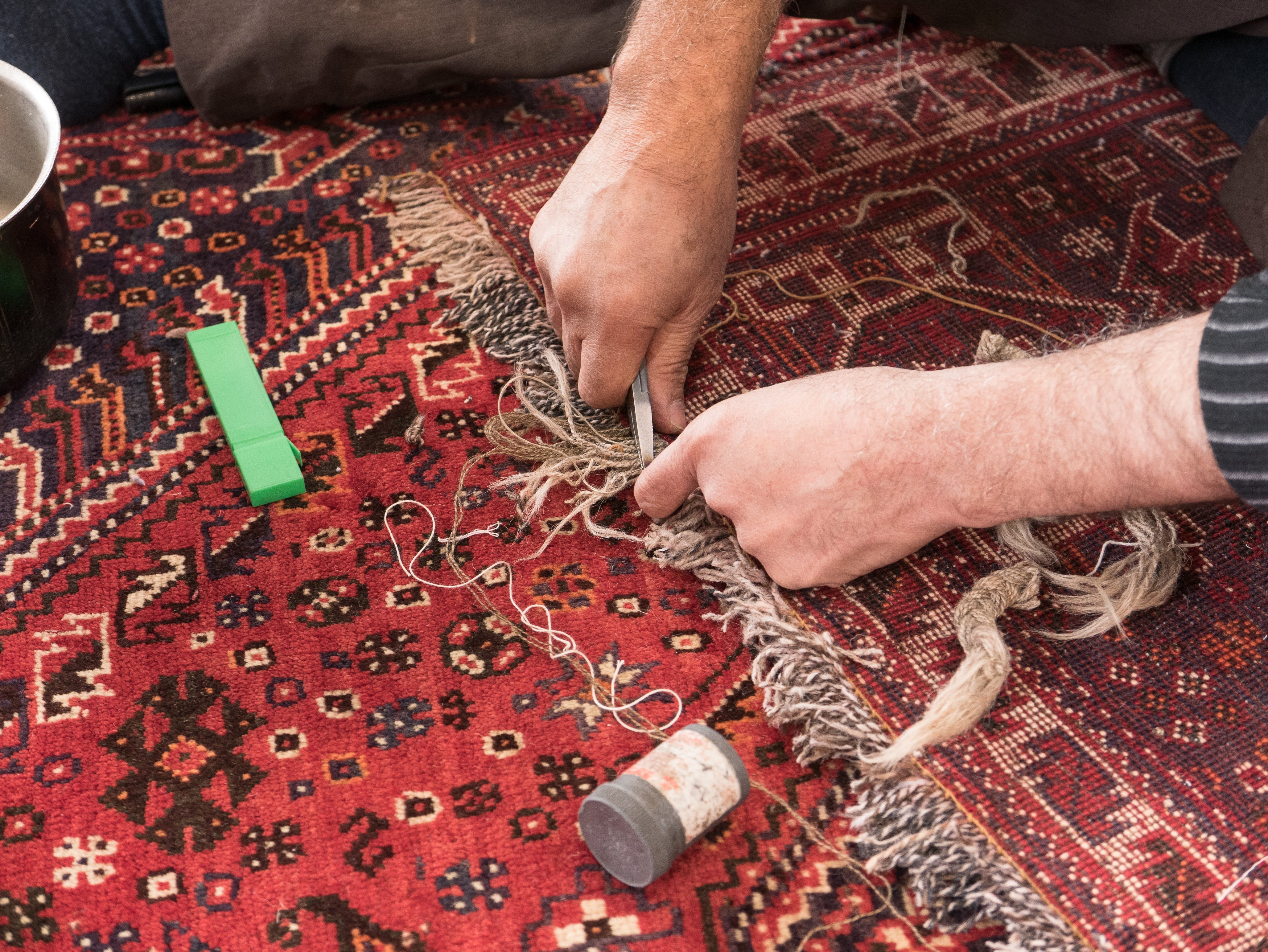
A note on the photos
Child labour? No thanks.
Child labour? No thanks. Children belong in school, not at a knotting frame or a loom. For us it therefore goes without saying that we only offer rugs made under fair conditions and without child labour.
We attach particular importance to humane working conditions and tolerate no child labour at any of our producers. Thank you for helping us to ensure fair conditions.
That is why we support the initiative Care & Fair against child labour in the rug trade.

Choose options
|
|
1-3 working days delivery time (within Germany) |
|
|
14-day home trial |
|
|
Free delivery & returns within the EU |