
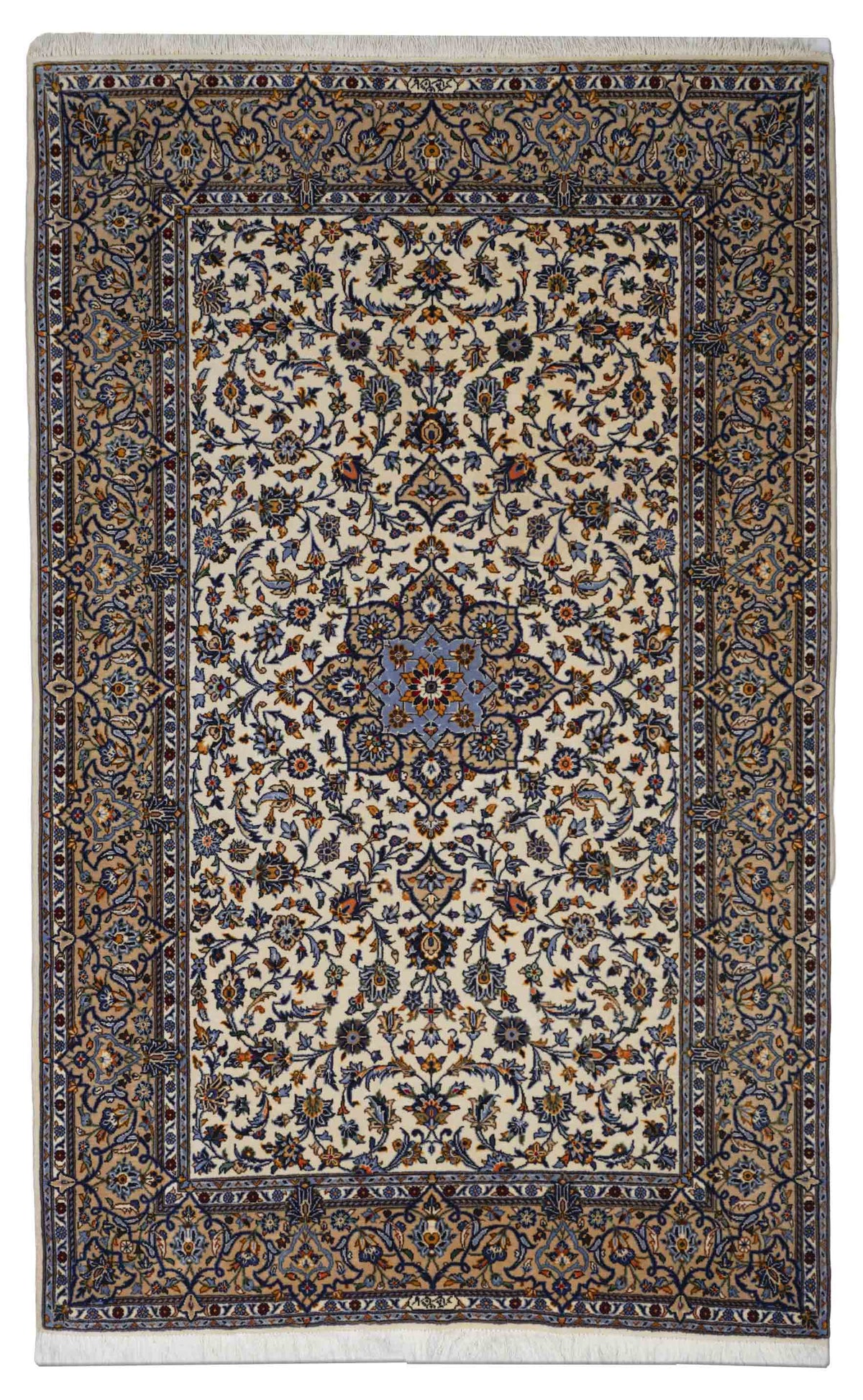
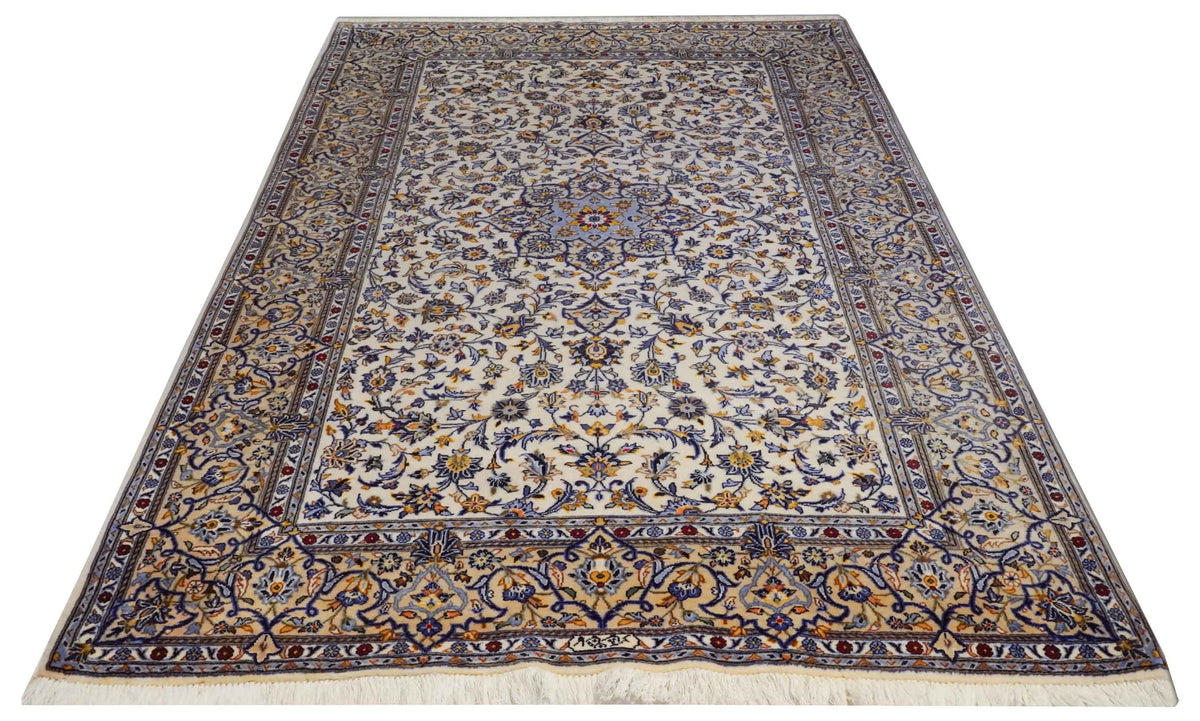
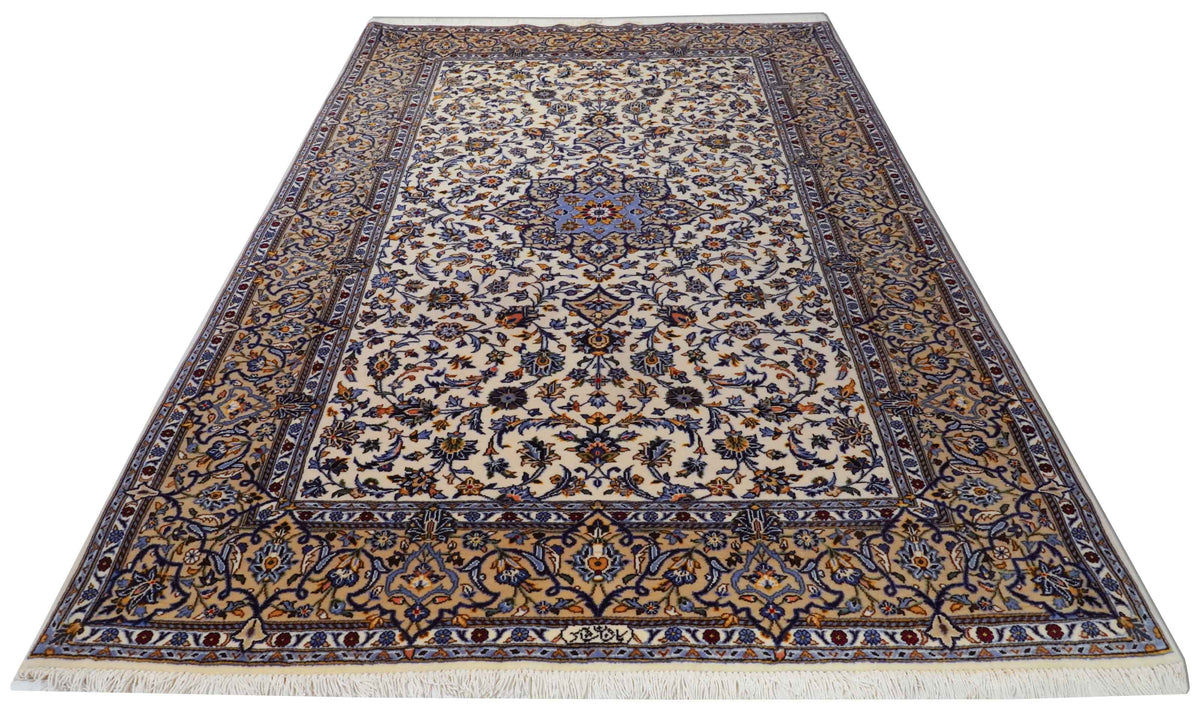
Keshan | 226 x 141 cm | Nr. Z-4623

|
14 Tage Probelegen |

|
Kostenlose Lieferung & Retoure innerhalb der EU |
Keshan, cream white with border, medallion and signature
| Origin |
|
| Dimensions | 226 cm x 141 cm (= 3.19 m²) |
| Construction | hand-knotted |
| Material |
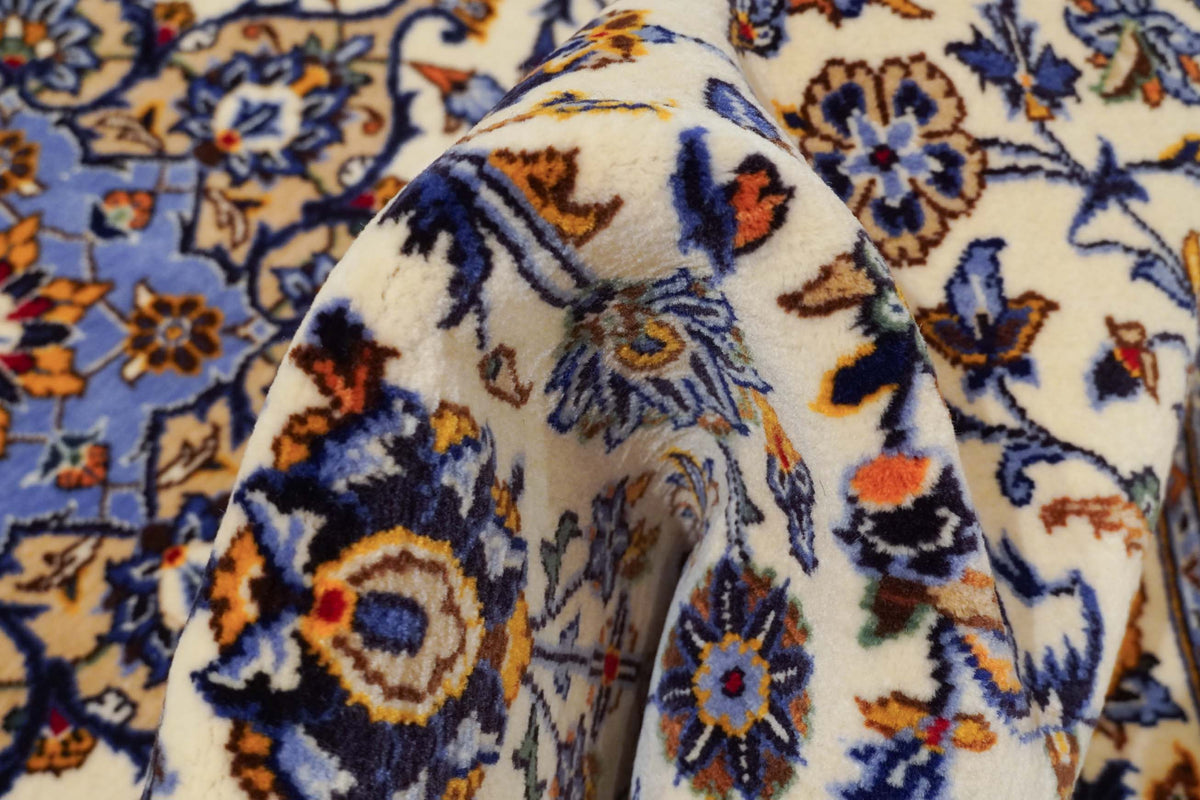
Pile: wool (hand-spun, natural dyes)
|
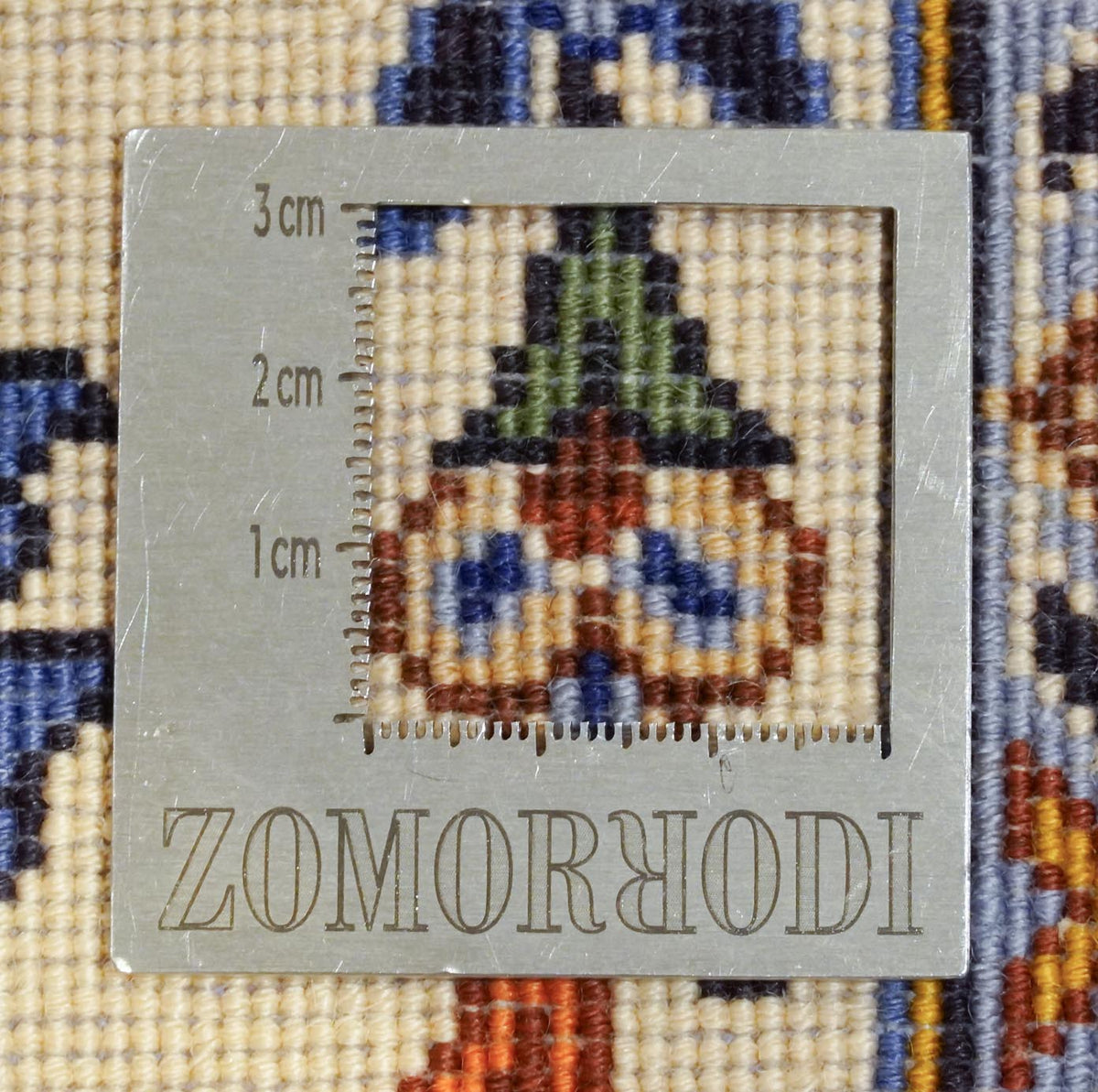
| knots per m²2 | 250.000 |
| Pile height | 10mm |
| Year of manufacture | 1990 |
| Colour | Cream White, Dark Blue |
| Edition | one-of-a-kind piece |
Origin
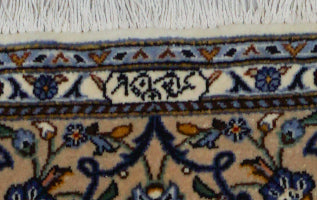
The central Persian city of Keshan (also written Kashan or Keschan) lies geographically between the mountain slopes of the Zagros range and the Persian desert regions. Thanks to its climate and the caravans that crossed the country, it was – at least until the Safavids moved their seat of government to Isfahan – a flourishing metropolis, known above all for its fabric and rug production. To this day it is marked by the elegance and splendour of that era. Keshan rugs are artful textiles made in an age-old tradition. Production in Keshan traditionally took place in the homes of the knotters themselves. The pile is typically knotted from extremely soft wool, which makes it particularly dense and compact. The signature translates as: "Qom Schadsar". This Keshan therefore comes from a highly renowned workshop.
Pattern
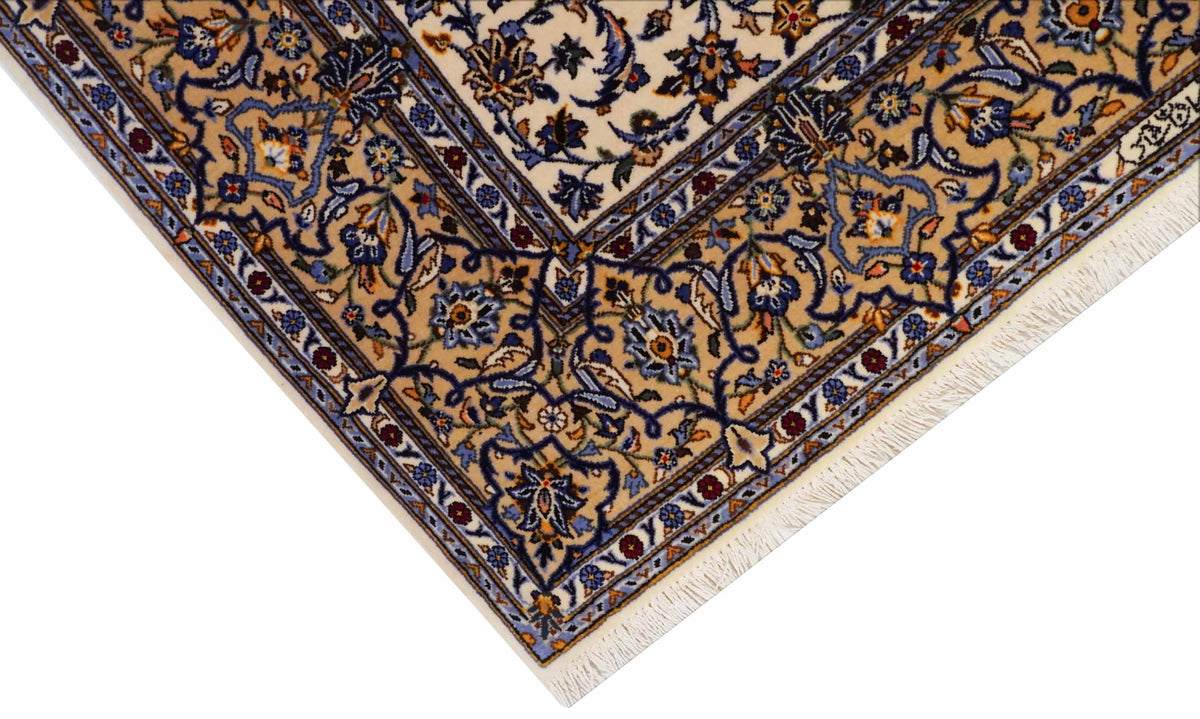
The decorated surround (border) forms a wonderful contrast to the centre and shapes the transition at the edge of the rug.
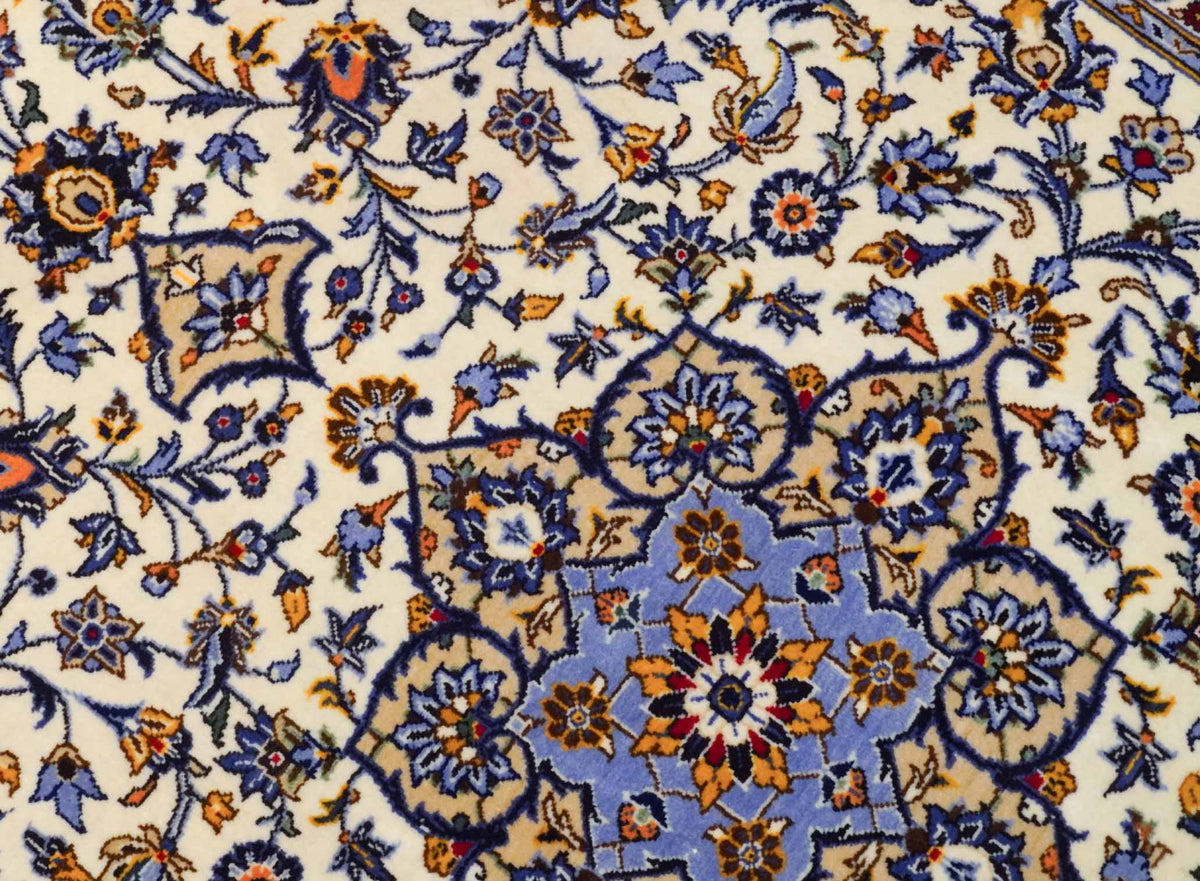
At the heart of this Keshan's central field sits the symmetrical centrepiece, also known as the medallion. The design of the field is subordinate to the medallion, so that the medallion seems to float on the field.
A special highlight of this Keshan is its signature. The signature documents that it was made in one of the most renowned knotting workshops in Keshan. The signature in Arabic script expresses the individuality and the noble origins of this rug.
The background of this Keshan is beige. The overall impression is also dominated by cream white and dark blue. The border is worked in cream white and dark blue.
Material
The technique used to make the materials for the pile of this Keshan is more than 200 years old. The wool was dyed with natural colours and spun by hand. Dyeing with natural or plant-based colours is more complicated, more expensive and more time-consuming than dyeing with chemical colours. For a luminous red, for example, you need around one kilo of ground madder root as dyestuff per kilo of wool. For a strong yellow that is not too pale, you even need two kilograms of weld per kilo of wool. Spinning the wool is time-consuming and labour-intensive as well. On top of that, fewer and fewer people still know how to spin wool by hand.
But the effort is worth it: because it is dyed with natural colours, the high-quality wool keeps its natural lanolin content. Wool dyed with natural colours and spun by hand creates fascinating, shifting patterns. The charm of hand-spun wool, with its slight irregularities and natural shades, comes into its own as a contrast in modern interiors, but equally in rooms furnished in a more traditional or country style. The weft and warp threads of this Keshan are made of cotton. This versatile material is tear-resistant and elastic, which makes it especially well suited to a hard-wearing foundation.
A note on the photos
Child labour? No thanks.
Child labour? No thanks. Children belong in school, not at a knotting frame or a loom. For us it therefore goes without saying that we only offer rugs made under fair conditions and without child labour.
We attach particular importance to humane working conditions and tolerate no child labour at any of our producers. Thank you for helping us to ensure fair conditions.
That is why we support the initiative Care & Fair against child labour in the rug trade.

Choose options
|
|
14 Tage Probelegen |
|
|
Kostenlose Lieferung & Retoure innerhalb der EU |