

Lori | 92 x 59 cm | Nr. Z-3613


|
14-day home trial |

|
Free delivery & returns within the EU |
Lori
This rug in terracotta and beige combines traditional craftsmanship with timeless elegance. The knot density of approx. 160,000 knots per m² makes the elaborate workmanship visible – right down to the fine execution of the details. At 92 × 59 cm it is well placed as a small accent rug. It shows to equal advantage as a seating rug or wall hanging. This one-of-a-kind piece brings individual character to the room and keeps its value far beyond short-lived trends.
| Delivery time | 2 days |
| Origin | Pakistan |
| Dimensions | 92 cm x 59 cm (= 0.54 m²) |
| Construction | hand-knotted |
| Material |
Pile: wool (hand-spun, natural dyes) Weft & Warp: cotton |
| knots | 160.000 |
| Edition | one-of-a-kind piece |
Origin
Lori rugs are a finer version of the Gabbeh, which was traditionally knotted by the Lurs. The Lurs are a tribal people in south-western Persia (also known as Loristan). Lori (or Luri) rugs are also referred to as Loribaft. The added syllable "baft" means roughly "knotted". Translated, Loribaft therefore means Lur knotting.Lori rugs traditionally have inventive geometric patterns in colourful designs. Modern Loris are usually plainer these days, with monochrome designs. Even so, you still come across traditional, stylised and geometric motifs from everyday nomadic life, such as goats, camels, dogs, plants or people. The geometric pattern and the friendly colours create a pleasant, warm atmosphere at home.
Material
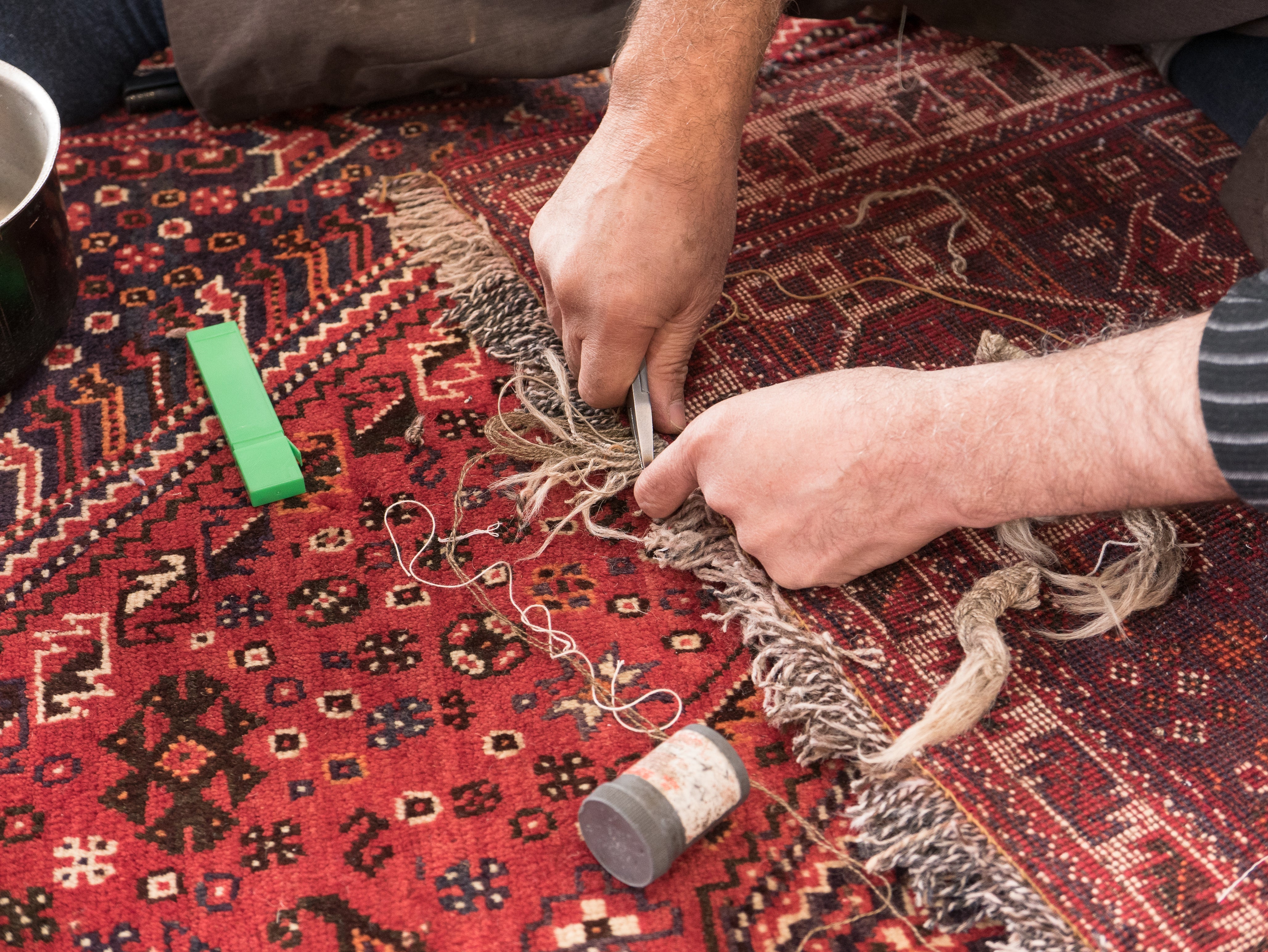
This hand-knotted Lori rug has a dense, fairly high pile. The sheep's wool used for the pile of Lori rugs is particularly fine and rich in lanolin. Lori rugs are wonderfully cosy and hard-wearing. Traditionally, Lori rugs – like the Gabbeh – were used for sleeping on. They invite you to sit and lounge about in the living room, but are also excellent for hallways and dining areas. The sheep's wool pile of Lori rugs is dyed with natural colours and hand-spun. That is what gives the Loris their soft surface. Hand-spun wool is always slightly irregular. During dyeing, the natural pigments are absorbed to differing degrees. The rug looks more lively for it, with so-called colour shifts (abrash), in other words light and dark shadings of colour. These changes of tone in the pile yarn always run across the length of the Lori and make the rug forgiving when it comes to dirt.The weft and warp threads of this Lori are made of cotton. This versatile material is tear-resistant and elastic, which makes it particularly well suited to a hard-wearing foundation.
A note on the photos
Child labour? No thanks.

The rug trade against child labour: Children belong in school, not at a knotting or weaving loom. For us it therefore goes without saying that we only offer rugs made under fair conditions and without child labour. We place particular importance on good working conditions and tolerate no child labour at our producers.
We are proud to be a member of the Care & Fair campaign against child labour.
The industry-wide campaign CARE & FAIR - the rug trade against child labour was founded in 1994. The initiative has made it its mission to fight the excesses of illegal child labour in the knotting countries and, at the same time, to improve the overall situation of rug knotters and their families in the knotting regions of India, Nepal and Pakistan.
Our goals:
- Ending illegal child labour in India and Pakistan.
- Creating better living conditions for knotters' families.
- Socially responsible production. We only accept goods that have been made under fair conditions. Working with our producers as partners, we want to make clear to them that taking on social responsibility benefits everyone.
Together with Care & Fair we currently support 10 schools, 6 adult education centres and 3 day clinics in India and Pakistan.
Choose options
|
|
14-day home trial |
|
|
Free delivery & returns within the EU |