

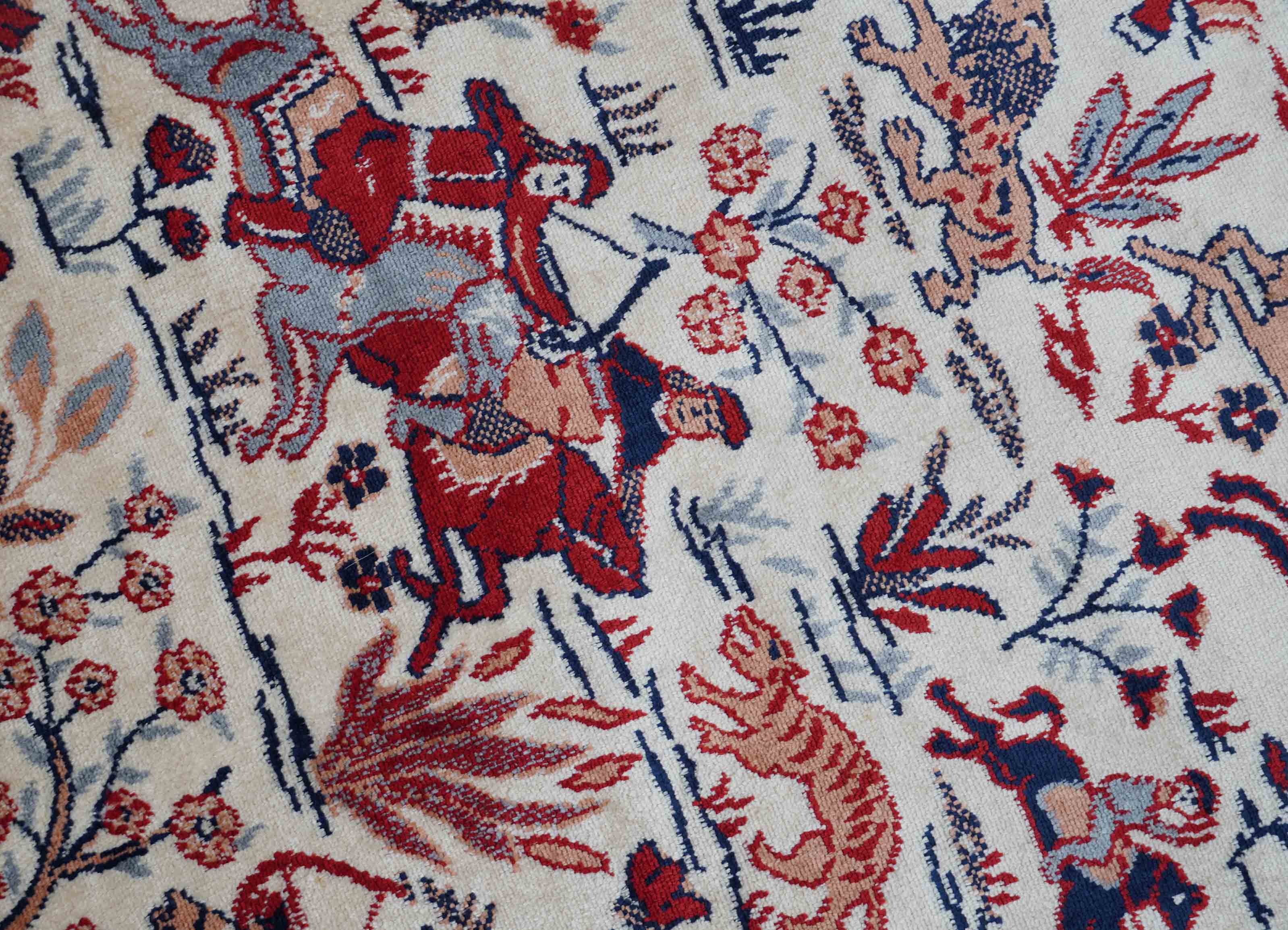
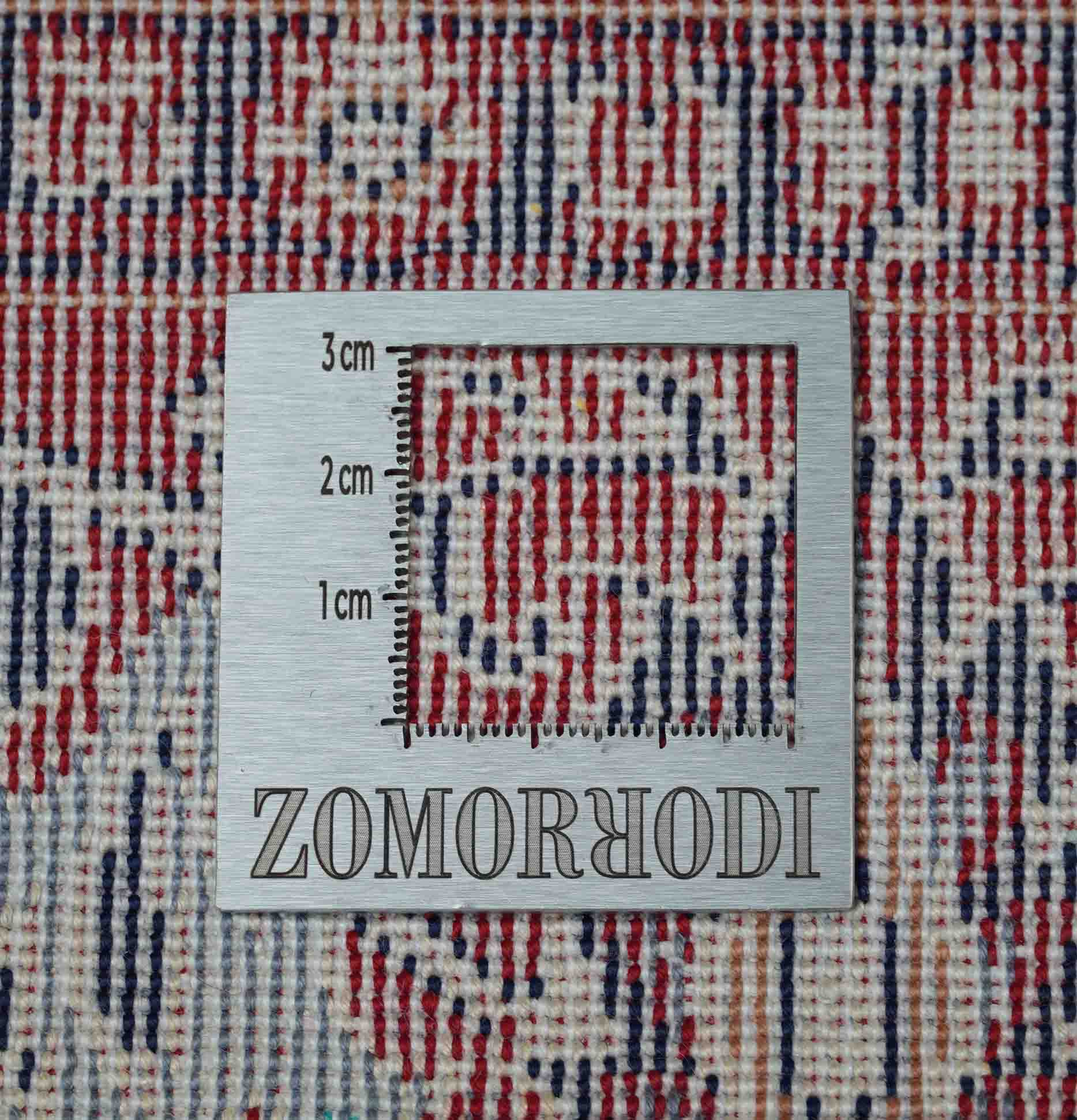
Maschiny | 137 x 102 cm | Nr. Z-164


|
1-3 working days delivery time (within Germany) |

|
14-day home trial |

|
Free delivery & returns within the EU |
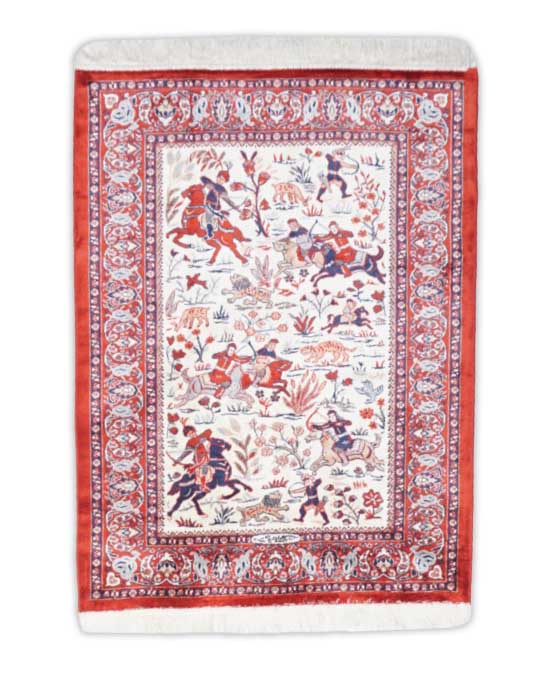
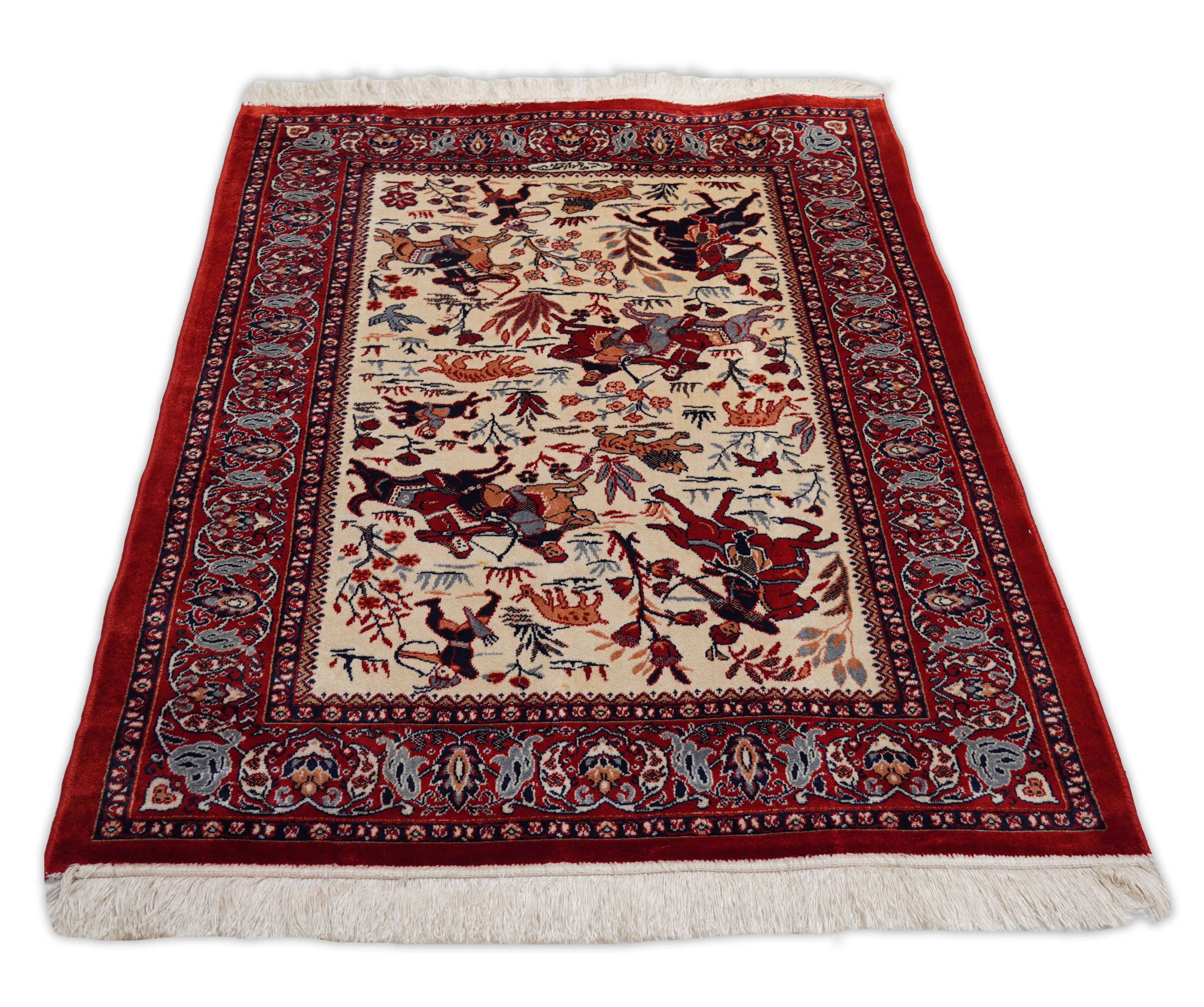
Maschiny, light red with border, motif and signature
| Origin | Germany |
| Dimensions | 137 cm x 102 cm (= 1.40 m²) |
| Construction | machine-made |
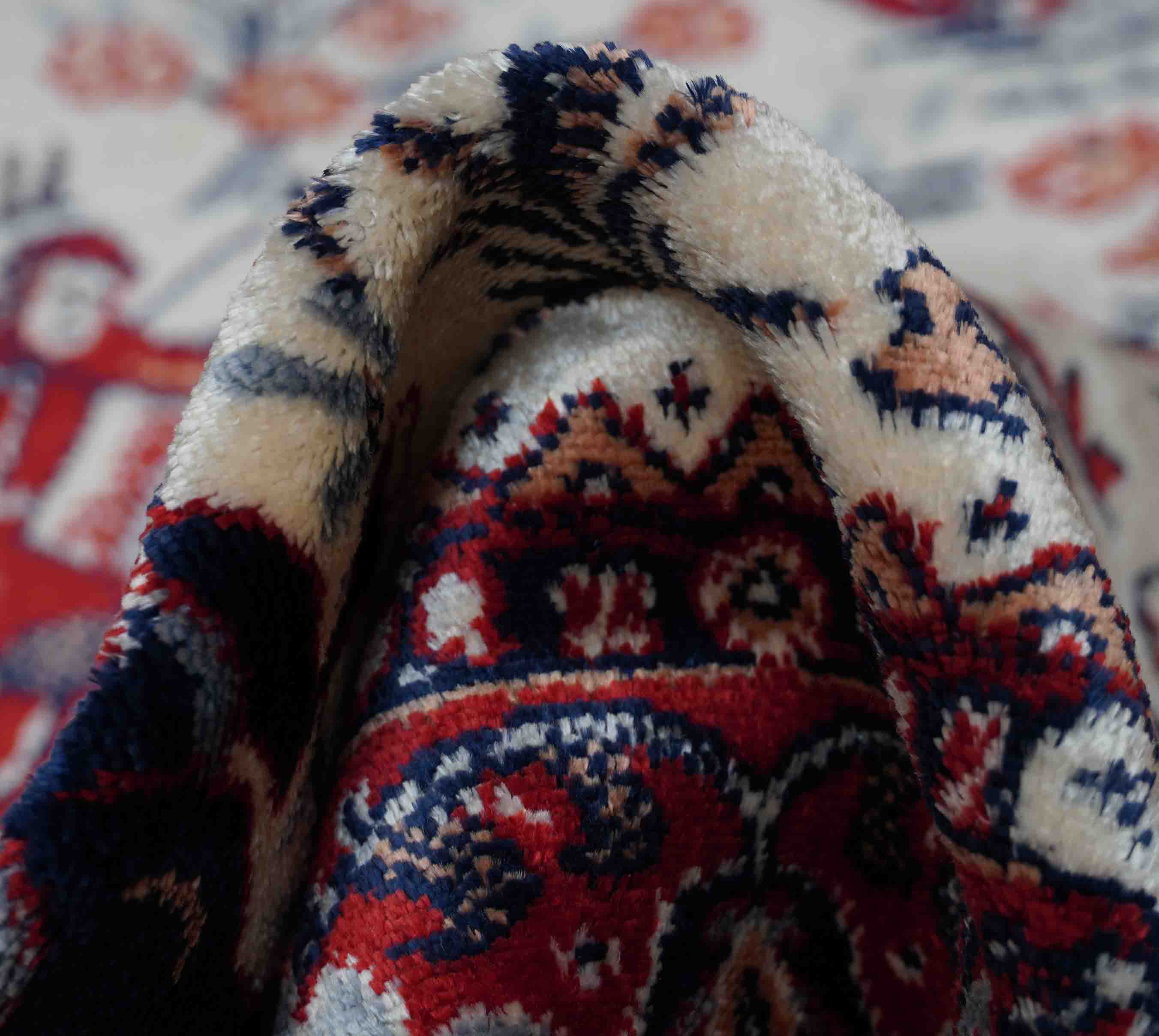
| Material | Pile: mercerised cotton Weft & Warp: cotton |
| Pile height | 4mm |
| Year of manufacture | 2015 |
| Colour | Light red |
| Edition | Unknown |

Origin
This rug is one of the few machine-made rugs in our collection. Knotting and weaving rugs is an elaborate, time-consuming process. Making rugs by hand calls for a great deal of skill, time and care. Only in the 19th century, in the wake of the industrial revolution, did rug making gradually become mechanised. Wool could now be spun with motorised machines, and automated weaving and knotting looms made it possible to produce rugs quickly and cheaply.
Today's automated rug knotting and weaving looms work with a multitude of yarns that are unwound from spools and fed in. The desired pattern is set digitally beforehand. In this way rugs can be made by machine in next to no time. By hand, the work can take weeks, months or even years – depending on material, fineness and size. This naturally has a considerable effect on the price.
Pattern
The decorated surround (border) forms a beautiful contrast to the centre and shapes the transition at the edge of the rug.
A particular highlight of this Maschiny is its signature. The signature documents that it was made in one of the most renowned knotting workshops in Maschiny. Written in Arabic characters, it speaks of the individuality and the noble origin of this rug.
The background of this Maschiny is cream white. Light red also dominates the overall impression. The border is kept in light red.
Material
The pile of this Maschiny is made of mercerised cotton. Cotton consists of lustrous fibres filled with cell sap. When the sap dries after the harvest, the surface of the fibre curls and the resulting refraction of light robs it of its sheen. In the middle of the 19th century, John Mercer invented the process that bears his name: mercerisation. During mercerisation the cotton is held under tension in cold, concentrated caustic soda and takes on a new, higher-grade fibre structure. Mercerised cotton has shortened fibres with a round cross-section. The refined fabric no longer shrinks and holds its shape very well. Because the light is refracted differently, the fibre gains a silky sheen. Mercerised cotton also takes up colour more easily and is far more tear-resistant than untreated cotton. Since mercerisation is elaborate and costly, only high-quality cotton fibres are refined in this way. Because of the silky sheen of the yarn, mercerised cotton – like viscose – is often referred to as "artificial silk". Under the German Textile Labelling Act (TKG), however, the colloquial term "artificial silk" is not permitted. The weft and warp threads of this Maschiny are made of cotton. This versatile material is tear-resistant and elastic and therefore particularly well suited to a hard-wearing foundation.
A note on the photos
Child labour? No thanks.
Child labour? No thanks. Children belong in school, not at a knotting frame or a loom. For us it therefore goes without saying that we only offer rugs made under fair conditions and without child labour.
We attach particular importance to humane working conditions and tolerate no child labour at any of our producers. Thank you for helping us to ensure fair conditions.
That is why we support the initiative Care & Fair against child labour in the rug trade.

Choose options
|
|
1-3 working days delivery time (within Germany) |
|
|
14-day home trial |
|
|
Free delivery & returns within the EU |