

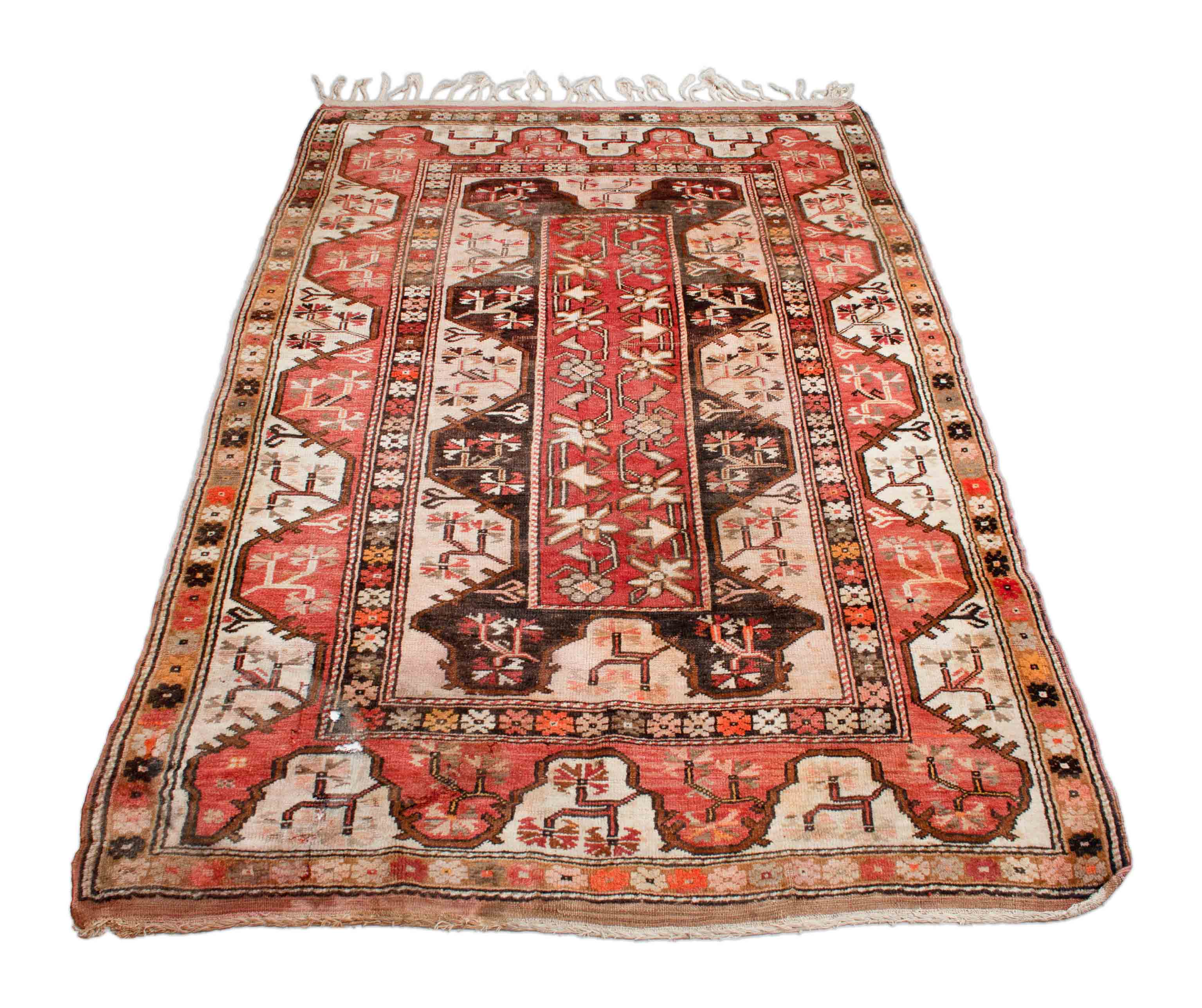
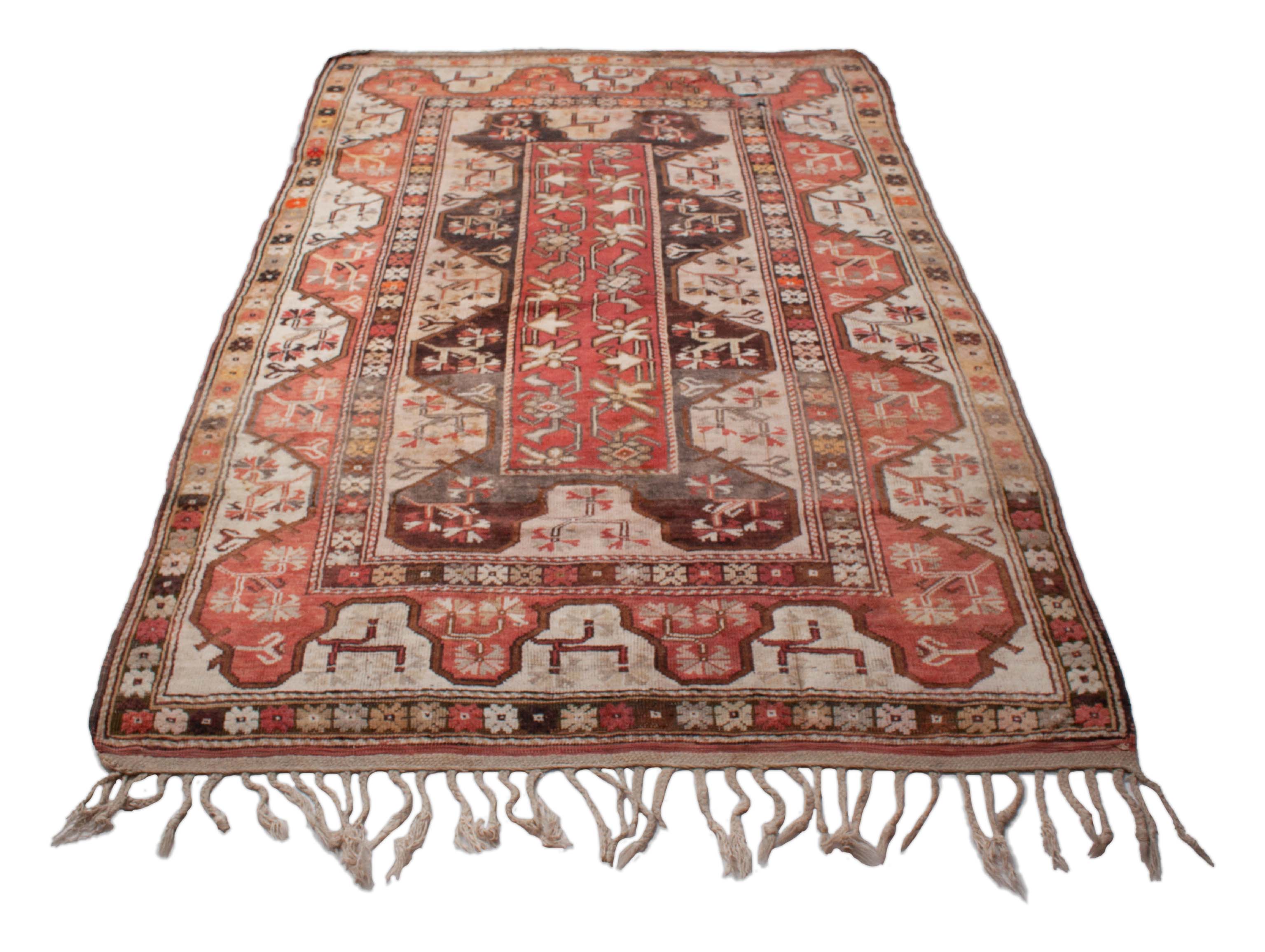
Milas | 204 x 135 cm | Nr. 10179

|
1-3 Werktage Lieferzeit (deutschlandweit) |

|
14 Tage Probelegen |

|
Kostenlose Lieferung & Retoure innerhalb der EU |
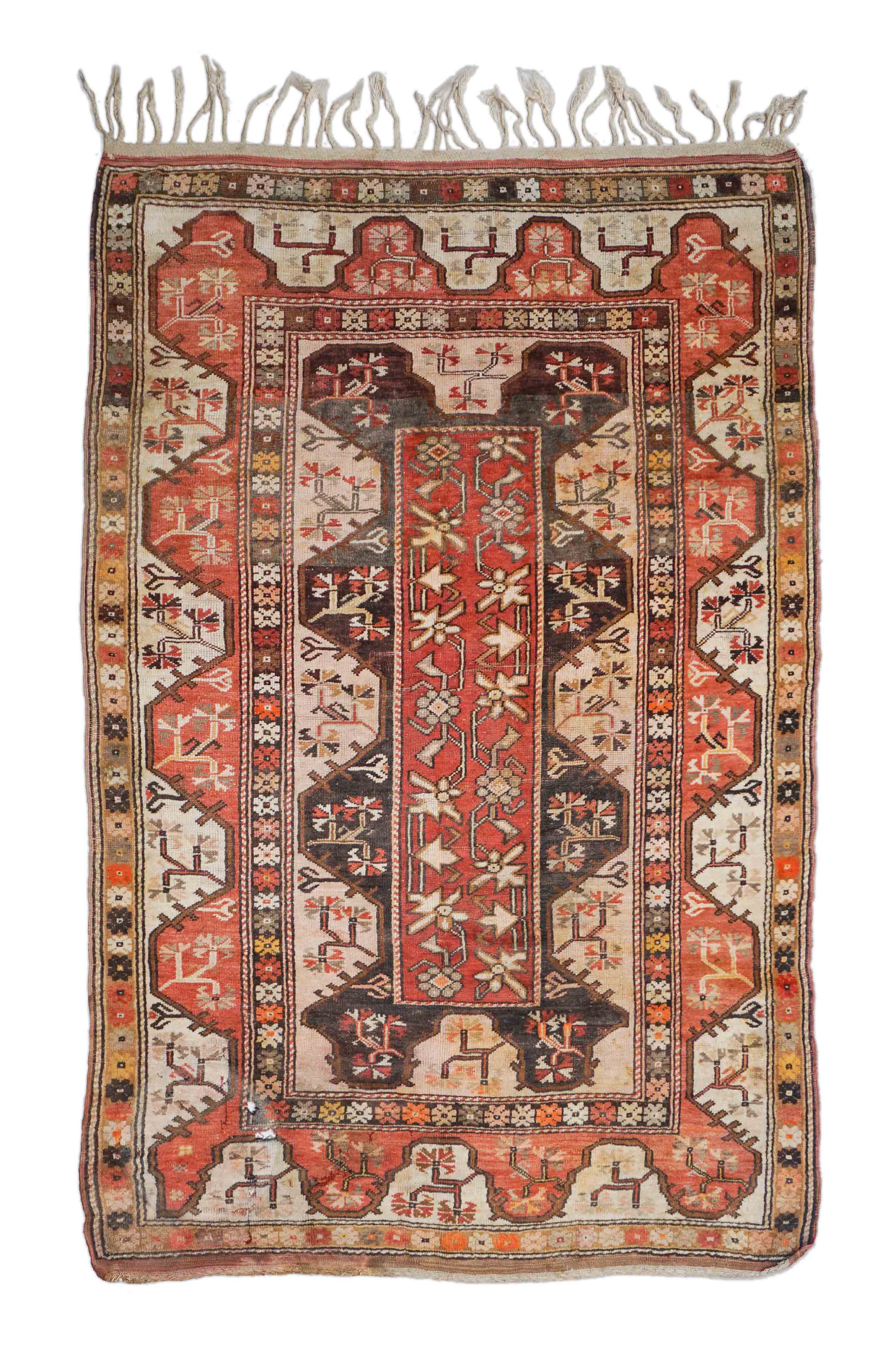
Geometric Milas, beige with border and medallion
| Origin |
|
| Dimensions | 204 cm x 135 cm (= 2.75 m²) |
| Construction | hand-knotted |
| Material |
Pile: wool
|
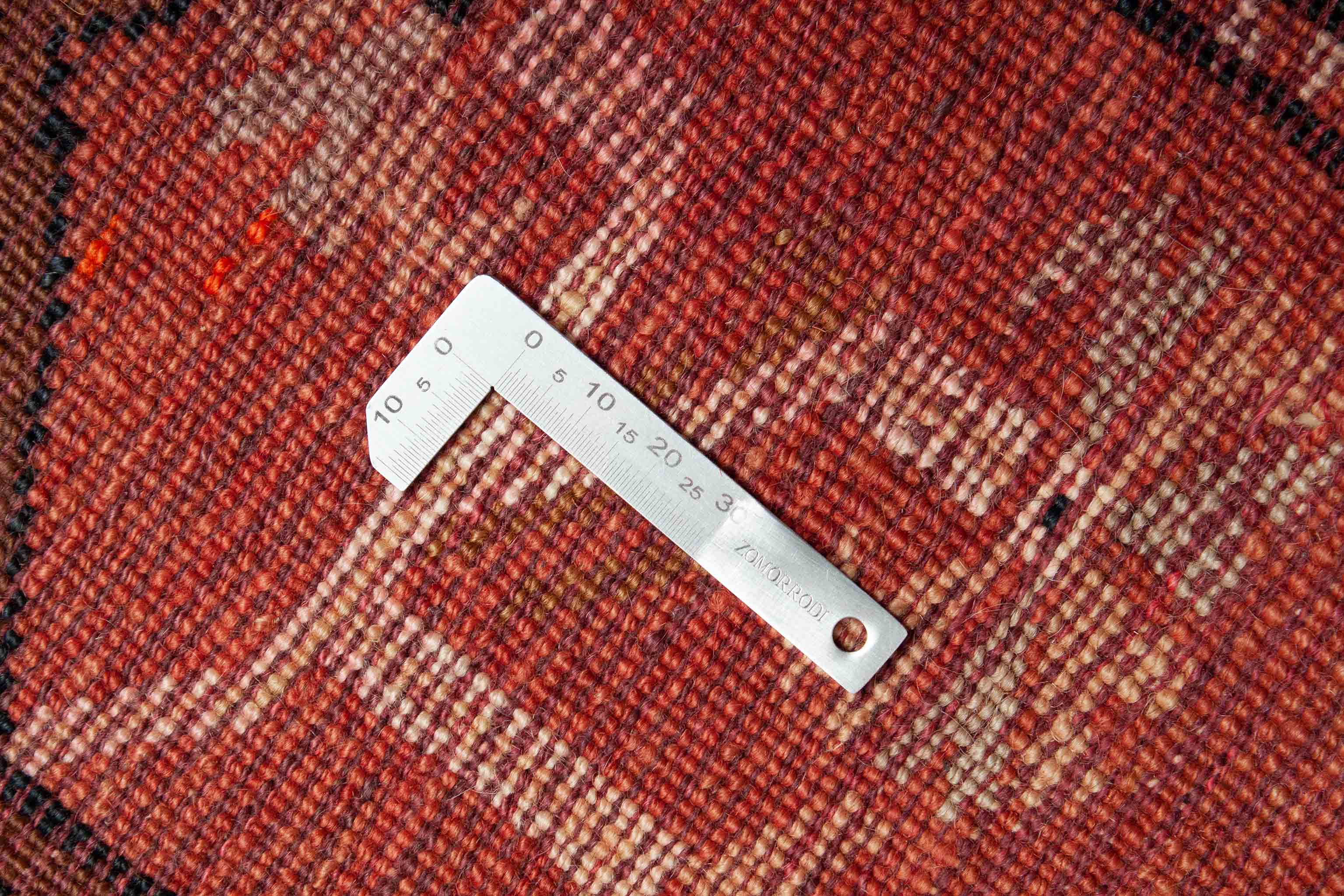
| knots per m²2 | 90.000 |
| Pile height | 5mm |
| Year of manufacture | 1940 |
| Colour | Beige, light red |
| Edition | one-of-a-kind piece |

Origin
Milas rugs come from south-western Turkey. They take their name from the town of Milas in the province of Muğla. Since the 16th century, Milas rugs have developed out of smaller prayer rugs (in Turkish: seccade).
By their colouring and patterns, a distinction is drawn between traditional (classic) and baroque Milas rugs.
Classic Milas rugs usually show a rectangle with a mihrab (a stylised prayer niche) at one of its short ends. The inner surround is filled with stylised plant patterns.
In baroque Milas rugs, the originally regular, stylised motifs of the borders give way to irregular, less strongly stylised ones. The influence of the so-called Ottoman Baroque shows up in the art of rug knotting in the early 19th century.
Pattern
The abstract, geometric composition is what gives this Milas its understated elegance. The pattern flatters the design of the room and never draws attention away from the furniture, the decor or the architectural elements. It settles beautifully into any setting and complements a room's furnishings in a subtle way.
The edge of the rug is framed by a decorative border. The border forms a beautiful contrast with the centre.
At the heart of this Milas's central field lies the symmetrical centre, also known as the medallion. The design of the field is subordinate to the medallion, so that the medallion seems to float on the field.
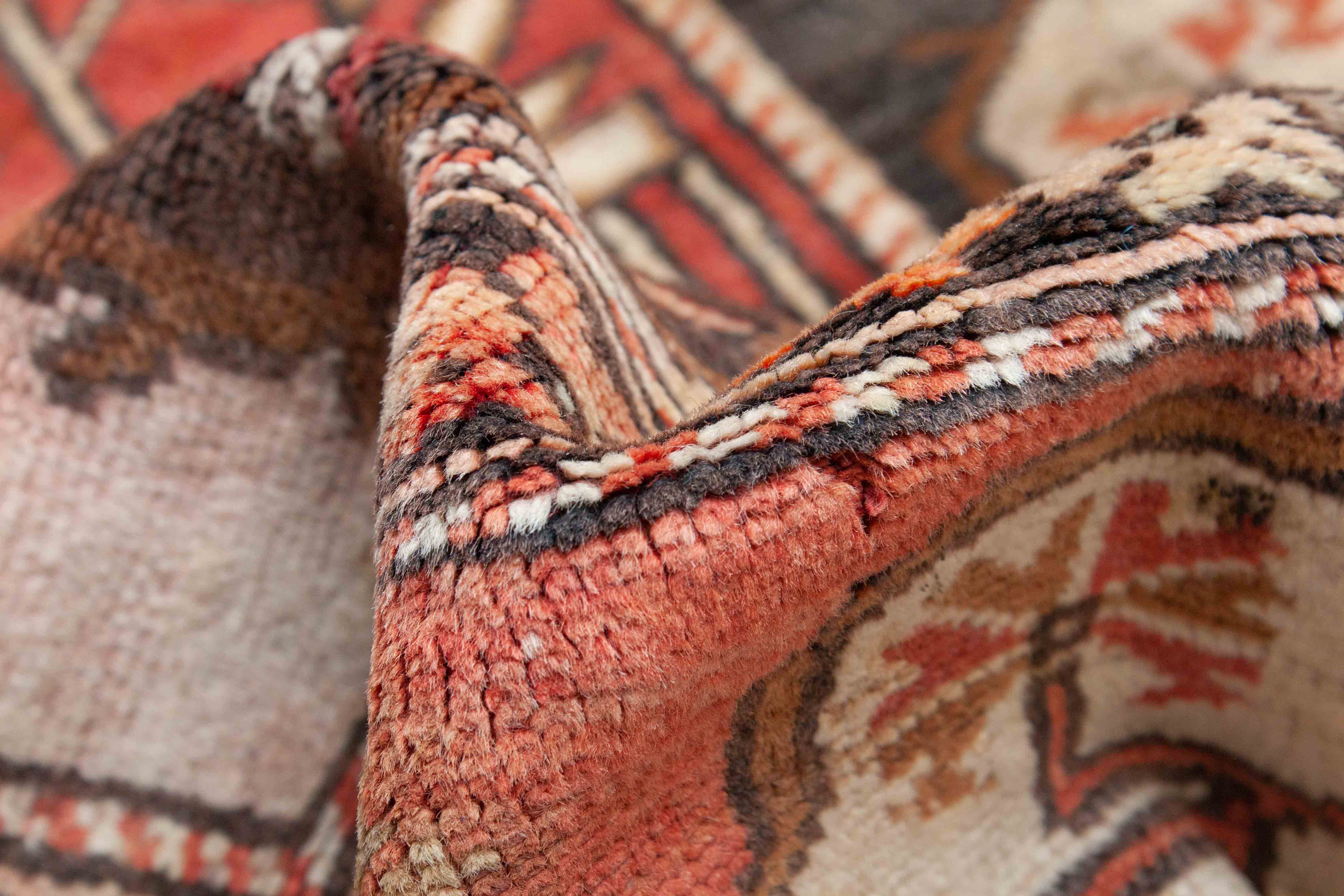
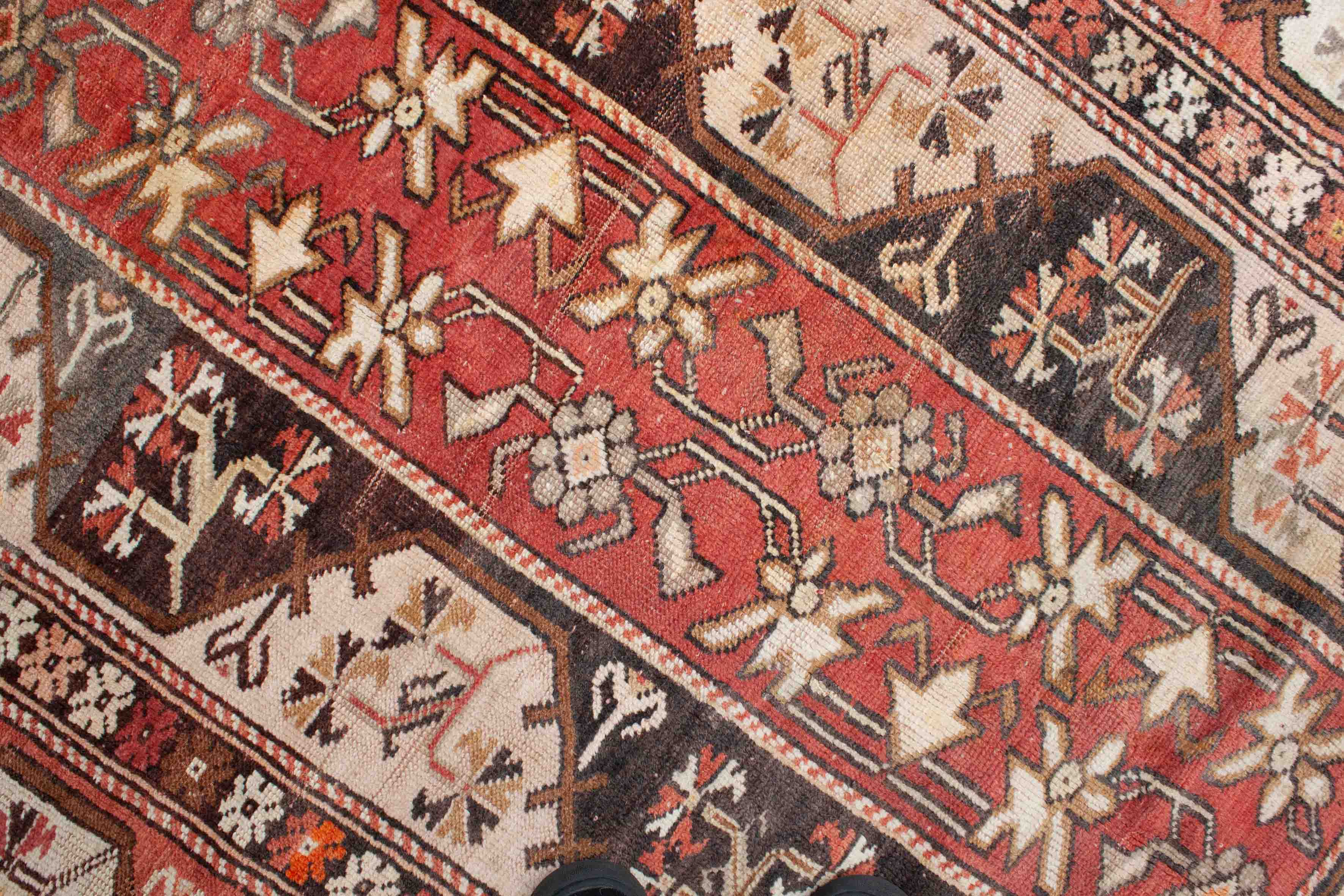
The surface of this Milas has a mottled look. Shifts in tone and the light-and-dark shading of the pile yarn make the colours shimmer and keep the rug forgiving of dirt. These so-called colour shifts, known as abrash, make the rug look livelier. The mottling comes about because the wool of this Milas was hand-spun. During dyeing, the natural dyes are absorbed to varying degrees.
The background of this Milas is black. Beige and light red also dominate the overall impression. The border is worked in light brown, beige and light red. In the light red centre, beige and light brown are combined.
Condition
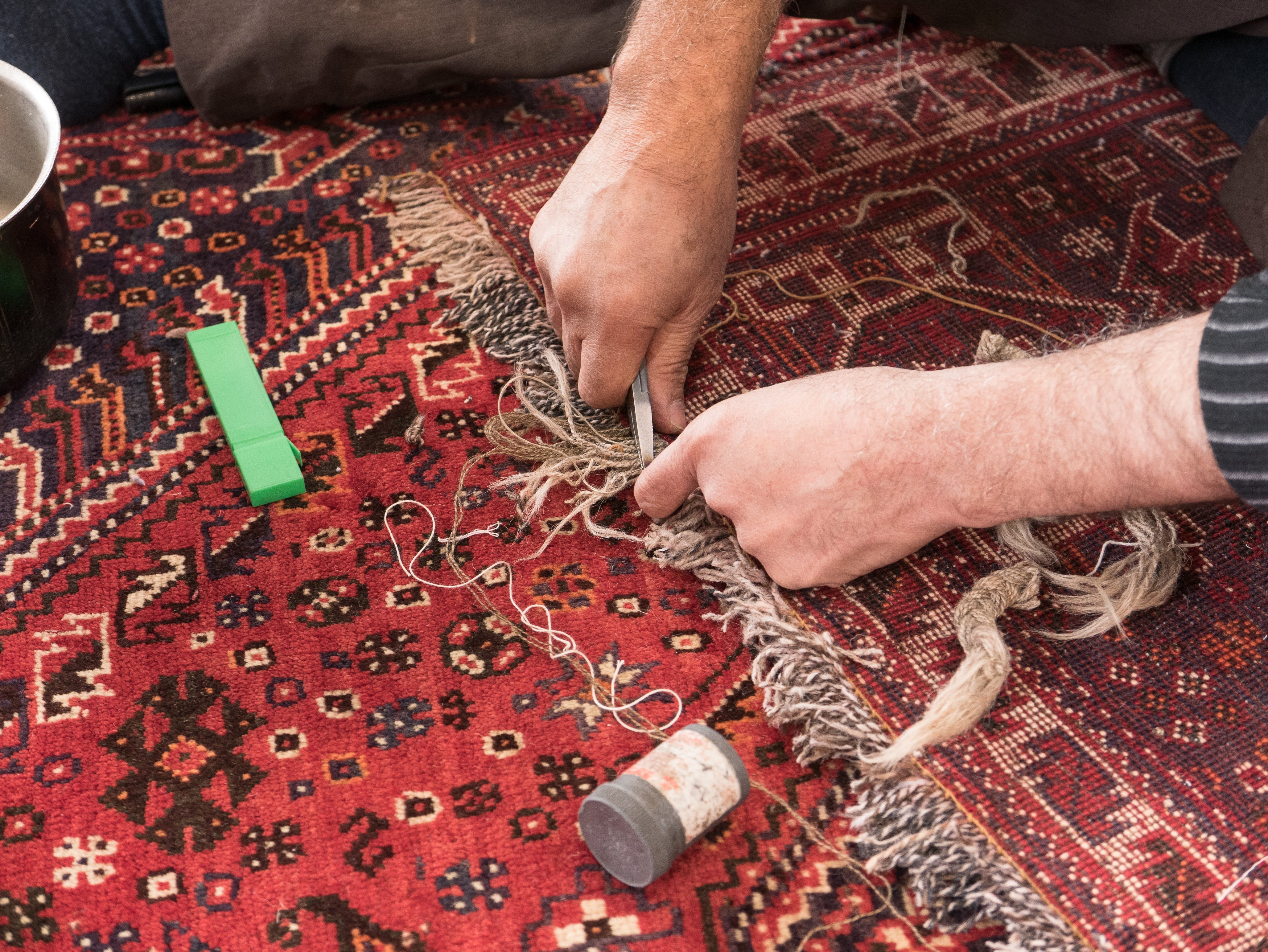
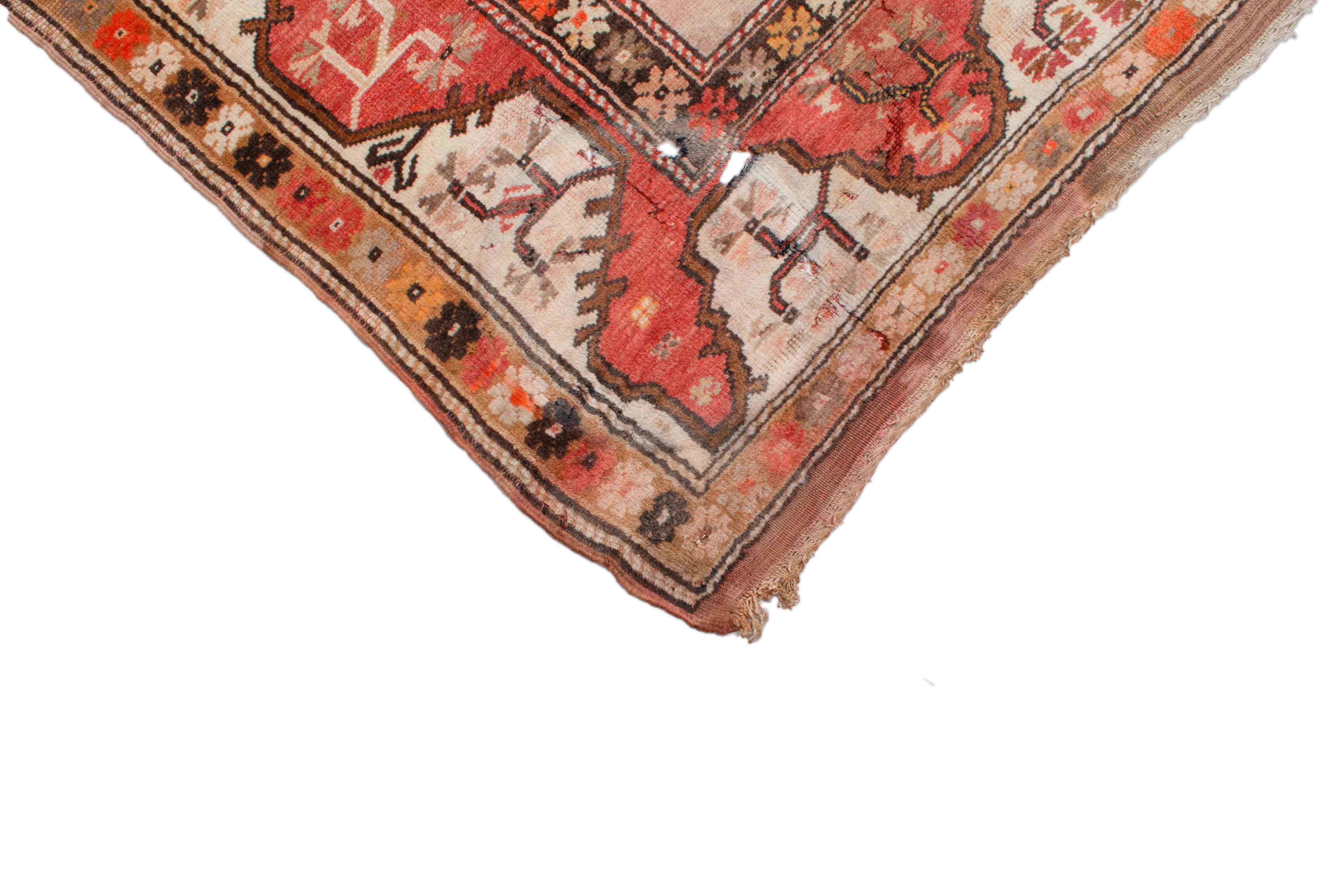
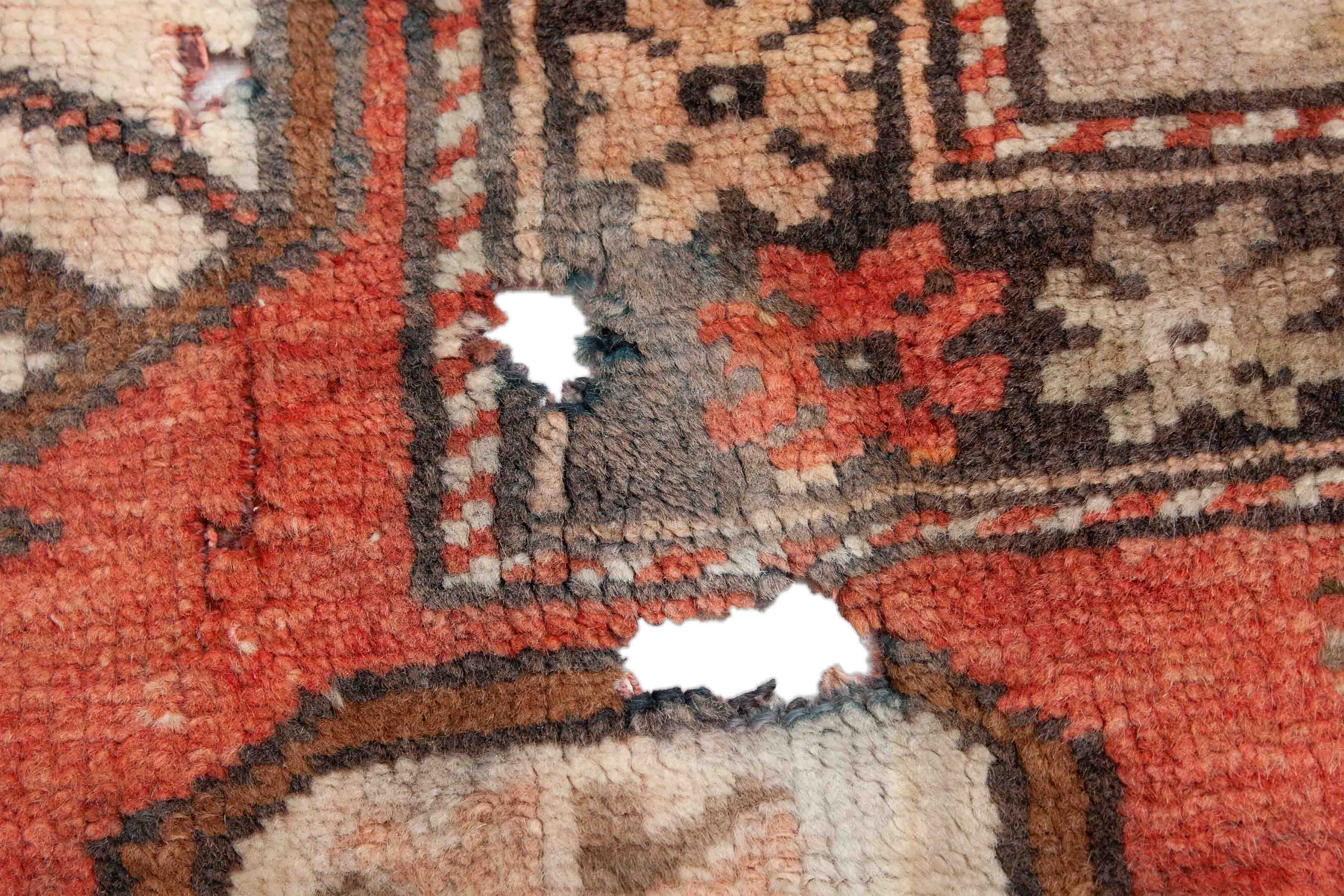
This Milas has a story to tell. It was hand-knotted around 1940. It has been thoroughly cleaned and is in good but unrestored condition. The pile has grown a little thinner over the years and has one worn-through spot roughly 30 cm across. We have not restored this Milas because we feel it has a special presence just as it is. If that's what you'd like, we'll of course gladly restore the rug for you. Either way, this Milas will give you pleasure for decades to come.
Material
The pile of this Milas was hand-knotted from high-quality new wool. New wool is obtained by gently shearing sheep. New wool is a renewable, natural raw material with a range of impressive properties: thanks to the natural lanolin in the wool, the surface repels droplets of water and is naturally protected against dirt. Wool also offers excellent thermal insulation, helps regulate the indoor climate and dampens sound. The foundation (weft and warp threads) of this Milas is made of new wool.
A note on the photos
Child labour? No thanks.
Child labour? No thanks. Children belong in school, not at a knotting frame or a loom. For us it therefore goes without saying that we only offer rugs made under fair conditions and without child labour.
We attach particular importance to humane working conditions and tolerate no child labour at any of our producers. Thank you for helping us to ensure fair conditions.
That is why we support the initiative Care & Fair against child labour in the rug trade.

Choose options
|
|
1-3 Werktage Lieferzeit (deutschlandweit) |
|
|
14 Tage Probelegen |
|
|
Kostenlose Lieferung & Retoure innerhalb der EU |