
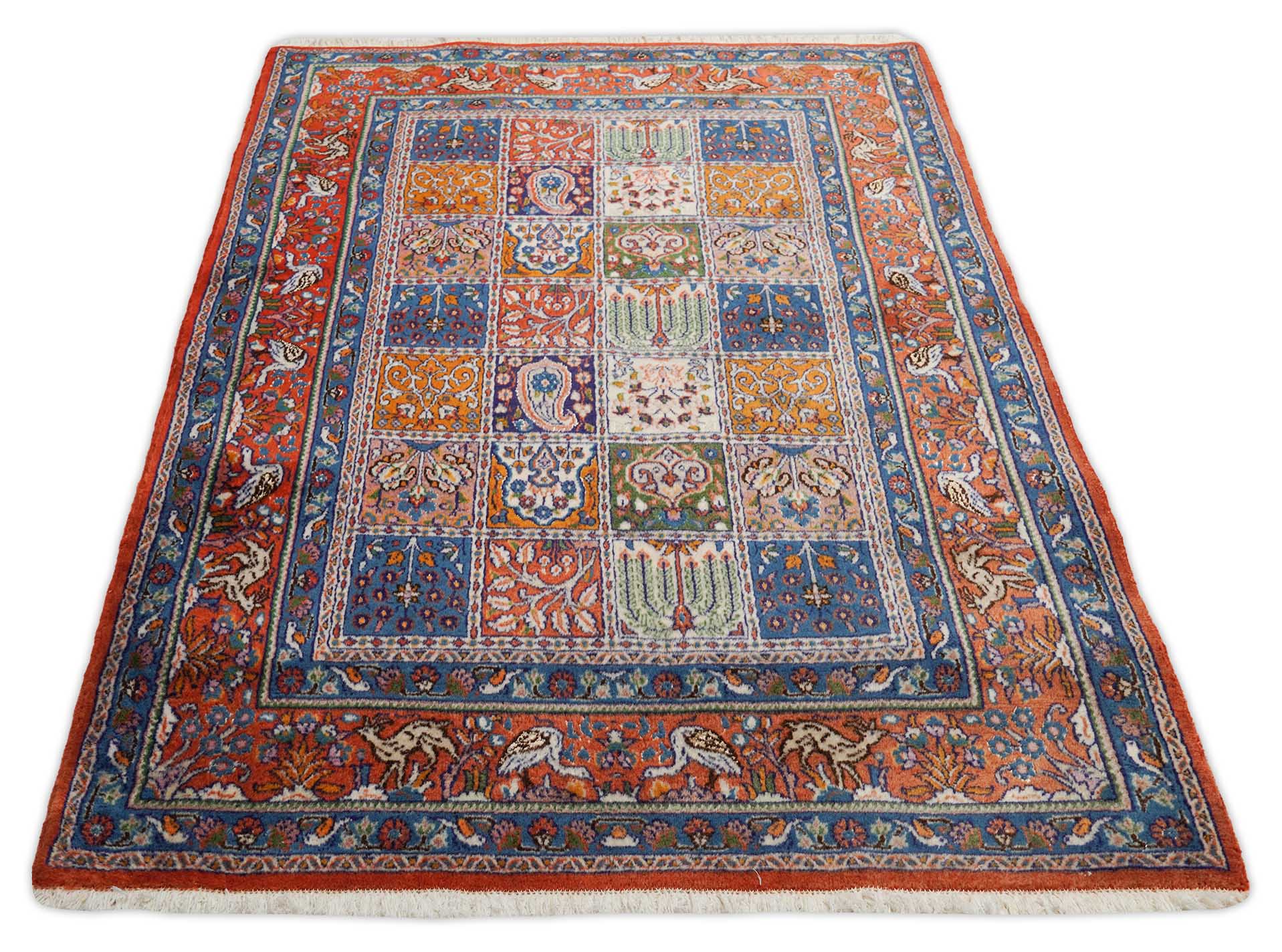
Moud | 158 x 110 cm | Nr. Z-910

|
1-3 Werktage Lieferzeit (deutschlandweit) |

|
14 Tage Probelegen |

|
Kostenlose Lieferung & Retoure innerhalb der EU |
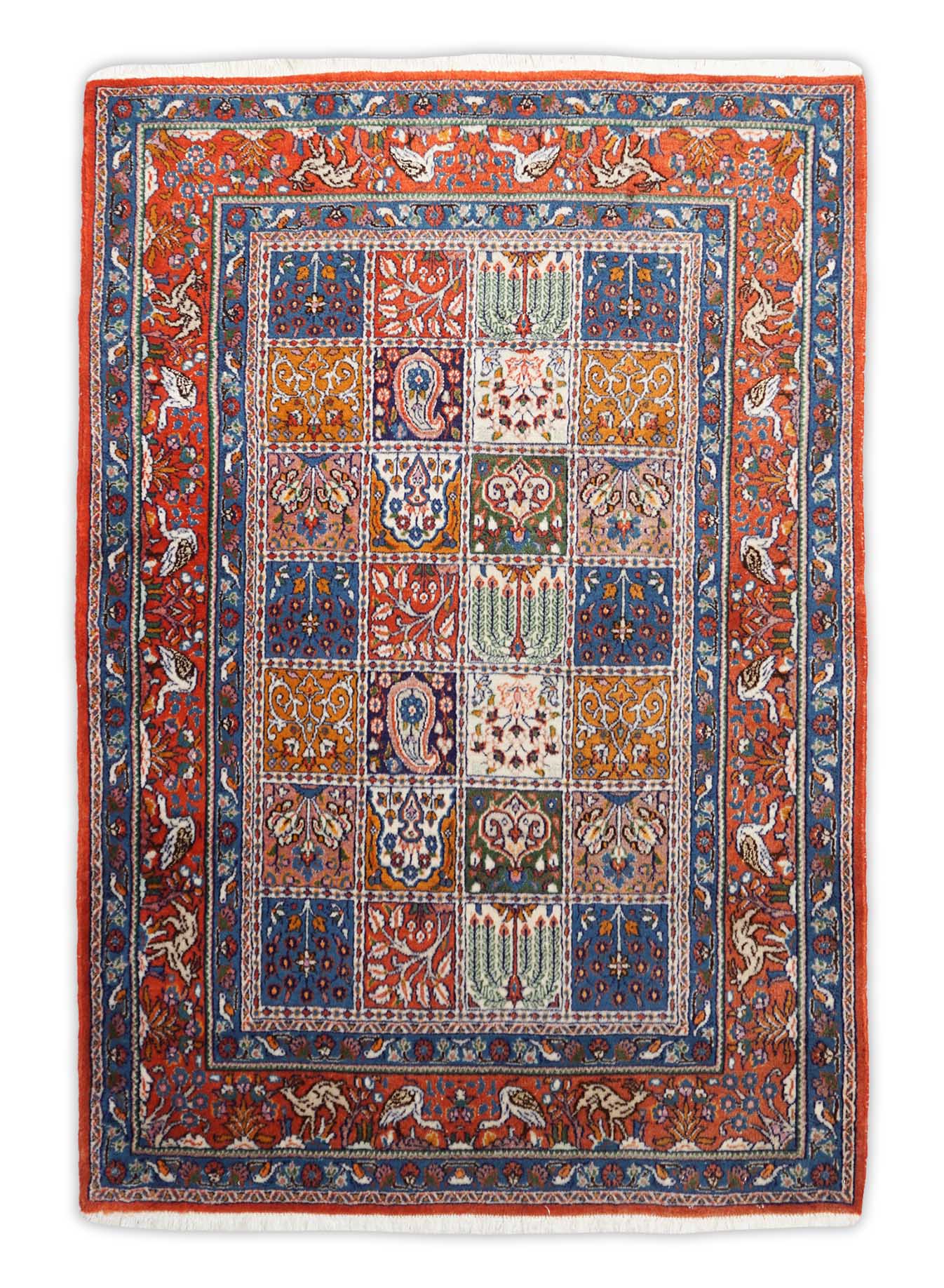
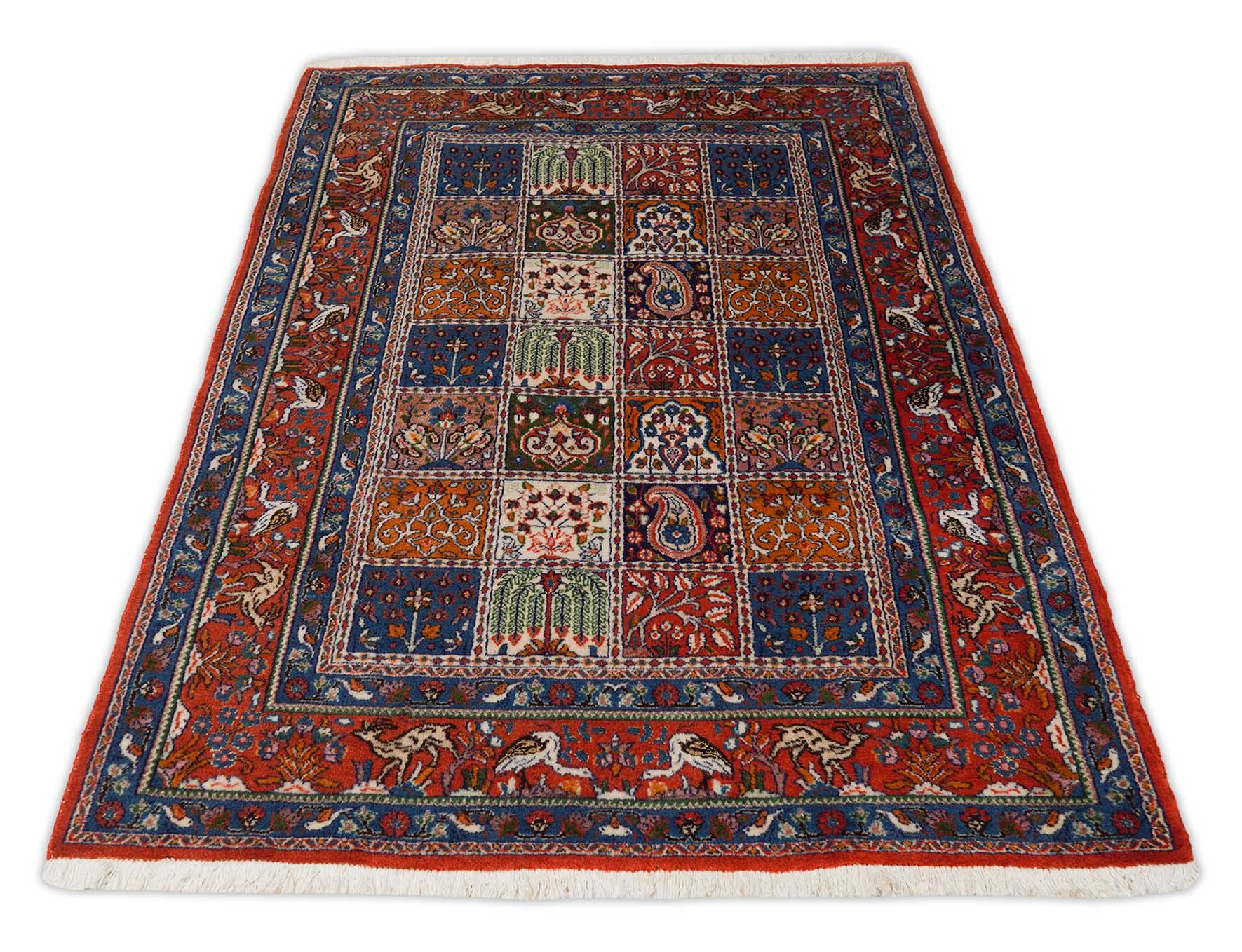
Moud, dark blue with border and compartment pattern
| Origin |
|
| Dimensions | 158 cm x 110 cm (= 1.74 m²) |
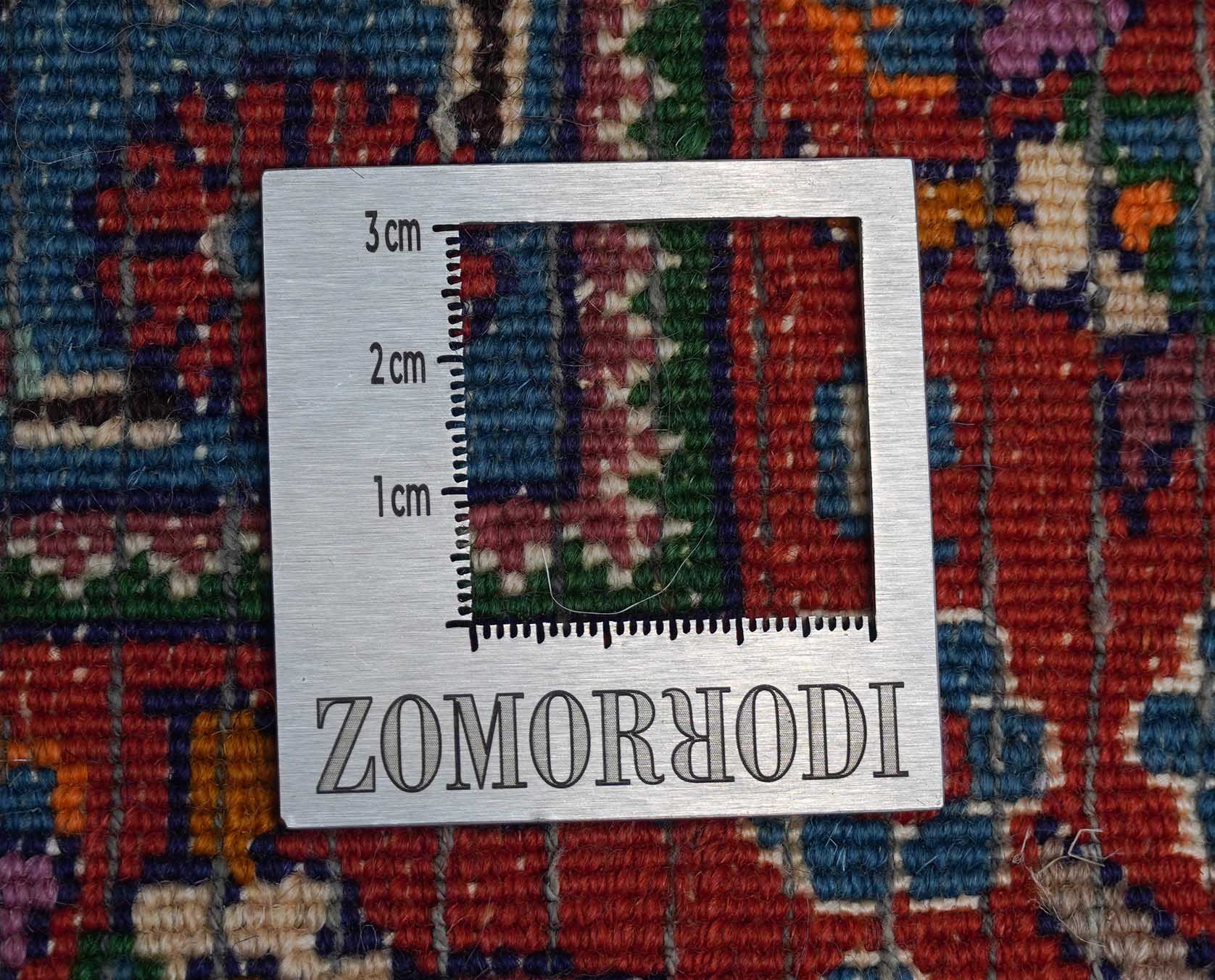
| Construction | hand-knotted |
| Material |
Pile: wool
|
| knots per m²2 | 360.000 |
| Pile height | 8mm |
| Year of manufacture | 1970 |
| Colour | Dark blue, light red |
| Edition | one-of-a-kind piece |

Origin
In earlier times, the east of Iran lived from farming and livestock. Rugs were knotted for people's own use only. It was not until the governor of the provincial capital Mesched went looking for outstanding rugs for his palace around 1830 that rug production began to develop there. The renowned rug knotter Amini had his high-quality rugs knotted in the small village of Moud (also Mood, Moudt, Mud), and so gave the rugs of this region their name. A larger centre of production grew up in the neighbouring town of Birdjend, which is why Mood rugs are also traded under the name Birdjend.
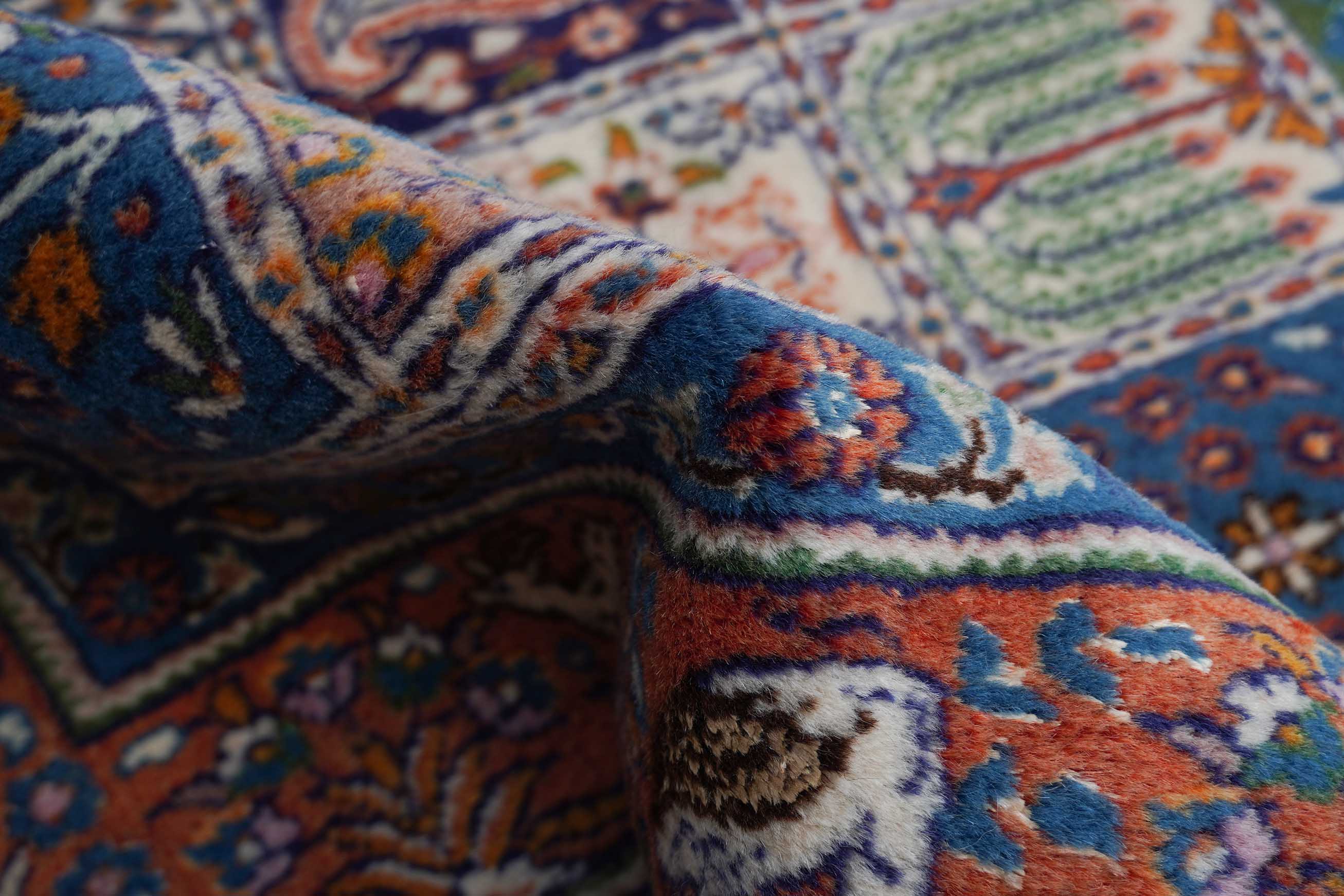
What all Moud rugs have in common is their palette of strong blue and red on a beige ground. They are knotted with an asymmetrical knot. On the back, a Mood can be recognised by the warp threads shimmering through in white.
Pattern
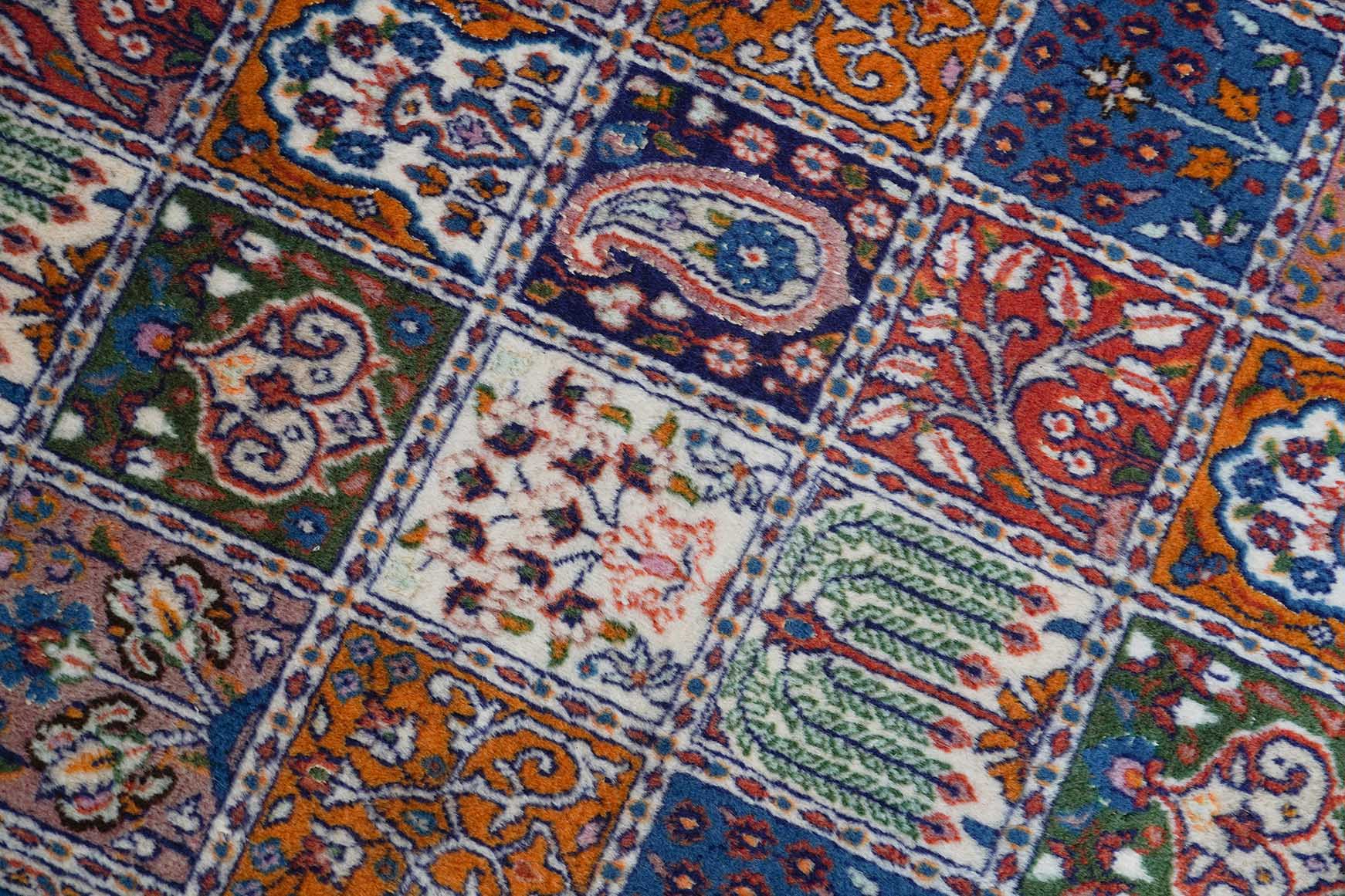
The so-called compartment pattern of this Moud is reminiscent of a lushly planted garden with geometrically laid-out beds, each one individually framed. This design is so typical that in German compartment-pattern rugs are also known as garden rugs. The individual compartments in the pattern of this Moud show different motifs, yet follow a strictly symmetrical, rectangular arrangement.
There is a reason for this: large parts of Persia and many other regions of the Middle and Near East are desert- or steppe-like arid areas, where so-called irrigation horticulture is widely practised. Water is channelled to the beds through small irrigation canals. The panel pattern renders this irrigation system in heavily simplified form. Because of the dryness in these regions, blooming and verdant gardens are also something quite special. The panel pattern therefore probably goes back to the wish to bring a little garden – and with it a small paradise – into the home. In the Koran the term garden, as the earthly counterpart to paradise – a word of Old Persian origin, incidentally – appears very frequently.
The overall impression is dominated by dark blue and light red. The border is worked in dark blue and light red.
Condition
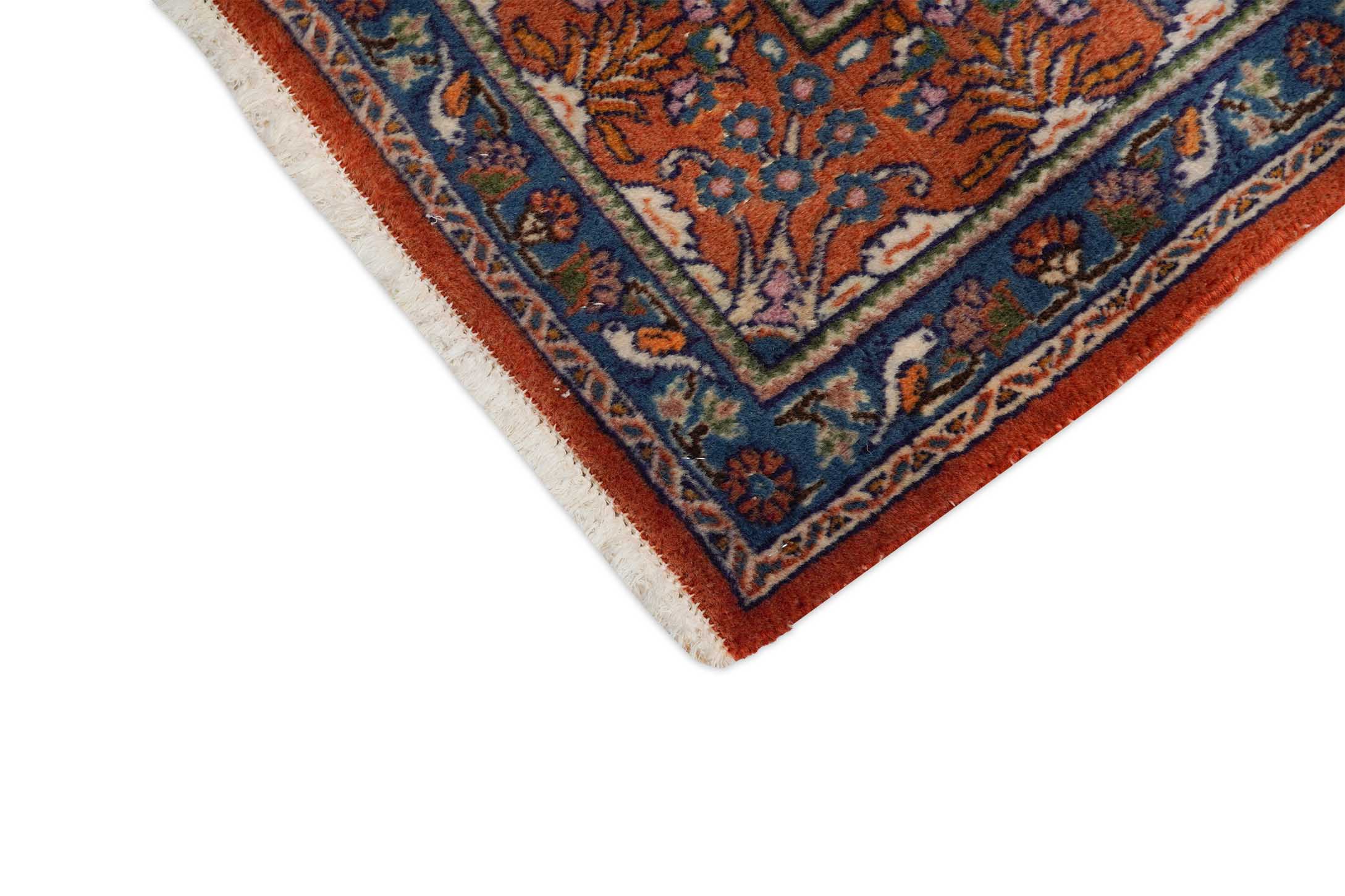
This Moud has had admirers before you. It was hand-knotted around 1970. We have cleaned it thoroughly and restored it with care. It is therefore – despite its age – in very good condition.
Material
The pile of this Moud was hand-knotted from high-quality new wool. New wool is obtained by gently shearing sheep. It is a renewable, natural raw material with a number of impressive qualities: thanks to the natural lanolin in the wool, the surface repels droplets of water and is therefore naturally protected against dirt. Wool also offers excellent thermal insulation, helps regulate the indoor climate and dampens sound. The weft and warp threads of this Moud are made of cotton. This versatile material is tear-resistant and elastic, which makes it ideal for a hard-wearing foundation.
A note on the photos
Child labour? No thanks.
Child labour? No thanks. Children belong in school, not at a knotting frame or a loom. For us it therefore goes without saying that we only offer rugs made under fair conditions and without child labour.
We attach particular importance to humane working conditions and tolerate no child labour at any of our producers. Thank you for helping us to ensure fair conditions.
That is why we support the initiative Care & Fair against child labour in the rug trade.

Choose options
|
|
1-3 Werktage Lieferzeit (deutschlandweit) |
|
|
14 Tage Probelegen |
|
|
Kostenlose Lieferung & Retoure innerhalb der EU |