
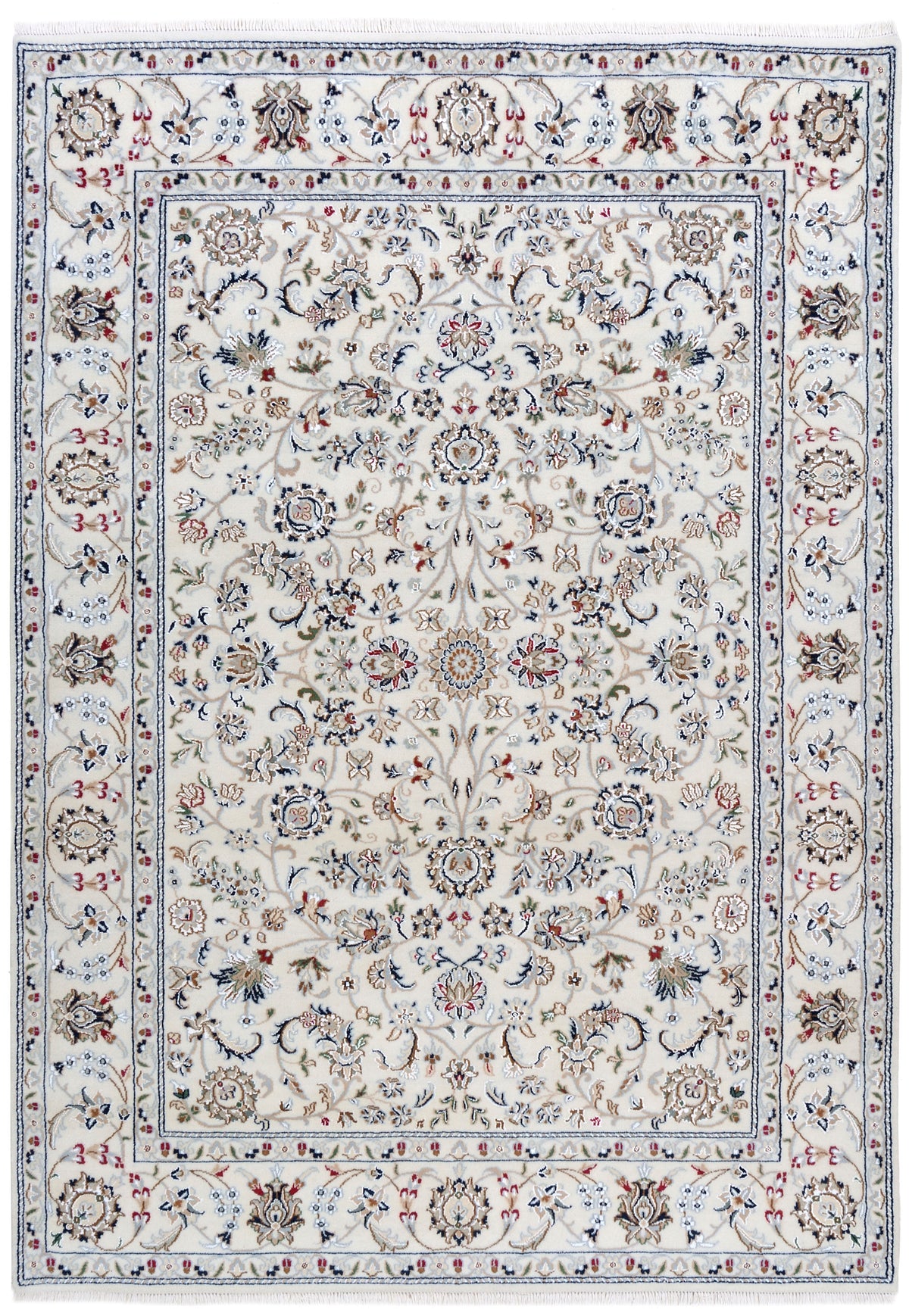
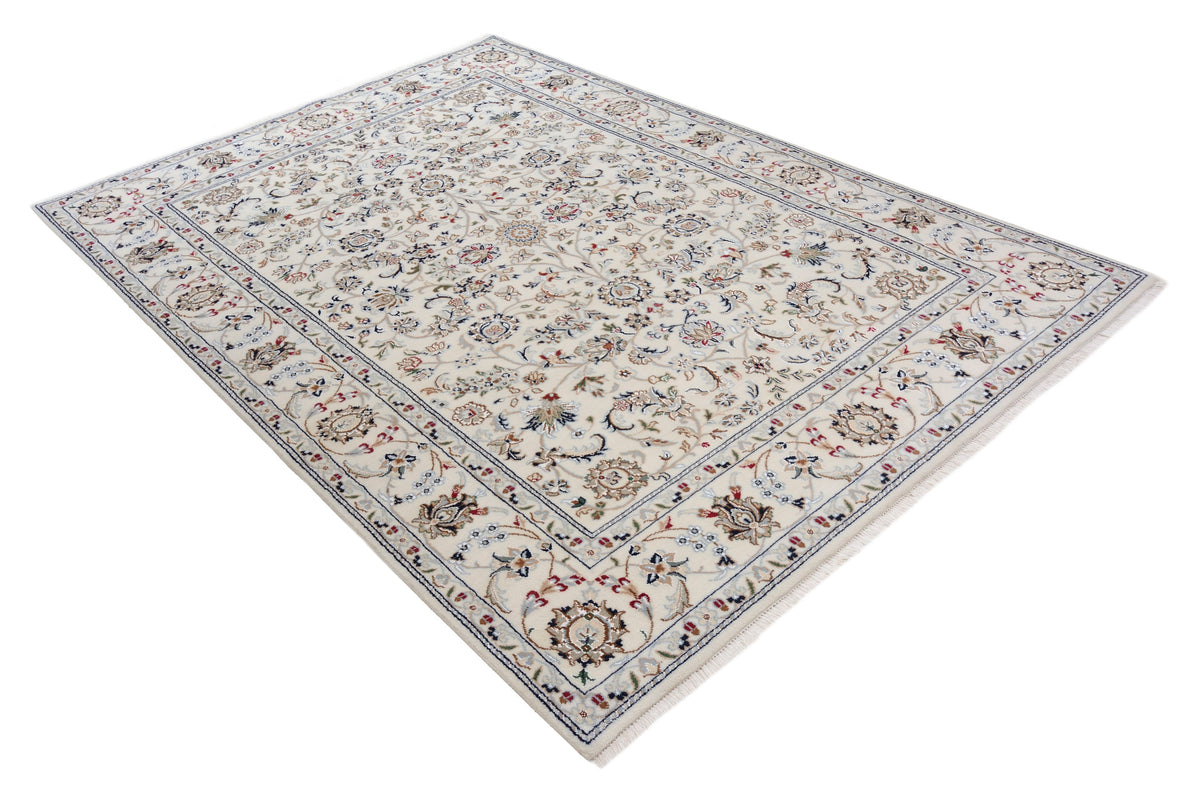
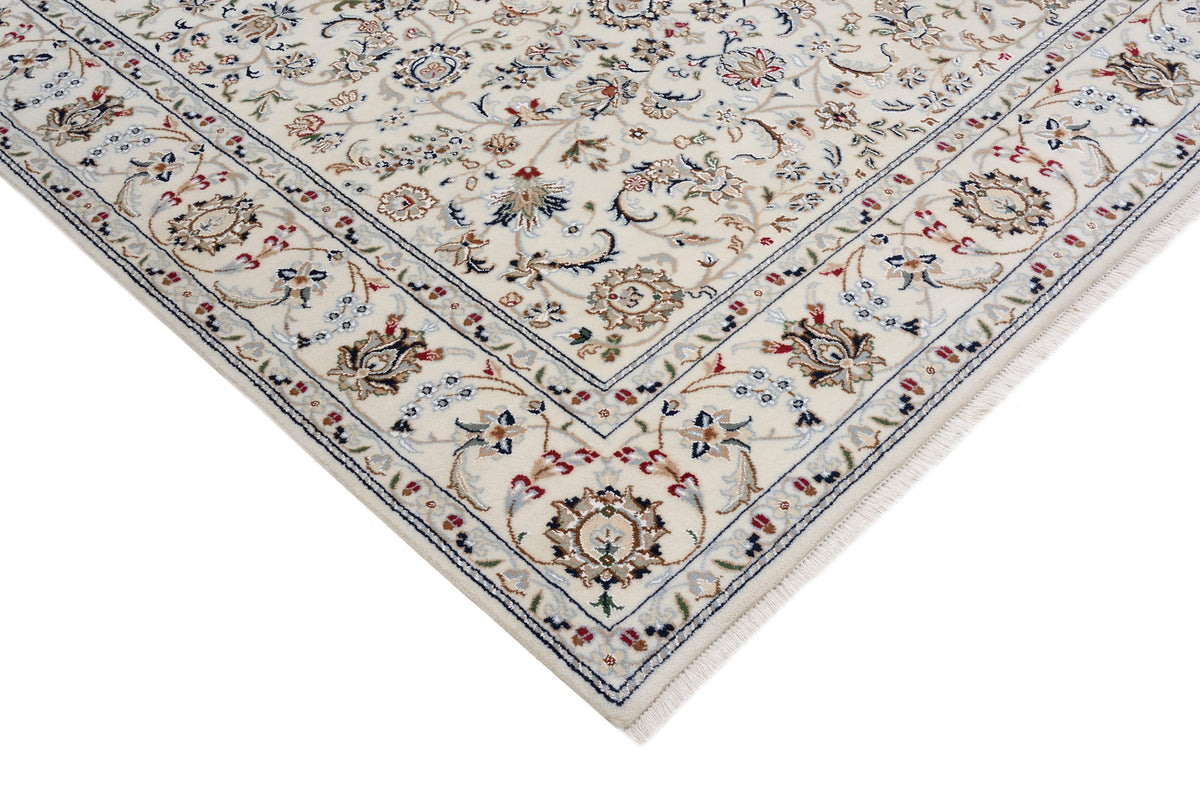
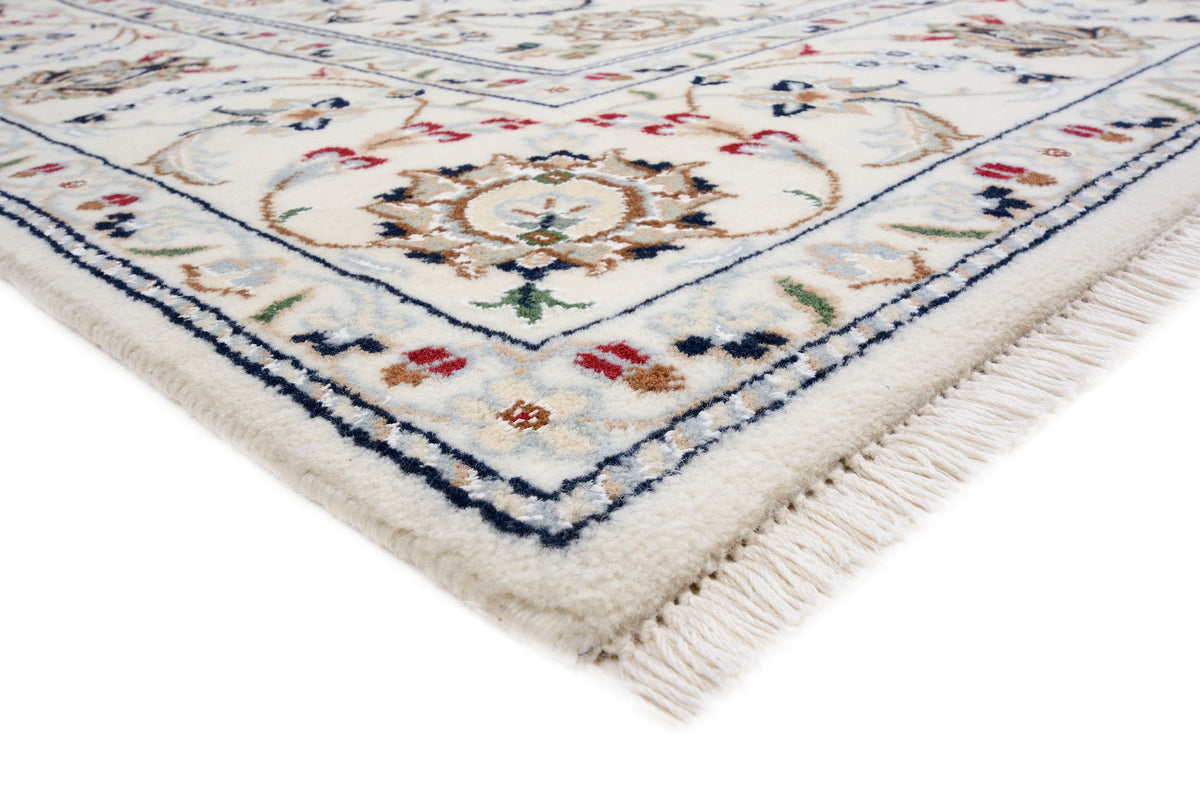
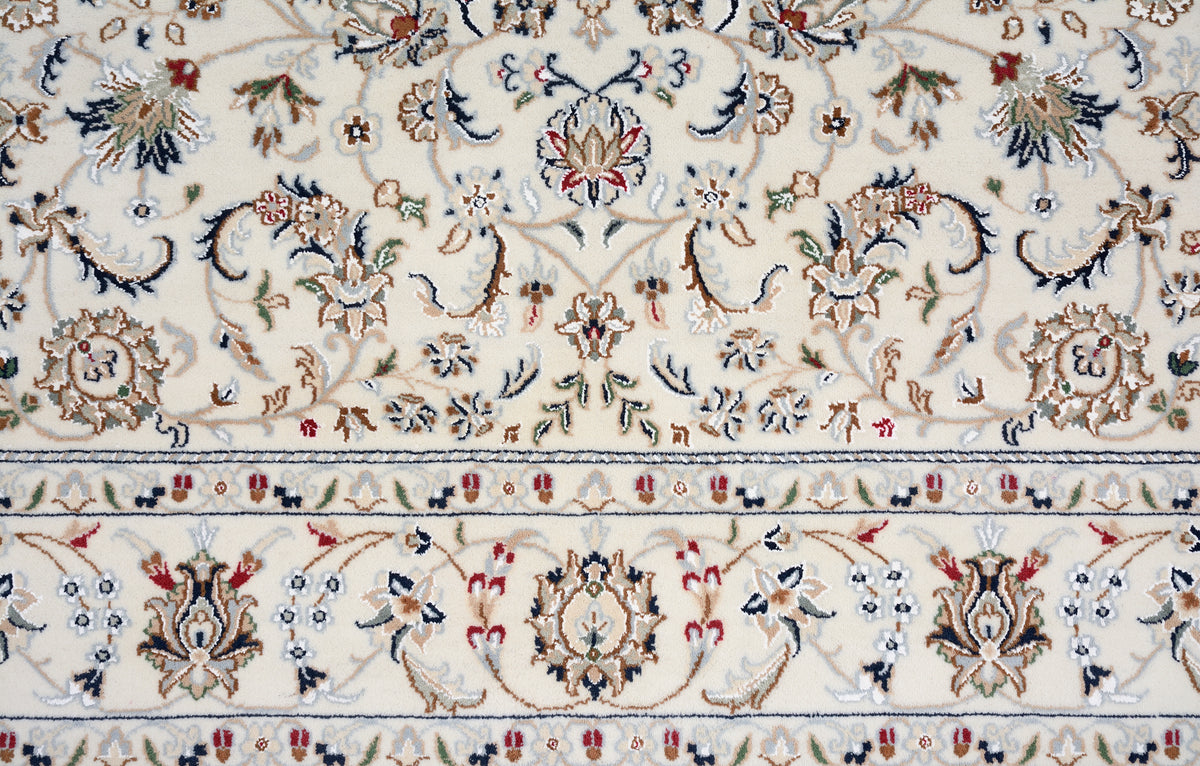
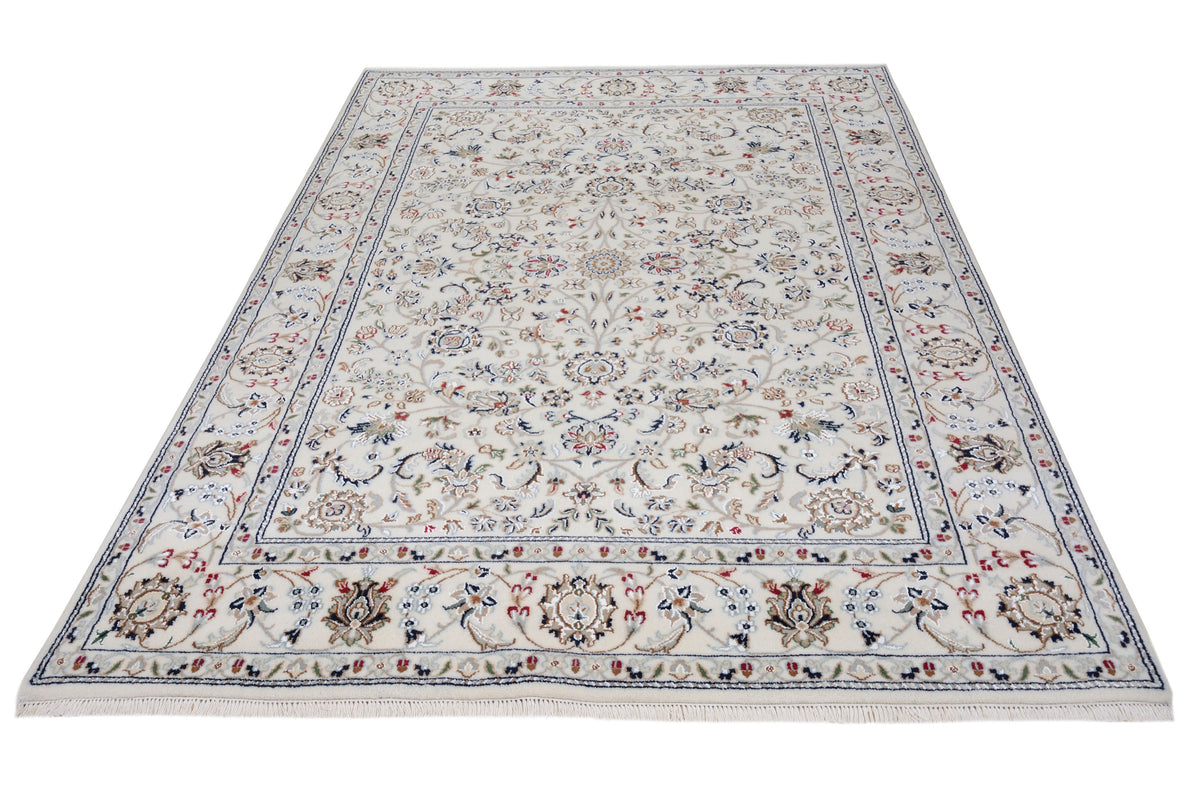
Indian Nain | 241 x 170 cm | Nr. 15-63033


|
1-3 working days delivery time (within Germany) |

|
14-day home trial |

|
Free delivery & returns within the EU |
Indian Nain
This Indian Nain is a one-of-a-kind piece. At 241 × 170 cm it makes an ideal living room rug. It also works well in an office. The knot density is given as 250000.
| Delivery time | 1-3 days |
| Dimensions | 241 cm x 170 cm (= 4.1 m²) |
| Construction | hand-knotted |
| knots | 250000 |
| Edition | one-of-a-kind piece |

Origin
Nain is one of the best-known rug provenances (source, origin) in Iran. The town of Nain lies north-west of Isfahan and has a long weaving tradition. Before the Qajar dynasty (1794 - 1925), the finest cloaks for noblemen – known as abas – were made here. Under the influence of Western culture, the traditional cloak was displaced as clothing by the suit. The weavers shifted their business and began knotting rugs.The rugs from Nain owe their unmistakable patterns and colour combinations above all to the master weaver Hadj Fatollah Habibian Naiini. He limited himself to fewer than ten colours at the loom and so laid the foundation for the colour composition of the Nain rugs that are still so popular today. To this day the base colours are usually white or beige and blue, although Nain rugs in red, green and yellow are appearing more and more often. Floral patterns whose contours are accentuated with silk are typical. Thanks to their understated elegance and restraint to just a few shades, Nain rugs also sit beautifully in modern interiors.
Nain rugs are distinguished by four quality grades, which are given in Lah (the Persian word for layer). Lah describes the number of threads twisted together to form the warp. The more threads are used, the thicker the warp and therefore the knots, and the lower the knot density.
The pattern of this rug is inspired by the pattern of classic Indian Nain rugs. This rug, however, was knotted in India.
Exactly when rug production in India began is unknown. The first rugs in India were probably made during the cultural flowering of the Mughal dynasty in the middle of the 16th century. In the middle of the 19th century, with the decline of the Mughal dynasty, Indian rug production fell into crisis. European companies whose only aim was export to the West took the place of the traditional court manufactories. Very similar rugs were produced in different towns, and standardisation set in. Today, the designs of hand-knotted Indian rugs can scarcely be attributed to individual regions. Instead, the workshops have come to specialise in rendering European and traditional Iranian designs adapted to Western taste. In terms of quality, rugs from India benefit from the long tradition of craftsmanship and the high quality of Indian materials.
A note on the photos
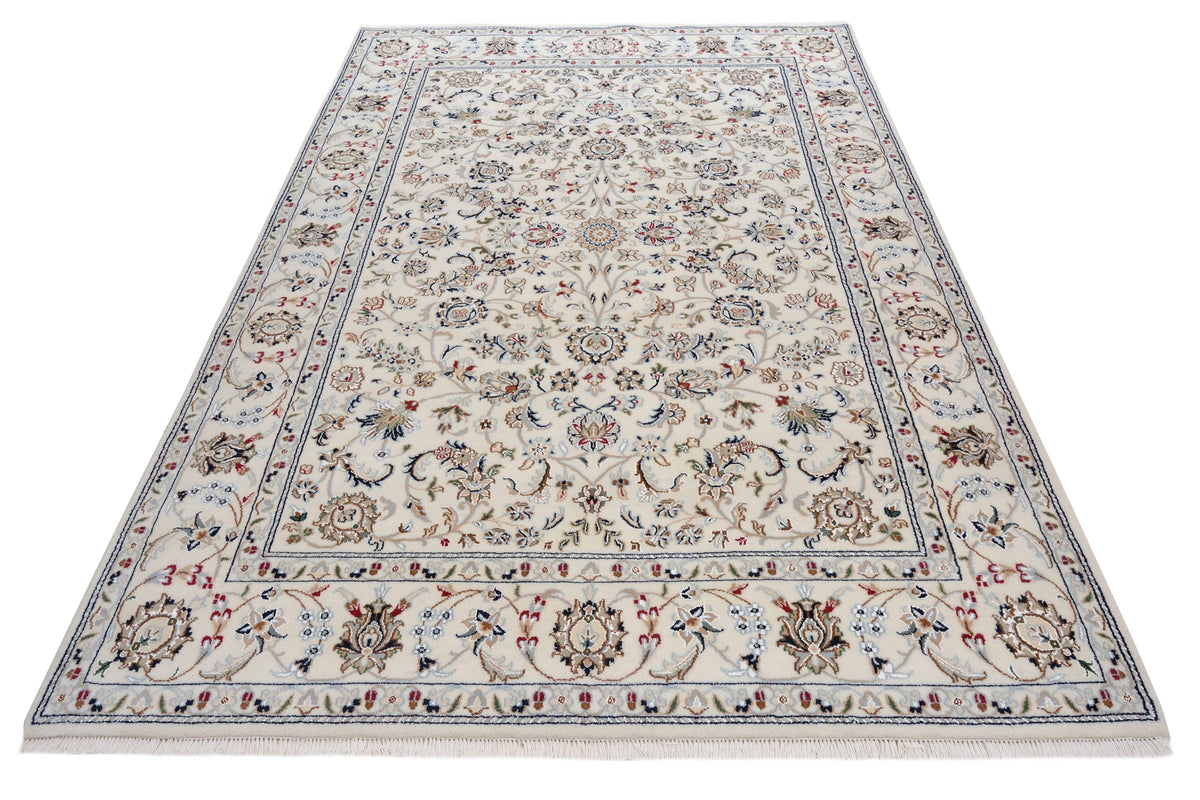
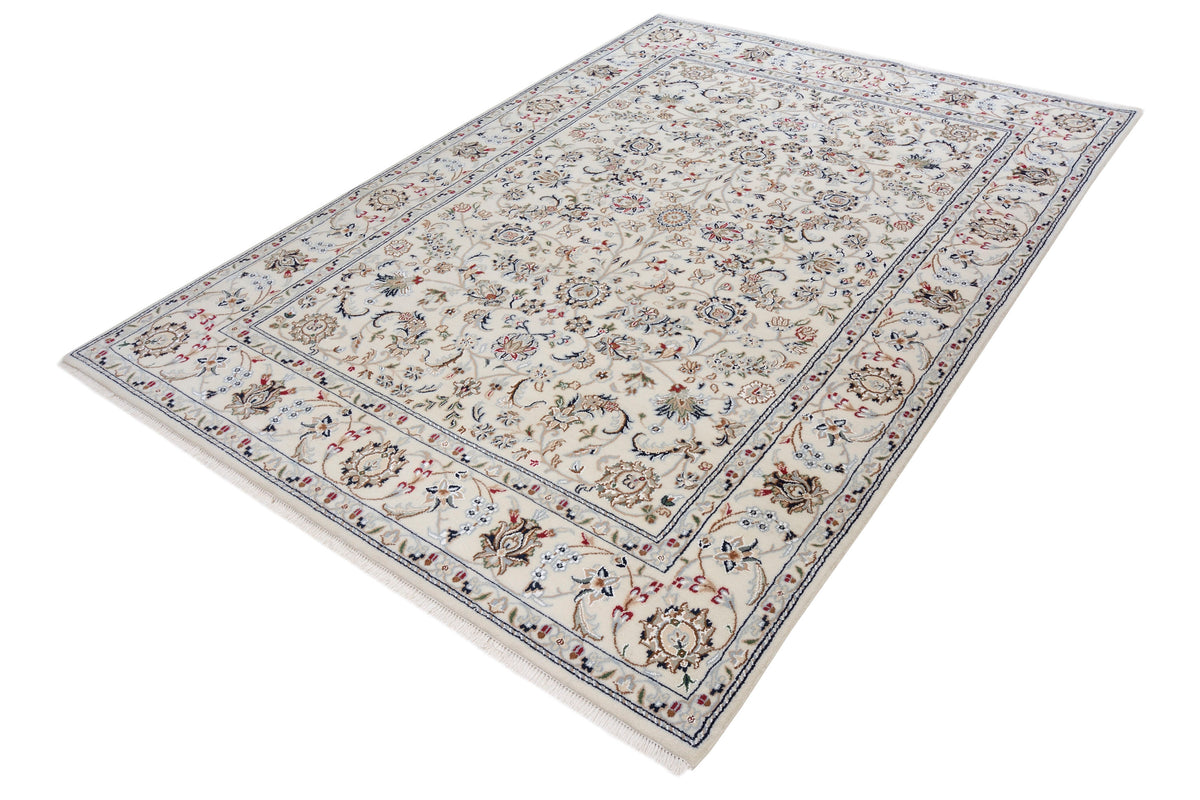
The colours of this rug change depending on which side you look at it from. It all depends on whether the light falls with the nap of the pile or against it. That is why we have photographed the rug from several angles.
Child labour? No thanks.
Child labour? No thanks. Children belong in school, not at a knotting frame or a loom. For us it therefore goes without saying that we only offer rugs made under fair conditions and without child labour.
We attach particular importance to humane working conditions and tolerate no child labour at any of our producers. Thank you for helping us to ensure fair conditions.
That is why we support the initiative Care & Fair against child labour in the rug trade.

Choose options
Indian Nain | 241 x 170 cm | Nr. 15-63033
Sale price2.470,00 €
|
|
1-3 working days delivery time (within Germany) |
|
|
14-day home trial |
|
|
Free delivery & returns within the EU |