
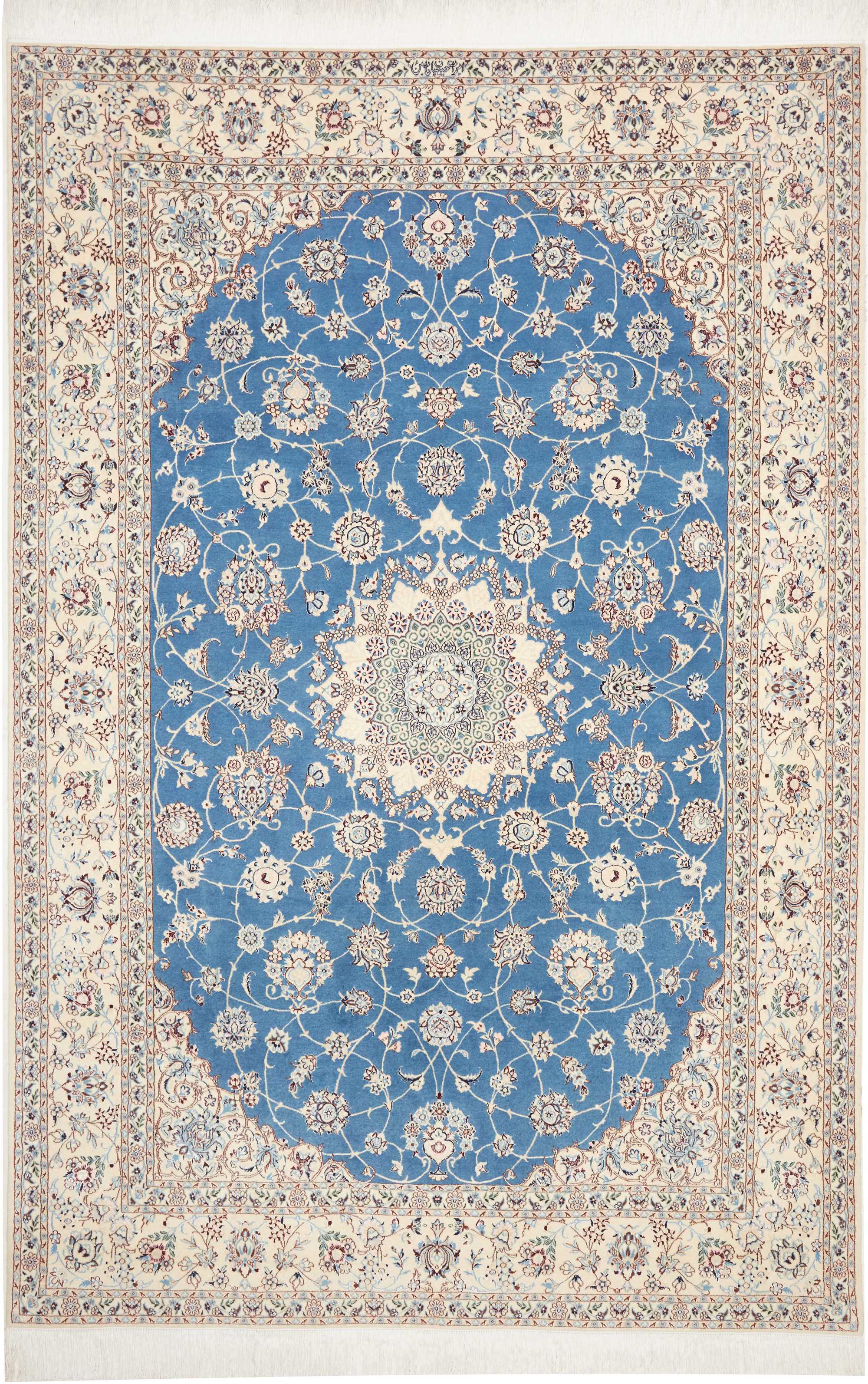
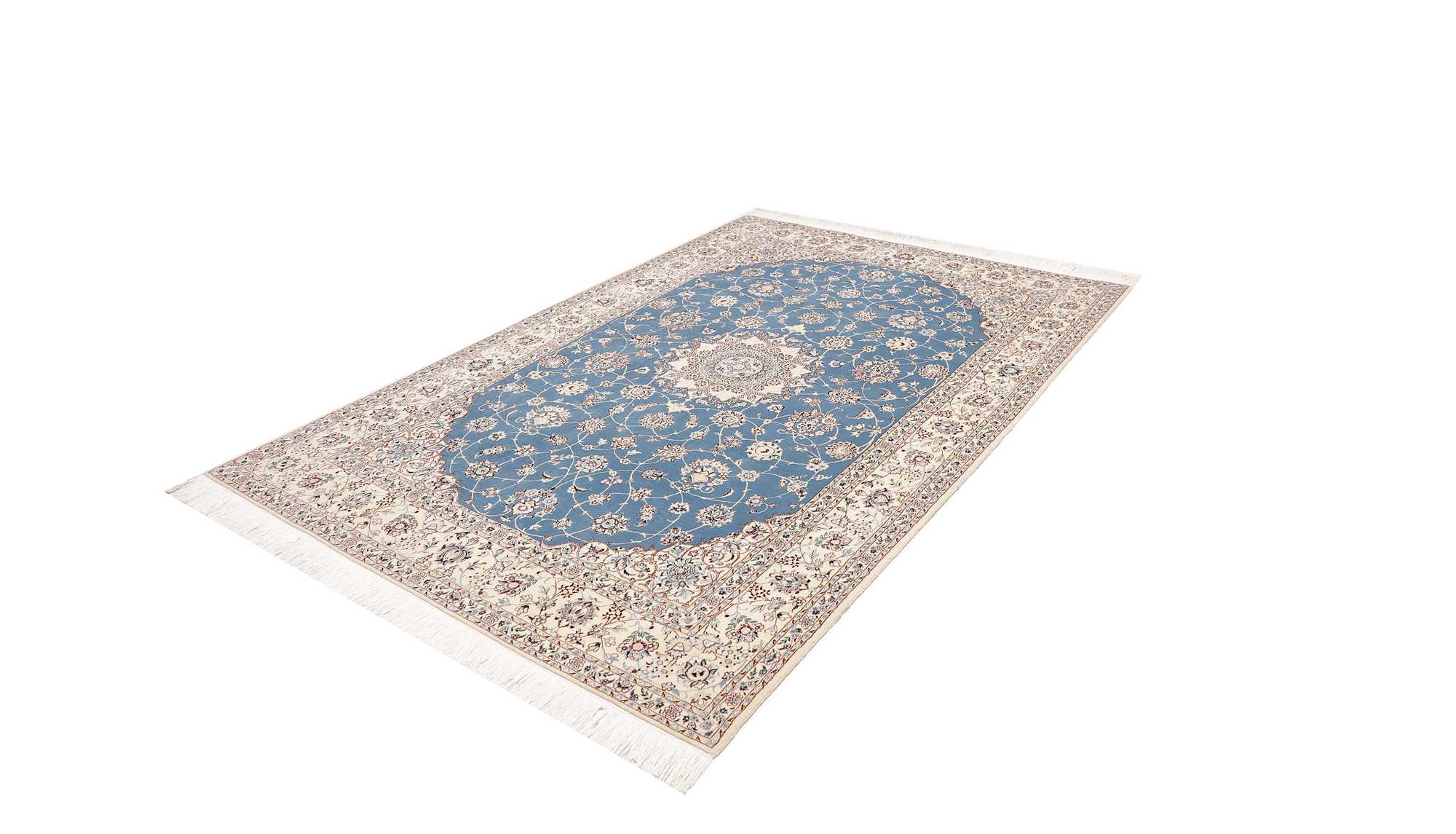
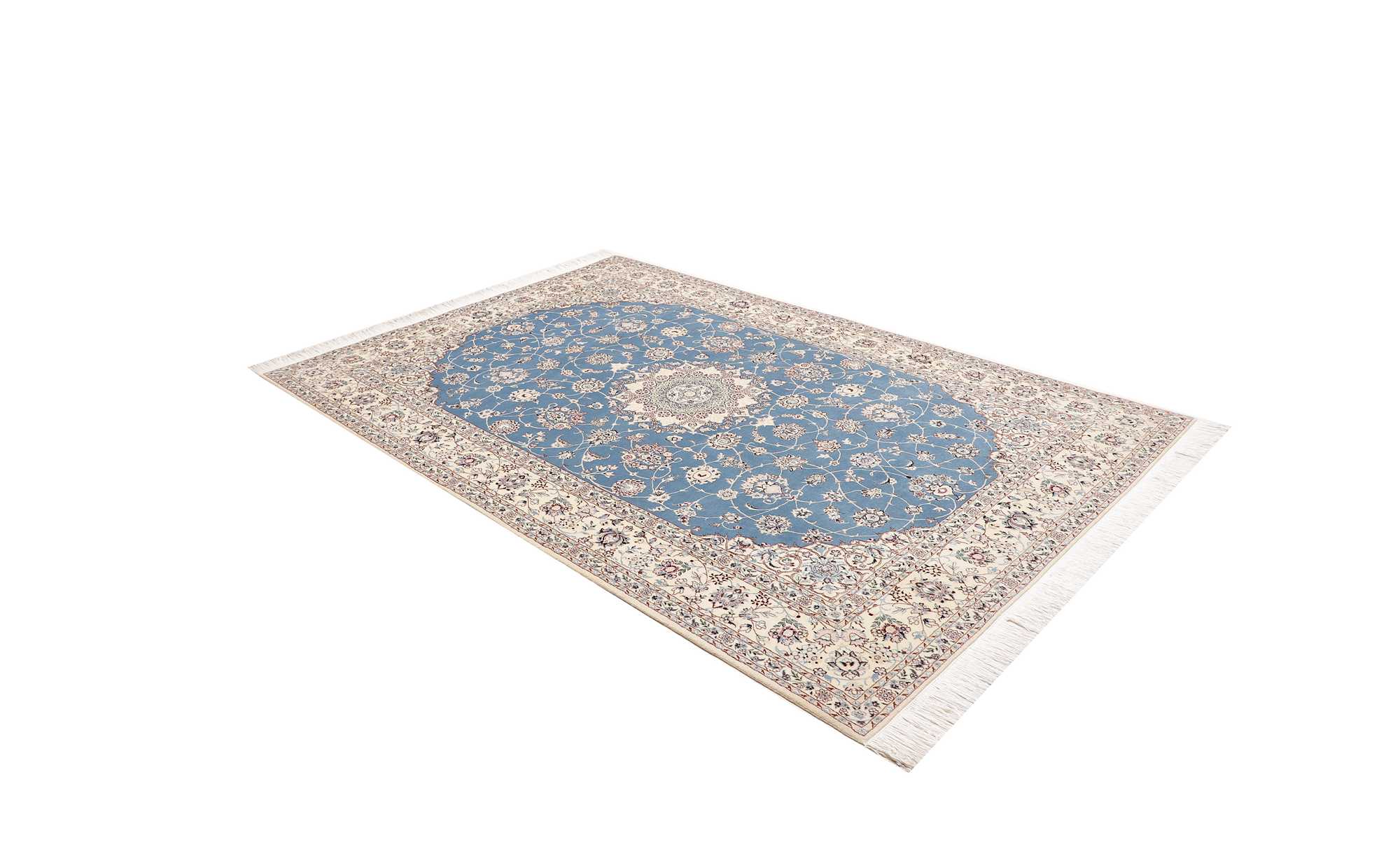
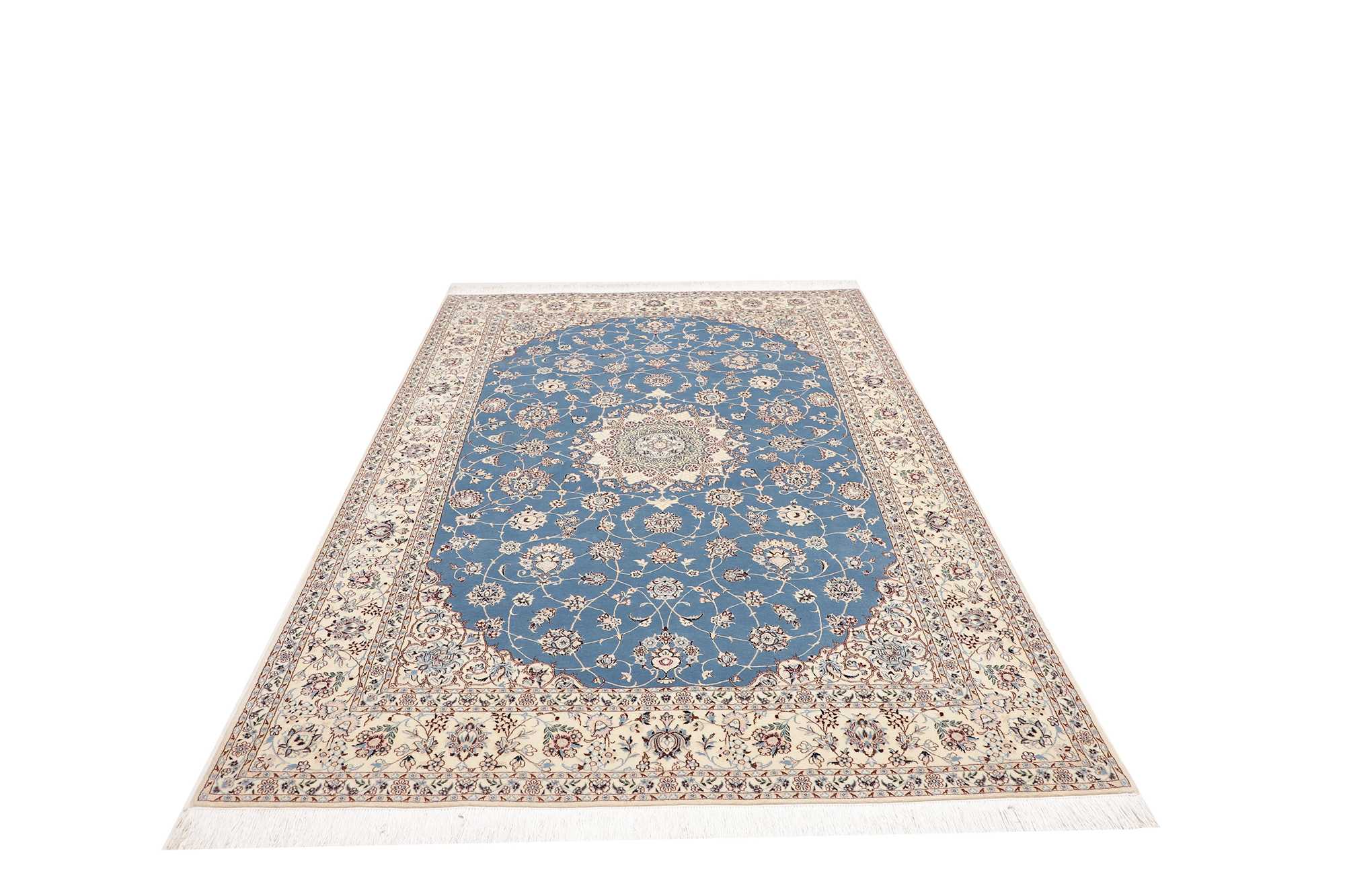
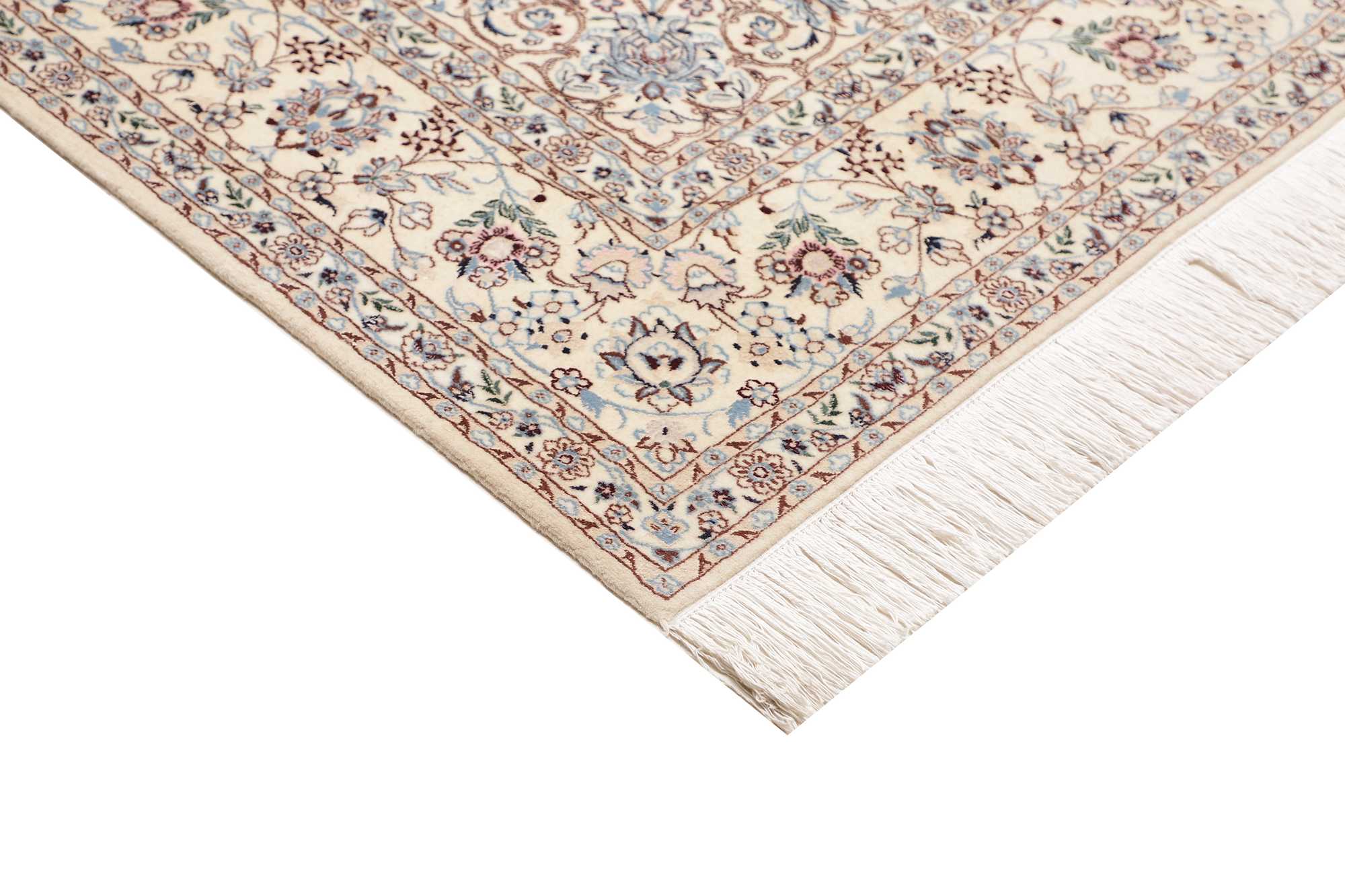
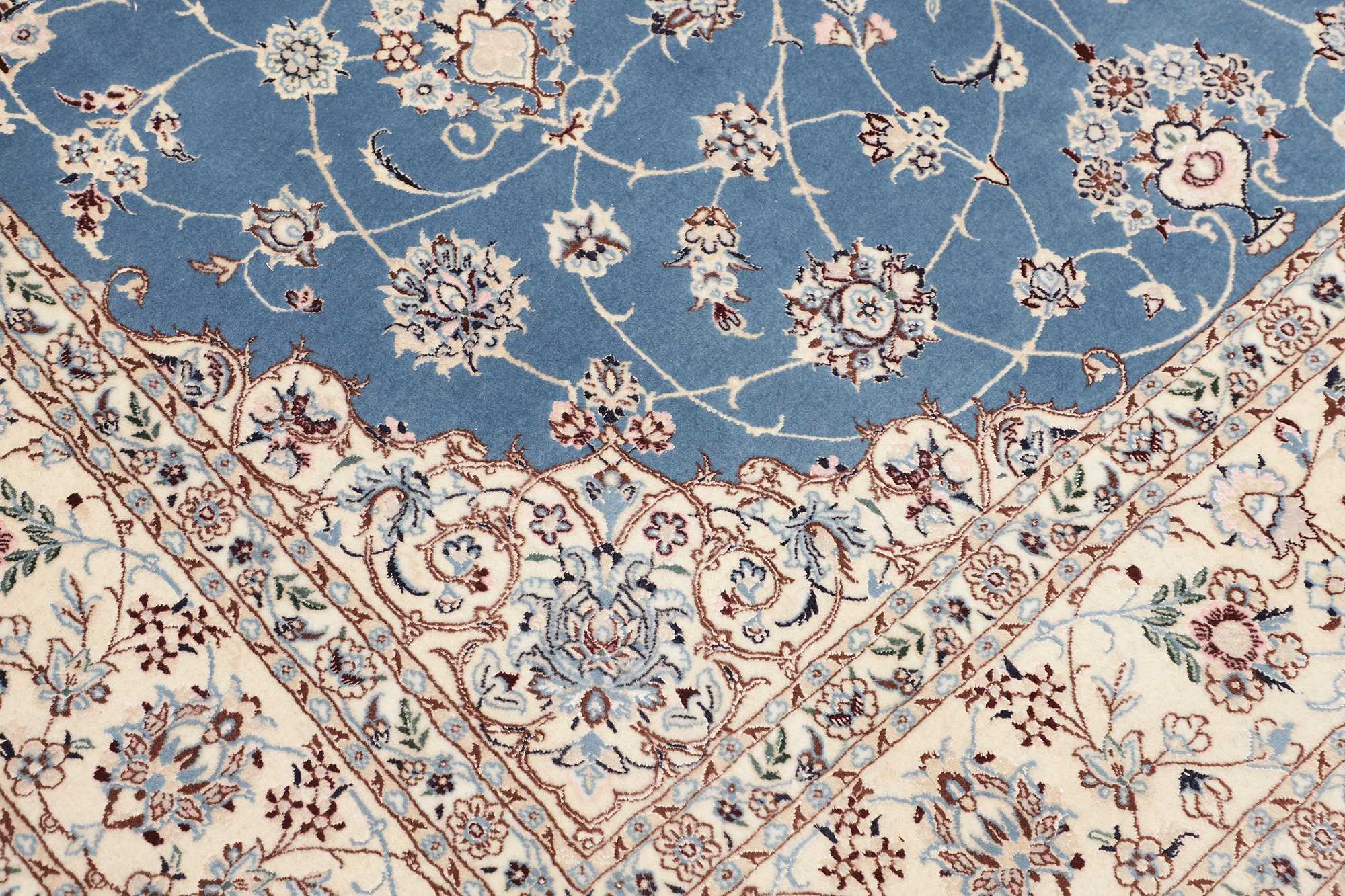
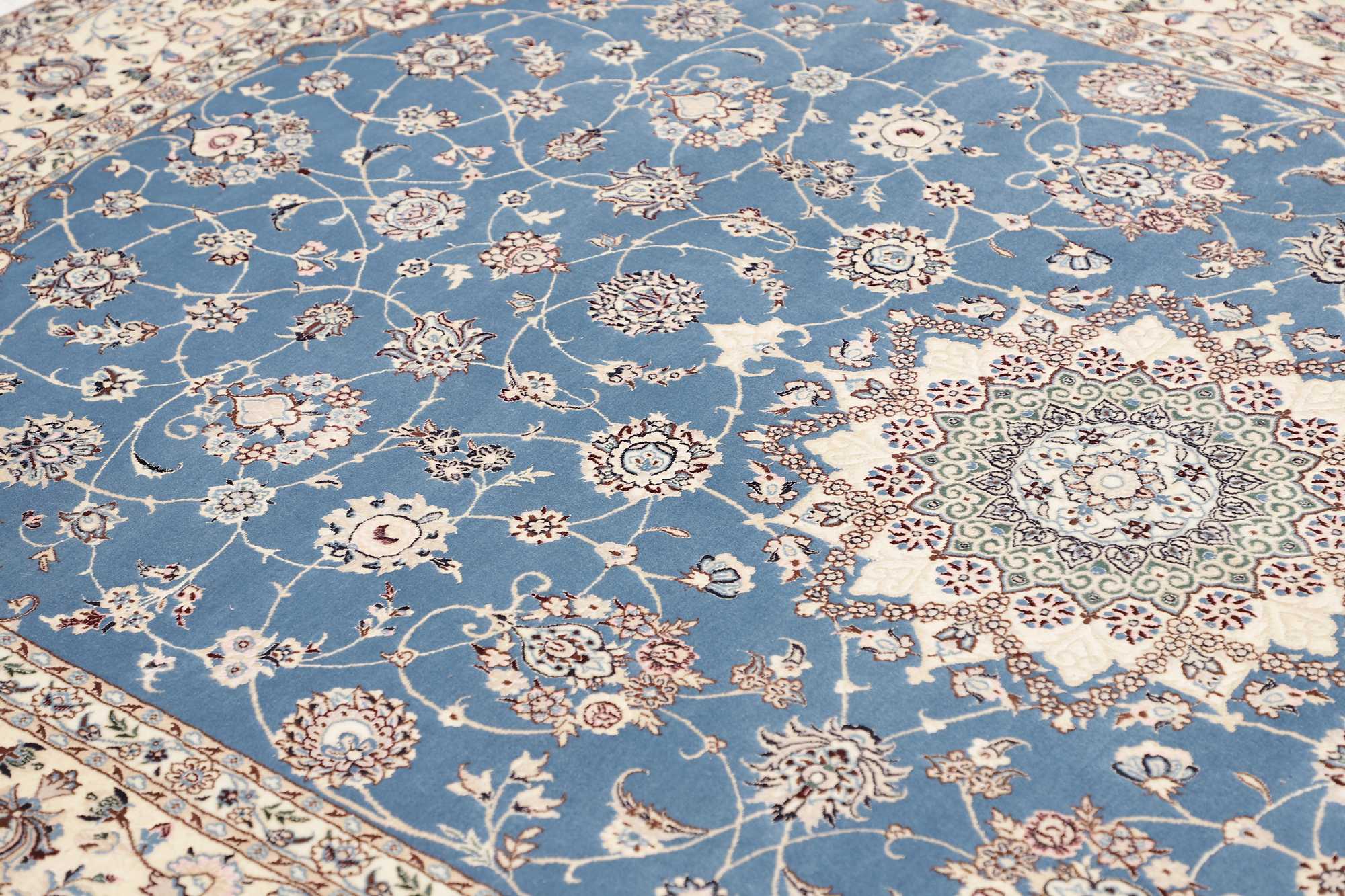
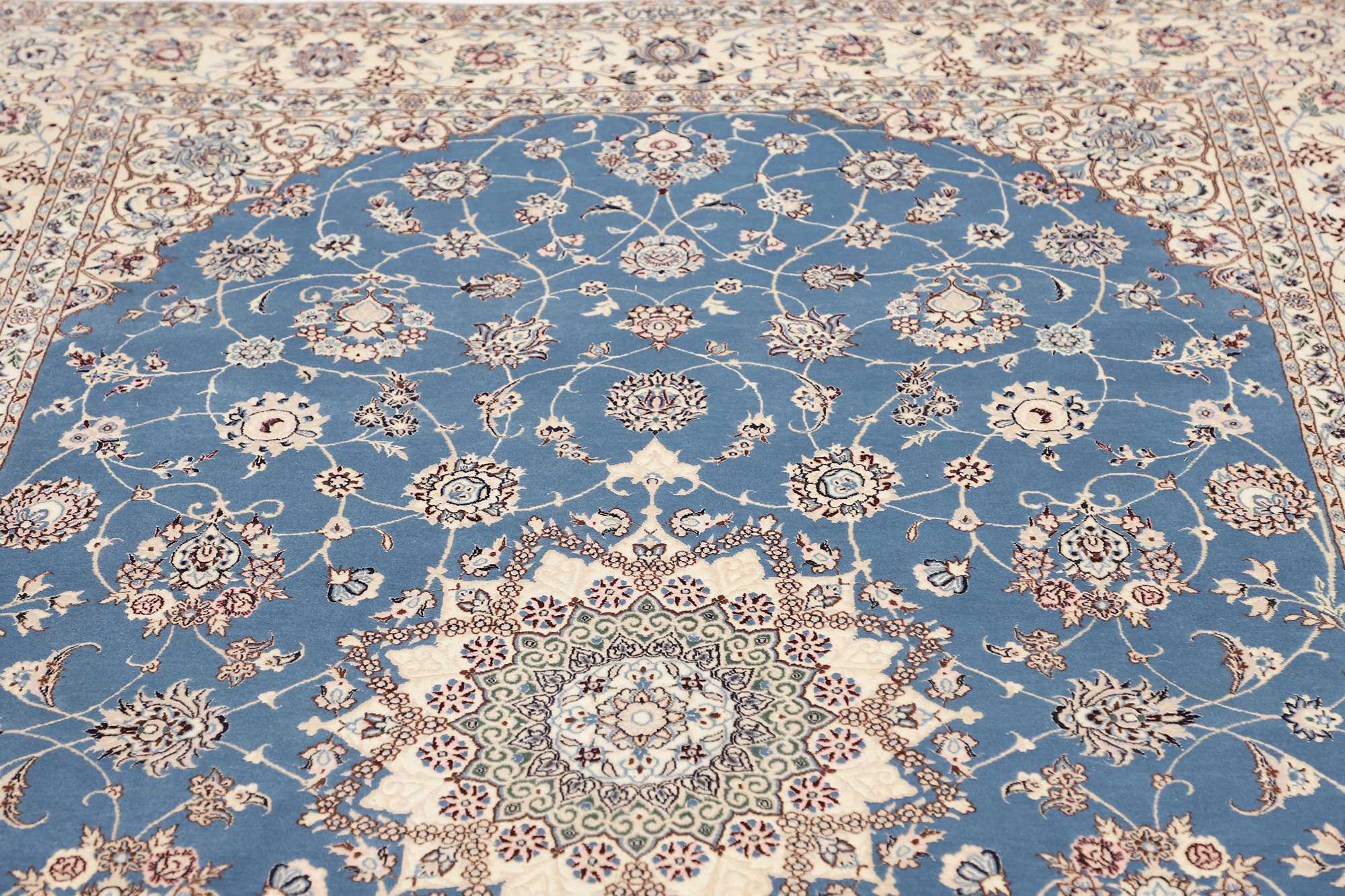
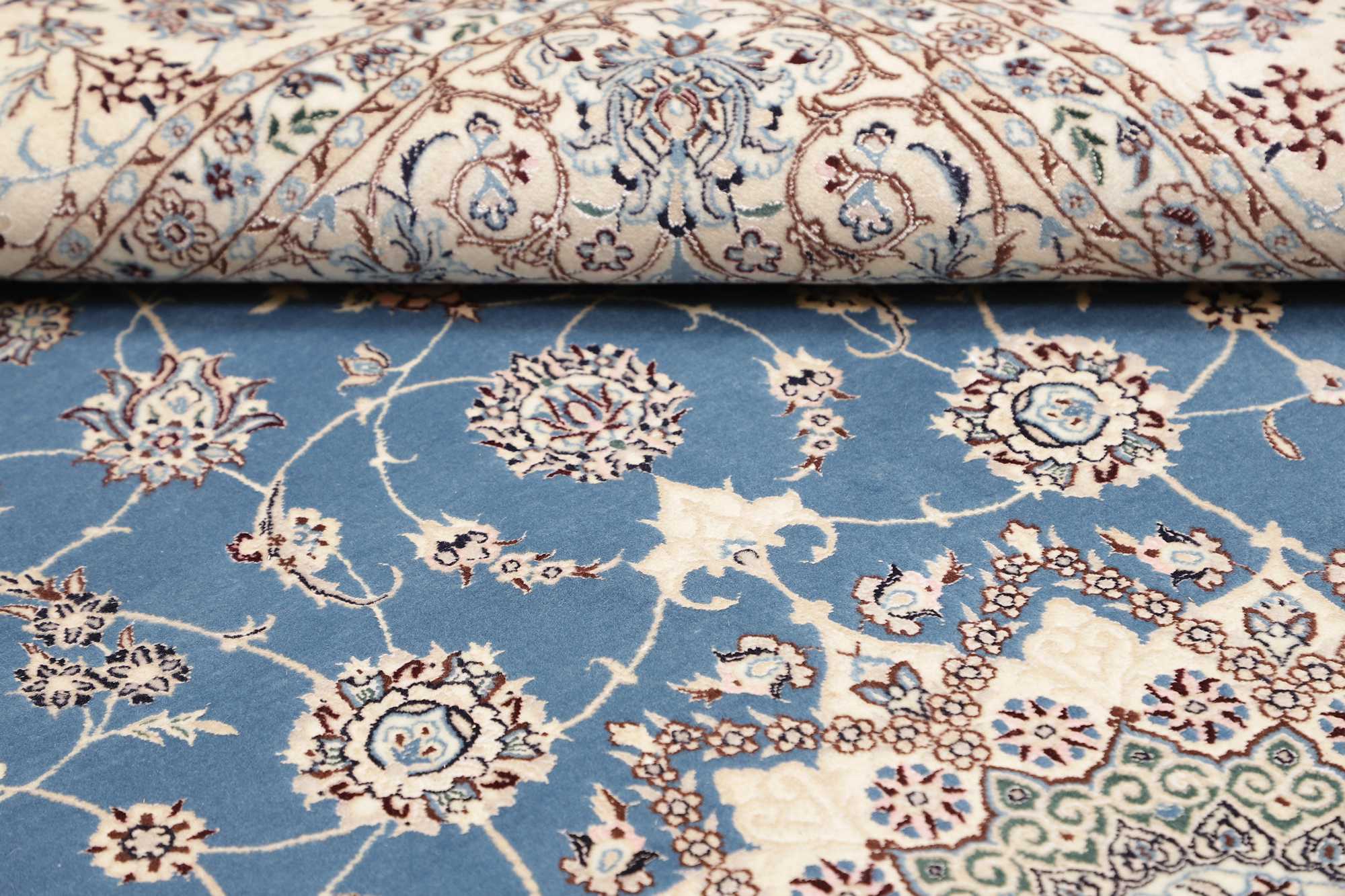
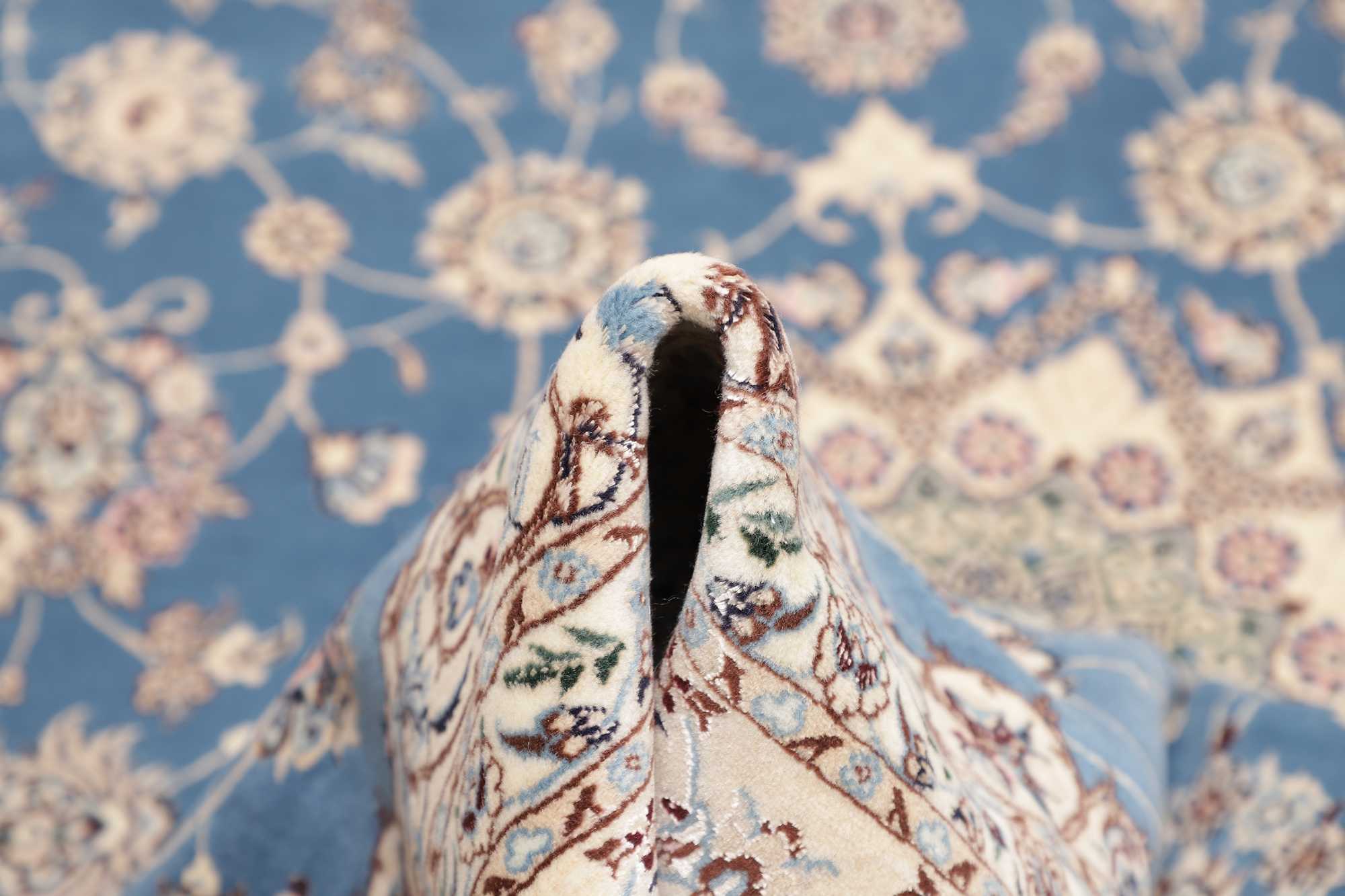
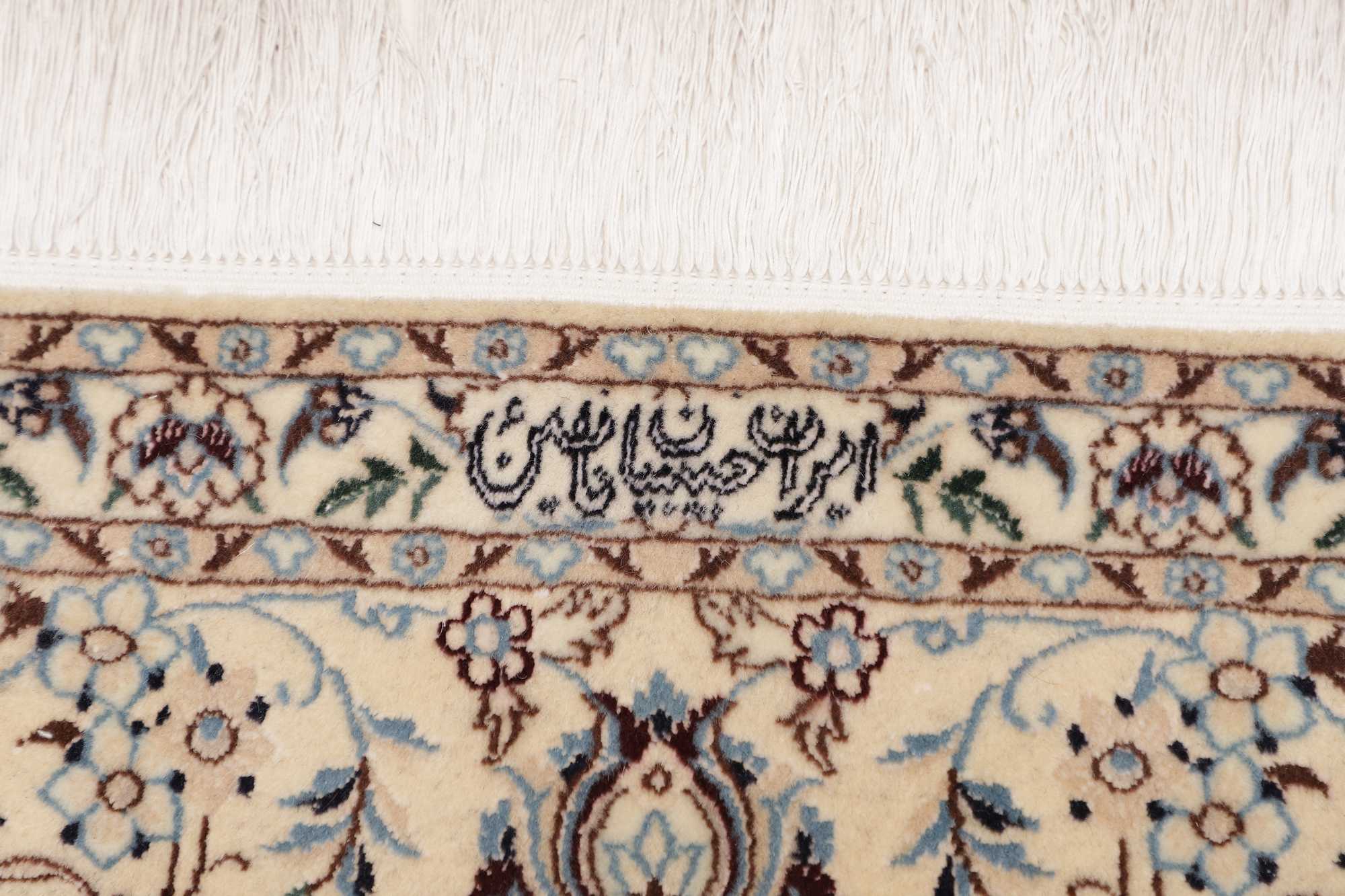
Nain | 255 x 167 cm | Nr. 12-374018


|
14-day home trial |

|
Free delivery & returns within the EU |
Nain
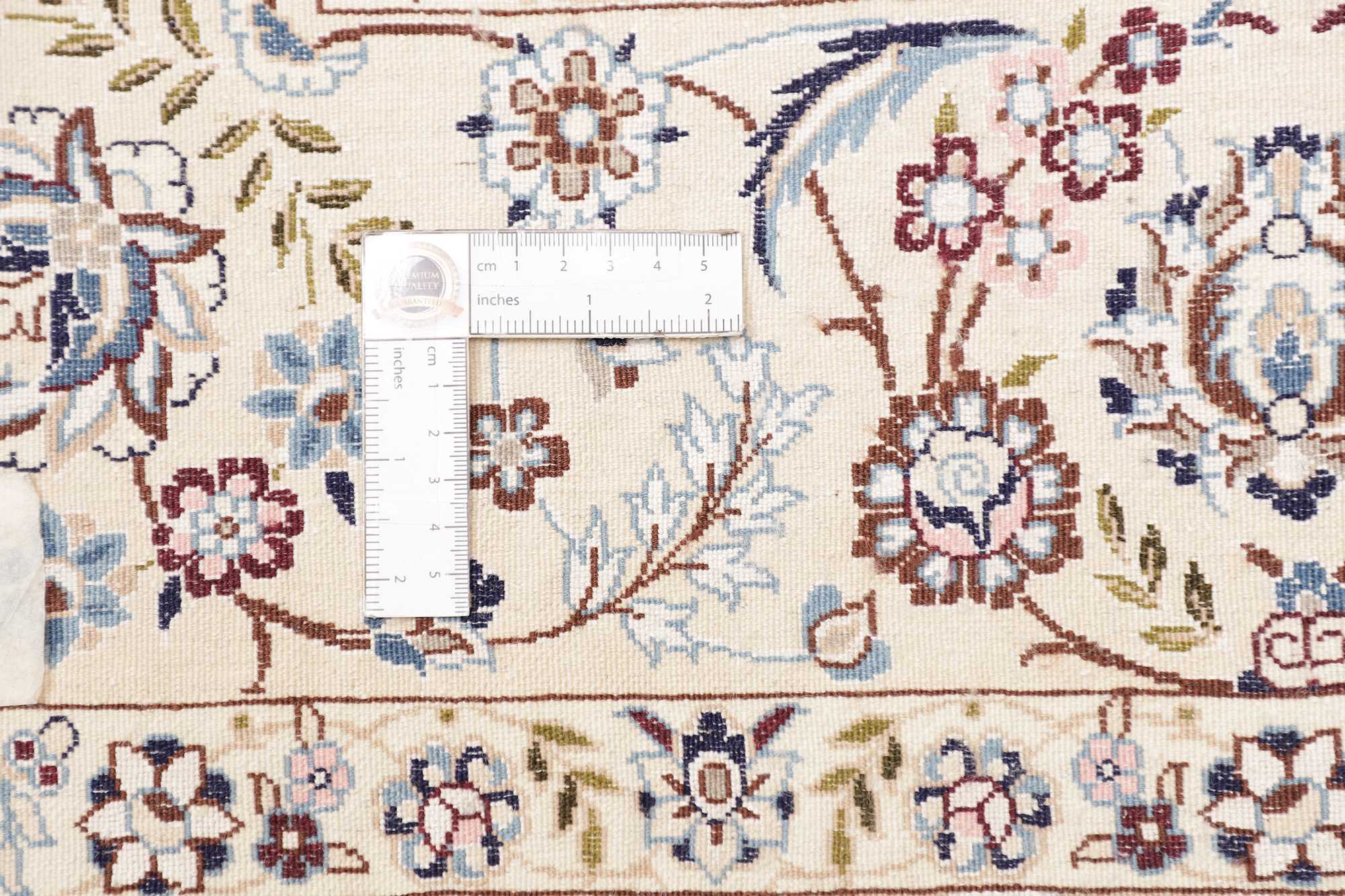
This rug in blue brings together traditional craftsmanship and timeless elegance. With a knot density of around 800k-900k knots per m², the elaborate workmanship shows above all in the precise drawing of the design and the fine execution of the details. At 255 × 167 cm, it works well as a living room rug. It looks just as good in the bedroom under the bed. As a one-of-a-kind piece, it brings individual character to the room and keeps its value far beyond short-lived trends.
| Delivery time | 1-3 days |
| Origin | Persia |
| Dimensions | 255 cm x 167 cm (= 4.26 m²) |
| Construction | hand-knotted |
| knots | 800k-900k |
| Edition | one-of-a-kind piece |
Origin
Nain is one of the best-known rug provenances (source, origin) in Iran. The town of Nain lies north-west of Isfahan and has a long weaving tradition. Before the Qajar dynasty (1794 - 1925), the finest cloaks for noblemen – known as abas – were made here. Under the influence of Western culture, the traditional cloak was displaced as clothing by the suit. The weavers shifted their business and began knotting rugs.The rugs from Nain owe their unmistakable patterns and colour combinations above all to the master weaver Hadj Fatollah Habibian Naiini. He limited himself to fewer than ten colours at the loom and so laid the foundation for the colour composition of the Nain rugs that are still so popular today. To this day the base colours are usually white or beige and blue, although Nain rugs in red, green and yellow are appearing more and more often. Floral patterns whose contours are accentuated with silk are typical. Thanks to their understated elegance and restraint to just a few shades, Nain rugs also sit beautifully in modern interiors.
Nain rugs are distinguished by four quality grades, which are given in Lah (the Persian word for layer). Lah describes the number of threads twisted together to form the warp. The more threads are used, the thicker the warp and therefore the knots, and the lower the knot density.
A note on the photos
Child labour? No thanks.

The rug trade against child labour: Children belong in school, not at a knotting or weaving loom. For us it therefore goes without saying that we only offer rugs made under fair conditions and without child labour. We place particular importance on good working conditions and tolerate no child labour at our producers.
We are proud to be a member of the Care & Fair campaign against child labour.
The industry-wide campaign CARE & FAIR - the rug trade against child labour was founded in 1994. The initiative has made it its mission to fight the excesses of illegal child labour in the knotting countries and, at the same time, to improve the overall situation of rug knotters and their families in the knotting regions of India, Nepal and Pakistan.
Our goals:
- Ending illegal child labour in India and Pakistan.
- Creating better living conditions for knotters' families.
- Socially responsible production. We only accept goods that have been made under fair conditions. Working with our producers as partners, we want to make clear to them that taking on social responsibility benefits everyone.
Together with Care & Fair we currently support 10 schools, 6 adult education centres and 3 day clinics in India and Pakistan.
Choose options
|
|
14-day home trial |
|
|
Free delivery & returns within the EU |