
Sarough | 267 x 190 cm | Nr. Z-3379

|
14 Tage Probelegen |

|
Kostenlose Lieferung & Retoure innerhalb der EU |
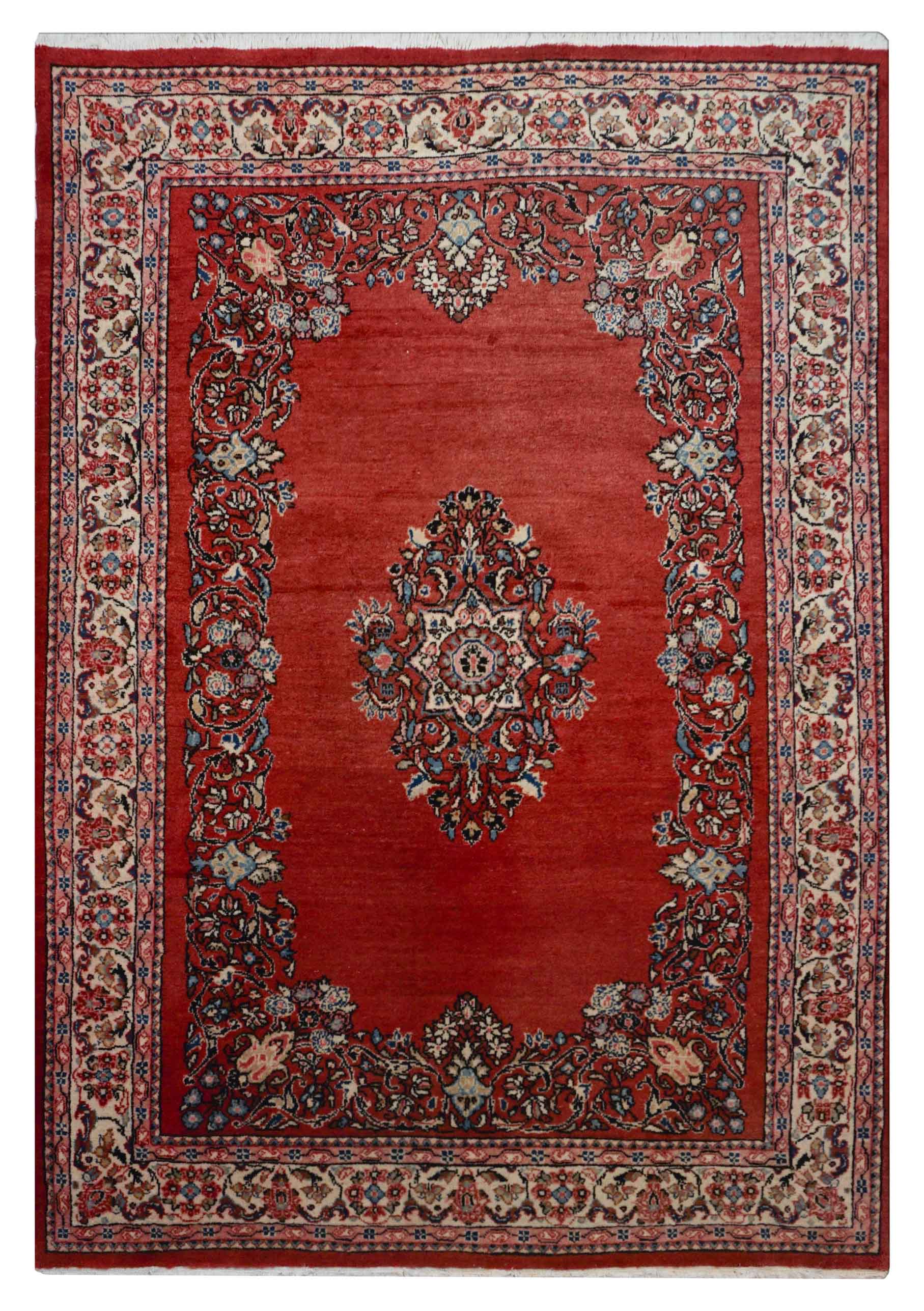
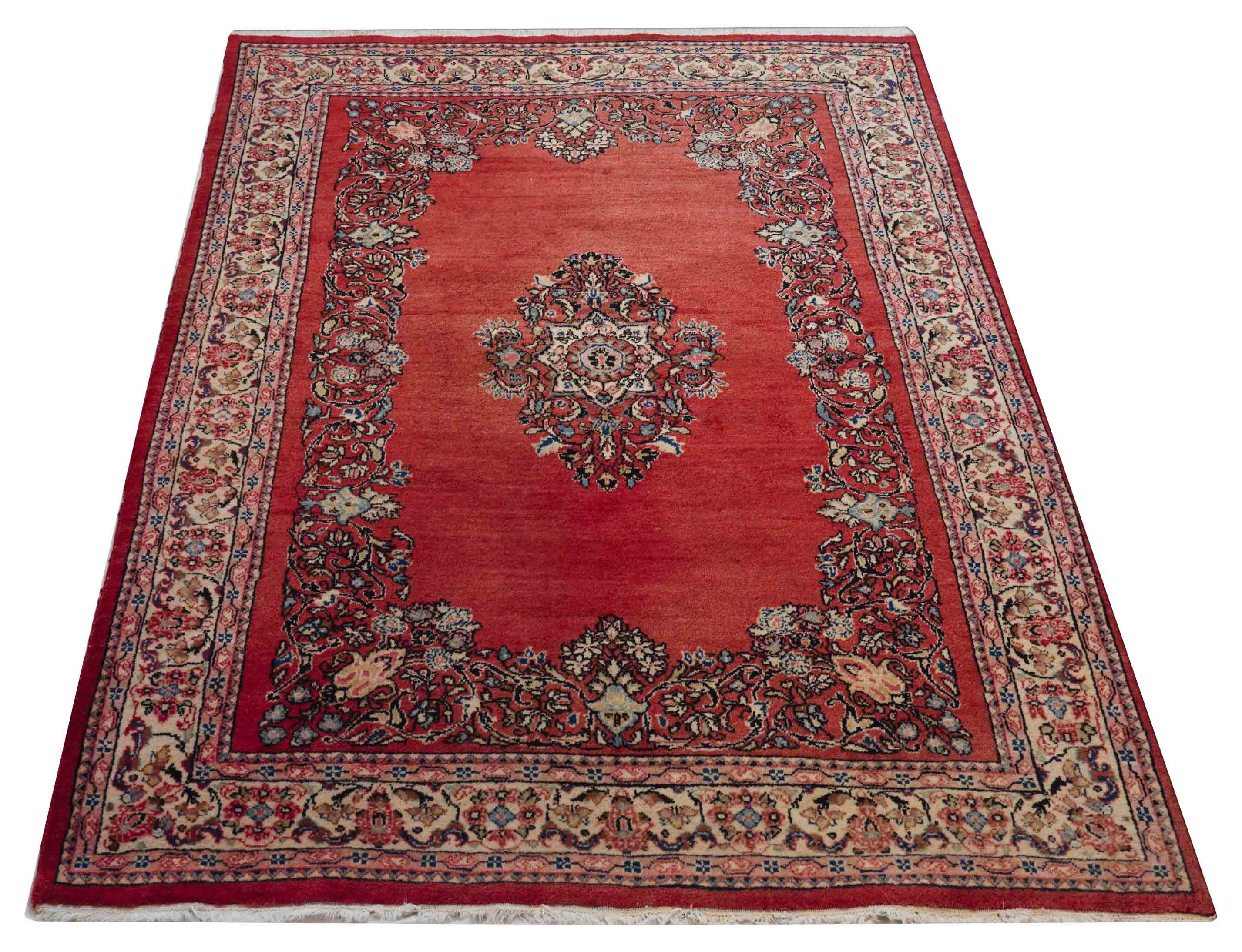
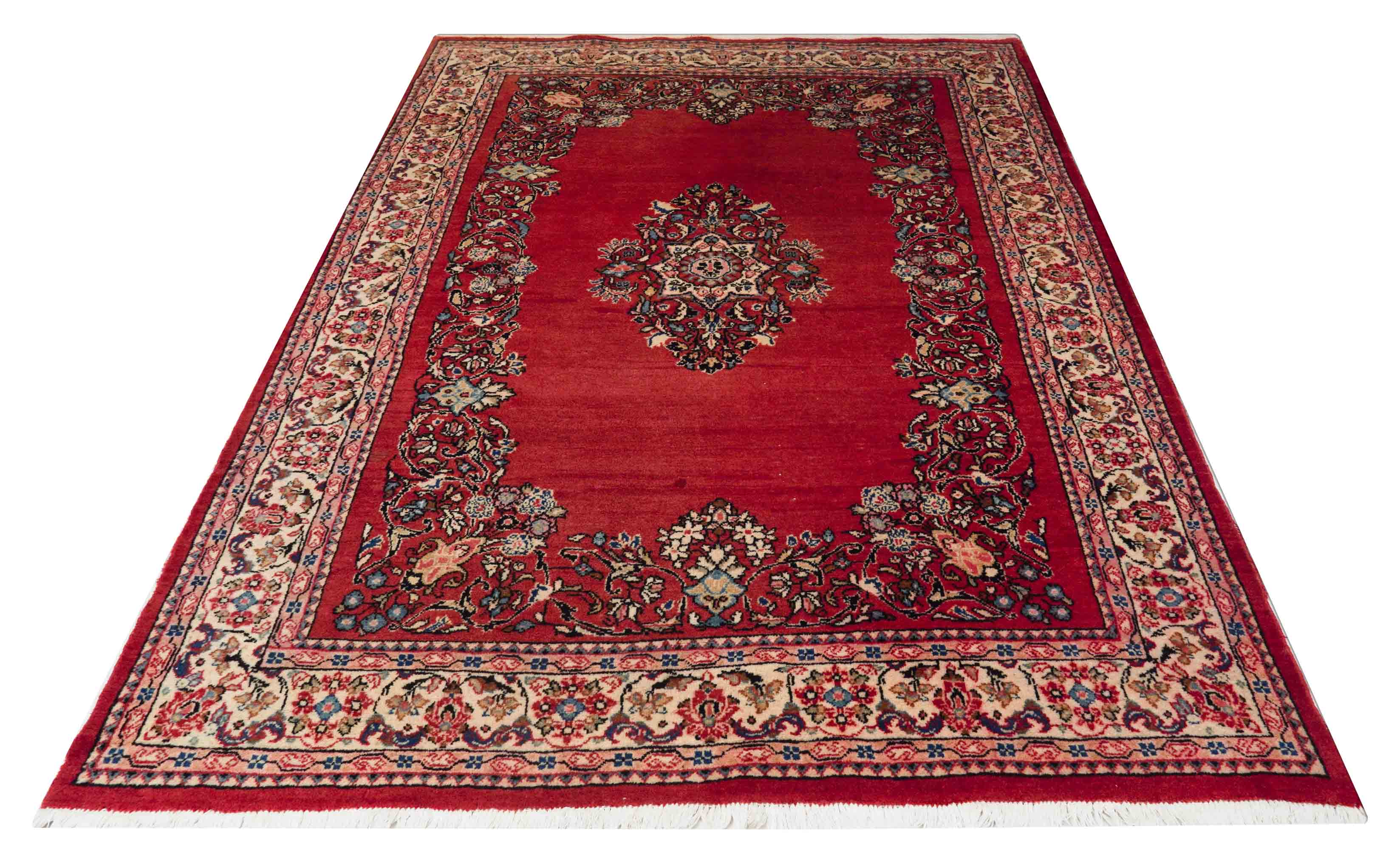
Floral Sarough, light red with border
| Origin |
|
| Dimensions | 267 cm x 190 cm (= 5.073 m²) |
| Construction | hand-knotted |
| Material |
Pile: wool (hand-spun, natural dyes)
|
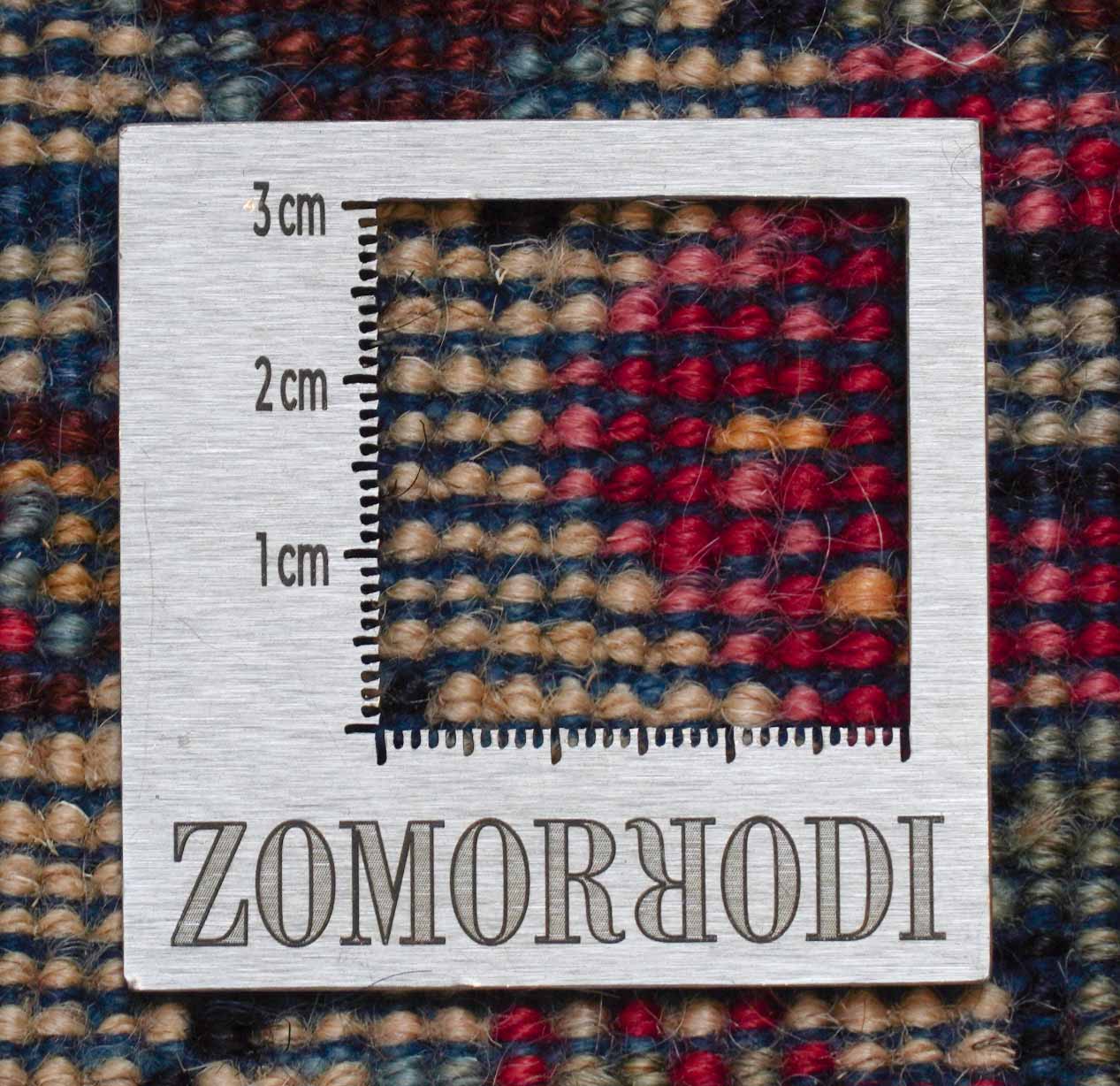
| knots per m²2 | 120.000 |
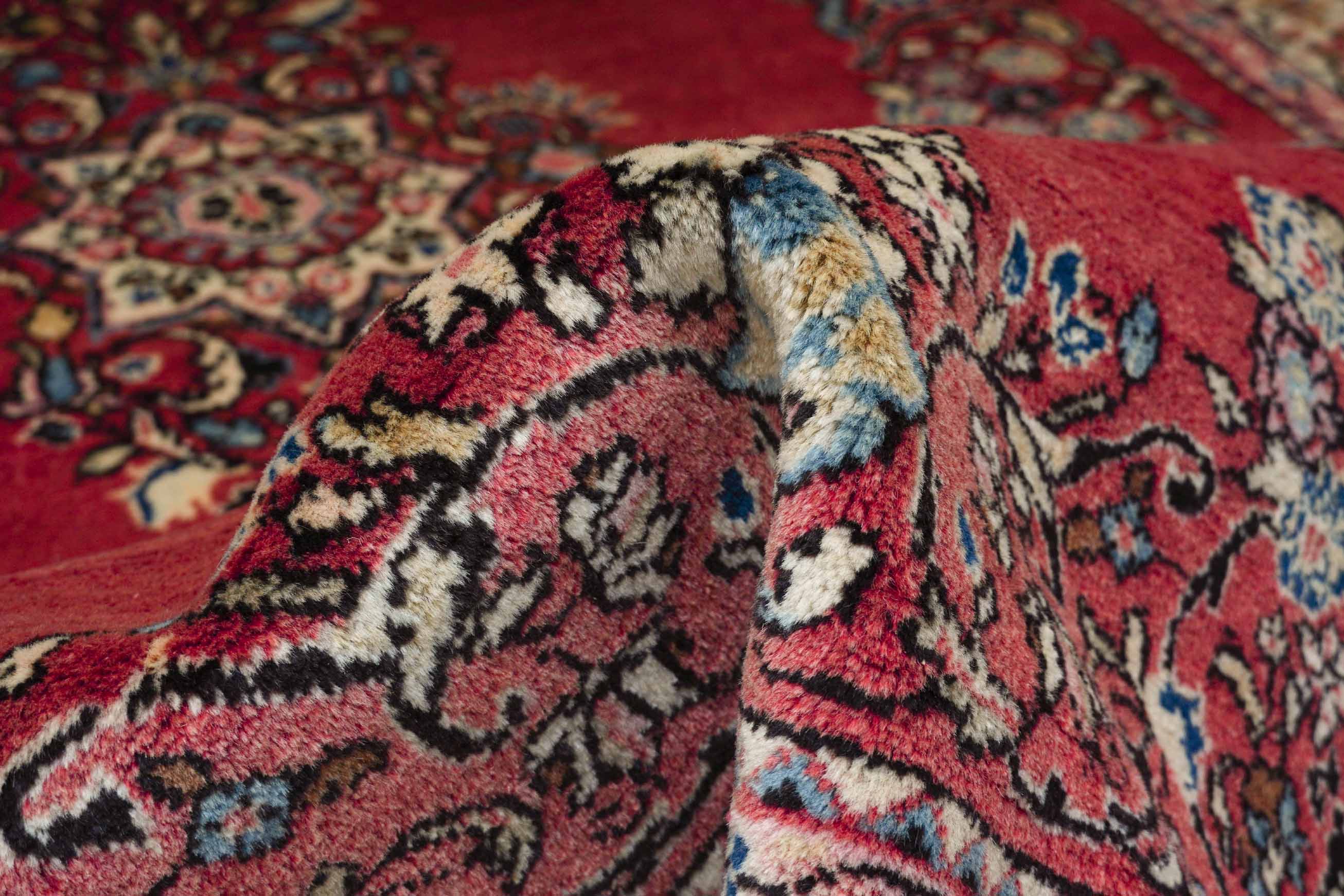
| Pile height | 7mm |
| Year of manufacture | 2000 |
| Colour | Light red |
| Edition | one-of-a-kind piece |

Origin
This rug comes from Sarough (also spelled Sarouk, Saruk or Sarogh). Sarough is one of the best-known rug-knotting regions in Iran. Located in the western Persian province of Aarak, it takes in the provenances Arak, Djozan, Ghiasabad, Mahal, Malayer, Mohajeran, Sultanabad and Wiss. Persian patterns of every kind are knotted in Sarough, in some cases to the buyer's own specifications. Weavers there are especially fond of the neighbouring Farahan designs, of their own Sultanabad patterns and of the so-called Mir-i-Boteh pattern made up of paisley motifs. Typical of this type of rug is the very good wool quality of the pile, as the new wool comes from the Persian highlands. The foundation – warp and weft – is, however, usually made of cotton. In old and antique rugs you will often find a blue weft thread. The knotting is very fine and the pile relatively high.
Pattern
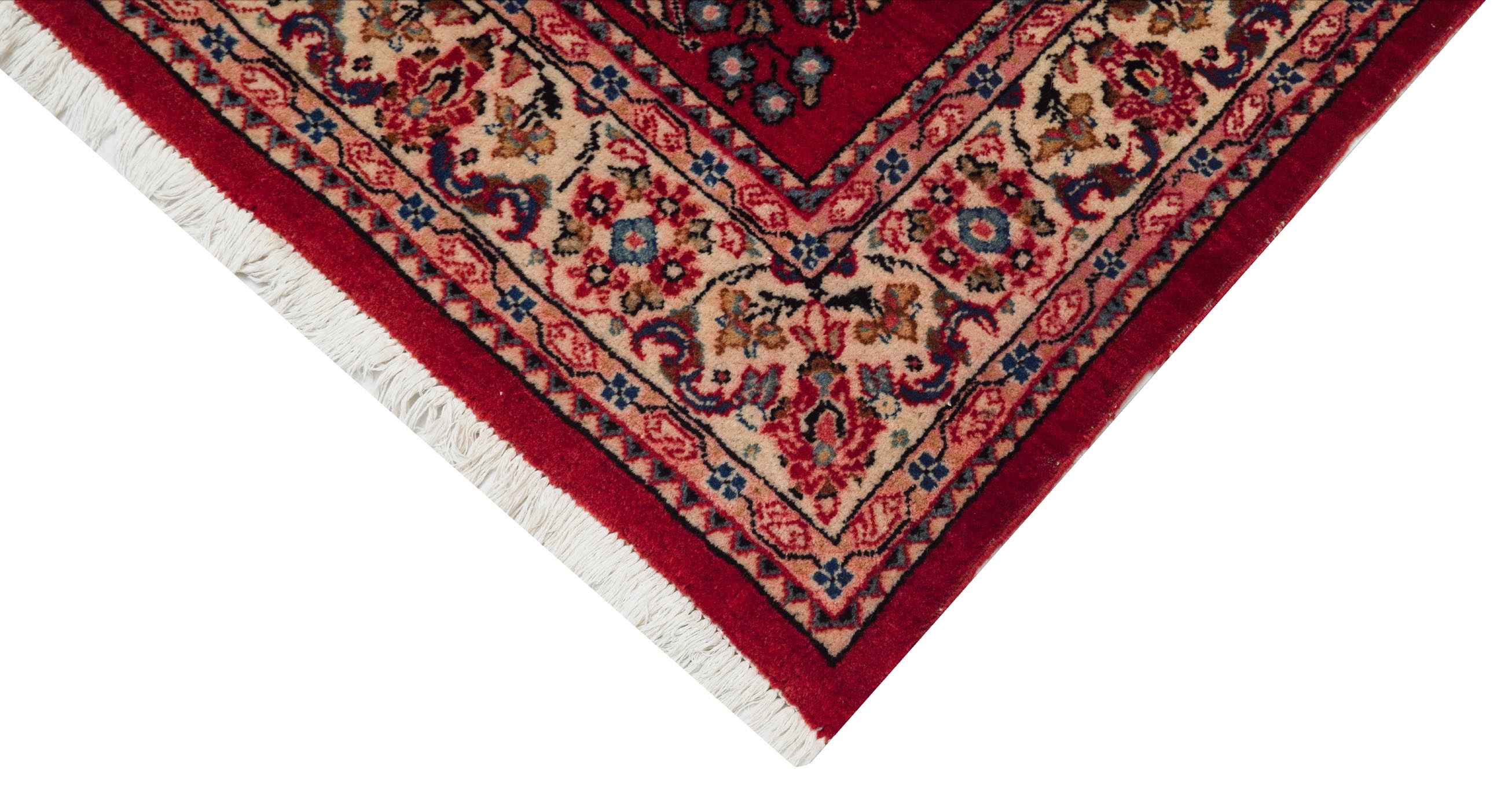
The edge of the rug is framed by a surround (border). The border forms a splendid contrast to the centre.
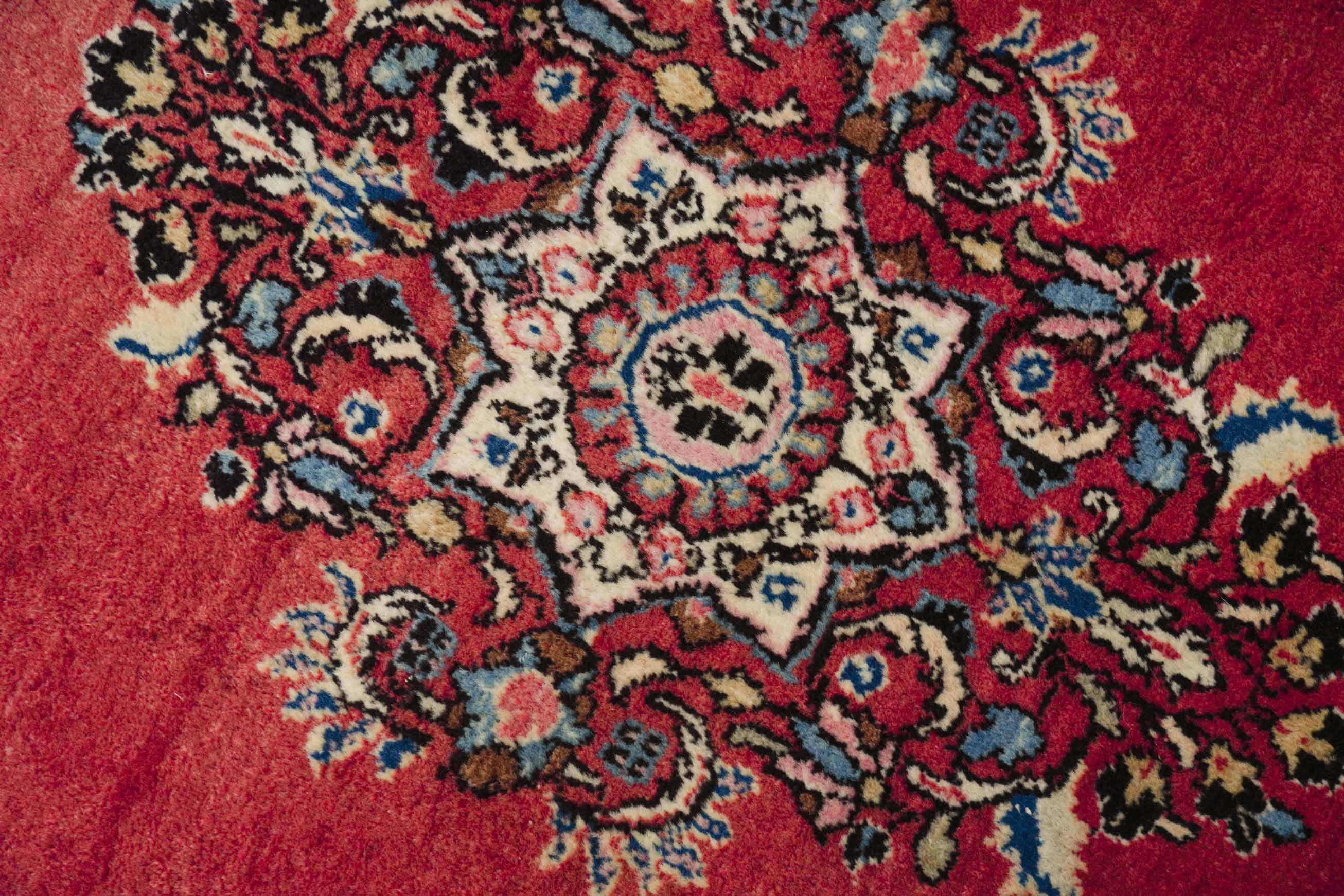
The lavish floral motifs of this Sarough are elegant and wonderfully varied. The graceful plant symbols, depicting blossoms, leaves and branches, are artfully intertwined.
The background of this Sarough is light red. Light blue and light red are combined in the beige centre.
Condition
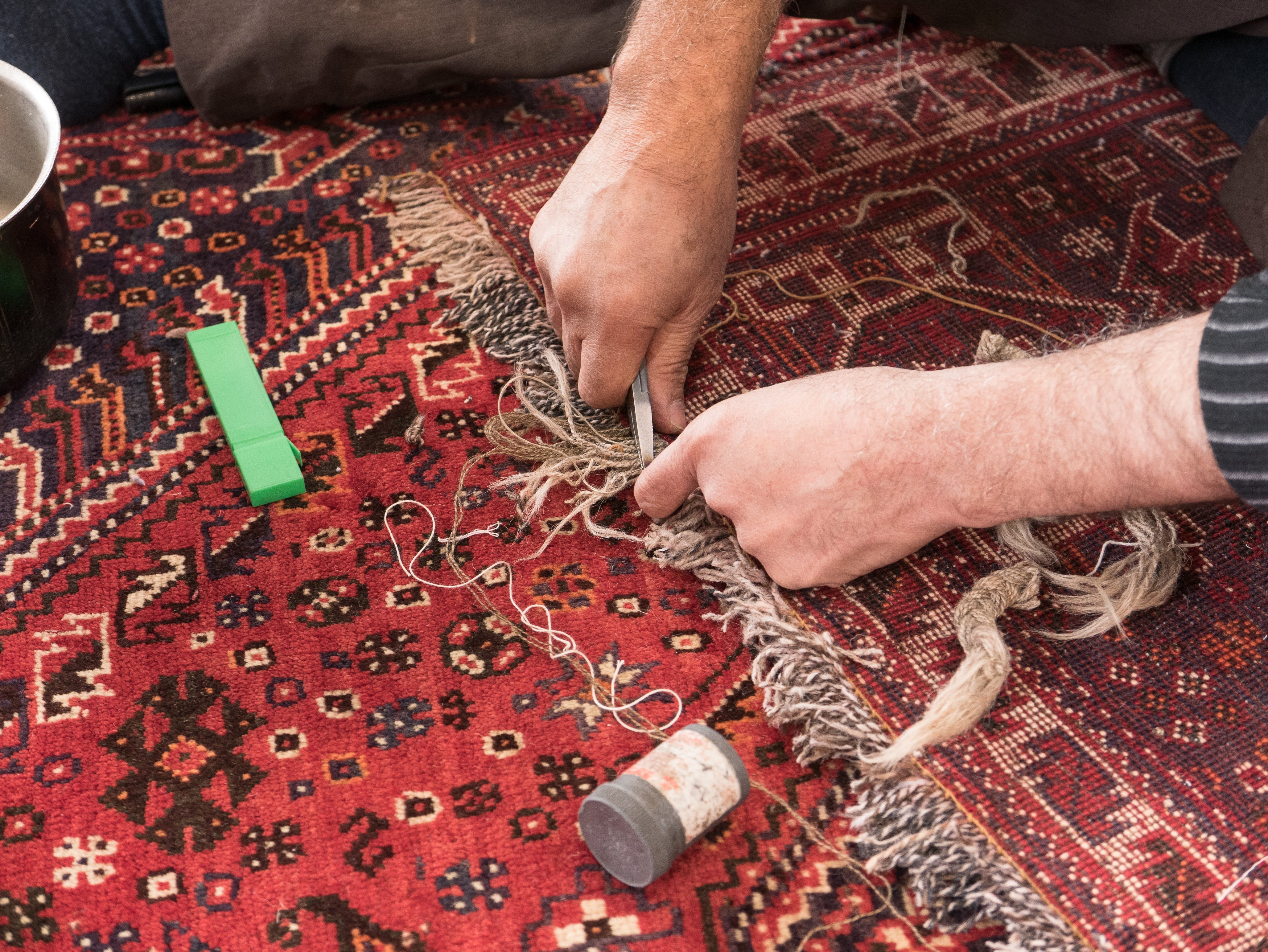
This Sarough has a history. It was hand-knotted around 2000. It has been thoroughly cleaned and is in good but only partly restored condition. The edges are damaged in places. We haven't fully restored this Sarough because we feel it has a special charm just as it is. If you'd like us to, we'll of course be happy to carry on restoring the rug for you. We can return almost any rug to near-perfect condition.
Material
The technique used to make the materials for this Sarough's pile is more than 200 years old. The wool was dyed with natural dyes and spun by hand. Dyeing with natural or plant dyes is more complicated, more expensive and more time-consuming than dyeing with chemical colours. For a luminous red, for example, you need around one kilo of ground madder root as dyestuff per kilo of wool. For a strong yellow that is not too pale, you even need two kilograms of the dyestuff weld per kilo of wool. Spinning the wool is labour-intensive and takes time, too. And fewer and fewer people still know how to spin wool by hand.
But the effort is worth it: dyeing with natural dyes allows the high-quality wool to keep its natural lanolin content. Wool dyed with natural dyes and spun by hand produces fascinating, shifting patterns. The charm of hand-spun wool, with its slight irregularities and natural shades, works beautifully as a contrast in modern interiors, but equally in rooms furnished in a more traditional or country style. The weft and warp threads of this Sarough are made of cotton. This versatile material is tear-resistant and elastic, which makes it especially suited to a hard-wearing foundation weave.
A note on the photos
Child labour? No thanks.
Child labour? No thanks. Children belong in school, not at a knotting frame or a loom. For us it therefore goes without saying that we only offer rugs made under fair conditions and without child labour.
We attach particular importance to humane working conditions and tolerate no child labour at any of our producers. Thank you for helping us to ensure fair conditions.
That is why we support the initiative Care & Fair against child labour in the rug trade.

Choose options
|
|
14 Tage Probelegen |
|
|
Kostenlose Lieferung & Retoure innerhalb der EU |