

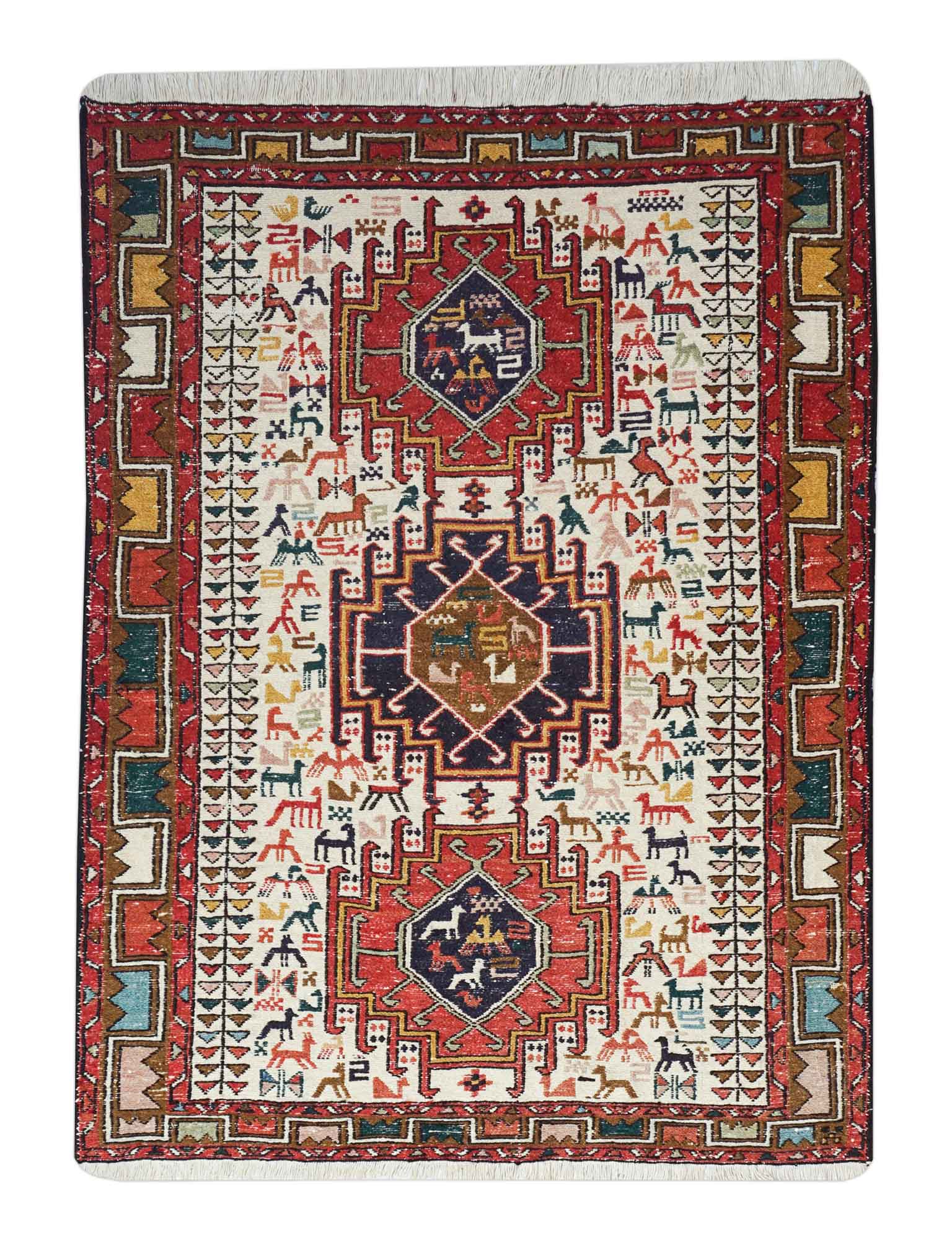
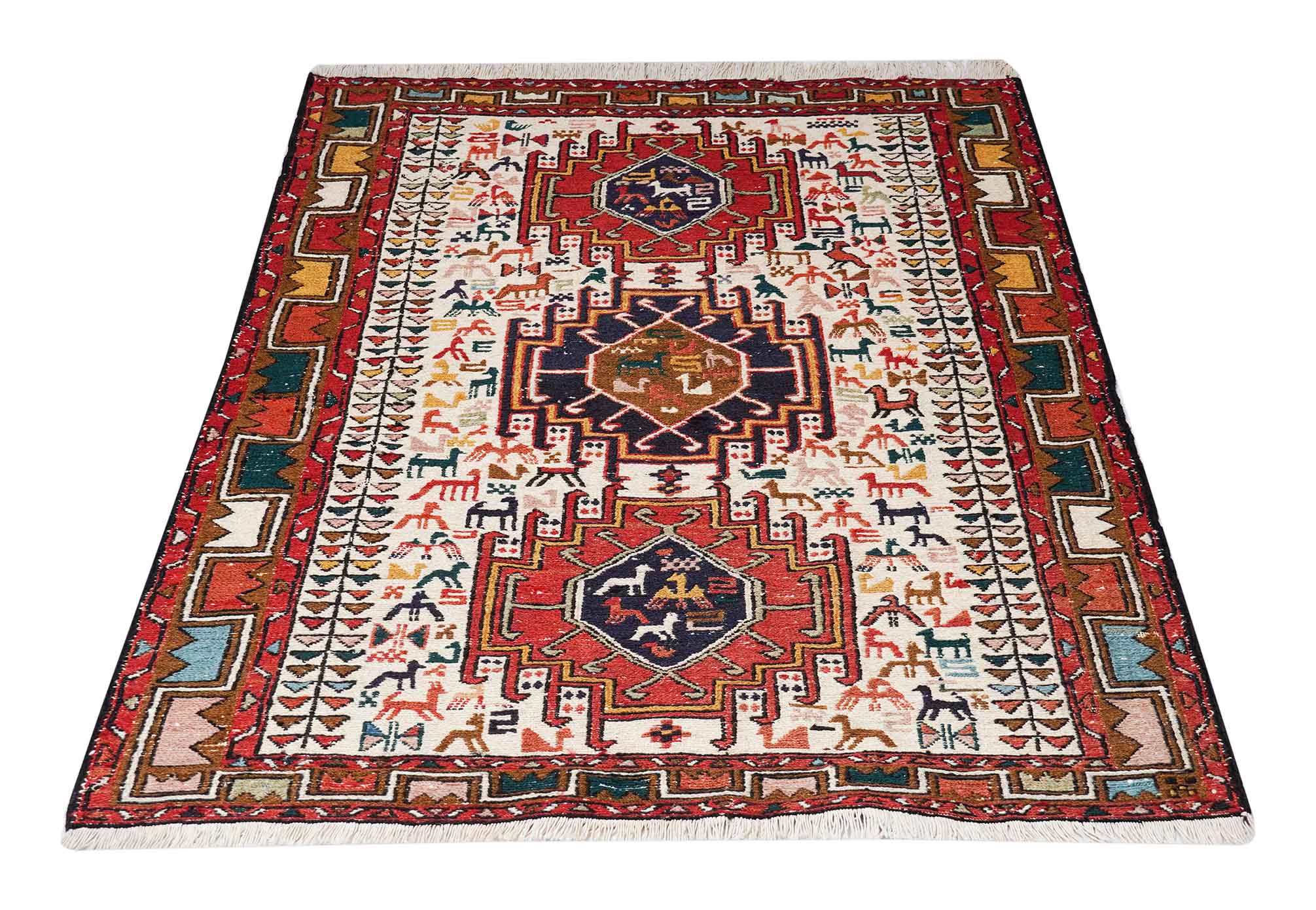
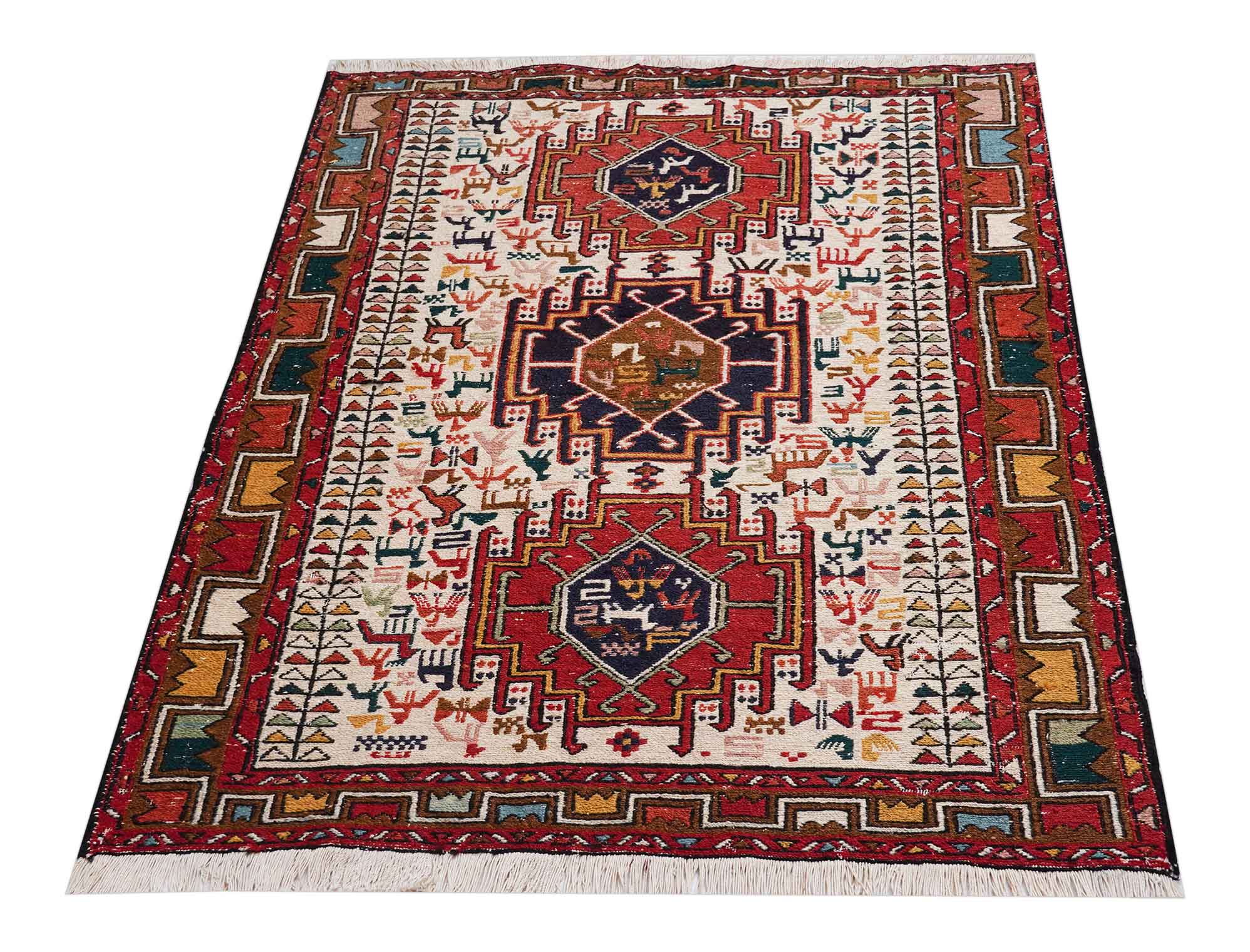
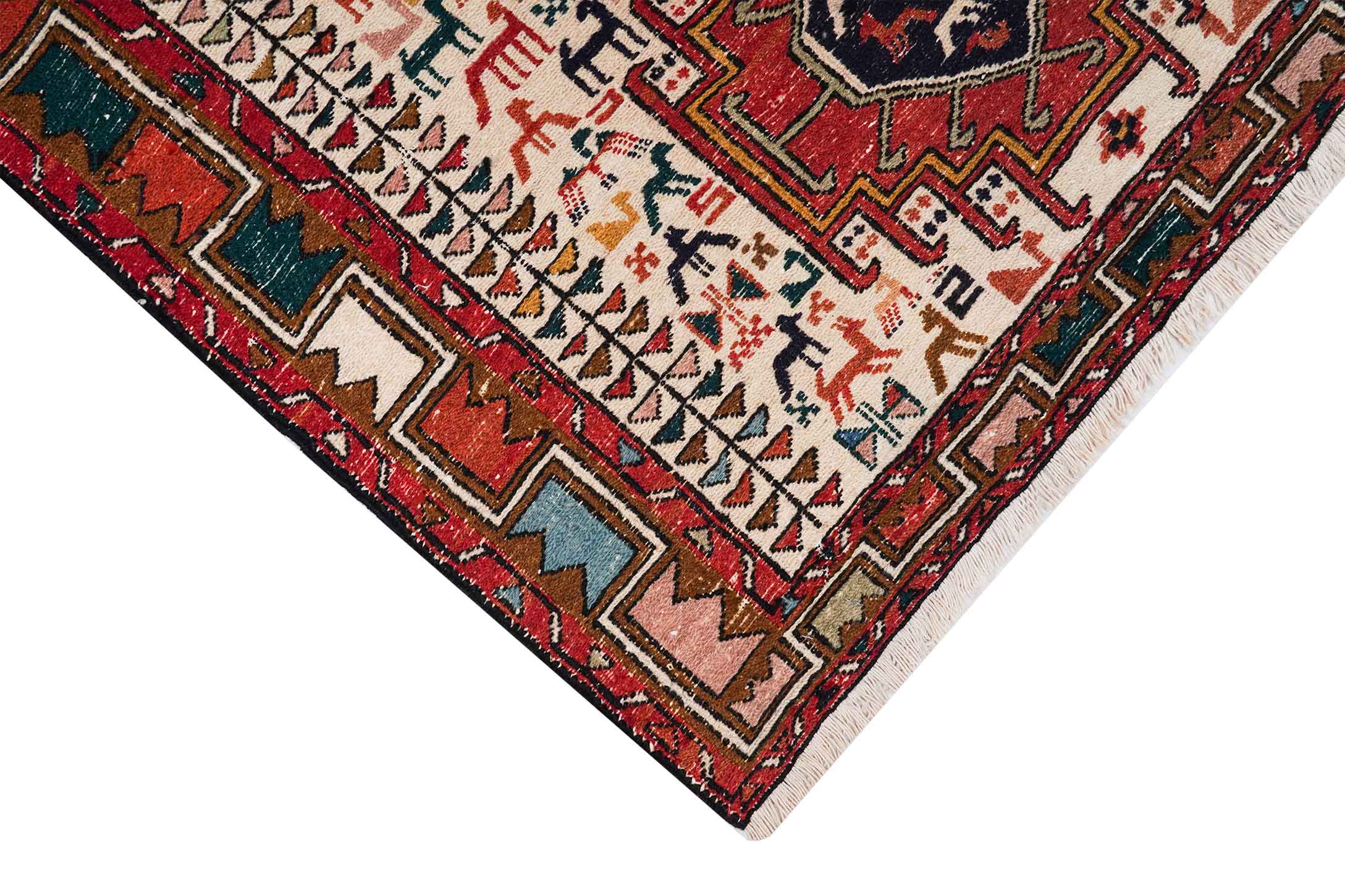
Soumak Kelim | 134 x 101 cm | Nr. Z-1594


|
1-3 working days delivery time (within Germany) |

|
14-day home trial |

|
Free delivery & returns within the EU |
Soumak Kelim
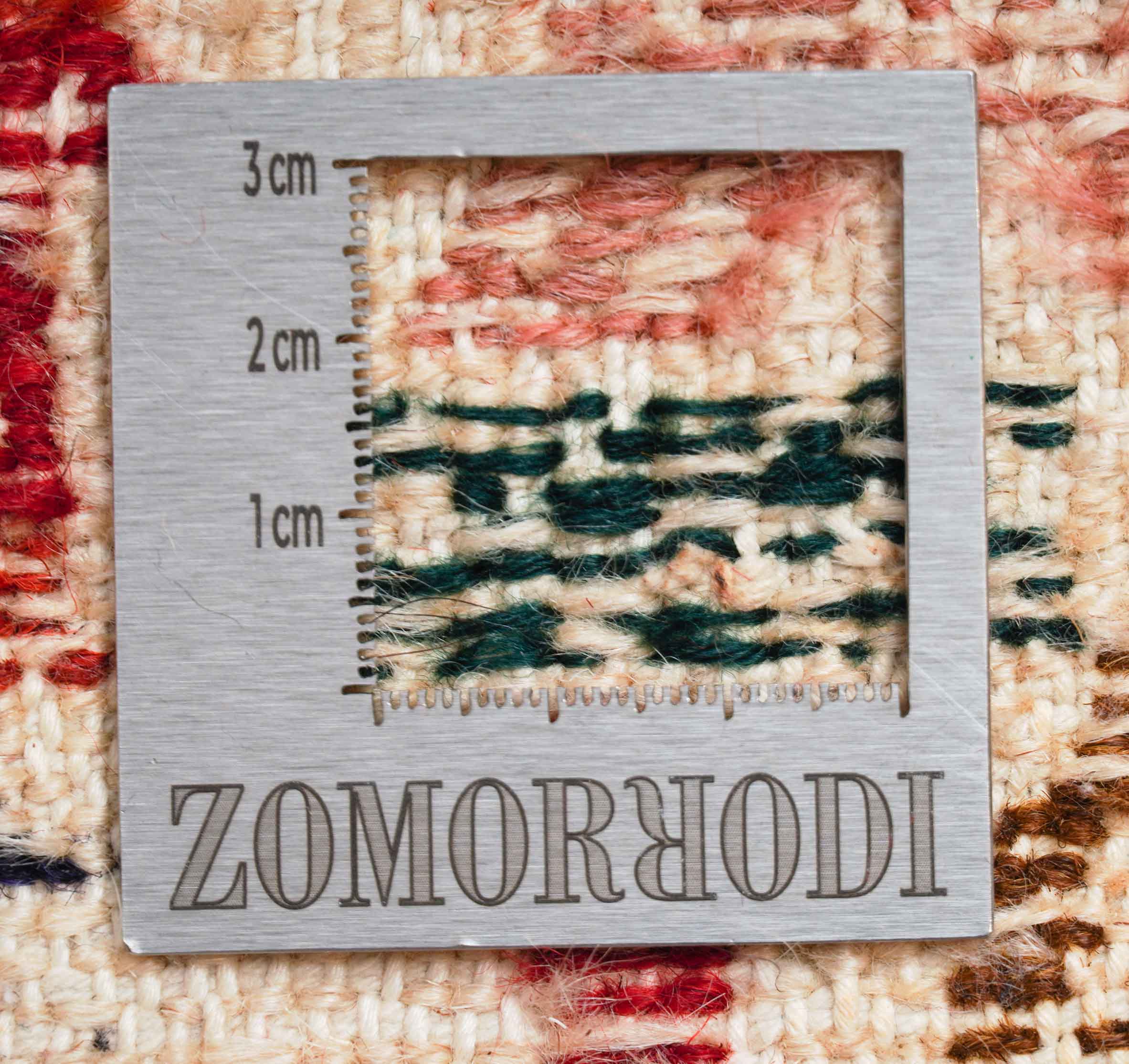
This rug in beige brings together traditional craftsmanship and timeless elegance. At approx. - knots per m², the work involved is considerable, as you can see in the precise drawing and the finely worked details. Its 134 × 101 cm make it a small living-room rug. As a one-of-a-kind piece, it brings individual character to a room and keeps its value far beyond short-lived trends.
| Delivery time | 2 days |
| Origin | Persia |
| Dimensions | 134 cm x 101 cm (= 1.35 m²) |
| Construction | hand-woven |
| Material | Pile: wool |
| knots | - |
| Condition | pre-owned and cleaned |
| Edition | one-of-a-kind piece |

Origin
Bright colours and simple patterns – that is what Kelims are known for. Kelims (also written Kilim, Qilim) were traditionally made only for the weavers' own use. Nomads and farmers used, and still use, their Kelims as rugs on the floor, but also as tent or wall hangings, blankets, cushions or bags. Because Kelims were constant companions in everyday life, their patterns – however naive they may look – always carry a personal message and hold meaning for the weavers and their families.In Europe, Kelims from Turkey, the Caucasus region, Iran, Afghanistan and the Turkmen cultural area are particularly well known and popular. In fact, rugs are hand-woven in every country where rugs are knotted.
The name Soumak is said to go back to the eastern Caucasian town of Shemakha, home – so the legend goes – to the most graceful dancers in the Caucasus. Another theory derives the name from the spice sumac, which was used among other things to dye wool a reddish tone. In Persia, the wrapping technique of Soumak Kelims is also called peech baff or kayegh. The oldest known Soumak Kelims were woven in the 7th century BC.
Material
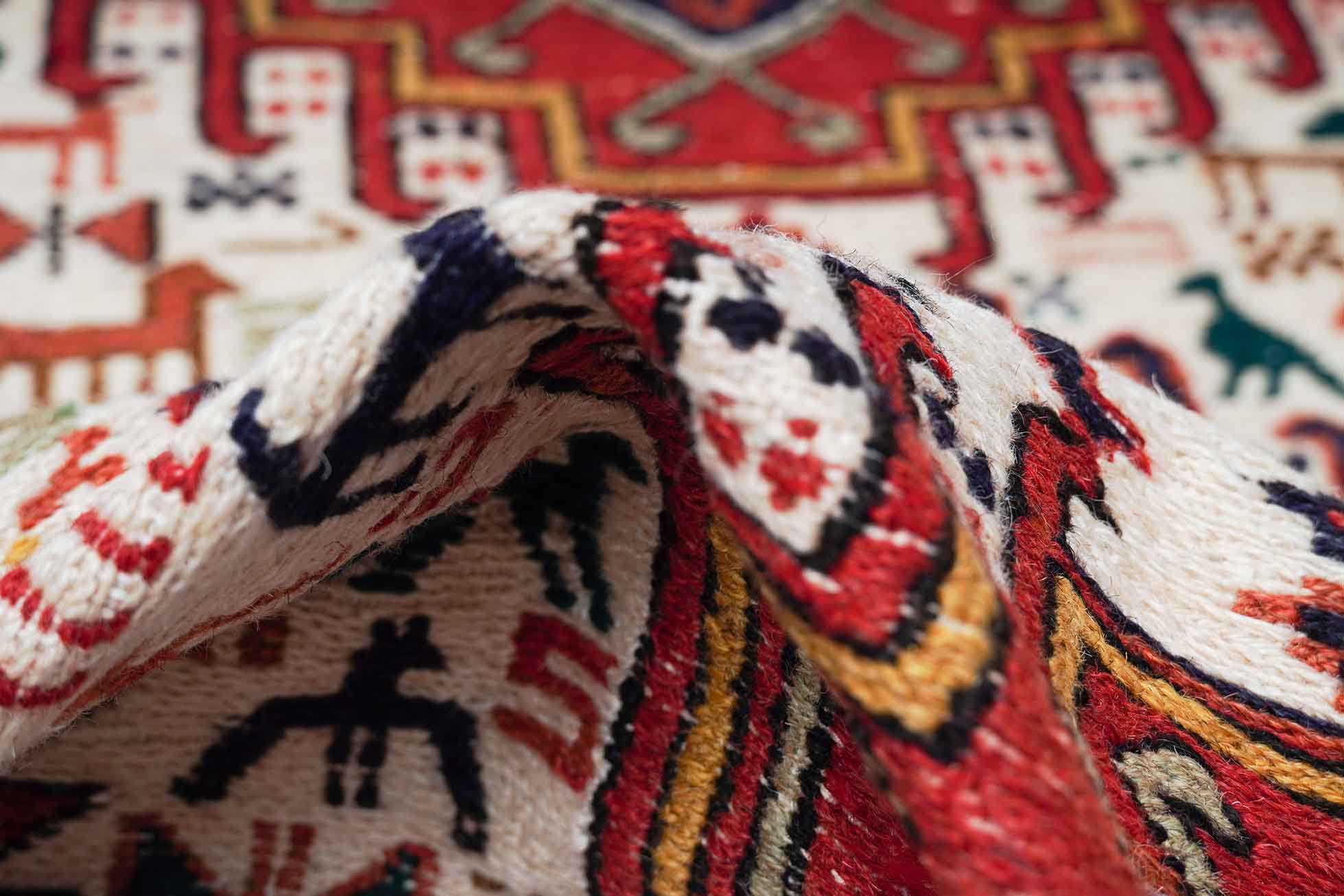
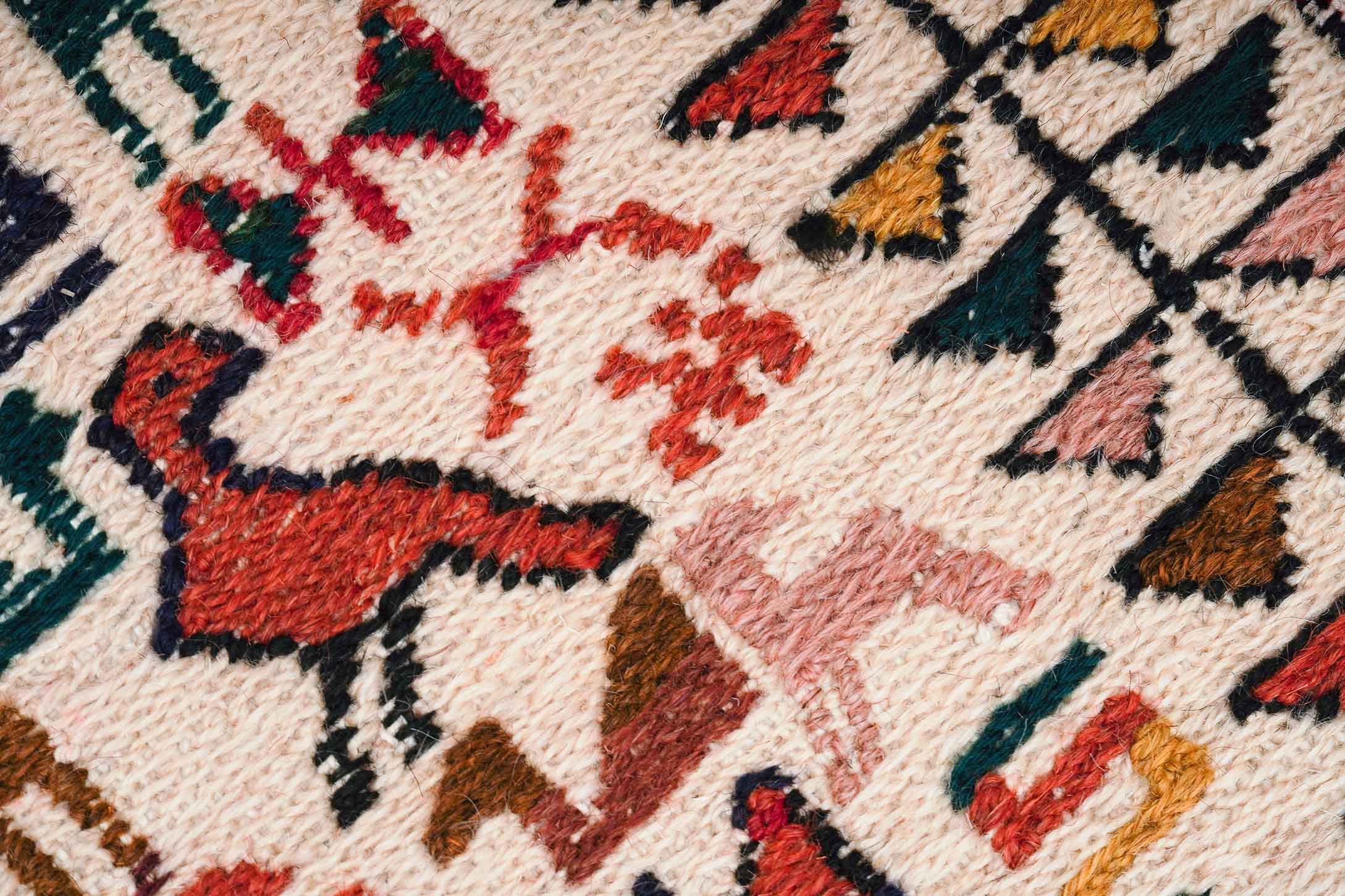
Soumak Kelims are hand-woven and consist only of warp and weft threads. They therefore have no thick pile standing upright. The weft threads that form the pile of this Soumak are made of wool. Cotton was used for the warp threads. In the so-called wrapping technique used to make Soumak Kelims, the protruding weft ends are not woven back in and often hang loosely from the back of the Soumak Kelims. Soumak Kelims can therefore – unlike many other Kelims – only be used on one side. The Soumaks also lack the slits that are characteristic of many types of Kelim, as an additional weft thread is usually woven in as a continuous carrier.
Condition
This Soumak Kelim has a history. It was knotted around 46. It has been thoroughly cleaned and is in good but unrestored condition. We have not restored this Soumak Kelim because we feel it has a special charm just as it is. If you would like us to, we will of course be happy to restore the rug for you. Either way, this Soumak Kelim will give you pleasure for decades to come.
A note on the photos
Child labour? No thanks.
Child labour? No thanks. Children belong in school, not at a knotting frame or a loom. For us it therefore goes without saying that we only offer rugs made under fair conditions and without child labour.
We attach particular importance to humane working conditions and tolerate no child labour at any of our producers. Thank you for helping us to ensure fair conditions.
That is why we support the initiative Care & Fair against child labour in the rug trade.

Choose options
|
|
1-3 working days delivery time (within Germany) |
|
|
14-day home trial |
|
|
Free delivery & returns within the EU |