
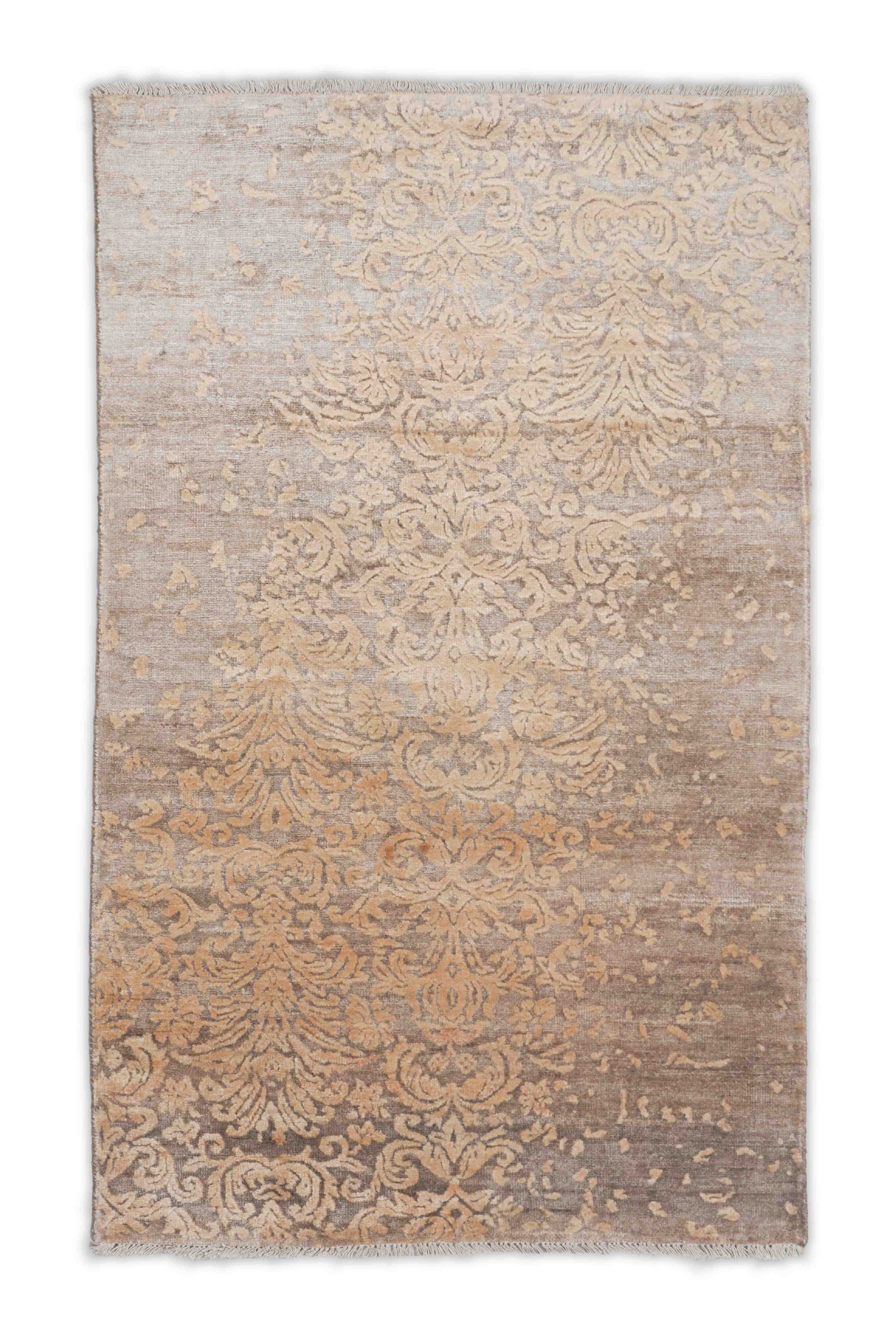
Tapis | 150 x 93 cm | Nr. 20461


|
1-3 working days delivery time (within Germany) |

|
14-day home trial |

|
Free delivery & returns within the EU |
Modern Tapis, light brown
| Origin |
|
| Dimensions | 150 cm x 93 cm (= 1.4 m²) |
| Construction | hand-knotted |
| Material |
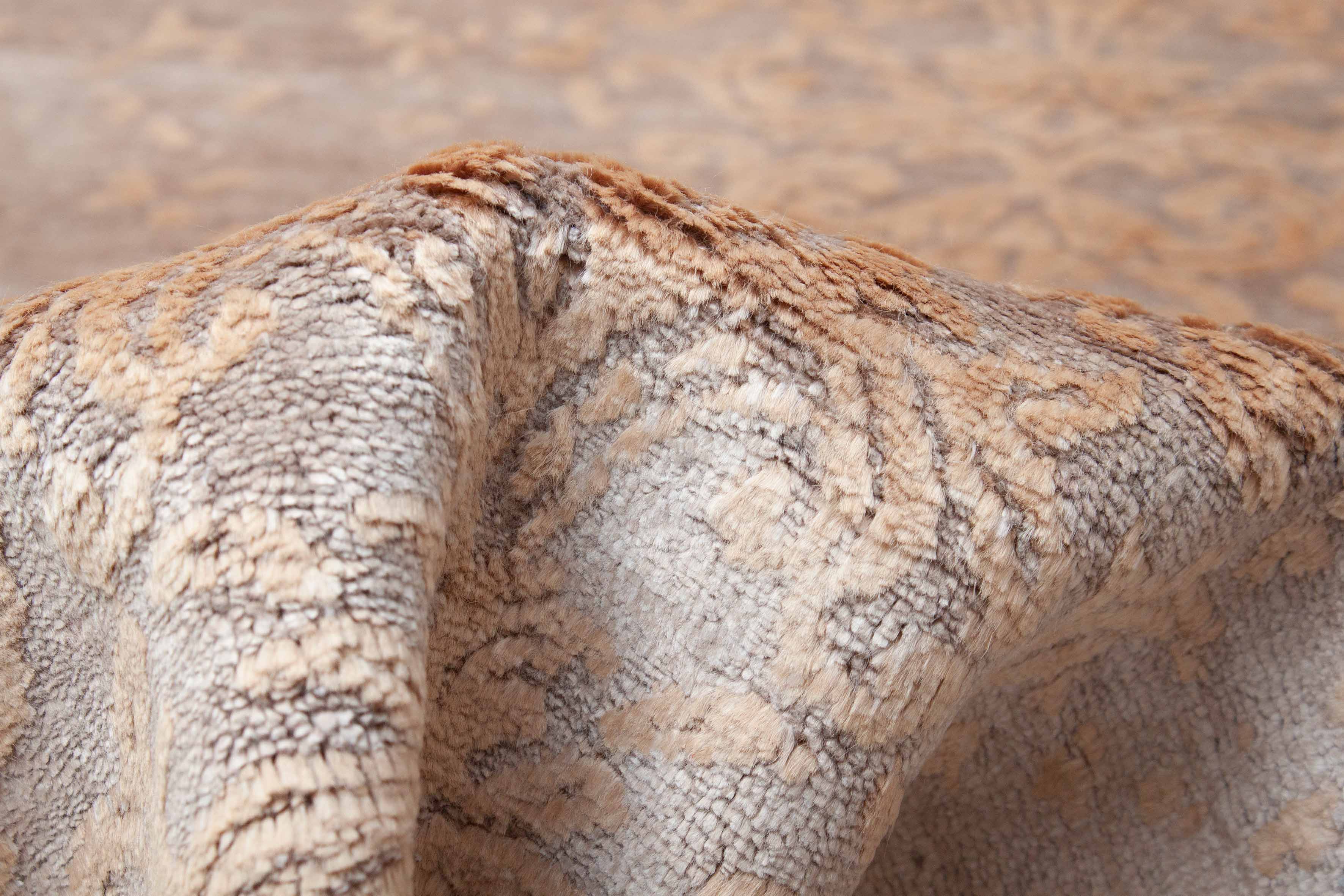
Pile: viscose
|
| knots per m²2 | 160.000 |
| Pile height | 8mm |
| Condition | new |
| Colour | Light brown, beige |
| Edition | one-of-a-kind piece |

Origin
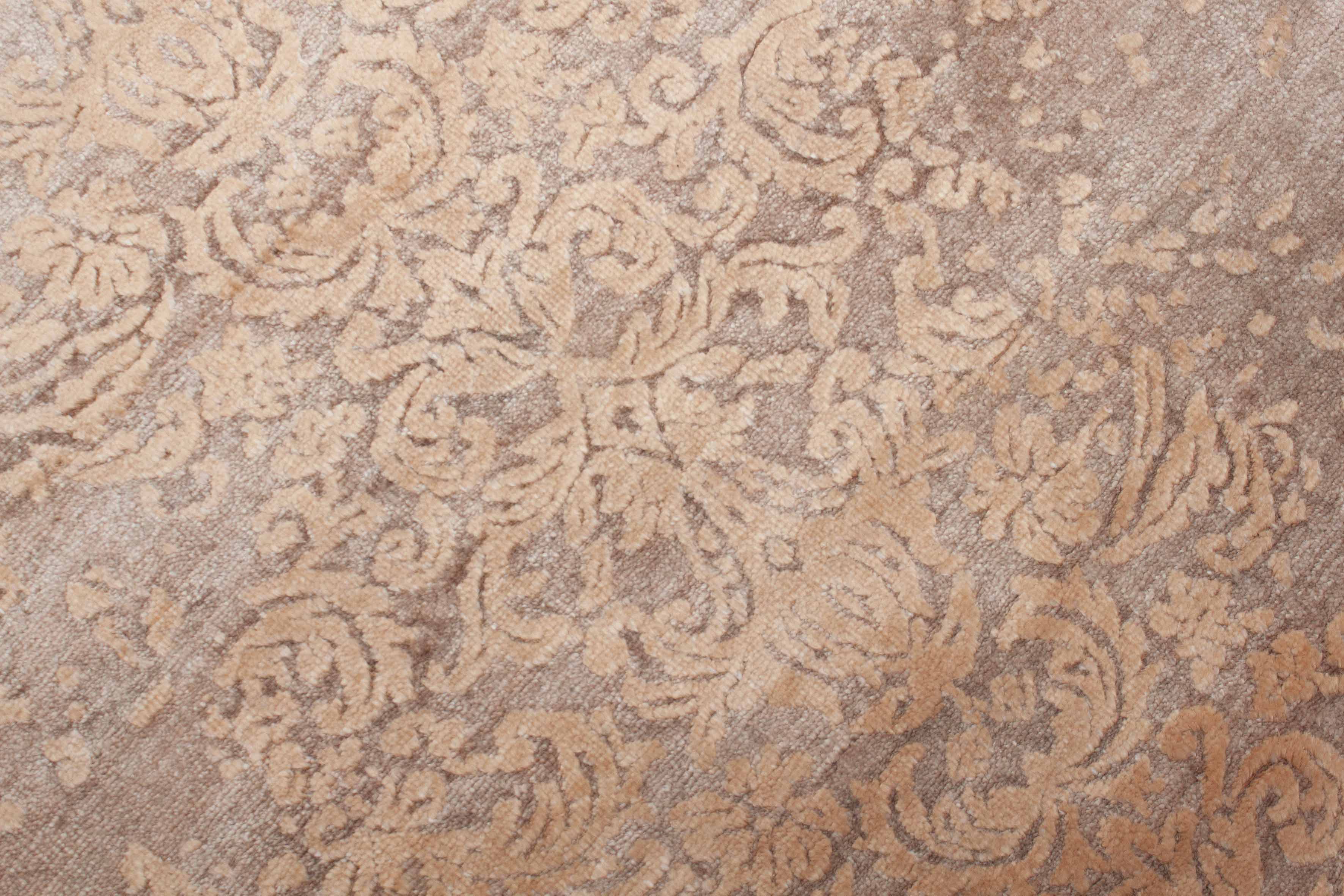
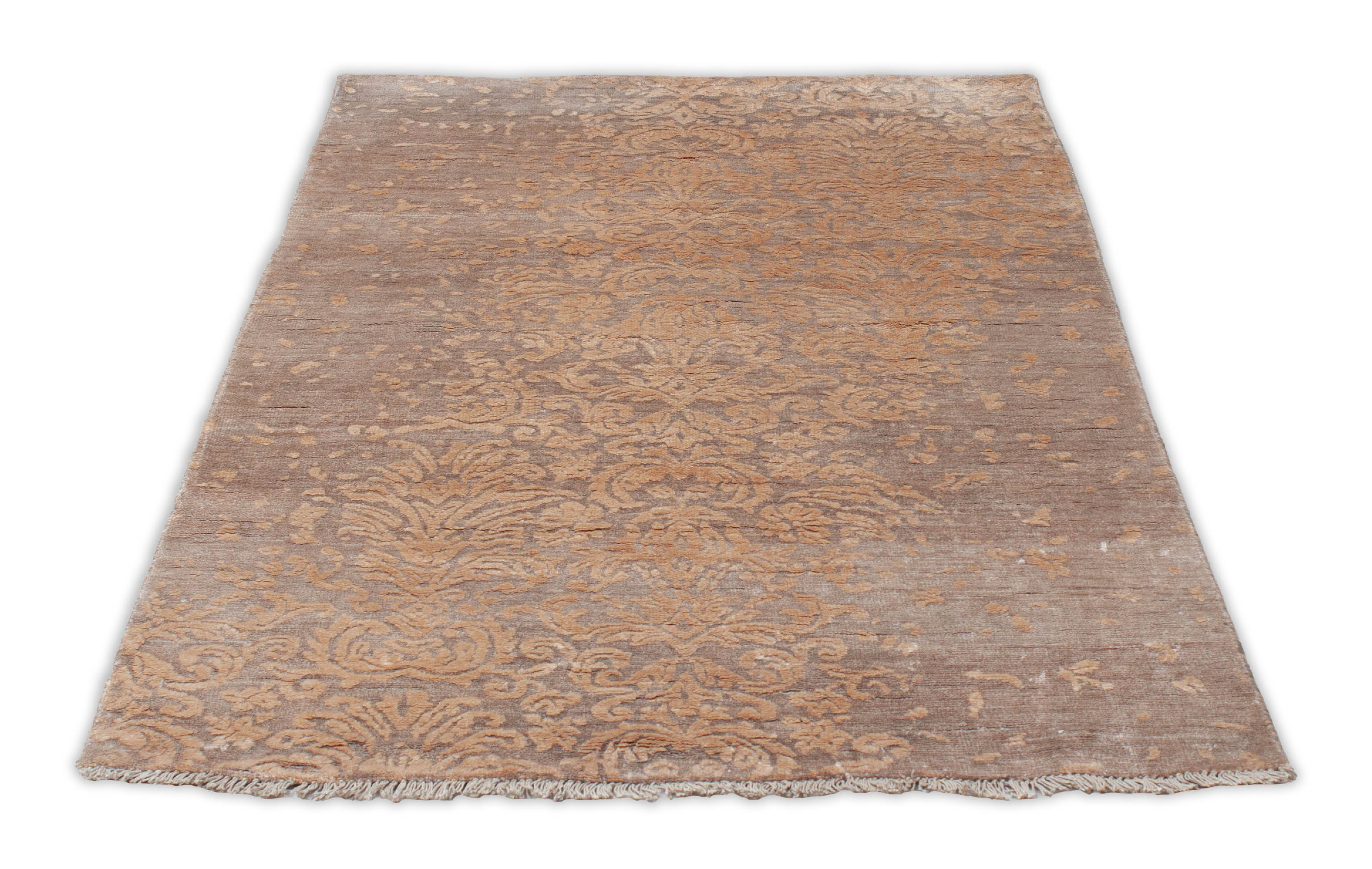
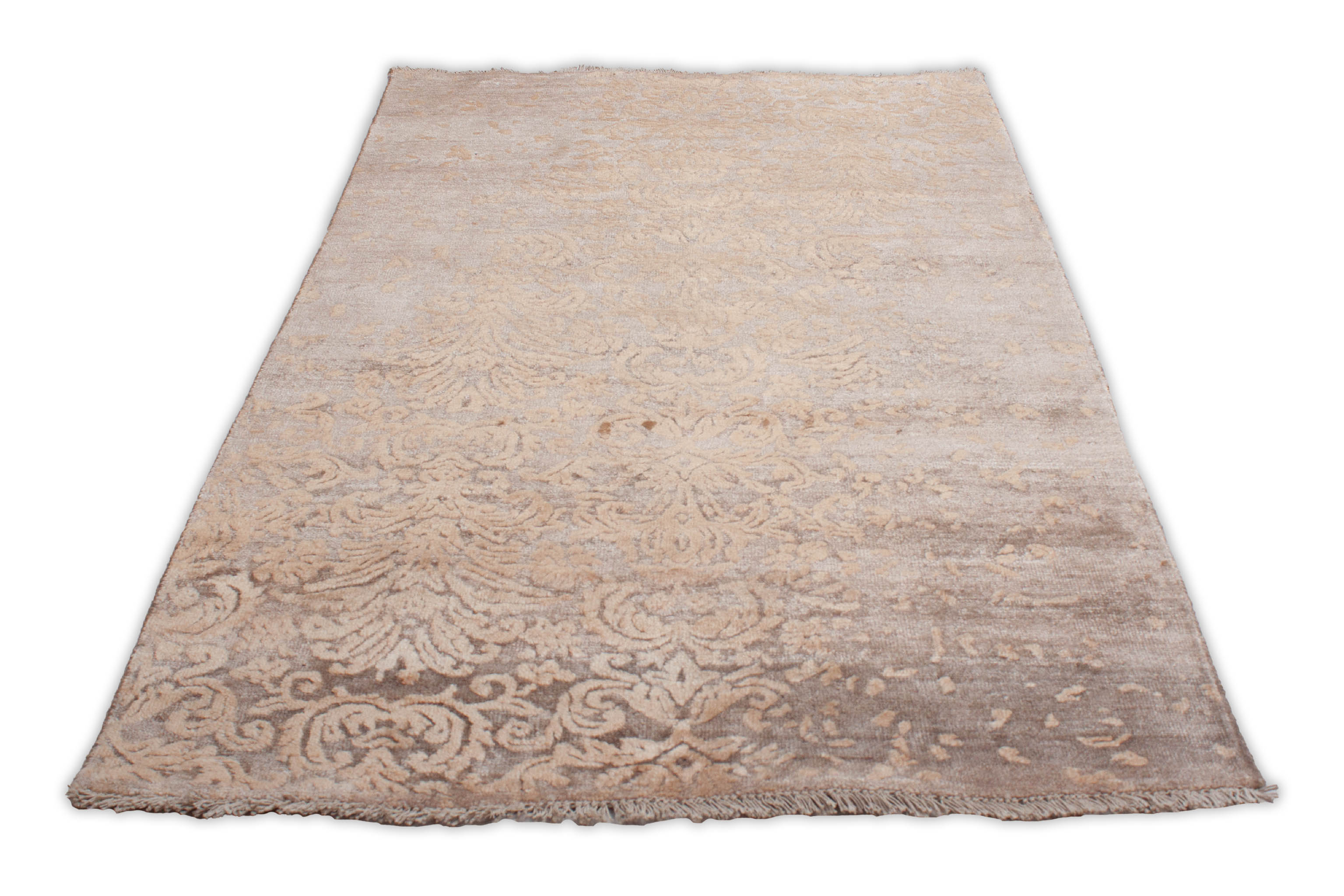
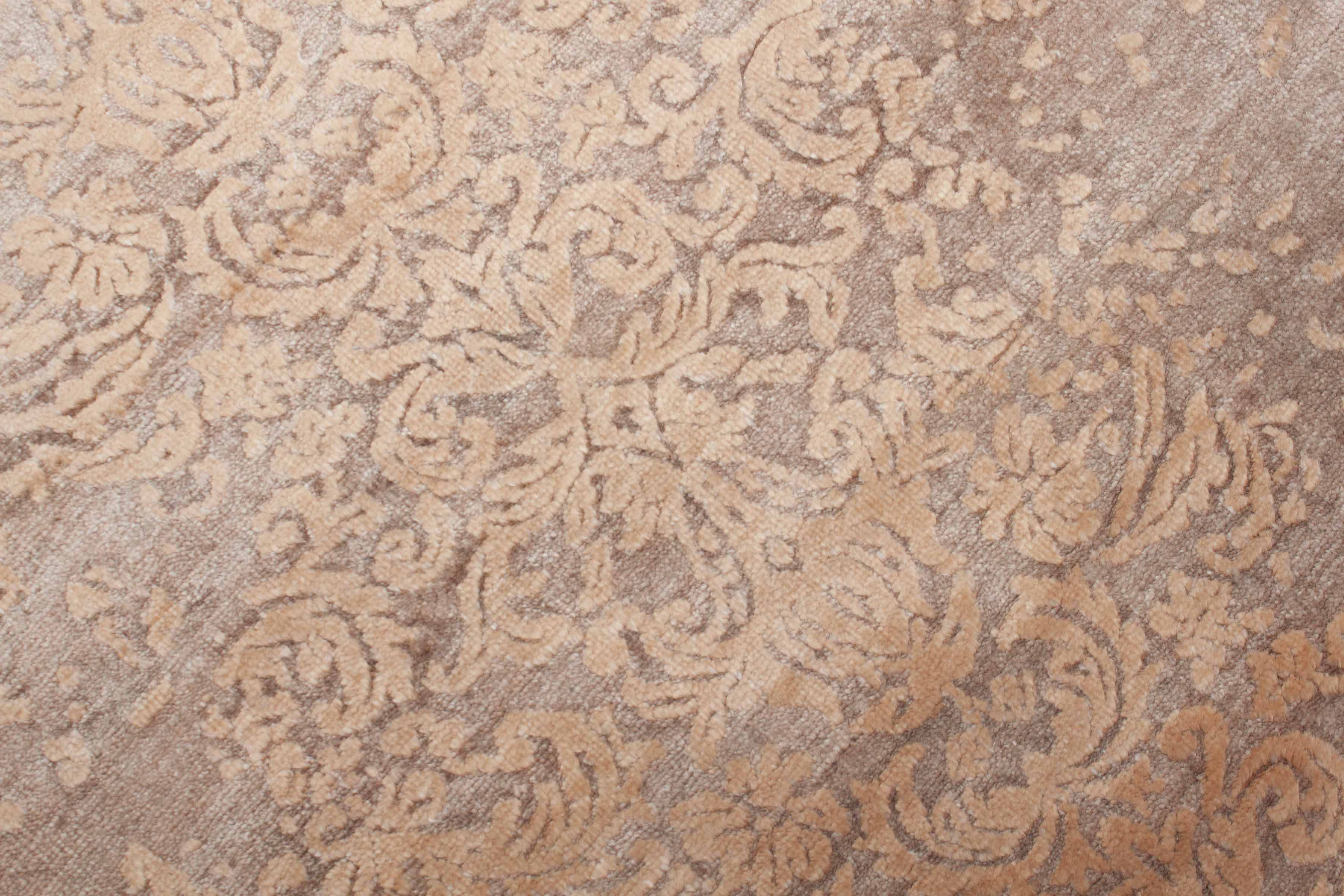
Classic floral ornament paired with contemporary aesthetics – for this hand-knotted Tapis we drew our inspiration from the flowering patterns of French tapestry rugs.
We reworked the traditional ornaments, pared them back and, above all, rearranged the colouring completely. The result is a fusion of traditional rug design and modern European aesthetics. With our Tapis design we set out to meet the trends of European interiors, playing freely with the conventions of traditional rug knotting.
Pattern
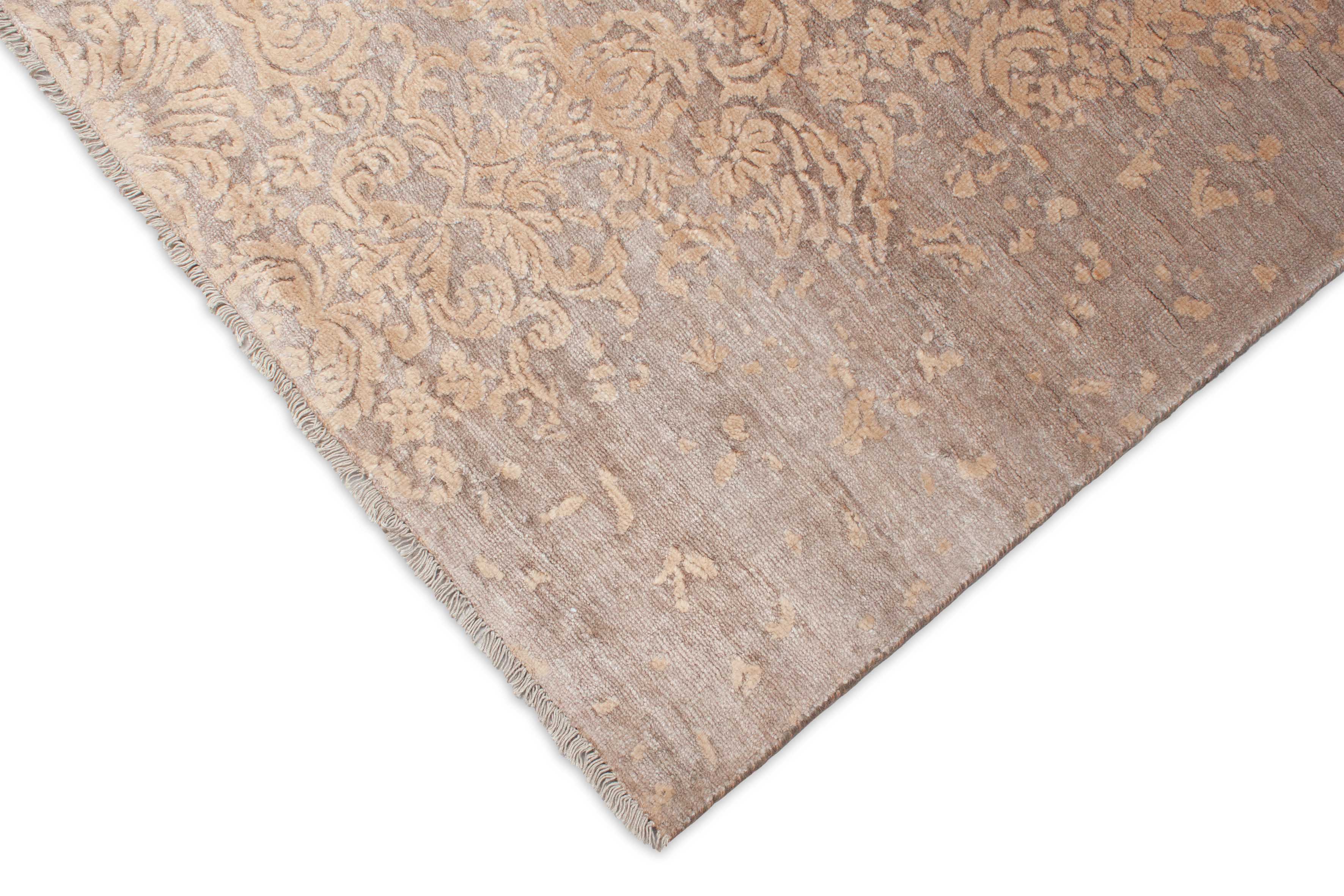
The clear, abstract design of this contemporary rug speaks especially to people who love simple, modern interiors and architecture. The design idea for this rug comes from Europe. Free from the rules of traditional rug patterns, it was developed for Western art and interior styles. That is not an entirely new development, though. The roots of European rug design go back to Art Deco rugs, which were made to Western specifications between the late twenties and the fifties.
The surface of this Tapis has a mottled look. The shifts in tone and the light-and-dark shading of the pile yarn run across the length of the rug, making the colours shimmer and the rug forgiving of soiling. These colour shifts, known as abrash, give the rug a livelier feel. The mottling occurs because the wool of this Tapis was hand-spun. During dyeing, the natural pigments are absorbed to differing degrees.
Individual areas of the pattern have a higher pile than the rest of this rug. The patterns of modern rugs are tending to become plainer and more abstract. Playing with different pile heights is a new approach, and it has replaced more elaborate, more insistent patterns. Because parts of the pattern have been brought out in two dimensions, though, the rug never looks dull. The accentuation is out of the ordinary and has a truly distinctive effect.
The background of this Tapis is light brown.
Material
The pile of this Tapis is made of hard-wearing viscose. The colloquial term "artificial silk" is not permitted under the German Textile Labelling Act (TKG). Viscose, also known as acetate silk or rayon, is generally obtained from cellulose, a natural product, and therefore from the raw material wood. In India, however, the cellulose pulp is also obtained from bamboo. In an elaborate process the pulpy cellulose is drawn into a continuous textile yarn. That is why viscose is also referred to as continuous filament yarn. Because of the silky sheen of the yarn, viscose obtained from bamboo is also called "Bamboo Silk". The weft and warp threads of this Tapis are made of cotton. This versatile material is tear-resistant and elastic, which makes it particularly well suited to a hard-wearing foundation weave.
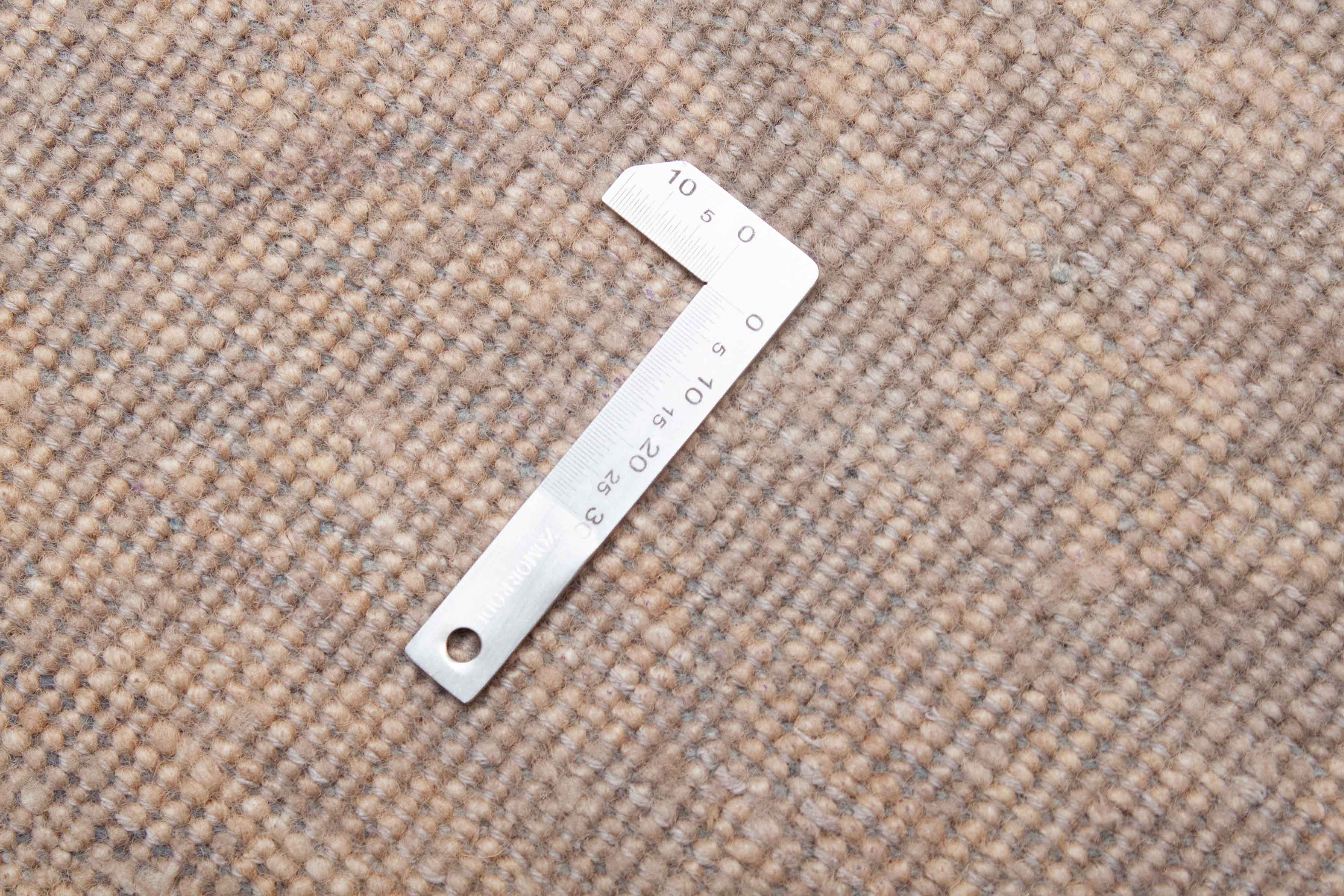
A note on the photos
Child labour? No thanks.
Child labour? No thanks. Children belong in school, not at a knotting frame or a loom. For us it therefore goes without saying that we only offer rugs made under fair conditions and without child labour.
We attach particular importance to humane working conditions and tolerate no child labour at any of our producers. Thank you for helping us to ensure fair conditions.
That is why we support the initiative Care & Fair against child labour in the rug trade.

Choose options
|
|
1-3 working days delivery time (within Germany) |
|
|
14-day home trial |
|
|
Free delivery & returns within the EU |