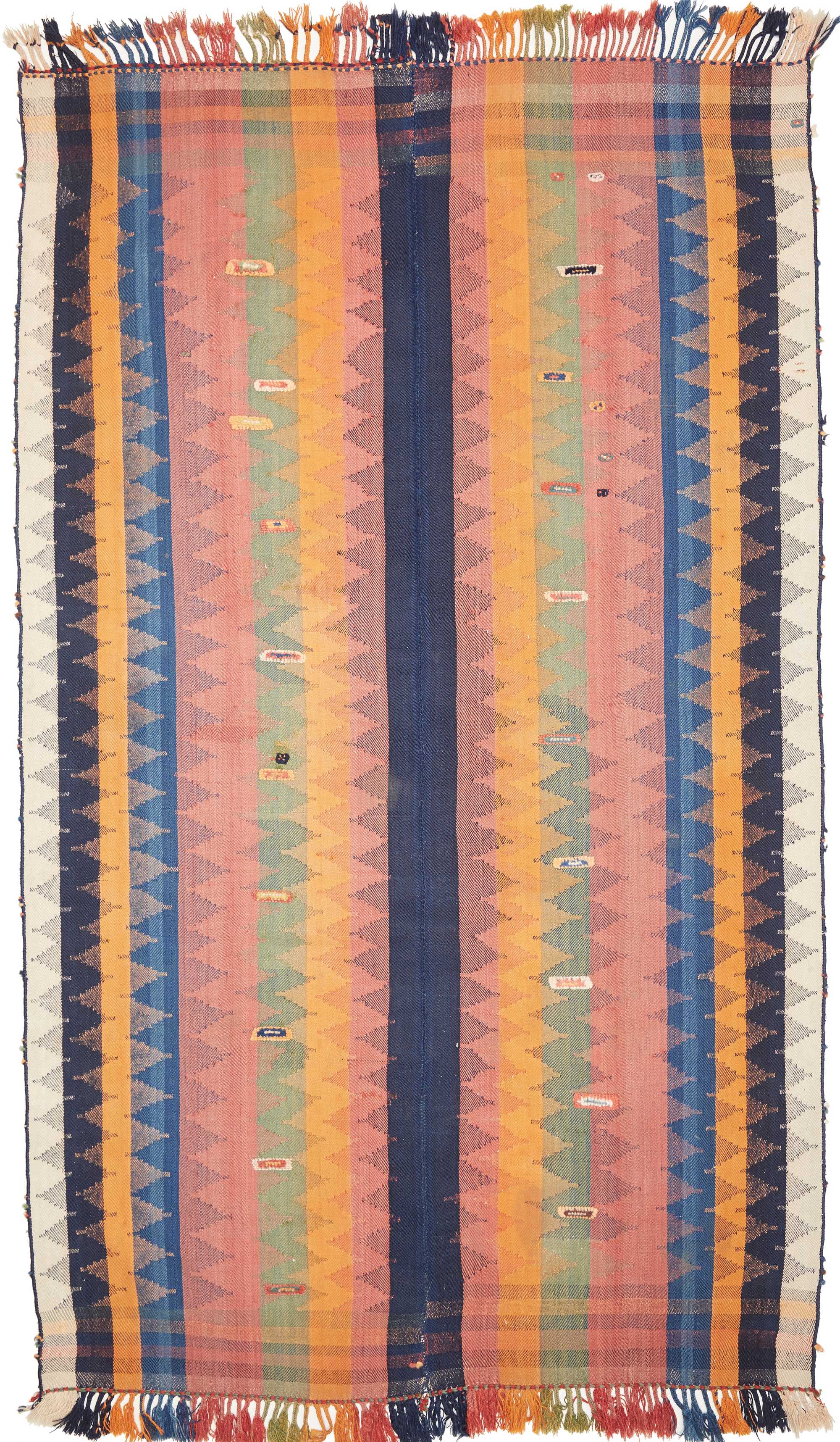
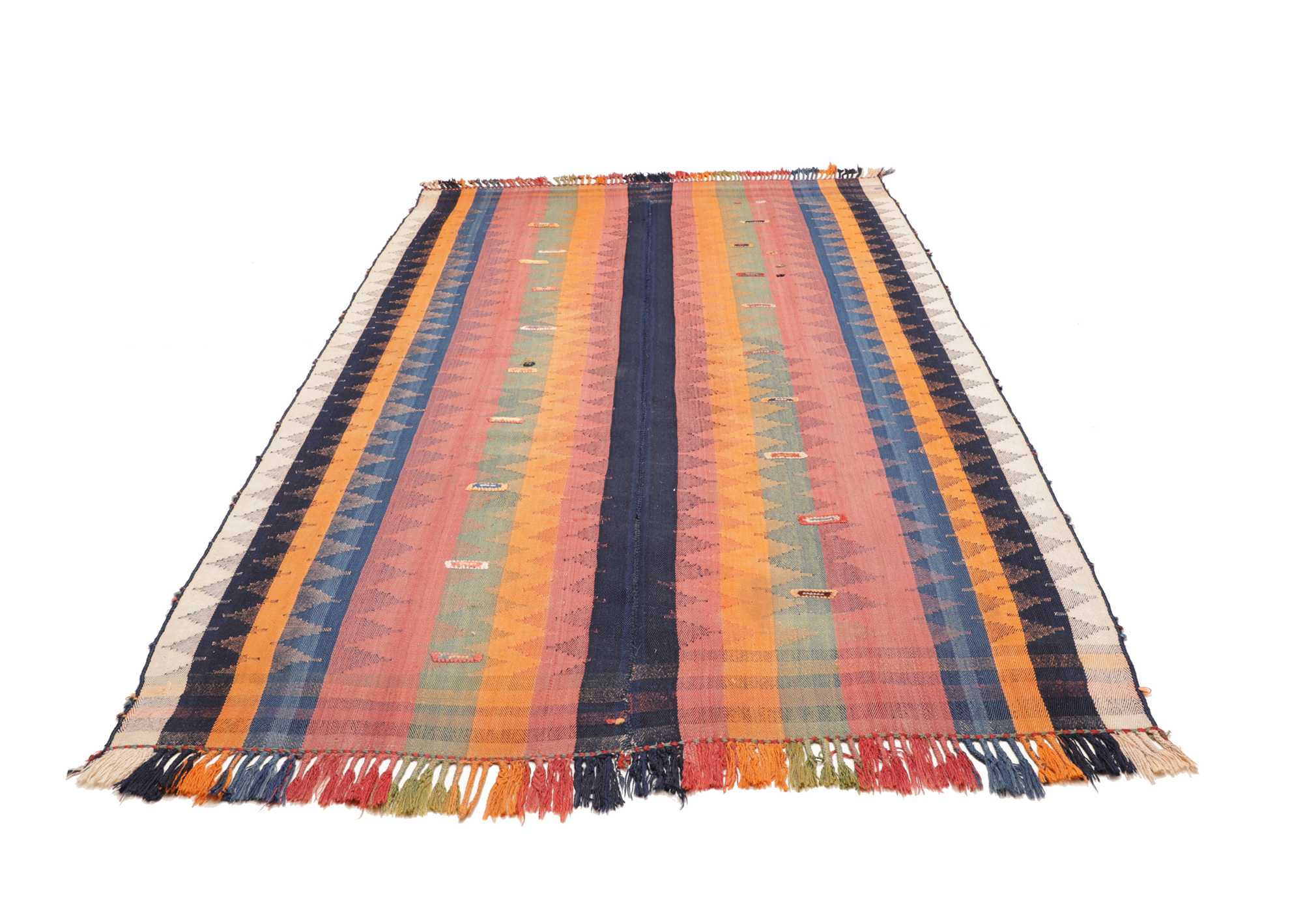
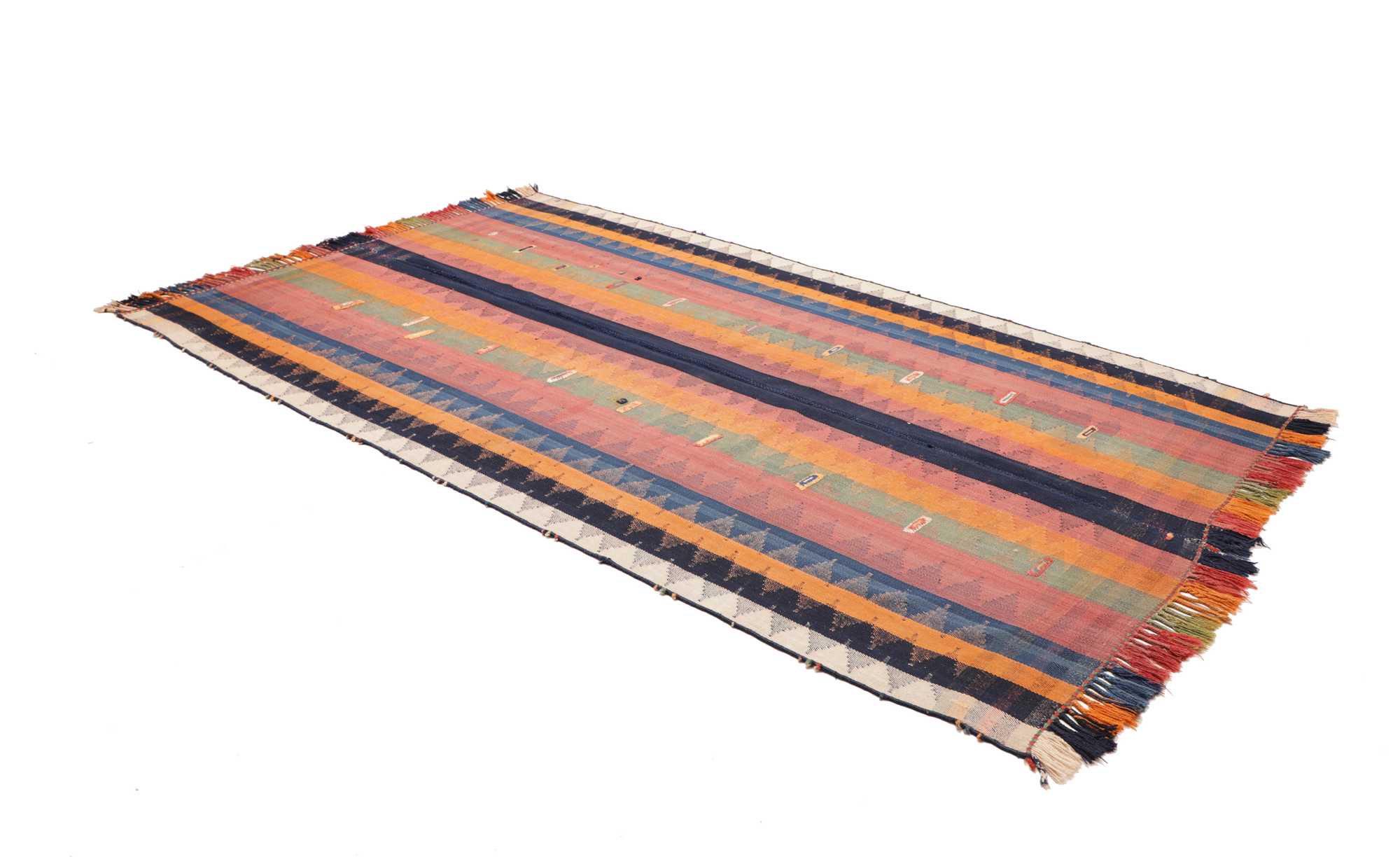
Old Ghashghai Kelim | 285 x 170 cm | Nr. Z-4531
Due to US sanctions, PayPal is not available for Persian rugs. You can use all other payment methods.


|
14-day home trial |

|
Free delivery & returns within the EU |
Old Ghashghai Kelim
This rug with its multicoloured design brings together traditional craftsmanship and timeless elegance. A knot density of approx. X knots per m² makes the painstaking work visible – right down to the fine detailing. Measuring 285 × 170 cm, it is well placed as a living room rug. It also looks good in the bedroom under the bed. This one-of-a-kind piece brings individual character into the room and holds its value far beyond short-lived trends.
| Availability | In stock | Delivery time: 1–3 working days |
| Origin | Persia |
| Dimensions | 285 cm x 170 cm (= 4.84 m²) |
| Construction | hand-knotted |
| Material |
Pile: wool (hand-spun, natural dyes) Weft: X Warp: wool |
| knots | X |
| Pile height | 3 mm |
| Colour | multicoloured |
| Edition | one-of-a-kind piece |

Origin
Bright colours and simple patterns – that is what Kelims are known for. Kelims (also written Kilim, Qilim) were traditionally made only for the weavers' own use. Nomads and farmers used, and still use, their Kelims as rugs on the floor, but also as tent or wall hangings, blankets, cushions or bags. Because Kelims were constant companions in everyday life, their patterns – however naive they may look – always carry a personal message and hold meaning for the weavers and their families.In Europe, Kelims from Turkey, the Caucasus, Iran, Afghanistan and the Turkmen cultural region are especially well known and loved. In fact, rugs are hand-woven in every country where rugs are knotted. This Kelim was woven – as its name already tells you – by the Ghashghai. The Ghashghai are an important Persian nomadic people who have settled in the south of Iran, in the province of Fars, for centuries. They are made up of seven tribes in all. The most significant Ghashghai tribe, at least as far as rug production goes, are the Kashghuli (also Kaschguli, Kashguli, Qashguli). Old and antique Ghashghai rugs and Kelims are sought-after collector's items today. Ghashghai rugs and Kelims are known as the king among Persian nomadic rugs.
This Old Ghashghai Kelim is around 76 years old and a real collector's piece.
Material
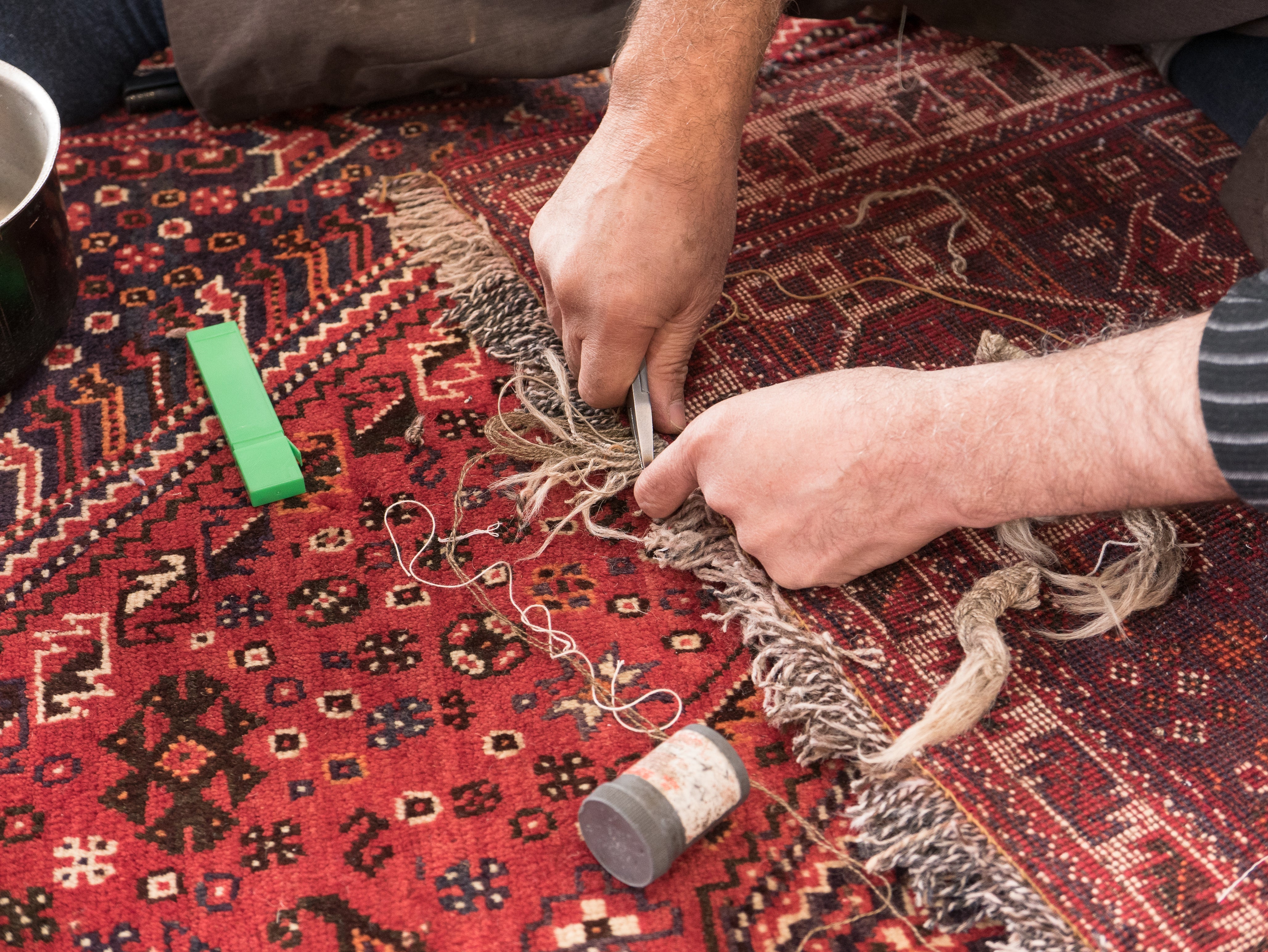
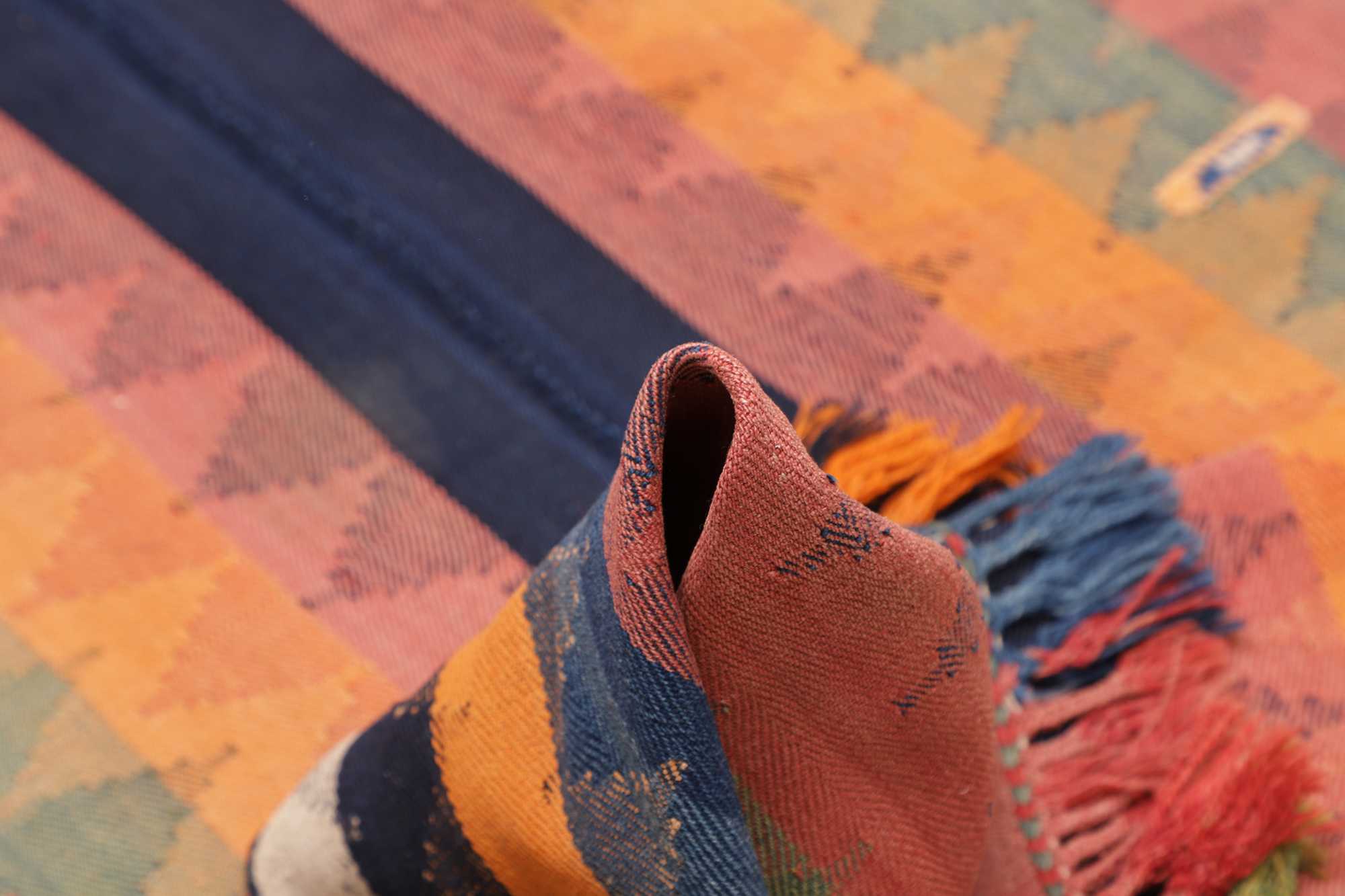
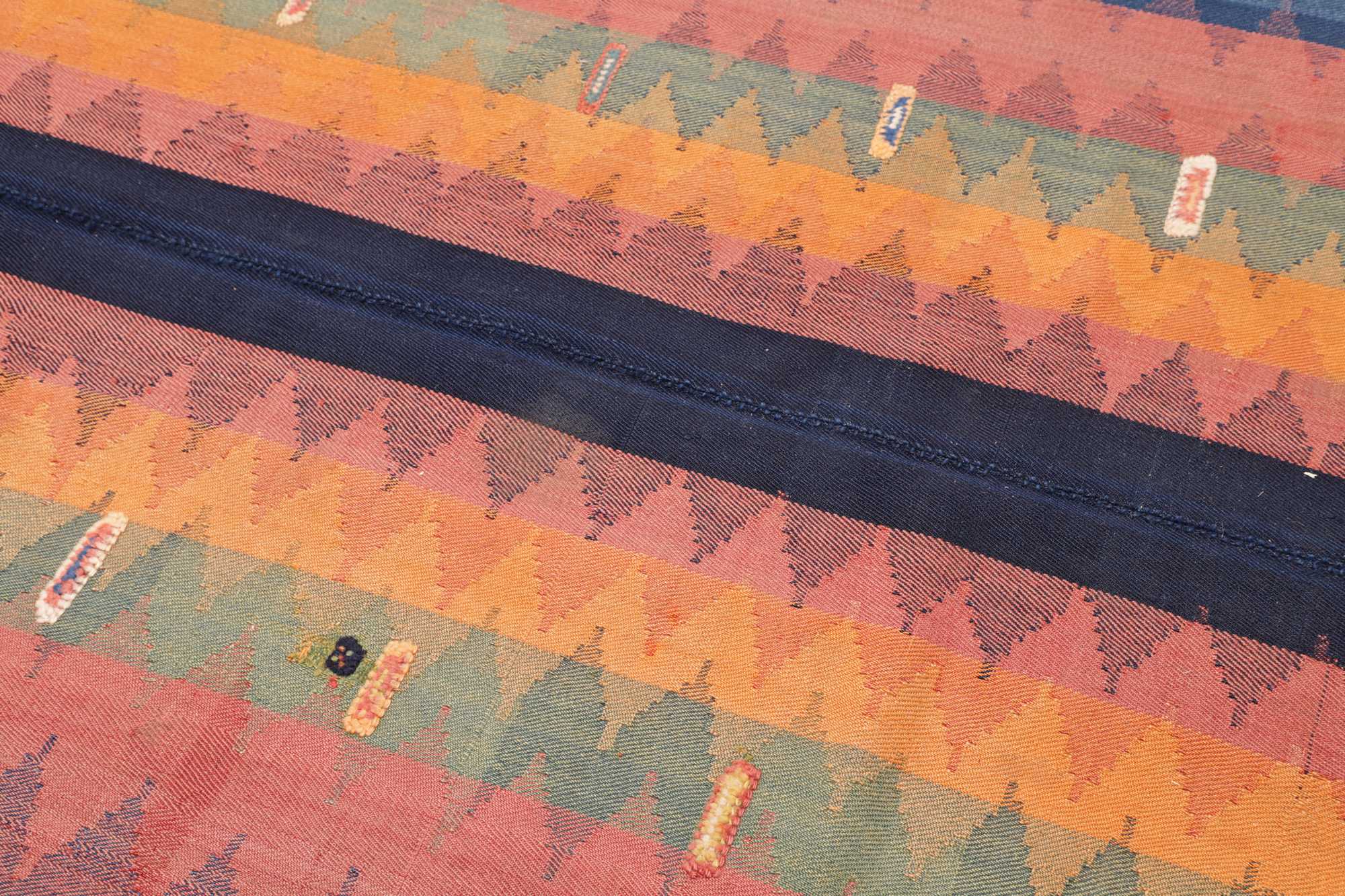
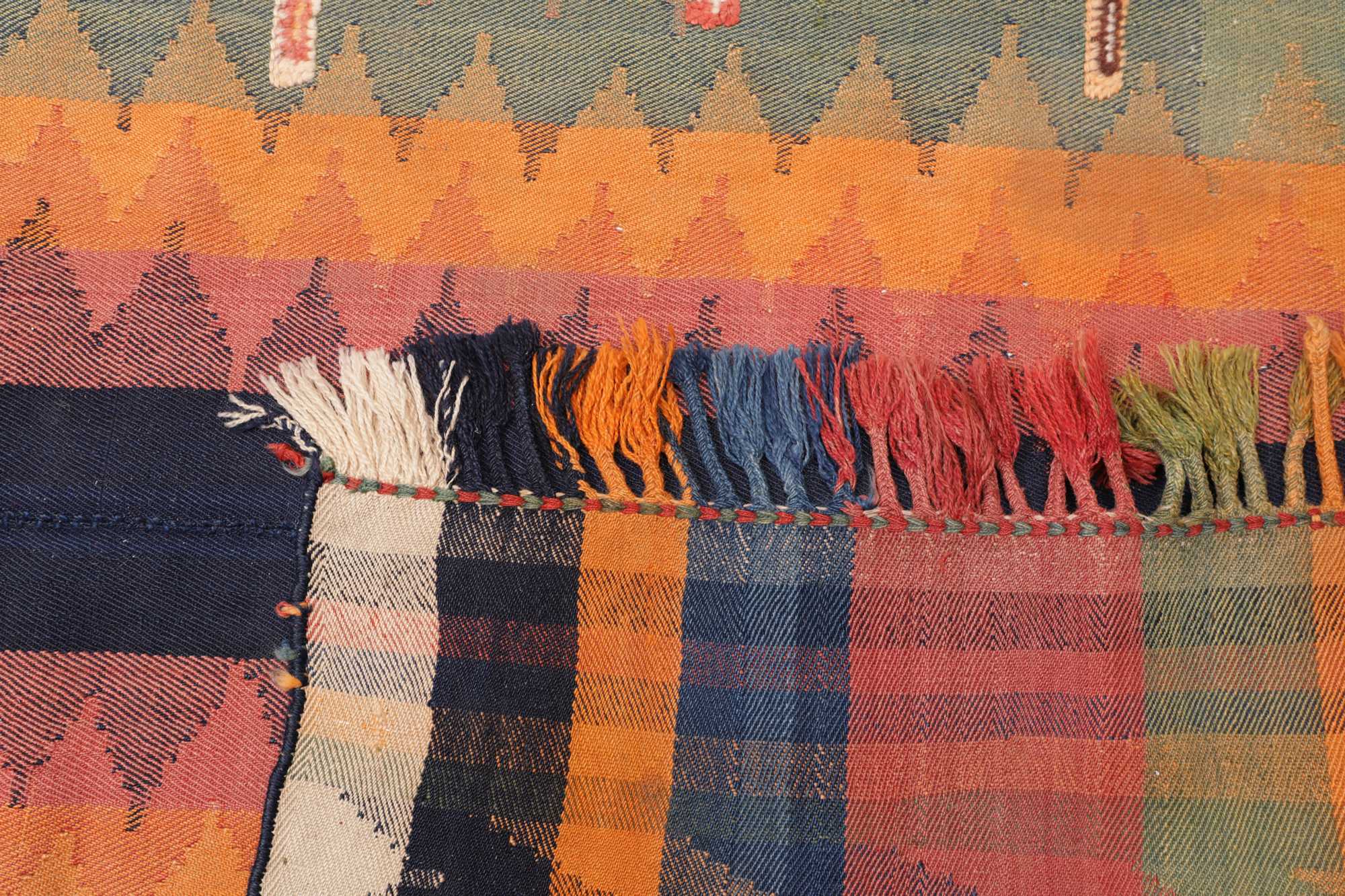
The technique used to make the materials for the pile of this Old Ghashghai Kelim is more than 200 years old. The wool was dyed with natural dyes and spun by hand. Dyeing with natural or plant dyes is more complicated, more expensive and more time-consuming than dyeing with chemical colours. For a luminous red, for example, you need around one kilo of ground madder root as dyestuff per kilo of wool. For a strong yellow that is not too pale, you even need two kilograms of the dyestuff weld per kilo of wool. Spinning the wool is labour-intensive and time-consuming too. What is more, fewer and fewer people still know how to spin wool by hand.But the effort is worth it: dyeing with natural colours allows the high-quality wool to keep its natural oil content. Wool that has been dyed with natural colours and spun by hand creates fascinating, shimmering patterns. The charm of hand-spun wool, with its slight irregularities and natural shades, comes into its own as a contrast in modern interiors, but equally in rooms furnished in a more traditional or country style.
The weft threads of this Old Ghashghai Kelim are made of X. Wool was used for the warp threads.
A note on the photos
Child labour? No thanks.

The rug trade against child labour: Children belong in school, not at a knotting or weaving loom. For us it therefore goes without saying that we only offer rugs made under fair conditions and without child labour. We place particular importance on good working conditions and tolerate no child labour at our producers.
We are proud to be a member of the Care & Fair campaign against child labour.
The industry-wide campaign CARE & FAIR - the rug trade against child labour was founded in 1994. The initiative has made it its mission to fight the excesses of illegal child labour in the knotting countries and, at the same time, to improve the overall situation of rug knotters and their families in the knotting regions of India, Nepal and Pakistan.
Our goals:
- Ending illegal child labour in India and Pakistan.
- Creating better living conditions for knotters' families.
- Socially responsible production. We only accept goods that have been made under fair conditions. Working with our producers as partners, we want to make clear to them that taking on social responsibility benefits everyone.
Together with Care & Fair we currently support 10 schools, 6 adult education centres and 3 day clinics in India and Pakistan.
Choose options
Due to US sanctions, PayPal is not available for Persian rugs. You can use all other payment methods.
|
|
14-day home trial |
|
|
Free delivery & returns within the EU |