


Pouf | 50 x 30 cm | Nr. Z-1756


|
1-3 working days delivery time (within Germany) |

|
14-day home trial |

|
Free delivery & returns within the EU |
Pouf
This Pouf is a one-of-a-kind rug from India. At 50 × 30 cm it is a versatile small living room rug that sets just as deliberate an accent in a bedroom or entrance area. More than just a hard-wearing wool rug: the natural material and the handcrafted execution give it a character of its own.
| Delivery time | 2 days |
| Origin | India |
| Dimensions | 50 cm x 30 cm (= 0.15 m²) |
| Construction | hand-knotted |
| Material | Pile: wool (hand-spun, natural dyes) |
| Edition | one-of-a-kind piece |

Origin
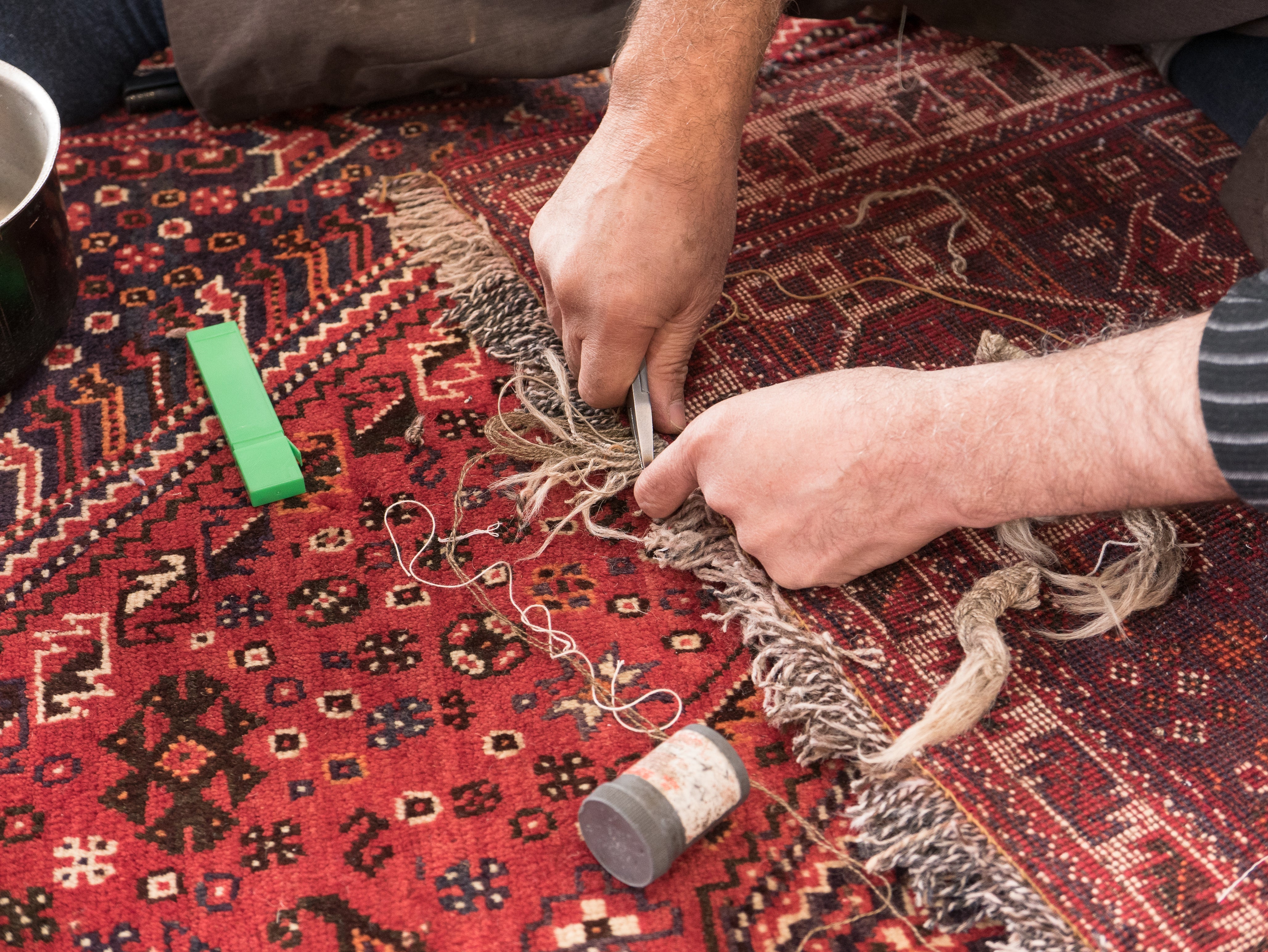
We sew our handmade poufs from old Moroccan Berber rugs. The result is small works of art that go beautifully with boho-style interiors, for example. Poufs and floor cushions can be used in all sorts of ways and are thoroughly decorative. They work as a stool, a side table, a footrest, a yoga cushion and much more.Berber rugs were traditionally knotted for use in the home. The weavers played freely and spontaneously with shapes and colours – with no pattern templates – following their own ideas and their individual intuition. That is why the traditional pattern of Moroccan Berber rugs typically consists of geometric, sometimes colourful, abstract shapes and lines on monochrome backgrounds. This powerful artistic expression has an extraordinary presence and makes Berber rugs unlike anything else – quite apart from their soft, fluffy feel. It is these traditional knotting techniques that give rise to the asymmetric, ethno-inspired motifs.
The high-quality materials of old Moroccan Berber rugs are not only long-lasting but also very soft and fluffy. That is what makes the poufs so comfortable, and it is kind to your floors as well.
What we sell here is the pouf cover only, without any filling. We spent a very long time looking for a sustainable filling for our poufs, but in the end we never found anything truly satisfactory. In our own showrooms we now fill the poufs with old towels or clothes we no longer wear. It works very well, is surprisingly comfortable and is completely sustainable.
Material
The technique used to make the materials for the pile of this pouf is over 200 years old. The wool was dyed with natural dyes and spun by hand. Dyeing with natural or plant dyes is more complicated, more expensive and more time-consuming than dyeing with chemical colours. For a luminous red, for instance, you need around one kilo of ground madder root as dyestuff for every kilo of wool. For a strong yellow that is not too pale, you even need two kilograms of weld dye per kilo of wool. Spinning the wool is time-consuming and labour-intensive too. And fewer and fewer people still master the craft of spinning wool by hand.But the effort is worth it: dyeing with natural colours allows the high-quality wool to keep its natural oil content. Wool that has been dyed with natural colours and spun by hand creates fascinating, shimmering patterns. The charm of hand-spun wool, with its slight irregularities and natural shades, comes into its own as a contrast in modern interiors, but equally in rooms furnished in a more traditional or country style.
The weft and warp threads of this pouf are made of cotton. This versatile material is tear-resistant and elastic, which makes it particularly well suited to a hard-wearing foundation weave.
A note on the photos
Child labour? No thanks.
Child labour? No thanks. Children belong in school, not at a knotting frame or a loom. For us it therefore goes without saying that we only offer rugs made under fair conditions and without child labour.
We attach particular importance to humane working conditions and tolerate no child labour at any of our producers. Thank you for helping us to ensure fair conditions.
That is why we support the initiative Care & Fair against child labour in the rug trade.

Choose options
|
|
1-3 working days delivery time (within Germany) |
|
|
14-day home trial |
|
|
Free delivery & returns within the EU |