

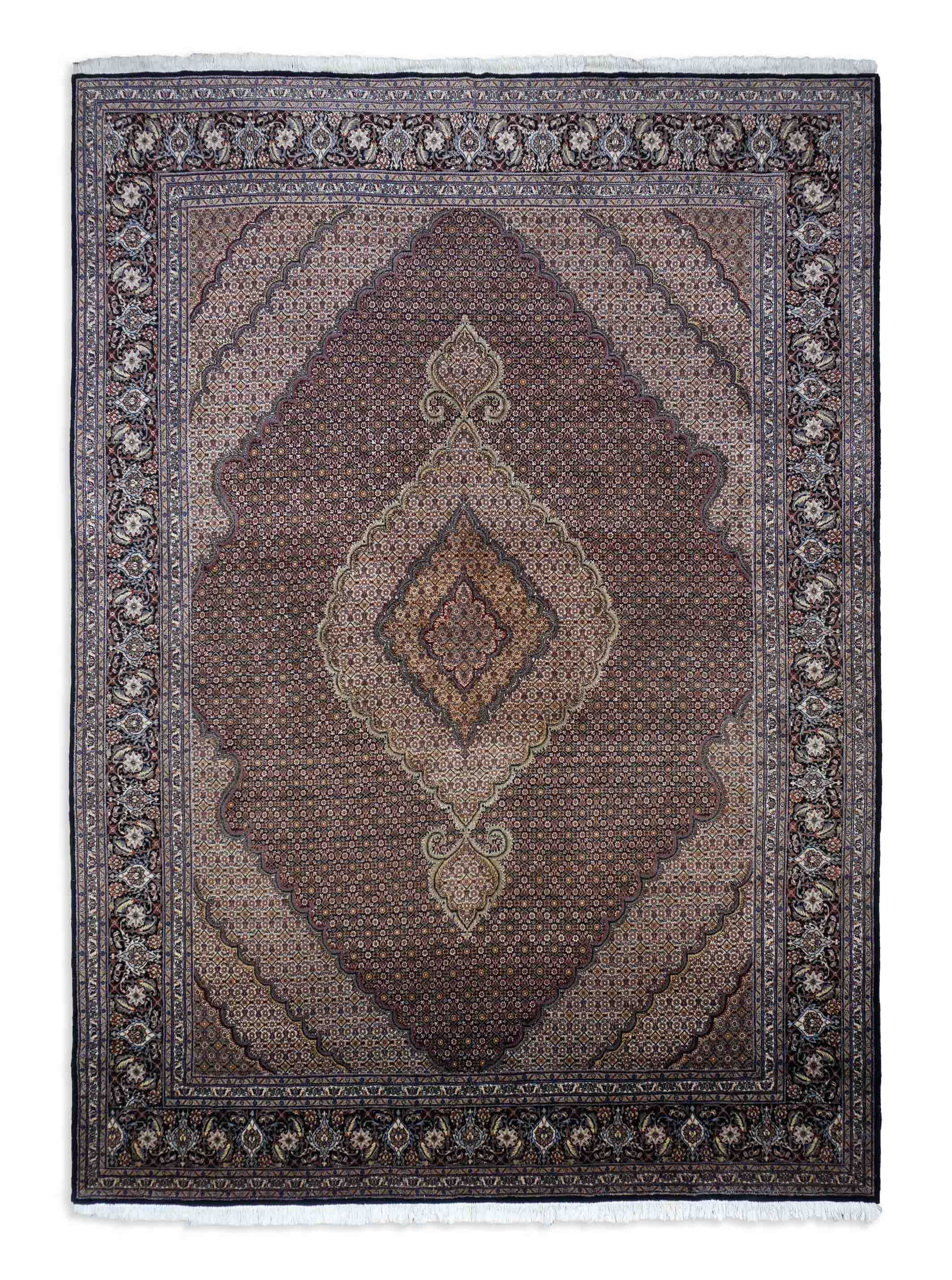
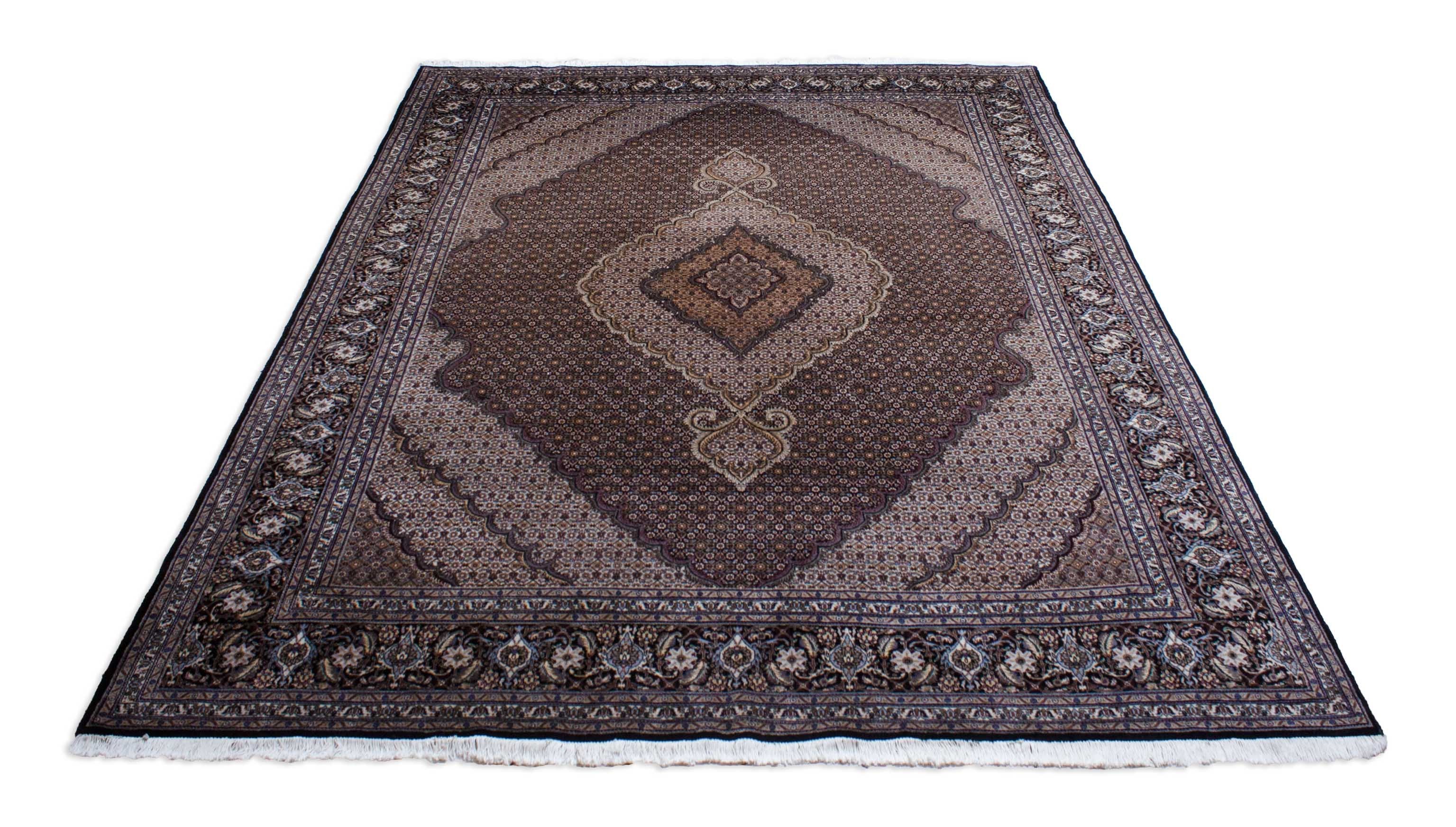
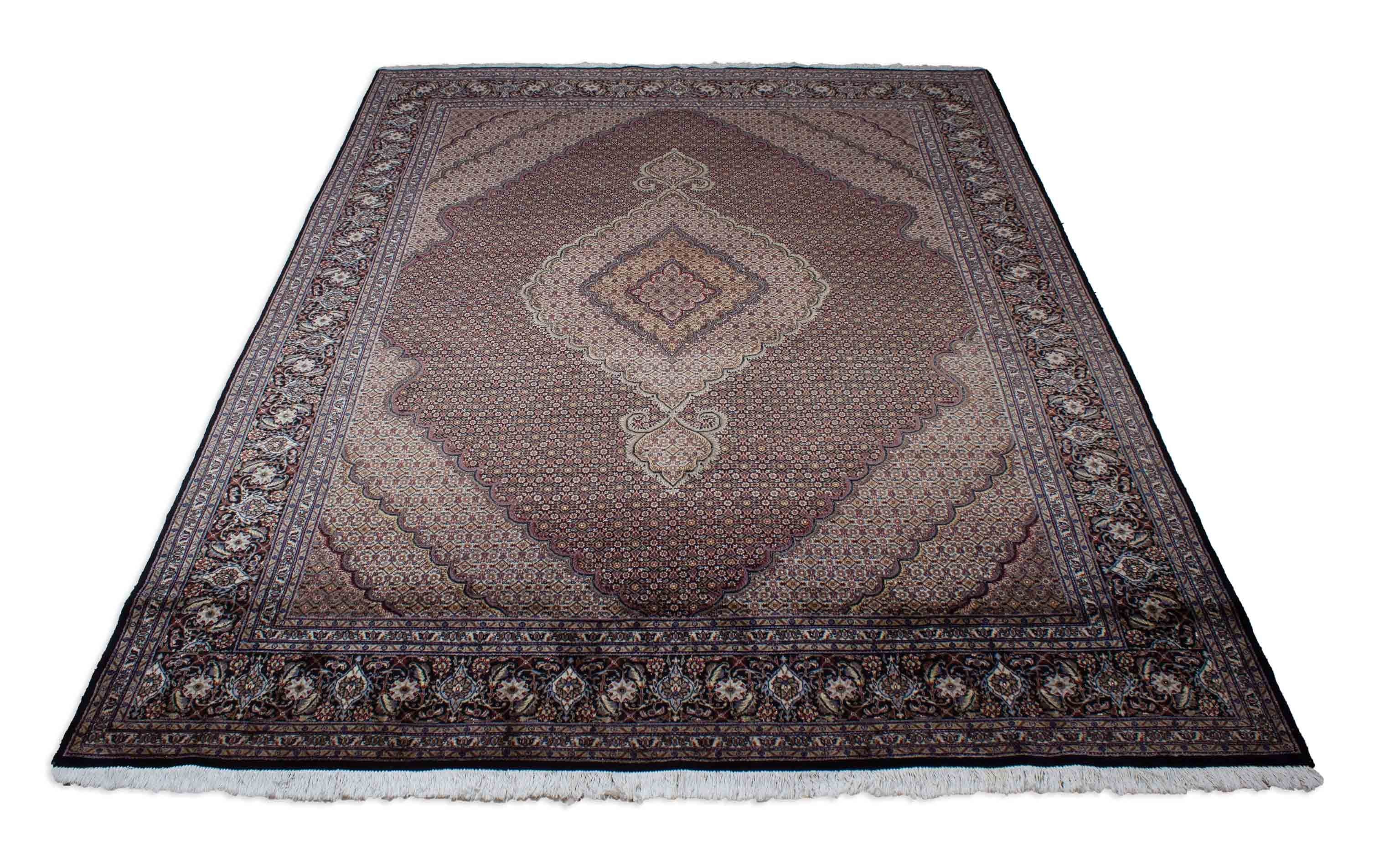
Tabriz | 347 x 247 cm | Nr. 19042


|
1-3 working days delivery time (within Germany) |

|
14-day home trial |

|
Free delivery & returns within the EU |
Tabriz
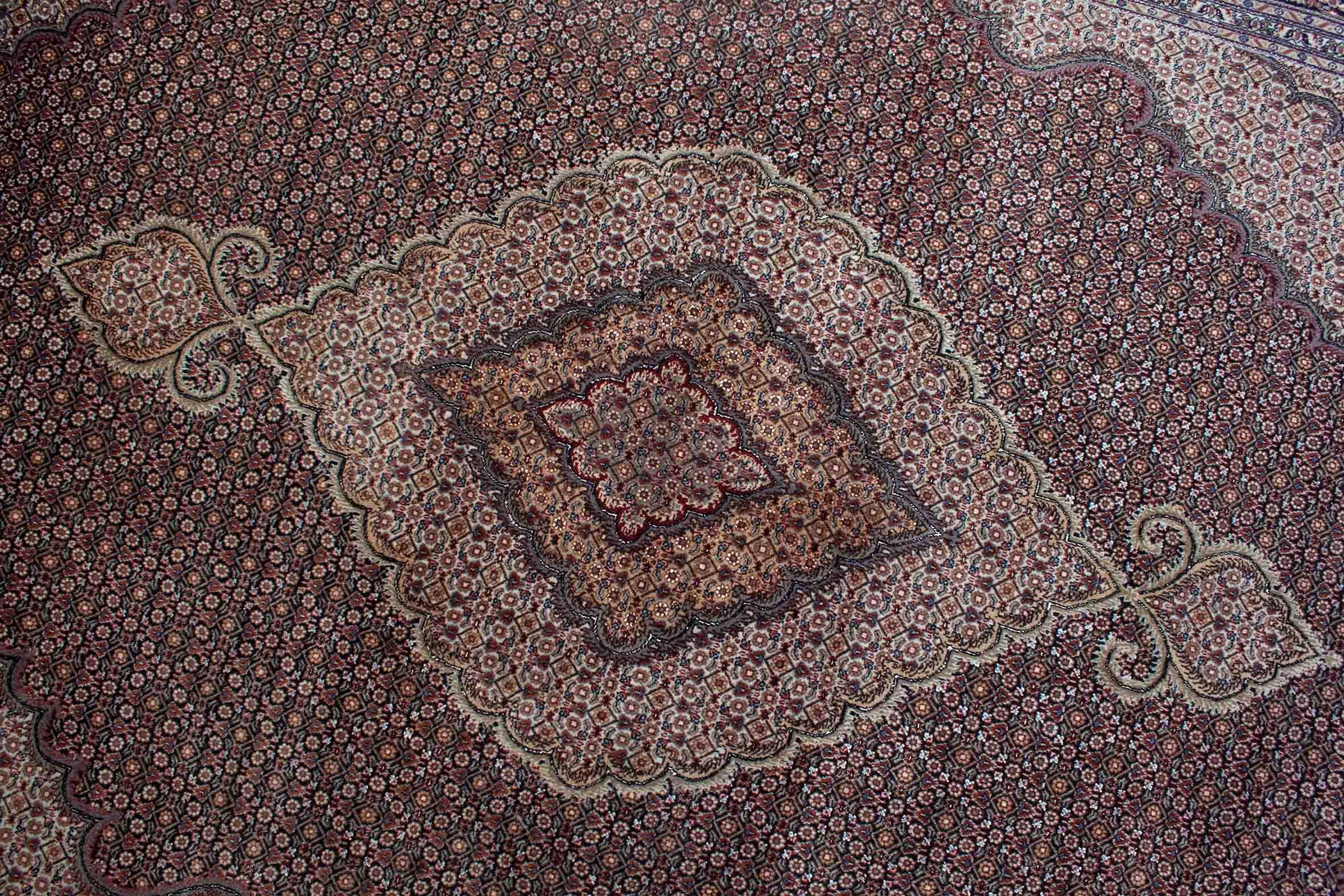
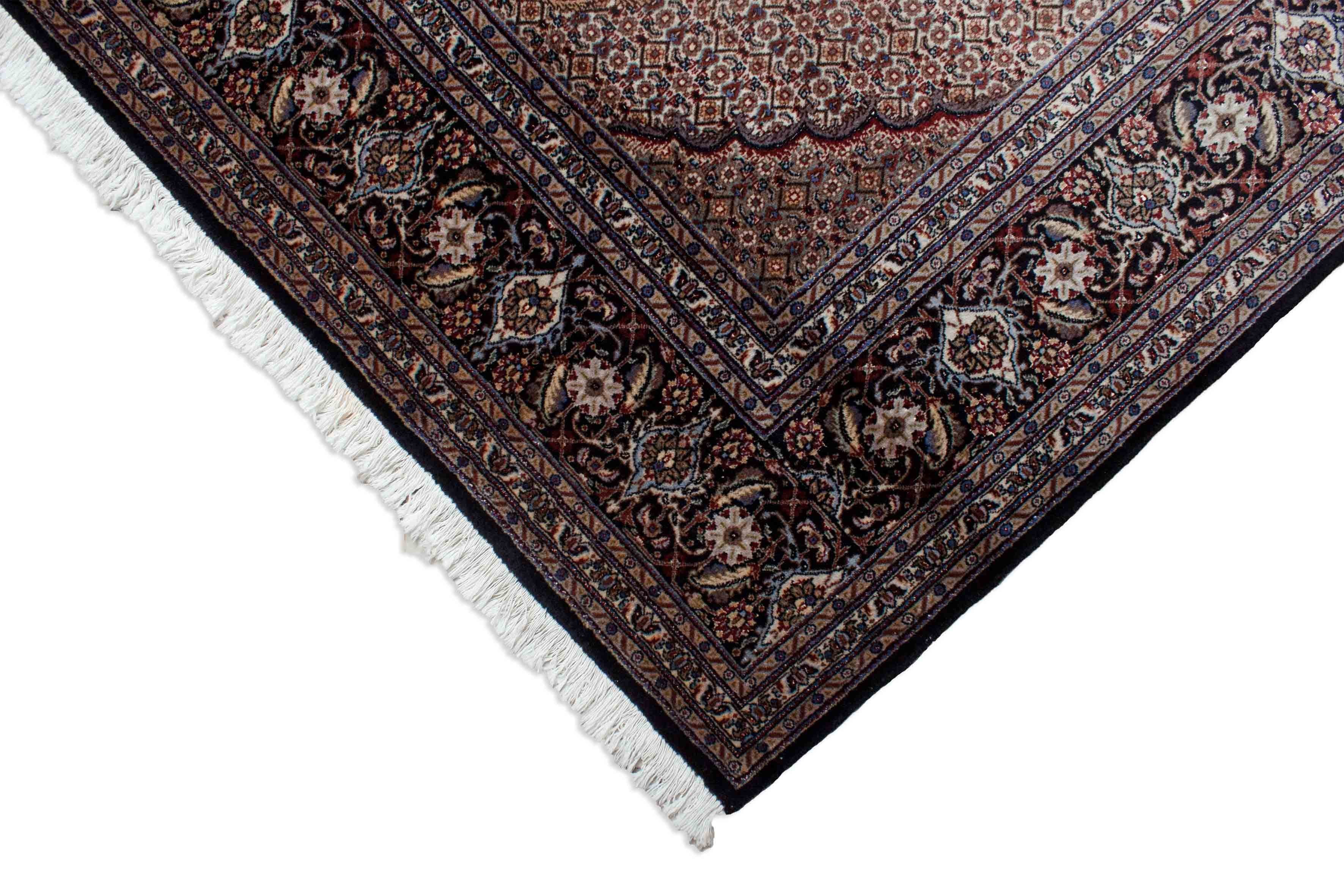
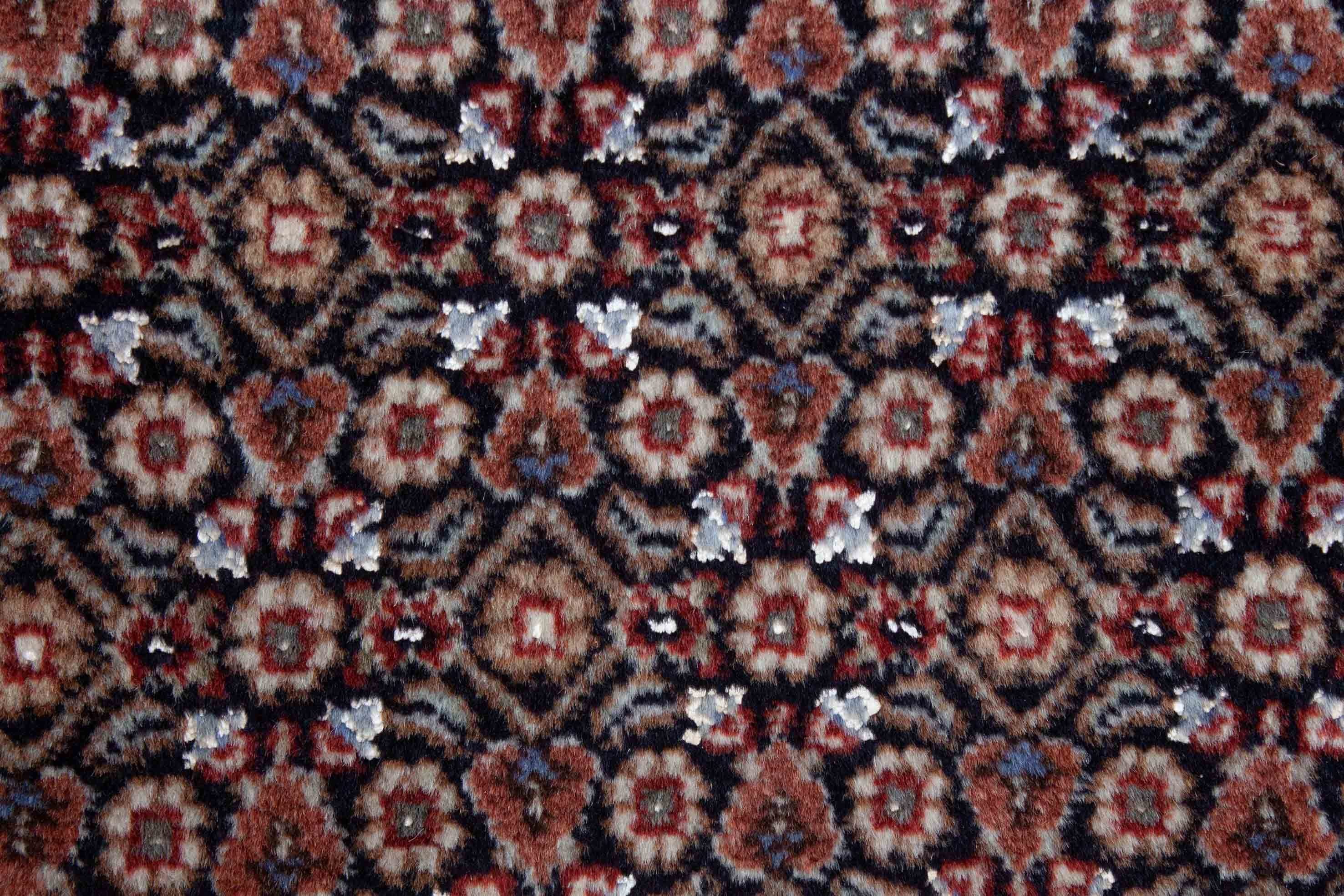
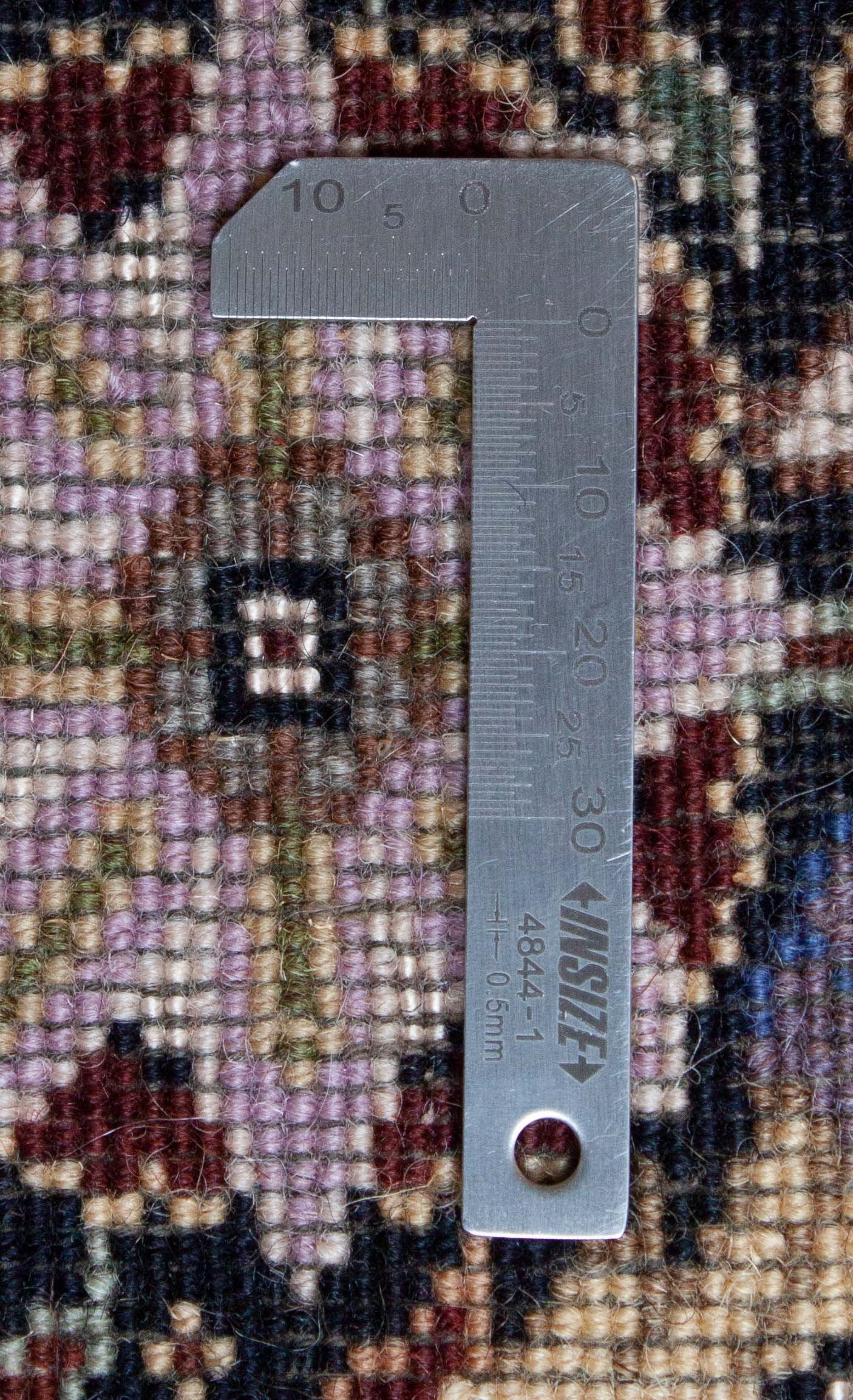
This rug in beige combines traditional craftsmanship with timeless elegance. At approx. 350,000 knots per m², the workmanship is correspondingly elaborate, as you can see in the precise drawing of the pattern and the finely worked details. Its 347 × 247 cm make it a large living room rug. As a one-of-a-kind piece it brings individual character into the room and holds its value far beyond short-lived trends.
| Delivery time | 2 days |
| Origin | Persia |
| Dimensions | 347 cm x 247 cm (= 8.57 m²) |
| Construction | hand-knotted |
| Material | Pile: wool with mercerised cotton |
| knots | 350.000 |
| Condition | pre-owned, but in very good condition (cleaned & restored) |
| Edition | one-of-a-kind piece |

Origin
Standing on Persia's northern border at the crossroads of countless caravan routes, the city of Tabriz (also written Tabris or Täbriz) has always been a melting pot of different ethnic and religious groups. Although the city lies on the border with Azerbaijan, the dialect spoken in Tabriz is related to Turkish. The bazaars of Tabriz have traded in craftwork for centuries, and above all in rugs from the surrounding villages.
Material
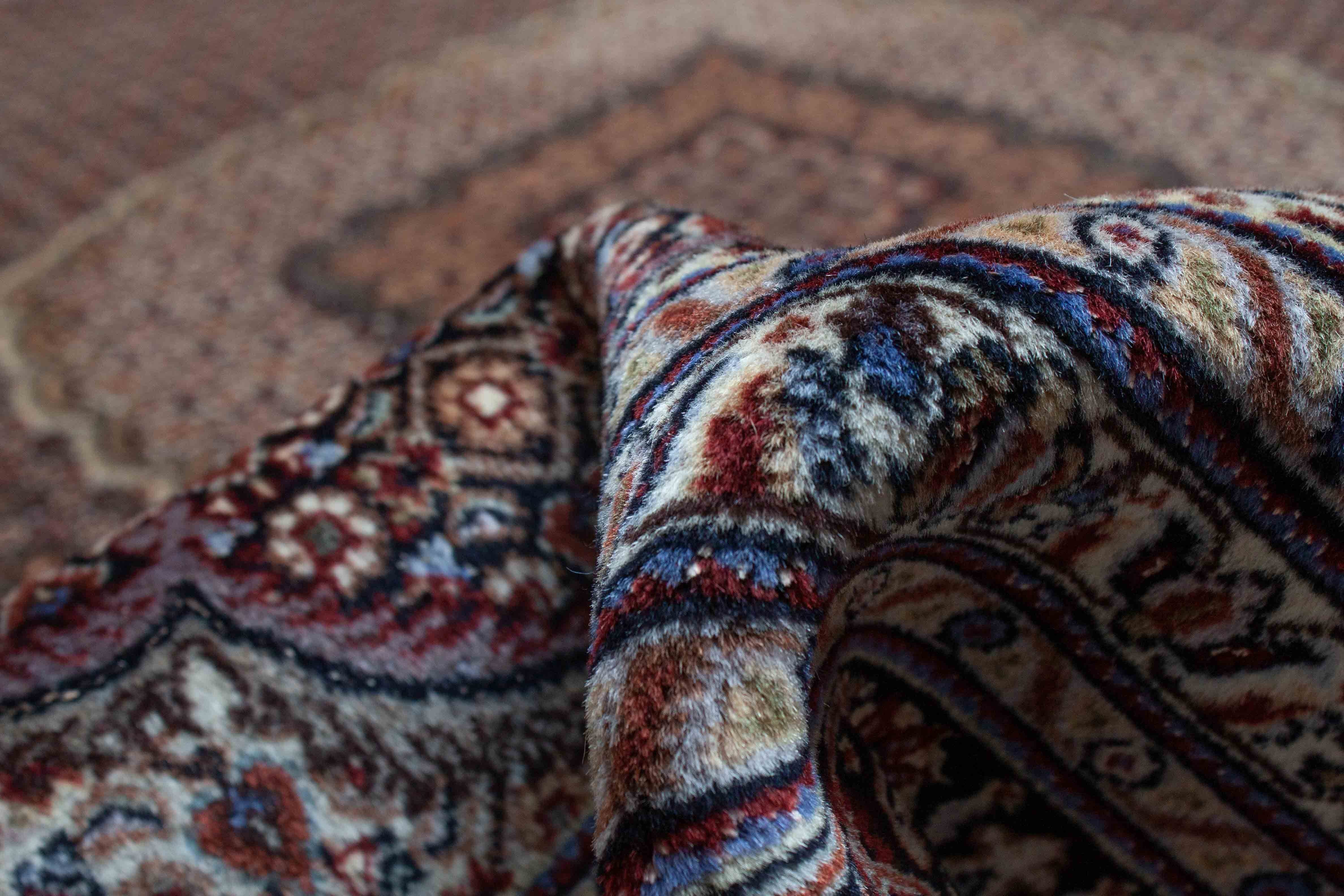
The pile of this Tabriz was hand-knotted from high-quality new wool. Individual details of the pattern are also picked out with the sheen of mercerised cotton.New wool is obtained by shearing live sheep. New wool is a renewable, natural raw material with a number of impressive qualities: thanks to the wool's natural grease content, the surface repels droplets of water and is therefore naturally proofed against dirt. Wool also offers excellent thermal insulation, helps regulate the indoor climate and dampens sound.
Cotton consists of lustrous fibres filled with cell sap. When this dries after the harvest, the surface of the fibre curls and loses its sheen through the refraction of light that results. In the middle of the 19th century, John Mercer invented the mercerisation process named after him. In the course of mercerisation, the cotton is held under tension in cold, concentrated caustic soda and takes on a new, higher-grade fibre structure. Mercerised cotton has shortened fibres with a round cross-section. The refined fabric no longer shrinks and is a pleasure for its high dimensional stability. The altered refraction of light gives it a silky sheen. Mercerised cotton also takes up dye more readily and is considerably more tear-resistant than the original material. Because mercerisation is laborious and costly, only high-quality cotton fibres are given this finish. Owing to the silky sheen of the yarn, mercerised cotton is, like viscose, often referred to as "artificial silk". The colloquial term "artificial silk" is, however, not permitted under the German Textile Labelling Act (Textilkennzeichnungsgesetz, TKG).
The weft and warp threads of this Tabriz are made of cotton. This versatile material is tear-resistant and elastic, which makes it particularly suitable for a hard-wearing foundation weave.
Condition
You are not the first to take a liking to this Tabriz. It has had owners before you who valued it and lived with it. It was knotted around 16. We have cleaned it thoroughly and restored it with care. As a result it is – despite its age – in very good condition.
A note on the photos
Child labour? No thanks.
Child labour? No thanks. Children belong in school, not at a knotting frame or a loom. For us it therefore goes without saying that we only offer rugs made under fair conditions and without child labour.
We attach particular importance to humane working conditions and tolerate no child labour at any of our producers. Thank you for helping us to ensure fair conditions.
That is why we support the initiative Care & Fair against child labour in the rug trade.

Choose options
|
|
1-3 working days delivery time (within Germany) |
|
|
14-day home trial |
|
|
Free delivery & returns within the EU |